Home Blog Page 1167

The Filipino’s guide to insurance at every stage of life

STOCK PHOTO | Image by Jakub Żerdzicki from Unsplash

Events of recent years in the Philippines have driven Filipinos to realize the value of insurance.

In 2021, the Philippine Life Insurance Association, Inc. reported that 67% of Filipinos were more likely to buy health insurance online during the coronavirus disease 2019 (COVID-19) pandemic, while 66% preferred pruchasing life insurance. More recently, the Manulife Asia Care Survey 2024 found that nearly 80% of Filipinos are looking to expand their insurance coverage and benefits in response to the rising costs of goods, services, and healthcare.

While a willingness to become insured is surely a welcome sight for Filipinos, understanding that insurance isn’t a one-size-fits-all solution is key to having the right coverage in every age. From the first insurance bought to the golden years of retirement, each stage of life influences the type of insurance coverage needed, the cost of premiums, and the most suitable policy options.

Laying the groundwork early

Many believe that the right time to avail of insurance is in one’s 20s to 30s. However, it may be smarter to invest as early as possible. With generally better health and fewer medical risks, younger individuals are considered low-risk by insurers, leading to more affordable premiums and a wider range of policy choices.

Starting young with insurance offers several advantages. Locking in a policy early means enjoying low rates that stay affordable over time. With the younger generation placing greater importance on mental health and overall well-being, having peace of mind through financial protection can ease the stress of unexpected expenses.

Additionally, insurance plans with investment or savings features, like variable universal life policies, can help lay the groundwork for future financial goals, which can be extremely beneficial for fresh graduates and young professionals. By starting early, they not only protect themselves but also take a smart step toward building a more secure financial life.

When commitments expand

By the time one reaches the age of 30, many Filipinos may have already started building their own families, bought their own homes, or are moving up in their careers. This means that adults of this age are more financially secured and can afford to get insurance with better coverage and better premiums.

At this stage of life, a few insurance options become increasingly important. Term life insurance is crucial for income protection, especially for those who are the primary earners in their families. This guarantees payment of a stated death benefit to the insured’s beneficiaries should something happen within a specified term.

Health plans with family coverage should also be a priority for those starting a family. Maternity benefits, children’s medical needs, and regular checkups can be pricy, making comprehensive coverage a need. Protecting property and car investments helps prevent significant financial setbacks in case of accidents or natural disasters.

Educational plans can also be a consideration at this stage. Starting early ensures that your child’s tuition is covered no matter what happens in the future, giving the insured a head start on saving for their kids’ education without the burden of financial stress in the future. Investment-linked insurance can also be an excellent choice as it helps protect loved ones while simultaneously building savings for long-term financial goals.

Once at the financial midpoint

Filipinos usually experience the peak of their careers during their 40s. At this point, they earn the most while also having greater financial commitments. One’s midlife can be a financial checkpoint, a good time to sit down with a financial advisor to review and possibly update their insurance portfolio.

Expanding life insurance is recommended to match a changing lifestyle, whether it is to cover bigger loans or provide extra protection for loved ones. Critical illness coverage may be of importance as well. Age-related health risks start to become more of a reality at this point in one’s life. Planning for long-term care and future medical expenses can go a long way in avoiding unexpected burdens later on. Protecting assets, such as a home, business, or other investments, is also prudent to prevent major setbacks from accidents, disasters, or legal claims.

Preserving wealth into legacy

As retirement approaches in one’s 50s and 60s, the focus inevitably shifts from building wealth to preserving it. Insurance at this point plays more of a protective role. Medical needs tend to grow with age, and so does the desire for peace of mind and financial stability for their children and maybe even grandchildren. It’s also a good time to reassess what’s still necessary. For example, large life insurance policies might no longer be needed if children are already financially independent.

Comprehensive health insurance becomes top priority, especially plans that cover age-related conditions and possible hospital stays. Long-term care coverage becomes more important, offering support in case caregiving or assisted living services are needed.

Most at this age also start thinking about what they will leave behind. Life insurance thus becomes a tool for wealth and estate planning, helping with estate taxes and providing a safety net for loved ones. Some insurance plans even offer retirement payouts, providing a steady stream of income to supplement savings.

For those in their 70s, insurance becomes less about growing wealth and more about preserving dignity, independence, and leaving a legacy. The needs are different, but the value of having the right coverage remains high.

Hospitalization and final expense insurance can help cover medical bills and funeral costs, easing the financial burden on loved ones. Even modest legacy planning policies can be meaningful, giving seniors a way to leave something behind.

At this age, simplified or guaranteed-issue plans become attractive, especially for those with pre-existing health conditions, as they typically require fewer medical checks. Many providers now offer plans tailored specifically for seniors, focusing on what matters most at this life stage.

Age plays a big role in how insurance works. The younger a person is when they get insured, the lower the premiums — thanks to lower health risks and more time to grow investments. As people get older, premiums tend to increase, and some options may no longer be available. Seniors, for example, might face limits on the types of policies they can apply for or how much coverage they can get.

This is why starting early isn’t just smart; it can be the key to unlocking better rates, broader choices, and long-term financial security. Age changes the conversation, but insurance remains a constant need throughout every stage of life. — Jomarc Angelo M. Corpuz

Mitsui eyes MPIC stake in toll unit

The Cavite-Batangas Expressway — PIXABAY

By Ashley Erika O. Jose, Reporter

MITSUI & CO. LTD. has expressed interest to buy Metro Pacific Investment Corp.’s (MPIC) 20% stake in Metro Pacific Tollways Corp. (MPTC) before the latter resumes merger negotiations with San Miguel Corp., MPIC Chairman and Chief Executive Officer Manuel V. Pangilinan said.

“We have to raise money first, once we finish that, then we will resume [merger talks with San Miguel Corp.],” he told reporters on the sidelines of the VITRO Sta. Rosa data center inauguration last week. “They (Mitsui) already converted half of their MPIC shares to shares of MPTC.”

Mr. Pangilinan earlier said the sale of their toll interest is part of a plan to raise P30 billion to P50 billion through a private placement to cut MPTC’s debt.

MPTC is trying to raise funds before it resumes merger talks with San Miguel.

MPIC owns 99.9% of MPTC, whose debt accounts for most of MPIC’s P64.99-billion short-term debt and the portion of its long-term debt as of end-2024.

Last year, MPIC signed a deal with Mit-Pacific Infrastructure Holdings Corp. for a share buyback and exchangeable bond issuance.

Under the deal, MPIC will buy back 4.58 million common shares owned by Mit-Pacific, equivalent to a 7.3% stake in MPIC, reducing Mit-Pacific’s ownership of MPIC to 7.8%.

Additionally, MPIC will issue P11.9 billion worth of exchangeable bonds to Mit-Pacific, which may be converted to 1.5 million MPTC common shares.

If Mit-Pacific opts to exchange the bonds for MPTC shares, it will acquire a 6.6% stake in MPTC along with a board seat in the toll company.

Mit-Pacific is a joint venture between Mitsui & Co. Ltd. and Japan Overseas Infrastructure Investment Corp. for Transport & Urban Development.

MPTC has said it had finalized the alignment of  Cavite-Batangas Expressway (CBEX), the company’s project with San Miguel.

“My impression is that the alignment has already been agreed,” Mr. Pangilinan said, but declined to give a timeline for the project’s groundbreaking. “The principals of the partnership and the alignment have been agreed upon, and we should start working soon.”

In 2023, MPTC signed a memorandum of agreement with San Miguel to build and operate CBEX and the Nasugbu-Bauan Expressway (NBEX) projects with a combined value of P72 billion.

Under the deal, the parties will develop an almost 80-kilometer toll road that will connect MPTC’s Cavite-Laguna Expressway (CALAX) to Bauan, Batangas.

In 2018, MPTC was granted the original proponent status for the 50.4-kilometer Cavite-Tagaytay-Batangas Expressway project by the Department of Public Works and Highways, some segments of which overlapped with San Miguel’s unsolicited proposal for CBEX and NBEX, which were approved by the Cavite and Batangas governments.

MPIC is one of the three key Philippine units of Hong Kong-based First Pacific Co. Ltd., alongside Philex Mining Corp. and PLDT, Inc.

Hastings Holdings, Inc., a unit of PLDT Beneficial Trust Fund subsidiary MediaQuest Holdings, Inc., holds a majority stake in BusinessWorld through the Philippine Star Group, which it controls.

Australia’s Anko to add 4 stores in Manila this year

BW FILE PHOTO

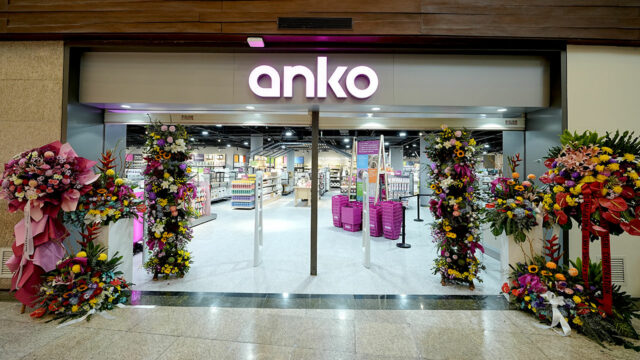
ANKO, Kmart Australia Ltd.’s home and lifestyle brand, is targeting to add four stores in the Philippines by the end of the year as it boosts its domestic presence under a joint venture with Ayala Corp.

“We have one store right now. We’re opening two more in the next couple of months. We think we’ll get to five stores by the end of the year,” Ayala Corp. Corporate and Business Development Head Mark Robert H. Uy told a news briefing in Makati City last week. “That’s our focus this year.”

“Currently, we’re focused on really growing Anko to its full potential because we think it’s really catering to a major pain point in this market… We think we’re offering products that are practically more or less the same price point as what you would get at Shopee and Lazada, but significantly better quality,” he added.

Anko debuted in the Philippines in November last year with a store in Glorietta 2, Makati City under a joint venture with Ayala Corp. mall unit Ayala Malls.

Anko is set to launch its second branch in Alabang Town Center, Muntinlupa City by May and a third store in TriNoma Mall, Quezon City by July.

The brand offers products including homeware, kitchenware, toys, beauty, pet supplies and electronics.

Meanwhile, Mr. Uy said Ayala Corp. is on the lookout for other brands that could strengthen its presence in the retail segment.

“There are other concepts knocking on our door, and we’re having the same conversation with them, which is, first of all, it needs to be a concept that addresses a pain point in the market,” he said.

“All the products we sell there (Anko), we’re selling them at the same price as what they’re selling in Australia… We’re trying to offer great value to customers and we’ll continue to be able to look out for brands that are relevant to Filipino customers,” he added.

Anko, established in 2017, is a part of Kmart Group, which includes Kmart Australia, Target Australia and Anko Global. These are all owned by Wesfarmers Ltd.

Ayala Corp. shares rose 1.42% or P8 to P570 apiece on April 25. — Revin Mikhael D. Ochave

Feed mill for aquaculture set up in Oriental Mindoro

PIA.GOV.PH

THE GOVERNMENT has established an aqua feed mill near fish hatcheries in Oriental Mindoro, according to the Bureau of Fisheries and Aquatic Resources (BFAR).

The aqua feed mill in Bulalacao, the first of its kind by BFAR, is expected to produce between 250 to 300 kilograms of high-quality aqua feed per hour, BFAR said in a statement.

The plant, which will use “cutting-edge technology,” is poised to support sorghum and corn growers in the area who provide raw materials for feed production, BFAR said, citing the need for a “symbiotic relationship between agriculture and aquaculture.”

The facility is situated near a 161-hectare mariculture park as well as bangus and shrimp hatcheries in Oriental Mindoro.

“Its location also benefits from nearby port and airport access, facilitating the distribution of products,” BFAR said.

“Bulalacao is in the heart of the region, and this plant will not only serve the locals but also cater to surrounding provinces,” it added.

“It’s a key development for the entire region’s fisheries.”

BFAR said it is also hoping to open aqua feed mill plants in other parts of the region. — Kyle Aristophere T. Atienza

Meralco declines despite news of higher electricity sales

MERALCO.COM.PH

By Abigail Marie P. Yraola, Deputy Research Head

THE SHARE PRICE of Manila Electric Co. (Meralco) fell last week despite news that its energy sales grew on strong demand from residential and commercial sectors.

The stock closed at P551.50 on Friday, 4.9% lower than a week earlier and bucking the 0.5% gain in the industrial index and 2.2% rise in the benchmark Philippine Stock Exchange (PSE) index. The share has increased 13% this year compared with the index’s 4% decline.

Investors were probably concerned about potential regulatory pressure including scrutiny of its pricing strategies despite its recent franchise renewal, said Toby Allan C. Arce, head of sales trading at Globalinks Securities and Stocks, Inc.

“The broader industrial subsector’s gains and PSE index growth may have been buoyed by election-driven optimism and macroeconomic factors such as lower inflation, which did not equally translate to Meralco due to these company-specific challenges,” he said in a Viber message.

He said Meralco’s mixed trend last week reflected the downturn in key sectors like steel and food and dampened growth in industrial sales volume.

“Meralco’s strategic operational upgrades, including significant enhancements to its Tayabas delivery point substation, reflect its commitment to meeting increasing electricity demands,” he added.

A week earlier, the power distributor said it had upgraded the power transformer at the Tayabas substation to 300 megavolt-amperes (MVA) from 100 MVA to meet demand in Quezon province and nearby towns in Laguna.

Meralco’s energy sales volume grew 1.5% in the first quarter to 12,493 gigawatt-hours, driven by increased residential and commercial sector demand, Ferdinand O. Geluz, senior vice-president and chief revenue officer at Meralco, told reporters in a Viber message.

Residential sales volume rose 3% due to the sustained momentum from energization efforts and the high heat index, while commercial sales inched up 1%, buoyed by consumer-facing establishments.

“Meralco demonstrates resilience in leveraging climatic conditions to boost residential consumption,” Mr. Arce said. He added that while this might be good for financial metrics, higher energy use is a cost burden for consumers and could spur calls for energy-efficient solutions.

Aniceto K. Pangan, an equity trader at Diversified Securities, Inc., said there might be concerns that Meralco’s push to lower electricity rates could cut its profit margin despite rising demand.

Meralco Chairman and Chief Executive Officer Manuel V. Pangilinan has said the company is focused on lowering power rates and ensuring supply reliability after lawmakers renewed its franchise.

On April 11, President Ferdinand R. Marcos, Jr. signed into law the measure extending the power distributor’s franchise for another 25 years.

Mr. Arce cited Meralco’s focus on operational efficiency including efforts to transition power generation methods, including the exploration of nuclear and renewable energy.

“Strategic investments such as the expanded substation capacities and the extended franchise period to 2053 ensure sustained reliability and broadened service delivery,” he added.

Mr. Geluz earlier said they expect energy sales to pick up next quarter in line with their 4.5% full-year growth target.

Mr. Pangan said the goal could only be achieved if the Philippine economy grows at least 5.8%.

Mr. Arce expects Meralco to post P497 billion in revenue and P48 billion in net income this year.

“Anticipated election-driven economic activity and seasonal factors are expected to bolster second-quarter sales,” he said. “Meralco’s optimistic full-year energy sales growth target of 4.5% aligns with ongoing infrastructure upgrades and market recovery.”

He said company’s stable income streams, particularly from its distribution utility business, while efforts to modernize infrastructure and focus on sustainable energy and competitive pricing could attract long-term investors.

“Its defensive qualities in the utility sector and consistent dividend policies also appeal to risk-averse traders,” he added.

Mr. Arce put Meralco’s critical support at about P550 and resistance near P587.60 this week.

“Breaching these levels could signify substantial upward (up to P600) or downward (to P520) momentum based on broader market cues and company-specific announcements,” he said.

Meralco’s controlling stakeholder, Beacon Electric Asset Holdings, Inc., is partly owned by PLDT, Inc. Hastings Holdings, Inc., a unit of PLDT Beneficial Trust Fund subsidiary MediaQuest Holdings, Inc., has an interest in BusinessWorld through the Philippine Star Group, which it controls.

A willingness to compete

ALEXANDRA “ALEX” EALA — RAFANADALACADEMY.COM

For many Philippine tennis fans, nothing matches the recent run of Alexandra “Alex” Eala. In the span of a few weeks, she has gone from the mid-100s of women’s tennis rankings (already a feat in itself) to world number 72 by defeating former 2017 French Open champion Jelena Ostapenko, 2025 Australian Open champion Madison Keys and multi-Grand Slam winner Iga Swiatek at the Miami Open in March.

Never has a Filipino reached that level or defeated several top-ranked players in the Open Era, which started in 1968. I started watching tennis in the 1970s, through grainy and often time-delayed broadcasts of the Grand Slams. Bjorn Borg, with his uncannily low pulse rate, vs. the mercurial John McEnroe was a favorite match-up. I marveled at Steffi Graff’s still unmatched calendar Grand Slam, and the unrelenting pressure that Venus Williams put on an opponent. Countless days through law school in the 1990s were spent under the hot sun in Quezon City or Greenhills, wherever a tennis court could be found, with my friends Henry, Aza, and Alvin without the luxury of a ball kid and wondering whether the ball had lost enough of its fibrous felt to be unplayable. While working at my desk in New York in the late 2000s, I sat opposite an Australian, now a member of parliament in his country, who was once ranked 183 in the world, and he described to me how life on the tour can be difficult for lower-ranked players.

This is why Eala’s wins are exciting to Filipino tennis fans — to finally have a countrywoman to cheer for with every down-the-line forehand or groan with every sprayed shot against some of the world’s top players, even at the unholiest of Philippine broadcast hours. The best tennis matches are gladiatorial one-on-one matches, with the best players painstakingly constructing points, i.e., setting up their opponents into more and more difficult positions to return the next shot. There are no teammates to blame and while the occasional umpire or linesperson (or electronic line judge) may make an error, the focus is on the two players on the court.

Tennis, along with golf, is one of the spectator-friendly sports where regular global competition is truly possible, with consistently high-level matches being held in accessible venues and with regular mainstream coverage. There are multiple tournaments throughout the year to follow, where the grand slam events are interspersed with mid-level tournaments; the defeat of a favorite player is difficult to watch but, health allowing, the next tournament is just around the corner.

The initial narrative of sports commentators is that Eala left the Philippines when she was 13 to enter the Nadal academy in Spain. It highlights that to become competitive in this sport, training and competition abroad are essential; golfer Bianca Pagdanganan is another athlete who left the country in a similar vein. Our Olympic champions and competitors also followed similar paths.

It holds a lesson for our country as well. To truly prosper and become world-beaters our companies must be willing to compete, whether here or abroad. Protection may create local winners, but that can only grow so far, because the size of our domestic market is limited.

Eventually, protected firms will have the incentive to maneuver politically to perpetuate their local advantages through favorable regulation that hamstrings foreign competition. These economic distortions lead to broader societal distortions as well, as the politicians become accustomed to working with their domestic economic patrons, which worsens corruption. Narratives are manufactured that foreign competition is unabashedly injurious to Filipinos, which then leads to more protections that wall off other parts of the economy. Consumers suffer because they pay higher prices for goods, with some of the profits being used by the local player for the political patronage that benefits them, not the buyer of the product. In the end, the consumer is worse off both economically and socially.

Admittedly, there is always a need to consider the domestic social effects of competition, and to implement measures that, for a limited time, help those who need to adjust to it — such as farmers who may need help staying competitive, or assisting them in transitioning to other crops that are more profitable or have larger markets. After all, while the market may solve supply-and-demand issues, and help consumers have access to better products at reasonable prices, it can still have negative effects on local firms and workers and helping them adjust is the other side of building competitive economies.

Reasonable environmental protection is also another priority in free markets; economic efficiency at the cost of our ecological well-being or that of our children is a dangerous tradeoff. This is where we also have some failings and which many free-market advocates fail to recognize, and which is why the domestic lobby for continued protection is still strong. While we must work to make markets and firms better through competition, we must also work just as hard to help mitigate the economic and social problems that it generates. Competition legislation must also be implemented faithfully.

The next few years will be important to the global trading system. There will be calls for more protection as countries try to insulate their industries and protect local jobs. But Asia has prospered through trade, and our workers benefit from more open borders, not closed ones. Firms that are competitive globally help the overall economy as technologies, skills, and competencies propagate and are transferred to other firms that they work for, and the result is more competitive firms and workers broadly across sectors and industries. As a geopolitical price taker, we must work with other countries to keep the wheels of trade spinning.

Alex Eala could have stayed here and she would very likely have prospered as the best tennis player in the country. Since we do not have significant international tournaments, she would have dominated the local scene and maybe even competed well at the Southeast Asian or Asian games. But by going abroad despite the separation from the family and the punishing schedule, she has widened her horizons. Was it Andre Agassi who recounted in his memoirs waking up unable to move with a painful back and barely recognizing which city he was in, as a price paid for being a champion?

Eala is still only turning 20 and, health allowing, has many, many more years of competition. On the internet, it is easy to spot the crabs who claim she has won nothing of note and claim that she is the product of hype after a lucky run in Miami. They, of course, do not understand that Filipino tennis fans have finally found one of their own to root for at this level of tennis, and are unabashedly excited about it. Undoubtedly, many more tennis rackets are going to be picked up in the next few years, and some may even start to make it abroad. It inspires others to do as well, and to become better — a lesson worth emphasizing today to our policymakers and locally bound firms.


Bob Herrera-Lim is a managing director at Teneo, a New-York based consulting firm that advises companies and investors globally. He covers all of Southeast Asia for the firm’s clients. He is also a fellow of the Foundation for Economic Freedom.

Buzz terminal

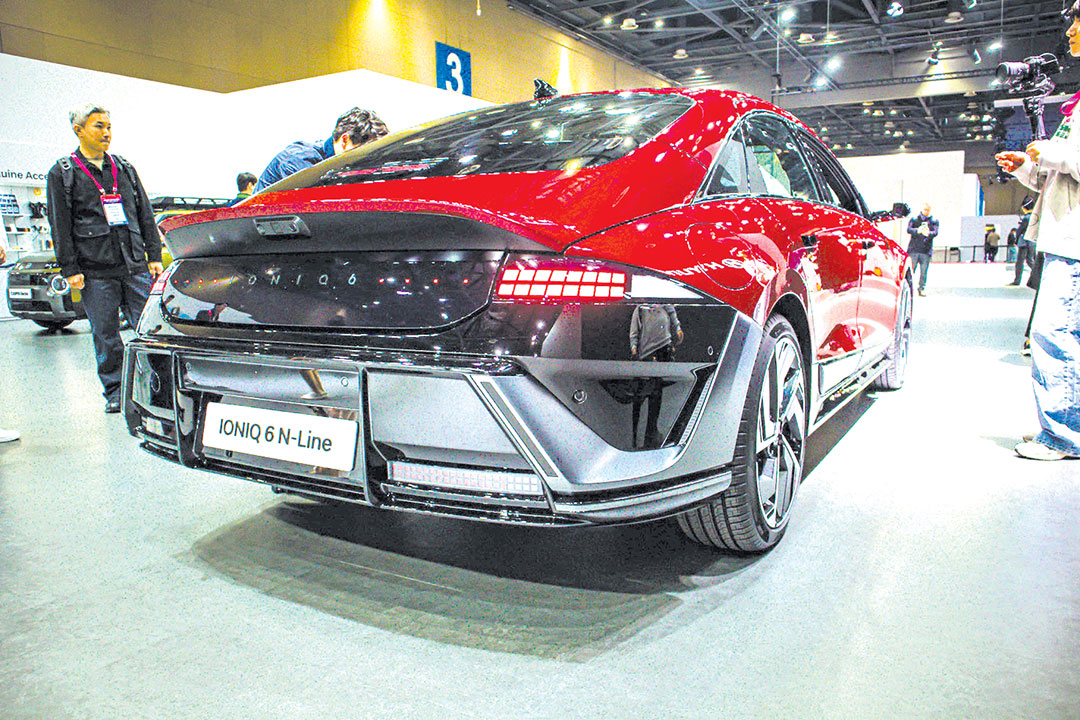
The refreshed Ioniq 6 gets exterior and interior tweaks. The so-called ‘Pure Flow, Refined’ design ethos seeks to make the vehicle at once simpler and more progressive. — PHOTO BY KAP MACEDA AGUILA

Hyundai’s electrics take center stage at Seoul Mobility Show

HYUNDAI MOTOR PHILIPPINES (HMPH) recently brought a delegation of media and content creators — this writer included — to South Korea for the Seoul Mobility Show 2025. Of course, there was much expectation for Hyundai’s participation in the biennial automotive showcase held in its home country.

Themed “Mobility Everywhere,” the 11-day show attracted some 560,000 visitors (up from 510,000 people in 2023) to the Kintex in Goyang. The theme highlighted the expansion of mobility “across industries and into everyday life,” and featured 451 companies and institutions. Headline partners included HD Hyundai, among others.

Hyundai Motor Company used its large display booth at the Seoul Mobility Show to unveil new iterations of two electric models: the Nexo and the Ioniq 6.

The Nexo is a hydrogen-powered fuel cell electric vehicle first launched by Hyundai in 2018 at the Consumer Electronics Show in Las Vegas, Nevada. Seven years later, the company introduces the second generation which, it said in a release, marks a significant milestone in hydrogen mobility. While the powertrain hasn’t officially made an appearance in the Philippines, hydrogen seems to be one of the future paths for mobility as it is a clean-burning fuel. In more developed economies, hydrogen-powered vehicles have already been deployed in limited numbers to compete with battery electric vehicles.

The all-new Nexo can reportedly realize more than 700 kilometers of range “from a five-minute charge,” and its powertrain with a new motor system and “high-efficiency” inverter exhibit greater efficiency and durability. Hyundai also shared that the car’s spacious cabin boasts Relaxation Seats in the first row, and increased luggage capacity — along with a segment-first towing capability. “Hyundai Motor reaffirms its global hydrogen mobility leadership as part of its commitment to become a smart solutions provider across the full mobility spectrum,” the company declared in a release.

Will Filipino car browsers get to see the Nexo soon? “The hydrogen format is continuously being studied and is progressing in a global platform, but in the Philippines, definitely, we still need to back it up with infrastructure,” said HMPH General Manager for Marketing Mark Parulan at Hyundai Motorstudio Goyang. “We’ll take it one step at a time, we have already introduced HEVs (hybrid electric vehicles) and EVs (electric vehicles). From there, we’ll see how we can progress them in our country.”

Obviously much nearer on the horizon as far as our market goes are the refreshed Ioniq 6 and the previewed Ioniq 6 N. In the Philippines, Hyundai has two full-electric models: the original version of the Ioniq 6 and the Ioniq 5 (and its N or performance version). “We’re very happy with the reception of consumers toward our electric vehicles,” shared Mr. Parulan. “In fact, it was very surprising that, for the N performance line, we got a lot of customers in our early months of selling, Last year, we released almost 30 units of the Ioniq 5 N, which shows that consumers are actually ready and are adapting not just to EVs but the (idea) of EVs with performance values.”

Hyundai designers evolved the “design spirit of the original, multi-award-winning Ioniq 6” launched in 2022 — featuring more refined curves that result in a sleeker silhouette.

Said Hyundai Design Center Head and Senior Vice-President Simon Loasby in a statement, “The Ioniq 6 has evolved from a single Electrified Streamliner into a lineup, (with) each model expressing its own character while staying true to one refined vision… Under the evolved design concept of ‘Pure Flow, Refined,’ we’ve enhanced every line and detail to make the Ioniq 6 simpler and more progressive.”

“Definitely, it’s coming soon,” added Mr. Parulan. “The Ioniq 6 is an important product (in our Philippine portfolio) as we are moving toward greener solutions for mobility.” In the Ioniq 6 N, the design is decidedly more “dynamic and aggressive,” with the front and rear wing-shaped bumpers getting more attention. A side sill “emphasized by a single line,” also helps in providing the vehicle a lower stance. The company also said that the heavy use of black color at the rear serves to highlight the Ioniq 6 N’s sporty proportions.

Hyundai is set to formally introduce the Ioniq 6 N globally in July.

Mr. Parulan admitted to “Velocity” that the sales split between Hyundai’s internal combustion engine (ICE) vehicles and electrified vehicles is still “quite big,” adding: “We do see a promise in terms of (EV) reception. I think that, for now, we cannot correlate the target audience that we have for ICE models versus EVs as we do have vehicles that cater more to the mass market. But we are very happy in what we’re seeing, and we’re optimistic that we can bring in more EV products that would be appreciated by the market.”

Pressed for a figure, the executive reckoned the breakdown to be “probably 95:5” in favor of ICE vehicles. “In the near term there will still be more ICE model buyers, but we are introducing HEV products in all segments that we have. From there, we will continue to release necessary products that will meet the demands of the market,” he concluded.

T-bills, bonds may fetch weaker demand after jumbo note issue

BW FILE PHOTO

RATES of the Treasury bills (T-bills) and Treasury bonds (T-bonds) to be auctioned off this week may move sideways as demand could weaken following the government’s jumbo issuance of new 10-year fixed-rate Treasury notes (FXTN).

The Bureau of the Treasury (BTr) will offer P25 billion in T-bills on Monday, or P8 billion each in 91- and 182-day papers and P9 billion in 364-day papers.

On Tuesday, the government will auction off P30 billion in reissued seven-year T-bonds with a remaining life of five years and two months.

The rates of the T-bills and T-bonds on offer this week could track sideways movements in secondary market yields before the end of the BTr’s public offering of new benchmark 10-year bonds, Rizal Commercial Banking Corp. Chief Economist Michael L. Ricafort said in a Viber message.

The jumbo bond issue likely “siphoned off some of the excess liquidity from the financial system that could have reduced demand for… the upcoming Treasury bill and Treasury bond offerings,” Mr. Ricafort said.

At the secondary market on Friday, the rates of the  91- and 364-day T-bills rose by 4.25 basis points (bps) and 5.21 bps week on week to end at 5.4558%, and 5.7362%, respectively, while the 182-day debt went down by 2.19 bps to yield 5.6089%, based on PHP Bloomberg Valuation Service (BVAL) Reference Rates data as of April 25 published on the Philippine Dealing System’s website.

Meanwhile, the yield on the seven-year bond went down by 1.43 bps week on week to close at 6.0928%, while the rate of five-year debt — the tenor closest to the remaining life of the T-bonds on offer on Tuesday — also declined by 1.75 bps to 5.9247%.

The government raised a total of P300 billion via its offering of new 10-year benchmark bonds, the BTr announced on Friday.

This was 10 times the initial P30-billion program as bids reached P307.05 billion, allowing the Treasury to end the public offer period on April 23, a day earlier than planned.

The BTr raised an initial P135 billion from the papers at the rate-setting auction on April 15 as tenders reached P197.3 billion.

The notes fetched a coupon rate of 6.375%. Accepted bid yields ranged from 6% to 6.4%, resulting in an average rate of 6.286%.

The issue will be listed on the Philippine Dealing & Exchange Corp. fixed-income board on April 28 (Monday).

Last week, the BTr raised P25 billion as planned from the T-bills it auctioned off as total bids reached P73.913 billion or nearly thrice the amount on offer.

Broken down, the Treasury borrowed the programmed P8 billion via the 91-day T-bills as tenders for the tenor reached P13.67 billion. The three-month paper was quoted at an average rate of 5.546%, rising by 12.4 bps from the previous auction. Tenders accepted by the BTr carried yields of 5.425% to 5.625%.

The government likewise made a full P8-billion award of the 182-day securities as bids for the paper amounted to P25.863 billion. The average rate of the six-month T-bill was at 5.675%, up by 1.8 bps, with accepted rates ranging from 5.62% to 5.696%.

Lastly, the Treasury raised P9 billion as planned via the 364-day debt papers as demand for the tenor totaled P34.38 billion. The average rate of the one-year T-bill slipped by 2.3 bps to 5.691%, with bids accepted having yields of 5.684% to 5.7%.

Meanwhile, the reissued seven-year bonds to be offered on Tuesday were last auctioned off on March 4, where the government raised P30 billion as planned at an average rate of 6.019%, lower than the 6.375% coupon.

The government borrows from local and foreign sources to help fund its budget deficit, which is capped at P1.54 trillion or 5.3% of gross domestic product this year. — A.M.C. Sy

Mexican farmers fight drought amid water dispute with the US

REUTERS

JULIMES, Mexico — Dead animals lie scattered across the planes of this cattle ranching town in northern Mexico, victims of a long-term drought that is forcing farmers here to consider uprooting their lives to look elsewhere for land and water.

More than 64% of Mexico’s territory is experiencing some level of drought, according to government data. Northern states are the hardest hit, particularly Chihuahua, with most of its territory engulfed by the most extreme levels of drought.

The struggles of farmers come as Mexico and the US are in tense negotiations over Mexican delays in delivering the quantities of water laid out in a 1944 treaty.

President Donald Trump has threatened tariffs and sanctions if Mexico does not increase water deliveries, which US officials say have devastated Texan farmers. The Mexican government says drought has ravaged its ability to comply.

In the agricultural town of Julimes in Chihuahua, farmers are wondering how much longer they can survive.

“I don’t think we’ll be able to hold out much longer,” said cattle farmer Leopoldo Ochoa, 62, as he rode with his granddaughter on horseback behind his herd.

Farmers in northern Chihuahua have already had to move their herds out of the mountainous areas where they typically graze due to a lack of water and grass. Mr. Ochoa lives in Valle de Zaragoza, which is dependent on the strained La Boquilla Dam.

“If there is no more water, we will have to leave this ranch and look elsewhere. Imagine leaving here at my age, where I have lived all my life,” said Manuel Araiza, 60.

“It is sad, but it is the reality that all of this is coming to an end,” he added.

As diplomats negotiate water deliveries from Mexico to the US, farmers in Chihuahua consider their own futures.

“My children tell me this is no longer profitable and that I should sell the animals,” said cattle rancher Estreberto Saenz Monje, 57. “The truth is, we’ve never seen anything like this before.” — Reuters

Muji opens largest store in Glorietta

AN ILLUSTRATION of Muji’s new store in Glorietta. — FACEBOOK.COM/MUJI.PH

MUJI, the brand known for espousing minimalist lifestyles through its stuff (a charming contradiction), has opened its largest store in the Philippines and its first flagship in the country with three floors worth of things in Glorietta 3 (occupying the former space of Mercury Drug).

Takeshi Akiyosi, president of Muji Philippines, said in a group interview on April 24 that Muji has over 7,000 products to date (it initially had 40 when it opened in Tokyo in 1980). “We have to show the many products, so we needed to make a new location; a big store,” he said. Plans for the new flagship began three years ago, he explained.

“As a part of our brand-building strategy, we are also developing flagship stores in each ASEAN market. These flagship stores are more than just retail locations: they are a space where customers can experience our brand’s identity and values in depth,” said Akihiro Kamogari, officer in charge of Southeast Asia operations and director of business for Muji in Thailand.

Muji Philippines Corp. Marketing Manager Christina Dagdag said, “We also hear a lot of customers asking us to open more stores. Really, what the Muji Philippines brand or company wants is to bridge the gap and to be more accessible… that’s why we’re slowly opening more stores closer to the community.”

The brand, short for Mujirushi Ryohin, translates to “no-brand quality goods.” It opened in 1980 in Aoyama district in Tokyo, amid a consumer boom in newly wealthy Japan. The brand, through its goods that reflect a certain refined roughness, promotes a lifestyle devoid of visual noise. In a 2018 BusinessWorld story, the brand’s Art Director Kenya Hara said, “The brands always want a customer to say, ‘I want to have it. I must have it.’ The only thing that Muji would want the customer to say [is], ‘Muji will do.’”

The 2,600-square-meter store carries 2,500 products out of the brand’s 7,000, including Muji-branded ceramics and tableware. It also houses the largest Muji Coffee Counter in the Philippines (it seats 122), plus the new Muji Bakery.

Its interiors incorporate reclaimed wood from the Philippines, and the Green Plants section has plants sourced from a farm in Batangas. Other sections include the stamp table, embroidery services, in-house alterations, a water refill station, and a service counter. There’s also an exhibit explaining the brand’s philosophy.

“With strong economic growth continuing across this market, we are accelerating our store expansion and aim to build a brand that is more deeply rooted in the everyday lives of the people in each country,” said Mr. Kamogari, highlighting their presence in the ASEAN region. They are currently in five countries in Southeast Asia: the Philippines, Thailand, Vietnam, Singapore, and Malaysia. “We have recently launched product development, especially here in the ASEAN market, by taking into account in that climate for culture, lifestyle, and beauty preferences.

“Moving forward, we will focus on enhancing our product lineup, and offering these items at affordable price points,” he said. “We think the ASEAN is not simply a destination for business expansion, but as a true partner in building the future together.”

Muji Philippines Corp. is a joint venture between the SSI Group, Inc. and Japan’s Ryohin Keikaku Co. Ltd. Muji has branches at Glorietta 3, Greenbelt 3, Central Square in BGC, Power Plant Mall at Rockwell, Shangri-La Plaza East Wing, SM Mall of Asia, SM North EDSA and Uptown Mall in BGC. — Joseph L. Garcia

Amid elections, let’s talk about why we need health taxes now

FREEPIK

Two weeks before the 2025 midterm elections, the political spotlight is understandably focused on the widening and seemingly irreparable rift between the Marcos and Duterte factions. Their political feud may dominate headlines, but the deeper issues at stake — justice, accountability, governance, and the rule of law — are what truly matter. This political rupture will likely reshape the political landscape and test our country’s democratic institutions.

Yet even as the nation grapples with this political confrontation, we must not lose sight of another grave and connected problem: the country’s worsening fiscal situation. If left unaddressed, fiscal deterioration would cripple the capacity of the current and succeeding administrations to deliver basic services, protect economic stability, and rebuild trust in governance. Economic weakness will only deepen political instability.

The warning signs are already showing: GDP growth has slowed from 7.6% in 2022 to below 5.5% and 5.7% respectively in 2023 and 2024. The Philippines has underperformed not just against its own targets but also against the expectations of multilaterals who have downgraded their projections for the country from previous years. Given this loss of economic momentum, the Marcos administration’s goal of achieving upper middle-income status by 2025 is now likely out of reach.

The fiscal deficit remains above 5% of GDP. Debt-to-GDP stayed above 60% by end-2024, with debt servicing costs rising to 12.1% of the budget last year and set to consume 13.8% of the national budget in 2025. Yet despite these pressures, the 2025 national budget reflects cuts to critical human capital investments in health and education, while expanding pork-laden ayuda (assistance) programs designed more for political patronage than for genuine development.

The question now is not whether the government needs new sources of revenue, but rather, how quickly and decisively it can act. And one of the clearest, most urgent measures available is having health taxes: higher taxes on tobacco, vapes, alcohol, and sugar-sweetened beverages.

The economic argument is overwhelming. Alcohol and tobacco consumption, through healthcare costs, lost productivity, and premature deaths, inflicted an estimated P1.1 trillion in economic damage or nearly 5% of the country’s GDP in 2021. Yet excise tax collections from these products amounted to just P266.6 billion in 2021, barely one-fourth of the total cost. The burden of this imbalance is borne not by the industries that profit, but by ordinary Filipino taxpayers who fund public hospitals and healthcare programs.

Health taxes offer a “double dividend”: they raise much-needed revenues while simultaneously reducing the social and economic harm caused by unhealthy consumption. According to the 2024 Budget of Expenditures and Sources of Financing (BESF), the government could have generated P76.1 billion in incremental revenue in the first year alone by increasing taxes on alcopops, softdrinks, and junk food. Yet in the 2025 BESF, these measures have disappeared, signaling that the administration may have abandoned a critical health tax reform. A broader alcohol tax reform, such as that proposed in House Bill 11320 filed by Anakalusugan Party-list Rep. Ray Reyes, would be even more impactful. Based on projections by Action for Economic Reforms, Mr. Reyes’ bill could yield an additional P69 billion in revenue over the next five years, while reducing the public health burden of alcohol and strengthening funding for Universal Health Care.

But health taxes are not just about generating revenue. They are about justice and fairness: making those who profit from harm pay a greater share. They are about discouraging consumption patterns that are devastating public health, particularly among vulnerable populations such as young and low-income Filipinos.

Meanwhile, reducing health taxes, as House Bill 11360 — which health advocates refer to as the Sin Tax Sabotage Bill — seeks to do, would be not only irresponsible but reckless in the face of the fiscal crisis. Finance Secretary Ralph Recto’s silence on this industry-backed sabotage of revenues, even as he publicly acknowledges the need for new taxes, is a glaring contradiction.

Instead of championing health taxes, Mr. Recto has pinned his hopes on hiking capital gains, estate, and donor’s taxes under the so-called GROWTH (Government Revenues Optimization through Wealth Tax Harmonization) Bill. This strategy is flawed. History and tax reform experience, particularly the objectives of the original PIFITA (Passive Income and Financial Intermediary Taxation Act) proposal, show that higher capital gains taxes rarely yield significant revenues. Instead, they encourage tax avoidance, drive up evasion, complicate tax administration, and risk spooking financial markets, especially when the country already faces external economic pressures.

Health taxes, from a political perspective, can also generate public support. A March 2024 national survey by polling firm WR Numero, commissioned by Action for Economic Reforms, found overwhelming public backing for health taxes: 72.1% support higher tobacco taxes; 69.3% support higher vape taxes; 67.7% support higher alcohol taxes; and 56.2% support higher taxes on junk food and soft drinks.

Filipinos understand the need for reform. It is the politicians who are lagging behind.

And President Marcos must recognize this too. While he struggles to maintain a hold on his political coalition, he must remember that governance should not pause for elections. Even if his administration’s slate wins a plurality of seats in the midterm elections, failure to address the country’s deeper economic and fiscal challenges will reflect poorly on his leadership, both now and in history’s judgment.

The next Congress and administration must make a choice: protect the profits of alcohol, tobacco, and junk food industries, or protect the health and economic future of the Filipino people. The evidence is overwhelming, and the public support is strong.

We need higher health taxes now — to rebuild fiscal space, to safeguard public health, and to secure a more stable and equitable future.


AJ Montesa is a program officer for research and heads the tax policy team of Action for Economic Reforms.

Electro luxe

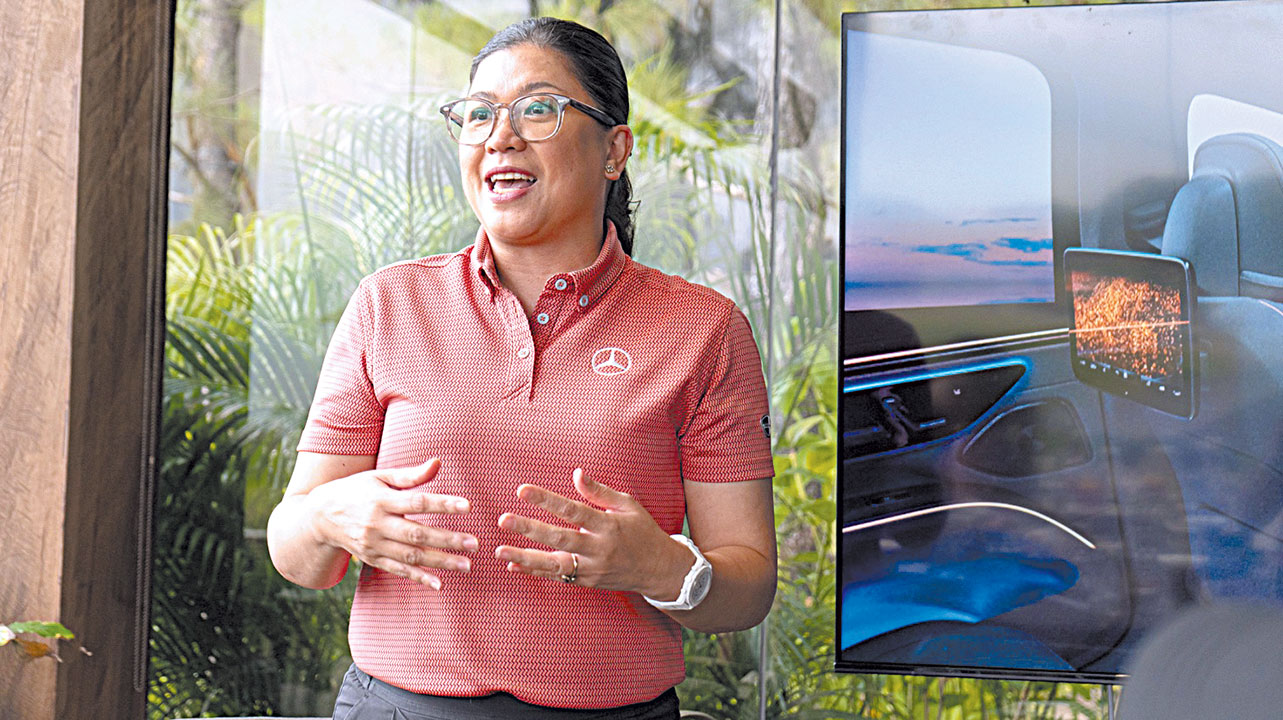
Mercedes-Benz Philippines General Manager for Distribution and Retail Maricar Parco with the EQE (left) and EQB — PHOTO BY KAP MACEDA AGUILA

BEV aspirations continue to drive Mercedes-Benz Philippines

By Kap Maceda Aguila

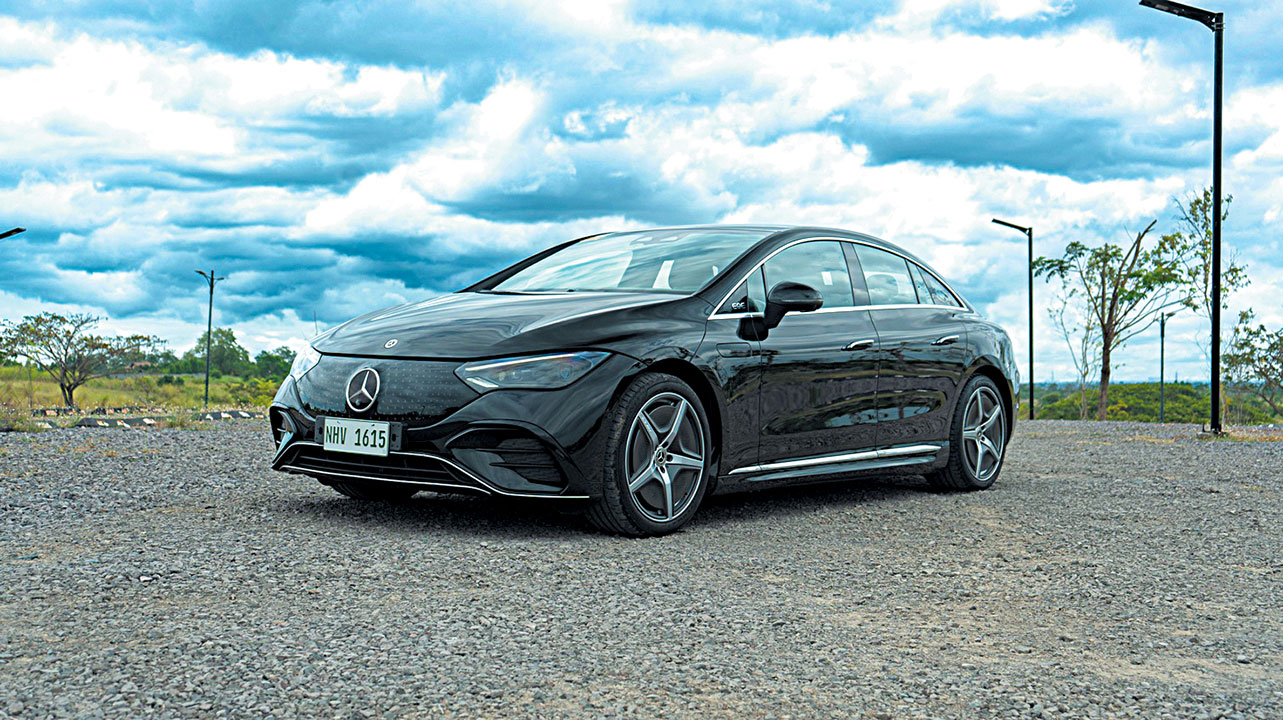
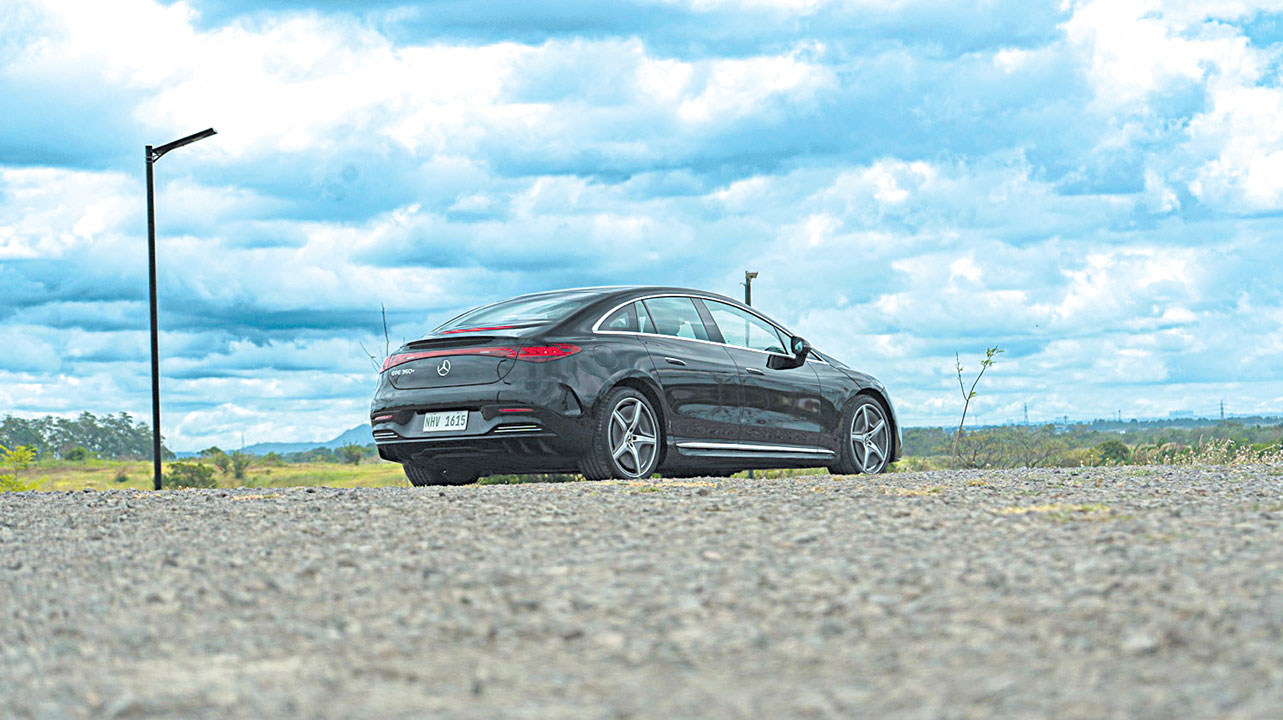
A BRIEF SOUTHWARD drive aboard two Mercedes-Benz battery electric vehicle (BEV) models comprised an exclusive “Sustainable Luxury in Motion” activity with media recently. Inchcape Philippines, distributor of the Stuttgart-headquartered brand, sought to bring to the fore its BEV offerings via the EQE sedan and EQB SUV through a ride-and-drive activity to and from its flagship dealership in Greenhills to Dasmariñas, Cavite.

“Mercedes-Benz is proud to have the widest range of BEVs in the EQ. We have six models, starting from the EQA, EQB, the EQE, the last with sedan and SUV versions, and the top-of-the-line EQS — also coming in sedan and SUV versions,” said Mercedes-Benz Philippines General Manager for Distribution and Retail Maricar Parco. “We introduced the EQ line about two years ago, and we’re very happy to share that we have now about 200 proud owners.”

Currently, Mercedes-Benz BEVs account for 12% of the brand’s sales in the Philippines, added Ms. Parco. The target is to grow that number to 50%. She revealed that they plan to bring in plug-in hybrid electric vehicle (PHEV) models in the second half of the year.

Significantly, toward the end of Q2 or at the start of Q3, the much-awaited electric version of the iconic G-Class: The Mercedes-Benz G 580 with EQ Tech (which shows a departure from the traditional appellation style), will be launched.

For the drive, Inchcape Philippines conscripted the Mercedes-Benz EQE 350+. The model outputs 215kW and 565Nm, and musters a zero-to-100kph time of 6.4 seconds. The rear wheels drive the vehicle, motivated by a 90.5-kWh battery. WLTP standard testing reveals maximum range of 644km to 682km. Meanwhile, the front-wheel-driven Mercedes-Benz EQB 250+ boasts 140kW and 385Nm of output from its 70.1-kWh battery — helping realize a standstill-to-100kph time of 8.9 seconds and a WLTP-certified range of 422km to 473km. The entry point to the EQ line, the EQB 250, was also among the test units. This one can deliver a decent 450 kilometers on a fully charged battery.

The EQ models of Mercedes-Benz have gotten somewhat mixed reviews — mainly because of their radically different design versus its internal combustion engine (ICE) counterparts. “Quality is always the priority in Mercedes-Benz, along with safety and the design concept,” submitted Mercedes-Benz Philippines Assistant Vice-President for Product Planning and Training Benjamin Bautista. “Mercedes-Benz is also creating a separate image for its EQ line, as we are aware that we have purist customers in our core products in the E-Class and S-Class.”

He hopes that creating a new image for the EQ line will hopefully result in a larger market for these models. “However, it doesn’t stop us from perfecting our core values: ease of use, love, respect, and trust — while innovating toward wider electrification in the future,” Mr. Bautista stressed. Part of this future, he explained, will be PHEVs and range extended electric vehicles (REEVs).

Even as Mercedes-Benz continues to pin its hopes on its slew of full-electric offerings, we will see if the German automaker comes up with the next big thing to possibly follow in the footsteps of its EQs — possibly finding more resonance with a growing market that is becoming increasingly open and cognizant of the benefits of the electric format.