Home Blog Page 1145

Condo oversupply a sign of policy disconnect as affordable housing backlog widens

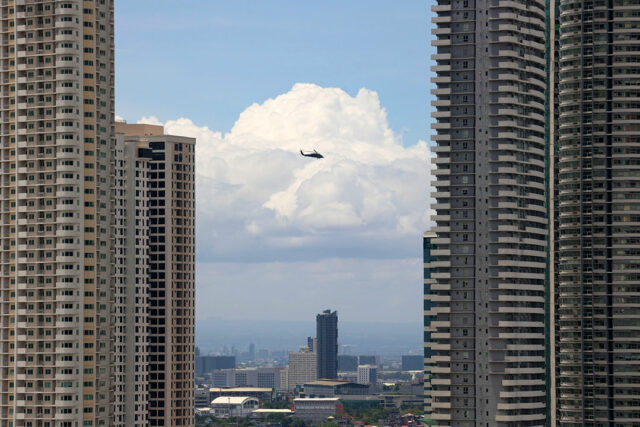
Condominium buildings are seen in the Ortigas business district, April 4, 2025. — PHILIPPINE STAR/MIGUEL DE GUZMAN

PHILIPPINE HOUSING policy is likely to be encouraging the wrong activities, judging by the condominium oversupply, which is taking place simultaneously with a backlog in affordable housing, a government think tank said.

“About 64% of Filipinos are between the ages 15 to 64. This is an opportunity for government to come up with a framework on how to serve the housing needs of this population,” according to Marife M. Ballesteros, vice-president at the Philippine Institute for Development Studies.

“We have a rising backlog in the midst of the oversupply of condominiums and problems with vacancy rates in socialized housing. And therefore, the question is: are we doing the right thing in terms of policies?” she said at a virtual briefing.

The Philippines faces a housing deficit of 6.5 million units, which could rise to 22 million by 2040 if not addressed, according to UN Habitat.

On the other hand, mid-market and upscale condominiums in the Philippine capital are in oversupply, with 81,400 unoccupied units, Leechiu Property Consultants said.

In their “Demographic Trends and Housing Patterns in the Philippines” study, Ms. Ballesteros and co-authors Jenica A. Ancheta and Tatum P. Ramos cited the need to address the demand for affordable housing.

“The difficulty to access housing also implies a slowdown in the rate of new household formation. Children, relatives staying longer in parental homes can lead to congestion as larger sized homes are even more difficult to attain in the market.”

Heads of household aged 25 to 34 have declined from 28% in 1980 to 20% in 2020. In contrast, households headed by those aged 35 to 64 have increased.

“From a housing perspective, these are households that own rather than rent, and have a lower demand for large-sized housing,” according to the authors.

Single-person households also saw a significant increase, more than doubling from 2.9% in 1990 to 9.1% in 2020.

“The housing problem in cities actually can endanger family institutions and impact children’s psychosocial development, which could be a cause of rising health and social problems in society,” Ms. Ballesteros said. — Beatriz Marie D. Cruz

YouTube Shopping launches in Philippines

YOUTUBE

YOUTUBE and Shopee launched YouTube Shopping in the Philippines on Thursday, making it the sixth Southeast Asian market where the feature has been made available.

Sapna Chadha, vice-president for Southeast Asia and South Asia Frontier at Google Asia-Pacific, said video now consists of about a fifth of e-commerce.

“We’ve actually also seen that 20% of all e-commerce is video. So that is 20% of the entire e-commerce market,” she said.

“That is the big driver of our investment into this space, and we’ve also seen that profits are on the rise in this space,” she added.

She said the creator economy in Southeast Asia is driving the trend.

“YouTube creators are seen as not just entrepreneurs and influencers, but are seen as trusted advisors,” she added, noting that 98% of users globally are likely to trust YouTube creator recommendations.

Citing Ms. Chadha, Shopee Philippines Head Vincent Lee said YouTube and Google are among the most trusted platforms by e-commerce shoppers in the Philippines making the integration beneficial for Shopee users.

“The way it integrates provides a very seamless experience for the buyers. So, the creators can tag the products now, and the buyers now have a seamless experience and reliable experience for checkout,” he said.

He added that the feature is particularly important for categories that naturally require a lot of testimony or product try-on.

“Beauty, skincare, technology, and gadgets… are all natural categories where people want to have a look and feel and have an experience looking at the product in an authentic way,” he said.

“The content creator plays a big role in helping the buyers to make these decisions,” he added.

Asked if the partnership could be a growth driver for Shopee, he said, “Yes, of course. I think overall because of the reach of Google and YouTube, we do believe that this allows not just Shopee but also brands and sellers and creators to reach more audiences.” — Justine Irish D. Tabile

ADB 2024 Philippine package tops $6 billion

BW FILE PHOTO

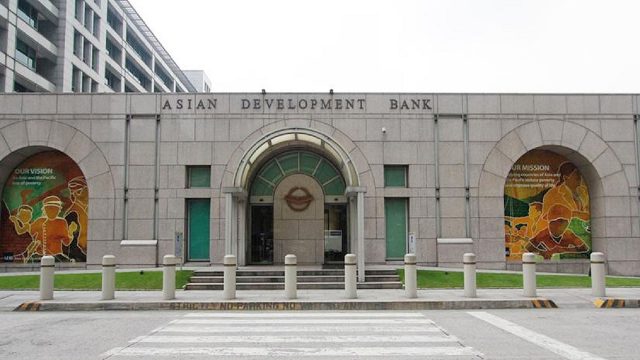
THE PHILIPPINES received $6.02 billion in financial assistance from the Asian Development Bank (ADB) in 2024, the second-biggest recipient among the bank’s partner countries after India with $7.26 billion.

The other top recipients were Indonesia ($3.28 billion), Bangladesh ($3.21 billion), Pakistan ($2.99 billion), and Uzbekistan ($2.35 billion).

In its annual report released on Thursday, the bank reported that commitments to the Philippines, consisting of loans, grants, and co-financing programs, fell 28.16% year on year.

The Philippines had been the biggest recipient of financial assistance from the ADB in 2023.

Among the approved loans last year were the $1.19-billion first tranche of the Laguna Lakeshore Road Network facility and the $500-million support for the subprogram 1 of the public financial management (PFM) reform program.

The nearly 30-kilometer Laguna Lakeshore expressway aims to cut travel time between Taguig City and Calamba, Laguna.

Meanwhile, the PFM program is expected to improve national budget frameworks, boost local government capacity, and establish a PFM system in the Bangsamoro Autonomous Region in Muslim Mindanao.

Other loans include $474.6 million for subprogram 2 of the Climate Change Action Program and $30 million for the Project Development and Monitoring Facility managed by the Public-Private Partnership (PPP) Center to develop up to 35 new projects by 2029.

The climate-related policy-based loan will “finance the deployment of climate technologies and mobilize investments in renewable energy, energy efficiency, climate-resilient agriculture, and nature-based solutions.”

Another PPP-related program was the $2.1 billion support for the modernization of the Ninoy Aquino International Airport.

In addition, the Philippines also received $1.55 billion for co-financing projects and $6.6 million for technical assistance from the ADB last year.

In response to the housing shortage, the ADB committed a nonsovereign loan of $5 million for the property technology platform Lhoopa, Inc. to build affordable housing in Cebu, Davao, and Luzon.

The ADB also said that it launched new country partnership strategies for the Philippines, Cambodia, and Laos.

“Extending to 2029, the Philippine strategy prioritizes human development, economic competitiveness, quality infrastructure, and disaster resilience,” it said.

ADB Philippines Country Director Pavit Ramachandran has said the bank is hoping to approve loans worth $4 billion for 2025.

In the same report, the ADB said its overall commitments amounted to $24.30 billion, with $14.87 billion for co-financing. 

“With our increased financial firepower and a sharper strategic focus, the ADB is turning commitment into concrete results,” ADB President Masato Kanda said.

“We are financing more affordable and efficient energy and transport systems, supporting a vibrant private sector that creates better-quality jobs, and strengthening basic services in education, health, and social protection. Together with our partners, we are building a brighter future for the next generation in Asia and the Pacific,” Mr. Kanda added. — Aubrey Rose A. Inosante

Electric vehicles, infotainment systems vulnerable to cyberattacks — Trend Micro

REUTERS

CYBERSECURITY needs to be upgraded for electric vehicles (EVs) and in-vehicle infotainment systems, according to cybersecurity company Trend Micro.

“The Philippines faces cybersecurity gaps due mainly to a lack of strict regulations and security frameworks for connected vehicles and EV infrastructure. The EV ecosystem continues to expand, and with it, its attack surface,” Myla Pilao, director of Trend Research, said in an e-mail.

About 4% of the estimated 500,000 vehicle purchases this year are expected to be EVs, Chamber of Automotive Manufacturers of the Philippines President Rommel R. Gutierrez said in February.

As more countries adopt EVs, attackers are likely target EV components and in-vehicle infotainment. This could lead to compromised vehicle controls, data breaches, and potential financial losses.

“Attackers will most likely target personal data, GPS (global positioning system) location, payment credentials, and remote access controls, which are the tip of the iceberg regarding the data collected by used modern vehicles,” Ms. Pilao said.

In the last decade, about 83% of reported automotive-related vulnerabilities worldwide involved onboard components like operating systems and chipsets, according to a report by VicOne, a subsidiary of Trend Micro.

To gain unauthorized access, attackers usually exploit weak authentication, outdated software, or unsecured communication protocols to gain unauthorized access, Ms. Pilao said.

Once inside, attackers can deploy malicious code to control vehicle functions, steal sensitive data, or disrupt operations, while remaining undetected.

Artificial intelligence (AI) can also be used to attack EVs and in-vehicle infotainment systems.

“While AI can enhance security, researchers have found that AI-powered threats could manipulate sensor data in autonomous vehicles and bypass security measures,” according to Ms. Pilao.

Car companies and vendors must deploy stricter supplier evaluations, and conduct security assessments and vulnerability scans, Trend Micro said.

For their part, vehicle owners must ensure regular software updates and multi-factor authentication.

EV charging stations are also vulnerable as they are connected online, and interact with payment systems and power grids.

“If not properly secured, they could be exploited to access in-vehicle systems, steal payment information, and disrupt charging processes,” the company said in its Trend Micro Security Predictions for 2025 report.

Derrick John Tolentino, vice-president and general manager at EV solution startup EVOxCharge, said it is implementing robust security measures through multiple protection layers.

“While industry frameworks like the NIST Cybersecurity Framework and ISO 21434 provide guidance, the rapid expansion of charging networks introduces new security challenges,” he said in an e-mail.

EVOxCharge is a unit of logistics company Transnational Diversified Group. It supplies, operates and maintains EV charging infrastructure. 

Its practices include end-to-end encryption, multi-factor authentication, regular software updates and pricing, network segmentation, threat monitoring and incident response, and secure payment processing. — Beatriz Marie D. Cruz

Hotel manpower plan must take migration into account, industry says

FREEPIK

THE Philippine hotel industry will need to develop a human capital development plan to address the likely migration of many qualified workers, the Philippine Hotel Owners Association, Inc. (PHOA) said.

“We want to craft a Philippine Hotel Industry Human Capital Development Plan. Because there’s no such document right now,” PHOA Executive Director Benito Bengzon told reporters on Wednesday.

He cited the prevalence of industry workers seeking employment in cruise ships, or in places like Dubai, Hong Kong, and Singapore.

“We have to have a document that will tell us what the requirements are. And we’re going to have to crunch the numbers because we cannot expect all the graduates to work here,” he added.

He said some hotel workers will also choose to work in other industries, such as in business process outsourcing.

“We saw it during the pandemic. So this is going to be a very important document because it will tell us what the requirements are for the hotel industry based on the Philippine Hotel Industry Strategic Action Plan (PHISAP) 2023-2028,” he added.

Launched in October last year, PHISAP is a five-year roadmap designed to enhance the competitiveness, sustainable development, and expansion of the hotel industry.

He said a human capital development plan will allow the industry to ensure that all hotels opening in the next five to 10 years will have a qualified pool of manpower to recruit from.

Meanwhile, he said PHOA is seeking to attract more investment at its Philippine Hotel Connect 2025 conference.

Scheduled for July 24-25, event attendance is projected at 300 delegates and 50 exhibitors.

“It will have two components: the conference and the exhibition. And the overall objective is to promote investments in tourism and hotels as part of our commitment to help the Department of Tourism,” he said.

“The second is on the part of our members, the hotel owners, for them to explore other investment opportunities in different forms, whether it’s direct equity investment in other parts of the Philippines or partnering with other groups,” he added.

He said the event will help expand the capacity of the accommodations industry and upgrade the quality of facilities and services in line with the National Accommodation Standards. — Justine Irish D. Tabile

German businesses in PHL ‘cautiously optimistic’

LUFTHANSA-TECHNIK.COM

MOST GERMAN companies operating in the Philippines are confident about business prospects in the next 12 months, according to the German-Philippine Chamber of Commerce and Industry (GPCCI).

“German-Philippine companies remain cautiously optimistic about their business outlook over the next 12 months, identifying the Philippines as a strategic destination for growth despite ongoing global and domestic challenges,” GPCCI said.

Citing results of the chamber’s Spring 2025 World Business Outlook survey, GPCCI said 65% of the German firms are expecting improved business developments over the next 12 months.

Meanwhile, 58% of the 130 companies rated their current business situation positively.

The survey also found that 44% of firms plan to raise their levels of investment, 47% see staffing growth, while 49% believe that economic conditions will remain stable in the year ahead.

“This continued confidence in the Philippine market reflects the deepening strength of German-Philippine business ties,” GPCCI Policy and Advocacy Chairperson Marian Majer said in a statement on Thursday.

“But with that optimism comes the clear need for policy consistency and regulatory stability to sustain momentum,” he added.

According to the survey, German-Philippine companies are concerned with regulatory uncertainty, demand fluctuations, rising raw material costs, and the impact of international trade dynamics such as tariffs and supply chain shifts.

“Economic policy uncertainty emerged as the leading risk, driven by challenges such as inconsistent regulations, bureaucratic inefficiencies, and unpredictable policy shifts,” GPCCI said.

“Businesses also pointed to fluctuating demand and rising raw material costs as critical issues that could impact stability and planning,” it added.

Businesses are also concerned about the impact of US tariffs, the potential for a global recession, tax audits, Philippine elections, political instability, and port congestion.

“Businesses are clearly taking a cautious view, balancing opportunity with the need to manage risks,” GPCCI President Marie Antoniette Mariano said.

“Supporting long-term business confidence will depend on consistent, forward-thinking policies that reduce uncertainty and encourage investment. There’s a strong expectation that continuity and clarity in economic direction will remain a priority in the months to come,” she added.

On US tariffs, GPCCI said German firms have not yet seen any direct operational impact and noted the opportunity for greater trade between the European Union (EU) and Southeast Asia.

However, the companies see the new tariff measures disrupting supply chains, raising import costs, and product delivery cancellations.

Meanwhile, the companies are waiting on the prospective EU-Philippines Free Trade Agreement (FTA) in planning their expansions and investment, noting that the FTA could support hiring growth.

“The EU-Philippines FTA is poised to drive economic growth and enhance the business landscape in the Philippines,” GPCCI Executive Director Christopher Zimmer said.

“In the face of global trade realignments, the FTA can offer businesses from the EU a timely opportunity to strengthen their supply chains, reduce exposure to external shocks, and plan more sustainably for the long term,” he added. — Justine Irish D. Tabile

Rice milling yields rising with mechanization

RCEF.PHILMECH.GOV.PH

THE Department of Agriculture (DA) said the rice processing systems introduced by the Philippine Center for Postharvest Development and Mechanization (PhilMech) have boosted milling recovery rates to 63-65% from 55-58% previously.

“This improvement means that for every 100 sacks of palay, 63 sacks of rice are now produced instead of just 55 at minimum,” the DA said

PhilMech has distributed 104 rice processing systems, it added.

Mechanization is supported by the Rice Competitiveness Enhancement Fund (RCEF), which will have annual budget of P30 billion starting in 2026 following amendments to the Rice Tariffication Law.

PhilMech expects to complete the delivery and installation of 47 more units covered by first phase of the RCEF program.

The DA said PhilMech in 2024 deployed 5,030 units of rice production and post-harvest equipment, including tractors, seeders, harvesters, dryers, and milling systems.

Of these, 2,450 were funded by the 2024 budget and 2,580 were procured with funds carried over from previous years.

PhilMech’s mechanization initiative aims to lower rice production costs by up to P3 per kilo and reduce post-harvest losses by as much as 5%.

At the end of 2024, PhilMech procured 32,694 machines with RCEF support and distributed 30,549 units to 7,493 beneficiaries.

“The remaining deliveries and installations are scheduled for completion by June 2025,” the DA said. — Kyle Aristophere T. Atienza

Eala in collision course against No. 2 Świątek at Madrid Open

ALEX EALA — FACEBOOK.COM/MUTUAMADRIDOPEN

ALEX EALA is cherishing her precious time to slug it out against the world’s giants, including world No. 2 and reigning champion Iga Świątek of Poland once again in the Madrid Open as part of her preparations for the French Open next month.

Ms. Eala, in her second straight WTA 1000-level tourney in Spain after a stellar Miami Open run, found herself in a collision course against the Polish superstar anew, making it another stage to earn her stripes in a learning curve or add another feather in her cap in another upset.

The 19-year-old Filipina sensation pulled the rug from under the fancied Ms. Świątek, 6-2, 7-5, in the Miami Open run quarterfinals last month as part of her giant-slaying spree en route to a historic Final Four stint.

In Madrid, she took care of business against Bulgaria’s Victoriya Tomova, 6-3, 6-2, for another shot at Ms. Świątek in an early Round of 2 clash still being played at press time.

And she’s not in the illusion of an easy repeat of her stunning conquest last time out against whom she considers an idol.

“Even if it’s against the same player, every time, it doesn’t matter if I play her in the same time in Miami next year or in Madrid next year, it’s going to be a different story than the last one,” warned Ms. Eala.

Ms. Świątek, like in Miami, is the No. 2 seed in Madrid, a clay tourney she owns given her four Roland Garros crowns. She gained a first-round bye as the top-ranked player and defending titlist en route to the Round of 64.

“I think Iga (Świątek) is an all-court player. I think she plays well on hard, she plays well on clay, she plays well on grass. But I definitely think that each match is a different story,” added Ms. Eala, now the No. 72 player in the Women’s Tennis Association (WTA) rankings.

Ms. Eala started at No. 140 prior to the Miami Open before stringing wins against three Top-25 players, three former Grand Slam winners to become the first ever WTA semifinalist.

Win or lose against Ms. Świątek though, Ms. Eala is poised to meet her anew in the French Open, where she is eligible for direct invite being inside the Top 100 rankings now.

And who’s to say the lefty wunderkind could not pull off another miracle? — John Bryan Ulanday

Gin Kings brace for tough dogfight against Beermen

BARANGAY GINEBRA GIN KINGS — FACEBOOK.COM/PBAOFFICIAL

Games on Friday
(Smart Araneta Coliseum)
5 p.m. – Blackwater vs NorthPort
7:30 p.m. – Ginebra vs San Miguel

BARELY HAVING TIME to shake rust and get a rhythm coming off a 26-day break, Barangay Ginebra takes a major test just two games into its PBA Philippine Cup campaign.

After encountering little resistance from skidding Terrafirma (1-3) in Wednesday’s 101-80 opening romp, the Gin Kings are in for a dogfight against San Miguel Beer (2-1) on Friday at the Smart Araneta Coliseum.

“It wasn’t a great game (against Terrafirma) but we played solid. We’re a little sloppy at times but it’s our first game. Hopefully, we can tighten things up and be better in our second game. We need to be going up against San Miguel who is always the All-Filipino favorite,” said coach Tim Cone. “We know we have work cut out for us on Friday.”

While the Gin Kings are still getting their feet wet after losing its marathon duel with TNT in the Commissioner’s Cup finals on March 28, SMB has had the benefit of a good workout from the early hostilities of the season-ending conference.

That’s something else the June Mar Fajardo-bannered Beermen can use to their advantage in the 7:30 p.m. marquee encounter where solo second behind pacesetting Magnolia (3-0) is at stake.

“The problem with coming late into the conference is you’re not as sharp as some of the other teams,” noted Mr. Cone, whose team reassembled for the Philippine Cup training camp only last week.

“You do get a longer break which is important for our guys to be able to rest their bodies. But still, when you get back, the games come a lot faster and you’ve got to make up that time.

“Also, you’re playing teams who have a rhythm already and made some adjustments to their game, to the rotations. And we haven’t been able to do that,” he added.

More than match-fitness, the Beermen are also bringing into the table a strong determination to rebound after their 98-95 overtime heartbreaker to the Hotshots on Holy Wednesday.

NorthPort (1-1) and Blackwater (0-2) engage at 5 p.m. in a clash of squads in need of boosting wins. — Olmin Leyba

Cavs ride 3-point barrage to another win over Heat

DONOVAN MITCHELL scored 17 of his 30 points in the fourth quarter and Darius Garland contributed 21 points and nine assists as the Cleveland Cavaliers held on for a 121-112 win over the visiting Miami Heat on Wednesday in Game 2 of their Eastern Conference first-round series.

Cleveland holds a 2-0 lead in the best-of-seven set heading to Game 3 on Saturday in Miami.

After Miami, which trailed by as many as 19 points, pulled within 105-103 on a Tyler Herro jumper with 3:11 remaining. Donovan Mitchell answered with a midrange basket and drained a 32-footer off a Jarrett Allen steal to give top-seeded Cleveland some breathing room at 110-103.

“In the fourth quarter when it’s a two-point game, I had to find a way,” Donovan Mitchell said. “I just tried to put pressure on the defense. That’s my job. Those are the moments.”

Miami’s Davion Mitchell said, “He’s a superstar for a reason. It’s kind of like there is nothing you can do in the NBA sometimes when someone is hitting tough shots like that.”

Miami got the deficit down to five by scoring on its next two possessions, but the Heat missed their next two shots before Evan Mobley sank two free throws with 25.7 seconds left to put Cleveland up 115-108.

“I love the fact that the game happened like this,” Donovan Mitchell said. “I’d rather win like this than by 20 like we did the other day. The biggest thing is we responded when we needed to and closed out the game.”

Cavaliers coach Kenny Atkinson added, “When they cut it to two, you could feel the game slipping a little bit, but we kept our composure. Obviously, it helps when you’ve got Donovan Mitchell. That was one of those ‘superstar takes over games’ (moments).”

Cleveland made 11 3-pointers in the second quarter, a team playoff record for any period. Former Miami forward Max Strus made three of them, and Mitchell, Sam Merrill and De’Andre Hunter had two apiece. Mitchell finished 7 of 10 from beyond the arc.

“There were four of them that we defended really well, but once it got to seven or eight, I think we got discouraged a little bit,” Miami coach Erik Spoelstra said.

Herro collected 33 points, six rebounds and five assists for the Heat, who lost the first two games in a postseason series for the first time since the 2021 first round against the Milwaukee Bucks. Bam Adebayo had 11 points, 14 rebounds and nine assists, and Haywood Highsmith scored 17 points and made 5 of 6 3-point attempts.

Cavaliers All-Star Evan Mobley had 20 points and six rebounds, and Hunter added 12 points after going scoreless in the opener. Cleveland made 22 3-pointers, three shy of the league record.

Strus had 12 points and Mobley and Donovan Mitchell each scored 10 in the first half as Cleveland built a 68-51 lead, despite Herro’s 17 points for the Heat. The Cavaliers held 19-point advantages in the second and third quarters. — Reuters

Determined Lakers

Unshakable confidence definitively carried the Lakers to victory the other day. Even as they suffered an embarrassing setback courtesy of the Timberwolves in their playoff opener, they continued to deem themselves the favorites to advance to the next round. And so determined were they to show their true colors that even their practice session on the eve of Game Two smacked of aggression and purpose. Little wonder, then, that they found themselves in control for the last 45 minutes and change of the set-to, ultimately knotting the series at a match apiece.

If any surprise came with the turn of events, it was that the Lakers stamped their class on the defensive end of the floor. Notwithstanding their regular season predilections highlighting the scoring capabilities of their personnel, they managed to claim Game One by holding the Timberwolves to 85 points, a full 29 below average. Given their relative lack of size, anybody who bet on them to win via containment would have been branded a fool. And they really didn’t do themselves any favors by putting up a mere 94 — further underscoring how much they went against type in crafting the outcome.

To be sure, the Lakers haven’t really gained headway insofar as the best-of-seven affair is concerned. All they did the other day was take care of business, thereby affording them an opportunity to regain homecourt advantage on Saturday. In other words, their work remains cut out for them. And if there’s anything certain in Game Three, it’s that the Timberwolves will be primed to return the favor in front of some 19,000 fans at the Target Center; if nothing else, the three-day turnaround provides ample time for adjustments and counter-adjustments.

That said, there can be no doubting the Lakers’ commitment to live up to expectations. They didn’t have their best the other day, especially in the crunch. And still they prevailed, knowing well enough to lean on sheer determination. The alternative — which would have put them in a deep hole — was simply unacceptable. Now, they’re set up for success — that is, for as long as they lean on their strengths and minimize their frailties. Else, the Timberwolves will pounce.


Anthony L. Cuaycong has been writing Courtside since BusinessWorld introduced a Sports section in 1994. He is a consultant on strategic planning, operations and human resources management, corporate communications, and business development.

Trump’s U-turns on Powell, China follow dire economic warnings

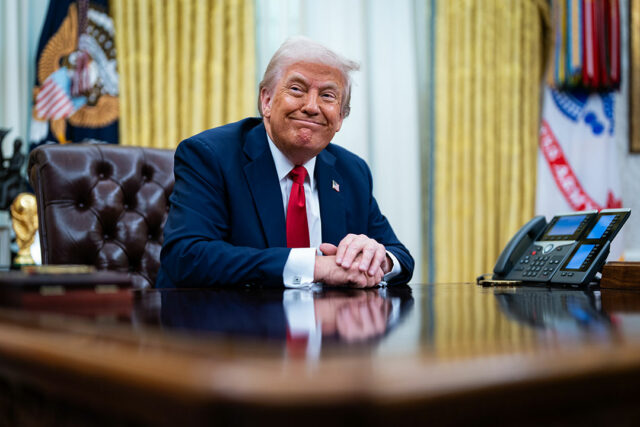
US President Donald J. Trump — BLOOMBERG

CONFRONTED with fresh warnings from financial markets, business leaders and top advisers, President Donald J. Trump this week eased off on two of his frequent punching bags: Jerome H. Powell and China.

Mr. Trump entered office with a steadfast desire to reshape the global economy. But his resolve has appeared to waver in the face of turmoil in equities and bonds and pleas from powerful executives who fear his sweeping tariffs and interference with the US Federal Reserve could set off an economic calamity.

Mr. Trump on Tuesday said he had no intention to fire Mr. Powell — despite days of criticism over the central bank’s policies — and said he believed a deal with Beijing would significantly reduce the sweeping tariffs he’s posted on Chinese goods. After a report that the US would be willing to phase in lighter tariffs on Beijing over five years on Wednesday, Mr. Trump told reporters that China was “going to do fine” once talks had settled.

Mr. Trump’s turnabout eased investors’ concerns that had fueled a weeks-long sell-off.

Still, the whiplash underscores that markets and the economy are beholden to the whims of the US president unlike ever before — a sign that more turmoil lies ahead.

Mr. Trump made his about-face on Tuesday, saying he’d be willing to “substantially” pare back his 145% tariffs on China. He turned down his aggressive rhetoric a day after meeting with executives from Walmart, Inc., Home Depot, Inc. and Target Corp., who said import taxes could disrupt supply chains and raise the prices of goods, according to people familiar with the matter. Warnings about the potential for empty store shelves within weeks seemed to resonate with Mr. Trump, one of the people said.

“We’re going to have a fair deal with China,” Mr. Trump told reporters on Wednesday.

Later, Mr. Trump mused that he could announce tariff rates for countries, including China, “over the next two to three weeks.” At the same time, Mr. Trump said the deadline would ultimately depend on whether China engaged.

“Depends on them,” Mr. Trump said. “We have a situation where we have a very, very great place. It’s called the United States of America, and it’s been ripped off for years and years.”

The Wall Street Journal reported Wednesday that administration officials are considering plans to slash tariffs on Chinese imports. Under the proposals, the range could come down to between 50% to 65% as a result of a tiered approach that would see 35% levies on items not considered critical for national security and 100% on those that are, gradually implemented over five years, the paper reported.

Mr. Trump is known to change his mind and his posture could shift yet again. And the reported offer — which may have been intended as a trial balloon to entice China back to the table — wouldn’t happen without action in the talks, a White House official said.

Treasury Secretary Scott Bessent echoed that caution on Wednesday, saying the US was not looking to unilaterally lower tariffs and that a full trade deal could take two to three years. His remarks pared some of the earlier stock gains.

“There will be no unilateral reduction in tariffs against China. The president has made it clear China needs to make a deal with United States of America, and we are optimistic that will happen,” White House Press Secretary Karoline Leavitt said on Fox News later Wednesday.

Mr. Bessent, when asked who the president consults on tariff and trade policy, said Mr. Trump is “constantly soliciting views” from business leaders, citing the visit from the major retailers and revealing that “the three largest German auto companies were in on Friday.”

The White House has yet to formally launch tariff talks with the Chinese government, though Mr. Trump said “everything’s active” when asked whether he was actively engaging with China.

“We’re going to be making money with everyone, and everyone’s going to be happy,” Mr. Trump said Wednesday. “We’re no longer going to be the country that’s ripped off by every country in the world.”

Mr. Trump’s efforts to will a China negotiation into reality dovetailed with his public show of support for Mr. Powell, at the urging of top advisers and allies.

Mr. Bessent recently advised Mr. Trump to indicate he was not looking to dismiss Mr. Powell and to make clear to markets he believes in an independent central bank, according to a person familiar with the conversations. Commerce Secretary Howard Lutnick has also been a voice of caution on the Fed, the Wall Street Journal reported.

Asked if he had spoken to Mr. Powell, Mr. Trump told reporters on Wednesday that he had not called the Fed chair but suggested he may do so.

“I might call him. I haven’t called him, but I believe he’s making a mistake by not lowering interest rates,” he said.

The pivot was a signal he’s become more sensitive to market movements and entreaties from advisers with Wall Street pedigrees, such as Mr. Bessent and Mr. Lutnick, after hawkish White House trade adviser Peter Navarro played a heavy hand in his April 2 tariff rollout.

Americans’ outlook for the economy has soured amid the uncertainties posed by Mr. Trump’s tariffs, with survey data showing a surge in expectations for future inflation. Many analysts have also taken a dimmer view of the US economy’s prospects, trimming their forecasts for growth and boosting those for inflation.

Mr. Powell has said the announced tariff increases have been larger than anticipated, and that the duties are likely to generate at least a temporary rise in inflation. He and other Fed officials have indicated they are willing to hold interest rates steady as they await clarity on how the tariffs are filtering through the economy.

“Our obligation is to keep longer-term inflation expectations well anchored and to make certain that a one-time increase in the price level does not become an ongoing inflation problem,” Powell said last week at the Economic Club of Chicago.

Even before the tariff announcements, Fed officials had taken an increasingly cautious view on inflation, as it hovered stubbornly above the central bank’s 2% target. Inflation as measured by the Fed’s preferred gauge was 2.5% in the year through February.

At the same time, the manufacturing industry is showing some weakness amid the fallout from tariffs. US manufacturing activity shrunk last month, according to the Institute for Supply Management. In New York, factory activity contracted in April for the second straight month, New York Fed data showed.

Mr. Bessent told a closed-door investor summit Tuesday that the world’s two largest economies will have to find ways to de-escalate and that the standoff was unsustainable. Mr. Trump later followed by saying that “we’re going to be very nice and they’re going to be very nice, and we’ll see what happens.”

Mr. Trump also said he didn’t see the need to “play hardball” with Chinese leader Xi Jinping and that during discussions he wouldn’t raise COVID-19 — an issue that is politically sensitive in Beijing. The White House recently launched a website that suggested the virus came from a lab in China, irking the nation’s diplomats.

Foreign Ministry spokesman Guo Jiakun said “the door for talks is wide open,” at a regular press briefing in Beijing on Wednesday, reiterating that trade wars don’t have any winners. While Mr. Trump has repeatedly sought to get Mr. Xi on the phone, China wants the two sides to work out the contours of an agreement before the leaders speak.

Asked by a reporter on Wednesday what the China tariffs have accomplished, Leavitt said “leverage” to bring countries to the negotiating table. When pressed about the lack of Chinese concessions, Ms. Leavitt responded: “Have some patience, and you will see.” — Bloomberg