Home Blog Page 1104

Trump shock spurs Japan to think about the unthinkable: nuclear arms
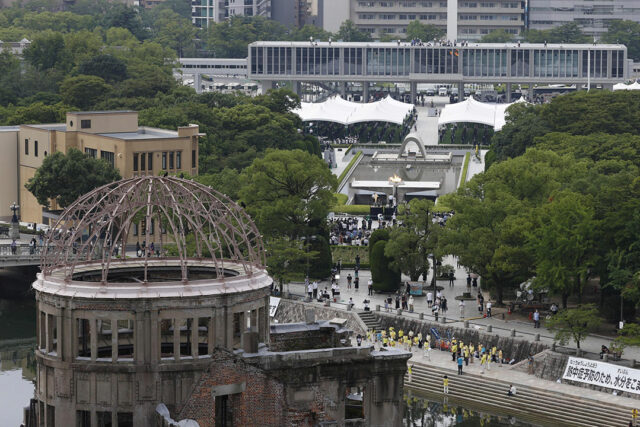
THE Atomic Bomb Dome is seen at the Hiroshima Peace Memorial Park in Hiroshima, western Japan, Aug. 6, 2020. — KYODO/VIA REUTERS

TOKYO — It was at an 18th century Georgian manor house outside London that Japanese lawmaker Rui Matsukawa began to have serious doubts about America’s commitment to defending her country.

Ms. Matsukawa, a former deputy defense minister, traveled in March to historic Fordham Abbey for a top-level bilateral conference. At the estate, now home to a Japanese-owned sake brewery, she said she learned from British lawmakers, diplomats and business leaders that a tectonic shift in their thinking was underway.

US President Donald J. Trump was openly berating America’s European allies and tilting toward Russia. And Europe had “awakened,” she said, to the fact it could no longer rely so heavily on America and must take more responsibility for its security.

This was also true for Japan, currently the home to the largest overseas contingent of US troops globally, she realized. “You can’t really take the US presence for granted,” said Ms. Matsukawa, a member of the ruling Liberal Democratic Party’s (LDP) influential national security policy council.

Ms. Matsukawa is part of a contingent of senior Japanese lawmakers who are beginning to think the unthinkable in the only nation to have suffered an atomic bomb attack: Surrounded by nuclear-armed neighbors China, North Korea and Russia, Japan too might have to deploy those weapons of mass destruction.

“Trump is so unpredictable, which is his strength maybe, but I think we have to always think about Plan B,” Ms. Matsukawa said in an interview at her Tokyo office. “Plan B is maybe go independent, and then go nukes,” she added, raising the possibility of Japan reducing its reliance on American security guarantees.

The Trump shock is also reverberating in neighboring South Korea, currently protected under the US nuclear umbrella like Japan. Up to 75% of the South Korean public is in favor of the country building its own nuclear weapons, polling shows. The election of left-center President Lee Jae Myung in June has dampened some of the more overt talk of nuclear weapons in Seoul. But even some in his Democratic Party are increasingly recognizing the need, should US security commitments falter, to achieve “nuclear latency” — possessing the means to quickly build a usable atomic arsenal.

Support in Japan for developing its own indigenous atomic weapons is smaller. Ms. Matsukawa, for instance, stresses that the US remains an important ally and says Tokyo needs to persuade the Trump administration that it is in America’s interest to defend her country and deter a crisis over Taiwan.

But interviews with a dozen Japanese lawmakers, government officials and former senior military figures reveal there is a growing willingness to loosen Japan’s decades-old pledge, formulated in 1967, not to produce, possess or host nuclear weapons in its territory — what is known as the “Three Non-Nuclear Principles.”

Among the Japanese public, too, opinion surveys show a greater readiness to rethink the nuclear stance. Hiroshima native Tatsuaki Takahashi, whose grandfather survived the atomic bomb attack on the city, told Reuters that views on the issue are changing as the tragedy of the past becomes more distant.

The shifting attitudes in Japan and South Korea, both key pillars of America’s decades of dominance in the Pacific, have been spurred by a growing loss of faith among US allies in Washington’s commitment to their security, in particular doubts about whether America will come to their aid in a conflict.

Mr. Trump’s election on an America-First platform and his spurning of America’s traditional allies has turbo-charged these concerns, interviews with lawmakers and officials in Japan and South Korea show. The president’s sowing of doubt about continued US support for NATO, imposition of tariffs on Japan, South Korea and Australia, and talk of absorbing Canada into the US, have spooked many of America’s long-time allies.

The White House did not respond to a request for comment, but a senior Trump administration official told Reuters that there are “no changes in US policy” toward Japan and South Korea. Mr. Trump and his senior national security aides have repeatedly stressed their commitment to allies in Asia.

Japan’s foreign ministry said the government considers the Trump administration’s commitment to the bilateral alliance “to be unwavering.” The defense ministry said Japan has “full trust in the US fulfilling its obligations using all types of capabilities, including nuclear forces.”

South Korea’s foreign ministry said its decades-old alliance with the US remains “the foundation of our diplomacy and has played a key role in maintaining peace and stability on the Korean Peninsula.”

China’s defense ministry said it opposed “any attempt to hype up the so-called ‘Chinese nuclear threat’ in an effort to smear and defame China and deliberately mislead the international community.” China, the ministry added, continues to adhere to a no-first-use policy — “not to use or threaten to use nuclear weapons against non-nuclear-weapon states or nuclear-weapon-free zones.”

RETHINKING THE NUCLEAR UMBRELLA
For Tokyo, which in recent years has taken historic steps away from its post-war pacifism to rebuild its military capabilities, the nuclear question is the final security taboo.

Eighty years ago this month, Hiroshima and Nagasaki were devastated by atomic bombs at the end of World War Two. Japan renounced war and vowed never to possess the military means to attack other countries. It also became a vocal proponent of nuclear disarmament.

Prime Minister Eisaku Sato, who formulated the Three Non-Nuclear Principles, won the Nobel Peace Prize in 1974 for this policy achievement and for signing the Treaty on the Non-Proliferation of Nuclear Weapons. Last year, Nihon Hidankyo, an organization established by survivors of the atomic bomb attacks, also won the prize.

Until now, Japan has relied on US nuclear weapons, which once laid waste to Nagasaki and Hiroshima, to deter modern-day threats. In a security arrangement called “extended deterrence,” Washington has committed to use the full range of its military capabilities, including nuclear, to defend Japan and other allies.

In recent years, however, Tokyo has begun to adopt a more robust stance in its bi-annual closed-door talks on this arrangement with the US, Reuters has learned. Tokyo has been delving into subjects such as how its conventional military could practically support US nuclear forces in a conflict, two former US officials with direct knowledge of the talks said.

This has included discussions on how Japan’s ongoing efforts to acquire new, longer range “counter-strike” missiles could allow it to take out enemy launch platforms to deter or assist in a nuclear conflict, said the two officials. They spoke on condition of anonymity due to the sensitivity of the talks.

The two sides have also explored how Japan’s surveillance and intelligence apparatus could support the US nuclear mission and chalked out a roadmap for how the two governments and militaries would coordinate in a nuclear emergency, the former officials added. These details have not been previously reported.

Japan’s foreign ministry declined to comment on the details of the talks. The defense ministry said Japan and the US “have been working to strengthen extended deterrence,” but declined to comment further. The State department said America’s “extended deterrence commitments” to Japan and South Korea “are ironclad.”

Ms. Matsukawa and three former senior military commanders said Tokyo should also prepare for the possibility of nuclear sharing, a concept that allows non-nuclear states to participate with its nuclear-armed allies in planning, training and use of nuclear weapons.

Belgium, Germany, Italy, the Netherlands and Turkey, for instance, have been hosting US nuclear weapons on their soil as part of NATO’s nuclear-sharing strategy. In the event of a nuclear war, these non-nuclear states could deliver those weapons to targets on behalf of the US, using their own aircraft. Before taking office, Japanese Prime Minister Shigeru Ishiba advocated for an Asian version of NATO that could include nuclear sharing.

Japan “has no intention” of revising its non-nuclear principles, the Liberal Democratic Party said in response to questions. But Mr. Ishiba has instructed the party “to examine Japan’s future security arrangements in Asia,” it said.

The foreign ministry said the government “does not consider nuclear sharing to be permissible.” Japan, it said, “will not possess nuclear weapons.” Mr. Ishiba’s office said the foreign ministry’s responses represented its views.

CONFIDENCE SHAKEN
Doubts about the reliability of American security guarantees didn’t start with Mr. Trump.

When the Obama administration didn’t respond to Chinese island-building and reclamation in disputed territories of the South China Sea, starting in 2013, it raised questions about Washington’s stomach for confrontation with Beijing, said Taro Kono, a ruling party lawmaker who previously served as foreign and defense minister.

After Russia invaded Ukraine, President Joseph R. Biden sent tens of billions of dollars in military aid to Kyiv. But Mr. Biden also said the US wouldn’t fight World War Three over Ukraine.

The Biden administration’s Ukraine policy rattled political and military strategists in Tokyo and Seoul. Russia has repeatedly threatened to use nuclear weapons to limit outside intervention in the war. The apparent success of that nuclear intimidation has fueled anxiety over the readiness of the US to protect its allies, said Tomohisa Takei, a retired admiral who helmed Japan’s navy from 2014 to 2016.

“Out of concern for escalation, the United States became cautious even about the types and capabilities of weapons it provided to Ukraine,” Mr. Takei said. “I believe that the credibility of extended deterrence has been significantly shaken for countries under the US nuclear umbrella.”

Song Seong-jong, a retired South Korean military officer, said Ukraine’s fate after earlier giving up its nuclear weapons served as a warning. “Do you think Trump will retaliate with nuclear weapons for the sake of South Korea?” he said, referring to a potential conflict with North Korea.

Mr. Song doesn’t think Mr. Trump would. “This is an inconvenient truth,” he said.

Mr. Trump and top administration officials have repeatedly stated in public that the US is committed to remaining a Pacific power. In meetings last month with the Japanese and South Korean foreign ministers, Secretary of State Marco Rubio discussed enhancing security cooperation, according to State department statements.

Adding to the anxiety in Asia has been Beijing’s rapid expansion of its nuclear arsenal, a decisive break with China’s earlier preference for a small force sufficient to maintain deterrence. North Korea’s fielding of increasingly sophisticated ballistic nuclear missiles has also heightened concern.

China has the fastest-growing nuclear arsenal globally, adding about 100 new warheads per year since 2023, the Stockholm International Peace Research Institute said in its annual inventory of the world’s most dangerous weapons published in June. China has some 600 nuclear warheads, while the US and Russia have stockpiles of 3,700 and 4,309 warheads respectively, according to estimates by the research institute.

In 2016, before the presidential election, Mr. Trump suggested Japan and South Korea might need nuclear weapons because of the threat posed by North Korea and China. Actions he has taken at the start of his second term have made some in Asia think he was right.

Since his re-election, Mr. Trump and senior members of his administration have raised questions about America’s commitment to NATO, with the president saying the US wouldn’t defend member countries unless they increase defense spending.

Mr. Trump’s trade war, which targets even US allies, has further eroded faith in American commitment to long-time friends. After threatening to impose tariffs of 25% on Japan and South Korea, Mr. Trump last month reached deals with Tokyo and Seoul that put a 15% tax on imports from both countries.

“Trump’s tariffs hit allies the hardest,” said Itsunori Onodera, a former defense minister and currently the ruling party’s policy chief. “The tariffs risk pushing them closer to China, the very countries the US should be aligning with” to counter Beijing.

Ryoichi Oriki, who served as chief of staff of the Joint Staff of Japan’s Self-Defense Forces from 2009 to 2012, said the American president’s “volatility on trade” has created doubts about US security commitments. “The US has become a variable, not a constant, which affects trust,” he said.

In South Korea, former President Yoon Suk Yeol raised the prospect in early 2023 that Seoul could be forced to pursue nuclear weapons in the face of a mounting threat from North Korea. He backed off later that year when Seoul extracted extra security assurances from the Biden administration with the signing of the Washington Declaration. That pact included giving South Korea greater insight into US nuclear planning for any conflict with North Korea.

Mr. Yoon was impeached after plunging the country into crisis when he declared martial law in December last year. While newly elected President Lee Jae Myung has rejected the idea of nuclear armament, his intelligence agency chief, Lee Jong-seok, this year called for Seoul to secure the right to enrich uranium to demonstrate its “potential nuclear capabilities.”

It would be a mistake to “interpret South Korean nuclear ambitions as a bluff,” says Ely Ratner, who served as assistant secretary of defense for Indo-Pacific security affairs in the Biden administration.

South Korea’s foreign ministry said the government isn’t considering the acquisition of nuclear weapons.

CHANGING ATTITUDES
There is broad public support for acquiring nuclear weapons in South Korea, in the face of threats from nuclear-armed Pyongyang. In Japan, public opinion is constrained by the weight of its history — though attitudes are changing.

A poll in March found that 41% of respondents were in favor of revising Japan’s Three Non-Nuclear Principles. In a similar poll three years ago by the Kioicho Strategy Institute, a consultancy and think tank, just 20% backed the idea.

Even some Japanese with personal connections to the atomic attacks are calling for a shift on the bomb.

Tatsuaki Takahashi, the Hiroshima native, said his grandfather was just four years old when the bomb was dropped on the city at 8:15 a.m. on Aug. 6, 1945, but could still vividly recall the flash-and-boom and the windows in his home shattering. Some of Mr. Takahashi’s relatives went missing during the disaster and were presumed to have died, he said.

Growing up in Hiroshima, Mr. Takahashi believed that diplomacy and dialogue could help avert a repeat of that nuclear nightmare. Now 28, and living as an IT programmer in Tokyo, he thinks Japan may need a show of nuclear strength to achieve that goal.

“Personally, I think allowing US nuclear weapons into Japan might be unavoidable as a form of deterrence,” said Mr. Takahashi, who runs a group called Youth Vote Hiroshima, which aims to engage young people in his home city in politics through social media. “I’m still against using nuclear weapons, but just possessing them has strategic value.”

Mr. Takahashi said Japanese views on the issue are changing as the memory of the bombings dims and younger people think more critically about the need for deterrence.

There are signs that even in Hiroshima, where the 80th anniversary of the attack was commemorated earlier this month, some people are increasingly reluctant to dwell on the past.

A survey published in April by public broadcaster NHK found more than 30% of people aged between 18 and 24 in the city and surrounding prefecture who had not heard the accounts of the city’s atomic bomb survivors said that they did not wish to do so. That was more than 6 points higher than a similar survey five years ago and higher than a 25% figure for the rest of Japan. The most common reason given was that the accounts were too horrific.

THRESHOLD STATE
Both Japan and South Korea have committed not to develop or acquire nuclear weapons by signing the Non-Proliferation Treaty (NPT).

But security experts describe Japan as a threshold nuclear-weapons state — meaning it has the technical capacity, and could obtain the materials, to build and launch a bomb if it was determined to do so.

Within a couple of years, Tokyo could build a nuclear device small enough to fit on a missile, said Jennifer Kavanagh, director of military analysis at Defense Priorities, a Washington-based think tank. One senior lawmaker close to Mr. Ishiba told Reuters that Japan could build a nuclear weapon in as little as six months, and that it should consider doing so if trust in the US nuclear umbrella broke down.

Japan has advanced nuclear know-how with a long-established fleet of civilian reactors, a sophisticated defense industry and technology from its space program, including solid-fuel rockets. This would allow it to build ballistic missiles to deliver a nuclear payload, experts say.

As a by-product of its nuclear fuel consumption, the government says Japan has about 45 tonnes of plutonium — the fissionable material needed to make a bomb. Japan also has the capacity to enrich uranium, another path to produce weapons-grade nuclear material.

South Korea has also developed and deployed a number of weapons that analysts say could deliver nuclear bombs — including a submarine designed to launch conventional ballistic missiles, and increasingly powerful missiles that could reach North Korea or China.

But South Korea is not as close to the threshold as Japan because it lacks the capacity to reprocess fuel to extract plutonium or enrich uranium, despite operating 26 reactors to generate power. Seoul aborted a clandestine weapons program in the 1970s under pressure from Washington and ratified the NPT in 1975. Experts predict it would take several years for Seoul to build a nuclear weapon, even if it overcame these hurdles.

“Even if we announce a state of emergency and throw all national resources behind it, the steelmaking, the facility building and making fissile materials and so on, it’s not easy. I’d say four to five years,” said Cheon Myeong-guk, a researcher at the Korea Institute of Science and Technology.

Beyond the technical hurdles, other factors inhibit US partners from developing their own nuclear weapons.

If Japan began to build a bomb in breach of its NPT commitments, it could face sanctions by the United Nations and lose access to the imported nuclear fuel it needs to feed its nuclear power industry. The densely populated archipelago also lacks an area suitable for nuclear testing.

Despite Mr. Trump’s earlier apparent openness to Japan and South Korea acquiring nukes, it remains unclear if his administration would ultimately agree. The State department said Mr. Trump and Vice-President JD Vance “have spoken frequently about their opposition to the spread of nuclear weapons.”

Beijing would be highly unlikely to remain passive if it learned that either Seoul or Tokyo were taking this path. A nuclear armed US ally in East Asia could end up precipitating the conflict that acquiring nuclear weapons was intended to avoid, according to Alexandra Bell, a former Biden administration official who was directly involved in nuclear deterrence talks with Tokyo and Seoul.

“Having doubts about the US commitment to extended deterrence and actually pursuing proliferation are two very different things,” Ms. Bell said. “The latter action would certainly provoke a response from the Chinese.”

Any move to acquire nuclear weapons might prompt China to further build up its nuclear stockpile or increase the likelihood of conflict if Beijing perceived such actions as being a prelude to war, she said.

China’s foreign ministry accused Japan and South Korea of “promoting so-called ‘extended deterrence’ to justify military expansion and military provocation.” Japan in particular, it told Reuters, claims to “advocate for a ‘nuclear-free world,’ while in reality relying on the US ‘nuclear umbrella’ to cooperate with the deployment of US strategic forces. These practices are hypocritical and self-contradictory.”

Japan’s evolving attitudes to the bomb have dismayed some survivors of the 1945 attacks.

Atomic bomb survivor Kunihiko Sakuma, 80, said he cannot understand that today a growing number of Japanese people are coming around to the view that nuclear weapons can offer protection, given the horrors he and others in Hiroshima experienced.

He was an infant when the bomb fell, curled up on a futon on the floor of his family home as his mother sorted the laundry. There was a flash and then suddenly everything went dark, his mother later recounted to him. She described how she had whisked him up and carried him on her back to a nearby shelter through a radioactive shower of soot and ash known as “black rain.”

“Just because we’re under the US nuclear umbrella doesn’t mean we’re safe,” he said. “If nuclear weapons are used, it’s over, isn’t it. Real security only exists when there’s mutual trust between nations.” — Reuters

India plans to ban online games played with money, citing addiction risks

IMAGE COURTESY OF YIELD GUILD GAMES

NEW DELHI — India’s government plans to ban online games played with money, a proposed bill showed on Tuesday, in what would be a heavy blow for an industry that has attracted billions of dollars of foreign investment.

Citing psychological and financial harm it says can be caused by such games, the Promotion and Regulation of Online Gaming Bill 2025 says that no person “shall offer, aid, abet, induce or otherwise indulge or engage in” the offering of online money games and such services.

The 13-page bill, which has not yet been made public but has been reviewed by Reuters, describes an online money game as one played by a user by depositing money in expectation of winning monetary and other enrichment.

The Indian market for such gaming is set to be worth $3.6 billion by 2029, venture capital firm Lumikai says.

Endorsements by top Indian cricketers and other marketing efforts have boosted appeal and investor interest of real money gaming apps such as the popular fantasy cricket games operated by startups Dream11 and Mobile Premier League.

Dream11 commands a valuation of $8 billion while Mobile Premier League is valued at $2.5 billion, PitchBook data shows.

The Indian government has long been concerned about how such games are addictive.

India’s IT ministry, which has drafted the bill, did not immediately respond to a request for comment. MPL and Dream11 declined to comment.

In fantasy cricket games on Dream11, users create their teams by paying as little as 8 rupees (10 US cents), with a total prize pool of 1.2 million Indian rupees ($14,000). The apps become more popular during the Indian Premier League season, one of the world’s most popular cricket tournaments.

The bill states that anyone who offers such money games could face a jail term of up to three years and a fine.

“Such games often use manipulative design features, addictive algorithms… while promoting compulsive behavior leading to financial ruin,” the bill said. — Reuters

Trump again attacks Fed chair, says Powell ‘hurting’ the housing industry

US FEDERAL RESERVE Chairman Jerome Powell — REUTERS/KEVIN LAMARQUE/FILE PHOTO

WASHINGTON — President Donald J. Trump said on Tuesday that US Federal Reserve Chair Jerome Powell is “hurting” the housing industry “very badly” and repeated his call for a big cut to US interest rates.

“Could somebody please inform Jerome “Too Late” Powell that he is hurting the Housing Industry, very badly? People can’t get a Mortgage because of him. There is no Inflation, and every sign is pointing to a major Rate Cut,” Mr. Trump wrote on Truth Social.

Inflation is well off the highs seen during the pandemic, but some recent data has given a mixed picture and inflation continues to track above the Fed’s 2% target range.

Mr. Trump’s latest salvo against Mr. Powell comes ahead of the Fed chair’s Friday speech at the annual Jackson Hole central banking symposium, where investors will cleave to his every word for hints on his economic outlook and the likelihood of a coming reduction to short-term borrowing costs.

The Fed’s next policy meeting will be held on Sept. 16-17.

Investors and economists are betting the Fed will cut rates by a quarter of a percentage point next month with perhaps another reduction of similar size to come later in the year, far less than the several percentage points that Mr. Trump has called for.

Mr. Trump’s Treasury secretary, Scott Bessent, has promoted the idea of a half-point rate cut in September.

The US central bank cut its policy rate half a percentage point last September, just before the presidential election, and trimmed it another half of a percentage point in the two months immediately following Mr. Trump’s electoral victory, but has held it steady in the 4.25%–4.50% range for all of this year. Fed policymakers have worried that Mr. Trump’s tariffs could reignite inflation and also felt the labor market was strong enough not to require a boost from lower borrowing costs.

MIXED INFLATION PICTURE
The Consumer Price Index (CPI) rose 0.2% in July, with the 12-month rate through July at 2.7%, unchanged from June. Core CPI, which strips out the volatile food and energy components, increased 3.1% year-over-year in July. Based in part on that data, economists estimated the core Personal Consumption Expenditures (PCE) Price Index rose 0.3% in July. That would raise the year-on-year increase to 3% in July. The PCE is a key measure tracked by the Fed against its own 2% inflation target.

And despite a moderate rise in overall consumer prices in July, producer and import prices jumped, a suggestion that higher consumer prices could be coming as sellers pass higher costs onto households. The inflation picture comes amid a picture of a possible cooling in the labor market, with declines in monthly job gains, although the unemployment rate, at 4.2%, remains low by historical standards.

Mr. Trump’s online attacks on the Fed and Mr. Powell more typically focus on the cost that higher interest rates mean for US government borrowing. High mortgage rates are a key pain point for potential homebuyers who are also facing high and rising home prices due to a dearth of housing supply.

Mortgage rates can be loosely tied to the Fed’s overnight benchmark rate but more closely track the yield on the 10-year Treasury note, which typically rises and falls based on investors’ expectations for economic growth and inflation. A Fed rate cut does not always mean lower long-term rates — indeed after the Fed cut rates last September, mortgage rates — which had been on the decline — rose sharply.

In recent weeks the most popular rate — the 30-year fixed mortgage rate — has drifted downward but — at around 6.7% most recently — is still much higher than it had been before inflation took off after the pandemic shock and the Fed began its rate-hike campaign in 2022. — Reuters

Pioneer’s microinsurance inspires global adoption

Pioneer Group Head Lorenzo Chan, Jr. during the Sapiens International Client Conference in Austria

The Philippines remains a global model for microinsurance, with Pioneer Insurance at the forefront, championing inclusive and scalable insurance solutions that are now being studied and emulated worldwide.

This global leadership was reaffirmed when Pioneer Group Head Lorenzo Chan, Jr. was invited to headline two prestigious international events held recently in Egypt and Austria.

His mission: to share the Philippine microinsurance experience and help other countries replicate its success.

From local innovation to global influence

Pioneer’s microinsurance success story is being shared on global stages as a blueprint for inclusive protection.

Mr. Chan recently addressed the Insurance Federation of Egypt (IFE) Microinsurance Conference and the Africa Regional Conference on Inclusive Insurance in Luxor, Egypt, which was organized by the IFE, the Munich Re Foundation, and FinProbity Solutions.

The event convened global leaders to exchange insights on expanding financial inclusion through microinsurance.

In a one-on-one interview with Wayne Clarke, CEO of World Class Manager, Mr. Chan recounted Pioneer’s microinsurance journey, from overcoming skepticism to delivering timely, compassionate claims to millions.

He emphasized the value of trust, technology, and community partnerships in driving sustainable impact.

Shortly after, Mr. Chan was also a featured keynote speaker at the Sapiens International Client Conference in Vienna, Austria, where he highlighted microinsurance as a powerful enabler of financial resilience.

Mr. Chan also stressed the importance of fast claims processing in disaster-prone environments and shared Pioneer’s scalable approaches to inclusive insurance that focuses on customer, partnership, price, and continuous value enhancement.

Sapiens Chief Revenue Officer for EMEA and APAC, Raj Ghuman, lauded the presentation, “Lorenzo is truly an inspiration. This is the heart and soul of Pioneer. I always say, people make the company — the company doesn’t make people. Well done!”

In the past decade, the Philippines has emerged as a leading hub for microinsurance innovation. CARD Pioneer Microinsurance, Inc. (CPMI), a joint venture between Pioneer Insurance and CARD MRI (Center for Agriculture and Rural Development Mutually Reinforcing Institutions), has played a central role in scaling affordable, simple, and accessible insurance for underserved Filipinos.

“The Philippines is proud to lead the way in inclusive insurance,” said Mr. Chan. “We are not just protecting lives, we are building a model that delivers results and empowers vulnerable communities across the globe.”

Sharing playbook: A global learning platform

Microinsurance remains a core offering across all companies under the Pioneer Group. In 2024, Pioneer microinsurance enrollments reached over 30 million. Leading the group’s inclusive insurance efforts is CARD Pioneer Microinsurance, Inc. (CPMI), the country’s first microinsurance company.

CPMI’s journey to success is chronicled in the best-selling book titled Covering Nanay: The Philippine Microinsurance Journey, co-authored by its founders, Dr. Aristotle Alip and Lorenzo Chan, Jr. The book has earned praise both locally and globally for its honest account of CPMI’s challenges, setbacks and even trade secrets.

It is available locally in select Fully Booked outlets and globally via Amazon.


Spotlight is BusinessWorld’s sponsored section that allows advertisers to amplify their brand and connect with BusinessWorld’s audience by publishing their stories on the BusinessWorld Web site. For more information, send an email to online@bworldonline.com.

Join us on Viber at https://bit.ly/3hv6bLA to get more updates and subscribe to BusinessWorld’s titles and get exclusive content through www.bworld-x.com.

FEU’s Reynold Agnes elected President of the Philippine Political Science Association

As the first FEU alumnus to lead PPSA, Dr. Reynold Agnes brings consultative leadership, academic grounding, and a strong mentoring spirit to the national stage. Photo credit: FEU Media Center

For the next two years, Far Eastern University’s (FEU) very own Dr. Reynold D. Agnes takes the lead as president of the Philippine Political Science Association (PPSA), a professional organization of political scientists, educators, and researchers established in 1962. As the first FEU alumnus to hold the position, Dr. Agnes carries the distinction with great purpose.

“The PPSA is composed of professionals, scholars, and groups from different universities, so the best approach is to consult with them and reconcile our positions toward the common good,” said Dr. Agnes, who believes consultative leadership is key to the association’s continued relevance.

Before being elected to the national post, Dr. Agnes served as the inaugural representative of PPSA’s National Capital Region cluster. Despite the challenges of the pandemic, his team mounted a national symposium and helped sustain the organization’s lecture caravans, crediting the success to the commitment of volunteers across the country. ‘The PPSA shall promote the discipline of political science in the country and the region,’ the organization’s mission states. Its vision: to be the leading institution for knowledge production and dissemination for the political science community and the public.

Dr. Agnes currently serves as a tenured faculty member at FEU’s Institute of Arts and Sciences, where he continues to emphasize the real-world value of political education. “As teachers, we are accountable to ourselves as much as we are accountable to our students and the community. Political education is indeed necessary nowadays,” he said. “Public service requires self-effacement.”

A trusted leader within and beyond the classroom

Whether in faculty meetings, student consultations, or national academic circles, Dr. Agnes has built a reputation as someone others can count on.

“I am a member of the PPSA. While I know a lot of people in PPSA, and Dr. Agnes was the one who included me in one of the recent activities,” shared Wayne Winter Uyseco, a fellow faculty member at FEU. Dr. Agnes’s ability to bring others in, whether to contribute to an event or collaborate on ideas, speaks to his openness and reliability. “He also throws out a lot of ideas to improve workflow,” Mr. Uyseco added. “He is very approachable and easy to get along with. He is able to start a conversation with anybody.”

The trust extends to academic mentorship. Mr. Uyseco recalled how a conversation with Dr. Agnes about his dissertation led to insights and data that proved pivotal. “Given his connections and experience, he easily helps others without thinking twice,” he said.

For student leaders like Jared Izek Mallillin, newly elected president of the FEU Political Science Society, Dr. Agnes is both a guide and a model of what a political science educator should be. “Through his unwavering support and deep commitment to our growth, he challenges us to think critically, dream boldly, and pursue our ambitions with confidence.”

As one who has served the PPSA in various capacities and contributed consistently to its growth, Dr. Agnes’s election as president is a well-deserved natural progression. Across roles, titles, and generations, he remains a steady, inspiring presence at the heart of the political science community.


Spotlight is BusinessWorld’s sponsored section that allows advertisers to amplify their brand and connect with BusinessWorld’s audience by publishing their stories on the BusinessWorld Web site. For more information, send an email to online@bworldonline.com.

Join us on Viber at https://bit.ly/3hv6bLA to get more updates and subscribe to BusinessWorld’s titles and get exclusive content through www.bworld-x.com.

Humble coconut oil turns into a luxury on rising demand, shrinking output

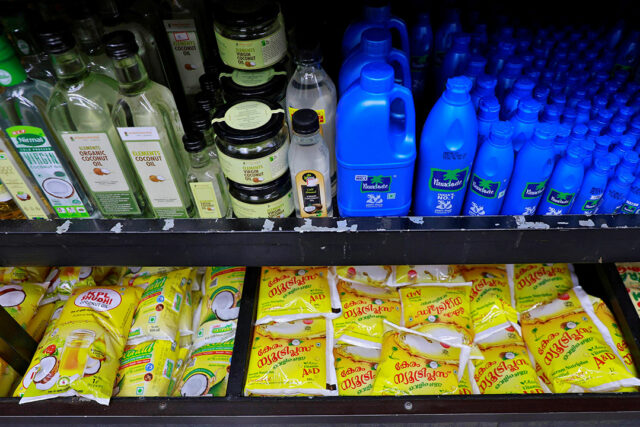
Various brands of coconut oil packets and bottles are placed on the shelves inside a retail store in Kochi, India, July 23, 2025. — REUTERS/SIVARAM V

MUMBAI/JAKARTA/KUALA LUMPUR — Prices of coconut oil are surging in Asia, where top consumer India leads the charge with a tripling in two years, as supply shortages and booming demand for the nutrient-rich water enclosed within turn the kitchen staple into a premium product. 

The edible oil is slipping out of the reach of price-conscious consumers, and those accustomed to its distinctive flavor, deeply embedded in regional cuisine, must search harder to find alternatives.

“I will switch to the more affordable refined sunflower oil for everyday cooking and save coconut oil for dishes where its flavor is absolutely irreplaceable,” said Leelamma Cherian, who lives in India’s southern state of Kerala.

The price surge that began in the second half of 2024 was accelerated by output disruptions across major producer nations from India to Southeast Asia, caused by seasons of lower rainfall, extended heat, and more ravages by pests and disease.

Prices in India have nearly tripled in less than two years, to a record 423,000 rupees ($4,840) a metric ton, while global prices surged to an all-time high of $2,990 per ton over the same period.

A group of producer nations, the International Coconut Community (ICC), says growing demand in the face of production limits will keep second-half global prices in the range of $2,500 to $2,700, well over the 2023 figure of about $1,000.

Coconut oil supplies usually improve in Southeast Asia in the second half, and new season output will help ease prices off records, said a Singapore-based vegetable oil trader.

“Still, prices probably won’t drop below $2,000 anytime soon,” he said.

A fall below $1,800 a ton in the next two years was unlikely, he added, pointing to the neglect of plantations and unfavorable weather in recent years as factors likely to delay a broader production recovery, especially at a time when supplies of other similar lauric oils are tight.

“While prices are expected to ease gradually, the current rally is likely to establish a new normal.” 

The price surge also affects unripe green coconuts harvested for their electrolyte-laden water, and products such as copra, milk, and powder, while squeezing makers of shampoo and skincare items, who prize the oil for its high content of lauric acid.

SUPPLY SQUEEZE
Globally, coconut oil output is falling as trees age, replanting proves inadequate, and plantations grapple with a shortage of better seed varieties, said Dorab Mistry, a director of Indian consumer goods company Godrej International.

World coconut oil production was 3.67 million tons in 2024–25, with no growth over the past three decades, barring minor annual fluctuations, the U.S. agriculture department says.

As weather conditions increasingly swing from hot, dry spells to sudden heavy rains, both extremes disrupt coconut production, said Joe Ling, executive director of Malaysia’s Linaco Group, a leading supplier.

These days, at least one producing country is affected – if dry weather is not curtailing output in Indonesia or Malaysia, it is highly likely that typhoons are disrupting production in the Philippines, or vice versa, Ling said.

Yields fell in 2023 as the El Niño weather phenomenon brought above-average heat and below-average rains to key growing regions, said a Mumbai-based dealer at a global trading house, who sought anonymity in line with company policy.

The shortfall was only reflected in 2024, since coconuts typically need nearly a year to mature after flowering.

In the wake of years of underinvestment thanks to low prices, coconut production was further hit by the COVID-19 outbreak, as lockdowns brought a slump in demand and prices.

That in turn led farmers to neglect plantations, resulting in lower yields just as demand began to recover when social media influencers drummed up attention to the health benefits of coconut water.

Higher demand for the water prompted farmers to harvest coconuts earlier and further narrowed the supply of mature nuts used to make oil and copra.

Even at higher prices, the perceived health benefits continue to fuel demand for coconut food products, said Ling of Linaco Group.

The rally has led his company to raise prices almost monthly and maintain supplies despite upsetting customers, Ling added. 

Coconut oil’s premium over rival palm kernel oil, also primarily produced in Asia, has surged to a record $1,000 per ton, up from the usual $100 to $200. Palm kernel oil prices have also risen, climbing 30% this year.

Any major shift away from coconut oil could drive up prices of alternatives, including palm kernel oil for industry and palm, soy, and sunflower oils for households.

GLOBAL DEMAND
While coconut oil is popular in Asia, demand for copra, coconut cream, and milk is strong in Britain, China, Europe, Malaysia, the United States, and the United Arab Emirates.

To capitalize on rising demand, Indonesian farmers are increasingly shipping whole coconuts instead of extracting oil, said Amrizal Idroes, vice chairman of the Indonesian Coconut Processing Industry Association.

Indonesia’s coconut oil exports fell 15% between January and June, while shipments of items such as desiccated coconut and endocarp coconut rose by 58% annually, government data showed. 

Shortages have spurred calls for changes to trade policies that make more oil available at home.

In Indonesia, the Association urged suspension of coconut exports for six to 12 months to stabilize prices, while in India, the Solvent Extractors’ Association asked New Delhi to allow imports of coconut oil and copra.

India regulates imports of coconut oil tightly, with a duty of more than 100% that makes them expensive, and traders required to seek permits from state trading enterprises.

Higher prices have spurred farmers to expand planting, with strong seedling demand depleting most nurseries’ stocks this year, said an official of India’s state-run Coconut Development Board, who sought anonymity.

But yield from new plantations take four or five years to come in, so prospects are bleak for prices to subside quickly. — Reuters

Musk quietly puts brakes on plans for new political party, WSJ says

ELON MUSK — REUTERS

Billionaire Elon Musk is quietly putting the brakes on plans to start his new political party, telling allies he wants to focus on his companies, the Wall Street Journal said on Tuesday, citing people with knowledge of the plans.

Mr. Musk unveiled the ‘America Party’ in July after a public dispute with President Donald Trump on the tax cut and spending bill.

He has recently been focused in part on maintaining ties with Vice President JD Vance, the paper said, and has acknowledged to associates that forming a political party would damage his relationship with Mr. Vance.

Mr. Musk, the world’s richest man, and his associates have told people close to Vance that the billionaire is considering using some of his financial resources to back Vance if he decides to run for president in 2028, the paper said.

The CEO of Tesla and SpaceX spent nearly $300 million in 2024 to help Mr. Trump and other Republicans get elected, exerting enormous influence in the first few weeks of Mr. Trump’s term as head of the newly created efficiency department (DOGE).

Reuters could not immediately verify the Journal report. Tesla and the White House did not immediately respond to a Reuters request for comment outside regular business hours.

Mr. Vance, who had called for a truce following Mr. Musk’s all-public feud with Mr. Trump, reaffirmed his position this month and said he had asked Musk to return to the Republican fold.

Tesla shares are down more than 18% this year after it posted in July its worst quarterly sales decline in more than a decade and profit that missed Wall Street targets, though its profit margin was better than many had feared.

Mr. Musk also warned of “a few rough quarters” after the end of support for electric vehicles by the Trump administration.

Investors worry whether he will be able to devote enough time and attention to Tesla after locking horns with Mr. Trump over his ambitions for a new political party. – Reuters

US commerce secretary says trade documents wanted by Japan are ‘weeks away’

COMMONS.WIKIMEDIA.ORG

 – U.S. Commerce Secretary Howard Lutnick said in a CNBC interview on Tuesday that documents memorializing trade agreements with Japan and South Korea — a sensitive topic in Tokyo — are “weeks away” from being ready.

Japanese Prime Minister Ishiba, who is facing calls to step down after the ruling coalition’s loss in the July upper house election, has come under attack for not insisting on getting the details of the U.S.-Japan trade deal in writing.

He has said Japan skipped this to avoid delaying a reduction in U.S. tariffs on Japanese goods.

Lutnick told CNBC the United States has reached a common understanding with both Japan and South Korea on these trade agreements.

Under the deal reached last month, the U.S. agreed to reduce tariffs on Japanese car imports to 15% from the previous 27.5%, but did not announce when the change would take effect.

India, China agree to resume direct flights, boost business links

STOCK PHOTO | Image from Pixabay

 – India and China agreed on Tuesday to resume direct flights and step up trade and investment flows as the neighbours rebuild ties damaged by a 2020 border clash.

The Asian giants are cautiously strengthening ties against the backdrop of U.S. President Donald Trump’s unpredictable foreign policy, staging a series of high-level bilateral visits.

The two countries would resume direct flights and boost trade and investment, including reopening border trade at three designated points, and facilitate in visas, the Indian foreign ministry said.

Direct flights have been suspended since the COVID-19 pandemic in 2020. No date was given for their resumption.

The latest statements came at the end of Chinese Foreign Minister Wang Yi’s two-day visit to New Delhi for the 24th round of talks with Indian National Security (NSA) Advisor Ajit Doval to resolve their decades old border dispute.

The border talks covered issues related to pulling back troops both countries have amassed on their Himalayan border, delimitation of borders and boundary affairs, the Indian ministry said.

Both countries have agreed to set up a working group to consult and coordinate on border affairs to advance demarcation negotiations, a Chinese foreign ministry statement released on Wednesday showed.

It said the mechanism will extend talks to cover the eastern and middle sections of the border. Meanwhile another round of talks on the western section will be held as soon as possible, the ministry said.

Beijing also said both countries agreed to meet again in China in 2026.

“Stable, predictable, constructive ties between India and China will contribute significantly to regional as well as global peace and prosperity,” Prime Minister Narendra Modi posted on X after meeting Wang.

Modi is scheduled to travel to China at the end of this month to take part in the summit of the Shanghai Cooperation Organisation – his first visit to the country in more than seven years.


TIBET DAM

A readout from the Chinese foreign ministry said Wang told Doval that “the stable and healthy development of China-India relations is in the fundamental interests of the two countries’ people”.

The two sides “should enhance mutual trust through dialogues and expand cooperation,” Wang said, and should aim for consensus in areas such as border control and demarcation negotiations.

India said Foreign Minister Subrahmanyam Jaishankar had underlined in his talks with Wang India’s concerns with regard to the mega dam China is building on the Yarlung  Zangbo river in Tibet.

Yarlung  Zangbo becomes the Brahmaputra as it flows into India and Bangladesh, a lifeline for millions.

The dam would have implications for lower riparian states and the need for “utmost transparency” was strongly underlined, New Delhi said.

To that, China agreed to share with India emergency hydrological information on relevant rivers on humanitarian principles, China’s foreign ministry said.

Both sides agreed to engage an expert-level mechanism on cross-border rivers, and maintain communication to renew flood reporting arrangements, the ministry said.

Chinese officials had previously said hydropower projects in Tibet will not have a major impact on the environment or on downstream water supplies, but India and Bangladesh have nevertheless raised concerns.

Earlier on Tuesday, an Indian source said Wang had assured Jaishankar that Beijing was addressing three key Indian concerns – the need for fertilisers, rare earths and tunnel boring machines.

The Indian foreign and mines ministries and China’s commerce ministry did not immediately respond to requests for comment. – Reuters

White House launches TikTok account with Trump saying ‘I am your voice’

A TikTok logo is displayed on a smartphone in this illustration taken Jan. 6, 2020. — REUTERS

 – The White House launched an official TikTok account on Tuesday, taking advantage of the short video app’s more than 170 million U.S. users to spread the messages of President Donald Trump.

Mr. Trump has a soft spot for the popular app, crediting it with helping him gain support among young voters when he defeated Democrat Kamala Harris in the November 2024 presidential election.

Lawmakers in Washington worry, however, that its U.S. user data could fall into the hands of China’s government. Trump has been working on a deal for U.S. investors to buy the app from TikTok’s Chinese parent, ByteDance.

Past intelligence assessments have said the app’s owners are beholden to the Chinese government and that it could be used to influence Americans.

The new account, @whitehouse, went live on Tuesday evening with an initial video showing footage of Trump as he declares: “I am your voice.”

“America we are BACK! What’s up TikTok?” the caption read.

The TikTok account Mr. Trump used for his presidential campaign last year, @realdonaldtrump, has more than 15 million followers. The Republican president also relies heavily on his Truth Social account to deliver his message and posts occasionally on his X account.

“The Trump administration is committed to communicating the historic successes President Trump has delivered to the American people with as many audiences and platforms as possible,” White House press secretary Karoline Leavitt said.

“President Trump’s message dominated TikTok during his presidential campaign, and we’re excited to build upon those successes and communicate in a way no other administration has before,” she said.

A 2024 law required TikTok to stop operating by January 19 of this year unless ByteDance had completed divesting the app’s U.S. assets or demonstrated significant progress toward a sale.

Trump opted not to enforce the law after he began his second term as president on January 20. He first extended the deadline to early April, then to June 19 and then again to September 17.

Extensions to the deadline have drawn criticism from some lawmakers, who argue the Trump administration is flouting the law and ignoring national security concerns related to Chinese control over TikTok. – Reuters

US, NATO planners start to craft Ukraine security guarantee options

PRESIDENT OF UKRAINE, Volodymyr Zelensky, at the annual session of the NATO Parliamentary Assembly — PRESIDENT.GOV.UA

U.S. and European military planners have begun exploring post-conflict security guarantees for Ukraine, U.S. officials and sources told Reuters on Tuesday, following President Donald Trump’s pledge to help protect the country under any deal to end Russia’s war.

Ukraine and its European allies have been buoyed by Mr. Trump’s promise during a summit on Monday of security guarantees for Kyiv, but many questions remain unanswered.

Officials told Reuters that the Pentagon is carrying out planning exercises on the support Washington could offer beyond providing weapons.

But they cautioned that it would take time for U.S. and European planners to determine what would be both militarily feasible and acceptable to the Kremlin.

One option was sending European forces to Ukraine but putting the U.S. in charge of their command and control, two sources familiar with the matter told Reuters. The sources added that the troops would not be under a NATO banner but operate under their own nations’ flags.

The Pentagon and NATO did not immediately respond to a request for comment on the idea.

In a press briefing, the White House said that the United States could help coordinate a security guarantee for Ukraine.

Russia’s Foreign Ministry has ruled out the deployment of troops from NATO countries to help secure a peace deal.


POSSIBLE U.S. AIR SUPPORT

Mr. Trump has publicly ruled out deploying U.S. troops in Ukraine but on Tuesday appeared to leave the door open to other U.S. military involvement.

In an interview with Fox News “Fox & Friends” program, he suggested Washington could provide air support to Ukraine.

“When it comes to security, (Europeans) are willing to put people on the ground, we’re willing to help them with things, especially, probably, ... by air because nobody has stuff we have, really they don’t have,” Mr. Trump said.

He did not provide further details.

U.S. air support could come in a variety of ways including providing more air defense systems to Ukraine and enforcing a no-fly zone with U.S. fighter jets.

Since Russia’s full-scale invasion of its neighbor in 2022, the United States has shipped billions of dollars worth of weapons and munitions to Kyiv.

The Trump administration briefly halted those weapons shipments, including after a contentious White House meeting between Mr. Trump and Ukrainian President Volodymyr Zelenskiy in February and again in July.

Shipments have resumed and Trump has pledged to send weapons, primarily defensive ones, to help the war-torn country.


NATO MILITARY LEADERS TO MEET

NATO military chiefs will focus on Ukraine and the way forward when they meet virtually on Wednesday, a conference first reported by Reuters.

U.S. Air Force General Alexus Grynkewich, who also oversees NATO operations in Europe, will brief the chiefs of defense on the Alaska meeting between Trump and Russian President Vladimir Putin last week.

A U.S. official speaking on condition of anonymity said U.S. General Dan Caine, chairman of the Joint Chiefs of Staff, was expected to attend the meeting.

The official added that Mr. Caine would meet with some of his European counterparts in Washington on Tuesday evening.

Mr. Trump has pressed for a quick end to Europe’s deadliest war in 80 years, and Kyiv and its allies have worried he could seek to force an agreement on Russia’s terms after the president last week rolled out the red carpet for Mr. Putin.

Russia says it is engaged in a “special military operation” in Ukraine to protect its national security, claiming NATO’s eastward expansion and Western military support for Ukraine pose existential threats. Kyiv and its Western allies say the invasion is an imperial-style land grab. – Reuters

Iraq signs agreement with Chevron on oil exploration projects, prime minister says

 – Iraq signed an agreement in principle with U.S. oil producer Chevron for the Nassiriya project that consists of four exploration blocks in addition to the development of other producing oil fields, Iraq’s prime minister said on Tuesday.

Iraq in the past two years has signed agreements with other oil majors, reversing a long period during which they retreated from the country. Improved contract terms have lured both France’s TotalEnergies and UK oil major BP to sign new deals, with a combined investment of over $50 billion.

“We are confident that Chevron, with its proven track record and expertise in successfully developing oil and gas projects, has the resources, experience, and technology to support Iraq to further develop new energy resources,” said Frank Mount, Chevron’s vice president of corporate business development, in a statement.

In 2021, Iraq authorised National Oil Company (NOC) to negotiate with Chevron over the development of oilfields in Nassiriya, in the Iraqi southern province of Dhi Qar.

The ministry at the time said its plan in the province included the completion of a group of giant projects in the oil and gas and water injection sectors, with a targeted initial capacity of 600,000 barrels of crude oil per day within seven years of starting work.

Prime Minister Mohammed Shia al-Sudani said the government adopted a new approach in dealing with major international oil companies and their investments in Iraq, especially U.S. companies, his office said. – Reuters