Home Blog Page 1057

Agri dep’t calls for more support for tuna industry

PHOTOGRAPH © ALO LANTIN/WWF-PHILIPPINES/ WWF.ORG.PH

THE Department of Agriculture (DA) said on Wednesday that the tuna industry needs more support in the wake of difficulties in obtaining sustainability certifications to export their products.

In a statement, Agriculture Secretary Francisco P. Tiu Laurel, Jr. said on Wednesday  that the tuna industry faces threats from “climate change, global sustainability mandates, labor issues, and the persistent threat of IUU (illegal, unreported, unregulated) fishing.”

He called for science-based management of tuna stocks and stronger support for the industry.

A recent Supreme Court ruling allowing commercial fishing operations to ply municipal waters has cast doubt on sustainability claims for Philippine tuna, the Philippine Association of Tuna Processors, Inc., has said.

Sustainability certificates enable the Philippines to access crucial export markets that require traceability and sustainability of fish resources, it noted.

Philippine tuna production rose to 494,047.02 MT in 2024 from 409,797.17 MT in 2023, the DA has reported.

Tuna exports rose 31% to $514.47 million in 2024, it added — Kyle Aristophere T. Atienza

Senior House members back return of spending plan to DBM for ‘correction’

PHILIPPINE STAR/MICHAEL VARCAS

MEMBERS of the House of Representatives majority urged legislators on Wednesday not to participate in hearings on the proposed P6.793-trillion 2026 budget until the Department of Budget and Management (DBM) clears up what they described as “questionable” items in the spending plan.

Political parties making up the House majority called for the return of the proposed budget to the DBM for “corrections” of “erroneous entries” in the National Expenditure Program (NEP), Deputy Speaker and Antipolo Rep. Ronaldo V. Puno said.

He cited the duty of Congress to ensure the national budget is allocated “free of corruption,” adding that House leaders also want to avoid the perception that they are revising the spending plan for their own benefit.

“We are recommending to the Speaker that we return the 2026 National Expenditure Program to the Budget department, and we are asking our members now to refrain from any further participation in any other budget hearings until this matter is resolved,” Mr. Puno said at a briefing.

“The NEP, as submitted, is riddled with questionable entries,” he added, citing the alleged fund diversions, and blank line items that came with the preparation of the 2025 budget.

“There’s been enough and too much distrust already going around,” Mr. Puno said.

Government spending has come under the microscope following the discovery of defective or even non-existent flood control projects in the wake of the heavy rains in July, culminating in the replacement of the Secretary of Public Works, Manuel M. Bonoan.

“In light of the admissions publicly made by department secretaries that there are erroneous entries in the NEP transmitted to the House of Representatives, we would be justified in returning the same,” he added, reading a prepared statement.

The proposal to freeze budget proceedings has raised concerns that the delay will lead to another re-enacted budget, which happens when no budget bill is enacted when the new year begins.

The absence of a budget in place when 2026 starts triggers a rehash of the 2025 budget while the new bill is worked out.

The House initially estimated an October approval of the 2026 budget bill.

Budget Secretary Amenah F. Pangandaman has warned that a re-enacted budget would harm the economy and derail the Philippines’ transition to an upper middle-income country.

Deputy Speaker and Iloilo Rep. Janette L. Garin said legislators have committed to reviewing and approving the proposed 2026 budget during their congressional breaks to head off delays in passing the legislation.

“We have more than a month-long break from Oct. 10 to Nov. 11, and another extended break in December. Members of Congress have committed to spending their time so that the budget is not delayed,” she said at the briefing.

“It will not affect our economy because Congress will definitely submit it on time,” she added.

Returning the proposed budget to the DBM would allow for a faster review and revision than if the corrections were left to Congress, Mr. Puno said.

“They have a system for reviewing this thing,” he said.

The review of the proposed budget could result in the removal of billions of pesos in allocations, which Palawan Rep. Jose C. Alvarez said could improve the country’s fiscal position and reinforce public trust in government spending.

“If we’re able to return it and cut half a trillion from the budget, there’s nothing wrong with that,” he said at the briefing. “What matters most to Filipinos is that no one goes hungry.” — Kenneth Christiane L. Basilio

Subway ROW acquisition target set at 95% by end of 2025

PHILIPPINE STAR/ MICHAEL VARCAS

THE Department of Transportation (DoTr) said the right-of-way (ROW) acquisition target for the Metro Manila Subway project has been set at about 95% by the end of the year.

“As of today, the entire subway, the subterranean and the station are at 75%. Based on the (current phase) there is a big possibility we could hit 95% by the end of the year,” Transportation Acting Secretary Giovanni Z. Lopez told reporters on the sidelines of a briefing on Wednesday.

The DoTr is hoping to award the last three remaining packages of Metro Manila Subway project around October or November, Mr. Lopez said, adding that the department is currently in negotiations with prospective contractors.

The last three remaining contract packages (CP) are 105, 108, 109. CP 105 covers the construction of the station in Kalayaan Avenue and Bonifacio Global City; while CP 108 covers the Lawton and Senate-DepEd stations; and CP 109 the Ninoy Aquino International Airport (NAIA) Terminal 3 station.

The remaining contract packages are valued at between P10 billion and P15 billion.

Mr. Lopez said that once the contracts and notices to proceed are awarded, groundbreaking on the remaining segments is likely by November.

“Hopefully, we can break ground by November. Once the contracts are awarded and there is a notice to proceed, there is no reason not to break ground,” he said.

In July, the DoTr said that it is pushing for partial operations of subway line, though the entire line is expected to be completed by 2032.

The subway is 33 kilometers long with 17 stations. The goal is to cut travel time between Quezon City and NAIA to 35 minutes from over an hour currently. It is expected to accommodate up to 370,000 passengers daily. — Ashley Erika O. Jose

10% reduction in smoking population seen yielding savings of $687 million

BW FILE PHOTO

THE PHILIPPINES could save $687 million a year if it can convince 10% of its smoking population to shift to non-combusted alternatives, according to a De La Salle University study.

Associate professor Christopher James R. Cabuay said the findings were based on an estimate of $9.8 billion as the cost of smoking-related illnesses in 2019, including the cost of treatment and medicine shouldered by households.

“We are also talking about public resources that are dedicated to capacitating hospitals to treat these things, which is part of what we call the direct cost,” he said at the Consumer Choice Center briefing on Wednesday.

He added that indirect costs include lost productivity due to disability and death.

He said that the cost of smoking-related illness translates to about 2.48% of gross domestic product (GDP).

“Only a small part of that is… direct cost of treatment; the largest part of that is driven by smoking-attributable death,” he said.

The Philippines has one of the higher prevalences of smoking-attributable death relative to world averages.

For men, he said that prevalence in the Philippines is 23.2%, against the global average of 16.9%. For women, the corresponding numbers are 9.9% against 7.4%.

Citing the Global Adult Tobacco Survey, he said smoking prevalence in the Philippines was 18.5% in 2021, representing 14.4 million adult smokers.

“If, say, about 10% of the adult smoking population were to engage in tobacco harm reduction activities or they’re given this option, we could expect this cost of illness to decrease by $687 million annually, or 0.18% of GDP,” he said.

He said the issue is how the government can convince the public to shift.

“Who is going to bear the cost? Who’s going to provide the access (to alternatives)?” he added.

On Wednesday, the Consumer Choice Center brought together physicians, researchers, and consumer advocates from seven countries to discuss critical aspects of the World Health Organization’s Framework Convention on Tobacco Control.

“We needed an honest conversation about what’s working and what isn’t in global tobacco control,” according to Fred Roeder, health economist and president of the Consumer Choice Center.

“Many countries have seen different results with harm reduction approaches, yet these strategies remain largely unexplored in Southeast Asian policy discussions,” he added. — Justine Irish D. Tabile

DoE, UN agency studying impact of energy transition on coal industry

STOCK PHOTO | Image by PublicDomainPictures from Pixabay

THE Department of Energy (DoE) said it is studying the impact of shutting down coal mines  and coal-fired power plants as the Philippines transitions to cleaner fuels for power generation.

On the sidelines of the Philippine Energy Transition Dialogue 2025 on Wednesday, Michael O. Sinocruz, director of the DoE’s Energy Policy and Planning office, said the United Nations Office for Project Services (UNOPS) has been tapped to help study the effects on the coal industry and the segment of the power industry that depends on coal.

UNOPS is an arm of the UN that provides infrastructure, procurement and project management services.

“We need to study the impact if we’re going to close down our coal mines and coal-fired power plants,” Mr. Sinocruz said at an event hosted by the Clean, Affordable, and Secure Energy for Southeast Asia organization.

Mr. Sinocruz said of particular interest is the livelihoods of workers and communities dependent on coal mining operations.  

“Part of the study should (estimate) how much funding we need to protect this possible displacement of workers and even the livelihood of the community,” he said.

The global commitment to accelerate the transition to cleaner energy and decarbonization means winding down coal-fired power, with a knock-on effect on mining coal.

Mr. Sinocruz said the study could begin next year.

“Based on this study, we can have recommended policies for consideration by the Department of Energy or by the National Government, providing alternatives for those that will be affected by this transition,” he said.

The Philippines is a major importer of coal, shipping in more than 80% of its requirements in 2023.

Coal-fired power plants currently account for 62.5% of the power generation mix, while renewable energy accounts for 22.2%.

The goal is to increase the share of renewable energy to 35% by 2030 and 50% by 2040.

Semirara Mining and Power Corp., the largest coal producer in the Philippines, has said that it hopes the transition will be managed properly.

“For now, coal remains the backbone of our baseload supply, ensuring affordable and reliable electricity. Any move to phase it out will need careful study,  timing and planning to ensure energy security and protect livelihoods,” the company said in a statement.

“We trust that the transition will be managed in a way that balances sustainability with the country’s energy and economic needs,” it added. — Sheldeen Joy Talavera

PSEi tumbles to 6,000 level as sentiment sours

BW FILE PHOTO

PHILIPPINE SHARES sank to the 6,000 level on Wednesday to hit a near five-month low as corruption concerns and the peso’s weakness against the dollar affected investor confidence.

The Philippine Stock Exchange index (PSEi) declined by 0.75% or 45.96 points to close at 6,082.93, while the broader all shares index went down by 0.47% or 17.41 points to end at 3,663.62.

This was the PSEi’s lowest close in almost five months or since it finished at 6,082.44 on April 11.

“The local market extended its decline as lingering headwinds continued to weigh on sentiment. These include the corruption issues in the Philippines’ flood control projects, the weak position of the peso against the US dollar, and the uncertainties on the US’ tariff policies,” Philstocks Financial Inc. Research Manager Japhet Louis O. Tantiangco said in a Viber message.

“Rising long-term Treasury yields in the US also weighed on the bourse,” he said, adding that trading activity at the market remained “tepid.”

Finance Secretary Ralph G. Recto said on Tuesday that corruption related to flood control initiatives has cost the Philippines up to P118.5 billion in economic losses since 2023.

On Wednesday, the Department of Public Works and Highways said it has suspended the bidding for all locally funded projects amid the government’s ongoing investigation into alleged irregularities in flood control projects.

Meanwhile, the peso closed at P57.30 per dollar on Wednesday, rebounding from its Tuesday finish of P57.51, which was a near one-month low.

First Metro Investment Corp. Head of Research Cristina S. Ulang said in a Viber message that outflows related to the MSCI and FTSE rebalancing also dragged the Philippine market.

There was also “heightened risk-off sentiment” before the release of Philippine August inflation data on Friday, she said.

The majority of sectoral indices closed lower on Wednesday. Property fell by 1.38% or 34.04 points to 2,418.22; services decreased by 1.2% or 26.16 points to 2,154.67; financials retreated by 0.83% or 17.12 points to 2,045.81; and industrials went down by 0.81% or 74.12 points to 8,982.81.

Meanwhile, mining and oil jumped by 1.28% or 137.02 points to 10,811.63, and holding firms climbed by 0.34% or 17.27 points to 5,062.01.

Value turnover declined to P5.37 billion on Wednesday with 705.16 million shares traded from the P5.58 billion with 1.16 billion shares exchanged on Tuesday.

“San Miguel Corp. was the top index gainer, climbing 2.74% to P59.90. Ayala Land, Inc. was the main index laggard, falling 2.96% to P27.85,” Mr. Tantiangco said.

Decliners outnumbered advancers, 109 to 91, while 56 names were unchanged.

Net foreign selling surged to P921.70 million on Wednesday from P368.84 million on Tuesday. — Alexandria Grace C. Magno

Australia provides P172M in funding to female-led PHL small businesses

AUSTRALIA is providing P172 million in bridge financing for female-owned small businesses, its embassy in Manila said.

In a statement on Wednesday, the Australian Embassy said the Australian Development Investments (ADI) project will provide the funding through ARQ SME Finance.

“The Philippines is home to extraordinary Filipina entrepreneurs — but many face barriers when they seek funds to grow their businesses,” Australian Ambassador to the Philippines Marc Innes-Brown said.

“Australia is proud to partner with ARQ to help create more business opportunities for women and build economic growth that benefits women and men alike,” he added.

ADI’s first impact investment in the Philippines was announced at the 2X Global Summit on Tuesday.

The Australian government’s flagship impact investment fund, ADI is tasked with reducing poverty and inequality.

“The loan expands Australia’s existing commitment to help more Filipinas participate in the workforce or grow their own businesses through the Investing in Women program,” the embassy said.

ARQ will have more capital available to Philippine businesses that are committed to greater gender equality in leadership, the workforce, supply chains, and human resources management.

“This investment is a catalyst for resilient, inclusive SME growth,” according to Abigail Tan, co-founder and managing partner at ARQ.

“It enables ARQ to scale support for Philippine enterprises that embed gender equality, financial governance, and sound business practices — driving long-term opportunity across communities,” she added.

According to the embassy, ARQ serves firms that are too big for microfinance and too small for banks. — Justine Irish D. Tabile

Draft APA Blueprint: What taxpayers can expect

With the prevalence of transfer pricing (TP) regimes, keeping up with new rules and guidelines is becoming more crucial. Recently, the Bureau of Internal Revenue (BIR) released draft Revenue Regulations (RR) outlining the proposed implementation of Advance Pricing Agreements (APA) in the Philippines.

Following the release of the draft, the BIR held a public consultation to gather comments from taxpayers.

APA is an arrangement relevant to controlled transactions between related parties that determines an appropriate set of criteria (e.g., TP method, comparables, appropriate adjustments) to set reasonable transfer pricing for those controlled transactions. The draft RR provides that APAs can be valid for a fixed period of up to five years in the Philippines.

APA is a voluntary application by a taxpayer to help mitigate TP audit risk and to reduce the likelihood of double taxation. If the terms and conditions of the APA are met, the covered transactions are shielded from audit and TP adjustments by the tax authorities in the relevant jurisdictions.

The APA process, as outlined in the draft RR, consists of five stages: (1) Early engagement and pre-filing, (2) Formal filing of an APA, (3) Review of the APA application and negotiation, (4) Formal agreement, and (5) Implementation and compliance monitoring. The BIR is targeting a 12–24-month timeline to conclude APA applications (whether unilateral, bilateral, or multilateral), depending on case complexity and taxpayer cooperation.

The initial stages involve meetings between the taxpayers and the BIR to assess the suitability of an APA application for the proposed transactions. During this phase, the draft RR requires the submission of the pertinent documents. Once the taxpayer receives the BIR’s written notification to proceed with the APA, the formal application can then be filed. The BIR’s notification must be issued not later than four months before the APA period being applied for begins, and taxpayers must submit their formal application within three months of receiving notification.

However, if the BIR determines that the covered transaction is not suitable for an APA, the taxpayer must be notified in writing within 30 days from the last pre-filing meeting, including the reasons for non-acceptance. Unfortunately, the current draft RR does not specify the grounds for non-acceptance.

It would be reasonable to set explicit criteria for non-acceptance of APA applications to guide taxpayers and ensure fair consideration of their applications. For instance, in Malaysia, an application will be denied if the tax authority, upon reviewing the submitted documents, concludes that the proposed transaction involves a tax avoidance scheme or the arrangements involve improper use or abuse of the application of a tax treaty to obtain an unintended benefit.

Moreover, Malaysia provides taxpayers with the opportunity to respond and make further representations within 30 days from receiving a denial. The subsequent decision by Malaysian tax authorities is then considered final. Implementing a similar mechanism in the Philippines could benefit taxpayers by providing an avenue to further support their application and negotiate with the BIR. This approach also aligns with the due process requirements during tax audits.

At the Implementation and Compliance Monitoring stage of an APA application, once a formal agreement is concluded between the taxpayer and the relevant tax authorities, the taxpayer must file an Annual Compliance Report (ACR) with the BIR’s APA division. This report must be submitted on or before the income tax return filing deadline to confirm adherence to the APA terms and the critical assumptions underlying the transfer pricing method throughout the covered period. Additionally, a copy of the report will be forwarded to the taxpayer’s registered Revenue District Office (RDO).

Failure to file the ACR on time or comply with the APA terms will lead to the APA’s cancellation or revocation. This is a key consideration for taxpayers to note, as the draft regulations state that the APA division will recommend a TP audit by RDO in the event of such cancellation or revocation.

Similar procedures are observed in neighboring countries like Indonesia and Malaysia, where APA cancellation or revocation may likewise trigger a TP audit. Needless to say, taxpayer cooperation is essential to the successful conclusion and continued validity of an APA. Strict compliance with APA terms and documentary requirements not only prevents TP audit risks but also maintains the agreement’s integrity.

This significant development demonstrates the BIR’s intention to establish clear guidelines for implementing APAs in the Philippines while considering practices from neighboring countries. The contents of the draft RR reveal that the proposed rules are largely comparable to the APA regulations of other Asia-Pacific countries. For example, the proposed stages of the APA process align with the rules in Singapore and Malaysia, and certain timelines within the APA process are notably similar to those of Singapore.

Finally, considering the nature of an APA, TP documentation is a key component of an APA application. Taxpayers are required to submit a detailed TP analysis as early as the pre-filing stage. This analysis should include a discussion on the selected TP method and its rationale, the profit level indicator, comparable prices or margins, the commercial database used, and the arm’s length result.

As these elements are expected to be included in a TP documentation prepared in compliance with Philippine TP rules, the documentation may serve as a reliable support for the taxpayer’s proposed TP method and pricing for the covered transaction of the APA. Thus, it is strongly recommended that APA applicants ensure full compliance with TP documentation requirements. Adhering to these standards can significantly support APA applications and enhance the development of APA practices in the Philippines.

The views or opinions expressed in this article are solely those of the author and do not necessarily represent those of Isla Lipana & Co. The content is for general information purposes only, and should not be used as a substitute for specific advice.


Joyce Anne Boaloy is a manager at the Tax Services department of Isla Lipana & Co., the Philippine member firm of the PwC network.

+63 (2) 8845-2728

joyce.b.boaloy@pwc.com

Lawmakers push to lower age requirement for president, VP

PHILIPPINE STAR /KJ ROSALES

By Kenneth Christiane L. Basilio, Reporter

CONGRESSMEN submitted a resolution on Wednesday seeking to amend the 1987 Constitution to lower the minimum age requirement for candidates running for presidential, vice-presidential (VP) and senatorial posts, citing the need to inject youth into the country’s national leadership.

Resolution of Both Houses (RBH) No. 2 seeks to lower the minimum age for presidential and vice-presidential candidates to 35 years old and senatorial candidates to 30 years old, both five years lower than what is currently prescribed in the Constitution.

“Lowering the age qualifications for national leadership posts will align the Philippines with other democracies, such as the US,” the resolution filed by Deputy Speakers Francisco Paolo P. Ortega and Jefferson F. Khonghun, alongside district representatives Ernesto M. Dionisio, Jr. (Manila) and Ziaur-Rahman Alonto Adiong (Lanao del Sur).

Charter change (Cha-cha) efforts have been a recurring theme in Philippine politics, but previous attempts have always faltered due to lack of public support, driven in part by concerns about political motives.

Party-list Rep. Alfredo A. Garbin, Jr. earlier filed a resolution seeking to amend the Constitution’s economic provisions to ease foreign ownership limitations in key industries and reinforce the country’s territorial claims in the South China Sea.

Like Mr. Garbin’s proposal, RBH No. 2 seeks to amend the Constitution via a constitutional convention, which would gather delegates whose purpose is to propose changes to the charter.

The House passed a resolution in 2023 supporting a constitutional convention. A year later, it pushed joint discussions on amendments by both chambers of Congress. A signature drive to support Cha-cha also fizzled amid allegations that lawmakers were behind the initiative.

There is a need to lower the minimum age requirement for national posts to reflect “major demographic and social shifts,” the resolution read, citing that 52% of the population is under the age of 30.

“This reform strengthens youth representation, promotes intergenerational leadership and embodies the spirit of inclusivity, renewal and empowerment of the next generation of leaders,” it added.

The Resolution of Both Houses No. 2 may be short-sighted and likely driven by political motives, saying it lacks valid grounds for constitutional amendment, political analysts said.

“I am of the view that the proposal is too myopic,” Ederson DT. Tapia, a public administration professor at the University of Makati, said in a Facebook Messenger chat. “The debates surrounding the age requirement have been exhaustively debated during the deliberation in 1986.”

“The public should be suspicious of proposals that would call for a constitutional amendment due to underlying political motives,” said Hansley A. Juliano, a political science lecturer at the Ateneo de Manila University.

“Who is expected to benefit from age lowering?” he said in a Facebook chat.

Hunger among beneficiaries of DSWD’s food aid program continues to drop — Gatchalian

PHILIPPINE STAR/WALTER BOLLOZOS

HUNGER incidence among beneficiaries of the Department of Social Welfare and Development’s (DSWD) Walang Gutom program declined for the second consecutive quarter, Secretary Rexlon T. Gatchalian said on Wednesday.

Mr. Gatchalian said the program, which began in 2023 under the directive of President Ferdinand R. Marcos, Jr. to eradicate hunger, has so far reached 300,000 food-poor households nationwide.

“We are seeing early signs of success of the Walang Gutom Program. And as instructed by President Ferdinand R. Marcos Jr., we will expand the program further to 600,000 beneficiaries in the second half of the year,” Mr. Gatchalian told reporters in Malacañang.

The latest tracking survey conducted by Social Weather Stations (SWS), with funding support from Globe Telecom and Monde Nissin Corporation, showed a 7.2-percentage point drop in hunger among beneficiaries within six months.

Hunger prevalence, measured through self-rated hunger, fell to 41.5% in March 2025 from 48.7% at baseline in October 2024.

“The evidence consistently points to the positive impact of scaling up the Walang Gutom program to the food-poor population of the country,” said SWS fellow Roehlano M. Briones.

The rate of improvement among beneficiaries was six points higher compared with non-beneficiaries, he added, underscoring that the changes could be attributed directly to the program.

Significant gains were noted in the Bangsamoro Autonomous Region in Muslim Mindanao (BARMM) and adjacent provinces, where hunger incidence fell by 17.2 points to 37.7% from 55.1%.

Other clusters also recorded improvements, though at varying degrees.

Mr. Gatchalian said the government allocated P1.89 billion for the pilot phase covering the initial 300,000 households, with additional funds secured to support the expansion.

“We will not scale up a program if there are no sufficient funds and no evidence that it works,” he said.

To ensure long-term sustainability, the program also incorporates nutrition education and productivity interventions.

Beneficiaries attend sessions on proper diet and food preparation while also being linked to job fairs through the Department of Labor and Employment and skills training programs under the Technical Education and Skills Development Authority.

“The mandate of the DSWD is not only to provide material assistance but also to restore hope among Filipinos. That includes strengthening human capital and ensuring that families have sustainable income sources even after they exit the program,” Mr. Gatchalian said. — Erika Mae P. Sinaking

Lower food costs, higher wages among Filipinos’ policy priorities

A vendor waits for customers at a stall inside Commonwealth Market in Quezon City. — PHILIPPINE STAR/MIGUEL DE GUZMAN

By Adrian H. Halili, Reporter

MOST FILIPINOS want the government to tackle policies that would lower food costs and raise wages, according to the latest poll by public opinion research firm WR Numero Research.

In its August 2025 survey, the research firm found that 42% of Filipinos said the government should implement policies that lowers the cost of food and other essentials, when asked to list three top issues that needed to be tackled.

WR Numero conducted the survey following the fourth State of the Nation Address of President Ferdinand R. Marcos, Jr., in which he noted his administration’s initiatives to lower food costs, like increasing food security and investing in the agriculture sector.

It also found that about four in 10 Filipinos, or 39% noted raising the wages of workers among their top concerns.

Labor groups and civil service organizations earlier said that they will continue to push for higher wages after Congress failed to reconcile disagreeing provisions of their bills. The country’s economic managers warned that the measure would have “dangerous repercussions” on the Philippine economy.

WR Numero also reported that 29% of surveyed Filipinos said that the government should tackle illegal drugs and crime, while another 29% said that they want poverty addressed.

About 28% of those surveyed also said that the government should create more jobs and livelihood opportunities.

The country’s employment rate rose to 96.3% in June translating to 50.47 million Filipinos with jobs, according to the Philippine Statistics Authority.

It added that 23% of Filipinos cited fighting government corruption was a top issue, while 16% noted the education crisis.

Also among their list of key issues are the need to reduce taxes and fees (16%), restore the subsidies under the Philippine Health Insurance Corp. (16%), strengthen the country’s court and judicial system (8%), resist China’s interference in the West Philippine Sea (7%), expand comprehensive sex education (6%), and ensure a fair impeachment trial for Vice-President Sara Duterte-Carpio (6%)

A smaller share of Filipinos supports the strengthening the country’s military for national defense (5%), regulating political dynasties (3%), legalizing same-sex marriage (2%), and passing a divorce law (2%).

“Filipinos across political factions agree that lowering food prices and raising wages should be the government’s top priorities, but they differ on what ranks third,” the research firm noted.

WR Numero also found that supporters of Mr. Marcos and his allies noted poverty reduction, while Duterte supporters cited illegal drugs and crime. Those who identified as opposition supporters emphasized corruption, whereas independents prioritized job creation.

The third priority of Marcos supporters was fighting poverty and providing aid to the poor (32%), followed by creating jobs and livelihood opportunities (26%) and tackling illegal drugs and crime (23%).

Combating illegal drugs and crime ranks higher at 37% among Duterte supporters, compared to poverty reduction (27%), and job creation (24%).

Opposition supporters had emphasized fighting corruption (30%), followed by reducing poverty (29%), and creating jobs (27%).

Those who identified themselves as independent cited job creation as their third priority (33%), while 31% said tackling illegal drugs and crime, and addressing poverty (28%).

BI sends 49 South Korean fugitives home in mass deportation

PHILSTAR FILE PHOTO

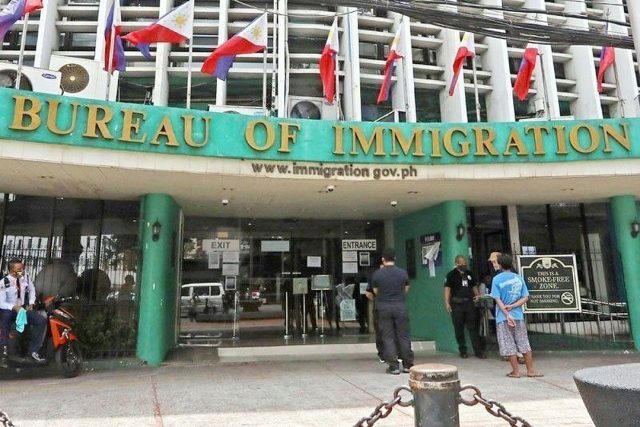
THE Bureau of Immigration (BI) on Wednesday said it sent home 49 South Korean fugitives in what officials described as the biggest deportation of Korean nationals since 2017.

The operation, carried out by the BI’s Deportation and Implementation Unit (DIU), was in line with the directive of President Ferdinand R. Marcos, Jr. to ensure the swift removal of foreign fugitives and “undesirable aliens” from the country.

“In a landmark effort to uphold the rule of law and strengthen international cooperation, the Bureau of Immigration has cleared the way for the mass deportation of dozens of Korean fugitives,” BI Commissioner Joel Anthony M. Viado said in a statement.

The 49 deportees, including 43 men and six women, were tagged by the South Korean government as fugitives from justice and were blacklisted by the Philippines.

They boarded a chartered flight at the Ninoy Aquino International Airport (NAIA) Terminal 3, to Incheon City, escorted by immigration officials and representatives from the South Korean government.

Mr. Viado said that the last deportation of this scale happened in 2017, when 47 South Koreans were sent home.

“This recent effort is the result of the strong partnership between the BI and the South Korean Embassy, through our partner and good friend Consul Jongmin Park.”

Most of the deportees faced fraud-related cases in South Korea.

“We are grateful for the strong partnership with the South Korean government to make sure that these criminals be returned to their home country to face justice,” Mr. Viado said.

Among those deported was a 36-year-old man accused of masterminding a phishing syndicate that illegally accessed the banking information of around 200 victims and transferred a total of 1.7 billion South Korean won. He was arrested in April in Angeles City, Pampanga.

Another deportee is a 42-year-old man arrested in San Juan City last July for allegedly running 23 illegal online gambling websites targeting South Koreans, reportedly profiting more than 2 trillion South Korean won.

Others were involved in operating illegal online platforms, using violence against recruits, and engaging in real estate loan scams that embezzled billions of won.

Mr. Viado said the operation is also part of efforts to decongest the bureau’s holding facilities.

“The Philippines is not a haven for foreign fugitives. Those who abuse our country’s hospitality will face the harshest penalty of law,” he said. — Erika Mae P. Sinaking

ADVERTISEMENT
ADVERTISEMENT