Home Blog Page 1013

RFM Corp. to hold 2025 Annual Meeting of the Stockholders virtually on June 25


Spotlight is BusinessWorld’s sponsored section that allows advertisers to amplify their brand and connect with BusinessWorld’s audience by publishing their stories on the BusinessWorld Web site. For more information, send an email to online@bworldonline.com.

Join us on Viber at https://bit.ly/3hv6bLA to get more updates and subscribe to BusinessWorld’s titles and get exclusive content through www.bworld-x.com.

It’s not the pandemic, it’s the budget!

Make no mistake — the quality of Philippine education had been bad even before the pandemic crisis beginning March of 2020. In fact, in the Philippine Development Plan (PDP) 2023-2028, it was admitted that the country’s education system continues to be “in urgent need of transformation.”

What is so revolting is that this has been the dismal state of learning in the Philippines for over 30 years.

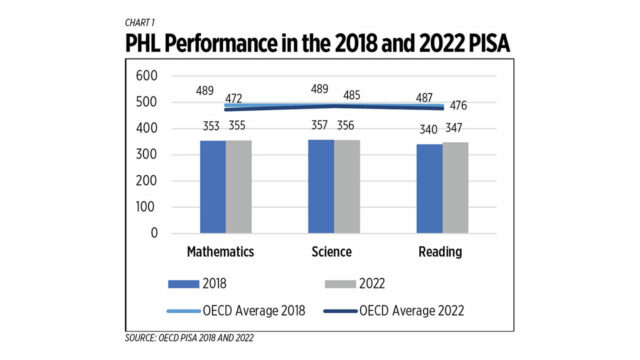
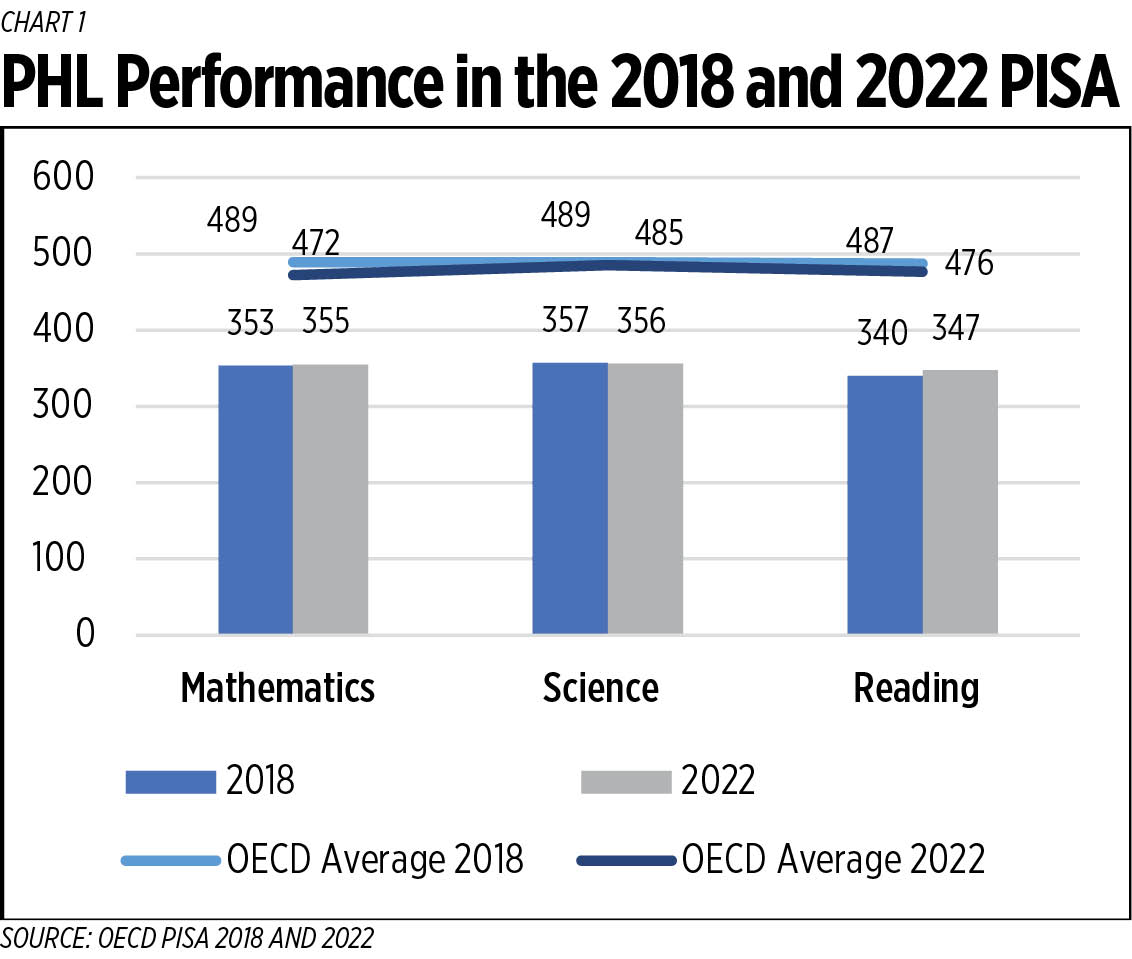
For baseline global comparison, the Philippines, though belatedly, joined the Programme for International Student Assessment (PISA) for the first time in 2018. Some 79 countries were covered during the year’s assessment of educational performance of 15-year-old high school students. Filipinos scored the lowest in reading and the second lowest in both mathematics and science. We stood so much lower than the Organization for Economic Cooperation and Development (OECD) average scores for the three subjects.
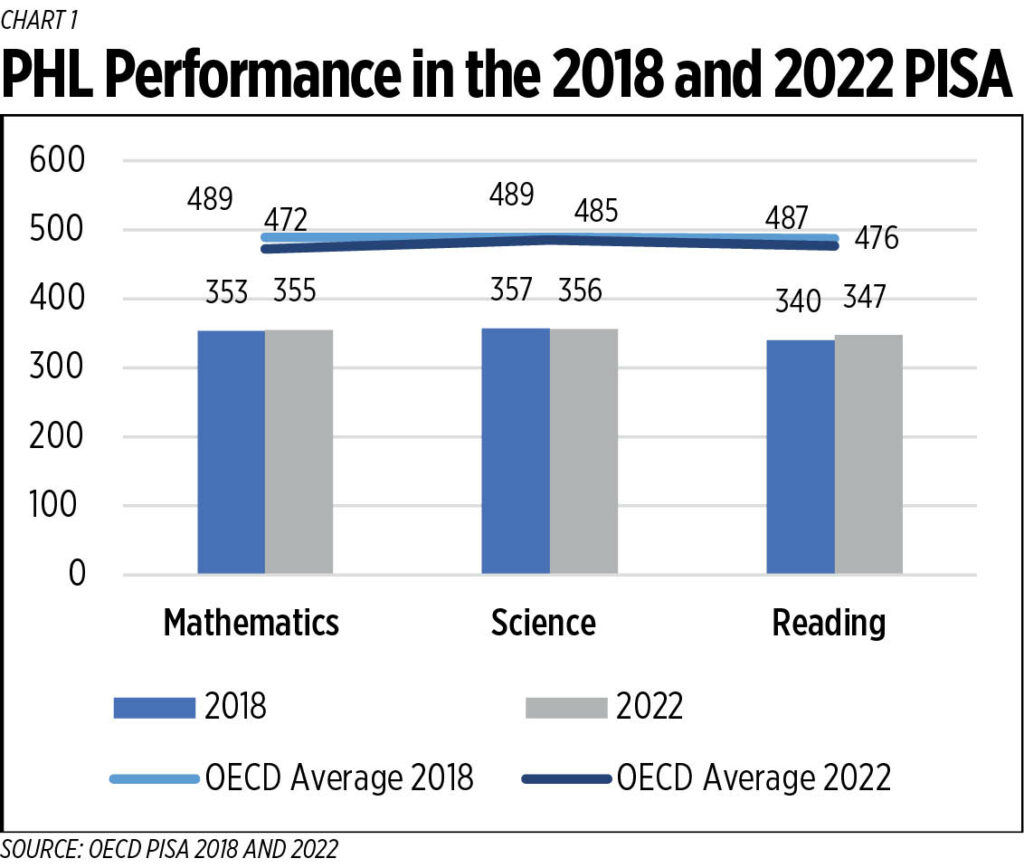
In response, the Department of Education (DepEd) in December 2019 assured the public that “the PISA results, along with our own assessments and studies will aid in policy formulation, planning and programming.” There was some honest admission that such results demonstrated in no uncertain terms the urgency of addressing issues and gaps in attaining quality basic education in the Philippines. As if to show its quick response capability, DepEd launched “Sulong Edukalidad” that would usher in “aggressive reforms” to achieve positive results in educational transformation.

The mantra was quite impressive: no student should be left behind in any part of the country. DepEd virtually called for a whole-of-society approach, especially in the areas of reviewing and updating of the K to 12 program, the improvement of learning facilities, upskilling and reskilling of teachers and school heads, and the engagement of stakeholders including parents and guardians of students.

The key challenge in the DepEd efforts to produce results is money.

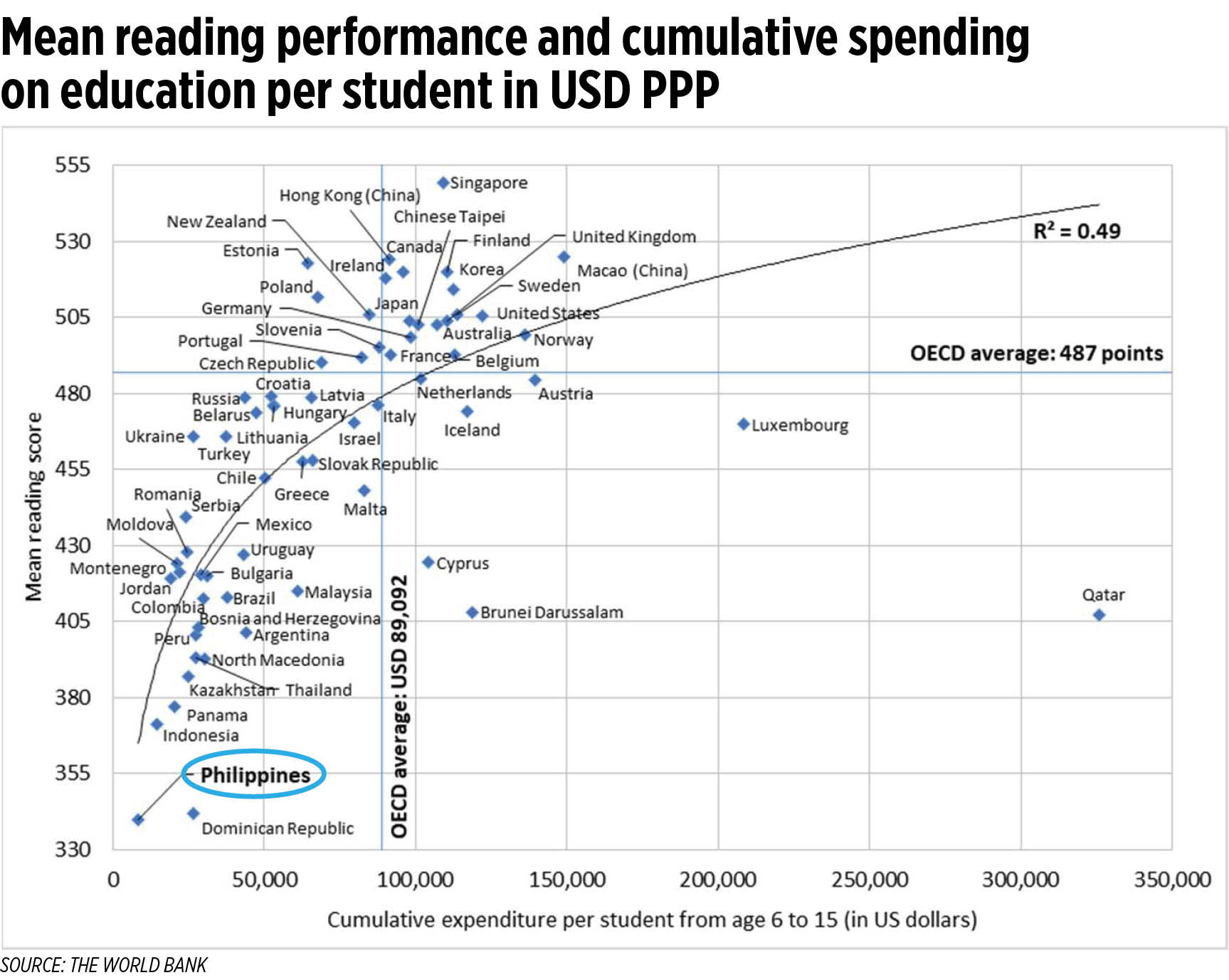
As a headline marker, one can argue that the Philippines is not putting its money where its mouth is. In June 2020, the World Bank, in its assessment of PISA’s 2018 country report on the Philippines, correlated the Filipino students’ performance in reading with public spending on education. The result is incontrovertible. The World Bank computed that the Philippines’ cumulative spending per student amounting to $8,474 (based on purchasing power parity) was the lowest among all the participating countries against the OECD average of $89,092!
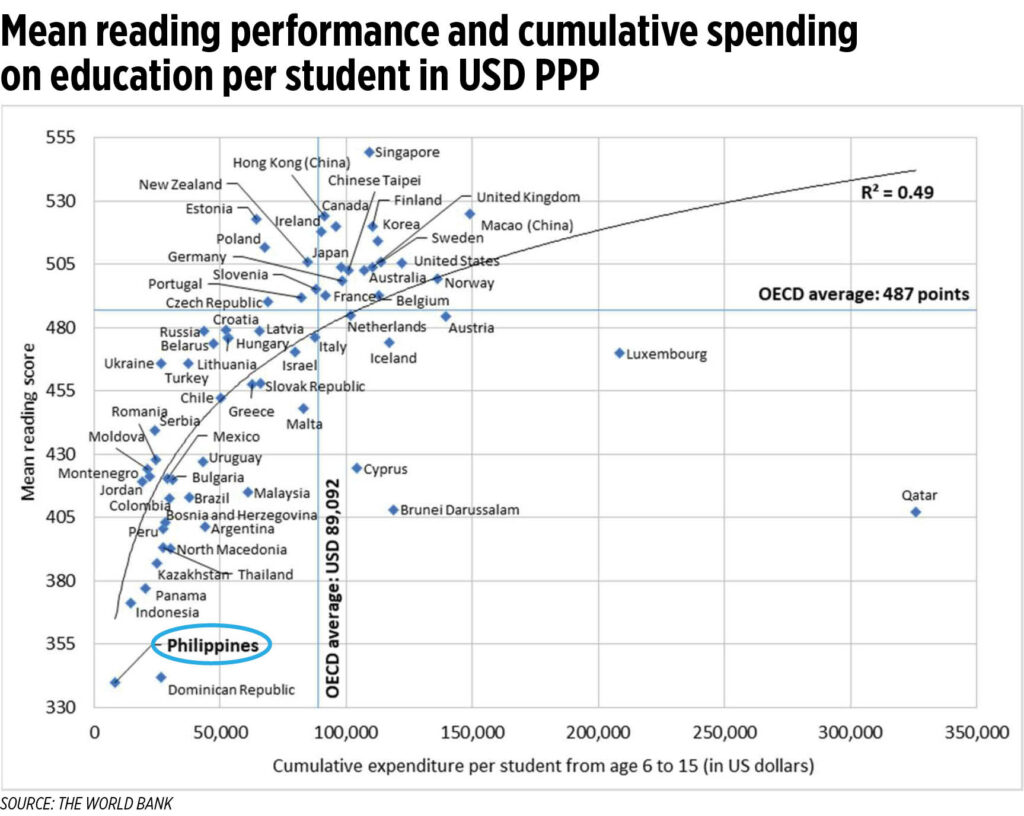
We were outclassed both in public spending and students’ scores in reading even by such countries as Estonia, Croatia, Latvia, Malta, Peru, and Panama.

Congress should therefore at least sustain the 1987 Philippine Constitution’s provision that education should be top priority in the budget. Its lion’s share should continue to increase over time. As the PDP admitted, “the Philippines is in a learning crisis, and the COVID-19 pandemic will make it even worse.”

But the numbers don’t lie. We did not respond to the call.

As Macrotrends observed, general government spending on education — inclusive of current, capital, and transfers as a share of total general expenditures on all sectors namely health, education, social services, etc. — actually declined, rather than increased from 2019 through 2022. In 2019, the year after the 2018 PISA assessment, the ratio stood at 17.89%, down by 0.85% from 2018; it was 16.97% in 2020, down by 0.91% from 2019; 16.782% in 2021, down by 0.25% from 2020; and 15.7% in 2022, down by 1.02% from 2021.

The Department of Budget and Management (DBM) and Congress cannot by no means deny that in 2022 alone, while educational agencies like DepEd and state-owned universities and colleges received a total of P789 billion, that only represented a mere 5% increase over the previous year’s level. Public works, on the other hand, which cornered a little lower amount of P787 billion was actually given a higher allocation by more than 13%.
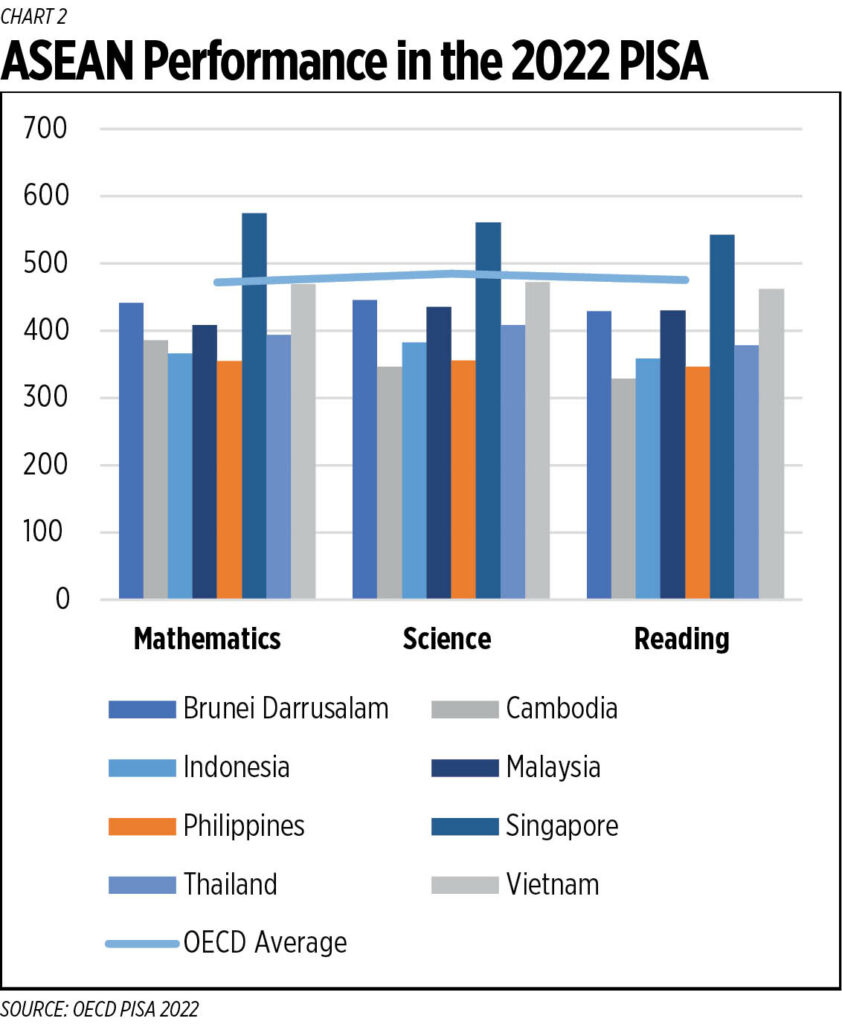
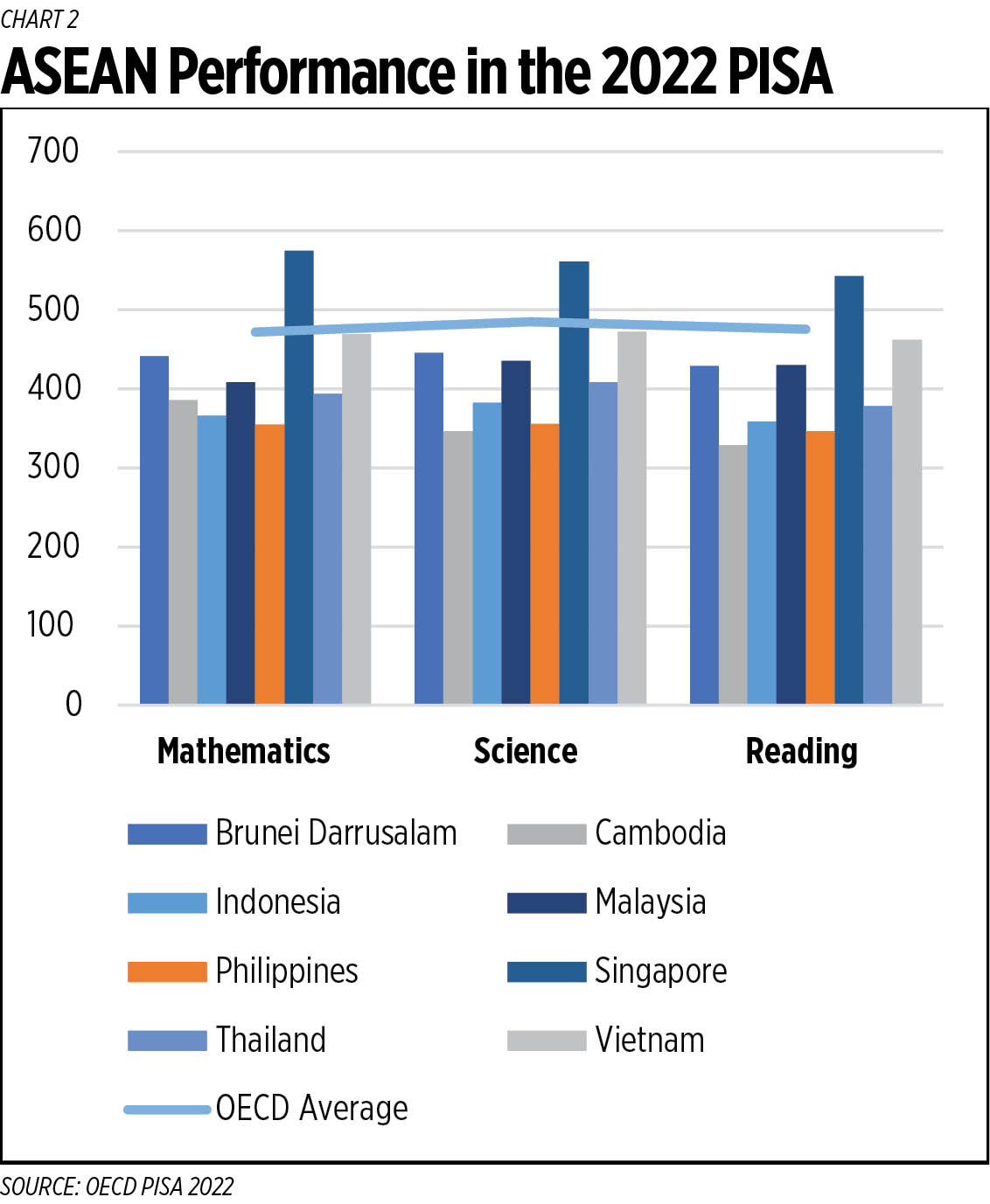
Should we be surprised that in 2022, four years after their initial assessment, Filipino students remained poor in learning? A pitiful less than a quarter of Filipino students who took the test hurdled the minimum level of proficiency in reading, mathematics, and science. The Philippines continued to score significantly lower than the OECD averages in all three subjects. We compared very poorly with our ASEAN peers, especially with Singapore, Malaysia, and Vietnam in all three subjects in 2022.

During the same assessment, Filipino students also ranked among the lowest globally in creative thinking. We were at par only with bottom dwellers from Albania, Uzbekistan, and Morocco. Our mean score was only 14 out of a possible 60 points, less than half of the OECD average of 33.

Those countries that allocated more public spending on education, like Singapore, Korea, Canada, Australia, and New Zealand, scored highest among those assessed.

PISA traced this weak proficiency in academics and critical thinking to equally weak support in technology and school facilities, which is equivalent to tracing the problem to the very feeble public spending by the Philippines in education. It comes down to the budget and governance.

This could not have been made more graphic than what the broadsheets reported the other day about the miserable shortage of classrooms in the Philippines. No less than Education Secretary Sonny Angara explained it: “Around 165,000 and growing because the current budget can’t support it — at this rate, it will take us 30 years to build if we stick to the existing budget!”

This means Congress should not only uphold the constitutional priority given to education, but it should also endeavor to increase its absolute size year after year. This is no different from what we need to do to make up for the large 9.5% decline in GDP in 2020 by growing much, much more than the official target of 6-8%. We need to do more to mitigate poverty incidence and income inequality in the Philippines by growing more than historical trends.

The DepEd is quite late in the game in raising the issue of the shortage of classrooms and the need to partner with the private sector. In the last several decades, this issue has always been on the agenda of the Government. DepEd admitted that in the 2025 budget, its allocation was indeed reduced. In the immediate future, when this issue is not addressed and addressed well, Filipino students will continue to “face overcrowded conditions, limited resources, and compromised learning environment.”

Against the PDP’s four desirable outcomes in the areas of educational attainment, student achievement, student wellbeing, and attitudes towards school and learning are four key foundations: quality instruction, learning time, inclusive environment, and family support.

DepEd’s call, however, addresses only the issue of educational infrastructure and facilities, perhaps learning time and conducive environment for learning. The other foundation of good quality education is, of course, the quality of instruction. Our public educational system is also hamstrung by the lack of teachers, competent teachers no less, and appropriate vetted teachings materials. The other week, the DBM approved 16,000 teaching posts for the coming school year. This should have been done yesterday, too! It’s not uncommon that when we combine the problems of lack of classrooms and teachers, we have many situations in many public schools where there are three shifts, instead of the previous two, and one teacher looking after over 50 students.

That brings us to the role of the private schools. In the 2018 PISA assessment, a scatter plot clearly showed that high achievers in the tests mostly came from independent private institutions. In these institutions, both the learning environment and quality of instructions are broadly and relatively higher. Public school students in general, buffeted by deficient infrastructure and weak instructional program, performed poorly in the tests.

Should we then direct more of our resources towards expanding access to education rather than to improving the quality of education?

In an article in the IMF’s Finance and Development Magazine of March 2025 (“The Power of Education Policy”), the World Bank’s Amory Gethin argued that education quantity drove global poverty reduction from 1980-2019. During the same period, the share of adults with no schooling declined while those with some schooling rose. On the other hand, education quality had stagnated.

Policy-wise, this should suggest that the National Government respond to DepEd’s appeal for more classrooms and trained teachers while providing some form of incentives for the private independent educational institutions to provide additional access for the rest of the school-going population in key areas throughout the Philippines. The quality of instruction can partly be managed by increased levels of technology use. The returns could in fact be much higher. This will be enhanced when better education outcome is linked to industry and services. Such synergy could many times increase productivity and efficiency, and mitigate social problems.

As Gethin quipped: “Failure to expand access to education would represent an enormous missed opportunity to enhance inclusive growth.”


Diwa C. Guinigundo is the former deputy governor for the Monetary and Economics Sector, the Bangko Sentral ng Pilipinas (BSP). He served the BSP for 41 years. In 2001-2003, he was alternate executive director at the International Monetary Fund in Washington, DC. He is the senior pastor of the Fullness of Christ International Ministries in Mandaluyong.


BPI on track to hit P1T in sustainability loans

RAWPIXEL/FREEPIK

BANK of the Philippine Islands (BPI) is on track to hit its target of P1 trillion in sustainability-linked loans by 2026.

“We’re well on that [path],” BPI Chief Sustainability Officer and Chief Financial Officer Eric M. Luchangco told a news briefing on Thursday, referring to the goal that the lender set in 2021.

BPI’s sustainability-linked loans had reached almost P900 billion as of the first quarter, he added. That means more than a third of the bank’s P2.3-trillion total loan portfolio.

The publicly listed bank would finance bigger projects that need more sustainability planning, Mr. Luchangco said. They would also do projects on energy efficiency, which are smaller and tend to get fewer headlines, he added.

He said BPI could also finance projects on water treatment, pollution control and agri-lending. “Those are also a significant factor or contributor to our SDG (sustainable development goals).”

The CFO said the bank’s small and medium enterprise (SME) loans, which also fall under sustainable lending, have been its fastest-growing loan book.

Mr. Luchangco said they hit the target earlier since sustainability loans have been growing faster than regular loans.

As part of its sustainability financing targets, BPI also wants 50% of its loans to be sustainability-themed by 2026, but Mr. Luchangco said this might be harder to achieve.

“Between those two goals, I think that one will be the more challenging one to achieve,” he said. BPI’s overall loan growth was about 13% in the first quarter, he added.

Meanwhile, Mr. Luchangco said BPI could finalize its framework for blue bonds this year, but the bank has yet to decide on its first issuance, which will depend on funding requirements.

He also said BPI raised more than the initial P5-billion plan from its recent offer of 1.5-year peso-denominated fixed-rate BPI Supporting Inclusion, Nature, and Growth (SINAG) bonds.

The bank ended the offer period early on March 23 instead of May 30 as originally scheduled.

“We haven’t publicly disclosed the size, but it will definitely be larger than the initial disclosed offer, which I believe was P5 billion,” he said. “The demand for this bond has been very, very strong.”

BPI started the offer period on May 20, pricing the notes at 5.85% per annum to be paid quarterly. The debt will be issued and listed on the Philippine Dealing and Exchange Corp. on June 10.

The bonds were sold at a minimum investment amount of P500,000 and in increments of P100,000 above that.

The SINAG bonds will make up the first tranche of the bank’s P200-billion bond and commercial paper program approved by its board in October last year.

BPI would use the proceeds of the bond sale to finance or refinance eligible projects under its sustainable funding framework, it said earlier.

The bank tapped BPI Capital Corp. and Standard Chartered Bank as the joint lead arrangers and selling agents for the offer.

BPI’s net income rose 9% year on year to P16.6 billion in the first quarter.

Its shares fell by 0.72% or a peso to P138 each at the close of trading. — Aaron Michael C. Sy

DHL taps MSpectrum for solar energy in Laguna

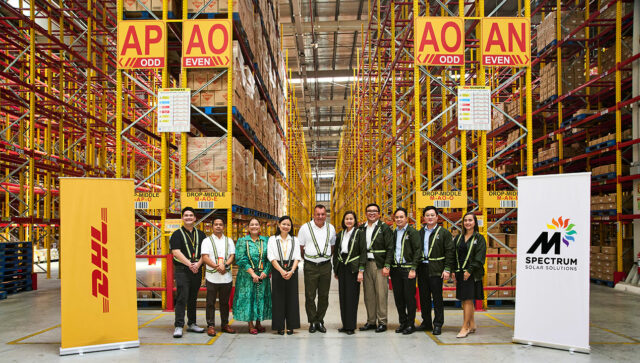
In photo are (from L-R) DHL Supply Chain Sector Head for Consumer and Retail Anthony Molina, DHL Supply Chain Business Development Director Eli Camus, DHL Supply Chain HR Director Cecilia Araneta, DHL Supply Chain Country Operations Excellence Director Brigette Ann Cias, DHL Supply Chain Country Managing Director Bevan Williams, MSpectrum President and Chief Executive Officer Ma. Cecilia M. Domingo, MSpectrum Chief Operating Officer Patrick Henry Panlilio, MSpectrum Commercial Services Head Rodolfo Lim, Jr., MSpectrum Account Officer Ronwell David, and MSpectrum Account Officer Billy Jean Palomiano.

MSPECTRUM, Inc., a wholly owned solar subsidiary of Manila Electric Co. (Meralco), has energized DHL Supply Chain’s training center in Sta. Rosa, Laguna with a 120-kilowatt-peak solar rooftop system.

The solar rooftop installation is expected to generate approximately 171,000 kilowatt-hours of electricity annually, enabling DHL to reduce its carbon emissions by an estimated 121 tons, MSpectrum said in a media release on Thursday.

“We are looking at building a few more sites powered by solar energy. It just makes so much sense, not just for this generation, but for future generations as well. We’ll continue to invest in solar panels, and we look forward to expanding and strengthening this partnership with MSpectrum,” DHL Country Managing Director Bevan Williams said.

MSpectrum and DHL began their partnership with the energization of the logistics firm’s largest facility in Sta. Rosa, Laguna. The collaboration was further supported by Power Consult’s advisory on optimizing energy usage.

“This partnership is more than just a milestone — it is a meaningful step toward our shared vision of a future where solar rooftops are a common sight across the Philippines. With this project, we take one step closer to that future,” MSpectrum President and Chief Executive Officer Ma. Cecilia M. Domingo said.

MSpectrum has been in the solar industry for eight years and has installed more than 80 megawatts of rooftop solar capacity, estimated to power around 40,000 households.

“As an active nation-building partner, Meralco and its subsidiaries actively support the logistics sector with innovative solutions and empower stakeholders to further contribute to economic development,” MSpectrum said.

Meralco’s controlling stakeholder, Beacon Electric Asset Holdings, Inc., is partly owned by PLDT Inc.

Hastings Holdings, Inc., a unit of PLDT Beneficial Trust Fund subsidiary MediaQuest Holdings, Inc., holds an interest in BusinessWorld through the Philippine Star Group, which it controls. — Sheldeen Joy Talavera

Stuff to Do (05/30/25)


Shop at DTI’s food fest at Megamall

THE Department of Trade and Industry (DTI) presents Food Festival 2025 — a three-day showcase celebrating the richness of Filipino gastronomy and the innovative spirit of local food micro, small, and medium enterprises (MSMEs). It will be held be held from May 30 to June 1 at Megatrade Halls 1–3, SM Megamall. There will be over 250 exhibitors from across the country, blending culinary tradition with technology and innovation. The food fest will showcase heritage-inspired food products from Luzon, Visayas, and Mindanao through curated exhibits, live cooking demonstrations, and the featured Kayumanggi Philippine heritage recipe book. It also celebrates Iloilo City’s designation as a UNESCO Creative City for Gastronomy. The DTI food fest also marks the launch of the DTI Malikhaing Pinoy Website, a technological space for the DTI B2B Marketplace online platform designed to connect Filipino MSMEs with a wider market.


Adopt a cat at Farmers Plaza

ON May 31, City Cats of Cubao will be holding an adoption drive at the activity area on the lower ground floor of Farmers Plaza in Quezon City. The whole-day event, done in partnership with Araneta City, aims to open new doors and opportunities for spayed and neutered cats around properties in Cubao. Those who visit can inquire about around 40 cats that are available for rehoming and adoption.


Attend an Art Deco lecture at the National Museum

THE lecture series “Making Modernity: The Art Deco Centennial Lectures 1925-2025” is set to take place on May 31 at the NMP Auditorium of the National Museum of Fine Arts in Manila. Starting at 8 a.m., the first session, “Spaces of Spectacle,” celebrates Art Deco in three talks on art, architecture, and history. It will discuss Art Deco’s influence across various regions, from public buildings to commercial establishments, creating an impression on the visual character of Filipino urban spaces. There will be Facebook and YouTube livestreams on the pages of the National Museum of the Philippines and Museum Foundation of the Philippines.


Shop for vintage at the Makati Retro Exchange

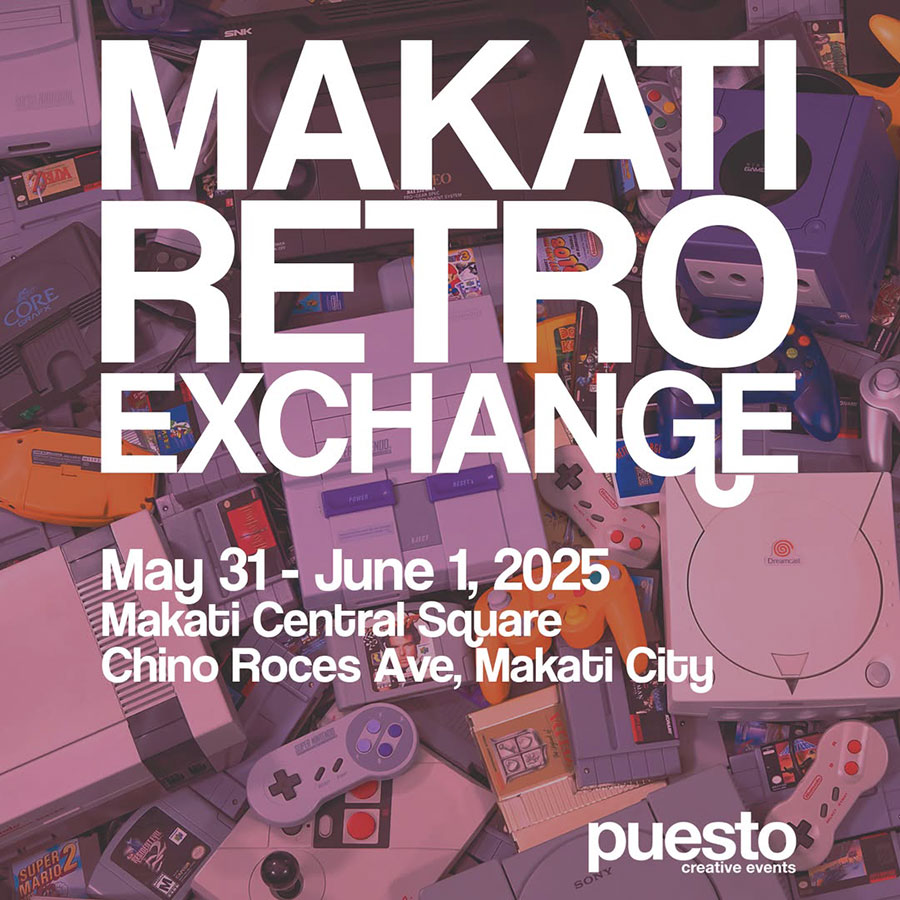
THIS weekend, Makati is going retro with the Makati Retro Exchange, a market that will be set up inside Makati Central Square (formerly known as the Makati Cinema Square, or MCS). Those looking for vintage and classic items, like clothes, toys, books, magazines, comics, posters, vinyls, cassettes, games, consoles, jewelry, accessories, home decor, furniture, and more, can find them here. The market will be open on May 31 and June 1.


Trade cards at Ali Mall

THE Neutral Grounds: Unplug and Play event will be held on May 31 at 1 p.m., at Ali Mall in Cubao, Quezon City. There will be new product releases, free game demos, and freebies. Gamers can join Flesh and Blood, a hero-centric trading card game. It will be held at the Ali Mall Activity Area on the ground floor. The game introduces its new High Seas expansion, where players are challenged to conquer the most treacherous and unforgiving tidal storms.


Go to the ballet

SUPERSTARS from the San Francisco Ballet in the United States will be gracing the home stage of Ballet Manila, the Aliw Theater, for its production of the iconic Swan Lake. The ballet will be headlined by Katherine Barkman and Esteban Hernández who are the first soloist and principal dancer of San Francisco Ballet, respectively. Their performances will be on May 30 at 8 p.m., May 31 at 5 p.m., and June at 5 p.m. Meanwhile, Ballet Manila’s principal dancer Abigail Oliveiro will pair up with San Francisco Ballet company artist Nathaniel Remez for matinee performances on May 31 and June 1, both at 1 p.m. All performances will be staged at the Aliw Theater, CCP Complex, Pasay City. For tickets, visit www.ticketworld.com.ph


Listen to It All Started in May’s first single

A NEW Filipino band, It All Started in May (IASIM), has released their debut single “O’ Kay Tamis” under Universal Records. The track made it to not just the New Music Friday playlist of Spotify Philippines, but also to the Fresh Finds Philippines playlist, even being featured on the cover. Formed just a year ago, the band gained attention in January when their covers of classic Filipino songs, including the iconic “Manila” by Hotdog and “Your Song” by Parokya ni Edgar, went viral on TikTok. GLXY is their talent management company. “O’ Kay Tamis” is out now on all digital music streaming platforms.


Watch Puregold digital series Si Sol at Si Luna

THE latest digital series of the Puregold Channel is Si Sol at Si Luna, starring Zaijian Jaranilla and Jane Oineza in an age-gap romance story. Sol, a film student working on his thesis, sees his life change when he meets the heartbroken Luna, who is older than him. The series is directed by Dolly Dulu, best known for her feature film The Boy Foretold by the Stars as well as her TV directorial work. The series was pitched as an entry to the 2025 Puregold CinePanalo Film Festival, making the top 16 but not greenlit as a film. Instead, Puregold funded the project in an expanded form as a weekly digital series. Si Sol at Si Luna is set to premiere on the Puregold Channel on YouTube on May 31, 7 p.m. Subsequent episodes will drop weekly every Saturday at the same time.


Listen to Tothapi’s jazzy pop single

BICOL-BASED pop outfit Tothapi is making noise once more in the local music scene, blending pop melodies with jazz rhythms. The eight-piece band has dropped their latest single, “Ulan,” which talks of a love that’s constantly shifting, hot and cold, much like the seasons. It captures the experience of being entangled in a relationship marked by uncertainty and half-presence. “Ulan” is out now on all digital music streaming platforms.

The political consequences of economic policy

PRESIDENT FERDINAND R. MARCOS, JR. — PPA POOL YUMMIE DINGDING

WHY did the administration’s candidates perform poorly in the midterm elections?

The conventional wisdom is that it was President Ferdinand “Bongbong” Marcos, Jr.’s handling of former President Rodrigo Duterte’s arrest and detention at the International Criminal Court (ICC) that turned off the voters and resulted in the anti-administration vote.

However, if this were true, why did Bam Aquino and Francis Pangilinan exceed all expectations and land in 2nd and 5th place in the senatorial elections? Bam Aquino and Francis Pangilinan belong to the Yellow or Pink opposition and are known to be Duterte’s political enemies. Former Senator Leila de Lima, whom Duterte jailed for alleged drug ties, got a seat in Congress under the Mamamayang Liberal Party. Akbayan, no political friend of Duterte, also got the highest number of votes for party-list representation.

Therefore, the midterm elections cannot be construed purely as a pro-Duterte vote. Rather, it was a political rebuke of the administration, with the anti-administration votes shared by both the Yellow and Pink opposition and the Duterte camp.

My theory is that the administration’s handling of the economy made voters sour on the administration candidates. As it was in the last US presidential election, it was “the economy, stupid!” It was the high cost of living that turned independents, young men, and even some Latinos and blacks against the Biden administration and the Democratic party, polling after the election revealed.

Similarly, the high cost of living here, primarily driven by high food prices, caused voter dissatisfaction, and likely caused an anti-administration vote. An SWS survey revealed that the economy, including job creation and cost of living, remained the top issue of many voters.

Voters probably saw through the P20 a kilo rice as too gimmicky and its effects too limited.

It wasn’t only the high food prices that weighed on the overall cost of living, the “higher for longer” interest rates probably did too. In response to the escalating food prices and higher than targeted inflation, the Bangko Sentral ng Pilipinas (BSP) raised interest rates. The negative effect of the higher interest rates resulted in slowing down the economy (5.2% in the fourth quarter 2024 and 5.4% in the first quarter 2025, instead of the targeted 6%). However, it was felt most notably in the real estate sector, as middle-class buyers dropped out of the market for residential condominiums because of the higher mortgage payments. This is the reason why a severe imbalance between supply of condominiums for the middle class and demand occurred, and condominium developers were left with lots of unsold inventory, especially in non-premium locations in Quezon City, Pasig, and Manila.

The problem of President Marcos Jr. is that he resorted to the old paradigms: protectionism, statism, and populism to manage the economy, and he got a political blowback as a result.

Consider former President Duterte in contrast. The first thing he did was to cut taxes for the middle class by adjusting the tax rates, which, because of inflation, pushed a lot of workers into higher tax brackets. He also cut taxes for corporations (from 30% to 25%), introduced more competition in the telco sector (Ditto), cut bureaucratic red tape (the ARTA law), simplified payment of inheritance taxes, simplified land titling (RA 11573), and removed the restrictions on agricultural patents (RA 11573), lifted the mining and open-pit mining ban, increased infrastructure spending, dismantled the National Food Authority (NFA) monopoly and liberalized rice importation, leading to lower rice prices.

In other words, former President Duterte adopted pro-market policies of more competition, deregulation, tax simplification, and liberalization that boosted the economy and improved general well-being. This was why he enjoyed high approval ratings even when he left office.

On the other hand, the first economic legislation that President Marcos Jr. pushed for was the Maharlika Investment Fund, whose effects can hardly be felt by the masses.

He also resorted to statism by getting the Department of Agriculture and the NFA back into the rice game. There was even an attempt to control rice prices by imposing rice price caps and blaming “hoarders and speculators.” Not surprisingly, those targeted rice traders just withheld supply from the market.

Instead of liberalizing food importation, the administration doubled down on protectionism by keeping the same import quotas on corn, sugar, fish, and other commodities. It didn’t help that there was no attempt to reform the phytosanitary clearance process, which was used to control importation.

Let us take the example of corn. Because the domestic price of corn is high and it accounts for 60% of the cost of poultry and swine production, our chicken and pork prices are double those of Thailand and Vietnam. We can’t produce enough corn domestically and at affordable prices because of our small-scale agriculture (land reform* was the culprit). However, corn importation is controlled through a system of quantitative restrictions. The annual import quota of 216,000 metric tons for corn is way below the industry requirement of 3 to 4 million metric tons. Out-quota importations are slapped with a 50% tariff. Instead of allowing the market to determine import volumes, the Department of Agriculture allocates the quota to favored traders.

The result is high corn prices, high chicken prices, high pork prices, and therefore, higher protein malnutrition, higher cost of living, and dissatisfaction with the status quo.

However, another economic policy will likely increase public dissatisfaction in the months ahead: allowing the peso to strengthen.

The strong peso is reducing the incomes of overseas Filipino workers’ (OFW) families, making it cheaper to import goods that will compete with local industries, discouraging exports, and reducing the profitability of business process outsourcing firms or BPOs, which are already facing challenges from Artificial Intelligence. The pain of OFW families will be particularly acute as they rely on these remittances to support their daily cost of living. Local manufacturers are also seeing a flood of Chinese imports. Even Philippine retailers are stressed by cheap goods from China being sold through Lazada, Shopee, Temu, and TikTok.

The strong peso is undermining the tariff advantage that the Philippines enjoyed under Trump’s Liberation Day tariffs, with the Philippines being slapped with a 17% tariff compared to Vietnam’s 47%, Indonesia’s 32%, and Thailand’s 36%.

The strong peso is also undermining a key economic strategy of the administration: forging FTAs or Free Trade Agreements with the EU, UAE, Canada, and the USA. The Department of Trade and Industry is also pushing for the country’s membership in the Comprehensive and Progressive Agreement for Trans-Pacific Partnership (CPTPP).

Why would investors come here and take advantage of our relatively lower tariffs under Trump or duty-free access to foreign markets when the strong peso makes labor and other domestic resources more expensive and makes exporting from the Philippines less competitive?

The BSP can, and has, shrugged off the strong peso because its mandate is inflation rate targeting, not exchange rate targeting. That may be, but there will be real political and economic consequences for the administration. Growth will surely slow, and there will be a lot of unhappy people, from OFW families to local manufacturers, and from exporters to farmers.

With oil prices, as well as prices of other commodities, from fertilizer to rice, softening and China dumping its surplus goods in our market, it’s unlikely that a weak peso will substantially increase inflation. The timing may be right to allow the peso to weaken and let an undervalued peso protect us, including our farmers, from imports rather than quantitative restrictions.

President Marcos Jr. has just three years left to generate the political capital to ensure that there will be a friendly leader to succeed him. Resorting to the old paradigm of protectionism, statism, populism, and a strong peso will make that task harder. It’s time for him to take a risk and try a new paradigm.

*The Comprehensive Agrarian Reform Program or CARP


Calixto V. Chikiamco is a member of the board of IDEA (Institute for Development and  Econometric Analysis).

totivchiki@yahoo.com

Banks’ trust assets up 19% at end-March

FREEPIK

ASSETS of Philippine banks’ trust units jumped 18.6% to P4.69 trillion at the end of March from a year earlier, according to data from the central bank, which could boost their noninterest income from management fees, commissions and other charges.

Net deposits reached P1.19 trillion as of end-March, 15.1% higher than a year ago, Bangko Sentral ng Pilipinas (BSP) data showed. Net financial assets rose 18.2% year on year to P2.77 trillion.

Cash on hand, in transit and in deposits with other banks surged 46% to P584 million from a year earlier.

Loans, which include gross equity investments, fell 13.3% year on year to P41.68 billion.

Under total accountabilities, trust holdings rose 16.9% to P1.63 trillion at end-March from a year earlier. Unit investment trust funds jumped 35.5% to P659.1 billion, while employee benefits went up 9.4% to P364.38 billion.

Universal and commercial banks had the bulk or P4.67 trillion of these trust holdings, which they hold and manage on behalf of their clients. — Luisa Maria Jacinta C. Jocson

National Reinsurance Corporation of the Philippines to hold Annual Meeting of Stockholders on June 25

NOTICE OF ANNUAL MEETING OF STOCKHOLDERS
JUNE 25, 2025 / 2:00 P.M.

Please be advised that the Annual Meeting of Stockholders of NATIONAL REINSURANCE CORPORATION OF THE PHILIPPINES (the “Company”) will be held on June 25, 2025, Wednesday, at 2:00 p.m., at the Kawayan Ballroom, 4F The City Club, Alphaland Makati Place,7232 Ayala Avenue Extension, Makati City, with the following agenda:

  1. Call to Order 
  2. Proof of Notice of Meeting and Certification of Quorum 
  3. Approval of Minutes of Previous Stockholders’ Meeting held on June 26, 2024 
  4. Management Report for the Year Ended December 31, 2024 
  5. Ratification of All Acts of the Board of Directors and Officers during the Preceding Year 
  6. Election of Directors 
  7. Re-election of Mr. Medel T. Nera as Independent Director 
  8. Other Matters 
  9. Adjournment

Only stockholders of record at the close of business on May 13, 2025 are entitled to notice of, to attend, and to participate in this year’s Annual Meeting. Stockholders who are unable to attend the Annual Meeting in person may execute a proxy or vote in absentia.

Proxy

Proxies must be submitted and addressed to the attention of the Corporate Secretary at the 31st Floor BPI-Philam Life Makati, 6811 Ayala Avenue, Makati City, Philippines or via email at asm@nat-re.com not later than 3:00 p.m. on or before June 15, 2025.

A proxy executed by a corporation shall be in the form of a board resolution duly certified by the Corporate Secretary or in a proxy form executed by a duly authorized corporate officer accompanied by a Corporate Secretary’s Certificate quoting the board resolution authorizing the said corporate officer to execute the proxy. Validation of proxies shall be held on June 20, 2025, at 2:00 p.m. at the principal office of the Corporation.

Voting in Absentia

Stockholders who intend to vote in absentia must submit the requirements by email at asm@nat-re.com or at the registration portal.  Please refer to this link for the list of requirements – https://www.nat-re.com/investor-relations/annual-stockholders-meeting/#rvj.

The link for the online voting facility will be emailed to the concerned stockholders after the Company has validated the submitted requirements. Stockholders may cast their votes in absentia from May 28, 2025, until 11:00 a.m. of June 25, 2025.

On-site Registration

To avoid any inconvenience in registering your attendance at the meeting, you or your duly designated proxy, are required to bring this Notice, and any identification documents containing a photograph and signature, such as a passport, driver’s license, or any government-issued identification. Registration starts at exactly 1:00 p.m. and will close at 2:00 p.m. on June 25, 2025.

Copies of the Notice of the Meeting, Definitive Information Statement, and other related documents in connection with the annual meeting may be accessed through the company’s website and through the PSE Edge portal at https://edge.pse.com.ph.

For any concerns, please reach us through asm@nat-re.com.

For complete information on the Company’s annual meeting, please visit www.nat-re.com/investor-relations/annual-stockholders-meeting.

May 22, 2025, Makati City, Metro Manila.

Access to Notice of Meeting, Agenda Items and Explanation of Agenda Items, Proxy Form, Sample Secretary Certificate, Definitive Information Statement, Management

Report, Financial Statements, SEC Form 17A and Minutes of Stockholders’ Meeting dated June 26, 2024 can be downloaded by scanning the QR code provided herewith.

Likewise, you may also download it from the Company’s website by clicking this link https://www.nat-re.com/investor-relations/annual-stockholders-meeting/#files.

Electronic copies of the same documents are also available at the PSE Edge.

For the Board of Directors,

(Original Signed)
NOEL A. LAMAN
Corporate Secretary


Spotlight is BusinessWorld’s sponsored section that allows advertisers to amplify their brand and connect with BusinessWorld’s audience by publishing their stories on the BusinessWorld Web site. For more information, send an email to online@bworldonline.com.

Join us on Viber at https://bit.ly/3hv6bLA to get more updates and subscribe to BusinessWorld’s titles and get exclusive content through www.bworld-x.com.

SEC pushes real estate developers to tap capital market

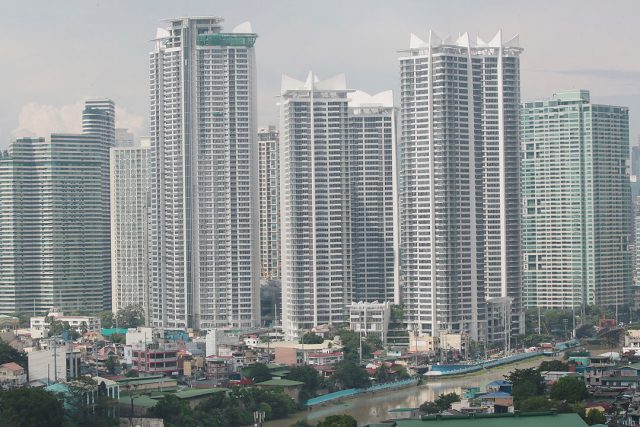
A VIEW of buildings in Makati City. — PHILIPPINE STAR/MICHAEL VARCAS

THE Securities and Exchange Commission (SEC) is urging real estate companies to tap the capital market for their growth and funding needs, citing a streamlined registration process.

“Access to the capital market can provide a long-term, cost-effective financing alternative, unlocking new opportunities for expansion and innovation. At the same time, increased real estate activity within the capital market can attract a more diverse pool of investors and contribute to greater market liquidity and resilience,” SEC Commissioner McJill Bryant T. Fernandez said in an e-mail statement on Thursday.

“Given its scale and strategic importance, the real estate sector stands to benefit immensely from deeper participation in the capital market,” he added.

At a launch event on May 21, the SEC introduced the guidelines on Securing and Expanding Capital in Real Estate Investment Transactions (SEC RENT), implemented through SEC Memorandum Circular No. 12, issued on July 16, 2024.

SEC RENT streamlines the registration process for securities issued by real estate companies offering investment contracts through rental pool agreements.

Rental pool agreements are investment contracts in which a property developer sells or offers units in real estate projects — such as condominiums, hotels, or resorts — to the public, provided that buyers contribute the units to a rental pool managed and operated by the company or a third-party operator.

Under such agreements, buyers receive a share in profits based on agreed conditions, typically derived from renting out the units to third parties.

“The growth of the real estate sector and the development of the capital market are mutually reinforcing,” Mr. Fernandez said.

“Accounting for 5.6% of gross domestic product in 2024, the real estate industry continues to be a vital engine of economic development, with strong interconnections to construction, finance, retail, and tourism,” he added.

Under the Securities Regulation Code, the SEC Markets and Securities Regulation Department is mandated to complete its review of registration statements filed by covered companies within 45 days.

“We probably look at securities offering and all these types of capital market sourcing as for the big players alone. Small companies like us traditionally resort into borrowings as source of funds to continue operating our businesses,” Chamber of Real Estate & Builders’ Association, Inc. Vice-President for Housing Affairs Demetrio L. Posadas said.

“Our organization appreciates the efforts being extended by the SEC for now reaching out not only to big developers, but likewise for making us understand that we, small companies, probably have a chance to participate in this capital market,” he added. — Revin Mikhael D. Ochave

Sean ‘Diddy’ Combs allegedly threatened to leak sex tapes of his ex

Sean “Diddy” Combs on the talk show Late Night with Seth Myers. — IMDB

NEW YORK — Sean “Diddy” Combs routinely beat his ex-girlfriend and during fits of rage threatened to release sex tapes of her to the internet, a stylist testified on Wednesday at the hip-hop mogul’s sex trafficking trial.

Deonte Nash, who worked as a stylist for Mr. Combs and Mr. Combs’ former girlfriend Casandra Ventura from 2008 to 2018, alleged that Mr. Combs repeatedly beat Ms. Ventura and threatened to release the tapes while raging at her for not being obedient.

“He told her she fucked up and he was going to put her sex tapes on the internet,” Mr. Nash said, recounting an alleged incident in 2013 or 2014.

Mr. Combs, 55, has pleaded not guilty to five counts including racketeering and sex trafficking. He faces up to life in prison if convicted on all counts.

Last week, Scott Mescudi — the rapper known as Kid Cudi — testified that his car was set on fire in 2012, shortly after Mr. Combs learned that Mr. Mescudi had a romantic relationship with Ms. Ventura.

Prosecutors say the alleged arson of Mr. Mescudi’s car was one of several violent or illegal acts that Mr. Combs or his associates undertook to prevent women from leaving his orbit and keep his abuse quiet.

On Wednesday, a lawyer for Mr. Combs told the judge outside the jury’s presence that prosecutors’ questions to a Los Angeles arson investigator implied that Mr. Combs had a role in the destruction of fingerprint evidence, arguing the questions were grounds for a mistrial.

US District Judge Arun Subramanian swiftly denied the request, saying none of the testimony was unfair to Mr. Combs. He told jurors to disregard the questions and answers about the fingerprints.

Testimony in Mr. Combs’ trial in Manhattan federal court is in its third week. Prosecutors say Mr. Combs, the founder of Bad Boy Records, coerced women, including Ms. Ventura, over two decades to take part in days-long, drug-fueled sexual performances with male sex workers known as “Freak Offs.”

Mr. Combs’ lawyers have acknowledged that he was at times abusive in domestic relationships, but said the women who participated in Freak Offs did so consensually.

Over four days of emotional testimony during the first week of trial, Ms. Ventura recounted years of alleged physical and emotional abuse by Mr. Combs.

Ms. Ventura, a rhythm and blues singer known as Cassie, said she hated the Freak Offs. She said she participated because she loved Mr. Combs and because she feared how he would react if she didn’t. — Reuters

AI: The lifeline of healthcare innovation in ASEAN

IBM ASEAN

By Catherine Lian

ACROSS the ASEAN region, a quiet revolution is transforming healthcare. From bustling urban hospitals in Singapore to remote clinics in Indonesia’s archipelago, Artificial Intelligence (AI) is reshaping how healthcare is delivered, making it more accessible, efficient, and personalized. As ASEAN nations strive toward universal healthcare coverage, AI has emerged as a critical enabler, bridging gaps in infrastructure and expertise while pushing the boundaries of medical innovation.

DIGITAL TRANSFORMATION
From early diagnostics to operational efficiency, AI is no longer a futuristic concept — it is the lifeline of healthcare innovation in ASEAN today.

The healthcare landscape across ASEAN is diverse, with Singapore’s cutting-edge medical facilities standing in stark contrast to the limited resources available in rural areas of neighboring countries. This disparity creates both challenges and opportunities for AI implementation. While Singapore’s SingHealth and National University Health System forge ahead with sophisticated AI solutions, other nations are finding innovative ways to deploy AI that addresses their specific healthcare needs.

In Indonesia, for instance, DoctorTool has pioneered a generative AI-powered prescription support system built on IBM’s watsonx.ai platform. This solution helps healthcare providers comply with government regulations while minimizing insurance fraud — a critical advancement in a country where healthcare resources are stretched across 18,000 islands.

TRANSFORMING PATIENT CARE
The impact of AI on patient care is multifaceted and profound. Early disease detection, perhaps AI’s most significant contribution to healthcare, is transforming outcomes for patients across the region. AI algorithms can now detect subtle patterns in medical images that might escape the human eye, identifying cancers, diabetes complications, and heart disease at earlier, more treatable stages.

Beyond diagnostics, AI-powered telemedicine is bridging critical access gaps. In remote areas where specialist care was once unavailable, AI-enhanced telehealth platforms now connect patients with medical expertise. These systems don’t merely facilitate video consultations; they incorporate predictive analytics and decision support tools that enhance the quality of remote care.

Thailand’s Siriraj Piyamaharajkarun Hospital illustrates this transformation. By implementing an AI-powered Pathology Information System developed with IBM, the hospital has revolutionized cancer diagnostics. The system integrates laboratory workflows, image scanning, and centralized data processing, allowing pathologists to make faster, more accurate diagnoses. For patients awaiting potentially life-changing results, this efficiency isn’t just convenient — it’s lifesaving.

OPERATIONAL EXCELLENCE
While patient-facing applications capture headlines, AI is quietly transforming healthcare operations. Some hospitals have utilized AI for resource management, patient flow optimization, and staff scheduling — creating efficiencies that directly impact patient experience and outcomes.

Maharaj Nakorn Chiang Mai Hospital has leveraged generative AI to automate laboratory orders, improve resource management, and streamline patient flow. Built on watsonx.data and watsonx.ai, the AI model analyzes doctors’ notes, recommends treatment pathways, and automatically processes lab orders and bookings — enhancing efficiency, reducing patient waiting times, and supporting faster, more confident medical decisions.

Similarly, Indonesia’s pharmaceutical sector is embracing AI-driven transformation. PT Holi Pharma and ETHICA Pharmaceutical Industry collaborated with IBM Consulting and SAP to accelerate its digital journey, deploying cloud-based ERP systems that deliver faster operational insights and enhance production capacity. For patients, this translates to more reliable medication access — a fundamental healthcare need.

NAVIGATING THE MAZE
Despite its promise, AI implementation in ASEAN healthcare faces significant hurdles. Data privacy concerns loom large, particularly as healthcare organizations collect and analyze sensitive patient information. The region’s uneven regulatory landscape compounds this challenge, with varying approaches to data protection across member states.

Infrastructure gaps present another obstacle. While Singapore boasts world-class digital infrastructure, many ASEAN nations struggle with basic connectivity, particularly in rural areas. This digital divide threatens to exacerbate healthcare inequalities if not addressed through targeted investments and policies.

Perhaps most critically, workforce readiness remains a concern. There’s a palpable resistance among some medical professionals to embrace new technologies — often masked as “having no time” to learn new systems. This perspective overlooks how AI can revolutionize practice, saving valuable time and allowing doctors to reconnect with their core mission of patient care.

The opportunity for healthcare providers to “be human again” and engage more personally with patients represents a compelling argument for AI adoption. Yet communicating this effectively to overworked professionals remains challenging.

ETHICAL AI
As AI becomes increasingly embedded in healthcare systems, ethical considerations must remain paramount. Algorithmic bias, a well-documented concern in AI development, carries particularly serious implications in healthcare, where it could perpetuate or even amplify existing disparities in care.

The path forward requires robust ethical frameworks that ensure AI-driven healthcare remains equitable and patient-centered. IBM’s AI ethics guidelines offer one approach, emphasizing transparency, fairness, and human oversight in AI development and deployment.

THE ROAD AHEAD
The future of AI in ASEAN healthcare will be shaped by collaboration. Government policies must evolve to support responsible AI adoption while protecting patient interests. Healthcare providers must be willing to rethink traditional approaches, embracing the efficiency and insights that AI offers. Technology companies must develop solutions that address the region’s unique challenges and diverse needs.

The transformative potential of AI in healthcare is undeniable. From enhancing diagnostic accuracy to personalizing treatment plans, from streamlining operations to expanding access, AI offers a path to more inclusive, efficient, and effective healthcare across ASEAN.

The revolution is already underway. The question now is not whether AI will transform healthcare in ASEAN, but how quickly and completely the region’s healthcare systems will embrace this transformation — and how equitably its benefits will be distributed.

For patients across the ASEAN, the stakes couldn’t be higher. In this era of technological possibility, access to AI-enhanced healthcare isn’t just a matter of convenience — it’s increasingly a matter of life and death.


Catherine Lian is the general manager and technology leader at IBM ASEAN.

Twilio: PHL banks may replace OTPs with more secure passkeys

By Aaron Michael C. Sy, Reporter

CUSTOMER engagement platform Twilio expects banks to adopt alternative authentication methods such as silent network authentication and passkeys as the Bangko Sentral ng Pilipinas (BSP) pushes lenders to veer away from one-time passwords (OTP).

“We expect banks and other financial firms in the Philippines to move towards more sophisticated and secure authentication methods and gradually use SMS (short message service)-based authentication for initial registration or as a fallback, considering its accessibility and convenience,” Twilio Communications Business Asia Director Billy Chan said in a note.

The central bank in February said it was looking to veer away from the use of OTPs for more secure and advanced authentication methods.

“One of the vulnerabilities of SMS-based OTP is that it is unencrypted, and therefore not designed for security,” Mr. Chan said. “This makes it vulnerable to interception, as anyone with access to the data can read it.”

He said passkeys, such as fingerprint scans or personal identification numbers (PIN), are gaining traction among local banks because many Filipinos are familiar with them and due to their enhanced security.

Twilio Asia Pacific and Japan Communications Solutions Engineering Lead Christopher Connolly said silent network authentication, which uses mobile carriers to verify the possession of a phone number without needing user input, is already being used by telecommunication companies.

“The process happens in the background and does not require a PIN or a separate authenticator app, eliminating risks associated with phishing, social engineering and SMS scams,” he said.

Mr. Connolly said this type of authentication is also built in the standardized global system for mobile communications authentication, which allows organizations to beef up security without any negative impact on user experience or conversion.

“Financial firms will likely explore adaptive authentication strategies that assess risk in real-time and leverage AI (artificial intelligence) and behavioral analytics to dynamically adjust access controls based on observed activities,” he added.

Banks may also tap third-party solutions as an alternative to OTPs, such as those that provide authentication across multiple channels.

“For instance, Twilio Verify is a purpose-built end-user verification API (application programming interface) that handles route optimization, channels, code generation and fraud monitoring — enabling user verification over multiple channels at scale,” Mr. Connolly said.

He said banks should use such solutions to add extra layers of security to prevent fraudulent transactions and access attempts.

“Twilio’s Lookup API, for example, works in the background to look up a phone number and filter real users from those with suspicious behaviors.”

Artificial intelligence (AI) and behavioral biometrics will also likely be used by banks, but Mr. Connolly said human oversight is still needed to prevent false positives.

He said regulators are expected to establish strict guidelines to address AI-generated fraud and emphasize identity-proofing protocols.

“Public education campaigns will raise awareness about digital deception risks and promote vigilance,” he said. “We also expect a closer collaboration between the public and private sectors to defend against these emerging threats targeting consumers and their digital transactions.”