Home Blog Page 1008

The evolving regulatory landscape for unsolicited proposals

The rules governing procurement have changed significantly over the past three years. In 2022, the Implementing Rules & Regulations (IRR) for the Build-Operate-and-Transfer (BOT) Law underwent two revisions — in March and September, respectively. In April 2023, the National Economic and Development Authority’s (NEDA) Revised Guidelines and Procedures for Entering into Joint Venture (JV) Agreements Between Government and Private Entities, otherwise known as the “2023 NEDA JV Guidelines,” took effect and repealed the 2013 Revised NEDA JV Guidelines. In July 2023, R.A. No. 11966, otherwise known as the Public-Private Partnership (PPP) Code was signed, repealing not only the BOT Law and its IRR, but the 2023 NEDA JV Guidelines as well (along with other guidelines formulated by various government instrumentalities involving partnerships between the government and the private sector not covered by the Government Procurement Reform Act or GPRA).

In that same month, R.A. No. 12009, otherwise known as the New Government Procurement Act (NGPA), was likewise signed, repealing the GPRA. In April 2024, the IRR for the PPP Code took effect. Meanwhile, given the repeal of the 2023 NEDA JV Guidelines by the PPP Code, other government instrumentalities such as the Power Sector Assets and Liabilities Management Corp. (PSALM), took the initiative and issued their own JV Guidelines covering JVs that do not involve the delivery of an infrastructure or development project (in PSALM’s case, JVs entered into pursuant to its mandate to privatize all assets transferred to it). Finally, the IRR for the NGPA was published in February.

Given the whirlwind of changes in the regulatory environment, it is not a surprise that prospective private sector partners and government implementing agencies (IAs) alike often find themselves seeking guidance from relevant agencies such as their statutory counsels (i.e., the Office of the Solicitor General or the Office of the Government Corporate Counsel, as the case may be), the PPP Center, or the Government Procurement Policy Board (GPPB). This is even more pronounced in the submission, evaluation, and approval of unsolicited proposals (USPs).

The provision on unsolicited proposals was legislated as early as the amendatory law to the repealed BOT Law (i.e., R.A. No. 7718). The rationale behind allowing the private sector to submit unsolicited proposals is a recognition that government does not have monopoly over ideas, and that the private sector may have better technology or more innovative approaches or methodologies to an identified project concept. USPs also provide an avenue for the private sector to propose new ideas or projects that allow the government to better achieve its strategic plans, goals, or objectives. Under R.A. No. 7718, a USP may be accepted provided: (1) the project involves a new concept or technology as determined by the IA and/or is not part of the List of Priority Projects, (2) the project does not require any direct government guarantee, subsidy or equity; and (3) the IA has invited comparative/ competitive proposals and no such other proposal is received within 60 days.

While the PPP Code has retained conditions (2) and (3) above (with some adjustments, particularly on the types of government undertaking that may be allowed provided government is compensated for its value), it has completely abandoned condition (1), stating that USPs are allowed for projects included in the List of PPP Projects, excluding those that have already been approved as PPP Projects by the appropriate Approving Body. Interestingly, condition (1) was adopted in the provision now allowing USPs for Goods and Consulting Services under the NGPA. The NGPA IRR provides that a USP may be accepted if it meets the following criteria: (1) deemed necessary, (2) introduces a new concept or technology, and (3) the IA has invited comparative or competitive bids.

Similarly, in the case of multiple USP submissions, the amended BOT Law previously applied the “first in time, stronger in right” approach, which means that the USP that is submitted first gets evaluated by the IA first; once accepted, the succeeding USPs will no longer be entertained. The PPP Code has departed from this approach by providing that USPs that have been considered complete upon submission must all be evaluated by the IA, which shall thereafter determine which among the USPs offer the best deal for the government. If none meets the criteria, the IA may opt to reject all of the USPs. Instead, it is the USP provisions under the NGPA and other procurement frameworks such as the 2024 PSALM JV Guidelines that adopt the BOT Law’s “first in time, stronger in right” approach when considering multiple USP provisions.

Another key feature of a USP is the granting of the Original Proponent Status (OPS) or Original Offeror status to the USP private proponent. The OPS grants the private proponent: (1) exclusive right over such proposal (i.e., no other private proponent may submit a similar USP), and (2) the right to match a superior comparative proposal, if any. Previously, under the 2023 NEDA JV Guidelines, the original proponent is instead given the right to submit its best and final offer (BAFO) together with the submission of financial proposals by its competitors. Given the repeal of the 2023 NEDA JV Guidelines, all existing procurement frameworks are now consistent in adopting the right-to-match instead of the BAFO.

Suffice it to say, for a prospective private proponent intending to submit a USP, it is important to answer to the following questions:

1. Does the USP involve the delivery of an infrastructure or development project? If so, the applicable procurement framework would be the PPP Code and its IRR.

2. Does the USP involve the supply of Goods or delivery of Services as defined in the NGPA? If so, the applicable procurement framework would be the NGPA and its IRR.

There are several items that need clarification regarding the implementation of Unsolicited Proposals with Bid Matching under the NGPA, including guidelines on securing funding for an accepted USP. As we are nearing the end of the NGPA’s three-year transitional period, these rules will hopefully become clearer over time.

The views or opinions expressed in this article are solely those of the author and do not necessarily represent those of Cabrera & Co. The content is for general information purposes only and should not be used as a substitute for specific advice.


Jose Patrick S. Rosales is a senior legal advisor specializing in infrastructure & capital projects at Cabrera & Co., a Philippine member firm of the PwC network.

jose.patrick.s.rosales@pwc.com

Philippine civilian vessel reaches Thitu Island without any incident

A SCREENGRAB showing the M/V Kapitan Felix Oca on its way to Thitu Island. — ATIN ITO! COALITION OFFICIAL FACEBOOK PAGE

By Kenneth Christiane L. Basilio, Reporter

A PHILIPPINE civilian ship carrying volunteers reached Thitu Island in the South China Sea without being harassed by Chinese vessels, according to the Philippine Coast Guard (PCG).

The 115-meter-long M/V Kapitan Felix Oca anchored 8.3 kilometers northeast of Thitu Island, where it plans to hold a concert at sea as part of efforts to bolster Manila’s claim in the contested waterway, the PCG said in a statement on Wednesday.

Three Chinese Coast Guard ships were seen loitering near the island in the Spratlys after the vessel carrying volunteers from the Atin Ito (This is Ours) coalition moored on Wednesday afternoon, it said. One was seen as close as 3.1 kilometers west of the island.

“We made it, and we’ve reached our destination,” Akbayan Party President Rafaela David, Atin Ito’s mission commander, said in Filipino, based on a Facebook livestream.

The PCG said its 97-meter BRP Melchora Aquino and 44-meter BRP Malapascua completed its mission of escorting the Philippine ship to Thitu Island.

“[We] remain dedicated to ensuring the safety and security of the civilians participating in the civil society-led concert in the area,” it said.

The civilian sail will hold a “peace concert” and provide fuel to Filipino fishermen living on the island where the Philippines has a military outpost, Atin Ito said in a separate statement.

Thitu Island, which the Philippines calls Pag-asa, is the second-biggest island in the disputed Spratly Islands, which China, Taiwan and Vietnam claim in their entirety. The Philippines, Malaysia and Brunei claim parts of the islands.

Competing claims in the disputed waters have led to frequent confrontations between Philippine and Chinese forces, and both have tried to assert their sovereignty through constant naval patrols and infrastructure build-up on the islands they control.

Tensions between Manila and Beijing flared again last week after a Chinese coast guard ship fired a water cannon on a Philippine civilian ship and bumped against it at Sandy Cay, which is near Thitu Island.

There are about 22 Chinese maritime militia ships anchored in waters near the barren sandbars, the PCG said.

A fleet of fishing boats greeted the M/V Kapitan Felix Oca as it was sailing toward Thitu as a show of “unity and solidarity” from Filipinos living on the island, according to Atin Ito.

“Artists delivered their music amid the tense shadowing presence of Chinese vessels,” it added.

“Through music, we forged solidarity across nations and declared to the world that our seas must be zones of peace, not arenas of conflict,” Ms. David said in the statement.

Volunteers aboard the ship held a flag-raising ceremony and distributed 220 liters of fuel to fishermen who live there.

“In these contested waters, every drop is a declaration of support, and every delivery is an act of courage,” she added.

A small Filipino community has lived on the isolated island since 1971. Thitu lies 500 kilometers west of the major Philippine island of Palawan.

Last year, a civilian flotilla of boats organized by Atin Ito failed to sail close to Chinese-occupied Scarborough Shoal to avoid a clash with dozens of Chinese ships patrolling the area.

The atoll is a vast fishing lagoon near major shipping lanes that China seized in 2012 after a standoff with Philippine troops.

China claims nearly all of the potentially mineral- and oil-rich South China Sea based on a 1940s nine-dash line map that overlaps with the exclusive waters of the Philippines and neighbors like Vietnam and Malaysia.

A United Nations-backed tribunal in 2016 voided China’s sweeping claims for being illegal, a ruling that Beijing does not recognize.

PHL military chief insists no coup under his watch

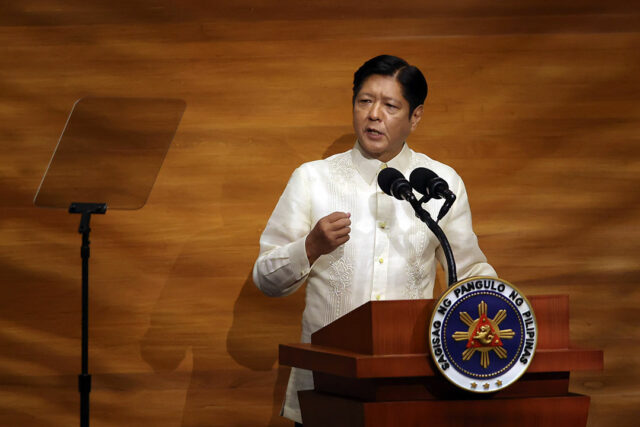
PRESIDENT Ferdinand R. Marcos, Jr. during his third state of the nation address on July 22, 2024. — PHILIPPINE STAR /KJ ROSALES

THE Philippines’ military chief on Wednesday dismissed rumors of a brewing coup, saying the armed forces are committed to upholding the Constitution.

The Armed Forces of the Philippines (AFP) is a “professional” and “disciplined” military that remains loyal to the chain of command and will shun any calls for a coup, Armed Forces of the Philippines Chief of Staff General Romeo S. Brawner, Jr. said in a statement.

“As long as I serve as chief of staff, no coup shall happen,” he said. “Not on my watch. We will not be shaken by rumor nor outmaneuvered by noise.”

The Southeast Asian nation is no stranger to coup attempts, having seen more than a dozen military mutinies since the restoration of democracy in 1986, after the late president Ferdinand E. Marcos was overthrown by a popular street uprising.

The last serious attempt to unseat a civilian government was in 2006, during the presidency of Gloria Macapagal Arroyo, but it was foiled by state security forces and led to the arrest of several military and police officials. A week-long national state of emergency was declared to quell the uprising.

Each succeeding President has seen the threat of a coup by disgruntled troops, with the government of ex-President Rodrigo R. Duterte having to deal with alleged plots to unseat him during his 2016-2022 presidency.

Mr. Duterte has called for military action against his successor, Ferdinand R. Marcos, Jr., amid a political feud between their families. Troops hold the “solution” to Mr. Marcos’s “fractured government,” he said in November, before his arrest and surrender to the International Criminal Cout in The Hague in March.

“Isolated grievances do not define the AFP,” Mr. Brawner said, warning those spreading disinformation about the military’s morale could face “broader consequences.”

“To those who persist in creating instability, I offer this not as a rebuke, but as a reminder,” he said. “Do not sow doubt among the very ranks that safeguard our democracy. Do not attempt to influence or mislead soldiers.”

In 2023, Mr. Brawner was quoted in reports as saying that he had heard of plots to destabilize the Marcos government.

National Security Adviser Eduardo M. Año quickly rejected coup rumors against Mr. Marcos, saying the military remained loyal to the President despite criticisms from former military officials about “certain policies.” — Kenneth Christiane L. Basilio

Marcos urged to keep Foreign Affairs secretary amid Cabinet revamp

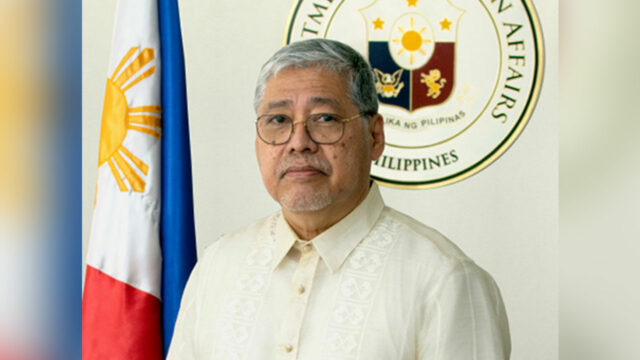
ENRIQUE A. MANALO — DFA.GOV.PH

A CONGRESSMAN on Wednesday urged President Ferdinand R. Marcos, Jr. to keep his top envoy amid a shake-up in his Cabinet.

Replacing Foreign Affairs Secretary Enrique A. Manalo would be a loss for the agency, Cagayan de Oro Rep. Rufus B. Rodriguez said in a statement.

He does not deserve to be replaced after his campaign to stake the Southeast Asian nation’s claim in the contested South China Sea, he added.

“[He] has led the Department of Foreign Affairs (DFA) with a clear vision of our national interest and has been working hard to protect our sovereign rights under international law, especially for our West Philippine Sea,” Mr. Rodriguez said.

Mr. Marcos last week called for the resignation of his top ministers as part of a “bold reset” of his government to better serve Filipinos. It came after administration-backed senatorial candidates underwhelmingly performed in the midterm elections.

The President’s allies failed to win majority of the 12 seats, leaving Mr. Marcos a divided political and legislative landscape that could thwart his attempt to have an ally succeed him in 2028.

Mr. Manalo has been appointed as the country’s permanent representative to the United Nations (UN) in New York, a post he held before, and would be replaced by Undersecretary Maria Theresa P. Lazaro on July 31, Executive Secretary Lucas P. Bersamin said last week.

The Philippines’ top envoy is expected to handle souring diplomatic tensions with China over disputes in the South China Sea and push a long-awaited code of conduct in the waters, as Philippine officials eye its completion next year when the country hosts the Association of Southeast Asian Nations.

“If he accepts the UN assignment… he will be reporting to his new DFA boss, who is now one of his undersecretaries,” Mr. Rodriguez said. “I don’t think that is fair to Secretary Manalo.”

Mr. Manalo will replace Antonio Manuel R. Lagdameo as head of the Philippines’ diplomatic mission to the UN.

Instead of transferring Mr. Manalo, Mr. Rodriguez said another career diplomat should replace the retiring UN representative.

“The country’s representative to the UN is a plum post,” he said. “Many senior career DFA personnel would surely aspire for that.” — Kenneth Christiane L. Basilio

DepEd mulls ‘exit points’ allowing students to enter college earlier

PHILIPPINESTAR/ MIGUEL DE GUZMAN

THE EDUCATION department on Wednesday said they are open to allowing senior high school students to enter college before completing their final year of schooling, as officials look to streamline the curriculum amid concerns over redundancies.

The Department of Education (DepEd) could permit students to skip their final leg of schooling under the K-12 curriculum, Education Assistant Secretary Janir T. Datukan told a House of Representatives panel.

“Even without a law, can DepEd implement exit points after Grade 10 or Grade 11?” Pasig Rep. Roman T. Romulo, who heads the House Education committee, asked Education officials. “Can they proceed directly to college without taking Grade 12 anymore?”

“Yes,” Mr. Datukan said.

The Philippines implemented the K-12 curriculum in 2010 amid efforts to align the country’s education system on par with global standards. It added two additional years in high school and was meant to better align students with courses they plan to take up in college.

The Commission on Higher Education (CHED) and DepEd are also looking at adopting some of the General Education subjects taken in college under the senior high school curriculum to reduce redundancies in the Philippine education curriculum, Mr. Datukan said.

“The new proposal is to adopt the general education courses in our senior high school core subjects,” he said.

“They have already met and agreed that five of the remaining General Education subjects in college will be moved down to Senior High School, specifically to Grade 11,” Mr. Romulo told reporters after the House education panel hearing.

This could shave off a semester from college, said Mr. Romulo.

“You have already heard that CHED is open about the possibility of removing an entire semester from college,” he said.

CHILD DEV’T WORKERS
Meanwhile, the Technical Education Skills Development Authority (TESDA) Board has approved the advanced training for Child Development Workers (CDWs) to improve the country’s early childhood education workforce, according to the Second Congressional Commission on Education (EDCOM 2).

“With the National Certification III for Early Childhood Care and Development, parents and guardians can be confident that our CDWs will gain the competencies needed to help children aged 0-4 in their holistic development,” said TESDA Secretary Jose Francisco B. Benitez said in a statement on Wednesday.

EDCOM 2 said that child development workers will undergo training and assessment under TESDA’s programs.

The new training will also cover the management of child development centers, assessments on the progress and development of children, and the implementation of the early childhood care and development curriculum.

In an EDCOM 2 report, it was found that only 16.8%, or 11,414 CDWs across the country had only completed high school. Around 89% of them remained in non-permanent positions, earning a monthly salary averaging P5,000.

“We have more than 68,000 CDWs nationwide, many of whom have not been given the tools, training, or compensation that will help them effectively perform their duties,” EDCOM 2 Co-Chairperson Senator Sherwin T. Gatchalian said.

“This certification is a crucial step toward their professionalization, which will improve both the delivery and quality of ECCD programs and services,” he added.

TESDA also launched a regional training program aimed at building a pool of qualified trainers at the regional level who can facilitate training programs for new regulations.

Moreover, Mr. Gatchalian pushed for a cost sharing initiative to address the lack of classrooms in local public schools.

“One effective strategy is implementing a counterpart program where local government units and the national government share the cost of constructing new classrooms,” he said in a separate statement.

DepEd earlier said that the backlog of classrooms in the country stood at 165,000 as it lacked the budget to construct more facilities. This was seen to impact the incoming 2025-2026 school year.

Under the 2025 budget, DepEd was given P28 billion for basic education facilities, including P7.18 billion for the construction of new kindergarten, elementary, and secondary school buildings. A P6.13-billion provision was allocated for rehabilitation and repair of schools.

“Solving the country’s classroom shortage demands a multi-faceted approach,” he added.

Mr. Gatchalian said that the government must also strengthen public-private partnerships and the Government Assistance to Students and Teachers in Private Education to help ease congestion in public schools.

“We need to be proactive in addressing these gaps. We must ensure that every student has a safe, secure, and appropriate educational space,” he added.

NEW ZEALAND SCHOLARSHIPS, RESIDENCY
In a separate development, New Zealand announced on Tuesday that more scholarships are open for Filipinos, along with an opportunity to pursue a possible long-term residency pathway after studying.

“We believe we have a strong understanding of motivations from students here in the Philippines,” Education New Zealand Manapou ki te Ao (ENZ) Regional Director for Asia Ben Burrowes told reporters in a briefing.

“So we can create an offering that best matches their interest, and we know their key interest are graduate outcomes,” he added.

In the 2024 data of ENZ, the Philippines was ranked the ninth largest source of international students in New Zealand. The government agency said that 56% of Filipinos were enrolled in applied learning and private training establishments (PTEs), followed by 27% in vocational training institutes.

To further increase the number of Filipino students abroad, the ENZ and 10 educational institutions will have an education roadshow for high school and undergraduate students, highlighting PTEs specializing in practical and hands-on courses.

The roadshow will have study fairs in Manila on May 31, Bacolod on June 3, and Cebu on June 7.

Apart from the roadshow, New Zealand Ambassador Catherine McIntosh announced more available slots for Filipinos in the Manaaki Scholarship Program opening in January 2026.

The Ambassador noted that the slots for Filipinos in 2026 rose to 44 from 16, which is the highest allocation for the country to date.

“It really is a significant increase in support of our foreign policy objectives in the region,” Ms. McIntosh said.  “But also the comprehensive partnership which has been agreed to bilaterally between President Marcos Jr. and New Zealand Prime Minister Luxon.”

Aspiring Manaaki scholars are assessed based on leadership potential, development impact, and academic merit.

On its website, the scholarship grant is open to Filipino students applying for postgraduate studies. The recommended research study subjects for the candidates from the Philippines include climate change and environment, disaster management, renewable energy, food security and agriculture, and governance.

Scholars are required to return to their home country after graduation for the return service component for two years.

“More than academic merit and their articulation skills, the narrative by which their scholarship can rebound to their communities is a very important narrative for New Zealand’s scholarship program,” said New Zealand International Development Cooperation Manila Manager Dyan Mabunga Rodriguez.

ENZ also leverages digital campaigns for “green list” programs or study pathways that can possibly lead to long-term residency.

The green list programs, which include civil engineering, agriculture, and education, are industries in New Zealand that experience skill shortages.

“Say they’re studying agriculture, that’s currently a skill shortage in New Zealand,” Mr. Burrowes said. “If they’re wanting to stay beyond their post-study work rights, then they have a greater chance of obtaining the different visas that potentially could lead towards permanent residency.”

“We align the education goals with what our prospective international students are looking for and what our national skill shortages are,” he added.

From January to August 2024, New Zealand had 1,983 enrolled students from the Philippines. The ENZ said that the student visa approval rate in the same year reached 79%, which is a “strong” approval rate, according to Mr. Burrowes. — Kenneth Christiane L. Basilio, Adrian H. Halili, and Almira Louise S. Martinez

$400-M ADB loan to drive BARMM growth

MARK BALMORES/PPA POOL

PRESIDENT Ferdinand R. Marcos, Jr., called the Asian Development Bank’s (ADB) $400-million loan for Mindanao a big deal, highlighting its potential to catalyze long-term economic growth in the Bangsamoro Autonomous Region in Muslim Mindanao (BARMM) and across the southern Philippines.

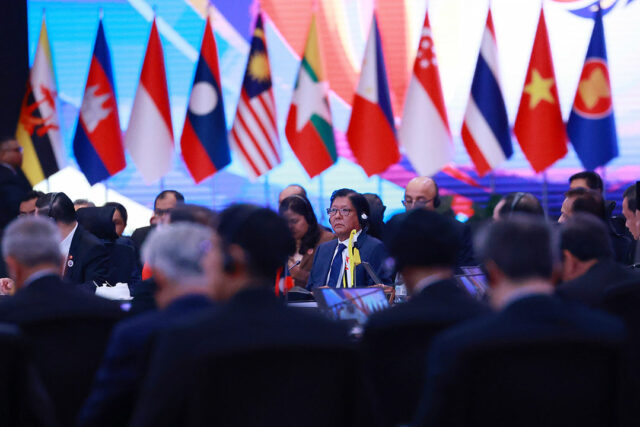
“This was part of the BIMP-EAGA discussion, and the ADB made commitments as it has always done,” Mr. Marcos said in a press briefing during the 46th Association of Southeast Asian Nations (ASEAN) Summit in Kuala Lumpur, Malaysia, on Tuesday evening.

Mr. Marcos was referring to the Brunei Darussalam–Indonesia–Malaysia–Philippines East ASEAN Growth Area (BIMP-EAGA) initiative. “ADB is really our counselor when it comes to these projects,” he added.

With the decades-long secessionist conflict in Mindanao largely resolved, Mr. Marcos said the region is now poised for sustained growth, provided that development efforts in BARMM are shepherded effectively.

“Mindanao is still the land of promise,” he added in Filipino. “We never quite realized that promise before, but now there is a real chance that we will.”

The push to develop Mindanao is not being led by ADB alone, he noted. The Organization of Islamic Cooperation (OIC), Malaysia, Japan, and the European Union have all played roles in the peace process and are increasingly involved in economic and institutional support for BARMM.

“I hold great hope for the future of Mindanao,” he said. 

ADB President Masato Kanda on Tuesday said it is set to approve this year a new $400-million loan for the Philippines, which would fund efforts to boost the country’s marine ecosystem and “blue economy.”

Separately, the ADB also expects to approve a $62.7-million loan for the first phase of the Mindanao Irrigation Development Project in 2026.

It aims to improve irrigation planning and promote climate-resilient farming systems to boost agricultural productivity in Mindanao.

Mr. Marcos arrived in the Philippines on Wednesday morning after a two-day summit in the Malaysian capital, where leaders dialogued on matters concerning the regional bloc. — Chloe Mari A. Hufana

Teves rearrested in Timor Leste

CONG. ARNIE A. TEVES FACEBOOK PAGE

A FORMER congressman accused of killing his political rival was rearrested in Timor Leste on Tuesday evening, his lawyer confirmed.

According to former Negros Oriental Rep. Arnolfo A. Teves, Jr.’s lawyer, Ferdinand S. Topacio, as of 8 p.m. on Tuesday evening, Mr. Teves “was taken from his residence in Dili” along with his Timorese counsel, Dr. Joao Serra, by the immigration police.

“The two are presently detained in the compound of the Ministry of the Interior. Mr. Teves has counsel inside the compound,” he told reporters in a Viber chat on Wednesday.

Mr. Topacio said there was no warrant, or any written authority shown to Mr. Teves and Mr. Serra.

In a separate statement, the Department of Justice (DoJ) said the move showed the Timorese government does not want Mr. Teves in their territory.

“We await their action — whether he would simply be deported for being an undocumented foreigner or extradited forthwith pursuant to our pending application,” spokesman Jose Dominic F. Clavano IV said.

In a virtual news briefing on Wednesday, Mr. Topacio said the legal team of Mr. Teves has filed a petition for habeas corpus in Dili, seeking to compel authorities to justify his sudden arrest and impending deportation to Manila.

Mr. Teves is accused of killing Negros Oriental governor Roel R. Degamo and others. He has been seeking asylum in the Southeast Asian nation, but his passport was cancelled by the Department of Foreign Affairs.

The DoJ said this made him an undocumented foreigner.

“We are ready to arrange the transfer of custody by the most expeditious means once we are clarified on this issue,” Mr. Clavano added. — Chloe Mari A. Hufana

Marcos visits largest PHL greenhouse

PRESIDENT Ferdinand R. Marcos, Jr. visited the Metro Pacific Fresh Farms in San Rafael, Bulacan on Wednesday. He was joined by Metro Pacific Agro Ventures, Inc. President and Chief Executive Officer Jovy I. Hernandez (leftmost), Metro Pacific Investments Corp. Chairman Manuel V. Pangilinan (second from left), MPIC Head of Government Relations and Public Affairs Michael T. Toledo (third from left), Agriculture Secretary Francisco Tiu Laurel, Jr. (third from right), and San Rafael Mayor Cipriano D. Violago (rightmost). — PPA POOL/NOEL B. PABALATE

PRESIDENT Ferdinand R. Marcos, Jr., on Wednesday, visited the Philippines’ largest greenhouse facility in Bulacan, highlighting his administration’s push to modernize the country’s agriculture through technology and private sector partnerships.

The 3.5-hectare Metro Pacific Fresh Farms (MPFF) in San Rafael, Bulacan, is operated by Metro Pacific Agro Ventures Inc. (MPAV), a unit of Metro Pacific Investments Corp. (MPIC). 

The facility uses Israeli hydroponic technology to grow vegetables in a controlled environment, aiming to improve productivity and promote food security.

Mr. Marcos, a former agriculture secretary in his own cabinet, made agricultural modernization a policy priority, citing the need to improve yields, reduce dependence on imports, and ensure long-term food sustainability in the face of climate and supply chain risks.

A statement from the Presidential Communications Office cited an interview with MPAV President Jovy I. Hernandez, saying the facility is nine times more productive than traditional farms. He called the facility a “big boost” to the Marcos administration’s push for agricultural modernization, with its potential to reshape how food is produced and distributed in the country.

Capable of yielding up to 500 metric tons of fresh vegetables annually, the greenhouse has also generated 100 local jobs since opening in March. While MPFF is exploring direct-to-consumer sales online, it is simultaneously negotiating with supermarket chains to broaden its market reach.

MPAV plans to establish additional greenhouse facilities in Cavite, Palawan, and Benguet. The company also aims to work with local farmers to share best practices and technology that could raise sector-wide productivity. — Chloe Mari A. Hufana

Chinese using Filipino identity nabbed

PHILSTAR FILE PHOTO

PHILIPPINE authorities have arrested a Chinese national suspected of using falsified documents to pose as a Filipino and having links him to a company previously investigated for Philippine offshore gaming operators (POGOs).

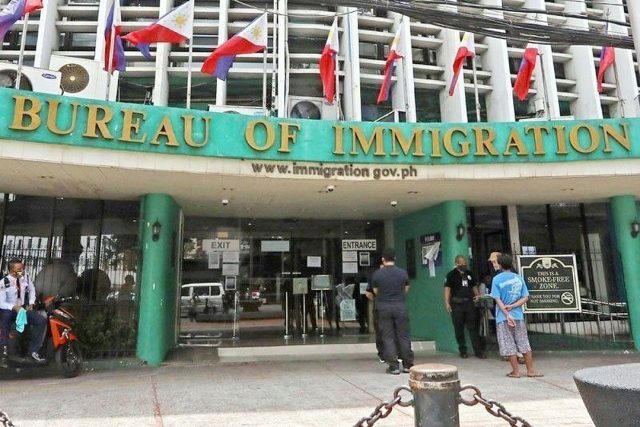
The Bureau of Immigration (BI) on Wednesday said Chinese national was apprehended on May 21 in Cagayan de Oro as part of a broader crackdown on POGOs, following a directive from President Ferdinand R. Marcos, Jr., to target illegal foreign nationals involved in criminal activity.

Commissioner Joel Anthony M. Viado said he was identified as an incorporator of Philippine Sanjia-Steel Corporation (Phil-Sanjia), a company subjected to congressional scrutiny in 2024 for its alleged links to illicit POGO activities.

Authorities recovered several Philippine-issued documents, including birth certificates, driver’s licenses, and voter registration slips, all under his name.

Another incorporator of Phil-Sanjia was listed as Antonio Lim, believed to be an alias another Chinese national arrested by the BI in 2024 for allegedly misrepresenting himself as a Filipino citizen.

“We will not allow foreign nationals to abuse our systems, falsify their identities, and use Philippine documents to cover their tracks,” said Mr. Viado in a statement. “The Bureau is fully committed to supporting the President’s campaign to rid the country of criminal elements linked to illegal POGOs.”

The Philippines on Dec. 31, 2024, declared all forms of POGOs illegal, following a series of crimes connected to them, such as human trafficking, money laundering, and torture. — Chloe Mari A. Hufana

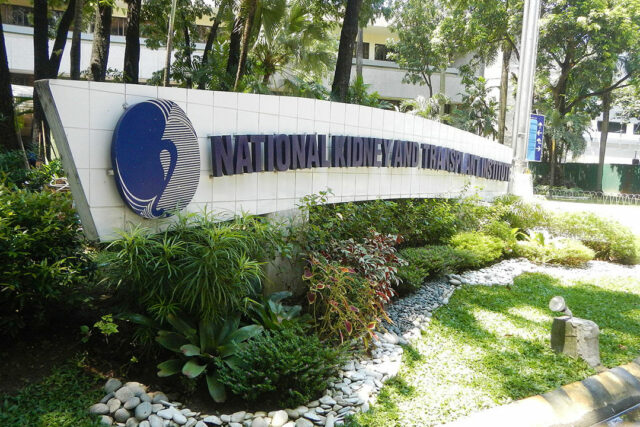
NKTI gets P592-M PhilHealth fund

EN.WIKIPEDIA.ORG

THE PHILIPPINE Health Insurance Corp. (PhilHealth) has disbursed over P592 million of total claims paid to the National Kidney and Transplant Institute (NKTI), as of May 21.

“In line with President Ferdinand R. Marcos, Jr.’s priorities, I visited and met with partner health care facilities to personally see how the public’s needs are being met, and ensure we are able to pay the benefits claims,” Acting PhilHealth President and Chief Executive Officer Edwin M. Mercado said in Filipino in a statement on Wednesday.

The disbursements were in line with the state insurer’s RISE30 initiative which aims to expedite claims processing and payment to ensure Filipinos are able to receive PhilHealth’s full benefits and services.

As of the first five months, PhilHealth has paid P161 million for hemodialysis procedures alone at NKTI.

In 2024, hemodialysis was the top paid medical procedure in the country.

PhilHealth said it has been enhancing Chronic Kidney Disease (CKD) Stage 5 benefits since 2023, with the expanded coverage for hemodialysis sessions to 156 sessions per year from 90 previously.

The state insurer also increased the Z Benefit Package for Peritoneal Dialysis, which now offers financial assistance of up to P1.2 million, while the Z Benefit coverage for Kidney Transplantation has been raised to over P2 million from P600,000. — Aaron Michael C. Sy

Sotto vows fight vs fake news

STOCK PHOTO | Image by memyselfaneye from Pixabay

A WINNING Senatorial candidate on Tuesday said he is looking to strengthen the country’s policies against fake news, especially in social media.

“We must preserve the freedom of the press, of expression, and of speech but it does not give (someone) the license to come up with fake news… under the provision that I will come up with, it should be taken down,” Senator-elect Vicente “Tito” C. Sotto III said at a news forum.

Mr. Sotto said that the proposed measure will be a standalone law that will immediately take down and arrest creators of fake news in online platforms.

In 2019, he filed an Anti-Fake News Bill that sought to eliminate the spread of fake news in online and in social media platforms by criminalizing the act of maliciously create or spread false information.

President Ferdinand R. Marcos, Jr. had earlier ordered his government to combat fake news and disinformation, following in social media platform coinciding with the 2025 midterm elections. — Adrian H. Halili

DBM issues rules on SK budget

THE Department of Budget and Management (DBM) has issued guidelines on the appropriation, release and budgeting process for the Sangguniang Kabataan (SK) funds in an effort to push for its financial autonomy.

“SK shall have financial independence in its operations, disbursements, and encashment of its fund, income and expenditures,” the DBM said, citing amended Section 20 (b) of the Republic Act No. 10742 or the Sangguniang Kabataan Reform Act of 2015.

This was indicated in the Joint Memorandum Circular No. 2025-1, between the DBM, Department of the Interior and Local Government, and the National Youth Commission.

In addition, the DBM said the SK is “strongly encouraged” to open and maintain a depository account in the same bank and branch of its barangay.

The circular also noted that the funds have to deposited by the barangay in the current account of the SK not later than five working days after the crediting of the monthly National Tax Allotment share of the barangay in accordance with the Commission on Audit’s rules and regulations. — Aubrey Rose A. Inosante