Home Blog Page 10027

Taal, Cadiz City and Tapaz, Capiz

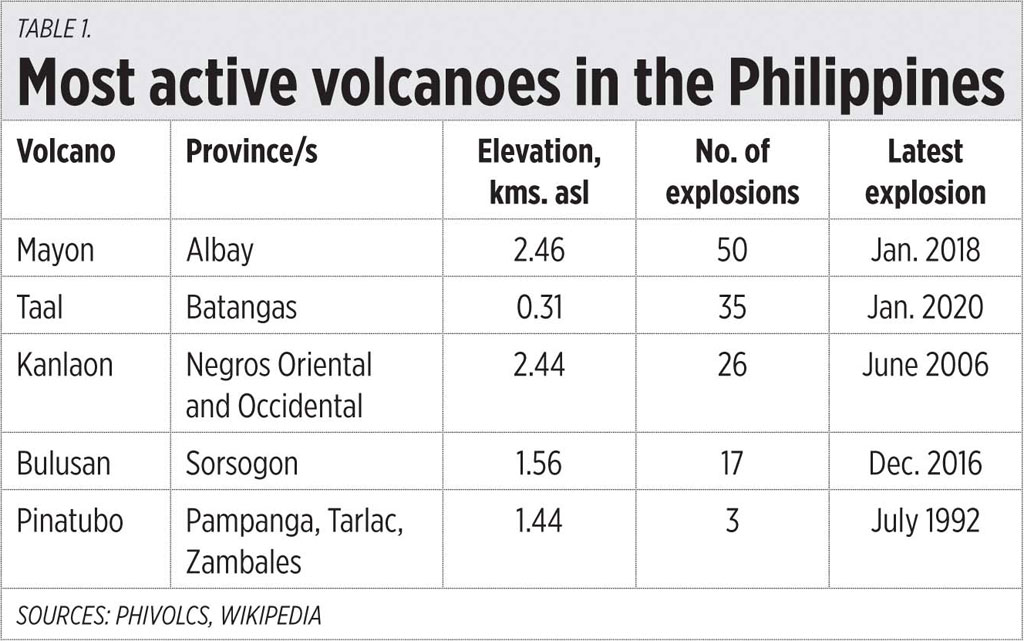
Volcanic areas are among the most beautiful places to see in the country — Mayon, Pinatubo lake, Bulusan lake, Taal lake, etc. They are beautiful when the volcanoes are at rest, but when they rumble and erupt, they are among the worst places in the planet to be due to the many dangers they pose. Among the most active, most violent volcanoes in the Philippines and their explosions since 1600 are listed in Table 1.
Residents and business locators around Taal volcano and lake in Batangas, Cavite, Laguna, and Quezon are suffering from the heavy ashfall. This is a big setback to business and tourism, but it is Nature taking its regular geological cycle of volcanic calm and eruption over decades or centuries.

Negros island has a huge, tall, active volcano — Kanlaon — that inspires plenty of tourism-related businesses around it. There are many waterfalls, big rivers, hot springs, then hills and flatlands below it.

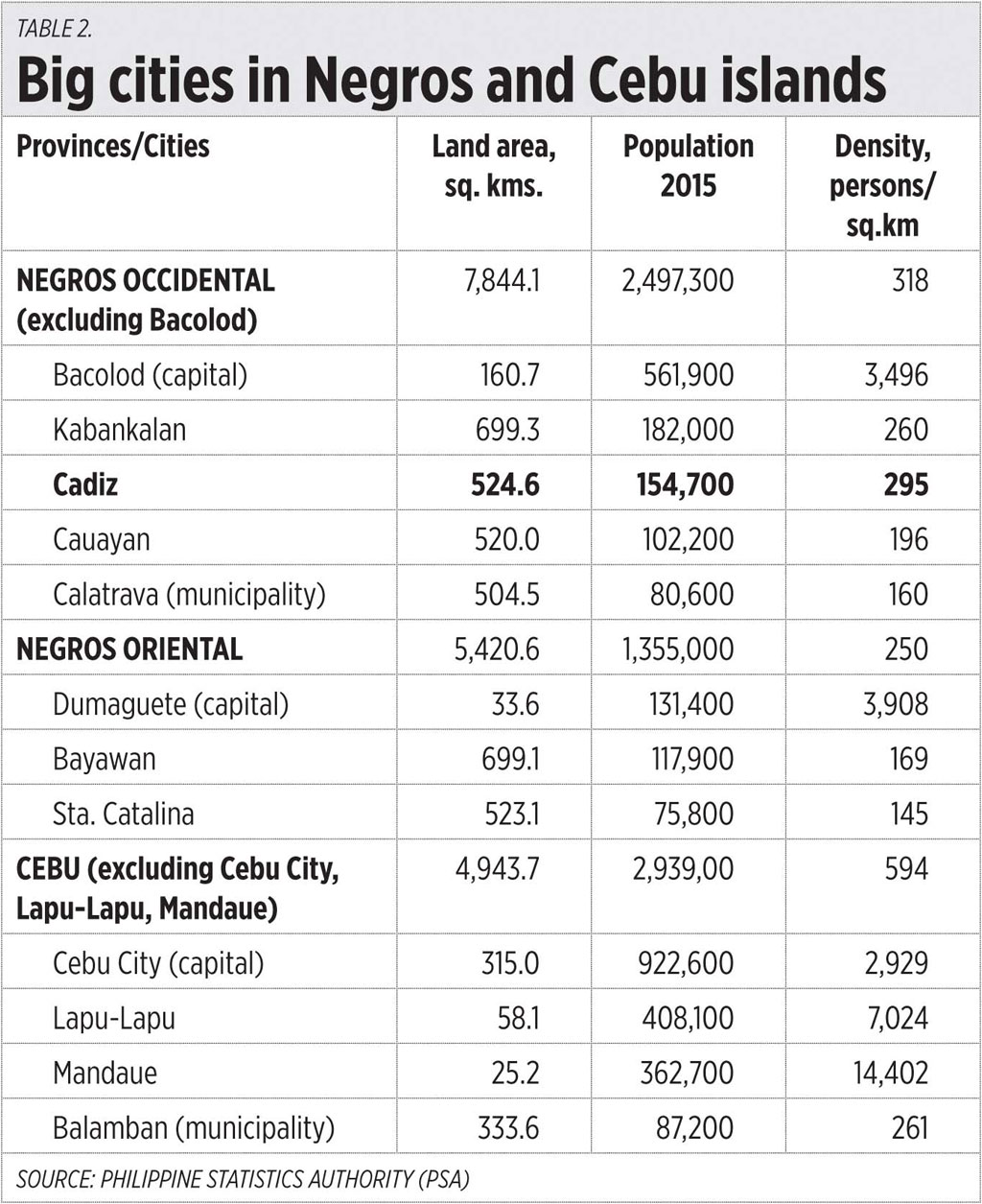
I am from Cadiz City, Negros Occidental. We are at the northern tip of Negros island and somewhat far from Kanlaon. It has the third biggest land area in Negros island, which is composed of two provinces. In terms of population though, cities in Cebu island are the biggest (see Table 2).
Last December, I spoke with Cadiz City Mayor Salvador Escalante, Jr. in the new City Hall building about the economic environment in the city. He was joined by City Engineer Jose Lauro Napud and City Investment Officer Lyn Regodos. I was surprised to hear of the many private investments, existing and planned, for the city. For instance, the malls that are already there are Citimall, Puregold, and SM Hypermart. Coming soon is Gaisano, and Robinsons has expressed an interest to come in. Some manufacturing and processing plants are being planned because of Cadiz’ huge land area, long coast, and access to the island’s nearly 5 million people and consumers.

Cadiz’ main tourism attraction is Lakawon island resort, with its modern facilities and its white sand beach which is considered the “little Boracay” of Negros.

Water should not be a problem because the city has many rivers. The problem though would be power as Negros island relies heavily on old and ageing geothermal power plants. There are many solar farms but solar is intermittent, unreliable, and non-dispatchable on demand. Negros does not have a single coal plant and is becoming more dependent on power “imports” from Iloilo and Cebu coal plants. I wish that my province mates will soon realize that the real “dirty energy” are candles and gensets running on diesel when there are frequent blackouts — not coal.

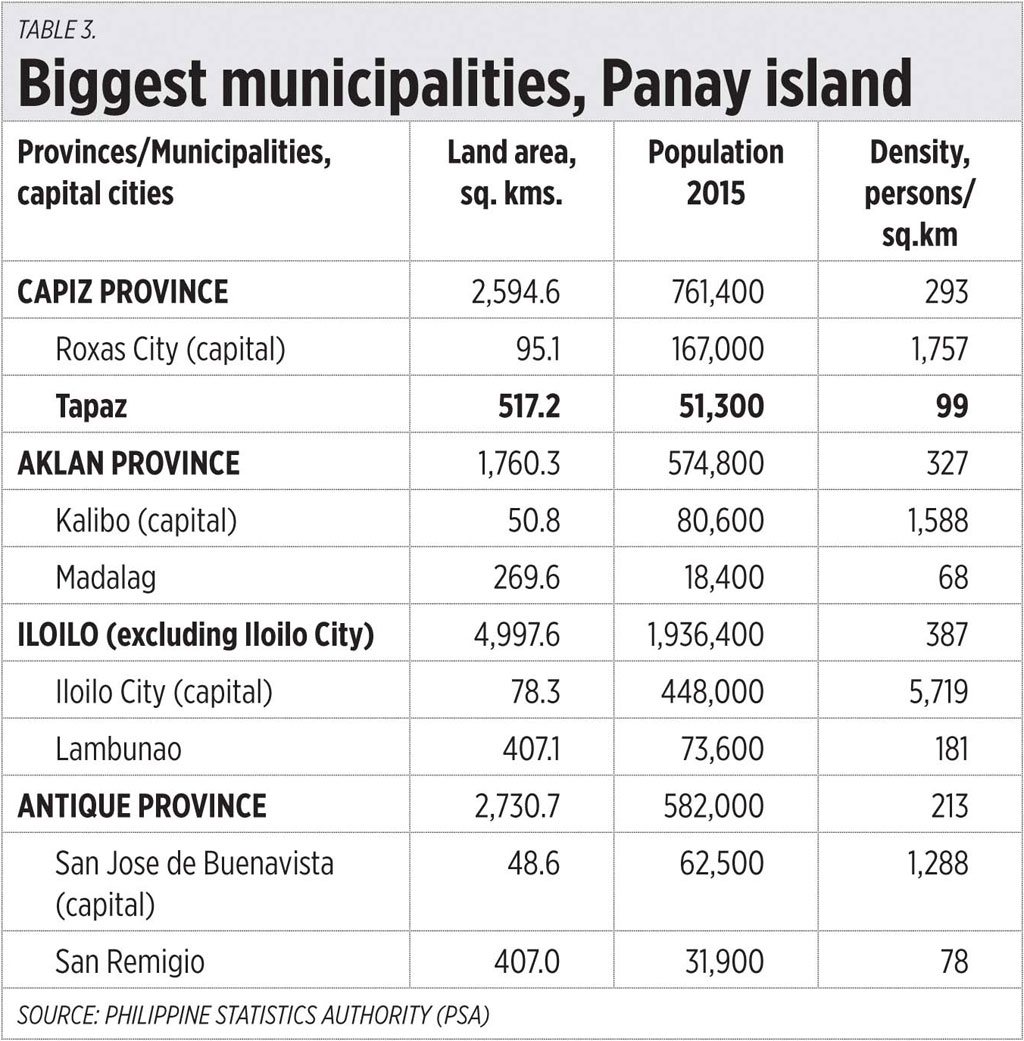
I also visited Tapaz, Capiz last December, and spoke with Mayor Roberto Palomar. I was introduced to him by my fellow Cadiznon Niel Defensor who works as a consultant to Mayor Palomar. I was surprised to know that Tapaz has the biggest land area in Panay island (composed of four provinces), and its population density is among the lowest in the island (see Table 3).
The municipality of Tapaz hosts the beautiful and very peaceful Marugo lake. My daughters and I enjoyed the swimming pool overlooking the lake. Then in the barrios there are four small waterfalls.

Mayor Palomar proudly enumerated the new structures that have been built there in the last three years — a new public market, a bus terminal, a new four-storey municipal hall to be finished this year, and many new cemented roads going to far away barrios. Coming soon is a municipal hospital.

The single biggest project in the municipality will be the construction of the management office of the Panay River Basin Integrated Development Project (PRBIDP), a P26-billion multi-year project that includes the construction of several dams for hydro power, bulk water, and irrigation along the huge and wide Panay River. The 18-MW hydro power plant will help address the problem of frequent blackouts in the province.

Panay island is lucky to have no active volcano and still have many big mountains, many big rivers and waterfalls.

Economic development should start from local businesses and local governments that optimize whatever resources they have, and not be too dependent on the Office of the President and the various national agencies.

Meanwhile, volcanoes and earthquakes, strong or mild, are 100% part of Philippines’ “geological DNA.” No earthquakes and volcanoes, no Philippines. Our archipelago came from under the sea.


Bienvenido S. Oplas, Jr. is the president of Minimal Government Thinkers.
minimalgovernment@gmail.com

Starting the year on the wrong foot

At the start of 2020, I was asked what the year would be like. I replied, “50-50.” I was just being facetious. It could very well turn out to be worse.

Over a period of two weeks, the world was rocked by rapidly escalating events in the Middle East triggered by a US decapitation strike on Jan. 2 that killed Iranian General Qasem Soleimani. He headed the Quds Force, built Iran’s terror networks in the region, and was high on Iran’s power ladder. His arc of influence stretched out to Lebanon, Syria, Iraq, and Yemen. He blazed a trail of death and destruction for decades with well-funded proxies — Hezbollah, Islamic Jihad, Hamas, Houthi rebels, Shiite militia groups, and terrorist groups outside the Middle East.

Claiming that a strike was “imminent” after its embassy in Baghdad was besieged in the last days of December, an event that brought back bitter memories of Benghazi, the US decided to take out Soleimani on Jan. 3 in an attack that also killed ranking members of Hezbollah and his team. On Jan. 4, two Iranian hit the Balad air base. A barrage of Iranian missiles struck two large military bases on Jan. 8. Hours later, a Ukranian commercial airliner was accidentally brought down by an Iranian missile minutes after it took off from Tehran. On Jan. 9, rockets hit the Green Zone. No Americans were killed or injured.

After its retaliatory strikes, Foreign Minister Javad Zarif tweeted: “Iran took & concluded proportionate measures in self-defense… we do not seek escalation or war, but will defend ourselves against any aggression.” President Donald Trump’s response hinted of deescalation: “All is well! So far, so good!” His statement the following morning ended on this note: “We want you to have a future and a great future — one that you deserve, one of prosperity at home, and harmony with the nations of the world. The United States is ready to embrace peace with all who seek it.” But he drew the red line — no nuclear Iran.

Eventually they deescalated after a harrowing year-starter I call Hell Week. Many thought the world was on the brink of World War III. Meanwhile, the court of public opinion believes the USA isn’t in the Middle East for altruistic reasons but for control of national resources. Its overextended presence in the region since 9/11, from Iraq (oil) to Afghanistan (opium poppy) is the alleged proof. For example, after the USA got out of the way of Turkey’s incursion into Syria in an anti-Kurd operation, President Trump said that the US will remain in Syria to “protect” its oil and prevent it from falling into the hands of ISIS, after proclaiming last year that the Caliphate was defeated.

Ironically, Soleimani’s proxy forces were also battling ISIS, whose fighters in the region remain in the thousands. After Soleimani’s death, the Iraqi parliament, now predominantly Shia and friendly to Iran (unlike in Saddam Hussein’s time), voted to end America’s military presence in Iraq. However, the US military leadership rejected it despite deep-seated resentment that it hasn’t done much to help the Iraqis rebuild their shattered country. It only deepens impressions about its real intent — endless war for selfish national interests, contrary to Trump’s Oct. 17, 2019 tweet: “…it is time for us to get out of these ridiculous Endless Wars, many of them tribal, and bring our soldiers home. WE WILL FIGHT WHERE IT IS TO OUR BENEFIT, AND ONLY FIGHT TO WIN.”

The hostilities placed our OFWs in Iran and Iraq (approx. 7,600 documented) in harm’s way, prompting President Rodrigo Duterte to order their immediate repatriation. However, the deescalation could place his order on hold. Even so, they must remain alert because as we’ve seen how modern conflicts can rapidly ramp up. Our actions must flow from intelligence with 20-20 vision, not 50-50. That means asking the right questions before anything else.

• How many will want to be redeployed? OFWs may want that instead of repatriation to avoid dislocation and more hardships for them and their families.

• How many want to be repatriated immediately?

• How long will it take to reach the OFWs?

• Where should they be assembled? Speed and accuracy are of the essence. My choice would be Basra in Iraq which hosts international seaports and an airport.

The total budget and the mix of human assets to be mobilized must be reckoned with the number and real needs of the evacuees. Fortunately, PAL and Cebu Pacific stepped up and offered to bring back whoever wants to be repatriated for free. That would be the quickest, cheapest, and most efficient way to get our OFWs out of harm’s way than our AFP assets. The distance from Manila to Basra by plane is 7,596 kilometers. It will take 14.5 hours of air travel. Ships will take 25 days. Iran is eight hours away by land from there.

We’re not out of the woods yet because all warfare is based on deception. The situation is still volatile and the protagonists remain on war footing. What should we expect in the near future? According to John Raine, Senior Adviser for Geopolitical Due Diligence of the International Institute for Strategic Studies: “Regardless of who drew the knife first, the nature of the fight has now changed. The US will likely continue to use non-military means but with a clear readiness to use lethal force.” Iran will be fighting asymmetrically while the US needs to find the elusive combination of techniques, capabilities, and diplomacy to counter it.

The global community though can’t be passive and allow these two countries to determine humanity’s fate, distracted from the real existential problem the world faces — climate change.

The UN’s Security Council better get moving because everyone loses in war. In our case, we must stay focused on possible rescue, and help vigorously in peacemaking and conflict resolution. Because if the world fails to get the US, Iran, and their allies to cool it, they’re bound to get us all killed.


Rafael M. Alunan III is a former Secretary of Interior and Local Government and chairs the Philippine Council for Foreign Relations.

rmalunan@gmail.com

map@map.org.ph

http://map.org.ph

The City wants to have its Brexit cake and eat it too

By Lionel Laurent

THE Bank of England’s outgoing boss, Mark Carney, has long come under fire from pro-Brexit politicians for his grim predictions for the British economy outside the European Union, including the possibility of a recession. It got to the point that it looked like one of the biggest tasks for his successor, Andrew Bailey, would be to un-ruffle feathers.

Yet Carney seems to be taking a more optimistic note of late, at least on the City of London’s ability to navigate Brexit and retain its role as a preeminent financial center. As the EU lays down the gauntlet on the trade rules and regulations it expects the UK to follow in return for access to the 27-member bloc’s lucrative single market, Carney seems unimpressed with the idea that the City should follow its lead. “It is not desirable at all to align our approaches, to tie our hands and to outsource regulation and effectively supervision of the world’s leading complex financial system to another jurisdiction,” he told the Financial Times last week.

This is a view shared by Boris Johnson — the UK Prime Minister recently rejected the idea of “regulatory alignment” as a basis for a post-Brexit partnership — and one that financial-industry executives have eagerly lined up to back. Legal & General Group Plc’s Nigel Wilson told the Telegraph the UK should “move as far away as we can” from EU rules. Paul Feeney, chief executive officer of wealth-manager Quilter Plc, went further to say future rules should be designed to strengthen Britain’s position as “a competitive and leading global investment center.” This sounds like the City wanting to have its cake and eat it too: Access to EU markets without the cost of having to play by EU rules.

It’s worth taking this chest-beating with a pinch of salt. Brexit is not a win for the City, and was never designed as such. The fact that the UK is leaving the single market and customs union, and that financial services aren’t part of the Brexit settlement, shows how little the interests of the financial sector have weighed in the debate since the 2016 referendum. London owes much of its growth in recent decades from the free movement of capital and labor that comes with EU membership. It exports about £60 billion ($78 billion) annually in financial and legal services to the bloc every year, and is still the world’s No. 1 center for trading euro derivatives. Barriers to trade won’t help any of this.

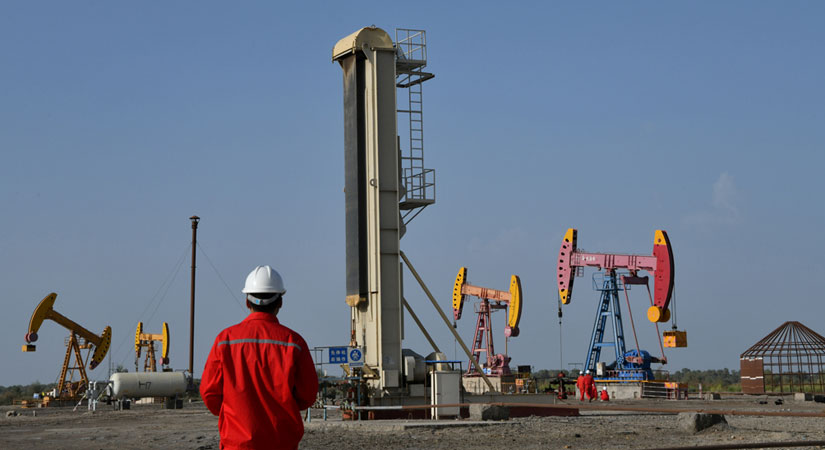
Workers are seen near pumpjacks at a China National Petroleum Corp. (CNPC) oil field in Bayingol, Xinjiang Uighur Autonomous Region, China on Aug. 7, 2019. — REUTERS

What the confident rhetoric is really about is trying to extract preferential treatment within the EU’s rules, rather than pretending that City firms could afford to do away with them altogether. This hinges around the technical details of so-called “equivalence” — a badge of approval granted to countries the EU deems close enough to its rules to be given market access to areas like investing or insurance. What the likes of Carney and Wilson are saying is the City is too important to be forced into a one-way street on regulation — simply adopting the EU’s rules — and should be given wiggle room within equivalence. This might mean tweaks to capital requirements under Solvency II, or to equity trading curbs under MiFID II, or even to banker-unfriendly rules like caps on bonuses. The terms of equivalence aren’t set in stone, and are a negotiation in themselves.

In an ideal world, a compromise deal on financial services would be straightforward. The EU knows that it can’t replace the City overnight either: London is currently its biggest capital market, and it would take years if not decades to properly integrate the continent’s disparate hubs. It seems eminently sensible that equivalence with the UK should be a two-way street: The City should recognize that it’s the best way to guarantee EU market access right now, while Brussels should understand that in the long run a bit of “rule-taking” from London might actually help its own ambitions to build a continent-wide financial system to replace Britain’s.

But that requires trust and goodwill on both sides. And to EU ears, the City’s current stance will sound too much like it wants to secure market access while also setting the rules. One of Brexit supporters’ favorite threats has been that deregulation would insulate the UK from any serious economic hit from leaving the EU. So Brussels is acutely sensitive to any sign that the country is more interested in competing with the EU (via regulatory arbitrage) than partnering with it. Talks over trade, while technically separate from financial services, will doubtless involve the kind of horse-trading over fish or agriculture that could sour the mood on both sides. And the EU is also keen to keep up the pressure on UK-based firms to relocate more activities to the continent, as reiterated by European Central Bank Vice-President Luis de Guindos last week. Even Legal & General is among those expanding their presence in the euro region to keep business going.

Considering how easily the upcoming talks could deteriorate, it’s far too early for anyone to gloat — least of all the City.


BLOOMBERG OPINION

Adjustments for Bolts in face of Almazan loss

By Michael Angelo S. Murillo
Senior Reporter

FACING the possibility of playing the rest of the best-of-seven Philippine Basketball Association Governors’ Cup finals series sans big man Raymond Almazan, the Meralco Bolts are bracing for a rougher road ahead against the Barangay Ginebra San Miguel Kings, necessitating for them to make added adjustments.

Midway into the opening quarter of Game Three on Sunday, Mr. Almazan went down with an apparent knee injury after colliding with Barangay Ginebra guard LA Tenorio.

The Meralco center failed to return to the game after and was set to undergo an MRI later on Sunday. Results have yet to be revealed as of this writing.

For Bolts coach Norman Black, the loss of Mr. Almazan affected their thrust in Game Three as they went on to lose, 92-84, and fell behind in the series, 1-2.

Mr. Black said from his initial assessment, they might have lost the services of Mr. Almazan, who they acquired from the Rain or Shine Elasto Painters via trade, for the rest of the series.

“From my viewpoint, we came out of the locker room very flat. We found out at halftime that we would probably lose Raymond for the rest of the game, and possibly the rest of the series. I think the guys were a bit down. They lacked the energy and the intensity going into the third quarter. I don’t know how much they were affected by it but they seemingly were and Ginebra did a good job on jumping on us and taking advantage of that, taking control of the game,” Mr. Black said post-Game Three.

“I try to be positive as possible. But when I talked to him, he said he could not move his leg. And as a former player it’s never a good sign. I hope he’ll be okay but I know when you have a swollen knee in the middle of a finals series it’s something you don’t bounce back right away,” he added.

The match was tightly fought in the opening half, with the Kings up by only a point, 43-42, at the break.

In the third quarter, Barangay Ginebra started to blow the game open.

It open the frame with a 10-0 run as Stanley Pringle started to find his mark, helping his team to a 53-42 lead with 9:43 to go.

The Kings stretched their lead to 21 points, 76-55, with a minute left before settling for a 78-68 advantage heading into the fourth.

But Meralco would not go down without a fight.

Led by rookie Trevis Jackson and import Allen Durham, the Bolts tried to rally back, coming to within five points, 87-82, with 2:04 left in the game.

But they would not get any closer than that as Barangay Ginebra went for the closeout after.

Chris Newsome top-scored for Meralco in the loss with 24 points with Mr. Durham adding 23 points, 13 rebounds and seven assists.

Bryan Faundo came off the bench to fire off 10 points in place of Mr. Almazan, who had two points and two rebounds before leaving the game because of his injury.

For Barangay Ginebra, it was import Justin Brownlee who led with 24 points, nine rebounds and nine assists. Japeth Aguilar had 23 points and seven blocks to win player of the game honors.

Mr. Pringle finished with 21 points, 17 coming from their telling third-quarter run. Mr. Tenorio had 11 markers.

“Because of what happened we will try to adjust as much as we can just in case we play without him (Almazan) and be ready in the next game. Our biggest concern is that without Raymond, you saw what happened, Japeth ran wild. Raymond allows us to match up with the big men of other teams. Without him we have a hole,” Mr. Black said.

Meralco looks to bounce back in Game Four tomorrow at the Smart Araneta Coliseum.

Mahomes, Chiefs beat Texans; Packers top Seahawks

LOS ANGELES — Quarterback Patrick Mahomes threw a record-tying four touchdowns in the second quarter as the Kansas City Chiefs roared back from a 24-0 deficit and defeated the Houston Texans 51-31 in the NFL playoffs on Sunday.

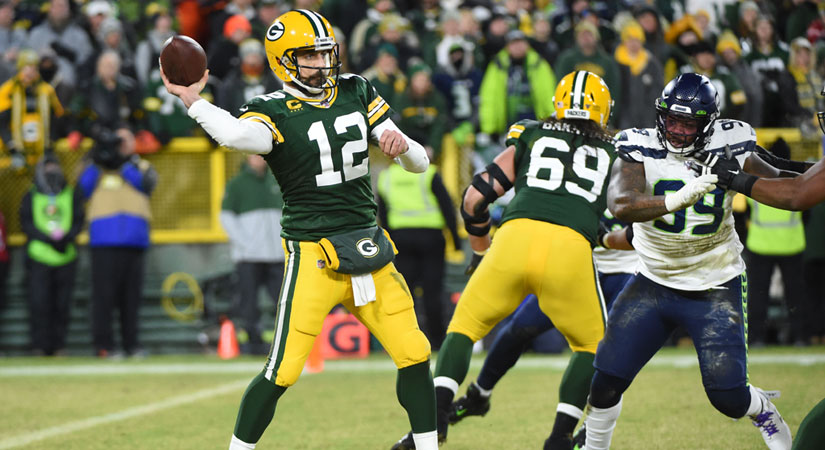
Green Bay also advanced, holding off the Seattle Seahawks 28-23 behind Aaron Rodgers’ two touchdown passes to Davante Adams. The Packers will visit the top-seeded San Francisco 49ers for the National Football Conference (NFC) championship.

Mahomes, the NFL’s most valuable player for the 2018 season, added a fifth touchdown pass in the fourth quarter as the Chiefs advanced to the American Football Conference championship game, where they will play the visiting Tennessee Titans.

The sixth-seeded Titans have beaten the number two seed Chiefs four consecutive times over the last six seasons, including a 35-32 win in November.

Mahomes had 321 yards passing and rushed for 53 more to help Kansas City score points on seven consecutive drives.

He joined former Washington Redskins quarterback Doug Williams as the only players to have four touchdown passes in a single quarter in a postseason game, the NFL said.

“Obviously we didn’t start the way we wanted to,” Mahomes said, “but we found a way.”

Tight end Travis Kelce caught three of Mahomes’ passes for touchdowns in the second period, a playoff record, despite a hamstring injury.

“I told him, ‘You are a monster, man,’” Mahomes said of Kelce, who had 134 yards receiving on 10 catches. “He was fighting through injury and still making plays all day long.” Running back Damien Williams also had three touchdowns, one on a pass from Mahomes and two on third-quarter runs. Houston, after its explosive start, scored only seven points in the second half.

Texans quarterback Deshaun Watson rushed five yards for their last score and passed for two touchdowns in the first half.

He had 388 yards passing but could not overcome the Kansas City show.

Kansas City’s mistakes helped Houston build its 24-0 lead.

Watson hit Kenny Stills with a 54-yard strike for the opening score. Then the Texans defense did its part.

Keke Mingo’s blocked punt led to Lonnie Johnson’s touchdown and minutes later Keion Crossen jumped on Kansas City returner Tyreek Hill’s muffed punt, leading to Watson’s touchdown pass to Darren Fells.

The Texans pushed the lead to 24-0 on a field goal, but the next 41 points belonged to Kansas City.

Green Bay Packers quarterback Aaron Rodgers aims to throw the ball against the Seattle Seahawks in the first quarter of a NFC Divisional Round playoff football game at Lambeau Field. — BENNY SIEU-USA TODAY SPORTS

Mahomes connected with Williams for a 17-yard touchdown and Kelce for scores of five, six and five yards. In nine minutes, the Chiefs had a 28-24 lead.

Williams added two more scores in the third quarter as Kansas City broke the game open on his runs of one and five yards.

Blake Bell caught the final touchdown pass from Mahomes, an eight-yarder in the fourth quarter.

PACKERS SCORE FIRST
In Green Bay, Adams powered the Packers offense, catching eight passes for 160 yards as Rodgers threw for 243 yards.

Adams caught a 20-yard pass from Rodgers for the game’s first score and later hauled in a 40-yarder that pushed Green Bay ahead 28-10.

“He had an unbelievable night,” Rodgers said. “He carried us on offense. His route running ability was incredible.”

Adams also caught a 32-yard pass on third down that kept the ball in Green Bay’s hands in the closing minutes.

The Seahawks made it interesting, though, scoring the final two touchdowns.

Russell Wilson connected with Tyler Lockett on a seven-yard scoring pass and Marshawn Lynch bulled his way in from the one,

But the Seahawks, despite Wilson’s 277 yards passing and 64 rushing, could not overtake the Packers.

CHIEFS, 49ERS FAVORED BY 7-PLUS FOR CONFERENCE TITLES
The Kansas City Chiefs and San Francisco 49ers each opened as a favorite by a touchdown or more as they prepare to host their conference championship games next Sunday.

The second-seeded Chiefs, who rallied from a 24-0 deficit to beat Houston 51-31 at home on Sunday afternoon, were 7.5-point favorites over the Tennessee Titans at DraftKings and FanDuel sportsbooks, while PointsBet had the line at -8.5. All three sportsbooks had the money line on Kansas City between -340 and -370.

The sixth-seeded Titans routed top-seeded Baltimore 28-12 on Saturday night, after taking down New England in Foxborough, Mass., last week. They upset the Chiefs 35-32 in Tennessee on Nov. 10.

The NFC’s top-seeded 49ers, meanwhile, were favored by exactly seven points at all three outlets against the second-seeded Green Bay Packers, who beat Seattle 28-23 on Sunday night. The money line on the 49ers ranged from -310 to -323. — Reuters

Ceres begins AFC Champions League 2020 bid

By Michael Angelo S. Murillo
Senior Reporter

AFC Champions League 2020 action kicks off today with top local club football team Ceres-Negros FC hosting Shan United of Myanmar in a preliminary round 1 qualifying action at the Rizal Memorial Stadium.

Acknowledged as Asia’s most prestigious club competition, the AFC Champions League gather the top teams in the region as they angle to be crowned as the best in the tournament, which was won last year by Saudi Arabia’s Al Hilal.

Bacolod-based Ceres, the three-time Philippines Football League champion, will try to make another spirited run, looking to better its performance from 2018 where it reached the third round of the preliminaries.

The quest begins for the “Busmen” today against Shan United in the scheduled 7:30 p.m. match where they hope to come away a winner to move to the next round of the preliminaries and continue to vie for a spot in the group stage of the AFC Champions League.

“We cannot promise anything, but we will represent the country in the best way possible. We are going to fight until the last minute to reach the next round. It’s a very hard competition. But we are going to try. We will give our best so I hope everyone will support us,” said Ceres coach Risto Vidakovic in the lead-up to today’s match.

The team will parade staples like Bienvenido Maranon, Stephan Schrock and Rolland Muller in the contest, joined by newly signed players Mark Hartmann, Pika Minegishi, Josh Grommen and Arnie Pasinabo.

Meanwhile, the AFC said it is expecting another solid run for the Champions League this year.

“The AFC Champions League has grown into one of the world’s leading club continental competitions and the growing appeal and new engagement records underline once again the AFC’s ambitions to continuously strengthen our competitions for the benefit of our member associations, players, clubs and fans,” said AFC General Secretary Dato’ Windsor John in a statement.

“Every year, we set out to improve each edition of the AFC Champions League and I have no doubts that we will witness another captivating season in 2020. I wish all our clubs the very best and I must thank all our stakeholders for sharing our belief and bringing our aspirations to life,” he added.

The preliminary round 2 stage is set to take place on Jan. 21 before the decisive play-offs on Jan. 28.

PHL stocks to take cues from US-China trade talks

THE RESUMPTION of trading today is seen to take cues from the slated signing of the US-China phase one deal tomorrow, as investors around the world keep a close watch on any development between the two countries’ attempt to end their two-year trade war.

The Philippine Stock Exchange (PSE) and the Securities Clearing Corporation of the Philippines shut down yesterday as the operator prioritized “(ensuring) the safety of employees and traders in light of the volcanic ash emission of Taal Volcano.”

The eruption of Taal Volcano on Sunday, which remained active on Monday, led to the evacuation of residents in Batangas, Tagaytay and Cavite. Parts of Metro Manila, including Bonifacio Global City where PSE is headquartered, also suffered from ash fall starting Sunday night.

Before the beginning of the natural calamity, the PSE closed Friday’s session with the main index down 20.87 points or 0.26% to 7,776.77. It fell 80% on a weekly basis.

Despite local events, Diversified Securities, Inc. Equity Trader Aniceto K. Pangan said the eruption of Taal Volcano may not have much effect on the stock market today.

“It’s too early to determine whether this will affect local shares as damages are minimal at this stage,” he said in a text message Monday.

Philstocks Financial, Inc. Senior Research Analyst Japhet Louis O. Tantiangco agreed, saying for his part that the casualties “remain limited so far so this may have little impact on…trading.”

“If this escalates into an explosive eruption or if signs will continue to point to one then it may start to weigh on the market. An explosive eruption would cause economic damages which in turn would be negative for the local bourse,” he added.

Given this, both Mr. Pangan and Mr. Tantiangco said the main catalyst of the market today remains to be the Sino-US trade deal signing on Wednesday.

“Investors would be anticipating the signing of the US-China phase one deal. Judging from how the negotiations went, investors realize that even if the two countries are moving forward with the talks, there’s still a lot of worries unless a deal is finally signed,” Mr. Tantiangco said. But he noted the “confirmatory act” could still give the PSEi a lift.

Apart from signing the phase one of the trade pact on Wednesday, the US and China will also be discussing the timetable for phase two of the deal, which investors will consider for any decisions.

Online brokerage 2TradeAsia.com said over the weekend it is putting immediate support at 7,600-7,700 and resistance at 7,900 for the week.

Meanwhile, most Southeast Asian stock markets were muted on Monday, as investors awaited the planned signing of the Sino-US phase one trade deal, while Thai shares rose after the country’s government passed a draft budget bill to prop up the economy.

Indonesian shares rose up to 0.4%, and were on track to post a third straight positive session. Singapore’s benchmark index was largely unchanged, while Malaysian shares edged lower. — Denise A. Valdez with Reuters

Peso may lag peers as current account gap widens; yuan to climb

THE PESO may weaken this year due to the central bank’s dovish stance. — BW FILE PHOTO

THE PHILIPPINE PESO is set to lag peers as the nation’s current account deficit widens, according to Goldman Sachs Group, Inc.

The Southeast Asian nation’s currency will likely weaken this year given the dovish orientation of its central bank and increased fiscal spending, Goldman strategists including Zach Pandl wrote in a Jan. 10 note. The firm recommends shorting the peso against the offshore Chinese yuan, which may benefit from improving sentiment as the US and China prepare to ink a phase-one trade deal.

“We expect the higher overall pace of public infrastructure spending and private investment to cause a deterioration in the current account,” they wrote. “The peso will underperform non-Japan Asian currencies driven by idiosyncratic factors and prefer to express this via being long the offshore Chinese yuan.”

Goldman’s note was published before the Taal Volcano south of Manila began erupting, triggering earthquakes and spewing massive clouds that have covered the region with ash. It isn’t clear yet how much economic impact the eruption may cause, though stocks and foreign exchange trading was suspended in the country on Monday.

The Philippine central bank expects the current account shortfall will widen to $8.4 billion this year from an estimated $5.6 billion in 2019.

The peso has been little changed against the dollar since the start of this year as a spike in crude prices triggered by US-Iran tensions spurred investors to sell the oil-importing nation’s currency. The currency dropped briefly to 51.32 per dollar on Jan. 6, the weakest since Oct. 25 — though it recovered throughout the week and ended Friday at 50.66.

The offshore yuan, on the other hand, is Asia’s top-performing currency this year along with Indonesia’s rupiah as thawing trade relations between Washington and Beijing boost demand for Chinese assets. Improving Chinese economic growth will support the currency further, according to the Goldman strategists.

“We expect China’s economic growth to bottom out in the fourth quarter and for activity data to pick up in 2020,” they wrote. — Bloomberg

Alex Eala thankful for chance to play in Australian Open Jrs. main draw

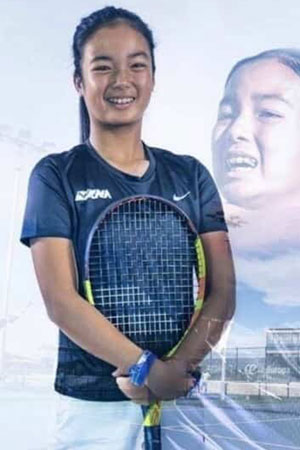
Filipino juniors tennis player Alex Eala, currently ranked ninth in the world, will be competing in the 2020 Australian Open Juniors main draw later this month.

FILIPINO juniors tennis sensation Alex Eala is set to compete in the main draw of the Australian Open later this month after securing her position in the top 10 in the latest ITF World Juniors Ranking.

Earning 1,452.50 points, 14-year-old Eala is currently ranked ninth in the world, the highest Southeast Asian tennis player in the list.

That earned for the Globe Telecom ambassador a spot in 2020 Australian Open Juniors tournament, which takes place from Jan. 25 to Feb. 1 in Melbourne.

“I couldn’t have made it without you. Thank you Rafa Nadal Academy, Globe Telecom and Babolat,” Eala posted on her Facebook account as she thanked those who played notable roles in her tennis progress.

Globe Telecom has been a steady supporter of Eala since she was eight years old and to see her live her dream bring much pride on its part.

“We are so proud of what Alex has achieved so far. Like what I have said so many times before, Alex can accomplish whatever she wants as long as she continues to work hard, persevere and focus on her goals. We wish her well on the upcoming Australian Open and we call all our “kababayans” (countrymen) to rally once more behind Alex as she competes against the world’s best,” said Ernest Cu, Globe President and CEO, in a statement.

Eala finished the 2018 season ranked 248th in the world, before jumping to a then career best 13th spot last October. She then pressed further to the top 10 after winning the title in the Orange Bowl doubles tournament in Florida last December to come within a spot in breaking the elite Top 10 best players of the world.

As part of her preparation for the Australian Open Juniors tournament, Eala will be competing in the Traralgon junior international event on Jan. 17. — Michael Angelo S. Murillo

Jokic leads Nuggets past Clippers

DENVER — Nikola Jokic had 20 points and 15 rebounds for his 21st double-double of the season, Jamal Murray scored 10 of his 19 points from the foul line, and the host Denver Nuggets beat the Los Angeles Clippers 114-104 on Sunday night.

Gary Harris scored 15 points, Michael Porter Jr. 13 and Monte Morris 12 for Denver, which had seven players score in double figures.

Kawhi Leonard had 30 points, Lou Williams 26 and Montrezl Harrell 25 for the Clippers, who played without Paul George (hamstring injury).

Denver led by 17 after Jokic hit a 3-pointer early in the third quarter, and the Clippers started to chip away. Leonard hit a jumper and Williams scored off a turnover to force a Nuggets timeout, and Jerami Grant, who finished with 11 points, hit a shot and Jokic his third 3-pointer to make the score 76-58. — Reuters

Best game for 2019

2019 has ended and a lot of people are coming up with their “Best of 2019” lists. Best player, best game, best combination, best endgame, etcetera, etcetera.

One thing interesting to me is that two of the top chess websites in the world, Chessbase (chessbase.com) and chesscom (chesscom.com) have their own best game lists with different judges and criteria, but their no. 1 game is one and the same, so I think for once we can say that this is indisputably the best game for 2019. I had commented on this previously so today we will stick with the highlights.

The winner of the following game is the Indian GM Murali Karthikeyan, born Jan. 5, 1999. He is a Tamil — I point this out because Tamils (similar to Viswanathan Anand, Chithambaram Aravindh, Baskaran Adhiban, S.P. Sethuraman, or the young chess sensation Rameshbabu Praggnanandhaa, etc.) have no concept of a surname. “Murali” is a patronymic (his father’s name), not a family name, and he should be referred to by the given name, Karthikeyan.

Karthikeyan is a two-time national champion (2015, 2016) of India. Together with Adhiban and Sethuraman, he is considered among the most aggressive chess grandmasters from India.

Firouzja, Alireza (2682) — Karthikeyan, Murali (2593) [E90]
Asian Continental Ch Xingtai, 2019

1.d4 Nf6 2.c4 g6 3.Nc3 Bg7 4.e4 d6 5.h3 0–0 6.Be3 c5 7.Nf3

Why can’t White win a pawn with 7.dxc5 ? Well, this is a well-known tactical device. Black plays 7…Qa5 and after 8.Bd3 (8.cxd6? Nxe4 9.dxe7 and now, depending on Black’s mood he can play 9…Re8 or 9…Bxc3+ both of which are dangerous for White) 8…dxc5 9.e5 Nfd7 10.f4 Rd8 there is nothing wrong with the White position here, but pawns are now equal and White’s position is a bit loose. Romero Holmes, A. (2514)-Guseinov, G. (2552) Mallorca 2004 0–1 84.

7…Qa5 8.Nd2

Firouzja tries something new. The main lines are 8.Bd3 and 8.Qd2.

8…cxd4 9.Nb3 <D>

POSITION AFTER 9.NB3

In this unfamiliar position Karthikeyan takes 21 minutes of thought and decides to sacrifice his queen. It looks like this is over-the-board inspiration.

9…Qxc3+!! 10.bxc3 dxe3 11.f3 Nh5! 12.Qc1 Bh6 13.g4 Nf4 14.Kd1 Ne6

Take note that Black can win back the queen with 14…Nd3! 15.Bxd3 (15.Qc2 Nf2+ gets an additional rook) 15…e2+ 16.Kxe2 Bxc1 17.Rhxc1 Na6 with a slight edge, but Karthikeyan did not sacrifice his queen in order to win it back a few moves later with a “slight edge.”

15.Kc2 Nc6 16.h4 Bf4 17.Qd1 Ne5 18.Nc1 Bd7 19.a4 Rac8 20.Ne2 Bh6 21.g5 Bg7 22.Bh3 Nxf3 23.Qd3 Ne5 24.Qxe3 Nxc4 25.Qf2 Rc5 26.Rhb1 Bc6 27.Bg2 f5!

In the past few moves we have been watching Black improve his position move by move. Now he activates his last remaining piece, the rook on f8, and White cannot survive this.

28.gxf6 Bxf6 29.Rf1 Bxc3! 30.Qxc5

Firouzja decides to give up his queen to try to survive into the endgame.

30…Nxc5 31.Rxf8+ Kxf8 32.Kxc3

[32.Nxc3 Ne3+ wins the g2–bishop]

32…Ne5 33.a5 Nxe4+ 34.Bxe4 Bxe4 35.Nd4 Bd5 36.Nb5 a6 37.Nc7 Bc6 38.Rf1+ Kg7 39.Ne6+ Kh6 40.Rf8 Kh5 41.Rh8 h6–+ 42.Rh7 Kxh4 43.Rxh6+ Kg4 44.Nd4 Kg5 45.Rh2 Bd5 46.Re2 Kf4 47.Rf2+ Nf3 48.Re2 e5 49.Nc2 Be4 50.Ne3 d5 51.Kb4 Nd4 52.Re1 Kf3 0–1

For second best game Chessbase had Dubov versus Giri (Moscow Grand Prix) while Chesscom’s choice is the same player but different game — Dubov versus Svane from the European Team Championship. Chesscom also recognizes Dubov versus Giri and ranks it as the 9th best game of the year.

I will show you Dubov versus Giri.

Dubov, Daniil (2690) — Giri, Anish (2787) [D44]
Moscow FIDE Grand Prix
Moscow (1.2), 18.05.2019

1.d4 Nf6 2.c4 e6 3.Nf3 d5 4.Bg5

This is usually meant to avoid the Vienna Variation (1.d4 Nf6 2.c4 e6 3.Nf3 d5 4.Nc3 dxc4) or the Ragozin Variation (1.d4 Nf6 2.c4 e6 3.Nf3 d5 4.Nc3 Bb4).

4…dxc4 5.e4

[5.Nc3 c6 6.e4 b5 7.e5 h6 8.Bh4 g5 transposes to the Botvinnik Variation.]

5…b5 6.a4 c6 7.Nc3 b4 8.Nb1 Ba6 9.e5 h6 10.Bxf6

Forced. The usual retreat here 10.Bh4 is met by 10…g5 11.exf6 gxh4 12.Nbd2 c3 White has an inferior form of the Botvinnik.

10…gxf6 11.exf6 c5 12.Nbd2

White has to hurry up and develop his pieces. For example 12.Qc2!? b3 13.Qc3 which Dubov strongly considered is not so good — 13…cxd4 14.Nxd4 Nd7 Black’s two bishops are soon going to lord it over the board.

12…c3 13.bxc3 bxc3 14.Ne4 cxd4 15.Bb5+! Bxb5 16.axb5 Qd5 17.Qxd4 Qxb5 18.Nxc3 Bb4 19.0–0–0!? Qa5?! 20.Nb5! Na6

[20…Qxb5 21.Qd8#]

21.Qd7+ Kf8

This is the sort of position where you know that someone will soon be mated, but not sure which side.

22.Kb1! Ba3 23.Rd3! Qb4+ 24.Kc2 Qa4+ 25.Kd2 Bb4+ 26.Ke2 Kg8 27.Ne5 Qc2+ 28.Kf3 Rf8

Would 28…Rh7 have been better? Let’s see … 29.Rhd1 (threatening 30.Qd8+ Rxd8 31.Rxd8+ Bf8 32.Rxf8+ Kxf8 33.Rd8 mate) 29…Rf8 30.Nd4 Qb2 31.Ndc6 threatening Ne7+ followed by Qd8.

29.Rhd1 h5!

With the deadly threat of 30…Rh6 which turns the tables on White.

30.Qd4! Rh7

Now 30…Rh6 is met by 31.Qf4 saving the crucial f6–pawn.

31.Qf4 Bc5 32.Nd4 Qa2 33.R1d2 Qd5+ 34.Ke2 Bb4 35.Ndc6! Qc5

[35…Bxd2 36.Qxd2 Qe4+ 37.Re3 Black has no more checks and the threatened Ne7+ is devastating]

36.Ne7+ Kh8 1–0

Giri resigns before Dubov can demonstrate the mate after 36…Kh8 and resigns because of 37.Nxf7+! Rhxf7 (37…Rfxf7 38.Rd8+) 38.Qh6+ Rh7 39.Qxf8#

Here is Dubov versus Svane:

Dubov, Daniil (2699) — Svane, Rasmus (2592) [D37]
22nd EU-chT Open 2019 Batumi (7.4), 31.10.2019

1.c4 e6 2.Nc3 d5 3.d4 Nf6 4.Nf3 Be7 5.Bf4 0–0 6.e3 b6 7.Qc2 Ba6 8.0–0–0!? dxc4 9.Ng5

The idea is to play d4–d5 since the black knight on f6 cannot move because of mate on h7.

9…Nc6 10.a3! g6! 11.h4 Bd6 12.g3! Qe7 13.h5! e5 14.hxg6 hxg6 15.Bg2 exf4 16.Bxc6 fxg3 17.Kb1!

White needs his white-squared bishop for the attack.

17…Rad8 18.f4 Bc8!

An excellent defensive move, planning to re-deploy on f5.

19.Rde1 Kg7 20.Nd5 Nxd5 21.Rh7+! Kg8 22.Rxf7! Rxf7 23.Qxg6+ Kf8! 24.Qh6+ Rg7! 25.Bxd5 Ke8 26.Qh5+ Kd7 27.Qh3+ Ke8 28.Qh5+ Kd7

Dubov had four minutes left on his clock so some onlookers thought that he would go for the draw by perpetual check, but no.

29.Be6+! Kc6?

It was either give up his queen or take his chances with the king out in the open. However, there is now a forced mate in 14. Hard to see, but it is there.

30.Qf3+ Kb5 31.Bxc4+! Ka5 32.Qd5+ Bc5

[32…c5 33.b4+ Ka4 34.Kb2 (idea is Qc6+ followed by mate 34…Bb7 35.Bb3+ Kb5 36.a4+ Kxb4 37.Qc4+ Ka5 38.Qb5#]

33.b4+ Ka4 34.Qg2! Bxb4

[34…Kxa3 35.Qb2+ Ka4 36.Qb3#]

35.Qc6+ Kxa3 36.Bb3!

An only move, everything else loses. Dubov found this with 10 seconds left on his clock. 36.Qg2? Bd2! 37.Qxd2 Qb4+ it is Black who wins.

36…Bd7

36…Kxb3 37.Qc2+ Ka3 38.Qa2#; 36…Bf5+ 37.e4.

37.Qc1+ Kxb3 38.Qc2+ Ka3 39.Qa2# 1–0

GM Grigory Serper (Filipino fans know him — the upstart Uzbekistan team shocked the chess world by coming 2nd in the 1992 Manila Olympiad behind the point production of 3 IMs – Serper, Nenashev and Zagrebelny) also wrote a 10 Best of 2019 list and included Dubov versus Svane, Dubov against Giri but in addition to that also Dubov versus Jonas Buhl Bjerre.

Bjerre, Jonas Buhl (2506) — Dubov, Daniil (2699) [C88]
22nd European Teams Batumi GEO (1.1), 24.10.2019

1.e4 e5 2.Nf3 Nc6 3.Bb5 a6 4.Ba4 Nf6 5.0–0 Be7 6.Re1 b5 7.Bb3 0–0 8.a4 d5 9.exd5 Na5 10.Nxe5 Nxb3 11.cxb3 Bb7 12.Nc6 Bxc6 13.dxc6 Bc5 14.d3 Bxf2+ 15.Kxf2 Qd4+ 16.Be3 Ng4+ 17.Kf3 Nxe3 18.Rxe3 Rae8 19.Re2 Qf6+ 20.Kg3 g5 21.Rf2 Qd6+ 22.Kh3 Qh6+ 23.Kg4 Qh4+ 0–1

According to Serper: “Some readers might complain that I included three games by the same player (Dubov). I absolutely agree; it is unfair. But I thought that it would be even more unfair if all 10 games on the list were played by Dubov, so I had to eliminate some of his games.”

Which gives me an idea. Henceforth, every year I will declare who to me is the “Most Exciting Player.” In a previous year the award would have gone to Baskaran Adhiban for his gestapo-style blitzkrieg attacks, for the 2019 the title undoubtedly should go to GM Daniil Dubov.


Bobby Ang is a founding member of the National Chess Federation of the Philippines (NCFP) and its first Executive Director. A Certified Public Accountant (CPA), he taught accounting in the University of Santo Tomas (UST) for 25 years and is currently Chief Audit Executive of the Equicom Group of Companies.

bobby@cpamd.net

Disappointment

Lamar Jackson’s uniqueness was not lost on the National Football League. In fact, it was the biggest story in the sport throughout the current campaign, what with the 32nd pick in the first round of the 2018 draft using his unparalleled skill set to lead the Ravens to a pacesetting 14-2 slate. With him under center, they were consensus Super Bowl favorites. Not for nothing did he break the record for rushing yards by a quarterback. Not for nothing did he finish the regular season with the highest number of touchdown passes. And not for nothing was he likely to claim the Most Valuable Player award.

Unfortunately, the NFL rarely subscribes to conventional wisdom. For all Jackson’s worth and worthiness of the spotlight, he still had to prove himself in the postseason. He still had to manufacture the victories just when they mattered most. And, over the weekend, he found himself falling prey to disappointment. Not only did the Ravens lose. They did so at M&T Bank Stadium, where an overflow crowd of 71,254 fully expected them to run roughshod over supposedly inferior competition. And they did so in a rout, their vaunted offense spearheaded by their dual threat hiccuping to an anemic 12 points even as their hitherto-solid defense coughed up 28 in turn.

To argue that Jackson had an off-day would be to grossly understate the obvious. True, he still managed to run for 143 yards on 20 carries, the best of the Ravens by far. On the other hand, any gains he had were dwarfed by his poor handling under pressure. He finished with more interceptions than touchdowns, fumbled and lost the ball, was sacked four times, and could do no better than post a 31.6 QB rating. Tellingly, he wound up being the third best passer when all was said and done. Not only had Titans counterpart Ryan Tannehill outplayed him; he fell behind running back Derrick Henry, whose trick-play jump pass led to an endzone score.

Granted, Jackson was not alone. If anything, the Ravens made him look worse. He had otherwise-perfect passed dropped, and alternatives flubbed, to the point where he, no doubt, felt he was his own best option. And he certainly called his number in the crunch; for instance, he ran in the first two of their four fourth-down attempts. The bad news, however, was that he couldn’t produce at the right moments as well; he got to be the first QB in NFL playoff history to go over 300 yards in passing and 100 yards in rushing, but was subjected to a shellacking all the same.

Perhaps the Ravens simply ran into a juggernaut at the wrong time. The Titans were certainly prepared — and, make no mistake, confident in giant-killer shoes, having made short work of the vaunted Patriots in the wild-card game the week before. And, needless to say, Jackson’s best years are still ahead of him. As he noted in the aftermath, “We’re a young team, especially on our offense,” Jackson said. “We’re going to get better. We only can get better. It’s only up from here.” He’s right, although he needs to learn fast. The world loves winners, and isn’t kind to would-be winners who fail, and fail again.


Anthony L. Cuaycong has been writing Courtside since BusinessWorld introduced a Sports section in 1994. He is a consultant on strategic planning, operations and Human Resources management, corporate communications, and business development.