
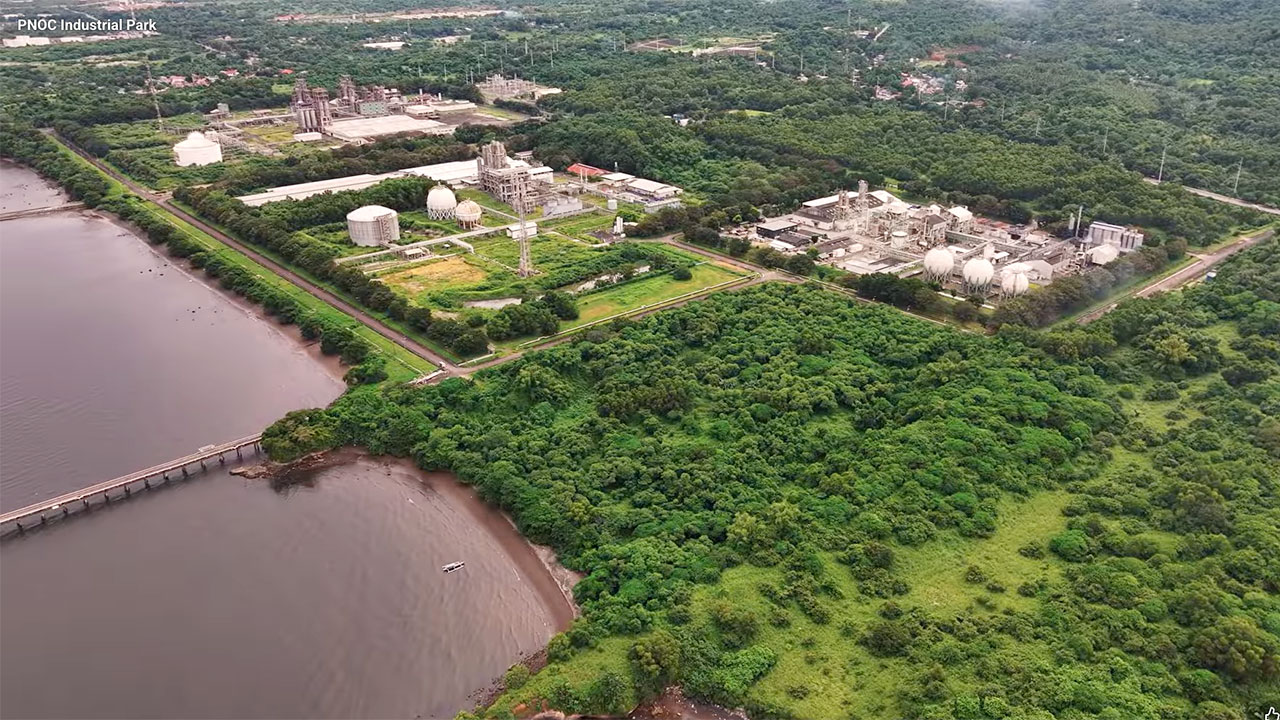
The Philippines is like a country that dismantled its arms industry in peacetime and then finds itself, again, at war. In 1973, when the first great oil shock hit, we were importers of oil. Today, we are importing not just of oil but everything else oil and gas are turned into: plastics, resins, fertilizer, food packaging, medical supplies, and more.
At some point in the last 53 years, and for a variety of reasons, trade liberalization included, we decided to just pay the premium of other countries’ industrial capacity to make things for us. It made more sense to import than produce. Now, we are paying for that decision in a crisis we did not cause and cannot control.
With the oil crisis in 1973, the Philippines responded with ambition. President Ferdinand Marcos, Sr. launched industrial projects envisioned to make the country self-sufficient in the things a modern economy cannot do without. Among others, steel, copper, fertilizer, and, crucially, the ability to process crude oil into the chemicals that industry runs on.
The logic was sound. We could not keep being held hostage to the supply decisions of distant countries. We would build our own capacity. To pay for it, the government borrowed heavily from Western banks that were then flush with cash from oil-producing nations and eager to lend.
A lot of money flowed in. But what came back was not a strong industrial base but a debt trap. The projects were plagued with problems and by 1986, the nation was in debt and the factories that debt was supposed to pay for were largely stalled or sold to the private sector.
We did not buy an industrial future. Instead, we got an expensive lesson in how not to industrialize, and we have been paying for that lesson ever since. Those failed projects, and the urgent need to pare down debt, influenced industrial policy decisions in the decades that followed.
In my opinion, a metric of our industrial regression is found in our oil refining capacity. In 1973, as the world reeled from the first oil shock, it seemed the Philippines possessed a more robust energy-processing backbone than it does today.
At that time, we were powered by a quartet of refineries: Caltex in Bauan and Shell in Tabangao, both in Batangas; Bataan Refining Corp.; and Filoil in Cavite. Together, I read, they provided a combined refining capacity of nearly 285,000 barrels of crude oil per day (bpd).
But by 2026, as the latest oil shock hit, we are left only with Petron’s Bataan refinery at 180,000 bpd. We effectively lost over 100,000 barrels of daily processing power after the Caltex refinery was shut down in 2003, and the Shell refinery in 2020, and both were converted into import terminals.
The Philippine National Oil Co. (PNOC) was founded in 1973 and PNOC’s original mandate was to maintain an adequate supply of oil and petroleum products to sustain the economy. I believe PNOC absorbed the Bataan Refining Corp., Esso Philippines, and Filoil, and the combination became Petron, which was later sold to the private sector.
Petron remains a vital commercial operation. But its primary obligation is now to its shareholders, not to the national buffer PNOC was designed to provide. The government decided to convert that strategic asset into a business. However, businesses are not designed to run at a loss to protect the public from a war.
All seemed fine until sometime last year, when JG Summit shut down its naphtha cracker in Batangas. That was the country’s only cracker, the core industrial facility that turned imported naphtha into ethylene and propylene, the base chemicals from which a modern plastics economy is built.
We import naphtha, an oil refinery output used as feedstock for crackers. I believe Petron’s Bataan refinery produces naphtha, but I am uncertain if JG Summit’s Batangas cracker ever depended on it to make ethylene and propylene. Although at some point, I think Petron supplied propylene to JG’s petrochemicals business.
But JG Summit put its petrochemical complex on indefinite commercial shutdown in January 2025 as high electricity costs, logistics bottlenecks, and cheaper alternatives from Singapore and South Korea made the plant uncompetitive.
Around the same time, the PASAR (Philippine Associated Smelting and Refining Corp.) copper smelter in Leyte, a direct descendant of the original 11 industrial projects proposed during the Marcos Sr. years, was placed under care and maintenance by its private operator Glencore before being sold off, reportedly to the Villar group.
Years before, another industrial project in Leyte and PASAR’s neighbor, fertilizer maker PhilPhos (Philippine Phosphate Fertilizer Corp.), was forced to shut down by Typhoon Yolanda. Philphos made use of sulfuric acid from the copper smelter to produce fertilizer. However, challenges with its insurance claim delayed the plant’s rehab after the typhoon.
Ahead of PASAR’s and Philphos’ shut down, over in Iligan, the country’s first integrated steel mill was brought down by a combination of financial distress, operational problems, policy failure, high cost of electricity, and external factors that affected its viability.
All these incidents highlight the weakness of the country’s industrial policy, if not its vulnerability to challenges that made domestic manufacturing uncompetitive against importation. In hindsight, they were indicators of a 50-year industrial retreat, and we committed them just as the oil crisis loomed.
When the US-Iran conflict broke out weeks back and feedstock prices surged, a country with a complete and functioning petrochemical chain would still have faced a crisis of cost. But a country that had already shut down its only cracker facility entered the crisis in a weaker position.
The problem is that we no longer have a resilient petrochemical chain. We still make some things. But we import a great deal more. And by shutting down the country’s only cracker, we made the entire system more dependent on foreign feedstock, foreign intermediates, foreign shipping lanes, and foreign pricing.
We are now paying higher prices due to a structural penalty for outsourcing industrial capacity to countries that were smart enough to keep theirs. While it can be argued that the Philippines had no choice but to rely more on imports, somehow, I prefer to think that we could have also gone the other way.
The fertilizer sector tells the same story, with the Philphos plant still years from rehabilitation. As global prices of gas, the primary source of input for fertilizer, surge because of the war, Philippine farmers have no big domestic alternative. We are now importing inflation directly into our food supply.
The argument that justified the shutdowns of Shell’s and Caltex’s oil refineries, PASAR’s copper smelter, Philphos’ fertilizer plant, and JG Summit’s naphtha cracker was market efficiency. Why run a domestic plant at a loss when Singapore or South Korea et al can supply the same product cheaply?
In a world of stable shipping lanes and uninterrupted global trade, that logic holds. But we do not live in that world now. We live in a world where a single conflict in the Middle East has thrown Asia’s oil, plastics, and fertilizer markets into disorder. We now pay the price for choosing imports over domestic production.
Moving forward, perhaps certain industrial facilities need to be treated as strategic national assets. We need to have them, no matter what. Second, we need cheap, stable power from renewable sources, geothermal, or modular nuclear supplied specifically to designated industrial zones to make domestic manufacturing competitive.
Third, the state needs to reclaim a meaningful role in critical industrial decisions. A full return to state ownership of refineries and crackers is neither feasible nor desirable. But the decision to shut down the country’s only cracker should never again be a purely private one.
A government stake, even a modest one, in facilities that underpin national food security, medical supply chains, and basic manufacturing is not socialism. It is risk management. The challenge now is to identify what the government can invest in and how. Maharlika can be used for the purpose.
In the 53 years between oil shocks, we are still at square one if not worse. Both times, global events we had no part in starting became national emergencies. We need to learn from our mistakes. A country that cannot make its own basic materials does not control its own economy.
Marvin Tort is a former managing editor of BusinessWorld, and a former chairman of the Philippine Press Council.