
SC justices themselves violated the Rule of Law
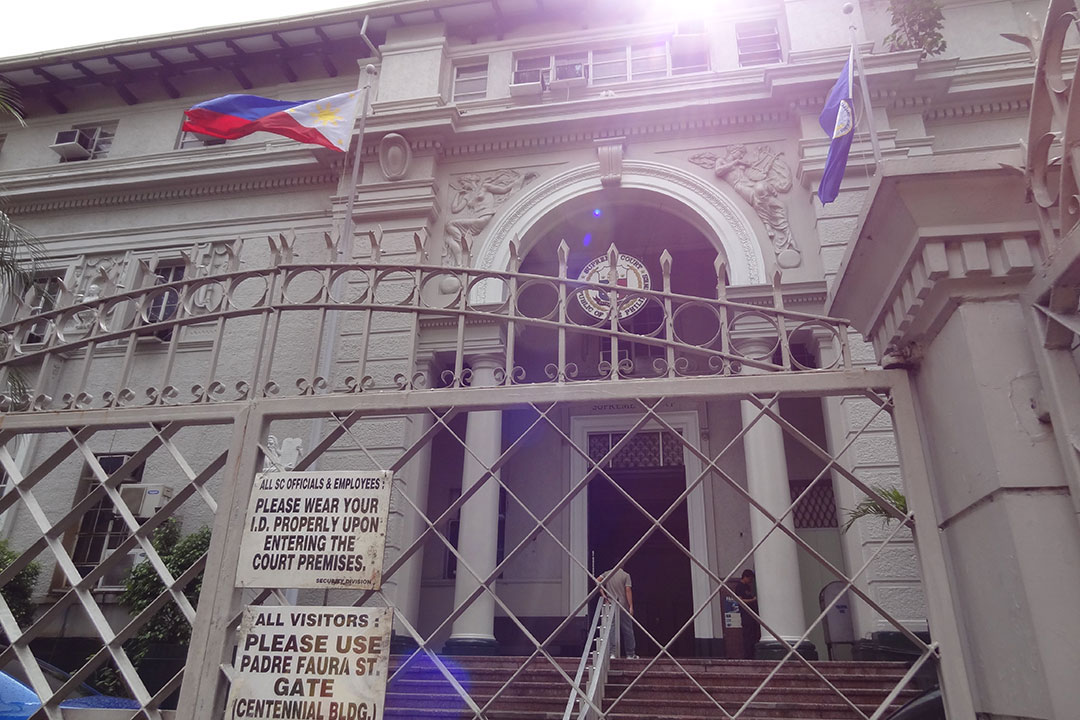
On Jan. 28, in a unanimous vote of all participating associate justices, the Supreme Court (SC) affirmed with finality its July 25, 2025, decision, which declared the articles of impeachment against Vice-President Sara Duterte unconstitutional. “The Resolution is immediately executory …No further pleadings will be allowed,” SC spokesperson Camille Sue Mae Ting told reporters in a press conference.
The Court clarified in a press release that the initial three impeachment complaints filed against Duterte turned on the constitutional clock, even though they were not placed in the order of business within the required 10 session days.
Under article XI, section 3(5) of the 1987 Constitution, the one-year bar rule disallows any impeachment proceedings against the same official for more than once in a year.
The Court interpreted “session days” in its plain and ordinary sense to mean any calendar day in which the House of Representatives holds a session, rather than strictly legislative session days.
Citing the landmark Gutierrez v. House of Representatives case, the Court detailed that an impeachment is deemed initiated when a verified complaint is referred to the Committee on Justice. It also pointed out that the initiation must occur within the term of Congress to be valid.
As in 2025, Associate Justices Alfredo Benjamin Caguioa and Maria Filomena Singh were on leave. As in last year, Senior Associate Justice Marvic Leonen penned the SC decision.
The Supreme Court decision drew mixed reactions from lawmakers, legal experts, and other stakeholders.
Here is the statement of the defense team of VP Sara: “We welcome the Supreme Court’s ruling. This unanimous Decision has once again upheld the rule of law and reinforced the constitutional limits against abuse of the impeachment process. We remain prepared to address the allegations at the proper time and before the appropriate forum.”
House of Representative spokesperson Princess Abante said: “We respect the Supreme Court. But our constitutional duty to uphold truth and accountability does not end here.
“The impeachment process is not just a legal mechanism — it is a vital democratic safeguard. Under Article XI, Section 3 of the Constitution, the exclusive power to initiate impeachment rests solely with the House of Representatives. This was firmly established in the case of Francisco v. House of Representatives and has long stood as settled doctrine.
“To allow judicial interference in the initiation of this process risks undermining the very principle of checks and balances. Impeachment is a political act rooted in the people’s will — no legal technicality should silence it.”
Akbayan Rep. Chel Diokno, former dean of De La Salle University School of Law, said: “In this decision, the people lost. Accountability lost. Impeachment is about accountability. The process followed the Constitution: the complaint was verified, endorsed by more than one-third of the House, only one case confronts VP Sara. There was no violation of due process — only a demand to present the truth to the Filipino people.
“Together with the people, we will not waver in our call for those accountable to be held so. We will continue to work with civil society and reform-minded leaders to defend our democracy and ensure that truth and justice prevail.”
Mamamayang Liberal Rep. Leila de Lima, former Secretary of Justice, stated: “The Supreme Court’s decision today declaring the impeachment complaint against Vice-President Sara Duterte unconstitutional is not only unprecedented; it is procedurally questionable.
“This was a decision rendered without hearing the other side. The House of Representatives, the principal respondent in the case, was not given the opportunity to file a formal Comment as required by Rule 65, Section 6 of the Rules of Court. No such order was issued by the Court.
“Instead of directing the House to file a comment, the Court issued a written interrogatory — a rare, if not irregular, move. Somehow, the Supreme Court treated the House’s compliance with this interrogatory as if it were a formal responsive pleading. It was not.
“How was a final decision released without a formal reply from the respondent? A decision without due process is a decision left in the air. The decision is basically an ex-parte decision, a very prohibited action among judges when the rules require the parties to be given the opportunity to be heard first.
“I respect the Supreme Court. But in a case of this magnitude -— transcendental constitutional importance — we must demand clarity, not shortcuts. The public deserves an explanation.”
Senate Impeachment Court spokesperson Regie Tongol told reporters: “We acknowledge the Supreme Court’s decision. The Senate, sitting as an Impeachment Court, has always acted in deference to the Constitution and the rule of law. As a co-equal branch of government, we are duty-bound to respect the finality of rulings issued by the High Court.
The Senate remains committed to upholding constitutional order, ensuring due process, and protecting the integrity of our democratic institutions.”
Senator Panfilo Lacson quipped, “The Supreme Court is the final arbiter of the law. They are not called ‘The gods of Padre Faura’ for nothing.”
Lawyer Rene Sarmiento, a framer of the 1987 Constitution, expressed concerns over “judicial overreach” rather than just “judicial activism,” and the weakening of the impeachment process.
The same comments were made when the Court ruled the impeachment of VP Sara unconstitutional last year.
A framer of the 1987 Constitution Christian Monsod said the Court not only misapplied the one-year bar rule but also imposed retroactively new requirements that were never part of past impeachment complaints, such as requiring a plenary hearing before referral to the House of Representatives Committee on Justice. “It violates due process,” Monsod said. “You cannot comply with a rule that didn’t exist at the time of the act. That’s basic.”
Another framer of the same Constitution, Adolf Azcuna, a retired associate member of the Supreme Court as well, said the Court made a crucial but unsupported presumption in ruling that the House acted in bad faith. “They cannot say that because they have no evidence. There can be none, because there was no hearing in order to find bad faith … because bad faith is not presumed.” He reiterated his appeal to the Court to call for oral arguments.
In a statement written by Philippine Constitution Association chair, retired Supreme Court Chief Justice Reynato Puno, “Decisions of the Supreme Court that rearrange the particles of the principle of separation of power, redefine the limits of power of government or change the calculus of the balance of power between and among the three branches of our government demand their strictest scrutiny for the slightest of error can bring about a tyrannicide that will incinerate our Constitution.”
In a televised interview, Puno noted that the seven conditions set by the Court in initiating an impeachment complaint are not included in the 1987 Constitution. He also noted that “the right of the House to promulgate its own rules is very clearly stated in the Constitution.”
That is why I find Justice Leonen being the author of the Court’s decision inconsistent with his previous stand. In 2015 the Court ruled that the fragile state of Senator Juan Ponce Enrile’s health was a compelling reason for his admission to bail. Several justices dissented, saying the decision was contrary to the rule of law. Associate Justice Leonen, then the most junior member of the Court, vented in his dissenting opinion that the granting of bail to Senator Enrile for humanitarian reason “will usher in an era of truly selective justice not based on clear legal provisions.”
It appears from the reactions of many legal luminaries that the associate justices of the Court were the ones who violated the Rule of Law. The 1987 Constitution, specifically Article XI, Sections 2 and 3, provide the exclusive process for removing high-ranking officials like the President, Vice-President, and Supreme Court Justices for culpable violation of the Constitution.
The rule of law is a foundational principle where all people, institutions, and the government itself are accountable to publicly promulgated, equally enforced, and independently adjudicated laws. It ensures that no one is above the law, fostering accountability, just laws, open government, and impartial justice.
Christian Monsod, citing a 2023 Cambridge study, commented last year that justices appointed by President Rodrigo Duterte had voted in favor of government positions 94% of the time. “There is growing concern that our institutions are being weakened,” he said. Of the 13 SC associate justices who voted that the impeachment of VP Duterte was unconstitutional, 11 were appointed to the SC by President Duterte, the father of VP Sara.
As regards Senator Lacson’s remark about “the gods of Padre Faura,” it has been said that when the gods fall, they crash and shatter or sink deeply into green muck. As I enumerated in past columns, the gods of Padre Faura have crashed and sunk more deeply into muck through the years.
Rene Sarmiento said that although the House of Representatives must honor the finality of the decision, the ruling has effectively changed the landscape for how accountability is enforced against top government officials. He noted that “overwhelming public pressure” might prompt the Supreme Court to eventually overturn its own ruling.
This is where the Catholic Bishops Conference of the Philippines (CBCP) can play a vital role – galvanize public pressure. All bishops are well versed with Canon Law, the internal legal system used by the Catholic Church to govern its organization, clergy, and members.
Canon Law is often referred to as the first “modern” Western legal system and had deeply influenced the development of the secular Rule of Law. The bishops can tell their flock, who compose 83% of the entire Philippine population, that the justices of the Supreme Court were the ones who violated the Rule of Law by violating with their partial ruling Article XI of the Constitution, which was ratified by the Filipino people.
The bishops can urge the people to denounce the justices of the Supreme Court for not upholding the Constitution and bearing true faith and allegiance to it.
Oscar P. Lagman, Jr. has been a keen observer of Philippine politics since the late 1950s.