A lowly knight’s perspective refreshes the world of Westeros


By Brontë H. Lacsamana, Reporter
TV Review
A Knight of the Seven Kingdoms
HBO Max
WHILE avid readers of George R.R. Martin’s A Song of Ice and Fire novels wait for the final two installments of the series (which formed the basis for HBO’s hit medieval fantasy show — the haphazard final three seasons of which fans choose to forget these days), a new spinoff show set in the same universe has come out.
The good news is that the spinoff, A Knight of the Seven Kingdoms, succeeds in what many others don’t. Clocking in at just six episodes of 30 minutes each, it manages to enliven GRRM’s universe thanks to its clever storytelling and refreshing perspective.
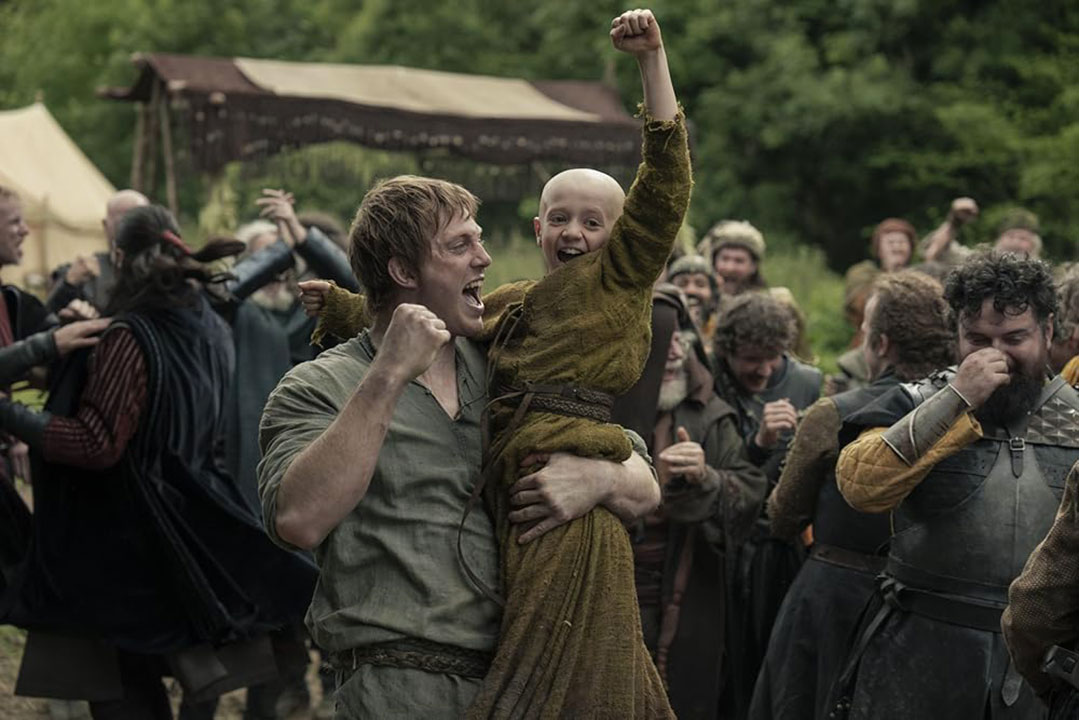
Adapted from The Hedge Knight, the first novella in the author’s Tales of Dunk and Egg series, it follows Dunk, or Ser Duncan the Tall (played by Peter Claffey), the titular wannabe hedge knight, wandering the land. On the way to a tourney, he meets Egg (played by Dexter Sol Ansell), a young boy determined to be his squire, later revealed to be the runaway prince Aegon Targaryen.
The opening scene alone signals how different this adaptation is compared to the self-important warring family dramas that have come before. The famous opening theme begins, only to be abruptly cut off by the disgusting sound of Ser Dunk having a poo under a tree. Set a hundred years before Game of Thrones and a hundred years after the other ongoing spinoff series House of the Dragons, this show has a lighter, more comedic tone, with a running theme being the lies and pretense that go into mythmaking, be it that of a knight, a prince, or the complex history of a family or the entire seven (or is it nine?) kingdoms.
A Knight of the Seven Kingdoms needs no refresher for the intricate web of generations of incestuous dynasties nor a recap of political vortices among dozens and dozens of characters with incomprehensible names. It’s simply about a man who wants to be a knight, and a prince who wants to be a squire, and the adventures they go on as they navigate a world with bits of magic and royal intrigue. It seems showrunner Ira Parker knew exactly what to do to bring out the charm of GRRM’s Dunk and Egg novellas in a way that would solve the audience fatigue for the sprawling world of Westeros.
What this spinoff series gets right is its ability to let each character shine sparingly in service of the story being told. Daniel Ings as the indulgent Lyonel Baratheon and Shaun Thomas as the amiable Raymun Fossoway make for memorable friends for Ser Dunk as he stumbles around trying to become a full-fledged tourney knight. Some of the best lines in the show are delivered by Ings’ impassioned scenes, as Lyonel tries to pull Dunk into his hedonistic world. Rowan Robinson as Fossoway prostitute Red and Tanzyn Crawford as the Dornish puppeteer Tanselle are also scene stealers, adding character to a medieval fantasy world that feels very lived in.
Ironically, compared to the spinoff show that’s all about the Targaryens in their heyday, A Knight of the Seven Kingdoms presents the most interesting Targaryen family dynamics put to screen so far, even without the dragons. There’s Princes Baelor (played with a resolute charm by Bertie Carvel) and Maekar (played with an amusing, perpetual scowl by Sam Spruell), two brothers seemingly doomed to bring their house to ruin in spite of all their efforts. Egg’s older brothers, the drunkard Daeron (Henry Ashton) and the cruel Aerion (Finn Bennett), also make an impression. But truly, what seems to serve the sense of tragedy that looms around these characters best is the sparing glimpses of how they struggle to carry the burden of their family name. (Of course, by the time Game of Thrones comes around, almost all Targaryens have been wiped out.)
But make no mistake: Dunk and Egg’s endearing chemistry is at the heart of the show. Claffey’s huge stature does him favors embodying the physicality of Dunk, sure, but he really does capture the essence of the firm yet kind knight that tries to overcome his limited intellectual capabilities and the traumas he’s endured all his life. Meanwhile, Ansell breathes life into Egg’s naivete and spunk, as he learns to live among people who see him as an equal, coming from a sheltered existence in a ruling house that is starting to waver.
Without spoiling anything, what sets A Knight of the Seven Kingdoms apart is how self-aware it is of the tall tales that the world of Westeros is built on. Those who haven’t watched any of the other shows or read the books will be able to follow this and appreciate its heart and its wit — except, of course, if bloodshed isn’t your cup of tea, because this is still a medieval fantasy and the penultimate episode (and best of the season!) has lots of it, for good reason. Otherwise, it’s a refreshing, boots-on-the-ground take on a familiar universe filled with action, revelry, and philosophical conundrums, all told with humor.
In the meantime, fans of the novels who continue to ceaselessly wait for GRRM to actually finish the main series, will have something to enjoy. The world-building remains subtle and the stories of these characters feel fleshed out in their limited screentime, which makes it a topnotch experience for anyone who has avidly kept up with the lore for years. It even keeps you itching for more, with season two still a year away, slated for 2027.
Overall, it’s a fascinating look at a Westeros still reeling from the embattled past when dragons used to exist, but also on its way to a bleaker world that is the stage for Game of Thrones. Of all adaptations so far, it’s the most faithful, and also the most tightly written and edited, making for a refreshing experience which proves that fantasy doesn’t always have to be so complicated.