

Bohol’s asin tibuok inscribed in UNESCO Intangible Cultural Heritage list
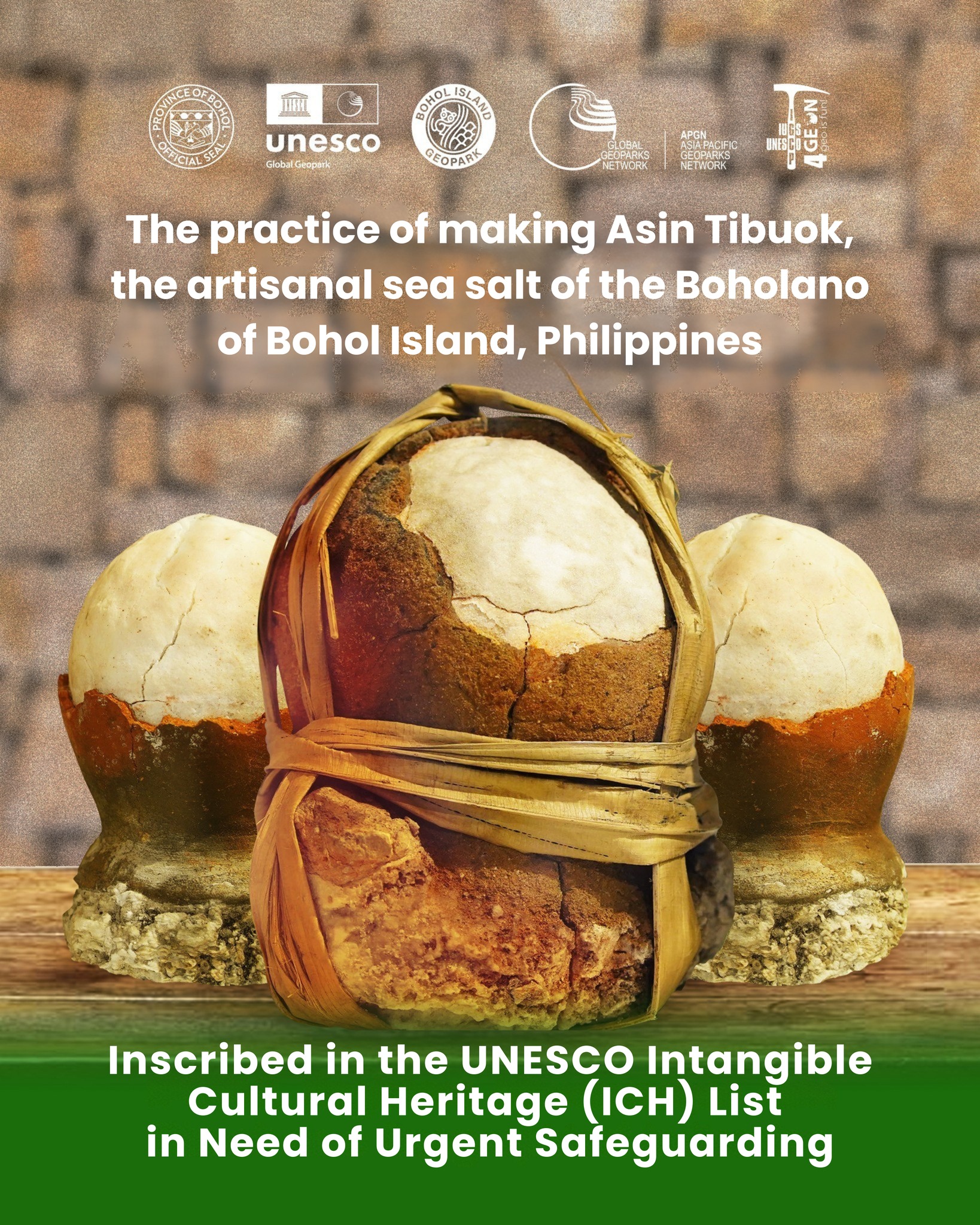
THE BOHOLANO artisanal salt making tradition joins Philippine chants, epics, and weaving onto the Intangible Cultural Heritage (ICH) List of the United Nations Educational, Scientific, and Cultural Organization (UNESCO).
Asin tibuok was officially inscribed on Dec. 9 during the 20th Session of the Intergovernmental Committee for the Safeguarding of the Intangible Cultural Heritage in New Delhi, India.
“The UNESCO-Philippine National Commission (UNACOM) congratulates the Boholano community on the inscription of the practice of making asin tibuok, the artisanal sea salt of the Boholano of Bohol Island, Philippines to the UNESCO List of Intangible Cultural Heritage in Need of Urgent Safeguarding,” said UNACOM in a Facebook post.
Asin tibuok is the first Philippine traditional food process to be included in a UNESCO ICH list.
UNACOM further explained that “the Urgent Safeguarding List includes intangible cultural heritage elements identified by communities and States Parties as needing immediate support, enabling international cooperation and assistance to help ensure their continued survival.”
According to UNESCO, “‘intangible cultural heritage’ refers to living practices — traditions, skills, rituals, music, crafts and social customs that communities pass on from one generation to the next. “Through its lists, UNESCO works with governments and communities to promote these traditions, strengthen transmission and mobilize support to ensure their survival, particularly where they are threatened by social, economic or environmental change.”
Asin tibuok is made by family-owned workshops and enterprises in the town of Alburquerque in Bohol. Often described as a dinosaur egg, the making of asin tibuok involves a lengthy process that includes soaking gathered coconut husks in seawater, cutting the husks, drying, burning, collecting the ash-salt mixture, collecting the produced brine, and cooking it in clay pots.
Asin tibuok joins six other traditions that have been inscribed on UNESCO’s Heritage lists including the hudhud chants of the Ifugao (2008), the Darangen epic of the Meranaw people of Lake Lanao (2008), the Punnuk tugging game of the Ifugao (2015), and Aklan piña handloom weaving (2023) all of which are on the List of the Intangible Cultural Heritage of Humanity; the Subanen ritual buklog (2019) in the Urgent Safeguarding List; and the School of Living Traditions (2021) in the Register of Good Safeguarding Practices.
Also inscribed on this year’s list were: India’s festival of lights, Deepavali; the craft of Đông Hồ folk woodblock printing of Vietnam; the Mwazindika spiritual dance of the Daida community in Kenya; Pakistan’s Boreendo clay musical in-strument; Panama’s quincha mud-house construction techniques; Paraguay’s Ñai’ũpo ceramic craftsmanship; Portugal’s moliceiro wooden boats; the Kobyz string instrument of Uzbekistan; Albania’s lahuta epic singing; landships cultural traditions in Barbados; and the Negliubka textile tradition of Belarus.
Other inscriptions are the Bisht, a ceremonial men’s garment worn across several Middle Eastern countries including Qatar, Iraq, Jordan and the United Arab Emirates; Venezuela, Joropo, a lively tradition combining music, poetry and dance; Bo-livia’s Festivity of the Virgin of Guadalupe in Sucre; Argentina’s dance-music genre cuarteto; Tangail saree weaving in Bangladesh; Behzad-style miniature art associated with Afghanistan; Belgian rod marionette theater; Belize’s Christmas Bram and Sambai celebrations; Bulgarian bagpipe traditions; and Zaffa wedding procession across parts of Africa and the Middle East.


