Oil firms cut diesel, kerosene prices for third week in a row
By Sheldeen Joy Talavera, Reporter
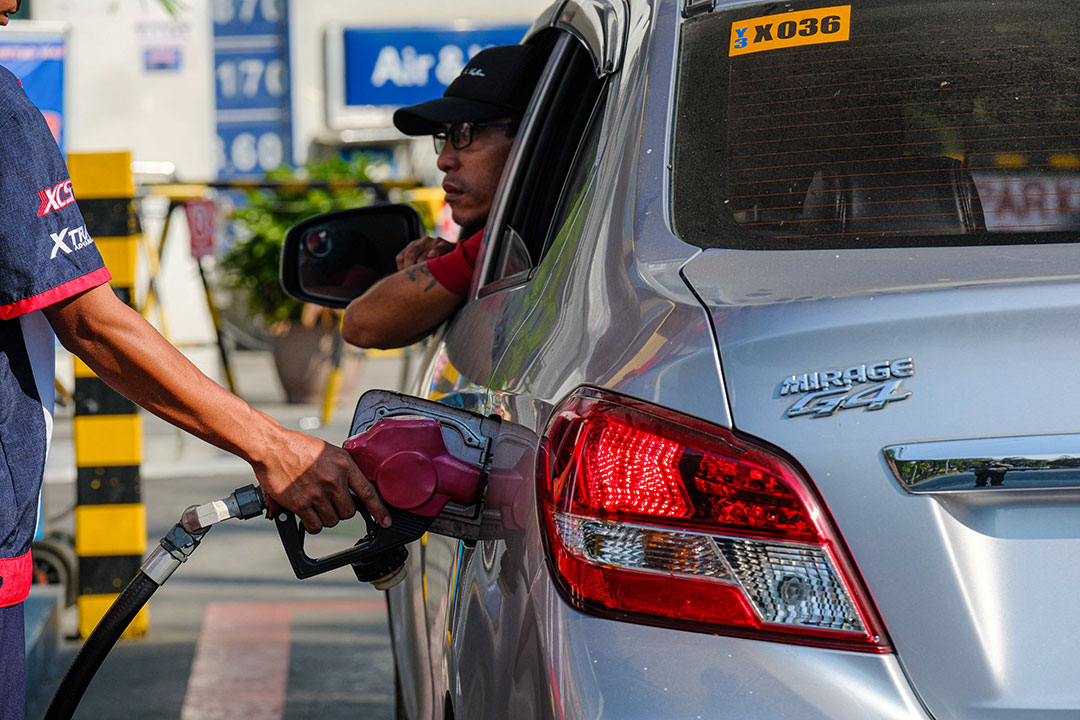
MOTORISTS can expect another round of rollbacks this week, with diesel and kerosene prices set to decline for a third straight week.
The Department of Energy (DoE) said diesel prices should go down by at least P12.94 per liter, starting April 28.
“The estimated pump price range for diesel is from P75.93 to P101.96,” Energy Secretary Sharon S. Garin told reporters at a media briefing.
The DoE chief said fuel retailers should cut kerosene prices by at least P15.71 per liter.
On the other hand, gasoline prices are expected to go up by as much as P0.53 per liter.
“This is being calculated based on specific accounting procedures. It is not just based on market behavior or expectations, but on what happened last week,” Ms. Garin said.
Unioil Petroleum Philippines, Inc. said it will implement the government-mandated price adjustments.
Ms. Garin warned that oil companies are mandated to comply with the price adjustment limits set by the government. She noted that if an oil firm does not follow the DoE advisory, then cases will be filed.
An industry source earlier said that the markets have remained highly event-driven, with shipping interruption and resulting disruption in supply flows triggering the volatility in prices.
The US-Israel war on Iran, which began on Feb. 28, has disrupted global oil supplies and drove crude oil prices up by around 50%.
RUSSIAN OIL
Meanwhile, the US has granted a one-month extension to the Philippines allowing it to purchase oil from Russia, Energy Undersecretary Alessandro O. Sales said.
“There’s a new waiver effective from April 17 to May 16… So, there is an existing waiver period again,” Mr. Sales said at the same press briefing.
Mr. Sales said that the one-month extension does not only apply to the Philippines, but other countries as well.
The Philippines had earlier asked the US to extend a waiver to purchase Russian oil after it expired on April 11,
The Philippines is a net importer of crude oil and sources most of its supply from the Middle East, the world’s biggest oil-producing region.
Seeking to diversify its energy sources, the Philippines has tapped Russian oil when the US temporarily lifted sanctions on imports for one month.
Last month, the country’s sole refiner, Petron, acquired 2.48 million barrels of Russian crude oil as “an extraordinary emergency measure” to source additional supply.
To boost oil buffer, the government has also moved to procure barrels of diesel since March from different countries through state-run Philippine National Oil Co.
Following the full delivery of four shipments of diesel, the Philippines has so far imported 1.12 million barrels.
“As the Middle East conflict continues, our priority is to ensure that the Philippines remains prepared, adequately supplied, and able to respond swiftly to developments that may affect fuel availability and market stability,” Ms. Garin said.
As of April 24, the Philippines’ fuel inventory could last for 54 days, increasing from the 52 days recorded last week.
The average inventory for gasoline is 53.91 days, while diesel has an average inventory of 54.61 days. Kerosene has an average inventory of 168.74 days, 70.83 days for jet fuel, 67.55 days for fuel oil, and 38.44 days for liquefied petroleum gas.
“The number of days didn’t decrease because the supply is being replenished continuously, even as we consume 34 million liters of diesel every day,” Ms. Garin said in Filipino.