Sari Dalena’s films screened in retrospective
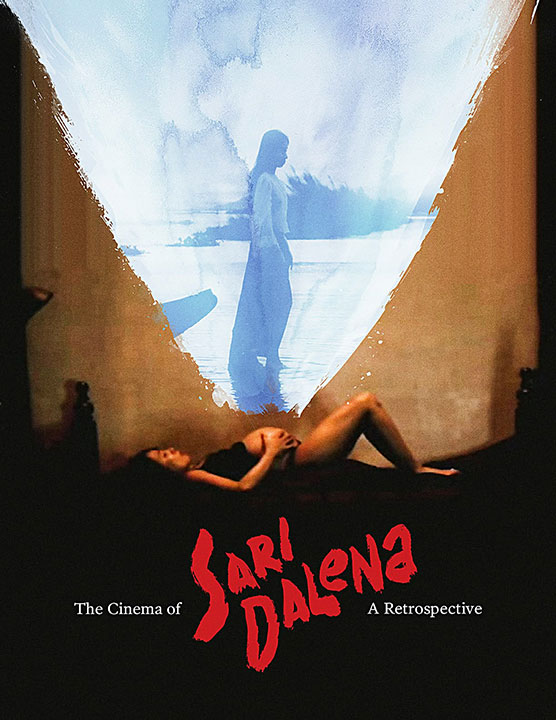 THE FEATURE films, documentaries, hybrids, experimental works, and video art of filmmaker Sari Dalena are being screened in a multi-site retrospective which started in March and continues until May.
Film scholar and programmer Patrick F. Campos curated the program, titled “Counter-Archives of a Film Guerrera: A Retrospective of Sari Dalena’s Cinema.” It aims to look at “film as a counter archive: a made form of evidence shaped by testimony, return, montage, and the risks of visibility, especially where women’s labor and memory have been pushed to the margins of official history.”
Following screenings, masterclasses, and talkbacks at the University of the Philippines Film Institute in Diliman, Quezon City, and the University of the Philippines Mindanao and The Green House Cinema, both in Davao City, a few more stops lie ahead.
Ms. Dalena’s short films were screened on April 15 at the Mowelfund Film Institute in Quezon City, and will be shown again there on April 22. That first day she told BusinessWorld that “the guerrilla energy of filmmaking in the ’90s is impossible to recreate now, though it lives on in different ways.
“It was important for me to establish a sense of support from my family and from collaborators. I found a community and felt comfortable working with smaller crews back then,” she explained.
FILMS IN FRAGMENTS
Ms. Dalena’s most recent film, Cinemartyrs, was part of the Cinemalaya Independent Film Festival lineup last year — and was also the driving force behind Mr. Campos’ decision to mount a retrospective about the filmmaker.
“I observed it had a way of baffling so many people, because it makes you think, ‘what is this film?’” he said, at the opening remarks of the Mowelfund screening program. “That’s her cinema. It makes you ask ‘what is this?’ so I thought it was the right time to do a retrospective.
“Over 30 years of making films in the alternative scene, as a woman and as a mother, is no joke. So, I thought it was the right time,” added Mr. Campos.
The short films shown that evening — Bullet Days, Kamikaze, Asong Simbahan, Mumunting Krus, and Puting Paalam — were Ms. Dalena’s earliest works that emerged from her time at the UP Film Institute, the Mowelfund Film Institute, and New York University.
“What these films preserve is the wonder of youth in a profound sense, the excitement of finding form, and the appetite for experimenting. These are youthful works by a young filmmaker trying what a settled industry would caution against,” said Mr. Campos.
He also explained that this part of her filmography marks her “willingness to work through fragments, collision, rough edges, abrupt feeling, multiple art forms, and formal leaps,” which deepened later on in her career.
INTERDISCIPLINARY
Ms. Dalena told BusinessWorld that this rich filmmaking practice was only possible because of the artistic wealth passed down to her by her parents, Julie Lluch and Danilo Dalena.
“I come from a family of visual artists. As children, we were exposed to German expressionism, Akira Kurosawa films, animation like Disney’s Fantasia, Alfred Hitchcock films. It was very natural for us and we were encouraged to explore,” she said.
An exhibit accompanying the retrospective, Notes Toward a Guerrera Cinema, ran earlier this month at the UP Film Institute’s Ishmael Bernal Gallery. There, storyboards, sketches, paintings, and sculptures across Ms. Dalena’s practice were displayed, including some contributed by family members.
At the Mowelfund talkback, she said that being exposed to her mother’s sculptural works planted the seeds of feminism in her, while her father’s paintings embedded a sense of spirituality.
One film, Asong Simbahan, was a direct translation of his “Pakil” series of paintings into the medium of film, reflecting the very Pinoy, somewhat humorous depiction of the ubiquity of dogs in local churches.
“Using the medium of film to translate and interpret his works was something else,” she said. “I never really thought of my practice as separate from other forms. It’s all really interdisciplinary.”
Another example is Mumunting Krus which makes use of art installations and is based on Ms. Dalena’s childhood experiences playing in open fields and swimming in the river in the province during summer.
Puting Paalam (White Funeral), which features clay artwork and stop-motion animation, is one of the first dance films in the Philippines. It’s a collaboration between Ms. Dalena and acclaimed dance artist Myra Beltran, set in the lahar landscapes of Zambales and Pampanga after the eruption of Mt. Pinatubo in 1991.
“It was largely intuitive and collaborative. I just jammed with them,” Ms. Beltran said at the talkback. “We had to keep going and going because it was hot out there on the lahar. I don’t know how kids work these days, but you just have to go and commit yourself.”
HISTORICAL WOUNDS
On May 6, the hybrid documentaries Memories of a Forgotten War and Cinemartyrs will be screened at the Mindanao State University’s campuses in Iligan and Tawi-Tawi.
What makes this event relevant is that it commemorates 120 years since the 1906 Bud Dajo massacre, a central historical wound revisited by both films.
“As technology changed and the types of projects changed, I tried different approaches, and eventually went from experimental forms to historical documentary,” Ms. Dalena said.
For her, having the films screened in the region was important because of her own family roots and filmmaking practice, both inextricable from Mindanao.
Mr. Campos explained that her films offer a look into history that is unique from mainstream retellings — which is the very reason retrospectives of alternative filmmakers are important.
“In Dalena’s cinema, history is kept otherwise through shards, returns, traces, and embodied labor,” he said, “Rather than through the polished order preferred by the center.”
Admission, reservations, and venue-specific details of the upcoming screenings can be found on the Mowelfund and Mindanao State University’s sites and their social media channels. — Brontë H. Lacsamana