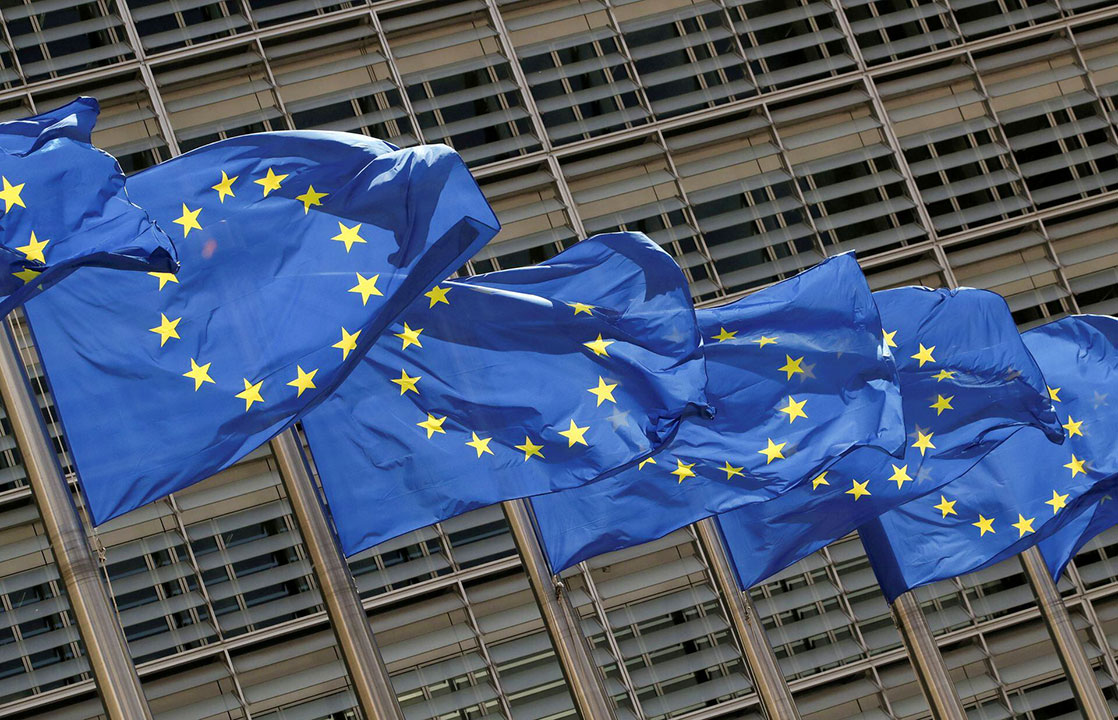
BRUSSELS — The European Commission will unveil plans on Wednesday to boost the competitiveness of the EU’s manufacturing sector during its drive to decarbonize and avoid reliance on cheap Chinese goods by setting local content requirements.
The intensely debated Industrial Accelerator Act (IAA), drafts of which were seen by Reuters, will set low-carbon and ‘Made in Europe’ requirements for public procurement of, or subsidies for, making aluminium, cement and steel, and technologies including wind turbines or electric vehicles.
The IAA aims to ensure that by 2035 manufacturing represents 20% of the European Union’s national output, from 14% today.
Critics say the IAA will prompt trading partners to close their doors.
Proponents point out that rivals such as the United States, China, Brazil and India already have rules on local content in place and that similar requirements could help fill the EU’s massive investment gap.
“We need to put out an alternative to the Trump agenda, who is very clearly going for a fossil economy,” said Greens co-leader Bas Eickhout, citing the need for “massive transition” in clean technologies and energy-intensive industry.
After the Commission proposes it, the European Parliament and EU governments will negotiate the final text – meaning further changes are likely.
DIVIDED VIEWS ON LOCAL CONTENT
The Commission has delayed the proposal numerous times due to disagreements about its content, with changes made even as late as this week.
Laurent Donceel, a director at industry association Hydrogen Europe, said Brussels had substantially scaled back its proposals. That included the share of low-carbon steel it would require companies to produce to qualify for subsidies – cut to 25% from an initial plan of around 70%.
“We are extremely disappointed that the demand that we were hoping for is far from being significant,” he said.
A key question for trading partners is how widely the EU will define “Made in Europe”.
France believes this could be limited to the EU27 and EU single market members Norway, Iceland and Liechtenstein. Some EU countries advocate a broader range of countries including Britain.
Drafts of the proposal have referred to the possible inclusion of the 21 largely developed countries with which the EU has commitments on public procurement, with reciprocity being a key condition.
The drafts also included rules to screen foreign investments to ensure sufficient involvement of EU companies and technology transfer. — Reuters