S&P: Philippines to outpace most Asian peers in next 3 years
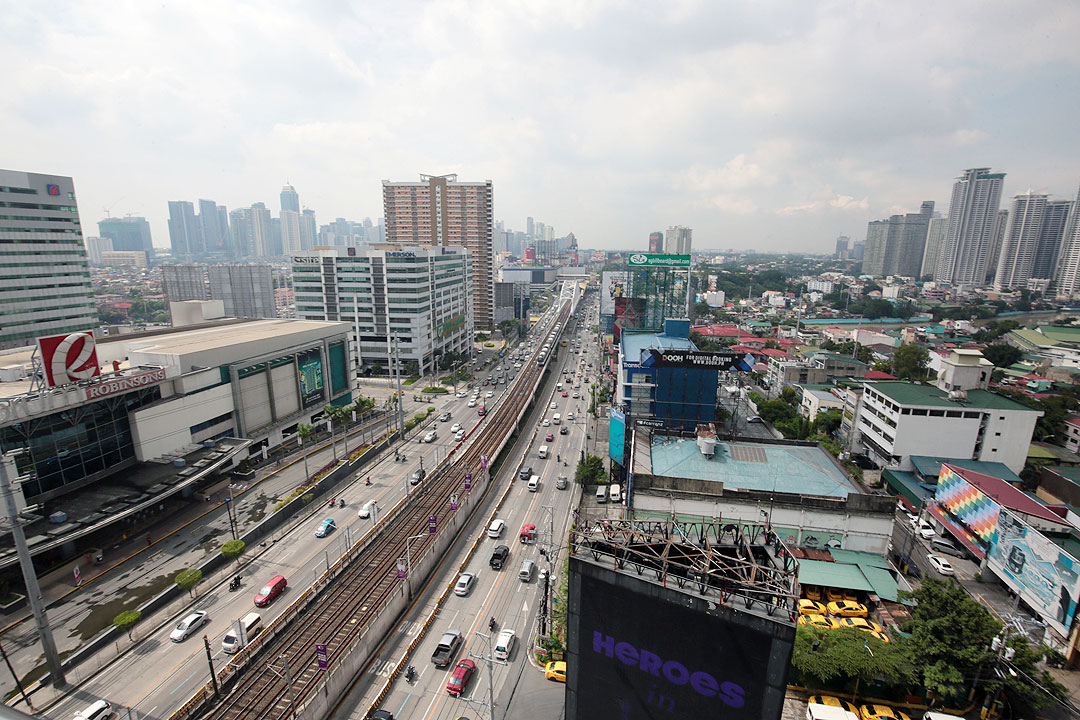
THE PHILIPPINES is expected to remain one of Southeast Asia’s fastest-growing economies over the next three years despite a slowdown in 2025 triggered by a corruption scandal, according to S&P Global Market Intelligence.
“Based on our data, the country is projected to remain one of the fastest economies in the region, second only to Vietnam,” Rodeza Mones, sector editor for news and research at S&P Global Market Intelligence, told an investment forum on Thursday.
The Philippines’ real gross domestic product (GDP) grew 4.76% in 2025, down from 5.64% in 2024. S&P now projects growth will accelerate to 5.66% in 2026, 5.84% in 2027, and 5.78% in 2028, though these estimates are lower than its prior 6.5% projections for 2027 and 2028.
GDP in dollar terms ended 2025 at $452.18 billion, with S&P expecting expansion to $477.78 billion in 2026, $505.7 billion in 2027 and $534.9 billion in 2028.
The projections do not account for uncertainties stemming from the Middle East war, Ms. Mones noted.
She said the projections show economic growth in the country is expected to be below 6%, far from the most recent high of 7.68% in 2022.
“The forecast comes as the country faces the economic fallout of a sweeping investigation into the alleged misuse of billions in state-funded flood control projects,” she said.
She noted that the graft scandal slowed infrastructure spending, weighed on investments and constrained growth by the end of 2025.
“Economists say that the outlook for economic growth in the Philippines hinges in large part on how the graft investigation will play out,” Ms. Mones said.
S&P also highlighted structural risks, including artificial intelligence (AI) disruption to the business process outsourcing sector, strained public finances and recurrent climate-related disasters such as floods, landslides and earthquakes.
“The Philippines should accelerate the implementation of structural and governance reforms and reduce infrastructure gaps to boost investments and increase fiscal multipliers,” she added, citing the International Monetary Fund.
REGIONAL CONTEXT
Across Southeast Asia, growth is expected to slow from 2025 highs. Singapore’s real GDP rose 4.96% in 2025 to $464.19 billion, driven by AI-related electronics demand. S&P projects GDP of $482.71 billion (3.99%) in 2026, $498.79 billion (3.33%) in 2027 and $516.4 billion (3.53%) in 2028.
Vietnam’s economy expanded 8.02% in 2025, with GDP reaching $464.71 billion, supported by trade growth, foreign direct investment and stable inflation.
S&P forecasts $495.43 billion (6.61%) in 2026, $526.35 billion (6.24%) in 2027 and $558.4 billion (6.09%) in 2028.
Thailand, by contrast, remains sluggish, with GDP growth near 2% in recent years. S&P projects it will dip to 1.6% in 2026 before recovering to 2.1% in 2027 and 2.4% in 2028.
“Southeast Asia’s second-largest economy has been crippled by prolonged political instability, weak domestic consumption and high household debt,” Ms. Mones said.
“Its industrial competitiveness has also declined owing to structural weakness in manufacturing, while tourism as a key source of income for the country has faced tough competition from other countries in the region,” she added. — Justine Irish D. Tabile