Philippines rebukes China over embassy remarks on South China Sea dispute
THE PHILIPPINES’ National Security Council (NSC) on Sunday criticized recent statements by China’s foreign ministry and its embassy in Manila about Philippine politicians and officials, calling them “undiplomatic,” as tensions persist over overlapping claims in the South China Sea.
In a statement, the NSC said any concerns from Beijing should be raised through established diplomatic channels, such as the bilateral consultation mechanism between the two countries, instead of being aired publicly.
“Public messaging that intimidates, threatens or seeks to silence Philippine officials performing their lawful duties is inconsistent with the spirit and obligations of diplomatic engagement and clearly violates the Vienna Convention on Diplomatic Relations,” the council said.
The Chinese Embassy in Manila did not immediately respond to a request for comment sent via Viber.
The NSC’s statement followed a series of remarks from Beijing’s embassy and foreign ministry that pushed back against statements by Philippine officials highlighting Manila’s position in the South China Sea dispute.
China claims most of the waterway under its U-shaped nine-dash line map, overlapping with the Philippines’ exclusive economic zone. Manila has repeatedly rejected Beijing’s claims, citing the 2016 arbitral ruling that voided China’s expansive maritime claims under international law.
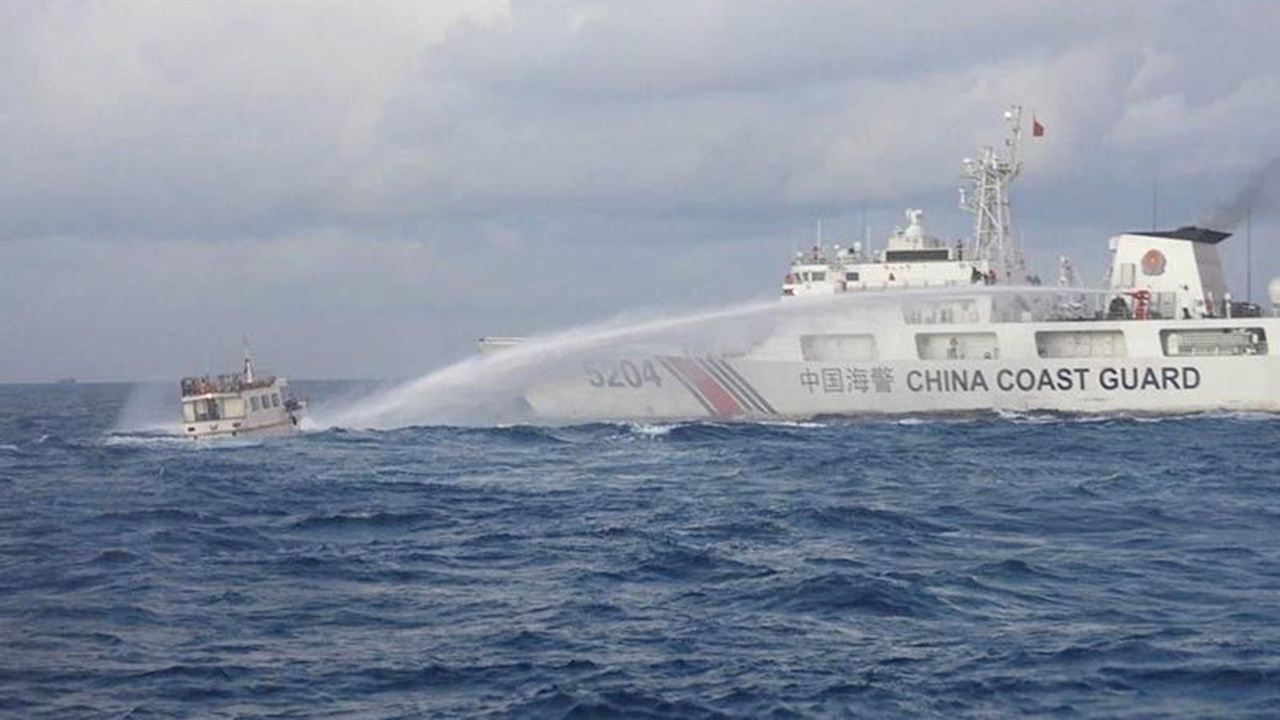
Philippine officials have stepped up public messaging on maritime issues in recent months, as confrontations between Chinese and Philippine vessels continue in contested areas of the West Philippine Sea.
Relations between Manila and Beijing have remained strained despite consultation mechanisms, with both sides trading accusations over maritime incidents and public statements.
“Public officials, spokespersons and institutions are mandated to inform the Filipino people of developments affecting national security, including activities in the West Philippine Sea,” the NSC said, referring to parts of the waterway within Manila’s exclusive economic zone.
“This responsibility does not require approval from any foreign government,” it added.
The Philippines would continue to uphold its sovereignty and rights in the South China Sea and would not be swayed by attempts to shift the discussions, such as those by China’s embassy, the NSC said.
It added that China’s refusal to comply with a 2016 United Nations-backed tribunal ruling in favor of the Philippines remains a continuing source of tension in the strategic waterway. — Kenneth Christiane L. Basilio