Home Blog Page 91

PHL Malls cut operation hours amid energy emergency

BW FILE PHOTO

Philippine malls on Thursday announced shortened operating hours, effective March 30, following the country’s declaration of a state of national energy emergency.

SM Supermalls, the mall operations unit of Sy-led SM Prime Holdings Inc. (SMPH) with 90 branches nationwide, said the adjustment aims to support nationwide energy conservation by significantly reducing demand on the national grid.

“SM is proactively adapting to the current situation by adjusting our operating hours,” said Steven Tan, president of SM Supermalls.

“We remain committed to delivering elevated retail experiences for all Filipinos, supported by our increased use of renewable energy to power our malls,” he added.

The new mall hours for SM run from 11:00 am to 9:00 pm during weekdays and 10:00 am to 9:00 pm on weekends.

Robinsons Malls, with 53 branches operated by Gokongwei-led Robinsons Land Corporation (RLC), also announced its nationwide adjustment as a means to contribute to “responsible management of power consumption” across the country.

“By optimizing daily mall operations, Robinsons Malls aims to help ease demand on the national grid while continuing to provide a safe, comfortable, and elevated retail environment for its shoppers,” it said in a statement.

Robinsons Malls would open its doors from 11:00 am to 9:00 pm on weekdays, and 10:00 am to 10:00 pm on weekends.

Mallgoers are still advised to check the operating hours of their preferred locations through the official website and social media channels of Robinsons Malls.

Opus Mall, the RLC’s luxury mall in Bridgetowne Destination Estate in Quezon City, will operate from 11:00 am to 10:00 pm on weekdays and 10:00 am to 10:00 pm on weekends.

The 30 mall branches of Ayala Malls, owned by Ayala Land, Inc. (ALI), a subsidiary of the Ayala Corporation, also trimmed down its hours on weekdays from 11:00 am to 9:00 pm, while weekdays remain from 10:00 am to 10:00 pm.

For the 18 branches of Andrew Tan-led Megaworld Lifestyle Malls, operational hours vary at each mall.

Cinema hours have also been adjusted from 1:00 pm to 9:00 pm every Monday and Tuesday, while 11:00 am to 10:00 pm on Wednesdays to Sunday. However, the mall said schedules may differ at each branch and advised goers to check the official website.

Villar-led Vista Malls, with over 30 locations nationwide, likewise, reduced its hours from 11:00 am to 9:00 pm on weekdays, and 10:00 am to 9:00 pm on weekends.

The nine branches of Starmalls, under Vistamalls Inc., have adjusted their hours as well. The mall chain will open from 11:00 am to 9:00 pm on weekdays and 10:00 am to 9:00 pm on weekends.

President Ferdinand R. Marcos Jr. declared a state of national emergency on Tuesday due to the Middle East war, which is disrupting the country’s fuel and energy supply.

Under Executive Order (EO) 110, the Department of Energy (DoE) is expected to provide energy supply management measures, including fuel optimization plans, load adjustments, and stricter enforcement of conservation efforts. — Almira Louise S. Martinez

Messaging is strategic for business, a driver for revenue in PHL – study

Majority of Philippine businesses, or 80%, expect messaging-based commerce to be “strategic or transformational for revenue” in the next two years, yet “fragmented” messaging remains a barrier that stifles customer engagement and growth, according to a study commissioned by Rakuten Viber.

The study, released Thursday, surveyed 271 decision-makers from Germany, Greece, Bulgaria, and the Philippines, and was conducted by analysts at Omdia, a technology research group.

The research covers sectors such as retail, banking, and logistics, aiming to identify key business messaging trends to guide brands on how to stay competitive over the next three years.

The optimistic 80% outlook is driven by messaging now being a critical business capability in the local market.

More than two-thirds of local organizations, or 68%, already use messaging for transactional notifications, while 67% utilize it for promotional campaigns and 36% for customer service and feedback, the study said.

However, this growth is being hampered by a “fragmentation tax,” as businesses struggle to operate seamlessly across Short Message Service (SMS), Over-the-Top (OTT) apps, and email.

The study found that 38% of Philippine respondents identify fragmented communication as a major roadblock for engagement, while 42% report difficulty reaching customers on their preferred channels.

This fragmentation leads to missed conversion opportunities, with 41% of respondents citing low engagement and open rates as a primary challenge and 28% reporting difficulty in converting campaigns into sales.

“The data is clear: the businesses that win in the next three years won’t necessarily be the ones with the most channels, but the ones that remove the most friction,” Cristina Constandache, chief revenue officer at Rakuten Viber, said in a statement.

“By treating messaging as a part of business operations, brands in the Philippines can turn fragmented conversations into consistent growth,” she added.

In response, Philippine organizations are prioritizing platforms that offer seamless integration with Customer Relationship Management (CRM) and core business systems, a feature 46% of organizations deem essential for driving engagement.

To increase the value of their messaging efforts, 49% of businesses are looking toward Artificial Intelligence (AI)-driven personalization.

Security has also become a top priority, with 65% of local businesses citing strong data protection as a primary driver when choosing a messaging platform.

The research suggests that the future points toward a “super app” approach to business messaging that connects workflows, delivers intelligence, and builds trusted, continuous experiences.

This shift is supported by the 43% of surveyed business leaders in the Philippines who believe that consolidating communication channels into a single platform will help meet business goals over the next two years.

“The next phase of messaging growth will belong to brands that simplify and coordinate – not those that simply add channels,” Adam Holtby, principal analyst at Omdia, said in a statement. — Edg Adrian A. Eva

DITO bags back-to-back awards as PH’s top rated, fastest network

DITO Telecommunity Corp. was recognized as the country’s back-to-back top-rated and fastest mobile network by two renowned global internet analytics companies.

During the 2026 Mobile World Congress held early this month, the company was hailed as the #1 Rated Mobile Network in the Philippines by Ookla, and also received the Fastest Mobile Network award from Opensignal.

The third telco player said the back-to-back recognition reflects its continued improvements in network quality, noting that these are driven by investments in 5G standalone technology and its nationwide rollout.

“These recognitions aren’t just about awards — they reflect the role DITO plays in shaping a more connected Philippines,” Eric R. Alberto, chief executive officer (CEO) of DITO Telecommunity Corp., said in a statement.

“Every day, our network helps bridge communities, enable opportunities, and empower Filipinos to participate fully in the digital future,” he added.

For a player that only started in 2021, DITO said the recognition indicates its growing presence and competitiveness in the country’s telco space, traditionally dominated by long-established operators. — Edg Adrian A. Eva

Malampaya operator aims to deliver gas by fourth quarter

A drillship testing the Camago-3 well in offshore Palawan.—PRIME ENERGY

Razon-led Prime Energy Resources Development B.V., the operator of the Malampaya deep water gas-to-power project, said it is on track to start producing gas by the fourth quarter this year following the completed drilling of one of the wells.

In a statement late Thursday, Prime Energy said it had a successful drilling, completion, and flow test of the Camago-3 well in offshore Palawan.

According to the company, the Camago-3 well produced gas at rates reaching up to 60 million standard cubic feet of gas per day, adding to the Malampaya’s remaining reserves.

The drilling of the well is part of the $893-million Malampaya Phase 4 development campaign.

Prime Energy said that the discovery in the Camago-3 is estimated to be approximately 2.5 times greater than the discovery at the Malampaya East-1 announced earlier this year.

“The single well alone effectively doubles the volume of gas that can be produced from Malampaya’s remaining reserves,” the company said.

Both wells are intended to extend the operating life of the Malampaya gas field by approximately six years, helping ensure the continued supply of indigenous natural gas to the Luzon power grid.

The Malampaya consortium, led by Prime Energy in collaboration with joint venture partners UC38 LLC, Prime Oil & Gas, Inc., and PNOC Exploration Corporation, continues to advance activities under the project on schedule.

After the completion of the two wells, the consortium is gearing up for the drilling of the Bagong Pag-asa exploration well, situated about 30 kilometers north of Malampaya.

If gas is confirmed, the well will undergo drill-stem testing to assess its production potential, Prime Energy said.

“The results at Camago-3 further strengthen our confidence in Malampaya’s remaining resource potential,” the company said. “Together with the Malampaya East-1 gas discovery, this will deliver continued value of indigenous natural gas in ensuring a stable and reliable power supply for Filipino consumers.”

Malampaya Phase 4 has been certified as a project of national significance by the government. Since inception, the Malampaya project has generated more than $14 billion in revenues for the Philippine government, while significantly reducing dependence on imported fuels. — Sheldeen Joy Talavera

Philippines, France sign military pact amid South China Sea tensions

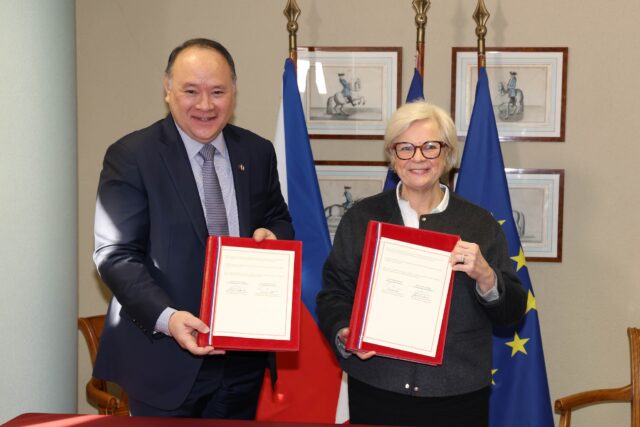
Defense Secretary Gilbert C. Teodoro with French Minister for the Armed Forces and Veterans Catherine Vautrin during the singing of the visiting forces agreement in Paris, France, Mar. 26, 2026.— DEPARTMENT OF NATIONAL DEFENSE FB PAGE

MANILA — The Philippines and France have signed a visiting forces agreement that would allow them to conduct joint military training in each other’s territory, as Manila expands defense ties amid rising tensions with Beijing in the South China Sea.

Philippine Defense Secretary Gilberto Teodoro and French Minister for the Armed Forces and Veterans Catherine Vautrin signed the agreement on March 26 during a meeting in Paris, where they discussed regional security challenges and reaffirmed support for rules-based international order.

The two also called for “the peaceful resolution of disputes” and the need to strengthen supply chain resilience in times of crisis.

“The agreement will greatly bolster bilateral cooperation and offer an adequate level of legal protection to the joint activities between the Armed Forces of the Philippines and the French Armed Forces,” the Philippine defense department said in a statement.

Aside from France, the Philippines also has the visiting forces agreements with the US, Australia, Japan, and New Zealand.

The Philippines’ signing of the landmark military deal with France came a day after the Philippine military said a Chinese missile frigate “executed an unsafe and unprofessional maneuver” against a Philippine Navy vessel conducting maritime operation near Thitu Island, one of the Philippines’ key outposts in the disputed sea.

Beijing claims almost the entire South China Sea, a strategic waterway where more than $3 trillion of trade passes annually.

The Asian economic and military giant has repeatedly refused to recognize a 2016 landmark ruling that invalidated its claim in the entire waterway. — Reuters

Domestic abuse tops 911 VAWC reports in PHL

STOCK IMAGE | Image by Gerd Altmann from Pixabay

Domestic abuse is the most reported form of violence against women and children (VAWC) on the country’s emergency hotline, with cases still rising since the launch of the Unified 911 system, according to the Emergency 911 National Office.

“Domestic abuse continues daily in Philippine households, alongside wife battery, maltreatment, and rape,” the office said in a statement on Thursday.

“Children face online sexual abuse and exploitation, violent discipline, incest, bullying, neglect, psychological abuse, and economic exploitation,” it added.

Data from the E911 National Office indicate that the hotline receives an average of 300 to 500 calls monthly regarding VAWC concerns.

From January 2025 to February 2026, the office recorded 2,533 calls involving physical, sexual, psychological, or economic abuse.

Wife battery (214), maltreatment (209), rape (106), child abuse (173), acts of lasciviousness (60), prostitution (8), human trafficking (5), abandoned children (3), and abortion (1) were also reported on the hotline.

Most VAWC calls came from Calabarzon, Metro Manila, Central Luzon, and Cebu Province, followed by Dumaguete and Bacolod.

E911 National Office Executive Director Francis Fajardo said the launch of the Unified 911 system has contributed to the rise of cases.

The new system has also improved call handling efficiency by 50%, from 48% in 2024 to 98%.

“The rise does not necessarily mean more abuse, but reflects improved reporting through an easy-to-remember hotline and faster response using next-generation technology,” he said in a statement.

While calls have increased, many VAWC cases remain unreported due to fear of exposure.

“Abuse victims need not fear exposure or suffer retaliation from their tormentors… The next-generation emergency system that we have has enhanced security and privacy protocols,” NGA Philippines Country Head Robert Llaguno said in a statement.

“The unified 911 system is designed to give citizens peace of mind and a reliable lifeline,” he added

The Philippine National Police (PNP) said that 6,883 cases were recorded from August to November 2025 alone, underscoring the severity of the problem in the country.

Perpetrators facing crimes under the Republic Act No. 9262 or the Anti-VAWC Act may face imprisonment of one month to 20 years, and a fine ranging from P100,000 to P300,000. — Almira Louise S. Martinez

China’s top chipmaker has supplied chipmaking tech to Iran military, US officials say

REUTERS

WASHINGTON — SMIC, China’s largest chipmaker, has sent chipmaking tools to Iran’s military, two senior Trump administration officials said on Thursday, raising questions about Beijing’s stance in the month-old US-Israeli conflict with Iran.

SMIC, which has been heavily sanctioned by the US government over alleged ties to the Chinese military, began sending the tools to Iran roughly a year ago and “we have no reason to believe that any of this has stopped,” one of the officials said.

The official added that the collaboration “almost certainly included technical training on SMIC’s semiconductor technology.”

The officials spoke on condition of anonymity in order to discuss previously undisclosed US government information. They did not specify whether the tools were of US origin, which would likely make shipment to Iran a violation of US sanctions.

SMIC, the Chinese Embassy in Washington, and a spokesperson for the Iranian mission to the United Nations did not immediately respond to requests for comment.

The Chinese government maintains that it carries out normal commercial trade with Iran. SMIC, which was added to a trade blacklist in 2020 that restricts its access to US exports, has denied allegations that it has ties to the Chinese military-industrial complex.

China has not publicly taken a side in the Middle East conflict. Chinese Foreign ‌Minister Wang Yi this week called on the parties to seize all opportunities to ​start peace talks as soon ​as possible.

The allegations threaten to heighten tensions between Washington and Beijing as the US wages war against Tehran and as it has sought to choke off China’s advanced chip industry.

Reuters reported last month that Iran was close to a deal with China on the purchase of anti‑ship cruise missiles, just as the United States deployed a vast naval force near the Iranian coast ahead of strikes on the Islamic Republic.

It was not immediately clear what, if any, role the chipmaking tools have played in Iran’s response to the war, which was launched by the US and Israel on February 28 and has roiled financial markets, triggered a surge in oil prices and fueled global inflation fears.

One of the officials said the tools have been provided to Iran’s “military industrial complex” and could be used for any electronics that require chips.

Washington has sought to curtail China’s ability to make advanced semiconductors through sanctions on SMIC and other Chinese chipmakers, aiming to limit their access to advanced chipmaking equipment from top US suppliers such as Lam Research, KLA, and Applied Materials.

The Biden administration tightened restrictions on SMIC in 2024 by cutting off its most advanced factory from more US imports after it produced a sophisticated chip for Huawei’s Mate 60 Pro phone, Reuters reported. — Reuters

World Bank to provide financial aid to countries affected by Middle East war

REUTERS

WASHINGTON — The World Bank Group said on Thursday it will support client governments as they deal with challenges caused by the Middle East conflict, including increases in energy costs, by leveraging fast-disbursing policy financing instruments.

The development lender said in a statement it was ready to respond at scale with immediate financial relief, policy expertise, and private sector support to preserve jobs and growth in affected countries.

“Our aim is to deliver immediate relief by leveraging our active portfolio, our crisis response toolkit, and pre-arranged financing facilities,” the World Bank Group said.

“We will transition progressively to fast-disbursing instruments anchored in sound policies to underpin recovery. Through our private sector arms, we will provide firms with essential liquidity, trade finance, and working capital,” the bank added.

The World Bank also used fast-disbursing policy development lending facilities to speed hundreds of billions of dollars in relief to developing countries affected by the pandemic in exchange for progress from governments on meeting certain reform targets.

The World Bank said it was keeping in direct contact with the most affected client countries.

“Shipping route disruptions are increasing costs, and supply risks are spreading from energy into fertilizers and other critical agricultural inputs,” the World Bank said. — Reuters

Trump extends pause on striking Iran’s energy plants into April

AN EXPLOSION caused by a projectile impact after Iran launched missiles into Israel following Israel and the US launched strikes on Iran, in Tel Aviv, Israel, Feb. 28, 2026. — REUTERS/GIDEON MARKOWICZ

DUBAI/TEL AVIV/WASHINGTON — US President Donald Trump said he will extend a pause on attacks against Iran’s energy plants into April and that talks with Iran were going “very well,” but an Iranian official said a US proposal for ending the war as “one-sided and unfair.”

The four-week war has spread across the Middle East killing thousands of people and hit the global economy with soaring energy prices, fueling global inflation fears.

The United States and Israel launched strikes on Iran on February 28 after talks about Tehran’s nuclear program failed to yield a deal.

On Thursday, Mr. Trump threatened during a cabinet meeting at the White House to increase pressure on Iran if it did not make a deal, before later posting on social media that he would pause attacks on Iranian energy plants for 10 days until April 6, 2026 at 2000 EDT (0000 GMT on April 7).

“Talks are ongoing and, despite erroneous statements to the contrary by the Fake News Media, and others, they are going very well,” he added in his Truth Social post.

Iran has said it is not engaged in talks with Washington.

Mr. Trump has not identified with whom the US is negotiating in Iran, with many high-ranking officials killed in the war.

On March 23, Mr. Trump announced a halt to all strikes against power plants and energy infrastructure for a five-day period, but has now extended it to 10 days.

Iran did not asked for a 10-day pause on strikes on its energy plants, the Wall Street Journal cited peace talk mediators as saying.

Mr. Trump told Fox News’ “The Five” program that the Iranians had asked for a seven-day pause on strikes on energy plants. There was no immediate reaction from Tehran.

DRONE SPEEDBOATS
The war has massively disrupted shipping, sending crude oil prices up around 40%, seen liquefied natural gas prices spike, and prices for nitrogen-based fertilizers, critical to food production, rise around 50%.

Despite Mr. Trump’s upbeat assessment, Iran continued to retaliate against US and Israeli strikes by hitting Israel and US bases. It also struck Gulf states and effectively blocked Middle East fuel exports via the Strait of Hormuz, which carries about 20% of global oil and liquefied natural gas.

Mr. Trump suggested on Thursday that Iran let 10 oil tankers transit the Strait of Hormuz as a goodwill gesture in negotiations, including some Pakistan-flagged vessels.

The Pentagon is looking at sending up to 10,000 additional ground troops to the Middle East so that Mr. Trump has more military options, the Wall Street Journal reported on Thursday, citing officials at the department.

The Pentagon did not immediately respond to a request for comment from Reuters.

The United States has deployed uncrewed drone speedboats for patrols as part of its operations against Iran, the Pentagon told Reuters, the first time Washington has confirmed using such vessels in an active conflict.

Mr. Trump said the US would become the Iran’s “worst nightmare” if it did not comply with US demands, which include opening the Strait of Hormuz and ending its nuclear program. He said taking control of Iran’s oil was an option, but gave no details.

IRAN REJECTS US 15 POINT PLAN
An Iranian official told Reuters that a 15-point US proposal, conveyed to Tehran by Pakistan, was reviewed in detail on Wednesday by senior Iranian officials and the representative of Iran’s supreme leader, who felt it served only US and Israeli interests.

However, diplomacy had not ended, the official said.

The proposal included demands ranging from dismantling Iran’s nuclear program to curbing its missiles and effectively handing over control of the strait, according to sources and reports.

Pakistan’s foreign minister said “indirect talks” between the US and Iran were taking place through messages relayed by Islamabad, with other states including Turkey and Egypt also supporting mediation efforts.

Iran has hardened its stance since the war began, demanding guarantees against future military action, compensation for losses, and formal control of the strait, Iranian sources say.

It also told intermediaries that Lebanon must be included in any ceasefire deal, regional sources said.

On Thursday, Iran launched multiple waves of missiles at Israel, striking Tel Aviv, Haifa and other areas, including a Palestinian town in central Israel.

At least one ballistic missile hit Tel Aviv, according to Israel’s military, while others carried cluster missiles that dispersed smaller explosives, damaging homes and cars.

Israel’s ambulance service said a man was killed in Nahariya after Hezbollah fired a rocket barrage at the northern city.

In Iran, strikes hit the southern city of Bandar Abbas and a village on the outskirts of the southern city of Shiraz. A university building in Isfahan was reported to have been hit. — Reuters

From early detection to personalized treatment: Navigating breast cancer with care

From left: Dr. Emmeline Cua delos Santos, Dr. Frances Victoria Que, and Jocelyn Gesmundo

The incidence of breast cancer in the Philippines continues to rise, positioning it as one of the most urgent health concerns among Filipino women today. In 2022, the World Health Organization Global Cancer Observatory recorded 33,079 new cases in the country, making it the most common cancer among women.

Despite these numbers, medical experts emphasize that the narrative around breast cancer is changing—from one being defined by fear to one increasingly shaped by early detection, precision medicine, and survivorship.

“Over the past decade, breast cancer awareness intiatives—led by healthcare institutions, advocacy groups, and both public and private sectors—have significantly improved the public’s understanding of screening, early detection, timely consultation, and prompt treatment,” Philippine Cancer Society President Dr. Corazon A. Ngelangel said. “More women now recognize the importance of breast self-examination, clinical breast examination, screening imaging via ultrasound/mammography, and prompt diagnostic biopsy consult.”

Particularly, with early detection, survival rates continue to improve,” Dr. Ngelangel added. “And patients now have access to more personalized and evidence-based treatment strategies than ever before, aided by foundational tools in precision medicine.”

For patients like Jocelyn Gesmundo, early detection is life-changing.

A retired IT project manager at 60, Ms. Gesmundo had already built a disciplined routine around her health. She had undergone regular mammograms and ultrasounds for more than 15 years, motivated by a strong family history of cancer.

“When I became a mother, I made sure I did regular checkups,” Ms. Gesmundo shared. “It was something I committed to.”

It was during one of the routine screenings that doctors detected a change. A previously monitored lump had grown, and another appeared near her lymph node, prompting immediate biopsy.

“Two days after my ultrasound, the doctor called me back. That’s when I knew something was different.”

She then was diagnosed early-stage breast cancer.

Personalized for precision

Breast cancer diagnosis today relies on what clinicians call triple assessment: a combination of clinical examination, imaging (such as mammography or ultrasound), and biopsy confirmation.

Beyond diagnosis, the classification of breast cancer has also become more sophisticated. There are three major subtypes: hormone receptor-positive, HER2-positive, and triple-negative breast cancer, each requiring distinct treatment strategies.

“What’s important now is that these types are much more treatable than before,” surgical oncologist Dr. Emmeline Cua delos Santos explains. “We have targeted therapies and better chemotherapy options.”

This shift reflects a broader transformation in oncology: the move away from one-size-fits-all treatment towards personalized, evidence-based care.

As Dr. Jose Rhoel C. de Leon, one of the board of directors at the Philippine College of Surgeons Cancer Commission Foundation, highlights, “We are seeing firsthand how innovations, such as improved imaging techniques, minimally invasive biopsy procedures, de-escalation of radical procedures like breast conserving surgery and sentinel lymph node procedures, as well as precision diagnostics are helping patients receive more accurate diagnoses and tailored surgical management.”

The role of genomics

At the heart of modern breast cancer care is a major shift: from standardized treatment protocols to highly individualized care.

“We’re going towards the era of personalized medicine—looking at molecular components that determine what is best for a patient based on their DNA,” said medical oncologist Dr. Frances Victoria Que.

Beyond confirming the presence of cancer, today’s diagnostics aim to understand how a tumor behaves. This includes identifying mutations, protein expressions, and recurrence risks—factors that directly influence treatment planning.

“For every patient, we assess their risk over time,” Dr. Que explains. “From there, we determine whether treatments like chemotherapy will actually provide benefit.”

With this new approach, patients are now stratified into risk categories, allowing oncologists to de-escalate treatment accordingly.

Early breast cancer patients with small tumors that are hormone receptor positive and HER2 negative can be tested if their genomic profile points to low risk. “If a patient is low-risk based on genomic testing, we can safely skip it [chemotherapy] and proceed with less aggressive treatment,” Dr. Que emphasized. A healthy discussion with doctors is important.

In Ms. Gesmundo’s case, genomic testing became a turning point in her cancer journey.

After her diagnosis, she underwent a precision genomic test used to determine the likelihood of cancer recurrence. The results classified her as low risk, meaning she could safely avoid chemotherapy.

“That was very important to me,” she recalled. “I saw how difficult chemotherapy was for my father. So, if there was something I could skip, I hope it would be that.”

“A cancer diagnosis brings a lot of anxiety,” Dr. Que said. “But when patients are given clear, personalized treatment plans, it helps reduce that uncertainty and gives them a sense of control.”

That sense of reassurance extended beyond Ms. Gesmundo herself. She also underwent genetic testing to determine whether her cancer could be passed on to her children. The results came back negative.

Navigating treatments

While genomics informs treatment decisions, doctors stress that care remains a collaborative process—one that integrates clinical expertise, patient preferences, and emotional readiness.

“It’s no longer one-size-fits all,” said Dr. de Los Santos. “We tailor-fit treatment based on the type of cancer, its stage, and what is best for the patient, even considering what gives them peace of mind.”

This includes a wide range of options: from breast-conserving surgery to full mastectomy, as well as less invasive procedures such as sentinel lymph node biopsy. Advances in oncoplastic surgery now even allow patients with larger tumors to preserve their breasts while ensuring effective cancer control. Systemic treatments are then layered onto this surgical foundation.

By investigating the individual’s genomic profile, we can tailor fit the treatment.

Awareness, hesitancy, and misinformation

Despite these advancements, however, one of the biggest challenges in breast cancer care remains awareness. Misconceptions about breast cancer contributes to delays in screening and diagnosis, Dr. Que observed.

“There’s still a lot of misinformation surrounding cancer,” she explained. “Many people think it’s a death sentence, when in reality, early-stage cancers are often very treatable—or even curable.”

“The hesitancy or fear will not get you anywhere, it may even cost your life,” she emphasized.

From survival to empowerment

Ms. Gesmundo’s cancer journey has reshaped her outlook in lasting ways.

“What you really have is the present,” she reflected. “You learn to be kinder to others and to yourself.”

Her days are now marked by intentional living: spending time with family and reconnecting with friends.

She also offers a reminder often forgotten in conversations about women’s health: the importance of self-care.

“As women, especially mothers, we tend to take on everything,” she said. “But you also need to take care of yourself. Because, when you do, you’re better able to care for the people you love. You always have a choice in how you face it. Choose to see the positive—even if it’s difficult.”

Doctors reinforce this message by emphasizing that the convergence of early detection, advanced diagnostics, and personalized treatment has transformed the breast cancer landscape.

Ms. Gesmundo, for her part, leaves a message of urgency and hope.

“Make sure you get tested. The earlier this is detected, the better the prognosis.”


Spotlight is BusinessWorld’s sponsored section that allows advertisers to amplify their brand and connect with BusinessWorld’s audience by publishing their stories on the BusinessWorld Web site. For more information, send an email to online@bworldonline.com.

Join us on Viber at https://bit.ly/3hv6bLA to get more updates and subscribe to BusinessWorld’s titles and get exclusive content through www.bworld-x.com.

BSP holds rates in off-cycle meeting

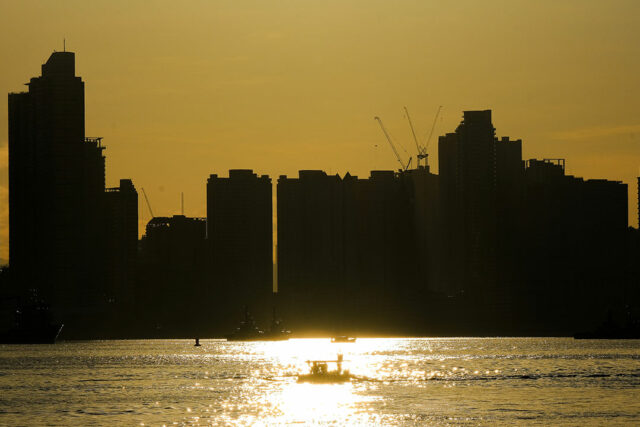
Towering buildings in the central business district are seen from Manila Bay during sunrise. The Philippine central bank kept rates steady in an off-cycle meeting on Thursday. — PHILIPPINE STAR/RYAN BALDEMOR

By Katherine K. Chan, Reporter

THE BANGKO SENTRAL ng Pilipinas (BSP) kept its policy rate unchanged at 4.25% during a surprise off-cycle meeting on Thursday, as it sought to calm markets amid growing concerns over the impact of the Middle East war on the economy.

In a statement, the BSP said it left the target reverse repurchase rate unchanged at 4.25%.

“To raise the policy rate at this time would delay the recovery,” the BSP said.

This marks the Monetary Board’s first off-cycle move in over two years or since October 2023, when it raised the policy rate to 6.5%. The central bank was not scheduled to review policy until April 23.

BSP Governor Eli M. Remolona, Jr. said they decided to stand pat as their growth outlook remains clouded and as emerging inflationary risks prove supply-driven, “for which monetary policy has limited effectiveness.”

Mr. Remolona noted that the latest off-cycle policy action was an assurance for the market, which has grappled with uncertainties arising from the ongoing war in the Middle East.

“I hope it reassures markets that we are assessing the situation constantly,” he said.

“Normally, with inflation going where it’s going, we would have hiked. But because it was driven by supply shocks, we felt a hike wouldn’t do very much. And at the same time, because growth was relatively weak, growth would temper any rise in inflation,” he added.

FASTER INFLATION SEEN
The BSP said its inflation expectations remain well-anchored but raised its forecast for 2026 to 5.1% from 3.6% previously. If realized, the headline print would breach its 2%-4% target.

BSP Deputy Governor Zeno Ronald R. Abenoja said this is based on projections that global crude oil prices will average around $85 per barrel (/bbl) by yearend and $76/bbl next year, citing futures prices.

The central bank also considered the second-round effects of oil prices, including possible uptick in transport fares, food and fertilizer prices, electricity rates and wages, as well as higher tariff rates and a potential fuel excise tax suspension.

According to Dennis D. Lapid, officer-in-charge of the BSP’s Monetary Policy Sub-Sector, inflation may hover around 3.5% in March before pushing past the BSP’s ceiling to around 5% in April.

As of February, inflation has averaged 2.2%.

However, Mr. Remolona said core inflation, which excludes volatile prices of food and fuel, will also rise but is unlikely to accelerate beyond 4%. This, he noted, is what the central bank prefers to assess their outlook amid current economic conditions.

For 2027, the BSP sees inflation averaging 3.8%, higher than its earlier estimate of 3.2%.

The BSP last held steady in February 2025, which was followed by sixth straight 25-basis-point cuts until its Feb. 19, 2026 meeting as its inflation outlook remained subdued at the time.

Mr. Remolona noted that current data showed they can do more to support growth right now than address supply-driven spikes in consumer prices.

However, he reaffirmed that the BSP remains committed to its price stability mandate.

Mr. Remolona also said the current growth environment still calls for support from fiscal policy to help the economy recover from the fallout from the corruption scandal, especially with the expected burden of energy shocks on domestic growth.

“Fiscal policy would be more effective at this stage,” the BSP chief said. “But it is, I think, unusual that inflation is now driven almost entirely by supply shocks for which monetary policy cannot do very much, but it can still do something about growth.”

The central bank trimmed its gross domestic product (GDP) growth estimate to 4.4% from 4.6% for this year but maintained its forecast for 2027 at 5.9%.

Mr. Abenoja said recovery may come by the second half of 2026 as spillovers from last year’s graft scandal and recent energy shocks could keep the growth momentum weak in the first half.

TIGHTER MONETARY POLICY
Looking ahead, Mr. Remolona said monetary policy decisions will focus on tempering potential second-round effects of the oil price shocks.

He noted that oil hitting $200 per barrel is an “extreme scenario but possible,” adding that the BSP would be forced to tighten if that materializes.

“It’s possible, of course,” he said. “But if that happens, we would be forced to raise our rates in a kind of catch-up mode. But for now, our scenario is not quite that extreme. So, we think we can still manage (to maintain) our policy.”

Mr. Remolona said the BSP is willing to tighten monetary policy if it can address demand-driven inflation stemming from the second-round effects of oil shocks.

“(O)nce we see second-round effects from those shocks, for which we can do something about the demand for those second-round effects, then I think it would be appropriate for monetary policy to tighten, address the inflation from those second-round effects,” he said.

Mr. Remolona also left the door open to holding more off-cycle policy meetings “as needed” if the economic crisis amid the United States-Israel war on Iran lasts longer.

The Monetary Board has five more regular policy meetings this year scheduled for April 23, June 18, Aug. 27, Oct. 22 and Dec. 17.

Meanwhile, Mr. Remolona said they are also planning to grant regulatory relief measures for the local banking sector, particularly lenders from the informal sector and low-income businesses.

“Actually, we’re contemplating the same things we did with bank lending to the informal sector and to low-income small businesses. We’re going to have a standardized restructuring if a loan is default,” he said. “We’re going to postpone some payments depending on the sector. So, very similar to what we did during (the COVID-19 pandemic),” the BSP chief said.

LONG PAUSE AHEAD
On the other hand, several analysts have already noted a likely pause prior to the BSP’s off-cycle announcement.

Singapore-based DBS Bank said early on Thursday that soaring pump prices and a weakening peso amid the Middle East war may prompt the central bank to hold steady for a long period.

In an e-mailed note, DBS Senior Economist Radhika Rao said they now see the BSP opting for a prolonged pause rather than delivering a final cut as initially expected.

“Onshore financial markets have already been under pressure this month, with the peso (depreciated to a record low) and equity markets amongst the regional underperformers on (a) month-to-date basis,” she said. “The BSP will be wary of lowering rates further in this environment, preferring to stay on an extended pause.”

Meanwhile, New Zealand-based ANZ Research noted that lingering growth woes and rising inflation risks complicate the BSP’s policy path.

Even as domestic activity remains sluggish, the BSP’s easing cycle has reached its end amid inflationary risks from rising costs of rice, electricity and fuel, the think tank said.

ANZ foreign exchange analyst Kausani Basak said markets are anticipating a rate hike from the central bank as the war drags on.

Ms. Basak said economic recovery will now depend on catch-up government spending, but the lack of a fixed timeline diminishes its capability as a growth driver.

“Domestic activity weakness has become more pronounced in recent months,” she said. “Its recovery will depend on a pickup in public capex (capital expenditure), with the revival timeline still unclear.”

The flood control corruption scandal last year dampened government spending, household consumption and investments, dragging GDP growth to a post-pandemic low of 4.4%.

Government spending has declined year on year for six straight months. In January, it was down by 23.9% to P303.5 billion from P398.8 billion a year ago.

Meanwhile, infrastructure spending has also fallen for five consecutive months, declining by an annual 45.2% to P48 billion in November.

ERC suspends electricity trading as prices set to surge

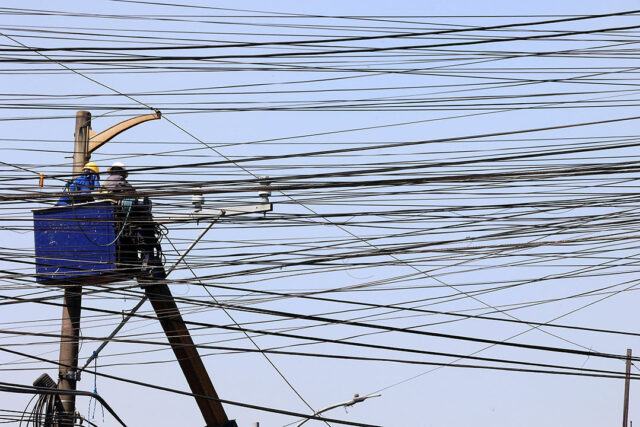
Electricity posts are seen along a road in Quezon City. — PHILIPPINE STAR/MIGUEL DE GUZMAN

By Sheldeen Joy Talavera, Reporter

THE ENERGY Regulatory Commission (ERC) has temporarily halted the trading in the country’s electricity spot market to curb the impact of rising prices, which is seen hitting P9 per kilowatt-hour (kWh) amid the ongoing energy crisis.

In a statement on Thursday, the ERC ordered the suspension of the operations of the Wholesale Electricity Spot Market (WESM) across Luzon, Visayas, and Mindanao grids starting on Thursday (March 26).

WESM is where energy companies can buy power if their long-term contracted power deals prove inadequate for their needs.

The suspension was triggered by the executive order recently signed by President Ferdinand R. Marcos, Jr., declaring a state of national energy emergency due to global fuel supply disruptions and rising oil prices.

The Department of Energy (DoE) had also recommended the suspension of the WESM operations.

Local pump prices have more than doubled since the US-Israeli war on Iran began last month, causing an unprecedented supply disruption in the Middle East that sent global fuel prices soaring.

While oil only takes up a small portion of the country’s power generation mix, other fuel sources also mirror this volatility, prompting the suspension of the WESM.

The WESM suspension will remain in effect until the ERC, in consultation with the DoE, determines that conditions are “suitable for the safe resumption of normal market operations,” the regulator said.

Amid suspension, the ERC is introducing a new pricing mechanism wherein the regulator sets prices depending on the type of power plant.

Under the modified administered pricing mechanism, prices will be based on prevailing fuel costs, replacing the use of historical market prices that do not reflect current conditions marked by geopolitical tensions and fuel supply constraints.

The ERC said that the modified approach seeks to “strike a balance between protecting consumers from excessive price spikes and ensuring that generators remain financially viable to sustain a reliable electricity supply.”

“The temporary suspension of the WESM and the implementation of a modified administered pricing mechanism are necessary measures to cushion the impact of volatile fuel prices and safeguard the integrity of our power system,” ERC Chairperson and Chief Executive Officer Francis Saturnino C. Juan said.

The Philippine Independent Power Producers Association (PIPPA) said that the proposed pricing mechanism is intended to work during “extraordinary circumstances” such as a national energy emergency.

“We support the ERC’s proposed modified administered pricing mechanism since per our initial evaluation, it is an equitable solution to protect the public and the energy stakeholders in this extraordinary situation,” PIPPA Executive Director Anne E. Montelibano told BusinessWorld.

Ms. Montelibano said that power generators will comply with the directive to ensure energy reliability and security.

The ERC chief confirmed to BusinessWorld that the WESM suspension is also intended to optimize available resources and temper any rate increase.

Initial simulations conducted by the Independent Electricity Market Operator of the Philippines (IEMOP) show that the average cost of procuring supply from the WESM could reach as high as P9 per kWh.

This represents a significant jump from the pre-Middle East conflict average price of around P5 per kWh or less.

IEMOP also observed that the costs of power supply from bilateral contracts are likely to increase as prices of fuel escalate.

In line with this, the DoE has called for the increased use of renewable energy, coal, and other indigenous energy sources.

In a separate statement, the department said that the full dispatch of indigenous sources and coal-fired power plants can reduce the increase in WESM prices by up to P2 per kWh.

“As a net importer of oil, coal, and liquefied natural gas, we are acting with heightened discipline to preserve power system reliability in the face of escalating global fuel market volatility,” Energy Secretary Sharon S. Garin said.

“This is a decisive intervention to protect the grid, manage fuel use responsibly, and ensure that essential electricity services remain uninterrupted,” she said.

To further cushion the upward pressure in electricity rates, the DoE also directed power generators to explore feasible fuel alternatives that can help reduce costs and maintain supply. This includes higher biodiesel blends for oil-based plants and coal blending.

For off-grid areas, which are heavily affected by rising fuel prices due to their reliance on diesel generation, the DoE told utilities to optimize available generation, secure adequate fuel supply, and implement demand-side management measures.

The DoE said it will closely monitor compliance, coordinate with key agencies, and take further action as needed to ensure system reliability, orderly market conditions, and consumer protection.

ADVERTISEMENT
ADVERTISEMENT