Home Blog Page 88

Philippine Finance chief Go says oil shock may spur April rate hike

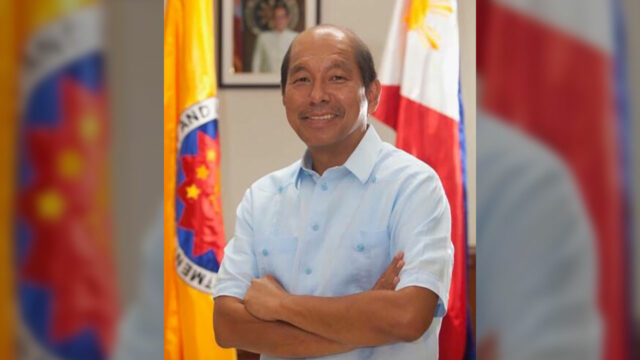
Philippines Finance Secretary Frederick Go — IYA FORBES/BLOOMBERG

The Philippine central bank may tighten its monetary policy next month if oil prices continue to rise, according to Finance Secretary Frederick Go.

“If the price of oil continues to persist at elevated levels, it is most likely that the Monetary Board will consider tightening in the next meeting,” Mr. Go said in an interview with Bloomberg Television’s Haslinda Amin on Tuesday.

Mr. Go is a member of the Bangko Sentral ng Pilipinas’ policymaking board which will hold its next policy meeting on April 23.

A rate hike would mark an abrupt pivot for the central bank, which had just reduced borrowing costs by 25 basis points in its February meeting, in a bid to support the economy’s recovery.

The impact of the Middle East conflict on gross domestic product growth “would be less than 10 basis points” if it was a short-term event, said Go, who assumed his post in November. “But if it will persist for more than six months, it will have a more pronounced effect on our GDP growth.”

Once one of the region’s fastest growing economies, the Philippines has been looking to rebound from a widespread corruption scandal that dragged GDP growth to its slowest pace in 14 years outside the pandemic.

The peso regained some lost ground against the dollar on Tuesday after touching a record low just under the 60 level on Monday. Bangko Sentral ng Pilipinas Governor Eli Remolona said Monday the monetary authority was intervening in the foreign exchange market in a bid to push down the currency below that psychological level.

The peso’s recent weakness highlights its vulnerability to rising fuel costs, with the country heavily reliant on imported oil. Oil rose on Tuesday above $100 a barrel as Iran stepped up attacks on energy infrastructure around the Persian Gulf.

The finance chief said he isn’t worried about the weakness in the Philippine peso “as long as the movements are smooth and not abrupt,” adding that a depreciating currency would support exports.

Before the Iran war broke out, Philippine officials and market participants have viewed the P60-per-dollar level as a key threshold. President Ferdinand Marcos Jr. does not want the peso to weaken to P60 against the dollar, according to his press officer in January.

Mr. Remolona earlier this month said that oil at $100 a barrel could force tightening of monetary policy as inflation may breach the central bank’s 2%-4% target range.

Inflation in the Philippines accelerated to 2.4% in February, the fastest pace in over a year and puts the economy in a delicate position ahead of the expected surge in prices of goods amid the war in Iran.

The Philippines saw another round of substantial increase in fuel prices this week, with power costs expected to rise by 16% in April. — Bloomberg

Slightly positive business sentiment signals ‘cautious optimism’ in the Philippines

HIGH-RISE buildings dominate the skyline of Makati City’s central business district. — PHILIPPINE STAR/ RYAN BALDEMOR

By Katherine K. Chan, Reporter

LOCAL BUSINESSES’ slightly positive outlook in January hints at “cautious optimism,” indicating that economic recovery may be on track but still weak, analysts said.

SM Investments Corp. Group Economist Robert Dan J. Roces said Philippine firms’ near-zero confidence index (CI) in January signals that “recovery is intact but fragile.”

“Firms are not pulling back decisively, but neither are they strongly accelerating hiring, capex (capital expenditure), or inventory buildup,” he told BusinessWorld in a Viber message. “Typically, a CI close to zero reflects caution — often tied to cost pressures, demand uncertainty, or external and internal risks.”

Based on the Bangko Sentral ng Pilipinas’ (BSP) maiden monthly business expectations survey (BES), businesses were a tad more optimistic in January as their CI stood at 0.9%.

A positive CI shows that more respondents are optimistic than pessimistic.

“A confidence index of 0.9% tells us the recovery is still intact, but very fragile,” Jonathan L. Ravelas, a senior adviser at Reyes Tacandong & Co., also told this paper via Viber. “Businesses are slightly optimistic, not exuberant. It suggests firms are seeing stabilization, but they’re still cautious on spending, hiring, and expansion.”

Last year, extensive flooding uncovered multiple substandard or nonexistent flood control projects across the country, sparking investigations into corruption allegations involving lawmakers, Public Works officials, and private contractors.

The controversies tainted consumer and business confidence, dragging the economy to its worst performance since the pandemic.

The Philippine gross domestic product (GDP) grew by only 3.9% in the third quarter of 2025 and weakened further to 3% in the fourth quarter as investments and spending remained sluggish, bringing full-year expansion to 4.4%.

Earlier this year, BSP Governor Eli M. Remolona, Jr. said recent figures show “tentative signs” of improving business confidence, fueling their projection that the economy will bounce back by the second half.

Among the data he cited were the S&P Global Manufacturing Purchasing Managers’ Index (PMI), the Philippine Stock Exchange index (PSEi) and government bond yields.

In January, the Philippines’ manufacturing PMI rose to a nine-month high of 52.9 in January from 50.2 in December. It further improved to 54.6 in February, the fastest pace in over eight years.

However, John Paolo R. Rivera, a senior research fellow at the Philippine Institute for Development Studies, said business sentiment in January points to “modest rather than strong” growth in the near term.

“For recovery prospects, this means growth is likely to remain modest rather than strong in the coming quarters,” he told BusinessWorld in a Viber message. “Businesses may delay expansion, hiring, and capital expenditure decisions until there is clearer evidence of sustained demand, policy stability, and global economic improvement.

“Momentum appears fragile and confidence driven recovery remains incomplete,” he added.

For Mr. Ravelas, businesses need more clarity on the government’s policies for the economy to recover stronger.

“For the recovery to gain traction, businesses need clearer signals on inflation easing, interest rate direction, and global demand,” he said. “Without those, confidence will likely stay near neutral rather than accelerate.”

For this year, the central bank expects GDP growth to average 4.6%, before expanding further to 5.9% in 2027.

Trump upset as US partners reject call for Hormuz warship escorts

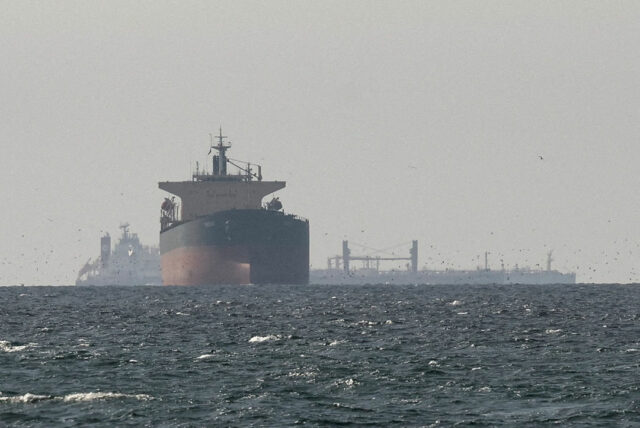
Tankers sail in the Gulf, near the Strait of Hormuz, as seen from northern Ras al-Khaimah, near the border with Oman’s Musandam governance, amid the US-Israeli conflict with Iran, in United Arab Emirates, March 11, 2026. — REUTERS

WASHINGTON/TEL AVIV/DUBAI — Several US allies rebuffed Donald Trump’s call on Monday to send warships to escort tankers through the Strait of Hormuz, drawing criticism from the US president, who accused Western partners of ingratitude after decades of support.

The US-Israeli war on Iran is in its third week with no end in sight. The critical Strait of Hormuz, through which 20% of the world’s oil and liquefied natural gas flow, remains largely closed off, raising energy prices and fears of inflation.

The conflict has already imposed economic costs on US allies, who were not consulted before the airstrikes on Iran and who have endured months of harsh criticism and bellicose threats from Mr. Trump since he returned to office.

A number of US partners, including Germany, Spain and Italy, said they had no immediate plans to send ships to help reopen the strategic waterway, which Iran has effectively shut with drones and naval mines.

“We lack the mandate from the United Nations, the European Union or NATO required under the Basic Law,” German Chancellor Friedrich Merz said in Berlin, adding that Washington and Israel had not consulted Germany before launching the war.

Mr. Trump, speaking at a White House event in Washington, said many countries had told him they were prepared to help, but voiced frustration with some long‑standing allies.

“Some are very enthusiastic about it, and some aren’t,” he said, without offering specifics. “Some are countries that we’ve helped for many, many years. We’ve protected them from horrible outside sources, and they weren’t that enthusiastic. And the level of enthusiasm matters to me.”

ISRAEL STILL HAS ‘THOUSANDS’ OF TARGETS IN IRAN

Israel said on Monday it had drawn up detailed plans for at least three more weeks of war as it pounded sites across Iran overnight, while Iranian drone attacks temporarily shut Dubai airport and hit a key oil facility in the United Arab Emirates.

Israel troops pushed into new parts of southern Lebanon, part of an expanding operation after Hezbollah fired rockets at Israel in retaliation for the killing of Iran’s supreme leader.

In a joint statement, Canada, France, Germany, Italy and Britain warned that any “significant Israeli ground offensive would have devastating humanitarian consequences and could lead to a protracted conflict,” and that such an operation “must be averted.”

Israel has said it wants to weaken Iran’s capacity to threaten it, striking ballistic missile infrastructure, nuclear facilities and the security apparatus, and that it still has thousands of targets to hit.

“We want to make sure that they are as weak as possible, this regime, and that we degrade all their capabilities, all parts and all wings of their security establishment,” Israeli military spokesperson Lieutenant Colonel Nadav Shoshani said.

Iran’s Islamic Revolutionary Guard Corps (IRGC) said it would target US industrial facilities in the Middle East and urged people living near US-owned plants to leave.

Iran also responded to Mr. Trump’s threat that he might attack oil facilities on Kharg Island, the country’s main oil hub, if Tehran does not reopen the Strait of Hormuz. US forces destroyed military targets on Kharg on Friday.

A spokesperson for the armed forces, Abolfazl Shekarchi, said Iran would target oil and gas facilities in any country from which US attacks were launched on Kharg Island.

Foreign Minister Abbas Araqchi said Tehran had not asked for a ceasefire or exchanged messages with the US, according to Iran’s semi-official Student News Network.

In a post on X, Mr. Araqchi also said some “neighboring states” that host US forces and permit attacks on Iran were actively encouraging the killing of Iranians.

He said 200 children were among the hundreds of Iranian civilians killed in US or Israeli bombings.

Rescue workers in Tehran worked to pull people from the wreckage of a building in what an Iranian Red Crescent aid worker said was an entirely residential alleyway.

ISRAEL CLAIMS STRIKES ON IRAN’S SPACE PROGRAM

Israel said its air force had struck sites linked to Iran’s space program, including destroying a research facility in Tehran involved in developing a satellite launched in 2024.

One Tehran resident told Reuters that there had been no internet overnight and Iranians felt isolated from the world.

“People are being killed,” Shahnaz, 62, said via WhatsApp. “Just days before Nowruz (Iranian New Year, on March 20), but people are not in the mood to celebrate. When will this end?”

Asked if she supported the Islamic Republic, Shahnaz said: “No, I don’t. How can I? They killed my granddaughter in (January’s) protests. We want this regime to go. We want this misery to end.”

In Tel Aviv, air raid sirens sounded late into the night, warning of incoming Iranian missiles and underscoring that, after more than two weeks of war, Tehran still retained the capacity to carry out long-range attacks. The IRGC said earlier that Iran had launched strikes on areas in Tel Aviv, the US Al Dhafra Air Base in Abu Dhabi, the US naval base in Bahrain and Bahrain’s Sheikh Isa Air Base.

On the UAE’s coast along the Gulf of Oman, oil loading operations at the port of Fujairah partially resumed after an Iranian drone strike. Fujairah is a key exit point for the UAE’s Murban crude – a volume equivalent to roughly 1% of global demand.

Flights at Dubai International Airport, one of the world’s busiest, were suspended for several hours after a drone strike on a nearby fuel storage facility sent plumes of black smoke into the sky. Saudi Arabia intercepted 34 drones in its eastern region in one hour, state media said. No injuries were reported in either incident.

Despite the turbulence, oil prices of Brent crude and West Texas Intermediate, which had been above $100 a barrel, fell and stocks rallied after US Treasury Secretary Scott Bessent told CNBC the US was “fine” to let some Iranian fuel vessels through the strait, and believed Indian and Chinese tankers had also passed through. — Reuters


LTFRB approves fare increase for jeepneys, buses, TNVS

STAR / Miguel De Guzman

The Land Transportation Franchising and Regulatory Board (LTFRB) has approved a P1 increase in the minimum fare for traditional public utility jeepneys (PUJs), raising it to P14 starting Thursday.

For modern jeepneys, the minimum fare will increase by P2 to P17 from P15, LTFRB Chairman Vigor D. Mendoza II said during a media briefing on Tuesday.

He said the LTFRB has also approved a P0.20 increase in fares for each succeeding kilometer for both traditional and modern PUJs.

For city buses, the minimum fare will be set at P15 for ordinary buses and P18 for air-conditioned buses, up from P13 and P15, respectively.

The regulator has also increased the base fare for transportation network vehicle services (TNVS) to P65 from P45 for sedan units, and to P165 from P145 for premium TNVS. — Ashley Erika O. Jose

Australia, EU signal progress in trade negotiations

STOCK PHOTO | Image by Rebecca Lintz from Pixabay

SYDNEY — Australian Trade Minister Don Farrell said on Tuesday he had “a productive call” overnight with European Union Trade Commissioner Maros Sefcovic, signaling progress in trade talks as both sides work toward a long-awaited agreement.

“I am confident we can do a deal, and look forward to continuing to work with him to reach an agreement that is in Australia’s national interest,” Mr. Farrell said in a statement.

Negotiations between Australia and the EU collapsed in 2023 largely over disagreements on access to agricultural products.

Australia has been seeking greater quotas for lamb and beef exports to Europe, while the EU has pushed for improved access to Australia’s critical minerals and lower tariffs on manufactured goods.

Mr. Sefcovic said on Monday that trade talks with Australia had been moving in the right direction and that he remained fully committed to securing a successful outcome.

“We are working hard towards a mutually beneficial agreement for all stakeholders,” Mr. Sefcovic said in a post on X.

The renewed push for a free trade agreement comes as the EU seeks to compete more strongly with the US and China amid growing global trade tensions. In January, the bloc struck a trade deal with India aimed at boosting two‑way trade and reducing reliance on the United States.

Bloomberg News earlier reported that European Commission President Ursula von der Leyen told EU leaders that the trade negotiations with Australia were in their “final stretch”.

The report, citing unidentified sources, said she could travel to Australia as soon as this weekend to sign the agreement, though plans have not been finalized. — Reuters

Rubio, South Korea Foreign Minister Cho agree Strait of Hormuz key to global economy, Seoul says

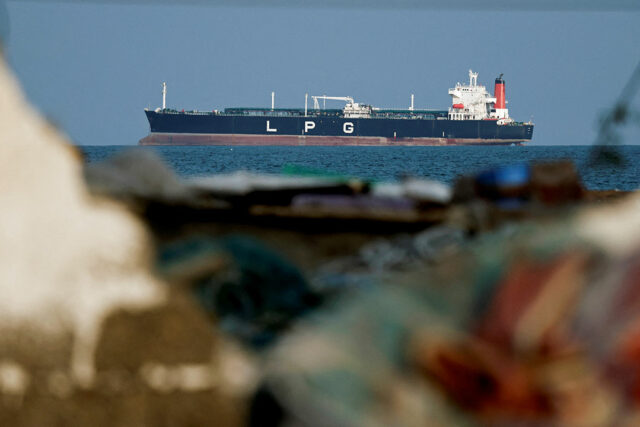
An LPG gas tanker at anchor as traffic is down in the Strait of Hormuz, amid the US-Israeli conflict with Iran, in Shinas, Oman, March 11, 2026. — REUTERS

SEOUL — US Secretary of State Marco Rubio said on a phone call with South Korean Foreign Minister Cho Hyun on Mondaythat cooperation among countries to secure safety in the Strait of Hormuz is more important than ever to stabilize the global economy and oil prices, Seoul said.

South Korea has said it would carefully consider US President Donald Trump’s call for countries including South Korea, Japan and China to deploy navy ships to the Middle East to form a coalition to ensure safe passage through the waterway.

Mr. Cho agreed with Mr. Rubio on the importance of the freedom of navigation in the strait for the security and economies of South Korea and other countries, and he suggested the allies continue close consultations, South Korea’s foreign ministry said.

Japan and Australia have said they were not planning to send ships to the Middle East to escort vessels through the strait.

Mr. Trump repeated his call on Monday to countries including South Korea, Japan and China to deploy navy ships to the Middle East to form a coalition to reopen the Strait of Hormuz.

The vital waterway has been effectively closed for most of the world’s tanker traffic since the US and Israel attacked Iran on February 28 at the start of an intensive bombing campaign hitting targets across the country. — Reuters

DoE: Diesel may hit P115 per liter

A motorcycle passes a gasoline station in San Juan City, March 13, 2026. — PHILIPPINE STAR/MIGUEL DE GUZMAN

By Sheldeen Joy Talavera, Reporter

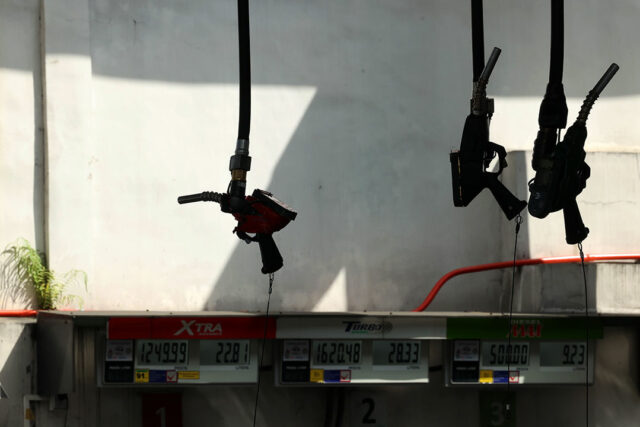
DIESEL PRICES could reach up to P115 per liter this week at gasoline stations within Metro Manila and nearby areas as a fresh wave of big-time price increases is set to be implemented amid the Middle East conflict.

Energy Secretary Sharon S. Garin confirmed that diesel costs could go beyond P100 per liter this week.

“It’s possible. Actually, our estimate is that it could reach P115,” she told reporters in a mix of Filipino and English.

Starting Tuesday, March 17, gasoline prices will increase by P12.90 to P16.60 per liter, diesel by P20.40 to P23.90 per liter, and kerosene by P6.90 to P8.90 per liter.

Based on the monitoring of the Department of Energy (DoE), gasoline prices may go as high as P91.60 per liter while diesel may surge to P114.90 per liter. Kerosene prices may jump to P143.79 per liter.

Some oil companies, including Shell Pilipinas Corp., Petron Corp., Total (Philippines) Corp., Seaoil Philippines, Inc., Flying V, and Jetti Petroleum, Inc., have agreed to stagger the implementation of the increase in two to three tranches within the week.

The latest price adjustments mark the 12th consecutive weekly increase for diesel and kerosene prices, and 10th straight week for gasoline.

“Today, we set a record. We have two of the highest jumps in oil prices. And (fuel prices) are also at the most expensive,” Ms. Garin said.

Local pump prices remain elevated amid the ongoing US-Israel war with Iran, which led to the closure of the Strait of Hormuz, a chokepoint for one-fifth of the world’s oil.

As a net importer of crude oil, the Philippines is vulnerable to global crude price swings.

Around 98% of the country’s crude imports are sourced from the Middle East. The remaining 2% is imported from Brunei and Malaysia.

ADEQUATE SUPPLY
Ms. Garin assured that the Philippines has enough supply that could last until end of April.

“The most important (thing) for today is that we have supply. There is no need to cause panic among our people,” she said.

Ms. Garin said that the government is negotiating for additional supply of fuel from other countries, including South Korea, Thailand, Singapore, and Japan.

The DoE has also tapped state-run Philippine National Oil Co. to search for alternative suppliers for stockpile.

Meanwhile, Ms. Garin said the country’s remaining oil refiner, Petron, is negotiating with Russia for supply of crude oil as the US eased sanctions on the latter.

“We’re waiting for that on what is the progress and talks on procuring from Russia, but we have already done the work,” she said.

Ms. Garin said she is in favor of revisiting the oil deregulation law, but to a certain extent.

“I do believe this system is only effective during good times. If prices are favorable for everyone, then things are fine. But in bad times, it does not work very effectively,” she said.

Enacted in 1998, the law allows oil companies to set and adjust pump prices based on global oil prices and other market factors, instead of awaiting government approval.

“In times like this, there has to be a certain control. Not because we want to limit profit or competition that is there, but we want also to protect the interest of the public,” Ms. Garin said.

The Energy chief also assured the country has a stable supply of electricity, but the consumption should be managed.

In a statement on Monday, consumer group ILAW Pilipinas urged the government to implement immediate measures that could help cushion consumers from price shocks, including the suspension or reduction of local taxes and tariffs on fuel and electricity.

“A potential increase in electricity prices shows how quickly international conflicts can translate into higher costs for households and small businesses,” said ILAW Pilipinas Youth Convenor Francine Pradez.

Cash remittances jump by 3.5% in January

REUTERS

By Katherine K. Chan, Reporter

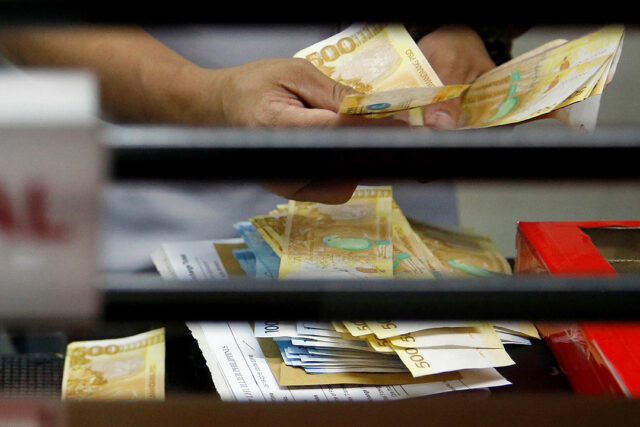
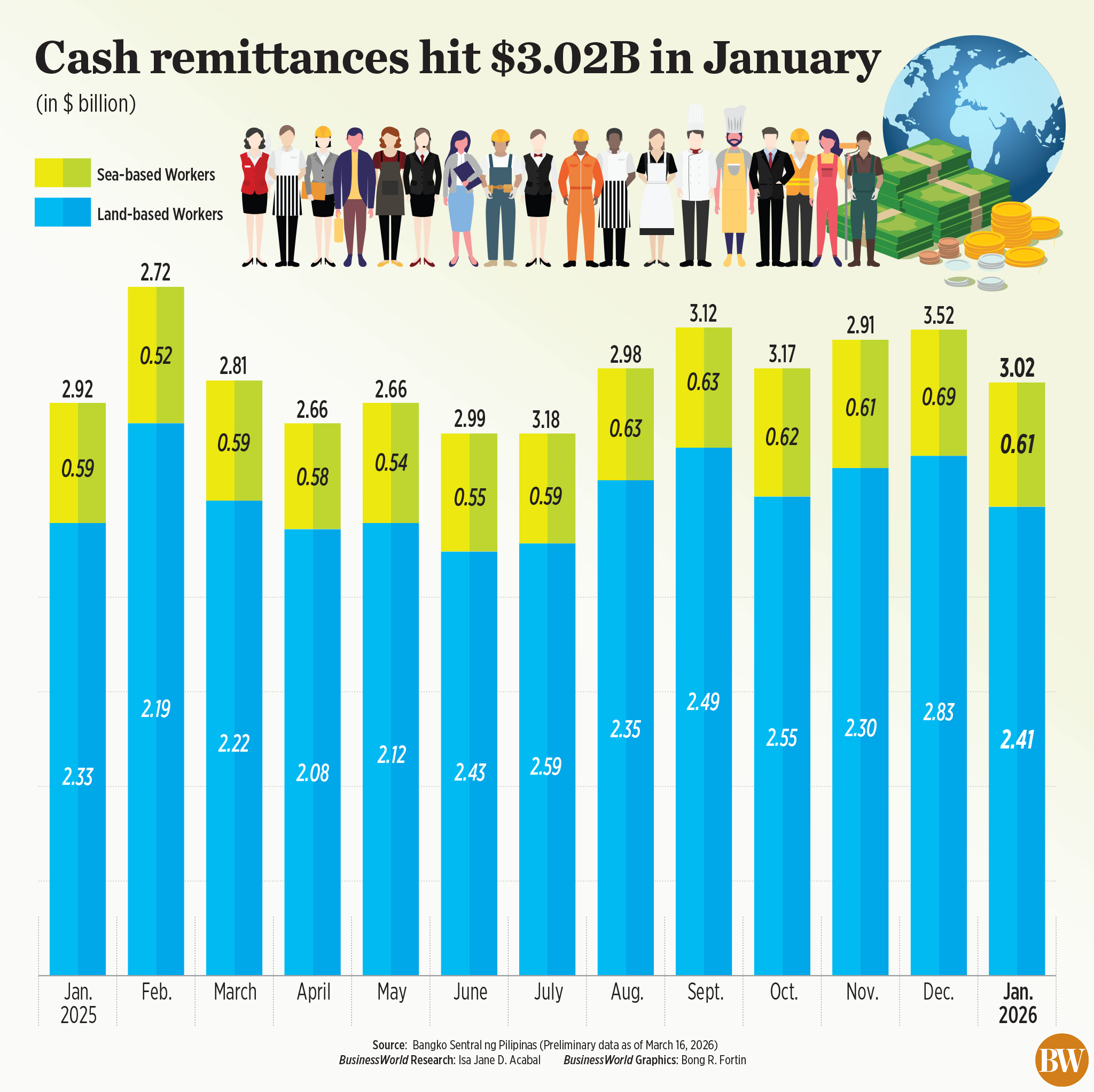
MONEY SENT HOME by Filipinos abroad climbed by 3.5% year on year in January as a weak peso boosted foreign exchange gains, preliminary Bangko Sentral ng Pilipinas (BSP) data showed.

Cash remittances, or money coursed through banks from overseas Filipino workers (OFWs), rose to $3.02 billion in the first month of the year from $2.918 billion logged in January 2025.

However, the 3.5% growth was the slowest annual growth seen in three months or since 3% in October last year.

Month on month, cash remittances slid by 14.3% from the record-high $3.522 billion in December.

“The United States remained the top source of cash remittances to the Philippines in January 2026, followed by Singapore and Saudi Arabia,” the BSP said in a statement on Monday.

Filipinos in the United States sent most money home with 40.2% of the total, followed by Singapore (7.6%), Saudi Arabia (6.7%), Japan (5.8%), the United Kingdom (4.6%), the United Arab Emirates (3.7%), Canada (3%), Taiwan (2.9%), Qatar (2.8%) and Hong Kong (2.5%).

Cash remittances from land-based workers grew by 3.5% to $2.413 billion in January from $2.331 billion in the same month in 2025.

On the other hand, remittances from sea-based migrant workers rose by 3.5% to $607.777 million from $587.024 million last year.

Personal remittances likewise went up by an annual 3.5% to $3.358 billion in January from $3.243 billion a year ago. These include both cash coursed through banks and informal channels and in-kind remittances.

“The year‑on‑year increase reflects steady overseas employment conditions and sustained income flows from key host countries such as the United States, Singapore, and Saudi Arabia, which continue to anchor remittance growth,” Union Bank of the Philippines Chief Economist Ruben Carlo O. Asuncion said via Viber.

Mr. Asuncion noted that the month-on-month decline is not worrisome as remittance inflows usually normalize in January following the holiday-driven surge in December.

“Remittances typically peak during the holidays due to year‑end bonuses and one‑off transfers, then normalize in January, so this pullback is expected and not a cause for concern,” Mr. Asuncion said.

Meanwhile, Jonathan L. Ravelas, a senior adviser at Reyes Tacandong & Co., attributed the annual rise in remittances to the weaker peso and robust overseas employment, allowing Filipinos abroad to earn well.

“The pullback from December is largely seasonal after the holiday surge, but the key point is remittances are still higher than a year ago, showing OFWs’ income remains resilient,” he said in a Viber message. “A weaker peso and steady overseas employment continue to support flows.”

In January, the peso traded between P58 and P59 to the dollar, averaging P59.1622 versus the greenback during the month, according to BSP data.

In the coming months, the peso’s performance and geopolitical developments will determine the flow of remittances into the country, Mr. Asuncion noted.

“Remittance flows in the coming months will depend on labor market conditions in major host economies, exchange rate movements, and broader global growth and geopolitical developments that may affect hiring and wages for overseas Filipinos,” he said.

The peso has depreciated amid the escalating war in the Middle East, with the market anticipating a potential plunge to the P60-per-dollar level this week as the greenback continues to strengthen.

On Monday, the local unit plunged to an all-time low of P59.87 against the greenback, falling by 13.50 centavos from the previous record finish of P59.735 logged on Friday, Bankers Association of the Philippines data showed.

For Mr. Ravelas, remittances growth will likely remain positive this year unless the Middle East war intensifies to threaten OFW jobs in the region or disrupt payment flows.

“Looking ahead, the Middle East conflict adds uncertainty and could cause month‑to‑month volatility, but unless it leads to widespread job losses or payment disruptions, full‑year remittance growth should stay positive,” he said.

“For households, the priority is to use remittances wisely — rebuild savings, reduce debt, and be cautious with spending given ongoing global risks,” he added.

The BSP projects cash remittances to climb by 3% to $36.6 billion by yearend.

House approves bill allowing Marcos to suspend or cut excise tax on fuel

The House of Representatives on Monday approved on final reading a bill authorizing President Ferdinand R. Marcos, Jr. to suspend or cut excise tax collections on fuel products. — PHILIPPINE STAR/MIGUEL DE GUZMAN

By Kenneth Christiane L. Basilio, Reporter

THE HOUSE of Representatives on Monday passed on final reading a bill authorizing President Ferdinand R. Marcos, Jr. to suspend or cut excise tax collections on fuel products, a move that promises to give some relief to motorists reeling from surging pump prices.

During plenary session, 247 lawmakers voted in favor of House Bill No. 8418, which seeks to give the President the power to temporarily halt or reduce the excise tax rates on fuel during national and global emergencies for no more than six months.

Three were against the bill, which Mr. Marcos certified as urgent to hasten its passage through Congress.

“This measure is a direct response to the ongoing crisis in the Middle East, which has a direct impact on fuel prices and the cost of basic goods in the Philippines,” Majority Floor Leader and Ilocos Norte Rep. Ferdinand Alexander “Sandro” A. Marcos III said in a statement.

“We need to enact this into law to provide immediate relief to our people.”

The bill’s approval comes as the Iran war stretched into its third week with no end in sight, with Washington and Tehran showing no desire to strike a deal to end the conflict.

The Philippines imposes an excise tax of P10 per liter on gasoline, P6 per liter on diesel and P5 per liter on kerosene under the 2017 Tax Reform for Acceleration and Inclusion law. It previously allowed the government to suspend the collection of excise tax on fuel when world oil prices reach $80 per barrel for three straight months, but that provision lapsed six years ago.

Under the bill, the President may now suspend or cut the collection of excise taxes on fuel if the average Dubai crude oil based on Mean of Platts Singapore benchmark reaches or exceeds $80 per barrel for a month.

But the Development Budget Coordination Committee must give a recommendation before the President can cut or suspend excise taxes on fuel, a key revenue stream for the government.

Any order suspending or reducing excise taxes due to emergencies or calamities must be certified by the Energy secretary, confirming that pump prices have surged “extraordinarily” as a result of the calamity, the bill said.

“The suspension may be applied to specific petroleum products and may be implemented either as a full suspension or partial reduction,” it said.

Under the bill, any suspension or cut in the fuel excise tax rate could be extended beyond six months through a joint congressional resolution, but cannot last longer than a year.

The bill also requires the President to submit to Congress within 15 days of issuing such an order a “factual basis” for halting or cutting the excise tax of petrol, including estimates of foregone revenue and the impact on inflation, fuel prices and economic activity, with monthly reports to follow.

Under the bill, the President may only suspend or reduce excise tax collections on fuel products until Dec. 31, 2028.

Jonathan L. Ravelas, a senior adviser at Reyes Tacandong & Co., said giving the President the power to suspend or cut the excise tax on fuel is not advisable.

“Cutting the excise tax means less revenue,” he said in a Viber message, recommending the government opt for a targeted subsidy program for the transport and food sectors instead to rein in surging prices. “A portion of excise tax collections helps pay for targeted aid.”

Department of Economy, Planning, and Development Secretary Arsenio M. Balisacan earlier said revenue losses from the suspension of excise taxes on petrol could reach P43.3 billion if the suspension lasts three months, and P106 billion if extended until September.

BIOFUELS BILL

Meanwhile, the House also approved on third and final reading House Bill No. 8469, which seeks to temporarily suspend the mandatory blending of biofuel on gasoline and diesel to help ease soaring pump prices.

A measure certified as urgent by Mr. Marcos, the bill allows the president to suspend the use of locally sourced biofuels for up to a year if blended gasoline and diesel are at least 5% more expensive than pure fuels.

“The mandatory blending of locally sourced biofuels can lead to a situation where blended fuel becomes more expensive than pure gasoline or diesel, exacerbating the financial burden of the vulnerable,” Palawan Rep. Jose C. Alvarez, who sponsored the bill, told the House floor.

The 2006 biofuels law required all fuels for use in motor engines to be blended with plant-based renewable fuels, and since 2012 gasoline have been sold with a 10% bioethanol mix.

“The Biofuels Act was enacted to reduce the country’s reliance on imported fossil fuels, to support our local agriculture sector and to promote cleaner and more sustainable energy sources,” Mr. Alvarez said.

Noel M. Baga, co‑convener of the Center for Energy Research and Policy, said the government could adopt several measures to lower fuel costs, including declaring a state of calamity to allow the imposition of price ceilings.

“The government can address the ongoing oil crisis through both immediate and long-term measures,” he said in a Facebook Messenger chat.

‘Moderately free’ Philippines improves in economic freedom

PHILIPPINE FLAG lanterns are displayed along Jose Abad Santos Avenue in San Fernando City, Pampanga in this file photo. — PHILIPPINE STAR/WALTER BOLLOZOS

By Beatriz Marie D. Cruz, Reporter

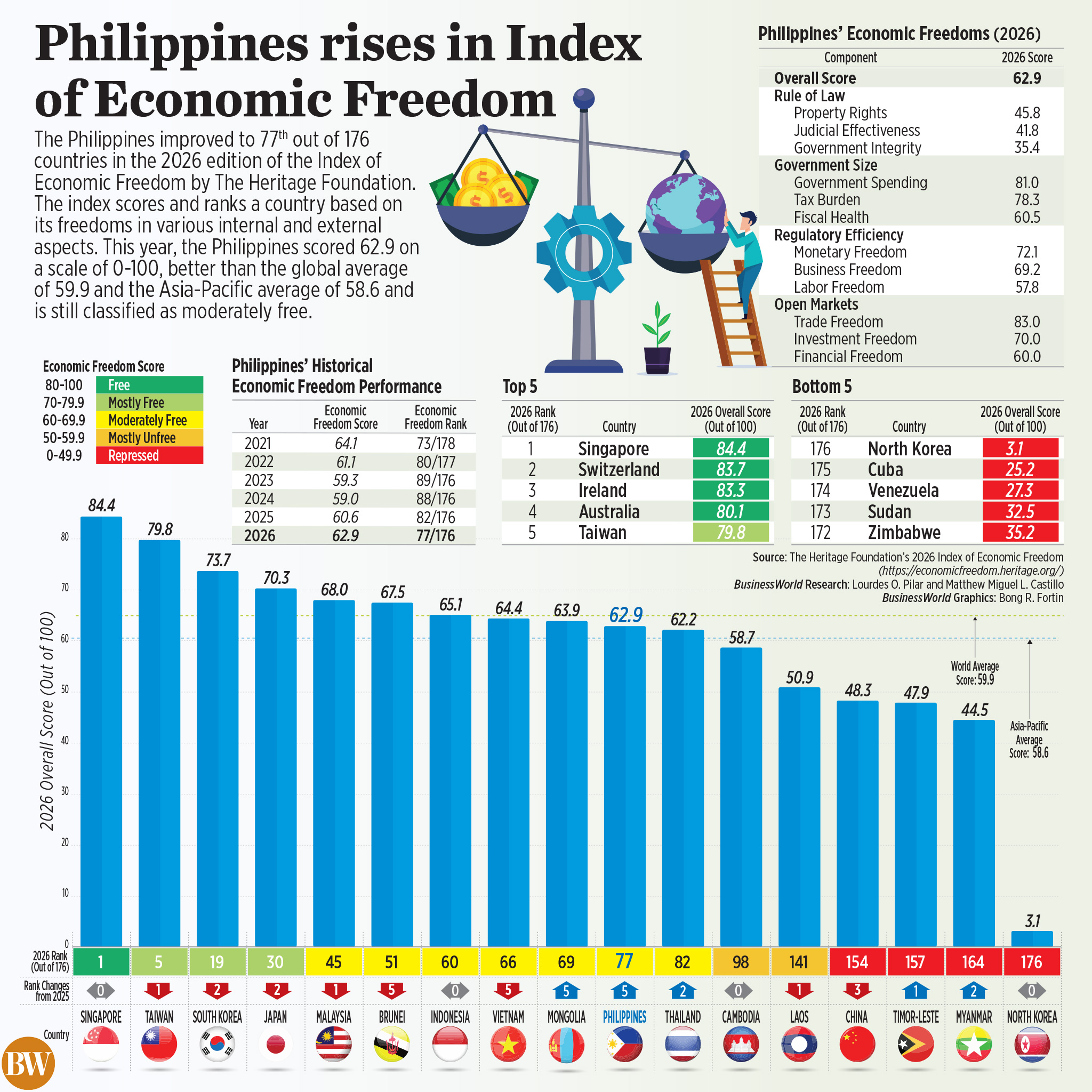
THE PHILIPPINES improved five spots to 77th out of 176 countries as its economy remains “moderately free,” according to a global index on economic freedom by The Heritage Foundation.

However, the Philippines’ progress is still hindered by corruption issues and the weak rule of law, the US-based conservative think tank said.

In the 2026 Index of Economic Freedom, the Philippines saw its score increase by 2.3 points to 62.9 from 60.6 in 2025.

The Philippines’ latest ranking is equivalent to the economic freedom status of “moderately free” since 2025 when it ranked 82nd in the index.

The index measures 12 aspects of economic freedom, which are grouped by four broad pillars — rule of law, government size, regulatory efficiency, and market openness.

The report defines economic freedom as individuals’ liberty to acquire and use economic goods and resources in a country, based on the four pillars.

Singapore (84.4) topped this year’s index as the freest economy in the world, followed by Switzerland (83.7), Ireland (83.3), Australia (80.1), and Taiwan (79.8).

The bottom five countries include North Korea (with a score of 3.1, ranking 176th), Cuba (25.2, 175th), Venezuela (27.3, 174th), Sudan (32.5, 173rd), and Zimbabwe (35.2, 172nd).

Among 39 Asia-Pacific countries, the Philippines ranked 14th, outpacing the region’s average score of 58.6, and some of its Southeast Asian neighbors such as Thailand (82nd), Cambodia (98th), and Laos (141st).

However, the country lagged behind Malaysia (45th), Brunei Darussalam (51st), Indonesia (60th), and Vietnam (66th).

Based on the latest index, the Philippines’ rule of law is “weak,” as it scored below the world average in property rights (45.8), judicial effectiveness (41.8), and government integrity (35.4).

Under the pillar of government size, the country scored 78.3 in tax burden, 81 in government spending, and 60.5 in fiscal health.

According to the US-based think tank, the Philippines’ regulatory environment is “relatively well institutionalized but lacks efficiency.”

This was reflected in the Philippines’ business freedom score of 69.2, labor freedom score of 57.8, and monetary freedom score of 72.1.

Under the pillar of market openness, the country scored 83 in trade freedom and 70 in investment freedom, and 60 in financial freedom.

“Foreign investment is generally welcome, and the investment code treats foreign investors the same as it treats domestic investors. The financial sector is dominated by banking and relatively stable, but capital markets are underdeveloped,” the think tank said.

It also cited recent legislative reforms to improve the country’s business environment and to support the private sector.

“Despite some progress, corruption continues to undermine long-term economic development,” the Heritage Foundation said.

In 2025, economic growth slowed to 4.4%, falling short of the government’s 5-6% target range, as graft-linked infrastructure projects triggered a decline in business confidence and government spending.

Filomeno S. Sta. Ana III, coordinator of Action for Economic Reforms, said the lack of judicial action from last year’s corruption scandal confirms the country’s “weak” rule of law.

“The massive scale of corruption is a big barrier to the country’s economic growth and development. That’s why the call to make the guilty accountable, punish them, demand for greater transparency are essential reforms,” he said in a Viber message.

For Jose Enrique “Sonny” A. Africa, executive director at think tank IBON Foundation, some positive indicators in the Philippines’ index do not reflect the conditions of many Filipinos.

“The economic freedom scores are inconsistent with the economic realities faced by the majority of Filipinos who remain poor,” he said in a Viber message.

Mr. Africa noted that the index does not look into real development indicators like family incomes, job security, and access to social services and public utilities.

Former Budget chief Abad to write on public finance for BusinessWorld

BW FILE PHOTO

FORMER Budget Secretary Florencio “Butch” Abad has joined BusinessWorld as its newest Opinion columnist.

His column, “Guardrails of the Purse,” will examine the national budget and broader public finance issues — from budget preparation and congressional deliberations to debt management, fiscal transparency, and the design of major spending programs — with a strict eye on what the Constitution has to say about it.

Mr. Abad is uniquely qualified to write about the national budget having been the vice-chair and chairman of the Committee on Appropriations of the House of Representatives from 1995-2004, and Secretary of the Department of Budget and Management during the administration of former President Benigno S.C. Aquino III.

As he writes in his inaugural column, “Public money is, after all, the people’s money. Following how it is raised, allocated, and spent is one of the most important tasks of democratic governance.” (see column: Guardrails Of The Purse)

His column will come out on the 3rd Tuesday of the month.

PHL market limits push companies to list abroad — analysts

RAWPIXEL-FREEPIK

By Alexandria Grace C. Magno, Reporter

STRUCTURAL CONSTRAINTS in the Philippine equities market, including thin liquidity, low investor risk appetite, and limited capital-raising prospects, are pushing some companies to consider overseas listings to access deeper capital pools and potentially higher valuations, according to market analysts.

“Some companies would list overseas hoping to get better valuations since there would be a better appreciation of their business models overseas,” April Lynn Lee-Tan, chief equity strategist at COL Financial Group, Inc., said in a Viber message.

Philstocks Financial Research Manager Japhet Louis O. Tantiangco said companies exploring offshore initial public offerings (IPOs) may be responding to limited capital-raising opportunities in the domestic equities market.

“Local companies considering offshore markets for their IPOs may imply that they are not seeing capital raising opportunities in the local equities market for the time being. This could be due to low risk appetite on the part of investors. Local companies listing abroad may also be a way for them to market themselves offshore,” he said in a Viber message.

Unicapital Securities, Inc. Research Head Wendy B. Estacio-Cruz said liquidity constraints in the Philippine market are also encouraging companies to explore overseas listings.

“I think most of these companies are also exploring the overseas market, especially with the current liquidity here in the Philippines. So, in order for them to really have — especially, for example, for JFC (Jollibee Foods Corp.), I think it’s also a plus for their investors that they have exposure outside the Philippines. So, it’s basically more on the liquidity issue here,” she said.

BDO Securities Corp. President John Tristan D. Reyes said companies seeking listings abroad are often aiming for deeper capital markets and stronger valuations.

“Companies like JFC and Maya looking to list overseas show they’re seeking deeper capital markets and higher valuations than what the Philippine market can currently provide. JFC’s move reflects a strategy to unlock value by separating its domestic and international businesses, with the global arm positioned for stronger growth on a US exchange. Meanwhile, Maya is exploring a US IPO to access better liquidity and more competitive fintech (financial technology) valuations. Overall, this trend highlights both the growing global ambitions of Philippine companies and the limitations of the local market (thin liquidity, low valuations among others),” he said.

Jesus Mariano P. Ocampo, president and chief operating officer of Investment & Capital Corp. of the Philippines (ICCP), said a foreign listing could be appropriate for companies with significant international operations.

“For JFC, it might make sense since these are international operations anyway. For Maya, supposedly it’s a big issue and the Philippine market might not be able to absorb it. Further, valuations in other markets are expected to be meaningfully higher than in the Philippines,” he said.

Several companies have recently outlined plans to pursue overseas listings.

In January, JFC announced plans to spin off its international operations from its Philippine business. The company intends to list the international business separately on a US securities exchange by late 2027, while the Philippine business will remain listed on the Philippine Stock Exchange (PSE). The move would create two independent entities with distinct strategies and investment profiles.

Jollibee Group Chief Financial Officer Richard Shin said the plan aims to unlock value by improving clarity, transparency, and capital allocation while allowing the international business to access the world’s largest capital market for improved liquidity and valuation.

Meanwhile, financial technology firm Maya is planning a dual listing, according to its chairman Manuel V. Pangilinan, with the company aiming to list first in the United States and then on the PSE by the second half of the year.

Maya Innovations, formerly Voyager Innovations Holdings, Pte. Ltd., is the parent holding company of Maya Philippines, Inc. and Maya Bank, Inc.

Maya Philippines is registered with the Bangko Sentral ng Pilipinas (BSP) as an electronic money issuer, remittance and transfer company, operator of payment systems, and virtual asset services provider. Maya Bank is one of six BSP-licensed digital banks in the country.

Maya’s planned listing is part of its effort to raise fresh capital while also providing liquidity for existing investors and allowing PLDT Inc. to maintain its stake.

Current shareholders include PLDT and First Pacific, which together hold 39.6%, as well as KKR & Co., Tencent Holdings, and the International Finance Corp.

Last week, PSE President Ramon S. Monzon said Maya Innovations Holdings’ planned Philippine IPO remains on track for the third quarter this year despite global market volatility linked to conflicts in the Middle East.

For 2026, the PSE set a modest target of four IPOs, including those of electronic wallet platform GCash and PNB Holdings Corp., which plans to list by way of introduction.

The exchange fell short of its 2025 target of six IPOs, recording only two listings during the year — Top Line Business Development Corp. and Maynilad Water Services, Inc.

Hastings Holdings, Inc., a unit of PLDT Beneficial Trust Fund subsidiary MediaQuest Holdings, Inc., holds a majority stake in BusinessWorld through the Philippine Star Group, which it controls.