Home Blog Page 873

ATI rolls out P120-M electric fleet at Manila South Harbor

ASIAN TERMINALS, INC.

LISTED Asian Terminals, Inc. (ATI) is investing up to P120 million to deploy internal transfer vehicles at Manila South Harbor as part of its transition to clean energy-powered landside operations.

“This is a significant leap not only for ATI and DP World, but also for the Philippines as we continue to work with our partner and local authorities to further power economic growth for the country. We are proud to align this new chapter to our sustainability journey by investing in next-generation terminal equipment that operates on clean energy with zero emissions,” ATI Chairman Glen C. Hilton said in a media release on Wednesday.

The company, together with its partner DP World, a multinational logistics company, has unveiled 15 electric internal transfer vehicles to facilitate the transportation of containers between vessels and yards.

The company said this move is also aligned with DP World’s global decarbonization roadmap, which aims to reduce carbon emissions by 42% by 2030 and to achieve net-zero operations by 2050.

In March, ATI expanded its capacity at Manila South Harbor with the commissioning of two additional ship-to-shore (STS) cranes, aimed at improving handling capacity and operational efficiency.

These complement the terminal’s existing fleet of 11 STS cranes, rubber-tired gantries, and other cargo-handling equipment, aligned with its ongoing modernization efforts.

At the local bourse on Wednesday, shares of the company closed 15 centavos higher, or 0.57%, to end at P26.40 apiece. — Ashley Erika O. Jose

Empowering agri value chains: LANDBANK rolls out AGRISENSO plus in Western Visayas

LANDBANK empowered over 1,500 farmers from across Iloilo with the launch of the AGRISENSO Plus Lending Program in Western Visayas on July 11, 2025 at the Pototan Coliseum in Pototan.

POTOTAN, ILOILO In its continued push to strengthen agri-based communities and ensure food security, LANDBANK launched the AGRISENSO Plus Lending Program in Western Visayas, bringing accessible financing and other support to small farmers, fishers, and agri-enterprises in the region.

The launch event on July 11, 2025 at the Pototan Coliseum in this municipality, dubbed as the “rice granary of Panay,” marked the sixth rollout of the Program nationwide and the first in Western Visayas.

Over 1,500 farmers and agrarian reform beneficiaries (ARBs) attended the event, underscoring the growing demand for affordable financing and holistic support across the agriculture value chain.

LANDBANK President and CEO Lynette V. Ortiz led the event, as joined by Department of Agriculture (DA) Undersecretary Asis G. Perez, Philippine Crop Insurance Corp. (PCIC) President Atty. Jovy C. Bernabe, Agricultural Credit Policy Council (ACPC) OIC-Executive Director Ma. Cristina G. Lopez, Pototan Mayor Rafael Enrique P. Lazaro, and LANDBANK Executive Vice-Presidents Leila C. Martin and Allan V. Bornas, and Senior Vice-President Atty. Roderick P. Sacro.

“With AGRISENSO Plus, LANDBANK is bringing more than just credit, we are building linkages, capacity, and opportunities to transform agri-livelihoods into viable enterprises that can compete and grow. This is especially crucial in Western Visayas which is as a key pillar of our national food supply,” said LANDBANK President and CEO Ortiz.

Inclusive financing and more

The AGRISENSO Plus Lending Program is LANDBANK’s comprehensive value chain-based financing initiative, developed in partnership with the DA, Department of Agrarian Reform (DAR), ACPC, and various private sector partners.

The Program offers a fixed interest rate of 4.0% per annum for small farmers, fishers, and ARBs, with competitive rates for their associations and organizations, micro, small, and medium enterprises (MSMEs), large enterprises, anchor firms, and agriculture graduates.

Under the AGRISENSO Plus Program, eligible borrowers benefit from simplified documentation requirements, free life and credit life insurance, and expanded access to financing and technical support across a wide range of agricultural activities.

The Program also connects borrowers to market opportunities through partnerships with anchor firms, namely Kita Agritech Corporation, Sarisuki Stores, Inc., TAO Foods Company, Inc., Yovel East Research and Development, Inc., and Unified Tillers Agriculture Cooperative (UTAC).

AGRISENSO Plus is reinforced by the LANDBANK ASCEND (Agri-Fishery Support through Capability Enhancement for Nationwide Development) Program, a capacity-building component that provides farmers and fishers with training on digital financial literacy, sustainable agriculture, and enterprise development.

AGRISENSO Plus Card

As part of the holistic approach of the AGRISENSO Plus Program, LANDBANK also introduced the AGRISENSO Plus Card, a specially designed savings account for farmers, fishers, and ARBs.

The account can be opened easily through the LANDBANK Mobile Banking App, with no initial deposit or maintaining balance required. Cardholders can conveniently pay bills, shop online, make cardless withdrawals, enjoy free fund transfers to other LANDBANK accounts, and receive remittances from abroad.

Expanding reach and deepening impact

As of May 2025, LANDBANK has extended a total of P1.16 billion in loans through AGRISENSO Plus, directly benefiting 6,853 borrowers and advancing growth across the agriculture sector.

The rollout of the LANDBANK AGRISENSO Plus in Iloilo follows successful launches in Pampanga, Cagayan, Isabela, Batanes, and Bukidnon that engaged more than 5,000 farmers across Luzon and Mindanao.

LANDBANK remains steadfast in its mandate to advance countryside development by scaling up inclusive and sustainable financing for the agri value chain — empowering small producers, driving productivity, and helping lay the groundwork for a more food-secure Philippines.


Spotlight is BusinessWorld’s sponsored section that allows advertisers to amplify their brand and connect with BusinessWorld’s audience by publishing their stories on the BusinessWorld Web site. For more information, send an email to online@bworldonline.com.

Join us on Viber at https://bit.ly/3hv6bLA to get more updates and subscribe to BusinessWorld’s titles and get exclusive content through www.bworld-x.com.

AI is already showing signs of slashing UK job openings

UK BUSINESSES are dialing back hiring for jobs that are likely to be affected by the rollout of artificial intelligence (AI), a study found, suggesting the new technology is accentuating a slowdown in the nation’s labor market.

Job vacancies have declined across the board in the UK as employers cut costs in the face of sluggish growth and high borrowing rates, with the overall number of online job postings down 31% in the three months to May compared with the same period in 2022, a McKinsey & Co. analysis found.

But it has been the most acute for occupations expected to be significantly altered: Postings for such jobs — like white-collar ones in tech or finance — dropped 38%, almost twice the decline seen elsewhere, according to the consulting firm.

The data provides a glimpse of how AI has started to reshape the job market since late 2022, when the release of ChatGPT set off waves of investment in the new technology and started factoring into corporate planning.

“The anticipation of significant — albeit uncertain — future productivity gains, especially as the technology and its applications mature, is prompting companies to review their workforce strategies and pause aspects of their recruitment,” said Tera Allas, a senior adviser at McKinsey.

Businesses have been expecting the new technology to deliver big productivity gains and reshape large segments of the economy. Governments have also sought to harness its potential, with Prime Minister Keir Starmer recently focusing a cabinet meeting on how it could potentially be used to improve the government services and living standards.

In the near term, though, the technology appears to be exerting another drag on the UK job market just as tax increases prompt cuts in lower-skilled sectors like retail and hospitality and the pace of economic growth stalls. Separately, a monthly report by KPMG and the Recruitment and Employment Confederation found that hiring plunged in June at the fastest pace in nearly two years.

Occupations considered to be highly exposed to AI — meaning the technology can replace at least some of the tasks involved — have recorded the sharpest contractions in vacancies, McKinsey’s analysis showed. Demand for jobs such as programmers, management consultants or graphic designers fell more than 50% over the last three years.

Some of that may also be due to industry-specific issues and a challenging macroeconomic backdrop. But McKinsey said in some sectors, like professional services and information technology, the number of job openings dropped even as businesses reported healthy growth rates.

Data shared by job-search website Indeed also indicated early signs that AI is affecting hiring decisions. It showed that employers tend to cut hiring in fields that involve building or using AI tools, according to Pawel Adrjan, director of EMEA economic research at the Indeed Hiring Lab.

For example, vacancies in mathematics, which mainly consist of data science and analytics roles, had the highest share of AI mentions in job descriptions but are down almost 50% from pre-pandemic levels, Indeed figures showed. At the other end of the spectrum, real estate or education jobs that barely mention the technology grew over the period.

Some entry-level jobs involving tasks like summarizing meetings or sifting through documents are particularly exposed to AI, accelerating a decline in such roles as companies streamline headcount costs. Entry-level postings, which include apprenticeships, internships or junior jobs with no degree requirements, have fallen by almost a third since ChatGPT came to market at the end of 2022, according to data from job-search website Adzuna.

“The rapid rise of artificial intelligence is adding pressure on young jobseekers, who are still in the grip of the Covid aftermath, marked by inflation, economic headwinds, and low business confidence,” said James Neave, head of data science at Adzuna. Bloomberg

These are the 50 Best Bars in Asia in 2025

HONG KONG’S Bar Leone, once again, has been crowned Asia’s best bar.

In fact, the top three of Asia’s 50 Best Bars remained unchanged, with Seoul’s Zest and Singapore’s Jigger & Pony coming in second and third again. It was a momentous night for Bar Leone, the Italian-vibed spot that shook up the drinks world in 2024 when it debuted at the top of the list — barely over a year after opening. In the process, it dethroned Hong Kong’s Coa, which held the coveted distinction for three consecutive years.

On Tuesday night in Macau, the first time the 10-year-old awards were celebrated in the former Portuguese colony, Bar Leone solidified its reputation. Known for outstanding negronis and drinks like its olive oil sour, the bar was co-founded by Lorenzo Antinori, the Rome-born bartender who worked in London and Seoul before joining award-winning Argo in Hong Kong’s Four Seasons.

Mr. Antinori recently teamed up with Spain-based Simone Caporale to open a second venue nearby in Hong Kong this month. Montana harks back to the golden age of Cuba and Miami in the 1970s, and its menu features classics such as the daiquiri, El Presidente, and the Montana cocktail, the inspiration for its name. The bar is Mr. Caporale’s first bet in Asia. He was previously with London’s Artesian at The Langham, the world’s best bar from 2012 to 2015, and helped co-found Sips in Barcelona in 2021. The latter snagged first place on the World’s 50 Best Bars in 2023, and ranked No. 3 last year.

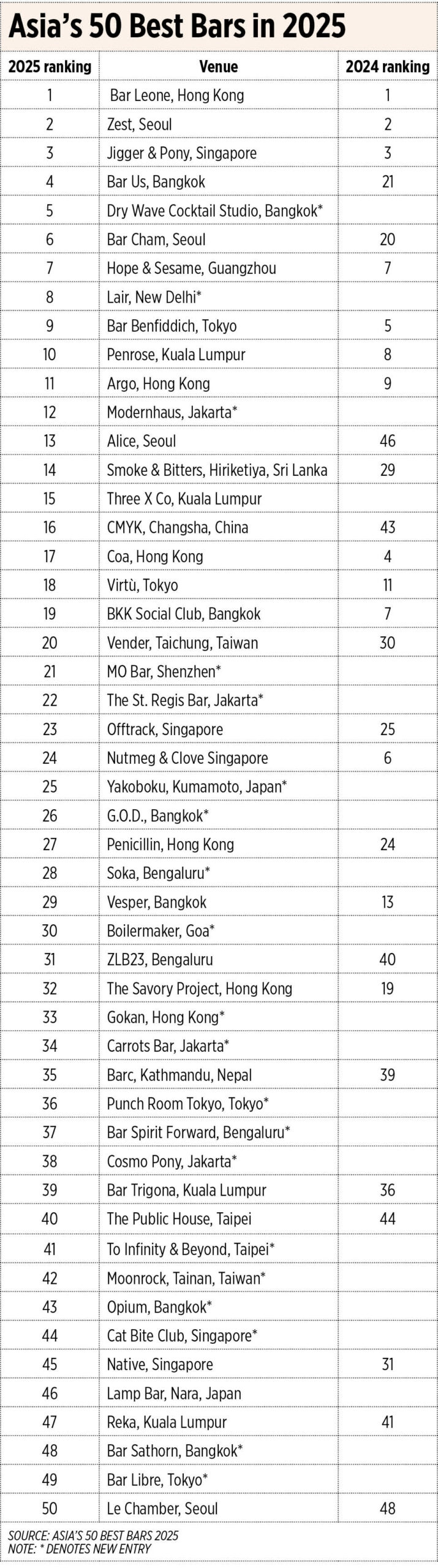
Though Hong Kong brought home the highest honors, Bangkok made a strong showing with seven spots in the top 50, including the debut of Dry Wave Cocktail Studio at No. 5, right behind neighboring Bar Us, which jumped up from No. 21 last year.

There was also notable representation from India: New Delhi’s Lair, also a new entry, came in at eighth place as the country’s best bar, and was joined on the list by Soka (28), Boilermaker (30), ZLB23 (31) and Bar Spirit Forward (37).

Seoul’s Alice snagged the highest climber award, making the greatest rise from last year’s ranking at 46th place to 13th.

The list is determined by over 300 anonymous voters in the region, which covers 14 territories across the continent. It is an offshoot of the World’s 50 Best Restaurants list, overseen by UK-based William Reed Business Media Ltd.

The Asian bars and lounges ranked 51 to 100 were announced earlier this month. The list, which included 14 new entries, had six bars from Singapore; four from Seoul, Shanghai, Taipei, and Tokyo each; and three from Hong Kong.

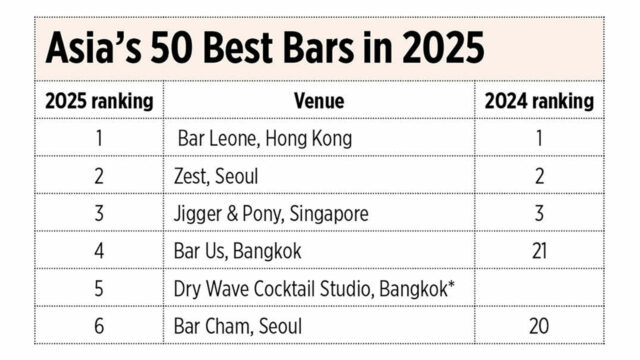
Here are the winners for 2025, with new additions marked by an asterisk. — Bloomberg


TDF yields edge up as offer goes undersubscribed

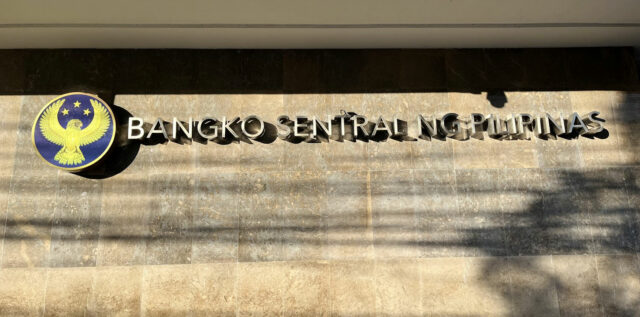
The main office of the Bangko Sentral ng Pilipinas in Manila. — BW FILE PHOTO

YIELDS on the Bangko Sentral ng Pilipinas’ (BSP) term deposits edged higher on Wednesday as the offer went undersubscribed amid fresh domestic inflation concerns following the peso’s recent weakness against the dollar and with the US Federal Reserve expected to keep rates steady in the near term amid rising consumer prices in the world’s largest economy.

Total demand for the central bank’s term deposit facility (TDF) amounted to P115.005 billion on Wednesday, below the P120-billion offering and the P138.995 billion in bids for the P150-billion offer a week ago. As a result, the BSP awarded only P109.937 billion in short-term papers.

Broken down, tenders for the seven-day papers reached just P59.433 billion, a tad lower than the P60 billion placed on the auction block and also below the P79.091 billion in bids for the P70-billion offer the previous week. The central bank accepted only P55.365 billion in bids for the one-week tenor.

Accepted yields ranged from 5.23% to 5.28%, a slightly narrower band compared with the 5.225% to 5.285% seen a week ago. With this, the average rate of the one-week term deposits inched up by 0.09 basis point (bp) to 5.2615% from 5.2606% previously.

Meanwhile, the 14-day papers fetched bids amounting to P55.572 billion, also below the P60-billion offer and the P59.904 billion in tenders for the P80 billion placed on the auction block a week ago. The BSP awarded just P54.572 billion in two-week term deposits.

Tenders accepted had rates ranging from 5.265% to 5.425%, higher than the 5.25% to 5.39% band seen last week. This caused the average rate of the two-week papers to go up by 0.7 bp to 5.3287% from 5.3217% in the prior auction.

The BSP has not auctioned off 28-day term deposits for nearly five years to give way to its weekly offerings of securities with the same tenor.

Both the TDF and BSP bills are used by the central bank to mop up excess liquidity in the financial system and to better guide market rates toward the policy rate.

Rizal Commercial Banking Corp. Chief Economist Michael L. Ricafort said TDF rates were slightly higher as the offer was met with lower demand compared to the previous week.

“The BSP TDF average auction yields corrected marginally higher after the US dollar-peso exchange rate went up to new three-week highs and also among three-month highs at P56.90 levels lately, as this could lead to higher importation prices and some pickup in overall inflation,” Mr. Ricafort said in a Viber message.

On Wednesday, the peso extended its losing streak to a third straight session, closing at a three-week low of P57.085, with safe-haven demand due to uncertainties surrounding the Trump administration’s tariff policies propelling the US dollar.

Tariff woes have also led to inflation concerns in the US, causing markets to recalibrate their bets on the Fed’s easing cycle, Mr. Ricafort added.

Early on Wednesday, the dollar climbed to its firmest against the yen since early April after US inflation suggested tariffs are pushing prices up, dampening expectations for Federal Reserve policy easing, Reuters reported.

US Treasury yields ticked to the highest in more than a month, lifting the dollar against the yen in particular.

Data on Tuesday showed US consumer prices rose 0.3% in June, in line with forecasts, but the largest gain since January. Economists attributed the rise in prices across goods such as coffee and home furnishings to the Trump administration’s escalating import tariffs.

The Fed has been keeping interest rates steady as it has waited for indications of the inflationary impact from tariffs, which Chair Jerome H. Powell had said he expected in the summer.

Traders currently price in 44 basis points of US rate reductions for the rest of this year, with 56.5% odds of a quarter-point cut in September.

Investors will now carefully monitor producer price data due later on Wednesday, looking for signs of whether inflationary pressures are also building on the factory floor.

US 10-year Treasury yields rose as high as 4.495% on Wednesday, the highest since June 11.

The dollar stuck close to a multi-week high against major peers. The dollar index was little changed at 98.525 after rising as high as 98.699 on Tuesday for the first time since June 23.

The US currency was steady at 148.835 yen and earlier rose to 149.19 yen for the first time since April 3, in the aftermath of US President Donald J. Trump’s “Liberation Day” tariff announcement.

In trade, Indonesia said on Wednesday it had reached a deal with the United States after an “extraordinary struggle” in negotiations which resulted in a reduction of proposed US tariff rates on Indonesian goods to 19% from 32%. — Luisa Maria Jacinta C. Jocson with Reuters

Closing a free trade deal with the EU

STOCK PHOTO | Image from Freepik

Bloomberg recently reported that the European Union (EU) is pivoting towards the Asia-Pacific region, actively pursuing new trade agreements with India, China, and other Asian countries. This strategic shift aims to offset potential business losses resulting from heightened US tariffs on imported goods. EU Competition Chief Teresa Ribera confirmed that the EU plans to finalize additional free trade agreements in Asia by yearend.

This development follows threats from US President Donald Trump to impose a 30% tariff on imports from Mexico and the EU starting Aug. 1 unless new trade agreements are signed beforehand. Although EU officials plan negotiations in the US, the growing uncertainty around American trade policies highlights the importance for the Philippines to diversify its international trade relationships.

Earlier, President Trump notified Japan, South Korea, Malaysia, Kazakhstan, South Africa, Myanmar, Laos, Tunisia, Bosnia and Herzegovina, Indonesia, Bangladesh, Serbia, Cambodia, and Thailand of impending 25% tariffs on their exports to the US, effective Aug. 1. Regardless of whether these tariffs materialize or bilateral agreements emerge to mitigate them, these developments underscore persistent volatility in US trade relations.

The Philippines already faces a 20% tariff on exports to the US, effective Aug. 1. Philippine officials continue to negotiate lower tariff rates through bilateral channels. The US reportedly accounted for nearly 16% of Philippine exports between January and May, with total trade estimated at $23.5 billion in the previous year.

Meanwhile, trade between the Philippines and the EU reached €16.8 billion (approximately $19.5 billion) in 2024, with the Philippines maintaining a favorable trade balance. Given the increasing tariffs imposed by the US and the EU’s renewed focus on Asia, it is timely and critical for the Philippines to actively enhance its trade partnership with the EU.

Historically, Philippine trade with Europe, particularly Spain, precedes relations with the US by over 300 years. This deep-rooted historical connection provides a strong foundation for reinforcing trade ties. Despite robust Philippine-US relations, Manila should concurrently prioritize strengthening economic cooperation with the EU to ensure long-term trade stability and growth.

Moreover, China presents a strategic gateway to Europe, offering logistical advantages through overland routes. China’s position between the Philippines and the EU creates significant opportunities for trade synergies. Philippine-made products — raw materials, intermediate goods, and finished items — can be exported to China and subsequently transported to Europe not only by sea but also via extensive rail networks.

Central to this logistical chain is the China-Europe rail corridor operated by DB Cargo Eurasia (formerly Trans-Eurasia Logistics and DB Schenker). Spanning roughly 10,000 kilometers, this corridor connects major Chinese industrial hubs such as Zhengzhou, Xi’an, and Chongqing with key European terminals in Duisburg and Hamburg. Established in 2008, this freight rail line traverses Kazakhstan, Russia, Belarus, Poland, and Germany, becoming one of the world’s longest and most strategic freight routes.

Freight volumes have surged dramatically on this route — from approximately 30,000 TEUs (Twenty-foot Equivalent Units or one 20-foot container) in 2016 to around 90,000 TEUs in 2018. By 2020, volumes exceeded 200,000 TEUs. DB Cargo Eurasia aims to reach 500,000 TEUs annually by 2025. Although geopolitical tensions and fluctuating sea freight rates led to a temporary decline in volumes for DB Cargo Eurasia in 2023, the broader China-Europe rail network handled approximately 1.9 million TEUs across 17,000 journeys.

This railway corridor offers the Philippines and other Southeast Asian countries an attractive alternative to maritime routes, potentially reducing transport times and logistical complexities. Moreover, the rail connection serves as a modern-day Silk Road, facilitating bilateral trade flows not only from Asia to Europe but also from Europe back to Asian markets.

However, maximizing the benefits of these logistical efficiencies requires favorable trade terms. Freight charges, whether rail or maritime, become significantly more competitive and beneficial when underpinned by comprehensive free trade agreements.

The Philippines and the EU commenced negotiations for a free trade agreement (FTA) in 2024. The third negotiation round concluded in Brussels in June 2025, building on earlier discussions held in October 2024 and February 2025. Given the urgency presented by escalating US tariffs, finalizing this FTA soon would provide a crucial strategic advantage.

An FTA between the Philippines and the EU would significantly boost bilateral trade, enhancing economic resilience and market access for Filipino businesses in one of the world’s largest economic blocs. It would also create a more stable environment for trade expansion, benefiting sectors such as agriculture, electronics, garments, and high-value manufactured goods. Furthermore, the FTA would stimulate investments, technology transfers, and knowledge exchange, fueling innovation and economic growth in the Philippines.

The EU’s pivot towards the Asia-Pacific region underscores a clear opportunity for the Philippines. Swiftly securing a free trade deal with the EU would not only mitigate current risks associated with US trade policies but would also strategically position the Philippines as a key partner in Europe’s renewed focus on Asian markets. Given the current global trade dynamics, this agreement would serve as a vital pillar of the Philippines’ long-term economic strategy.


Marvin Tort is a former managing editor of BusinessWorld, and a former chairman of the Philippine Press Council

matort@yahoo.com

AirAsia PHL expands Taipei flights

NEWSROOM.AIRASIA.COM

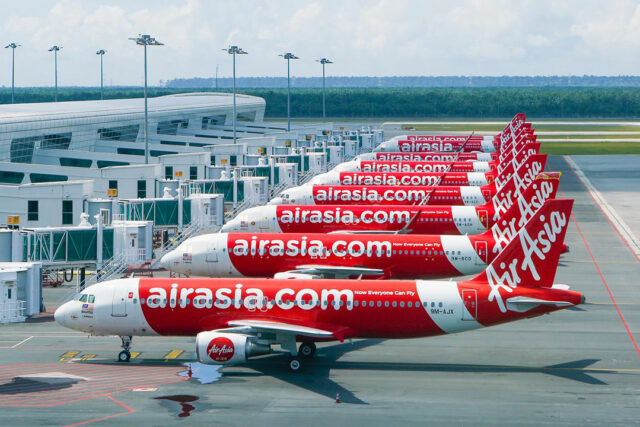
AIRASIA PHILIPPINES is boosting its services to Taipei to capture growing demand, the low-cost carrier said on Wednesday.

“The additional flights come at the perfect time as we enter the third quarter and gear up for the peak travel season. This move gets us ready for the expected surge in demand during the ‘Ber’ months, when many Filipinos head to Taipei to enjoy its cooler climate from September through February,” AirAsia Philippines President and Chief Executive Officer Suresh Bangah said in a media release.

The low-cost carrier said it will increase its flight frequency from 14 to 17 times per week starting this month.

This move comes after the airline recorded an average load factor of 85% on its Taipei route, it said.

For the first semester, the low-cost carrier said it had flown 70,000 passengers to Taipei alone, a number expected to increase following the extension of visa-free entry for Filipino travelers.

AirAsia Philippines had also previously been preparing to grow its operational fleet to 19 aircraft to meet rising demand and address the need for additional capacity.

The airline is also studying the possibility of launching new hubs outside Metro Manila, with Bohol, Clark, and Cebu being considered as potential alternatives.

For this year, AirAsia Philippines is confident it will serve more than seven million passengers after flying over three million in the first half. — Ashley Erika O. Jose

China smartphone market reverses to decline in Q2 after six quarters of growth

PEOPLE are seen using their mobile phones along Claro M. Recto Avenue in Divisoria, Manila, Dec. 27, 2022. — PHILIPPINE STAR/EDD GUMBAN

BEIJING — China’s smartphone market contracted in the second quarter after six straight quarters of growth, with shipments declining at four of the top five brands due to weaker consumer demand, IDC data showed on Tuesday.

Apple, ranked fifth in China’s smartphone market, saw its shipments decline 1.3% year-on-year to 9.6 million units in the second quarter, a smaller drop compared with the 9% decline in the first quarter, thanks to price adjustments made to specific iPhone 16 and 16 Pro variants eligible for government subsidies.

Apple’s market share rose to 13.9% in the June quarter, up from 13.7% in the March quarter. It was Apple’s eighth straight quarter of decline.

Huawei reclaimed the top spot after more than four years, with a market share of 18.1%. The Shenzhen-based tech giant shipped 12.5 million phones in the second quarter, down 3.4% year-on-year.

Xiaomi, which ranks fourth, is the only smartphone maker to record growth in shipments in the last quarter. Vivo, which ranks second, saw shipments decline 10.1%, the steepest among the top five selling brands.

China’s smartphone shipments overall dropped 4.0% year on year to 69 million units in the second quarter as growth momentum driven by the government subsidies subdued amid broader weakness.

“The broader economic environment presents ongoing challenges, with consumer confidence remaining subdued,” said Arthur Guo, senior research analyst at IDC.

A significant uplift in smartphone demand is unlikely in the immediate term, and the market will navigate a more complex landscape in the second half of the year, he added. Reuters

Severance, The Penguin lead nominations for TV’s Emmy awards

Colin Farrell in The Penguin (2024) — IMDB

LOS ANGELES — Psychological thriller Severance from Apple TV+ and HBO’s crime drama The Penguin stacked up the most nominations for Emmy Awards on Tuesday, outpacing The Studio and The White Lotus in the contest for US television’s highest honors.

Severance received a leading 27 nominations and was nominated for the top prize of best drama alongside Star Wars series Andor, The Pitt, The White Lotus and others.

The Penguin, set in the DC Comics universe and starring Colin Farrell, earned 24 nominations and will compete for best limited series against Netflix hit Adolescence, among others.

Hollywood satire The Studio, an Apple TV+ show featuring Seth Rogen as a nervous film executive, and HBO’s The White Lotus, about murder and misdeeds at a luxury resort in Thailand, received 23 each.

“What the heck?!! We never thought this would happen,” Mr. Rogen said in a statement.

Comedy nominees included defending champion Hacks, previous winner The Bear, Nobody Wants This, and Abbott Elementary.

The 23 nominations for The Studio tied the record for a comedy in a single season, set last year by Chicago restaurant tale The Bear.

Winners of the Emmys will be announced at a red-carpet ceremony held in Los Angeles and broadcast live on CBS on Sept. 14. Comedian Nate Bargatze will host.

The television industry is undergoing a contraction as media companies curtail the sky-high spending they shelled out to compete in the shift to streaming platforms led by Netflix.

Longtime Emmy favorite HBO and the HBO Max streaming service topped all programmers with 142 nominations, a record for the network.

Walt Disney collected 137 nominations, including six for ABC’s Abbott Elementary, one of the few broadcast shows in the Emmy mix. Andor, on Disney+, received 14.

Netflix garnered 120 nods and Apple scored 81, its highest total since launching its streaming service in 2019.

Severance tells the story of office workers who undergo a procedure to make them forget their home life at work, and vice versa.

“It’s distinctive in every way — in terms of its storytelling, in terms of style, in terms of its directing, its tone,” said Matt Cherniss, head of programming at Apple TV+.

Star Adam Scott, a best actor nominee, said the cast had been unsure of how viewers would respond.

“The fact that it’s resonated at all has been just such an incredible feeling,” Mr. Scott said. “We thought it was something that might be too weird.”

WYLE, FORD IN THE RUNNING
Noah Wyle received his first Emmy nomination since 1999 for his role as an emergency room doctor on The Pitt. Mr. Wyle was nominated five times for ER but never won.

“I’m humbled and grateful,” Mr. Wyle said of the recognition for The Pitt, which received 13 total nominations.

Harrison Ford, 83, earned his first Emmy nod, for playing a grumpy therapist on Shrinking.

Ron Howard, the former Happy Days star turned Oscar-winning director, also landed his first acting nomination, a guest actor nod for playing himself on The Studio.

“Who says nice guys finish last?!” Mr. Howard wrote on Instagram.

He will compete with fellow director Martin Scorsese, another guest star on The Studio.

Other notable acting nominees included Mr. Farrell and Cristin Milioti for The Penguin, The Bear actors Jeremy Allen White and Ayo Edebiri, Kathy Bates for Matlock, Hacks stars Jean Smart and Hannah Einbinder, and Pedro Pascal and Bella Ramsey for The Last of Us.

Eight White Lotus actors were recognized.

“This is a bunch of cherries on the icing on the cake that was the gift of playing such a tortured and lonely human,” said Jason Isaacs, who portrayed a suicidal father facing financial ruin on the show.

Beyoncé also made the Emmys list. Her halftime performance during a National Football League game on Netflix was nominated for best live variety special.

Missing from the field was Netflix’s popular Korean drama, Squid Game, while the final season of previous drama winner The Handmaid’s Tale received just one nod.

Winners will be chosen by the roughly 26,000 performers, directors, producers and other members of the Television Academy.


KEY NOMINATIONS

Best Drama Series: Severance, The Pitt, The White Lotus, The Diplomat, The Last of Us, Paradise, Andor, Slow Horses

Best Comedy Series: The Studio, The Bear, Hacks, Nobody Wants This, Abbott Elementary, Only Murders in the Building, Shrinking, What We Do in the Shadows

Best Limited or Anthology Series: Adolescence, Black Mirror, Dying for Sex, Monsters: The Lyle and Eric Menendez Story, The Penguin

Best Comedy Actor: Adam Brody, Nobody Wants This; Seth Rogen, The Studio; Jason Segel, Shrinking; Martin Short, Only Murders in the Building; Jeremy Allen White, The Bear

Best Comedy Actress: Uzo Aduba, The Residence; Kristen Bell, Nobody Wants This; Quinta Brunson, Abbott Elementary; Ayo Edebiri, The Bear; Jean Smart, Hacks

Best Drama Actor: Noah Wyle, The Pitt; Adam Scott, Severance; Sterling K. Brown, Paradise; Gary Oldman, Slow Horses; Pedro Pascal, The Last of Us

Best Drama Actress: Kathy Bates, Matlock; Bella Ramsey, The Last of Us; Sharon Horgan, Bad Sisters; Britt Lower, Severance; Keri Russell, The Diplomat

Best Actor, Limited Series or Movie: Colin Farrell, The Penguin; Stephen Graham, Adolescence; Jake Gyllenhaal, Presumed Innocent; Brian Tyree Henry, Dope Thief; Cooper Koch, Monsters: The Lyle and Erik Menendez Story

Best Actress, Limited Series or Movie: Cate Blanchett, Disclaimer; Rashida Jones, Black Mirror; Meghann Fahy, Sirens; Cristin Milioti, The Penguin; Michelle Williams, Dying for SexReuters

Cleaner air in East Asia may have driven recent acceleration in global warming, our new study indicates

STOCK PHOTO | Image from Freepik

Global warming has picked up pace since around 2010, leading to the recent string of record warm years. Why this is happening is still unclear, and among the biggest questions in climate science today. Our new study reveals that reductions in air pollution — particularly in China and east Asia — are a key reason for this faster warming.

Cleanup of sulphur emissions from global shipping has been implicated in past research. But that cleanup only began in 2020, so it’s considered too weak to explain the full extent of this acceleration. NASA researchers have suggested that changes in clouds could play a role, either through reductions in cloud cover in the tropics or over the North Pacific.

One factor that has not been well quantified, however, is the effect of monumental efforts by countries in east Asia, notably China, to combat air pollution and improve public health through strict air quality policies. There has already been a 75% reduction in east Asian sulphur dioxide emissions since around 2013, and that cleanup effort picked up pace just as global warming began accelerating.

Our study addresses the link between east Asian air quality improvements and global temperature, building on the efforts of eight teams of climate modelers across the world.

We have found that polluted air may have been masking the full effects of global warming. Cleaner air could now be revealing more of the human-induced global warming from greenhouse gases.

In addition to causing millions of premature deaths, air pollution shields the Earth from sunlight and therefore cools the surface. There has been so much air pollution that it has held human-induced warming in check by up to 0.5°C over the last century.

With the cleanup of air pollution, something that’s vital for human health, this artificial sunshade is removed. Since greenhouse gas emissions have kept on increasing, the result is that the Earth’s surface is warming faster than ever before.

MODELING THE CLEANUP
Our team used 160 computer simulations from eight global climate models. This enabled us to better quantify the effects that east Asian air pollution has on global temperature and rainfall patterns. We simulated a cleanup of pollution similar to what has happened in the real world since 2010. We found an extra global warming of around 0.07°C.

While this is a small number compared with the full global warming of around 1.3°C since 1850, it is still enough to explain the recent acceleration in global warming when we take away year-to-year swings in temperature from natural cycles such as El Niño, a climate phenomenon in the Pacific that affects weather patterns globally.

Based on long-term trends, we would have expected around 0.23°C of warming since 2010. However, we actually measured around 0.33°C. While the additional 0.1°C can largely be explained by the east Asian air pollution cleanup, other factors include the change in shipping emissions and the recent accelerated increase in methane concentrations in the atmosphere.

Air pollution causes cooling by reflecting sunlight or by changing the properties of clouds so they reflect more sunlight. The cleanup in east Asian air pollution influences global temperatures because it reduces the shading effect of the pollution over east Asia itself. It also means less pollution is blown across the north Pacific, causing clouds in the east Pacific to reflect less sunlight.

The pattern of these changes across the North Pacific simulated in our models matches that seen in satellite observations. Our models and temperature observations also show relatively strong warming over the North Pacific, downwind from east Asia.

The main source of global warming is still greenhouse gas emissions, and a cleanup of air pollution was both necessary and overdue. This did not cause the additional warming but rather, removed an artificial cooling that has for a time helped shield us from some of the extreme weather and other well-established consequences of climate change.

Global warming will continue for decades. Indeed, our past and future emissions of greenhouse gases will affect the climate for centuries. However, air pollution is quickly removed from the atmosphere, and the recent acceleration in global warming from this particular unmasking may therefore be short-lived.

THE CONVERSATION VIA REUTERS CONNECT


Laura Wilcox is a professor, National Centre for Atmospheric Science at the University of Reading. Bjørn H. Samset is a senior researcher in Climate and Atmospheric Sciences at the Center for International Climate and Environment Research – Oslo.

DFNN eyes recovery through new products

DFNN.COM

LISTED gaming technology provider DFNN, Inc. is banking on its recently launched LottoMatik platform and other technology products such as electronic gates (e-gates) to support its rebound after reporting a wider negative equity as of end-March.

The company aims to scale its business verticals, including LottoMatik, which was launched in February, DFNN President and Chief Executive Officer Ricardo F. Banaag said in a regulatory filing on Wednesday.

“The company aims for LottoMatik to achieve deployment parity with existing land-based lotto outlets, expanding its footprint to match traditional distribution channels and serve a wider segment of the population,” Mr. Banaag said.

The LottoMatik is a portable point-of-sale device that streamlines the process of buying lotto tickets.

Mr. Banaag said this as the Philippine Stock Exchange sought the company’s recovery plan and future actions after a wider negative equity, which puts it at risk of involuntary delisting.

DFNN posted P403.15 million in negative equity as of end-March, wider than the P273.21 million in negative equity as of end-2024.

LottoMatik is a platform that aims to digitalize and modernize the lottery experience and reach underserved markets across the country.

In addition, Mr. Banaag said DFNN has allocated the capital raised from private placements worth P450 million to settle existing obligations, invest in cybersecurity and artificial intelligence (AI), and cover regulatory listing expenses.

He added that DFNN is planning to increase its authorized capital stock, which would convert debt into equity and reduce the company’s liabilities.

Mr. Banaag also said DFNN is set to receive a boost from the e-gates project of its information technology subsidiary, Intelligent Wave Philippines, Inc. (iWave), at the Ninoy Aquino International Airport (NAIA).

“The rollout of the e-gates system is strategically aligned with the scheduled rehabilitation of NAIA Terminals 1 and 3, where the system will be installed,” he said.

“This timeline reflects our coordination with airport authorities and infrastructure readiness, ensuring operational deployment within the year 2025,” he added.

Mr. Banaag said iWave continues to build on its strengths in biometric systems, AI, unified messaging, and the Internet of Things.

“We remain confident that the outlined strategies form a solid foundation for DFNN’s continued viability and growth in the years ahead,” he said.

DFNN shares dropped by 2.08% or four centavos to P1.88 per share on Wednesday. — Revin Mikhael D. Ochave

Uber partners with China’s Baidu to deploy self-driving taxis in global markets

REUTERS

UBER and China’s Baidu will partner to deploy thousands of Baidu’s Apollo Go autonomous vehicles on the Uber platform across several international markets outside the US and mainland China, the companies said on Tuesday.

The first rollouts are expected in Asia and the Middle East later this year.

The tie-up brings together Uber’s massive ride-hailing network with Baidu’s fleet of more than 1,000 fully driverless vehicles across the world.

It is the latest in a series of efforts by Uber to compete in the burgeoning market as tech companies race to overcome regulatory and engineering hurdles to deploy self-driving taxis at a commercial scale.

Last month, Uber launched autonomous ride-hailing services in Atlanta, expanding its partnership with Alphabet’s Waymo, while also signing deals with autonomous vehicle companies including Pony AI and May Mobility.

Tesla rolled out its long-awaited robotaxis in Austin, Texas last month, in their first public test.

Meanwhile, China’s robotaxi firms have been increasingly eyeing global expansion; Apollo Go is now present in 15 cities, including Dubai and Abu Dhabi, and, as of May, had completed more than 11 million rides.

In May, Pony AI became the third Chinese autonomous vehicle company after Baidu and WeRide to unveil an agreement to deploy its vehicles in the Middle East.

Robin Li, co-founder and chief executive officer of Baidu, said on Tuesday that “the partnership with Uber represents a major milestone in deploying our technology on a global scale.”

Baidu has been running its Apollo Go robotaxi services commercially in several Chinese cities since 2022. Reuters