Home Blog Page 8416

GNPower Mariveles coal plant unit goes on unplanned outage

ABOITIZ Power Corp. said on Wednesday that a unit of its 632-megawatt (MW) pulverized coal-fired power plant in Mariveles, Bataan went on an unexpected shutdown due to a damaged boiler.

“The outage is attributable to damage found in a portion of the boiler of GMEC’s (GNPower Mariveles Energy Center Ltd. Co.) Unit 1,” AboitizPower said in a disclosure to the local bourse.

Restoration works are targeted to be completed by the third quarter, it said.

GMEC is a private limited partnership that handles the development, construction, operation, and ownership of two units of a pulverized coal-fired power plant in Mariveles. Each unit has a capacity of 316 MW.

AboitizPower subsidiary Therma Power Inc.; ACE Mariveles Power Ltd. Co; and Power Partners Ltd. Co. hold partnership interests in GMEC.

AboitizPower said it projects the restoration of the damaged unit to be completed by the third quarter, but the timeline could extend to the end of the year.

“The procurement of the necessary services for restoration works is underway, and, based on AboitizPower’s current assessment, completion of said works and Unit 1’s return to service are targeted by Q3 2021, but may take up to year-end 2021,” AboitizPower said.

The firm said that GMEC’s insurance brokers and adjusters are in the process of filing insurance claims. The firm said that it was also coordinating with regulators and key stakeholders.

Unit 1 of GMEC’s coal plant delivers a net sellable capacity of 247 MW, which is around 7% of AboitizPower’s total attributable net sellable capacity of 3,494 MW. GMEC makes up 13% of the total installed capacity under the AboitizPower’s market control of 3,850 MW.

AboitizPower has ownership interests in nine distribution utilities, which supply power to franchise areas covering a total of 18 cities and municipalities nationwide.

AboitizPower shares on Wednesday shed 1.57% or 0.40 centavos to finish at P25 apiece. — Angelica Y. Yang

2GO starts servicing firms with ‘alternative to air freight’

2GO Group, Inc. said it has started servicing pharmaceutical and e-commerce companies with its “alternative to air freight” called 2GO CabinCargo.

“2GO CabinCargo has successfully serviced important products and documents and is currently being used by pharmaceutical and e-commerce companies, as well as businesses carrying health and beauty products,” the company said in a statement.

The company noted the supply chain of products that normally go on air freight have been disrupted by the global health crisis.

“It led to a gap in transporting essential goods, such as pharmaceutical products and personal protective equipment,” it said.

The company’s new service, 2GO CabinCargo, delivers to consumers in the key ports of the Visayas and Mindanao “within five days.”

“With this option, shippers can simply adjust their supply chain by a couple of days and reestablish their product flow,” it said.

A 2GO CabinCargo vessel has a maximum capacity of 14cbm, equivalent to a 10-footer container.

2GO said vessels it uses for the service can accommodate up to 164 boxes, with each box allowed to weigh up to 25 kilograms.

2GO operates as an integrated transportation and logistics provider.

Among its units are 2GO Sea Solutions, 2GO Special Containers, 2GO Logistics, 2GO Distribution, and 2GO Express.

2GO’s total revenue for the first nine months of 2020 stood at P13.69 billion, 15.6% lower than the amount reported in the same period in 2019.

The company saw its nine-month shipping revenues drop 45.1% to P3.06 billion. Revenues from logistics and other services went down 14.5% to P4.29 billion, while the goods segment generated P6.33 billion, 12.7% higher than the previous year’s figure.

2GO Group shares closed 0.95% higher at P8.48 apiece on Wednesday. — Arjay L. Balinbin

Going green

Seda Vertis North Misto gets vegetarian-and vegan-friendly

THE DINING room at Misto, the main dining outlet and buffet at Seda Vertis North, reflects changing attitudes of the world in a pandemic. As every day is an examination of the essential, Misto has gone right ahead and serves what are today considered essentials: plant-based dishes.

Of course, meaty favorites at the grill (like US Prime Rib and Herb Roasted Chicken) haven’t been displaced. They’ll just be accompanied by vegetarian favorites such as Eggplant Parmigiana, Truffle Mushroom Tagliatelle, Spinach Lasagna, and Red Pesto Fusilli at the pasta station; French Onion Soup, Laksa, and Ramen (all with vegetable broth as a base) at the soup station; and Green Curry and fragrant Phad Thai at the Asian station.

We checked in with Seda Vertis North Sales and Marketing director Cinty Yniguez in a Zoom call, who clued us in as to the situation in the hotel. Staycations still aren’t allowed, and of the dining and drinking outlets, only Misto has been opened. Still, one can move around in the common areas such as in the lobby. To enter, one must undergo a temperature scan, a disinfectant foot bath, and fill out contact-tracing forms. One may also notice the barriers at the front desk. “We do have guests from the approved or permitted sectors, in accordance with the guidelines of the IATF (Inter-Agency Task Force on Emerging Infectious Diseases) and of course, the Department of Tourism,” said Ms. Yniguez. “It’s always been [about] safety, and security, and the comfort of our guests and employees.”

Changing times also reflect changing situations at Misto: clear barriers have been placed in front of the buffet stations. Eat-all-you-can buffets have been scheduled from Thursday to Sunday for lunch, and Thursday to Saturday for dinner. The rest of the week, the a la carte options are available.

The plant-based dishes at the buffet are an inclusive choice for vegetarians, who might usually avoid mainstream restaurants for lack of choice. Still, it’s still a party for everyone, as the meat dishes have not been removed. “We wanted our animal protein still there. In case people ask for it, it’s there; it’s available. We wanted to present to them, the guests, that there are yummy, plant-based meals full of nutrients; very rich in flavors, vitamins and minerals,” she said.

Ms. Yniguez personally helped develop the menu with the hotel’s culinary team. It is for her, after all, a personal crusade: “I am a staunch advocate of eating healthy and of a healthy lifestyle in general. I’ve been on that lifestyle for more than 20 years. I’ve seen the benefits for myself — I’ve lived through it,” she said.

While the bulk of the menu is vegetarian, vegans (who do not eat any animal by-products like milk and honey) can enjoy the Buddha Bowls. They are a feast in themselves: fresh greens like spinach, rocket, and watercress are combined in a bowl with grilled capsicum, mushrooms, tomatoes, roasted pumpkin, and marinated tofu. Of the plant-based proteins in the menu, aside from the tofu, one may choose from nuts, seeds, and grains (including adlai, quinoa, brown rice, flaxseeds, chia, sunflower, and pumpkin). This warm bowl can then be mixed and topped off with a savory Asian or Mediterranean dressing (but there are more options and sauces). “I wanted it to appeal to all the senses, essentially. Looks good, smells good, tastes good,” said Ms. Yniguez.

“I felt that this was an opportune time to heighten awareness within the community. During the pandemic, people really are focused now and more mindful of their health,” she said. “Having a plant-forward mindset is something I want to impart, because of the benefits it had brought to a lot of people I know.”

The sustainability measures a plant-based menu takes doesn’t run skin-deep for this hotel: quite literally, since Ms. Yniguez points out that a low-waste rule in the kitchen saw their chefs using vegetable skins in the vegetable broth. Ms. Yniguez points out other sustainability measures they had taken, before and during the pandemic: biodegradable toiletries in biodegradable packaging, biodegradable packaging for their to-go platters, a forthcoming single-use plastic ban, recycling water for other purposes, and conserving energy. “We try and just really make sure we conserve electricity and water without compromising the quality and integrity of our services,” she said.

These measures come all the way from the top: AyalaLand Hotels and Resorts Corp., under Ayala Land, Inc. “Ayala, to begin with, is very forward on sustainability. It has cascaded to all the business units,” said Ms. Yniguez. “We carry the same values.” — Joseph L. Garcia


Filipinos encountered more card skimmers online in 2020

FILIPINO internet users who encountered online credit card skimmers increased by 20% in 2020, internet security firm Kaspersky said.

In an e-mailed statement on Monday, web skimmers, sometimes referred to as sniffers, where scripts are embedded by attackers in online stores and used to steal users’ credit card data from websites, caused the increase in the total number of web threats in the Philippines last year.

“The number of web threats in the country is about 37.19% more in 2020 compared to 27,899,906 web threats (44.4%) detected in 2019,” it said.

However, globally, the Philippines’ ranking in 2020 global web threat detections fell to sixth place from fourth in 2019.

“In the 2020 Kaspersky Security Network report, it showed that Kaspersky solutions installed in computers of Filipino users detected 44,420,695 different internet-borne threats last year,” the internet security firm noted.

“The report also revealed that more than four-in-10 (42.2%) of online users in the country were almost infected with web threats in 2020, putting the country at sixth place globally,” it added.

The Philippines followed Nepal with the highest percentage of users attacked by web-borne threats (49.3%), Algeria (46.9%), Mongolia (44.5%), Somalia (44%), and Belarus (43.9%).

Kaspersky noted the number of Filipino internet users who encountered web miners declined “by one and a half times.”

“A Trojan miner like Trojan.Script.Miner.gen is an example of a web-mining malware that is used by cybercriminals to secretly mine cryptocurrencies using someone’s computing power and electricity,” it said.

Internet browsing, unintentional downloads, e-mail attachments, browser extensions activities, downloading of malicious components or communications with control and command servers performed by other malware were among the top five sources of web threats in the Philippines.

Yeo Siang Tiong, general manager for Southeast Asia at Kaspersky, said: “The pandemic has blurred the lines between corporate defenses and home security.”

“Remote work, online classes, digitalization across all sectors will continue, at least for 2021. It is high time for enterprises of all shapes and sizes to understand that online threats against individuals should now be considered as risks against companies. We need to remember that cybercriminals never sleep. Hence, our security solutions should be automated, intelligence-based, and proactive,” he added. — Arjay L. Balinbin

Mondelez, Plastic Flamingo partner for recycling push

SNACK maker Mondelez Philippines, Inc. has partnered up with social enterprise The Plastic Flamingo (PLAF) in collecting and recycling 40 metric tons or 40,000 kilos of plastic waste, which would be used in the latter’s production of eco-lumber material for disaster relief shelters.

According to a press release issued late Tuesday, Mondelez Philippines said that it aims to promote proper waste segregation and recycling, which are considered as “goals which anyone could contribute to,” through its new partnership with PLAF.

During a virtual briefing on Tuesday, PLAF Chief Executive Officer François Lesage said that Mondelez Philippines would also be financing the project.

“Thanks to our partnership, they will finance the collection and recycling of 40 tons of plastic waste into eco-lumber this year, and we will build shelters for them and with them, which will be donated to a local government unit (in) Paranaque in this case,” Mr. Lesage said.

He explained the PLAF collected all types of plastic waste from various collection points across the city, and segregated high-density polyethylene, low-density polyethylene and polypropylene plastic for processing into eco-lumbers. Other plastic waste such as PET bottles are co-processed or recycled by their industrial partners.

Joseph R. Fabul, Mondelez Philippines country manager for corporate and government affairs, said the project would be funded from a portion of a “substantial investment earmarked for the company’s collection, segregation and recycling program.”

According to Mr. Fabul, Mondelez Philippines’ purpose is rooted in “empowering people to snack right.”

“This ties in to our sustainability strategy… because we use sustainable ingredients. We have a commitment to make 100% of our food packaging recycle-ready by 2025, and to date, we’re already 94% compliant. We also intend to reduce the environmental impact of our company and its products by 10% by 2025,” he said during the virtual briefing.

In October, Mondelez Philippines and PLAF announced a partnership where the former would be collecting one metric ton or 1,000 kilos of plastic waste for a two-month long pilot program.

The plastics would be collected from various collection points across Metro Manila. The plastic waste would then be repurposed into eco-plants, which would be mostly used to build emergency shelter kits for locals affected by natural disasters.

Based on a report released by the McKinsey Center for Business and Environment last year, the Philippines was identified as the world’s third-biggest polluter, as the country was said to have generated 2.7 million metric tons of plastic wastes per year. — Angelica Y. Yang

Term deposit yields up on oil price gains

YIELDS ON the Bangko Sentral ng Pilipinas’ (BSP) term deposits continued to pick up following the recent climb in global oil prices.

Demand for the central bank’s term deposit facility (TDF) reached P695.227 billion on Wednesday, well above the P600 billion it auctioned off but lower than the P739.382 billion in tenders a week ago.

Broken down, the BSP’s one-week papers attracted tenders amounting to P283.972 billion, beyond the P200 billion on the auction block as well as the P258.927 billion in bids fetched on Feb. 17.

Banks asked for yields ranging from 1.59% to 1.656%, a slimmer band compared with the 1.59% to 1.698% seen at last week’s auction. This caused the average rate for the tenor to increase by 0.32 basis point (bp) to 1.6342% from 1.631% previously.

Meanwhile, the 14-day papers fetched bids amounting to P411.255 billion, surpassing the P400-billion offering but failing to beat the P480.455 billion in bids logged a week ago.

Accepted rates for the two-week term deposits were seen at 1.6 to 2%, a wider band the 1.59% to 1.7925% a week earlier. With this, the average rate of the papers rose by 6.12 bps to 1.7055% from the 1.6443% quoted at last week’s auction.

The BSP did not offer 28-day term deposits for the 19th straight week. This follows the start of BSP’s weekly offerings of bills with the same tenor.

The TDF and BSP securities are tools used by the central bank to mop up excess liquidity in the financial system and to better guide market interest rates.

“With ample liquidity in the financial system, market participants continue to search for yield as indicated by the strong demand for the BSP’s deposit facilities amid the RTB (retail Treasury bond) offering,” BSP Deputy Governor Francisco G. Dakila, Jr. said in a statement.

The Bureau of the Treasury is currently offering three-year RTBs that carry a coupon rate of 2.375% for a minimum of P5,000, with the sale set to run until March 4, unless ended earlier. It sold an initial P221.218 billion in retail papers in its rate-setting auction on Feb. 9.

Meanwhile, the uptick in TDF yields this week came amid recent higher global oil prices, Rizal Commercial Banking Corp. Chief Economist Michael L. Ricafort said in a text message.

Oil prices surged last week as some operations in Texas oil wells and refineries were disrupted by extreme weather conditions. The winter storm caused a loss of 2 million barrels per day in production and a shutdown of nearly 20% of refining capacity in the US.

Reuters reported that production has not fully restarted in Texas this week. On Tuesday, US crude slipped by 3 cents to $61.67 a barrel which was still close to its highest levels since January 2020. Meanwhile, Brent crude rose 13 cents to $65.37 a barrel. — L.W.T. Noble with Reuters

Jay-Z’s luxury champagne deal with Moet is a celebrity winner

THERE are two categories of celebrity brands. Some are intimately associated with the star: Lifestyle website Goop reflects the actress and founder Gwyneth Paltrow’s initials, cosmetics label Fenty is the singer Rihanna’s surname and Yeezy sneakers are a complicated play on rapper Kanye West’s first name.

Then there’s a second basket of brands that are also promoted, often founded and at least partly owned by celebs, but that have an independent identity: George Clooney’s Casamigos tequila, Ryan Reynolds’s Aviation American Gin, and Jessica Alba’s the Honest Co., a maker of baby and beauty products. They benefit from the star’s cachet and social media reach, but the company and the personality are not synonymous.

For a celebrity, this latter approach might represent the better path to a major payday, as the latest deal by French luxury giant LVMH demonstrates. Its Moet Hennessy unit bought a 50% stake in Armand de Brignac, the champagne maker that rapper Jay-Z has owned since 2014, for an undisclosed sum. The investment follows Diageo Plc’s $1 billion deal for Clooney’s Casamigos in 2017 and $610 million acquisition of Reynolds’s Aviation American Gin just last year.

In other words, the arm’s length approach to branding seems to work well for selling the business for a hefty fee. After all, if the company is not inextricably tied to a celebrity’s cachet, it’s easier for an acquirer to turn it into a standalone operation.

Both the Casamigos and Aviation deals have earn-out agreements, meaning the full sum will only be paid to the sellers if the brands meet certain goals over the course of a decade. That keeps the stars invested, but it also means that if Clooney or Reynolds suffer a reputational setback for any reason, then Diageo has some protection — the brands are not directly associated with the actors, and if sales suffer, then the earn-out fees are reduced.

That protection is harder to come by when celebs are the face and name of the product. Adidas AG, which makes Kanye’s Yeezys, trod a tricky path in 2018 when the rapper described slavery as “a choice” made by African Americans. Chief Executive Officer Kasper Rorsted weathered the storm by distancing the company from the comments, while sticking with the brand.

LVMH’s Armand de Brignac investment is likely to have a similar deal structure to Diageo’s in practice if not in appearance. The transaction amount wasn’t revealed, but The New York Times suggested, slightly tongue-in-cheek, that the brand might be worth $250 million based on a Jay-Z lyric indicating as much in 2018. The LVMH deal probably values it at significantly less than that, given that a sizable chunk of the brand’s sales come from high-end nightclubs, most of which have been closed due to the COVID-19 pandemic.

But the deal still provides the opportunity for Jay-Z to cash out for a lot more money in a few years’ time. After lockdowns ease, pushing the champagne, which is also known as Ace of Spades, through Moet Hennessy’s existing sales channels could make the company worth considerably more. LVMH might then consider buying Jay-Z’s remaining 50% interest at that more generous valuation.

Celebrity brands are not a new phenomenon. From tennis players Rene Lacoste and Fred Perry’s eponymous sportswear labels in the 1920s and 1930s, to boxer George Foreman’s Lean Mean Fat-Reducing Grilling Machine and the late actor Paul Newman’s namesake food company, superstars have long plastered their name onto products in which they have a financial interest.

They all cashed in on their name recognition. But today, keeping your moniker off the label appears more lucrative. — Bloomberg

Greenergy enters subscription agreement with Ocean Biochemistry

GREENERGY Holdings, Inc. has entered into a subscription agreement with Ocean Biochemistry Technology Research, Inc. (OBTRI).

In a regulatory filing on Wednesday, the Antonio L. Tiu-led firm said it had forged a subscription agreement with OBTRI for the issuance of 37,500 OBTRI common shares. The transaction is valued at P3.75 million, with a par value of P100 per share.

According to the disclosure, 51% of OBTRI is owned by M2000 Imex Co. Inc., a wholly owned subsidiary of listed agricultural firm AgriNurture, Inc., prior to the subscription of Greenergy.

Greenergy has paid 25% of the subscription price upon the execution of the agreement, while the balance will be paid upon the call of OBTRI’s board of directors.

“Upon issuance of the shares, the company shall hold 60% of the total issued and outstanding shares of OBTRI,” the disclosure said.

The disclosure said OBTRI is a domestic firm that has business interests in manufacturing and trading.

“Upon compliance with the relevant regulatory requirements, it intends to engage in manufacturing and trading of pharmaceutical, nutraceutical and alternative medicine and will secure a registration with the Food and Drug Administration (FDA),” the disclosure said.

On Jan. 26, Greenergy disclosed that it had signed an agreement with Information Technology Business Solutions Corp. (ITBS) that will integrate the electronic platforms of the two companies.

Greenergy’s e-Pitaka platform will be incorporated with ITBS’s Know Your Citizen platform that is used by various local government units.

Meanwhile, the Philippine Stock Exchange, Inc. recently announced that AgriNurture was one of the new members of the industrial sector index at the local stock market after conducting its regular stock performance review for the January to December 2020 period.

On Wednesday, Greenergy shares dropped 1.94% or eight centavos to finish at P4.04 each while AgriNurture stocks fell 0.83% or six centavos to end at P7.20 apiece. — Revin Mikhael D. Ochave

Huawei says politicization of tech advancements a major challenge

CHINESE multinational technology company Huawei Technologies Co. Ltd. said countries should address the politicization of technological advancements.

“We must reach a global consensus on this issue and believe in the power of technology to leverage it for the benefit of the society,” Chen Lifang, Huawei senior vice-president and board member, said at a virtual forum on Monday.

“Technological advancements are hyped and politicized, sometimes demonized. Many have stopped believing in the power of technology because of fear and distrust,” she noted.

There have been security concerns regarding Huawei, especially its 5G infrastructure.

“I recently read a report, which said that any important digital platform that is dominated by China will be highly dangerous to the US if not effectively contained and that 5G was one such platform,” Ms. Chen noted.

She said Huawei’s 5G should not be a “bad thing” as it enables the digital transformation of traditional industries.

In the Philippines, both PLDT, Inc. and Globe Telecom, Inc. have partnered with Huawei for their 5G networks.

PLDT inked an agreement with Huawei in 2017 for the development of its 5G network, which involves the establishment of an innovation laboratory and showcase network. The two also signed a $28.5-million deal to overhaul PLDT’s wireless service delivery platforms.

Globe forged a deal with Huawei in 2011, which was renewed in 2015, for the upgrade and expansion of its networks and the formation of a mobile innovation center.

Ms. Chen added that the abuse of new technologies is not a new concern. “But since the industrial revolution, we have seen how establishing rules to manage technological risks can safeguard us.”

“Through rules, technological developments can transcend national boundaries and improve the livelihoods of all without incurring undue risk,” she said. “For the rest of us, it’s time to be confident and open to technological development.”

She called on businesses to take action to utilize technology to create more value for industries.

Huawei recently said it wants to help the Philippine government achieve its goal of increasing the use of renewable energy in the country.

Hastings Holdings, Inc., a unit of PLDT Beneficial Trust Fund subsidiary MediaQuest Holdings, Inc., has a stake in BusinessWorld through the Philippine Star Group, which it controls. — Arjay L. Balinbin

New central bank sector to support efforts toward cash-lite economy

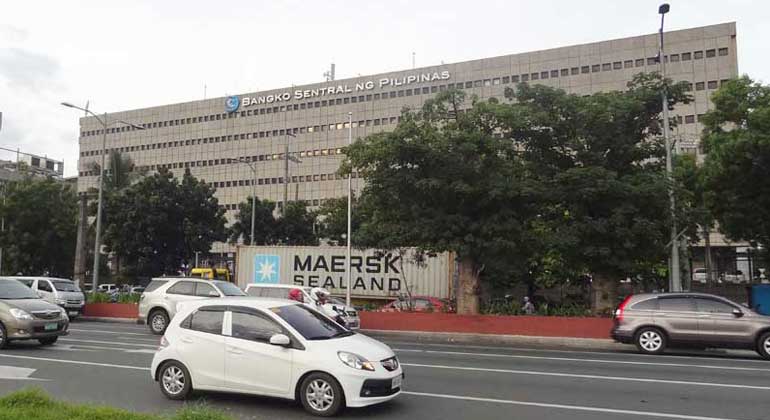
THE Bangko Sentral ng Pilipinas’ Payments and Currency Management Sector will help the central bank achieve its goal to make the country a cash-lite society by 2023. — BW FILE PHOTO

THE BANGKO SENTRAL ng Pilipinas (BSP) has set up a Payments and Currency Management Sector (PCMS) headed by financial inclusion expert Mamerto E. Tangonan as deputy governor as it aims to make the country a cash-lite society by 2023.

“We established the PCMS to further bolster BSP’s capabilities in managing the interplay between digital money and physical currency,” BSP Governor Benjamin E. Diokno said in a briefing on Thursday.

The PCMS will oversee three functional units: the Currency and Securities Production unit under Managing Director Mary Anne P. Lim, the Payments and Currency Development unit headed by Assistant Governor Edna C. Villa, and the Payments and Currency Management Operations unit led by Managing Director Elvira D. Lorico.

Mr. Tangonan will also oversee the operations of the central bank’s Security Plant Complex which is in charge of printing money.

“While cash payments will remain, digital payments are expected to increase as consumers become more familiar with its uses and as more segments of the economy take it up as part of their business model,” Mr. Tangonan said.

Mr. Tangonan previously headed the six-year E-PESO project funded by the United States Agency for International Development which worked towards accelerating the country’s shift to digital payments from cash.

He also spearheaded a team that provided technical assistance to the BSP in the policy formulation and implementation of the National Retail Payments System (NRPS).

The new deputy governor received his bachelor’s degree in civil engineering from the University of the Philippines and took an executive Masters in Business Administration at the Asian Institute of Management.

GOING CASHLESS SEEN TO BOOST ECONOMY
Mr. Diokno said fostering an environment for digital payments will have benefits in terms of financial inclusion and ease of doing business, which could support economic growth.

“One empirical study revealed that moving to a cashless model will have an impact of one percentage point to annual GDP (gross domestic product) among mature economies and more than three percentage points for those of emerging economies,” Mr. Diokno said.

The central bank wants 50% of all payments in volume and value done digitally by 2023.

E-payments made up 10% of the total volume in 2018 from just 1% in 2013, based on a study by Better than Cash Alliance. Meanwhile, it comprised about 20% of the total transactions in terms of volume from a mere 8% in 2013.

Mr. Diokno said the core duties of the PCMS will be anchored on the mandates of the National Payments System Act or the Republic Act No. 11127, which aims to promote safe, efficient, and reliable payment systems.

He said the PCMS will have a different role from the Financial Supervision Sector (FSS) led by BSP Deputy Governor Chuchi G. Fonacier, which is mainly in charge of promoting safety and soundness in the financial system through overseeing banks and quasi-lenders.

“It (FSS) will continue with its mandate to supervise banks and other nonbank institutions while the PCMS will oversee payment systems including non-banks that operate and provide payment services,” Mr. Diokno said.

Mr. Tangonan said he looks forward to helping improve the country’s QR scheme, bills payment and to allow regularly occurring payments such as rent and installments through online transactions. — Luz Wendy T. Noble

LVMH’s Moet Hennessy buys in to rap star Jay-Z’s champagne brand

PARIS — LVMH’s Moet Hennessy is buying a 50% stake in rap star Jay-Z’s Armand de Brignac champagne brand, the latest luxury brand to try to broaden its appeal with a celebrity tie-up.

“I’m proud to welcome the Arnault family into ours through this partnership,” the “Empire State of Mind” singer said in a statement, referring to the family that runs LVMH.

Financial terms of the deal, which was reported earlier by the Wall Street Journal, Financial Times, and New York Times, were not disclosed.

Historic luxury brands around the world have struck partnership deals with celebrities, seeking to appeal to younger customers, with Jay-Z’s pop star wife Beyonce already involved in the Ivy Park sportswear brand.

Last year, cosmetics company Coty agreed to buy a 20% stake in reality TV star Kim Kardashian West’s makeup brand KKW, although earlier this month LVMH put on hold its Fenty fashion venture with pop star Rihanna. — Reuters

Century Pacific launches plant-based food line unMEAT

LISTED food products maker Century Pacific Food, Inc. has introduced a 100% plant-based food line called “unMEAT” that caters to consumers who are choosing a healthier diet.

“The launch of the new plant-based range is in response to the expanding consumer preference for a healthier diet, partly triggered by the pandemic when people aimed to eat healthy to boost their immune system,” the company said in a press release.

Century Pacific, which manufactures and supplies food products, launched the unMEAT brand in the Philippines via Shakey’s Pizza’s Goood Burger. The burger’s plant-based meat is said to be similar to actual meat.

“One of the biggest concerns about plant-based foods is that they are not delicious or as pleasing to the palate as real meat,” Century Pacific Senior Executive Nikki Dizon said.

“Our Nutrition Science team took that as a challenge, and completely delivered by coming up with a meat alternative that unbelievably and undeniably looks, feels, and tastes like meat,” Ms. Dizon added.

After receiving positive reviews for Goood Burger, the company is making the unMEAT line available in the Philippine market, as well as in the US, Singapore, China, and the Middle East.

“In the Philippines, plant-based food options are limited. They’re usually expensive, not palatable or hard to find. For unMEAT, we use simple ingredients by extracting the nutrients from real food rather than using synthetic ingredients and have found ways to make it more affordable and tastier, while retaining all the health-giving benefits of plant-based food,” said Ms. Dizon.

The unMEAT product line consists of meat-free burger patties, Hungarian sausages, nuggets, and minced meat. The products are good sources of fiber and protein, and are free of cholesterol, trans fat, egg, and dairy.

The brand is the company’s latest nutritional meal option, with a tag of P120 to P135 per pack. Century Pacific’s Century Tuna line is popular among fitness enthusiasts. — K. C. G. Valmonte