Home Blog Page 8254

COVID-19, tensions with China to affect market

COURTESY OF PHILIPPINE STOCK EXCHANGE, INC.

TRADING at the stock market this week will remain choppy as investors monitor the rising of coronavirus disease 2019 (COVID-19) cases in the country and recent tensions in the disputed West Philippine Sea.

The Philippine Stock Exchange index (PSEi) declined by 106.54 points or 1.6% to close at 6,545.17 on Thursday.

Week on week, the PSEi gained 102.08 points from its 6,443.09 close on March 31. Financial markets were closed on Friday last week in observance of the Day of Valor.

“The market’s been moving with a downward bias since peaking at a little above 7,400 in January. Investor sentiment has flowed and ebbed along with developments regarding the pandemic,” PNB Securities, Inc. President Manuel Antonio G. Lisbona said in a text message on Saturday.

“A surging case count has also contributed to the market’s gloomy mood,” Mr. Lisbona added.

The country logged 12,674 new coronavirus disease 2019 infections on Saturday, the second highest single-day tally thus far.

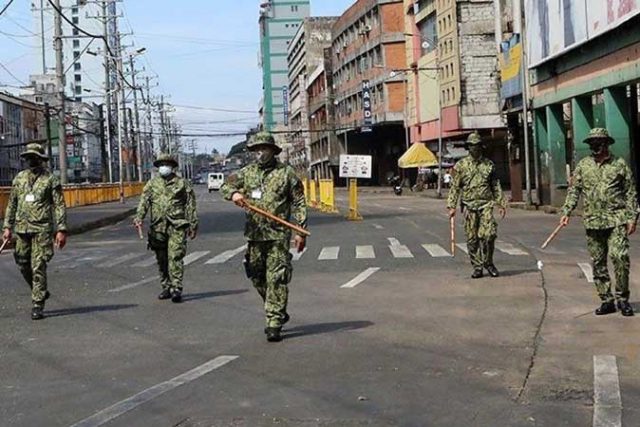
Metro Manila and nearby provinces have been under the strictest form of lockdown since March 29 as the government tries to curb the fresh surge in cases.

Analysts said for this week, the market will continue to monitor COVID-19 developments in the country.

“Market participants [will] continue to assess the COVID-19 situation in the country, as well as how the vaccine rollout plan comes into play,” Timson Securities, Inc. Trader Darren Blaine T. Pangan said in a Viber message on Sunday.

“Internationally, investors might employ a wait-and-see stance amid the recent tensions between the US and China over the West Philippine Sea,” Mr. Pangan added.

“The market will continue to be choppy,” PNB Securities’ Mr. Lisbona said.

Tensions are escalating over China’s move to mass militia vessels in disputed areas of the West Philippine Sea, with the US and Philippines expressing renewed concern and an investigation underway into reports that armed Chinese navy ships chased down a civilian craft carrying a Filipino news crew, Bloomberg reported.

The growing tension comes as Chinese vessels — initially numbering in the hundreds — were spotted at Whitsun Reef, prompting protests from Manila. The US last month said it stands by the Philippines while accusing China of using a “maritime militia to intimidate, provoke and threaten other nations.” China said last month that the ships were simply “taking shelter from the wind” and the Philippines should view the situation in a “rational light.”

For this week, Mr. Lisbona expects the main index to finish between 6,150 to 6,200. Timson Securities’ Mr. Pangan placed the PSEi’s support at 6,380 to 6,400, with 7,300 as the “major resistance area” for the index. — Keren Concepcion G. Valmonte with Bloomberg

Chiefs of Philippine, US military discuss South China Sea affairs

PHILSTAR

By Vann Marlo M. Villegas and Kyle Aristophere T. Atienza, Reporters

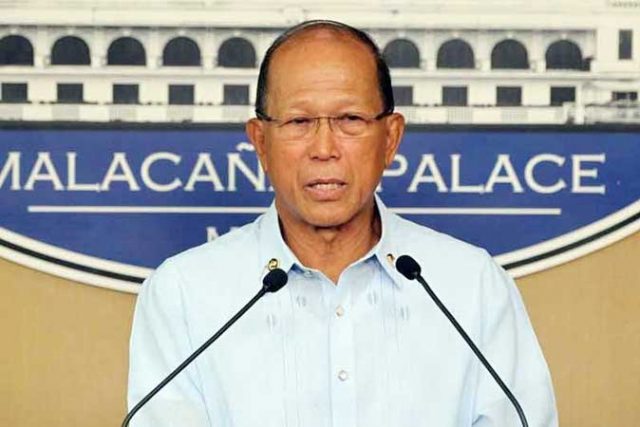
THE PHILIPPINE Defense chief discussed the situation in the South China Sea and regional security developments with his US counterpart on Sunday, according to the country’s military spokesman, amid increased Chinese presence in the disputed waterway.

Philippine Defense Secretary Delfin N. Lorenzana and US Secretary of Defense Lloyd J. Austin III are both looking forward to war games that got canceled last year because of a coronavirus pandemic, local military spokesman Arsenio R. Andolong said in a statement sent via Viber.

During the teleconference, Mr. Austin also reiterated the importance of the visiting forces agreement “and hopes that it would be continued.” “Secretary Lorenzana committed to discuss the matter with the President as the final approval lies with him,” Mr. Andolong said.

Mr. Lorenzana also sought the help of Mr. Austin in fast-tracking the delivery of coronavirus vaccines that the government had ordered from Moderna, Inc. Mr. Austin promised to look into the issue and bring it to the attention of the office concerned.

The Philippines has protested the continued presence of what it claims are Chinese militia vessels at Whitsun Reef in the South China Sea. China insists the reef, which the Philippines calls Julian Felipe, is part of China’s Nansha Island.

The Philippines should increase surveillance in the South China Sea, while reaching out to international groups and other allies as China tries to militarize the area, according to political analysts.

While filing diplomatic protests may be an “appropriate response,” the government should also keep monitoring the area within its exclusive economics zone, said Jay L. Batongbacal, head of the University of the Philippines Institute for Maritime Affairs and Law of the Sea

“Letting the world know what is happening in the course of this controversy is also necessary to ensure transparency and also to enable the Philippines to gather diplomatic support from other countries,” he said by telephone.

The Philippines can also take the issue to various global fora such as the Food and Agriculture Organization of the United Nations and denounce China as a state sponsor of “illegal, unreported, and unregulated” fishing without its consent, he said.

China faces trade sanctions if it’s proven that it has been sponsoring illegal fishing in the disputed waterway, Mr. Batongbacal said. “There are economic repercussions.”

‘BACKED BY ACTIONS’
The government should also ensure that its navy and coast guard are there to protect Filipino fishermen from harassment since the Mutual Defense Treaty with the US only covers attacks against state vessels, he said. 

Diplomatic protests should be backed by actions, Renato C. de Castro, an international studies professor at De La Salle University, said in a Zoom Cloud Meetings interview. “Words are not enough.”

The government should also send planes, not just ships, “just to show the Chinese that we’re watching over them,” he said.

Mr. de Castro said the Philippines should renegotiate its visiting forces agreement and fully implement its enhanced defense cooperation agreement with the United States, which will allow American reconnaissance planes to monitor China’s presence in the South China Sea.

“So the consequence of course would be greater American military presence in the South China Sea,” he said. “It is the last thing that the Chinese would want to see.”

Mr. Lorenzana on April 3 urged the remaining 44 Chinese vessels to leave. He said the Chinese had no reason to stay there since the weather had improved.

The Chinese Embassy said the waters around the reef had been “a traditional fishing ground for Chinese fishermen for many years.” It also said Philippines authorities should avoid “unprofessional remarks.”

Herman Joseph S. Kraft, who heads the University of the Philippines Political Science Department, said the Philippines should mobilize its resources to confront China.

Agencies such as the Fisheries and Aquatic Resources bureau, police units and the coast guard should be involved in the conflict.

“The narrative that the only option we have apart from not confronting China in the West Philippine Sea is going to war with China is false,” Mr. Kraft said, referring to parts of the sea within the Philippines’ exclusive economic zone.

“Vietnam has shown that not backing down in a confrontation is not going to lead to war — some tension or even violence perhaps, but not necessarily war,” he added.

Ronald U. Mendoza, dean of the Ateneo De Manila University’s School of Government, said the latest expansion of China in the disputed territory is “the result of mismanagement and bad governance.”

“These threats notwithstanding, our vulnerability right now is self-inflicted,” he said in an e-mail, citing President Rodrigo R. Duterte’s alleged silence on the issue.

“In periods of crisis — and clearly we have one right now with the pandemic and the blatant security threat posed by the Chinese incursion into our territory — leadership plays a key role in setting the tone, direction and forcefulness of our nation’s response,” he said.

Mr. Mendoza said only Mr. Duterte could mobilize both public and private resources and trigger the needed international support so the country can respond and decisively.

“We are facing security threats at a time when our health situation is at its worst,” he said. “Duterte’s absence shows a lack of direction, indecisiveness and vulnerability for our nation.”

Mr. Duterte earlier said the Philippines would stand by its rights but he did not see the need to use force against the Chinese maritime militias occupying Whitsun Reef, according to his spokesman.

Mr. Duterte thinks the sea dispute could be resolved through peaceful means, Presidential Spokesperson Herminio “Harry” L. Roque, Jr. said last week.

Lockdown in metro, nearby areas eased from April 12 to 30

PCOO.GOV.PH

By Kyle Aristophere T. Atienza and Vann Marlo M. Villegas, Reporters

PHILIPPINE President Rodrigo R. Duterte on Sunday eased the lockdown in Manila, the capital and nearby cities and provinces while urging local governments to boost their response to the coronavirus pandemic.

Metro Manila would be under a modified enhanced community quarantine from April 12 to 30, Presidential Spokesperson Herminio “Harry” L. Roque, Jr. told an online news briefing on Sunday, a day before a two-week strict lockdown was to expire.

The same applies to the provinces of Bulacan, Rizal, Laguna and Cavite, which were also locked down amid a fresh surge in COVID-19 infections.

Santiago City, Isabela, Quirino province and Abra in northern Philippines would also be placed under the modified enhanced lockdown, Mr. Roque said.

“The failure of the government to make a timely announcement on this week’s quarantine qualification speaks volumes of the current quality of Malacañang’s response to the crisis,” InfraWatch PH convenor Terry L. Ridon said in a Facebook Messenger chat.

“If the government makes a belated announcement today, sufficient time should be afforded to all to adjust to a new classification,” the former congressman said hours before the announcement.

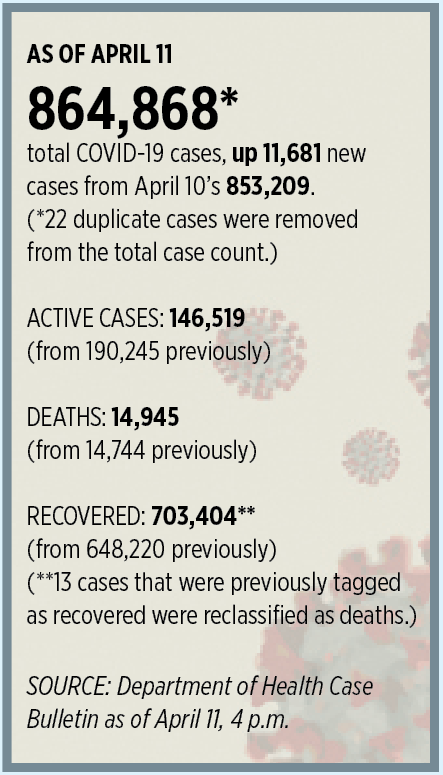
The Department of Health (DoH) reported 11,681 coronavirus infections on Sunday, bringing the total to 864,868. The death toll rose by 201 to 14,945, while recoveries increased by 55,204 to 703,404, it said in a bulletin.

There were 146,519 active cases, 96.8% of which were mild, 1.7% did not show symptoms, 0.5% were critical, 0.6% were severe and 0.34% were moderate.

Mr. Roque, who was hospitalized at the weekend after testing positive for the virus for the second time, said beds and health staff should be adequate, while local governments should ensure a well-coordinated triage and referral system for coronavirus patients.

Hospitals should be decongested through temporary treatment and monitoring facilities “provided there is proof of capacity to do adequate quarantine/isolation.”

“Local government units in the National Capital Region Plus are likewise enjoined to set up their respective local tele-health triaging systems equipped with sufficient medical personnel available to provide immediate medical and patient referral advice,” Mr. Roque said in a separate statement.

The Health, Public Works and Education departments as well as the Metro Manila Development Authority should work together to increase bed capacity for coronavirus patients in isolation, quarantine and health facilities, he said.

He added that the Labor and Trade departments had been ordered to decide on the number of workers who may undertake alternative work arrangements.

The Philippines has been experiencing a fresh surge in infections, just like many countries in the world, amid a slow vaccination program that started last month. The government was set to take delivery of 500,000 CoronaVac doses from China on Sunday, according to an inter-agency task force.

INTER-AGENCY ORDER
Based on the order issued by the task force on Sunday, all barred establishments and activities during the two-week strict lockdown may now operate at 50% capacity.

Entertainment venues, recreational hubs, personal care services, casinos and other nonessential establishments were still barred from operating.

Public vehicles, ships, rail and air transportation may operate in accordance with the rules issued by the Transportation department.

Religious gatherings will be allowed up to 10% of the venue capacity. Local governments may increase the capacity to 30%.

Gatherings outside residences will remain banned, except for essential activities related to health and government services and authorized humanitarian programs.

Mr. Duterte canceled his weekly address last week given the risk of infection, the palace has said.

Michael Henry Ll. Yusingco, a research fellow at the Ateneo De Manila University Policy Center, said it was normal for people to get anxious about the President’s prolonged absence from public view

“Questions about who is exercising presidential control are certainly warranted under the circumstances,” he said in an e-mail.

“Regardless of the President’s health, the government should still have been able to make a timely decision yesterday, as the entire economy and communities are dependent on the government’s next steps,” Mr. Ridon said.

The belated announcement causes unnecessary delays in manpower planning, Asian Institute of Management economist John Paolo R. Rivera said in a Viber message.

“The government needs to be sharper and clear in its policies especially during a potential transition from an enhanced community quarantine to another form of quarantine,” Ruben Carlo O. Asuncion, chief economist at UnionBank of the Philippines, Inc. said in a Viber message.

Even if companies try to foresee possible situations “the government should be many steps ahead,” he added.

The Health department on April 2 reported the highest daily tally at 15,310 cases since the pandemic started last year.

The agency on Sunday said 22 duplicates had been removed from the tally and 13 recovered cases were reclassified as deaths. Six laboratories failed to submit data on April 10.

About 10.1 million Filipinos have been tested for the coronavirus as of April 9, according to DoH’s tracker website.

The coronavirus has sickened about 136.1 million and killed 2.9 million people  worldwide, according to the Worldometers website, citing various sources including data from the World Health Organization.

About 109.5 million people have recovered, it said.

The agency on Saturday reported 363 new infections with the more contagious variants first detected in the United Kingdom, South Africa and Brazil.

In a statement, DoH said it had detected 192 new infections with the variant first detected from South Africa, bringing the total to 344.

A total of 170 new cases were detected to have been infected with the variant first found in the United Kingdom, raising the total to 392.

A person from the Soccsksargen region was infected with the variant from Brazil, it said, bringing the total to two.

The Health department also said 19 people had been infected with the variant first detected in the Philippines, bringing the total to 123.


Nationwide round-up (04/11/21)

PHILIPPINE STAR/ MICHAEL VARCAS

Employers, workers groups say more cash aid needed with another lockdown

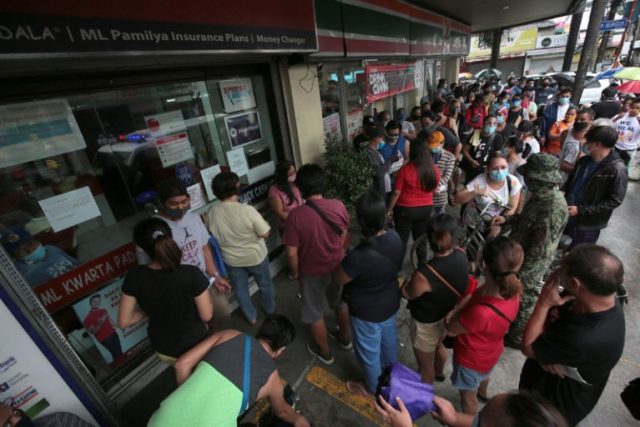
BOTH employers and employees on Sunday said another week of a strict lockdown in the Philippine capital and nearby provinces will be difficult if no aid will be given to affected sectors, adding restrictive measures cost billions to the economy daily. “You’re looking at business from bad to worse, even in confidence in business,” Employers Confederation of the Philippines President Sergio R.Ortiz-Luis said in an interview with BusinessWorld on Sunday. With the strictest quarantine level enforced in the past two weeks, “People are already losing money,” he said. “There is also not enough aid being given,” he added in Filipino. Mr. Ortiz-Luis added lockdowns are not sustainable and the government should instead focus on other means to control the virus. The stringent quarantine measures cover Metro Manila, Bulacan, Cavite, Laguna, and Rizal, which is collectively now referred to as the NCR (National Capital Region) Plus area. Meanwhile, Associated Labor Unions-Trade Union Congress of the Philippines Spokesperson Alan A. Tanjusay said in a statement that affected workers in the NCR Plus area will experience more difficulties if there is no additional government subsidy. “Without a quick and adequate additional cash assistance and food dole outs to get them by another week of government-imposed ECQ (enhanced community quarantine) lockdown, it is very difficult for the government to keep them at home for another seven days,” he said. — Gillian M. Cortez

Anti-trafficking council reports over 100% rise in convictions vs child exploitation

THE government’s inter-agency group on anti-trafficking recorded a 117% increase in convictions of child sexual offenders online to 100 in 2020 from 46 the previous year. Justice Undersecretary Emmeline Aglipay-Villar released data to reporters on Sunday showing the convictions in 2020 involved 34 human trafficking cases and 66 from other related laws, which include child abuse, child pornography, and photo and video voyeurism. Ms. Aglipay-Villar said the Department of Justice’s Inter-Agency Council Against Trafficking intensified its operations in 2020 following reports that cases of online sexual exploitation of children increased during the lockdown period. She also said the anti-trafficking task force has increased its manpower, which means there are now more prosecutors handling child exploitation cases. The council also works closely with the Philippine Internet Crimes Against Children Center and civil society organizations. — Bianca Angelica D. Añago

Drilon calls for transparency in pork importation

SENATE Minority Leader Franklin M. Drilon said there should be transparency in the pork importation process to allay suspicions that the government’s decision to ease restrictions is marred with corruption. “If there is transparency, we can avoid people thinking that there is anomaly here again,” he said in Filipino in an interview over DZBB on Sunday. He said the list of importers and where the pork will come from should be released. The Senate committee of the whole will hold a hearing Monday on food security, including the alleged corruption through padded costs in the importation of pork. President Rodrigo R. Duterte last week signed an order easing pork importation rules to help address supply shortage caused by the African Swine Fever (ASF) outbreaks since mid-2019 and minimize inflation. The Senate earlier asked the President to reject the recommendation of the Agriculture department to lower the tariff rates and increase the minimum access volume of imported products. The Senate last month also adopted a resolution urging Mr. Duterte to declare a state of national calamity due to the ASF impact on the swine industry. — Vann Marlo M. Villegas

Regional Updates (04/11/21)

Courts in Metro Manila, nearby provinces to remain closed

COURTS in the capital region and neighboring provinces of Bulacan, Cavite, Laguna, and Rizal will remain physically closed until April 18, the Supreme Court ordered on Saturday. “Considering the unabated rise of Covid-19 (coronavirus disease 2019) cases, the requests of the judges and court personnel, and upon the concurrence of the members of the Court en banc, all the courts and judicial offices in the (NCR Plus area) shall remain physically closed until 18 April 2021,” the high court said in a circular. The filing periods and service of pleadings and motions are also extended until the seventh calendar day after the relevant court is physically reopened. Affected courts will continue to function virtually through telephone and e-mail. Judges are also directed to conduct hearings via videoconferencing without the need for prior permission from the Office of the Court Administrator. — Bianca Angelica D. Añago

MinDA to set up economic recovery council to assist Mindanao businesses, workers

THE Mindanao Development Authority (MinDA) will set up a public-private sector council that will facilitate response to specific problems of businesses and workers affected by the coronavirus pandemic. “The purpose is to address issues and problems that may impede our economic recovery,” MinDA Chair Emmanuel F. Piñol said last week during the online Mindanao Economic Recovery Forum. The agency is proposing that private sector representatives lead what will be called Mindanao Economic Recovery Facilitation Council, which will have a 24/7 hotline for concerns. The tasks of the council will include providing expert advice on how to protect jobs during the ongoing economic crisis, identifying both short and long-term steps to address problems, and recommend specific local policy and strategies. “I would like to have this organized right away. The next step is to present the inputs today to the inter-agency group, particularly to agencies that deliver services like DA (Department of Agriculture), DSWD (Department of Social Welfare and Development),” Mr. Piñol said. MinDA will hold another forum involving government agencies. — Maya M. Padillo

DoT to propose adoption of IATA Travel Pass to IATF

IATA
IATA

By Arjay L. Balinbin, Senior Reporter

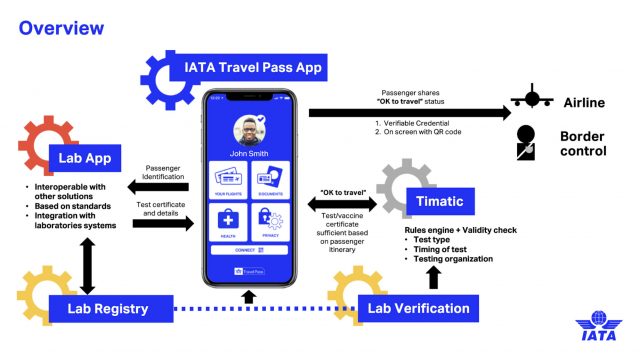
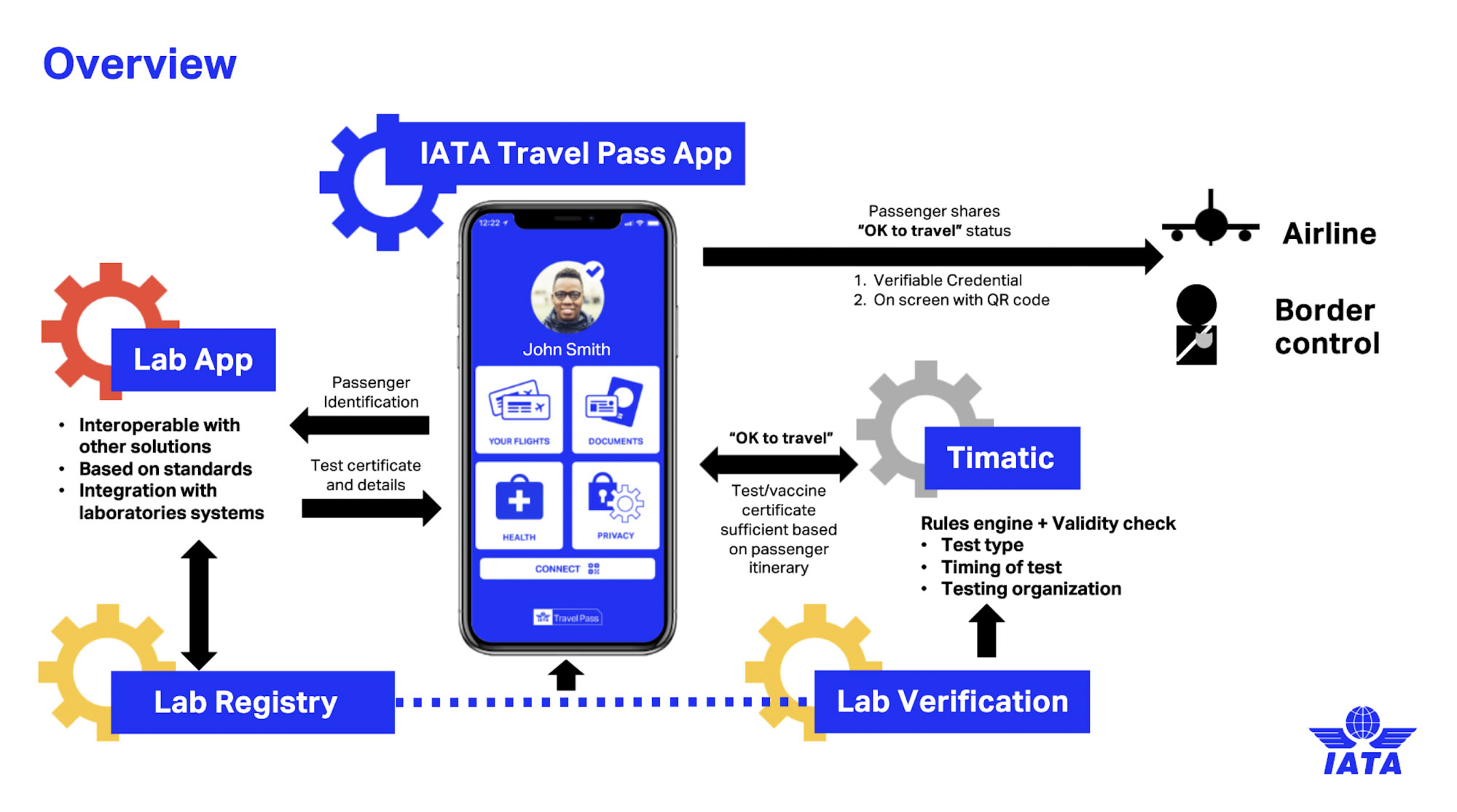
THE TOURISM department is set to present a proposal to the Inter-Agency Task Force on Emerging Infectious Diseases (IATF) for airlines to adopt a platform developed by the International Air Transport Association (IATA) that will enable passengers to digitally manage their travel documents and share their test and vaccination results.

“We will present it to the IATF next week,” Department of Tourism (DoT) Secretary Bernadette Romulo-Puyat told BusinessWorld in a phone message Friday.

The Air Carriers Association of the Philippines (ACAP) supports the proposal because it will help restart international travel, according to its executive director, Roberto C.O. Lim.

“ACAP supports the IATA industry initiative/tool for a standard and harmonized application to simplify international travel requirements,” Mr. Lim said in a phone message.

What is important is that IATA’s platform keeps data under the passenger’s control, he added.

He said testing and vaccination results issued by accredited and “reliable” medical providers will be uploaded by passengers as part of the platform’s security feature.

“The IATA Pass information is kept confidential because the information in the app is supplied by the medical provider who conducted the test/vaccine. No central repository holds information,” Mr. Lim explained.

For domestic travel, he said the DoT has an app called “Travel Philippines” that can be used to check on the entry requirements of local government units (LGUs).

The Travel Philippines app can be linked to the IATA Pass to create a unified digital travel pass, he noted.

Philippine Airlines Spokesperson Cielo C. Villaluna said the use of the IATA Pass will “most definitely” help restore customer confidence in air travel.

“We welcome the IATA travel pass initiative as it will enable travelers to comply and present travel and health document requirements with ease and convenience throughout the travel experience,” Ms. Villaluna said in a phone message.

“We look forward to working with IATA and industry stakeholders towards the eventual integration of the travel pass on our flights. After all, this concept is based on industry standards and IATA’s proven experience in managing information flows around complex travel requirements,” she added.

Philippines AirAsia said it has an ongoing regional integration for all its operation centers following the IATA Pass model.

“Although nothing is final yet, what’s certain is that AirAsia will fully support all measures that will further enhance safety and rebuild confidence in air travel,” Philippines AirAsia Spokesperson Steve F. Dailisan said in a phone message.

“Aside from having a standard set of requirements from the LGUs, there must always be stringent measures in place that will allow industry stakeholders to validate the authenticity of documents such as COVID-19 test results and vaccination certificates submitted by all our guests. This will enable swift coordination among LGUs, transport regulators, airline companies, molecular laboratories and health authorities,” he explained.

On its website, IATA said its platform also enables passengers to find testing centers and laboratories at their departure or arrival locations that can conduct coronavirus tests in accordance with the type of test required for their trips.

According to global travel technology company Amadeus, 91% of travelers are comfortable with digital health passports.

Amadeus’ recent study also found that the appetite for travel remains high, with 41% of travelers saying they plan to book international travel within six weeks of restrictions being lifted.

DoF pushing for localized lockdowns, unhampered logistics

PHILSTAR

THE GOVERNMENT needs to limit lockdowns to defined high-risk areas only and ensure smooth delivery of goods and services to minimize the impact on the economy, the Department of Finance (DoF) said.

“Like fiscal incentives that should be time-bound and targeted, strict quarantine measures, if and when they are called for, should be localized and time-bound while not unnecessarily hampering the transportation of goods and delivery of services so as to minimize the collateral damage on the economy and, consequently, employment,” the DoF said in an economic bulletin Sunday.

The number of unemployed rose to 4.2 million in February from 3.95 million in January, the Philippine Statistics Authority reported, bringing the jobless rate to 8.8% that month from 8.7% in the month prior.

Underemployment, which measures the number of workers still seeking more work, also rose to 18.2% in February from 16% previously.

Economic managers attributed the high underemployment rate to ongoing quarantine measures, which are reducing incomes.

The strictest lockdown setting was reimposed in Metro Manila, Bulacan, Cavite, Laguna and Rizal, and were due to end on April 11 after daily coronavirus cases hit new records. Malacañang had yet to announce new quarantine measures at deadline time.

On Saturday, the Health department reported 12,674 new infections to bring the total count to 853,209 so far. Deaths overall hit 14,744 after 225 new deaths were recorded that day.

Economic managers have been pushing for localized lockdowns to curb the high infection rate and allow areas with relatively few infections to operate normally.

The DoF said pharmaceutical and other non-medical interventions should be “managed effectively” to contain the outbreak that started more than a year ago, so the government will not be “forced to take the difficult and painful decision of imposing much stricter quarantine measures.”

“The timely passage of CREATE is a welcome development not only in improving the country’s long-term competitiveness but also in providing immediate relief and support for enterprises, the important players in providing employment opportunities to a large portion of the population,” the DoF added.

Republic Act No. 11534 or the Corporate Recovery and Tax Incentives for Enterprises (CREATE) Act was signed into law on March 26 and is set to take effect on Monday, April 12.

The law reduces the corporate income tax for small businesses to 20% from 30%, while the rates for all other companies will be lowered gradually until they hit 20% in 2027. It also reforms the tax incentive system to make it more time-bound and performance-based.

The Bureau of Internal Revenue on Friday released the implementing rules and regulations covering the tax provisions under CREATE. — Beatrice M. Laforga

Global renewable generating capacity rises 10% in 2020

GLOBAL RENEWABLE generating capacity grew 10% last year to around 2,799 gigawatts (GW) despite the economic slowdown caused by the pandemic, according to the International Renewable Energy Agency (IRENA).

An IRENA official said in a statement that 2020 is the beginning of the “decade of renewables.”

“Renewables’ rising share of the total is partly attributable to net decommissioning of fossil fuel power generation in Europe, North America and for the first time across Eurasia… The 10.3% rise in installed capacity represents expansion that beats long-term trends of more modest growth year on year,” IRENA said in the statement issued Sunday. In 2019, global renewable generation capacity stood at about 2,538 GW.

According to IRENA data, renewable capacity in the Philippines increased by 0.74% to 6.81 GW last year.

“Despite the difficult period, as we predicted, 2020 marks the start of the decade of renewables,” IRENA Director-General Francesco La Camera was quoted as saying.

“Costs are falling, clean tech markets are growing and never before have the benefits of the energy transition been so clear… Our 1.5 degree outlook shows significant planned energy investments must be redirected to support the transition if we are to achieve 2050 goals,” he added, referring to the Paris Agreement. The international treaty’s goal is to limit the global temperature rise to below 1.5 degrees Celsius.

In its statement, IRENA said hydropower accounted for more than half of the world’s total renewable generation capacity at 1,211 GW last year, but solar and wind are “catching up fast.”

“The two variable sources of renewables dominated capacity expansion in 2020 with 127 GW and 111 GW of new installations for solar and wind respectively,” it said.

IRENA gathered its data from questionnaires, official statistics, industry association reports, other reports and news articles.

Meanwhile, total fossil fuel additions to the global generation capacity fell to 60 GW in 2020 from 64 GW previously. The organization said that this highlighted a “continued downward trend of fossil fuel expansion.”

On its website, IRENA said that it advocated the widespread adoption and sustainable use of all forms of RE in pursuit of sustainable development, energy access, energy security and low-carbon economic growth and prosperity. — Angelica Y. Yang

Marikina to Pasig cable car project endorsed to NEDA

DOTR

THE DEPARTMENT of Transportation (DoTr) said it recently endorsed a project proposal to the National Economic and Development Authority (NEDA) for the construction of a cable car transit system between the Light Rail Transit (LRT) Line 2’s Santolan Station in Marikina City and Barangay Rosario in Pasig City.

“The feasibility study as well as the other required studies by NEDA were completed by the French consultants. The project was endorsed by DoTr to NEDA for evaluation and approval on March 16, 2021,” Transportation Undersecretary for Finance Garry V. de Guzman said in a phone message to BusinessWorld on March 30.

The feasibility study for the Metro Manila urban cable car project was funded by the government of France, according to a copy of the project briefing document provided by Transportation Assistant Secretary Goddes Hope O. Libiran to BusinessWorld on Friday last week.

The selected alignment spans 4.5 kilometers and mostly follows the Marikina River profile, according to the document. It starts from LRT Line-2 Santolan Station and proceeds southward to Ortigas Avenue in Rosario, Pasig.

Four more sites for stations were identified between LRT-2 Santolan Station and Rosario: Quezon City’s Libis and Eastwood and Pasig City’s Santolan and Manggahan.

The proposed technology for the line is a monocable detachable gondola lift with closed cabins seating 10 each.

“Distances between towers can reach up to 250 meters to 300 meters depending on the topography, height of the towers, and spacing of cabins,” the DoTr said.

The project is expected to “play a major role in the development of an efficient public transport system” in Metro Manila.

“It is envisaged as an attractive mass transport option for the riding public but not necessarily substitutes for a railway system, particularly on its ridership capacity,” the DoTr said.

Transportation Secretary Arthur P. Tugade had an online meeting with French Ambassador to the Philippines Michèle Boccoz on March 29. They discussed programs, projects, and initiatives the Philippines and France can jointly explore, his department said in a statement.

“Secretary Tugade… put forth the plan of the department to partner with the French Government for the realization of the Urban Cable Car Project,” the DoTr added.

Asked to comment, transport expert Rene S. Santiago said by telephone: “There is nothing wrong per se with cable cars, but the choice of place is an important consideration as well as how it is going to be operated and maintained.”

“If the government operates and maintains a cable car whether in Boracay, Metro Manila or Baguio without a private (entity), you kiss it goodbye. Let’s call it ‘build and forget…’ because of our institutional weakness. Our government has the reverse Midas touch. Whatever they touch in terms of operations and maintenance becomes garbage in the air,” he said. — Arjay L. Balinbin

IPOPHL developing means to block online pirated content

THE INTELLECTUAL property office has partnered with the Asia Video Industry Association (AVIA) to develop site blocking measures for pirated content.

The Intellectual Property Office of the Philippines (IPOPHL) signed a memorandum of understanding with the association to share information and develop technical knowledge on piracy.

AVIA will provide information on piracy, conduct training on piracy matters, and make recommendations for IPOPHL’s online piracy monitoring and rolling site blocking, IPOPHL said in a statement Sunday.

IPOPHL in turn will review piracy issues and will act on piracy reports and tips from AVIA, an association that promotes the interests of the video industry in the Asia Pacific.

“Site blocking is a responsible means of not allowing access to pirated sites… We have experience now in multiple markets all around the region that site blocking, where it is done properly, can be incredibly effective at reducing the levels of piracy in a market,” AVIA Chief Executive Officer Louis Boswell said.

“And we’re very keen to see this happen in the Philippines.”

IPOPHL received 54 piracy complaints in 2020, more than the 51 reported for all intellectual property violations a year earlier. Around 94% of piracy complaints last year were based on online violations. — Jenina P. Ibañez

Redefining Philippine Taxation: CREATE

First of four parts

A long period of uncertainty was ended after President Rodrigo R. Duterte signed Republic Act No. 11534, known as the Corporate Recovery and Tax Incentives for Enterprises (CREATE) Act on March 26.

The CREATE Act is said to be the first-ever revenue-eroding tax reform package and the largest economic stimulus program in the country’s history, with major amendments to our tax and incentives laws. With the pandemic continuing to negatively impact the business landscape, it is hoped that these changes will support post-pandemic recovery while attracting more foreign investment into the country.

In the first part of this four-part series, we discuss the passage and goals of the CREATE Act and how it reduces Corporate Income Tax (CIT).

IMPROVING THE EFFICIENCY OF THE TAX SYSTEM
Set to take effect on April 11, this legislation is part of the Comprehensive Tax Reform Program rolled out by the Duterte administration in 2017. After the passage of TRAIN Law in December 2017, the House of Representatives passed the Tax Reform for Attracting Better and Higher Quality Opportunities (TRABAHO) bill in September 2018. A year after it was transmitted to the Senate, the Senate renamed its version to the proposed Corporate Income Tax and Incentives Rationalization Act (CITIRA) bill.

Neither bill had seen the light of day when COVID-19 hit. To combat the pandemic, governments around the world imposed strict lockdown measures that led to the reduction of business operations or outright business closures. Extended lockdowns severely impacted the business community, leading the government to realign its priorities in response to the needs of the economy while simultaneously encouraging investor interest in the Philippines. With this in mind, CREATE was drafted to improve the equity and efficiency of the corporate tax system by lowering the tax rate, widening the tax base, reducing tax distortions and leakages, and developing a more responsive and globally-competitive tax incentives regime that is performance-based, targeted, time-bound, and transparent.

The House of Representatives and the Senate approved and passed different versions of the CREATE bill before deliberations by the Bicameral Conference Committee. On the last day of the 30-day period to act on the enrolled CREATE bill, the President signed it into law but vetoed certain provisions. These include the VAT-exempt threshold on the sale of real properties by real estate developers and the special corporate income tax incentive for domestic enterprises, among others.

REDUCTION IN CORPORATE INCOME TAX
As of 2020, the Philippines imposes the highest CIT rate at 30% in ASEAN, where the regional average is 23%. To address this, the CREATE Act lowers the CIT rate for domestic corporations (including one-person corporations) to 25% of the taxable income beginning July 1, 2020 while that for companies with total assets not exceeding P100 million and taxable income not exceeding P5 million is lowered to 20% of the taxable income. In valuing the P100 million threshold, we should note that the land on which the particular corporation’s office, plant and equipment are situated shall be excluded as the appreciation of its value may remove small businesses from the 20% bracket. This threshold shall be determined on a taxable year basis.

For resident foreign corporations (including branch offices), the CIT rate is lowered from 30% to 25% of the taxable income beginning July 1, 2020 while the interest income from a depository bank under the expanded foreign currency deposit system and gains from sale of shares not traded in the stock exchange received by the resident foreign corporations shall be taxed at 15%.

Regional operating headquarters are subject to 25% CIT beginning Jan. 1, 2022. However, they may apply for incentives under the CREATE Act. The CIT rate for non-resident foreign corporations is lowered from 30% to 25% of the gross income beginning Jan. 1, 2021.

With the lowering of the CIT rate, the non-allowable deduction for interest expense is likewise reduced from 33% to 20% of the interest income subjected to final tax. However, if the interest income tax is adjusted in the future, possibly in the tax reform package 4 or the proposed Passive Income and Financial Intermediary Taxation Act, the interest expense reduction rate may likewise be adjusted.

To compute the CIT due, corporations adopting calendar year ending Dec. 31, 2020 are to multiply the total annual taxable income by the effective rate of 27.5% (under the 25% CIT rate) or 25% (under the 20% CIT rate), whichever is applicable, for domestic corporations, and 27.5% for resident foreign corporations.

For corporations adopting fiscal years, the multiplier shall vary depending on the year ending. One way to compute the CIT due for those using fiscal years is to divide the total annual taxable income by 12 and multiply it by the number of months covered by the new rate. For example, for corporations with fiscal year ending March 31, 2021, the total annual taxable income shall be divided by 12 and the aggregate income from April 1, 2020 to June 30, 2020 is to be taxed at 30%, while the aggregate income from July 1, 2020 to March 31, 2021 will be taxed at 25% or 20%, whichever is applicable.

This was put in place to ensure that taxpayers do not resort to the allocation of income and expenses that will yield a lower tax due.

Since the CIT rate is reduced, a reduction of Expanded or Creditable Withholding Tax (EWT) rate should also follow suit to avoid any tax leakage. This will avoid a situation where the EWT tax due will be much higher compared to the income tax due of certain suppliers and hence, creating tax leakage. As a measure, the CREATE Act directs the Department of Finance (DoF) to revisit or amend EWT rules and regulations, including the tax rates, every 3 years.

An additional benefit in the form of a deduction from gross income is also provided under the CREATE Act wherein businesses are given an additional deduction of 50% of the value of labor training expenses incurred for skills gained by enterprise-based trainees enrolled in public senior high schools, public higher educational institutions, or public technical and vocational institutions covered by an Apprenticeship Agreement, provided they secure proper government certification and the additional 50% labor training expense deduction does not exceed 10% of the direct labor wage.

The CREATE Act also provides additional temporary relief to taxpayers beginning July 1, 2020 to June 30, 2023 by reducing the minimum corporate income tax from 2% to 1%, the CIT rate for proprietary educational institutions and non-stock and non-profit hospitals from 10% to 1%, and percentage tax from 3% to 1%.

The adjustments in CIT rates will not only support big businesses but will ultimately provide relief to micro, small and medium enterprises, which constitute 99.5% of the total business enterprises in the Philippines, employ 62.4% of the total labor force, and account for 35% of gross domestic product and 35.7% of economic value. While this tax reform package will reduce the government’s revenue, the DoF hopes that this will help revitalize businesses and consequently, create more jobs for workers who have been greatly affected by the pandemic.

While known for its skilled labor and professionals and relatively lower operating costs, the Philippines has unfortunately been left behind as investors tend to lean towards the more attractive fiscal system of our ASEAN neighbors. This recent development in our tax laws may be a good pull for foreign investors looking for more opportunities.

In the second part of this four-part series, we will discuss more effected changes: the exemption of foreign-sourced dividends, the repeal of improperly accumulated earnings tax, tax-free exchange, additional provisions to consider and provisions that were vetoed.

This article is for general information only and is not a substitute for professional advice where the facts and circumstances warrant. The views and opinions expressed above are those of the authors and do not necessarily represent the views of SGV & Co. 


Karen Mae L. Calam And Aiza P. Giltendez are a Tax Senior Manager and Manager, respectively, of SGV & Co.

Ancajas still IBF champ

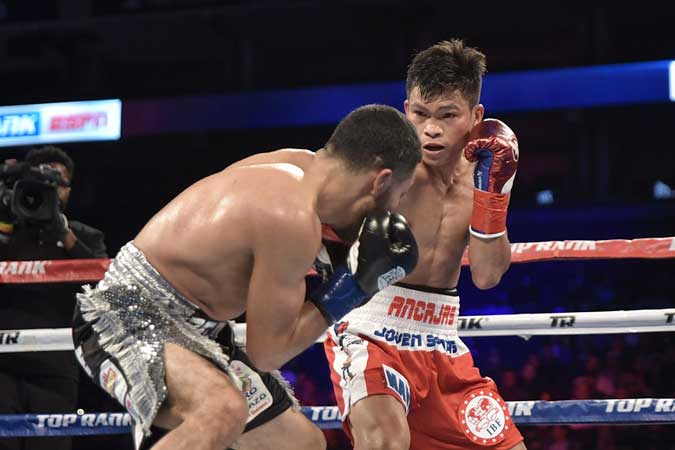
JERWIN ANCAJAS of the Philippines is still the IBF super flyweight champion after a successful title defense over Mexican Jonathan Javier Rodriguez on Sunday (Manila time) in Connecticut. — ALVIN S. GO

Magsayo keeps unblemished record intact

By Michael Angelo S. Murillo, Senior Reporter

FILIPINO world champion Jerwin “Pretty Boy” Ancajas retained his International Boxing Federation (IBF) super flyweight title in another successful defense on Sunday (Manila time) in Uncasville, Connecticut.

Davao del Norte native Ancajas, back in action after 16 months, defeated Mexican Jonathan Javier Rodriguez by unanimous decision (115-112, 116-111 and 117-110) in their 12-round collision held at the Mohegan Sun Arena.

It was the ninth successful title defense for Mr. Ancajas, who improved to 32 wins after the victory as opposed to two defeats.

Also victorious on Sunday was Mark “Magnifico” Magsayo of the Philippines over American Pablo Cruz by a fourth-round stoppage to keep his unblemished record intact.

Despite the long forced break from action he had because of the ongoing pandemic, Mr. Ancajas was on top of his game, holding his ground against the spirited challenge by Mr. Rodriguez.

The Filipino champion pummeled his Mexican opponent with telling shots throughout the fight, punctuated by a knockdown late in the eighth round.

Mr. Rodriguez tried to recover after being floored, but Mr. Ancajas stayed in control of the fight en route to the hard-earned unanimous decision victory.

“This is the toughest fight for me [so far],” said Mr. Ancajas post-fight as he described his battle with Mr. Rodriguez, which finally took place after being deferred a couple of times previously for varying reasons.

Mr. Ancajas, 29, who has been IBF super flyweight champion since 2016, now hopes his latest victory catapults him to more fights with elite fighters in his division.

With the loss, meanwhile, 25-year-old Rodriguez dropped to 22-2 and saw his winning streak stop at six fights.

MAGSAYO WINS, TOO
Also winning in Connecticut was top Filipino featherweight contender Magsayo.

The Boholano boxer impressed with a fourth-round technical knockout of Houston fighter Cruz in their 10-round undercard fight.

After feeling things out in the opening round, Mr. Magsayo upped the intensity in the succeeding rounds.

He scored a flash knockdown in the second round off a jab and dropped his opponent anew in the third.

Mr. Magsayo continued to put pressure on his opponent in the fourth round, eventually landing a right straight that sent Mr. Cruz to the canvas anew and signaled the end to the fight.

The win stretched his undefeated streak to 22 fights, 15 of which coming by way of knockout. 

It was Mr. Magsayo’s second victory under Manny Pacquiao’s MP Promotions, with whom he signed up with last year.

ADVERTISEMENT
ADVERTISEMENT