Home Blog Page 8250

Regional Updates (04/12/21)

2 northbound lanes of Skyway Extension now open and temporarily toll-free

TWO of three lanes of the Skyway Extension project’s northbound section have been opened to motorists, San Miguel Corp. (SMC) announced on Monday. The northbound section that covers four kilometers from Susana Heights to Sucat in Parañaque can now be used by light vehicles like cars and vans with radio-frequency identification or RFID, SMC President and Chief Operating Officer Ramon S. Ang said in an e-mailed statement. “Our long-term solution to addressing traffic particularly on SLEX (South Luzon Expressway) heading to the Alabang area has finally been realized,” Mr. Ang said. The northbound section, which is expected to allow the additional capacity of 4,500 vehicles per hour, provides a direct link to the elevated skyway system for vehicles coming from Laguna, Batangas, and Cavite. “It allows them to bypass the Alabang viaduct, reducing congestion in the area. From SLEX, they can go directly to their destinations like Makati, Manila, Quezon City up to the North Luzon Expressway (NLEX), via SMC’s new Skyway Stage 3,” the company said. According to Mr. Ang, no toll fees will be charged for the four-kilometer segment until further notice. “We are confident that this will further reduce congestion along Edsa and usher growth to provinces in Southern Luzon and beyond,” he said. Once fully completed, the northbound section is expected to reduce travel time to NLEX to 25 to 30 minutes from two to three hours. — Arjay L. Balinbin

Western Visayas travel ban renewed April 13-19

ENTRY to the Western Visayas Region will again be suspended from April 13 to 19 after the national task force on coronavirus response granted the request of local leaders to extend the temporary closure of borders due to rising infections. The travel ban covers all inbound flights, ships, and land transport from Metro Manila, the provinces of Rizal, Bulacan, Laguna and Cavite, and the cities of Cebu and Davao. The border closure does not include cargo and returning overseas Filipino workers. Defense Secretary Delfin N. Lorenzana, chair of the national task force, gave the approval as contained in an April 11 letter addressed to Mayor Jerry P. Treñas of Iloilo City, the regional center. “In light of the foregoing, acknowledging your recent surge in COVID-19 cases; and to give you more breathing space to prevent local transmission and protect your healthcare system from being overwhelmed, the NTF COVID-19 hereby approves your request for a temporary travel suspension,” reads part of the letter. Western Visayas is composed of the provinces of Aklan, Antique, Capiz, Guimaras, Iloilo and Negros Occidental, and the independent cities of Iloilo and Bacolod. As of April 11, Health department data show the region had 3,146 active cases out of the total 29,833 recorded since the start of the pandemic. Negros Occidental had the highest active cases at 1,317, followed by Bacolod with 456, and Antique with 389. — MSJ

Tourism workers in Metro Manila, nearby provinces get cash aid

MORE than 67,000 tourism sector workers in Metro Manila and four neighboring provinces have been given cash aid under a joint program of the Department of Tourism and Department of Labor and Employment. “We are hopeful that this financial assistance will provide some relief to our most affected stakeholders and tourism workers during these difficult times. While it may help in the short term, we believe that the best way to help stakeholders in the long run is to develop a tourism industry that is stronger, more resilient, and more adaptable to change,” said Tourism Secretary Bernadette Romulo-Puyat during Monday’s awarding ceremony for some of the beneficiaries. The 67,347 beneficiaries since last year each received P5,000. The joint program expanded the coverage of those who can avail of the financial assistance to include secondary tourism enterprises, service providers, members of  provider associations, and independent workers such as licensed tour guides. Nationwide, the Tourism department said P1.8 billion has been approved for release to 355,797 workers from establishments and associations as well as 12,321 individual workers. Application for the assistance is still open through the tourism regional offices. — Gillian M. Cortez

Globe building 200 cell sites in Batangas; Smart deploys 5G in Catanduanes

GLOBE Telecom, Inc. said on Monday it is setting up 200 new cell sites and adding 50,000 fiber-to-the-home lines in Batangas this year. “Globe is planning to build 200 new cell sites in Batangas this year as part of the telco’s sustained network builds, the Ayala-led telco said in an e-mailed statement. The province has 361 Globe sites, 85% of which will have additional 4G capacity, the telco added. Meanwhile, Smart Communications, Inc., the wireless arm of PLDT, Inc., announced that it has started deploying 5G technology in Virac, Catanduanes. “Smart has beefed up its 4G/LTE services and started deploying new generation Smart 5G technology in Virac, following the firing up of PLDT’s fiber optic link in the province,” Smart said in an e-mailed statement on April 8. Latest data from Speedtest Global Index by American internet testing and analysis firm Ookla showed  that the country’s fixed broadband continued to improve in March, with an average download speed of 46.25 megabits per second (Mbps), a 20.25% increase from 38.46 Mbps recorded in February. Meanwhile, mobile networks’ overall performance declined in March, with an average download speed of 25.43 Mbps from 26.24 Mbps in February. President Rodrigo R. Duterte in July last year threatened to shut down the country’s two biggest telecommunications companies if they fail to improve services by the end of the year. Hastings Holdings, Inc., a unit of PLDT Beneficial Trust Fund subsidiary MediaQuest Holdings, Inc., has a majority stake in BusinessWorld through the Philippine Star Group, which it controls. — Arjay L. Balinbin

MWSS extends suspension of disconnection activities

THE REGULATORY office of the Metropolitan Waterworks and Sewerage System (MWSS) directed the two Metro Manila water concessionaires to extend the suspension of service disconnection activities until the lifting of the modified enhanced community quarantine status in the nation’s capital region. MWSS Chief Regulator Patrick Lester N. Ty said in a statement on Monday that Manila Water Co., Inc. and Maynilad Water Services, Inc. have been directed to suspend service disconnection activities, whether temporary or permanent, until lockdown measures are further eased. Meanwhile, Mr. Ty appealed to concerned local governments for cooperation and assistance to allow meter readers to continue carrying out their work. In separate mobile phone messages, Manila Water Corporate Strategic Affairs Group Head Nestor Jeric T. Sevilla, Jr. and Maynilad Head of Corporate Communications Jennifer C. Rufo confirmed to BusinessWorld that they will comply with the MWSS’ directive. Metro Pacific Investments Corp., which has a majority stake in Maynilad, is one of three Philippine units of Hong Kong-based First Pacific Co. Ltd., the others being Philex Mining Corp. and PLDT, Inc. Hastings Holdings, Inc., a unit of PLDT Beneficial Trust Fund subsidiary MediaQuest Holdings, Inc., has an interest in BusinessWorld through the Philippine Star Group, which it controls. — Revin Mikhael D. Ochave 

Consular offices in NCR+ area resume partial operations

CONSULAR offices (COs) in the National Capital Region and four surrounding provinces, collectively referred to as the NCR+ area, will work under skeletal workforce until April 30 to attend to urgent cases only, the Department of Foreign Affairs (DFA) said in a statement on Sunday. These offices in Aseana, Parañaque City, Antipolo, Dasmariñas, Malolos, and San Pablo were closed in the past couple of weeks as the NCR+ area was placed under strict quarantine level. Passport applications are being rescheduled and the new appointment dates will be sent via email. “Please be advised that the schedules may still be subject to sudden changes due to unforeseen circumstances or changes in the policies of local governments and small partners which host these COs,” it said. The DDFA Office of the Undersecretary for Migrant Workers’ Affairs will remain closed until 30 April. “This is to allow our COVID-19-positive personnel to simultaneously isolate and work-from-home, and for DFA to avoid another wave of COVID-19 infections involving its staff,” it said, adding that related concerns can be raised through its hotline and Facebook. President Rodrigo R. Duterte on Sunday eased the lockdown in Metro Manila, Bulacan, Laguna, Cavite, and Rizal until April 30, after placing the areas under enhanced community quarantine to slow down the increase in cases. — Vann Marlo M. Villegas

Courts in MECQ areas to operate online

THE SUPREME Court has extended the directive for the physical closure of courts in all areas placed under the modified enhanced community quarantine (MECQ) level, which now includes Santiago City, and the provinces of Abra and Quirino until April 18. “(U)pon approval of Chief Justice Alexander G. Gesmundo, the provisions of Administrative Circular No. 21-2021, dated 10 April 2021, shall extend to and cover the courts in the City of Santiago, and the provinces of Quirino and Abra,” the high court said in its circular released on Sunday. In Administrative Circular No. 21-2021, the filing periods and service of pleadings and motions are extended until the seventh calendar day after the relevant court is physically reopened. Essential judicial offices will still maintain a skeletal staff to attend to urgent matters, while courts will function virtually through telephone and e-mail. Judges are also directed to conduct hearings on pending cases and other matters via videoconferencing without the need for prior permission from the Office of the Court Administrator. — Bianca Angelica D. Añago

House exploring ‘deficit-neutral’ ways to finance third stimulus

PHILSTAR FILE PHOTO

A THIRD ROUND of economic stimulus is likely to be enacted and Congress is currently exploring with economic managers how to fund it without adding to the budget deficit, including withdrawing retained earnings from government corporations, the chairman of the House of Representatives committee on ways and means said.

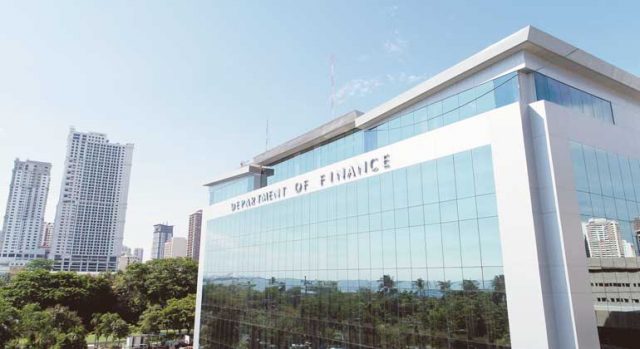
In a statement Monday, Representative Jose Ma. Clemente S. Salceda said the proposed Bayanihan to Arise as One Act, informally known as Bayanihan III, will be put together without exceeding the caps on deficit spending set by economic managers, with legislators currently in talks with the Department of Finance (DoF).

“In all likelihood, there will be a third Bayanihan measure. It will be deficit-neutral, if my work with Secretary Dominguez succeeds,” he said.

The third Bayanihan bill aims to support the economic recovery with the coronavirus disease 2019 (COVID-19) pandemic remaining uncontained. Bayanihan III follows the Bayanihan to Heal as One Act, which was signed on March 24, 2020, and the Bayanihan to Recover as One Act, which was signed on Sept. 11.

Mr. Salceda said he proposes to temporarily increase the minimum dividend to be paid by government-owned and -controlled corporations (GOCCs) to 75% from 50% via an amendment to Republic Act 7656.

“There are GOCCs that have accumulated more retained earnings over the years than they can deploy, especially now. Authorizing a distribution of excess dividends in favor of the government would allow us to mobilize sleeping money for COVID-19 response without hurting our overall fiscal standing… this is a suggestion I made to the DoF, which will then survey the full list of GOCCs for possible capital withdrawal,” he said.

Mr. Salceda added the need to immediately pass proposed measures to tax online cockfighting, known as e-Sabong, and Philippine Offshore Gaming Operators (POGOs) as these will be possible funding sources for Bayanihan III. Both proposed tax measures have gained support from the DoF.

He said with such funds, the government will be capable of funding more cash aid to households.

“The tug-o-war is between those who want ayuda (cash aid) by increasing our debt, and those who say we cannot borrow more. We need ayuda, so I mediated by providing options that will not increase our deficit, including more GOCC remittances, capital withdrawal from GOCCs, and taxes on POGOs and e-Sabong. That intervention appears to have broken the gridlock,” he said. — Gillian M. Cortez

Easing quarantine not enough to convince some businesses to open

SOME BUSINESSES are choosing to remain closed until the end of April despite the loosening of quarantine restrictions, Trade Secretary Ramon M. Lopez said.

Base sa aming mga nakakausap na mga SMEs (small- and medium-sized enterprises), lalo na sa restaurant industry, sabi nila, marami sa kanila magsasara na lang muna hanggang matapos ang Abril (Our conversations with SMEs, especially restaurants, indicate that many of them plan to stay closed until the end of April),” he told DZBB Monday.

Under rules set by the Department of Trade and Industry (DTI) and other quarantine regulators, restaurants are allowed to run some outdoor dine-in and delivery services during the modified enhanced community quarantine (MECQ) declared in Metro Manila and nearby regions until the end of the month. The areas were previously under the strictest form of lockdown, enhanced community quarantine (ECQ), for two weeks.

Under MECQ, several industries previously banned from operating can do so at 50% capacity, while those that were operating under ECQ are allowed to have full on-site capacity.

Pwede silang (restaurants) mag-operate sana ng take out, delivery. At under MECQ, allowed na sana ‘yung al fresco. Pero ‘yung al fresco, dun sa mga restaurant group na ‘yun, iilan lamang ‘yung merong capacity na may outdoor dine in. Karamihan sa kanila, nasa loob ng mall (Restaurants are allowed to offer take-out and delivery services, and under MECQ, al fresco dining is allowed. But not many restaurants can offer outdoor dining because many of them are in malls),” Mr. Lopez said.

Hindi rin sila maka-operate din kahit MECQ. Kaya sabi nila, magsasara na lang muna. At kawawa lang ‘yung mangagawa doon (Even under MECQ, operating is not viable and they’d rather stay closed. Their workers will be suffering)”

Mr. Lopez said he is hoping coronavirus disease 2019 (COVID-19) cases decline after the strict implementation of health rules and improved contact tracing so that the areas can move back to the more relaxed general community quarantine (GCQ).

“‘Pag GCQ, dun lang sila ulit pwede mag-bukas eh, which is after April, hopefully (In GCQ conditions, which I hope will come after April, that’s when many of them can open),” he said.

The Philippines on Saturday recorded its second-highest daily tally of COVID-19 cases at 12,674.

Sectors like entertainment venues, sports centers, casinos, and personal care services are still not allowed to open under MECQ. — Jenina P. Ibañez

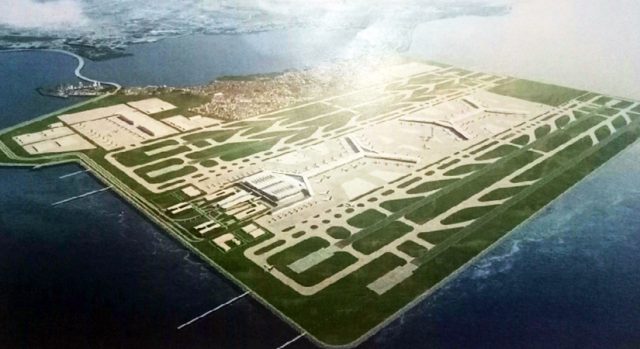
Cavite extends deadline to buy bid documents for Sangley airport plan

THE CAVITE government has extended the deadline for prospective bidders of the Sangley Point International Airport project to buy bid documents due to the quarantine restrictions imposed on the province.

“In response to written requests and in view of the recent ECQ (enhanced community quarantine) status declaration in NCR (National Capital Region) Plus including the province of Cavite, please be advised that the deadline for the registration of Candidate JV (joint venture) Partners and the purchase of the RFP (request for proposals) for the second bidding of the… project has been extended,” Renato A. Abutan, Cavite’s Public-Private Partnership-Selection Committee chairman, said in a notice published April 6.

He said the new deadline is May 14. Interested parties can register as candidate JV partners and purchase the RFP package, which includes details of the project feasibility study including the schedules and updates, the instructions to candidate JV partners, and the draft joint venture and development agreement, up to that date.

The documents were initially available between March 1 and March 30.

Interested parties should submit an intent letter, sign the non-disclosure agreement, and pay the non-refundable participation fee of P1 million or $20,000 before being given copies of the bid documents from the province, which is the implementing agency for the project.

Among the responsibilities of Cavite’s joint venture partner are to provide the necessary equity investment and debt financing.

The selected partner should also secure or perform engineering, procurement, and construction services for the land and airport development components of the 1,500-hectare project.

Cavite’s Public-Private Partnership Selection Committee Legal Officer Jesse R. Grepo recently said “two companies” have expressed interest in the project “as of March 18.”

The province is hoping to sign the joint venture and development agreement by July 1 at the earliest.

At a conference on March 18, Sol Castro, the Cavite government’s consultant for the project, said that the province will allow its future JV partner to co-own portions of commercial land that will be created by land reclamation.

But foreign ownership of land will remain restricted because the province will now require its JV partner to be 51% Filipino-owned or controlled.

“As a result of a policy decision by the province in response to the national security issues that have been raised, it is now required that the JV partner, whether it is a single entity or a consortium, is Filipino-majority owned and controlled,” Mr. Castro said.

Lucio C. Tan’s MacroAsia Corp. only had a 40% stake in the previous consortium that negotiated with the province for the airport project, while its foreign partner China Communications Construction Co. Ltd.  had a 60% stake.

Mr. Castro said that the option to co-own portions of the reclaimed land is “essential” to the project when raising debt financing. — Arjay L. Balinbin

DoE circular on energy efficiency projects out soon

THE DEPARTMENT of Energy (DoE) said that it is set to finalize this week a department circular on how energy efficiency (EE) projects will be endorsed to the Board of Investments (BoI) for fiscal incentives.

“The DoE has collaborated with other government agencies to stimulate investment through the use of energy efficient technologies in designated establishments. The culmination of our partnership with the Board of Investments will be in the finalization of the department circular on the recommendation of energy efficiency projects to the BoI… later this week,” Undersecretary Jesus Cristino P. Posadas said Monday during the Energy Efficiency Day 2021 virtual event.

Mr. Posadas delivered Energy Secretary Alfonso G. Cusi’s speech during the event, which was organized by the Philippine Energy Efficiency Alliance.

“We have seen that with any EE&C (Energy Efficiency & Conservation) Act-initiated program in other countries, the government is taking the lead by granting fiscal and non-fiscal incentives alike,” Mr. Posadas said.

The DoE has been soliciting comment on a draft circular that detailed the application process and criteria for evaluating EE projects for fiscal incentives. The draft also sought to define EE projects, and classify them based on complexity.

In the draft, qualified EE projects can avail of an income tax holiday (ITH), provided that they “meet the minimum 15% project boundary.” This boundary refers to the “percentage range of energy savings to avail of an ITH.”

On Monday, Mr. Posadas said that the BoI has “determined that a healthy ITH must be put in place to lower the cost of capital-intensive projects which are being built during a global economic slump.”

He said EE&C projects promise lower costs and reduced emissions.

“Pioneers… stand to reap greater rewards, especially in terms of immediate lower operational costs, (and) the possibility of short-term cost recovery for upgrading systems with energy efficient technology. Industry-wide participation can greatly reduce greenhouse gas emissions especially when done at a large scale,” he said.

To date, the DoE has registered 44 energy service companies (ESCOs) which have “shown their enthusiasm in promoting EE&C projects and practices across the country.” Mr. Posadas said the department expects more ESCO applications once more firms realize the potential of EE projects.

An ESCO develops, installs, and funds projects designed to improve energy efficiency, and reduce operations and maintenance costs for its customers’ facilities. — Angelica Y. Yang

Pork tariff reduction seen killing hog industry while depriving gov’t of revenue

PRESIDENT Rodrigo R. Duterte’s decision to lower the tariffs on pork imports will not only deal severe damage to the hog industry competing with the imports, but also deprive the government of much-needed revenue, Senator Panfilo M. Lacson said.

“On behalf of the hog raisers, we urgently appeal to the President to reconsider and recall such executive order (EO),” Mr. Lacson said in his opening statement during the Senate Committee of the Whole hearing Monday.

“Double-dead ang epekto ng EO 128. Bakit? Patay ang lokal na industriya ng baboy; patay din ang koleksyon ng taripa ng gobyerno, (The effect of EO 128 will be ‘double-dead.’ It not only kills the hog industry, but also the government’s tariff collections,)” he added.

He said the government will lose P3.6 billion because of the lower tariffs.

On April 7, Mr. Duterte issued EO 128, which lowered the tariffs on pork imports. Tariffs were ordered lowered for pork imports within the minimum access volume (MAV) quota to 5% for the first three months, increasing to 10% in the subsequent nine months.

Meanwhile, out-of-quota pork imports will pay 15% in the first three months. This rate rises to 20% in the succeeding nine months.

Before the EO, pork imports within the MAV quota were charged 30%, with those outside the quota paying 40%.

MAV is the scheme allowing for the import of specific volumes of agricultural commodities at lower tariffs under the World Trade Organization system.

During the Senate committee hearing Monday, Agriculture Secretary William D. Dar maintained that the pork supply faces a deficit of 388,563 metric tons (MT). He said that for the year, estimated demand is 1.60 million MT, while supply is 1.22 million MT.

“The country’s pork supply is already thin. The number of people engaged in hog raising is low and that is why we need to put up a whole-of-nation approach to solve the issues in the hog industry,” Mr. Dar said.

Asked when the lowering of tariff imports will reflect in lower retail prices of pork, Mr. Dar said the effect may be felt in 40 to 60 days.

“I understand that the entry of imported pork takes 40 to 60 days,” Mr. Dar said.

At the Senate Committee hearing, calls emerged for wider consultation on the tariff reduction after Customs Commissioner Rey Leonardo B. Guerrero said his bureau was not consulted about the decision to lower pork tariffs.

“Hindi po dumaan sa amin ang recommendation to lower pork tariffs, (The recommendation to lower pork tariffs did not go through us,)” Mr. Guerrero said.

Senator Francis N. Pangilinan said the Bureau of Customs should have been consulted since the lowering of pork tariffs will affect government revenue.

“This begs the question that one of the largest revenue generating government agencies not being consulted in a matter of reducing our revenue. That is a policy question. It is very basic that every time we decide to reduce revenue, there should be consultation,” Mr. Pangilinan said.

Mr. Duterte recommended that Congress increase the MAV allocation to 350,000 MT, which will be added to the current 54,210 MT, in order to expand the pork supply.

During the hearing, Bureau of Animal Industry Director Reildrin G. Morales also disclosed that the retail price of imported pork belly (liempo) with the 5% tariff rate will be P275 per kilogram, rising to P295 when charged the 15% tariff. Both will be cheaper than the P350 per kilogram price resulting from 40% tariffs.

Mr. Dar said on April 7 that there will be no extension in the effectivity of EO 124, which placed price caps on pork and chicken products. Regulators will instead set a suggested retail price (SRP) for imported pork.

Mr. Dar said the SRP for imported pork shoulder (kasim) will be P270 per kilogram, while that for pork liempo is at P350 per kilogram.

EO 124 had capped the price of kasim at P270 per kilogram, liempo at P300 per kilogram, and whole chicken at P160 per kilogram. — Revin Mikhael D. Ochave

Foreign loan availments to fund pandemic measures hit $15.5 billion

WWW.DOF.GOV.PH

FOREIGN LOANS availed of by the government to finance its pandemic containment rose to $15.493 billion as of April 8, mainly due to external debt taken on for the mass vaccination program, the Finance department said.

Based on the update issued Monday, total loans incurred as a result of the coronavirus disease 2019 (COVID-19) increased from the $14.29 billion tally on March 17, with the inclusion of some $1.2 billion in new loans to procure vaccines.

The three new loans are $500 million from the World Bank and $400 million from the Asian Development Bank which were signed on March 19, and $300 million from the Asian Infrastructure Investment Bank, which was signed on March 26.

The government tapped multilateral banks to plug the funding gap for its mass vaccination program worth P72.5 billion, to vaccinate 70 million citizens by year’s end.

Under the loan agreements, the banks will directly pay vaccine manufacturers and assist in the delivery of the shipments. The government will have to shoulder transportation and other administrative costs in distributing the vaccines and the inoculation program.

The government has been tapping the global debt markets to support its pandemic response, including vaccination, testing capacity, health system upgrades, and cash aid to low-income families and the worst-hit industries.

It is planning to raise P3 trillion this year from domestic and external lenders to help fund its budget deficit, which is expected to hit 8.9% of gross domestic product.

Official estimates indicate that the government’s debt stock will rise further to P11.98 trillion by the end of 2021. — Beatrice M. Laforga

Economy expected to contract again in second quarter after new lockdown

PHILIPPINE STAR/ MICHAEL VARCAS

THE ECONOMY is expected to post another contraction of minus 1.5% in the second quarter after the reimposition of the strictest lockdown settings, threatening the likely gains from the first three months of the year, Pantheon Macroeconomics said.

In a note issued Monday, Miguel Chanco, the independent research house’s senior Asia economist, said Pantheon increased its gross domestic product (GDP) forecast for the first quarter to growth of 2.2% from 1% previously due to an uptick in household spending.

If realized, the upgraded growth forecast would represent a rebound of sorts from the minus 8.3% growth posted in the fourth quarter.

Mr. Chanco said new lockdown at the start of the second quarter will likely dampen private consumption once more, supporting Pantheon’s view of an inevitable “double-dip” in GDP, in which the economy resumes contracting after a short-lived recovery.

Pantheon Macroeconomics expects the second quarter contraction to be driven by an estimated 7% contraction in private consumption during the quarter.

“The likely strong hit from the rapidly escalating second wave of COVID-19 implies that the recovery in household spending may need to start from square one,” Mr. Chanco said.

Mr. Chamco said the expected rise in household spending was supported by recovery in imports.

Merchandise imports grew 2.7% to $7.6 billion in February, bouncing back from the 12% decline the month before.

Pantheon expects goods imports to have risen by 7.4% in the first quarter against the previous three months, accelerating from the 4.2% gain in the fourth quarter.

He said there might have been a “rapid evaporation of pent-up demand” in household spending, which accounts for 70% of the broader economy, after it bounced back in the third quarter, though the rebound gradually lost momentum.

“A number of factors have weighed on households since the recovery began, including a marked acceleration in inflation, a stagnating labor market, and the massive drawdown in savings last year,” he said.

The Philippine Statistics Authority will report first quarter GDP print on May 11.

The government is targeting 6.5-7.5% growth this year to bounce back from the record 9.6% contraction in 2020.

The Development and Budget Coordination Committee is scheduled to meet this month to review macroeconomic assumptions after the recent spike in coronavirus cases and the renewed lockdowns.

The lockdown restrictions in Metro Manila, Bulacan, Cavite, Laguna and Rizal were eased on Sunday but stay-at-home orders and curfews remain, while operations of businesses are still limited.

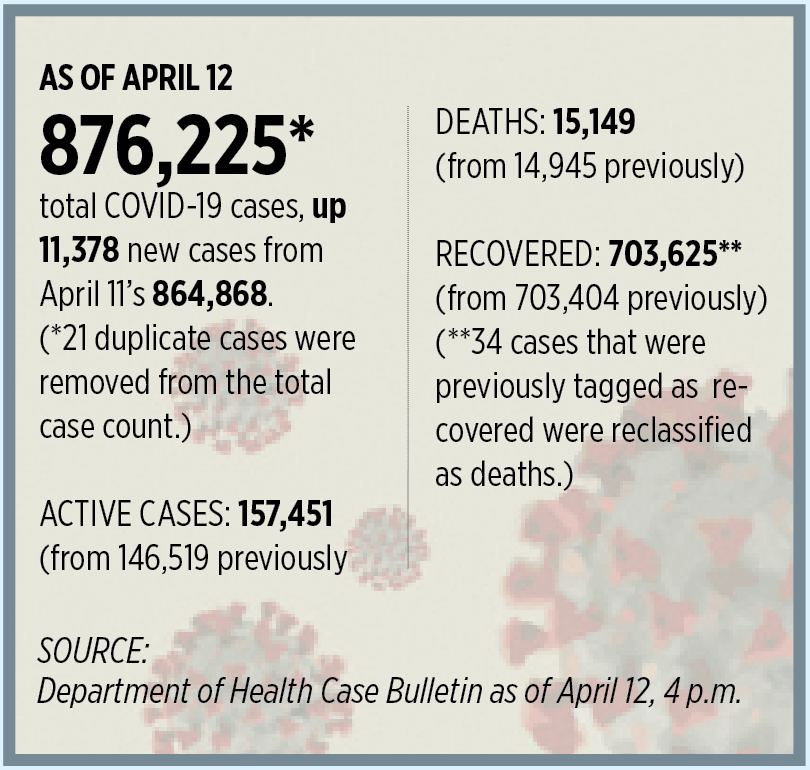
On Monday, the Health department reported 11,378 new infections to bring the total count to 876,225. Deaths overall hit 15,149 after 204 new deaths were recorded that day.

“For now, our base case is that a meaningful relaxation of curbs is unlikely to take place until May, at the earliest,” Mr. Chanco said. — Beatrice M. Laforga

DoLE tallies more than 15,000 Metro Manila workers displaced by new lockdown

PHILSTAR

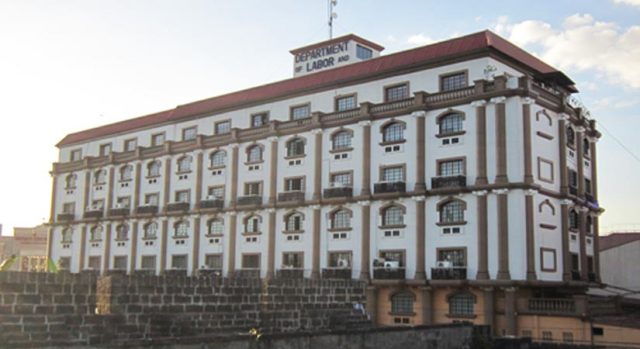
THE LABOR department said Monday that it recorded over 15,000 displaced workers in Metro Manila since March 22, including those who were retrenched during the reimposition of the strictest lockdown settings in the weeks leading up to April 11.

According to the Jobs Displacement Monitoring report issued Monday, the Department of Labor and Employment (DoLE) said 15,246 workers from the capital region were displaced between March 22 and April 11.

Over 700 were displaced because of retrenchment or reduction of workers while 69 were laid off due to permanent closures.

Due to the surge of coronavirus disease 2019 (COVID-19) cases, a week-long enhanced community quarantine was reimposed in Metro Manila, Bulacan, Cavite, Laguna, and Rizal beginning March 29 until April 4, which was extended to April 11. A modified enhanced community quarantine is currently in effect in these areas.

The Metro Manila total accounts for the bulk of the 26,114 workers displaced between March 22 and April 11, representing 1,567 establishments.

Around 89% of these workers were retrenched because of manpower reduction by their employers while the remaining 11% or over 3,000 lost their jobs because of companies closing shop.

Region III (Central Luzon) logged 2,947 worker displacements followed by Region VII (Central Visayas) with 1,905 and Region IV-A (Calabarzon) with 1,880.

Cavite, Laguna, and Rizal are located in Calabarzon while Bulacan is in Central Luzon.

Last week, DoLE said around 8,000 workers were displaced during the first few days of the ECQ, between March 29 and 31. — Gillian M. Cortez

Tax treaty application: What’s new and what has not been retained?

On March 31, 2021, the Bureau of Internal Revenue (BIR) issued Revenue Memorandum Order (RMO) 14-2021 which outlines the new procedures for availing of relief from double taxation under relevant tax treaties on all items of income derived by nonresident taxpayers from Philippine sources.

Under the RMO, these revised guidelines take effect immediately and will supersede guidelines issued in 2017 (RMO 8-2017), 2010 (RMO 72-2010), and 2002 (RMO 20-2001).

WHAT’S NEW?
In keeping with the government’s goal of improving efficiency and service to taxpayers, RMO 14-2021 provides that the withholding agent may rely on the submitted BIR Form No. 0901, the Tax Residency Certificate (TRC), and the relevant provisions of the applicable treaty to assess whether to apply a reduced rate or an exemption from withholding taxes. Therefore, it is important for nonresident taxpayers intending to avail of tax treaty benefits to submit the documents to each withholding agent prior to payment of income for the first time.

Failure of the taxpayer to provide the documents when requested may lead to withholding of taxes using the regular rates prescribed under the Tax Code, as amended, and not treaty rates for nonresident foreign corporations or nonresident aliens not engaged in trade or business, as the case may be.

WHAT TO FILE?
The withholding agent shall file a request for confirmation when it applies the treaty rates on the income earned by the nonresident taxpayer. On the other hand, the taxpayer shall file a Tax Treaty Relief Application or TTRA when the regular rates have been imposed by the withholding agent.

The RMO prescribes the revised general and specific documentary requirements for each type of income. All documents executed in a foreign country, to be acceptable in the Philippines, must either be authenticated by the Philippine Embassy there or apostilled if the foreign country is a signatory to the Convention Abolishing the Requirement of Legalisation for Foreign Public Documents.

Generally, one TTRA or request for confirmation must be filed for each transaction except for long-term contracts (e.g., contracts for services or loan agreements, license agreements, etc.) i.e., those which are effective for more than a year, where an annual updating must be made until the termination of the contract.

To ensure that the proper rate is applied until the end of the contract, the nonresident taxpayer must file an updated Application Form, a new TRC (if the validity period of the previously submitted TRC has already lapsed), and other relevant documents not later than the last day of the fourth month following the close of each taxable year.

WHERE TO FILE?
Each request for confirmation and TTRA is to be filed with the International Tax Affairs Division (ITAD) and supported by documentary requirements. Submission to any other BIR Office is considered improperly filed.

WHAT HAS BEEN RETAINED?
The submission of Certificate of Residence Treaty Relief (CORTT) form that is applicable to dividends, interest, and royalties is discontinued. However, previously submitted CORTT Forms must still be forwarded to the Revenue District Office (RDO) for compliance checking.

WHEN TO FILE?
The request for confirmation is to be filed by the withholding agent at any time after the payment of withholding tax but not later than the last day of the four-month period following the close of each taxable year.

Failure to file a request for confirmation within the prescribed period risks penalties while failure to supply correct and accurate information is punishable with the crime of perjury and with other appropriate crimes or offenses as may be warranted, in addition to the payment of deficiency taxes.

On the other hand, the filing of TTRA may be filed by the nonresident at any time after receipt of income to prove its entitlement to treaty benefits.

MANNER OF GRANTING AND DENYING TREATY BENEFITS
New TTRAs must be processed within four months from the submission of complete documents or as soon as practicable provided that the ITAD has addressed all its backlogs.

If the BIR determines that the withholding tax rate applied is lower than the rate that should have been applied on an item of income pursuant to tax treaties or that the nonresident taxpayer is not entitled to tax treaty benefits, the BIR will issue a ruling denying the request for confirmation or TTRA. Consequently, the withholding agent is to pay the deficiency tax plus penalties.

All adverse rulings, however, can be appealed to the Department of Finance (DoF) within 30 days from receipt.

On the contrary, if the withholding tax rate applied is proper or higher than the rate that should have been applied, the BIR will issue a certificate duly signed by the Assistant Commissioner for Legal Service confirming the nonresident income recipient’s entitlement to treaty benefits. In the case of higher rate, the taxpayer may apply for a refund of excess withholding tax within the two-year prescriptive period.

HOW TO FILE A CLAIM FOR REFUND?
The nonresident taxpayer claiming refund must accomplish and file BIR Form 1913 together with a letter-request. The claim can be filed independently or simultaneously with the TTRA. For an independently filed claim, the office where it was filed is to coordinate with and refer to ITAD the resolution of the nonresident’s entitlement to treaty benefits. However, for claims simultaneously filed with the TTRA, it is the responsibility of the ITAD to endorse such claims for refund to the proper office handling tax refunds. Nonetheless, all claims for refund must be filed within the two-year prescriptive period.

STATUS OF EXISTING TTRAS
Taxpayers with pending TTRAs for income earned in 2020 and prior years, including those with Notice of Archiving, are given three months from the receipt of a Final Notice to Submit Additional Documents (Final Notice), or from the effectivity of the Order, whichever is later, to submit needed documents. Taxpayers who were issued a Notice of Archiving will no longer receive a Final Notice. Failure to submit the requested documents will result in the automatic denial of the TTRA.

CLINCHER
Notwithstanding efforts of the BIR to streamline processes, taxpayers may still find the documentation requirements for tax treaty relief application tedious. While the BIR has acknowledged the slow disposition of TTRAs because of the volume of backlogs, the limited number of personnel who are responsible for evaluating and processing TTRAs, and the need for a thorough study and evaluation of facts, taxpayers and foreign investors are hopeful that the revised guidelines will, in the long term, help promote ease of doing business in the Philippines.

Let’s Talk Tax is a weekly newspaper column of P&A Grant Thornton that aims to keep the public informed of various developments in taxation. This article is not intended to be a substitute for competent professional advice.


Grace L. Turqueza is an associate from the Tax Advisory & Compliance division of P&A Grant Thornton, the Philippine member firm of Grant Thornton International Ltd.

pagrantthornton@ph.gt.com

Owning up to policy failure: Why does it matter?

MINDANDI-FREEPIK

The Philippines, on Easter Sunday, reported an additional 11,028 new COVID-19 infections, and a high positivity rate of more than 20%. This, after a year of being under various forms of “lockdown,” one of the longest sustained community quarantines in the world. It is not surprising therefore, that dissatisfaction over how the government has handled the pandemic is growing. In fact, many have claimed that the policy of handling the pandemic in the country has failed.

What do we mean by failure?

Understanding policy failure is not as straightforward as one might think. Public policies are complex and so are the factors that affect their implementation — which serve as lampposts to whether it is considered a success or failure. In the classic book Why policies succeed or fail, written by Ingam and Mann in 1980, they cite several reasons why a policy is considered a failure — such as the incompleteness of information at the time a decision was made, the changing circumstances across the time in which the policy is implemented, and the inability to think of the interconnectedness of policies (and therefore, designing something that is narrow and short-sighted).

And then there are failures that are brought about by factors that are structural — such as when the causal theory (i.e., what causes “Y”) upon which policies are based is not sound, and when political institutions break down.

The former refers to the extent upon which policymakers consider and use accurate and reliable evidence to inform their decisions. The latter, on the other hand, is the magnitude by which political power has taken hostage the way policies are made. In both situations, policy failures are not just the result of the limitation of information, technology, or even cognition; but it is a product of our ailing political institutions and systems which affect our political processes including policymaking.

FAILURE IN A TIME OF CRISIS
Another important dimension in understanding policy failure is the notion of policymaking in a time of crisis. In a comparative case study of policy making, Grindle and Thomas wrote in 1991 that during such situations, policy decisions of governments in a less stable political environment are often swayed by external pressures. Particularly, decisions are based on how it can maintain regime legitimacy and, at the same time, continue accessing much needed international support such as loans. These are deemed more essential than technical and bureaucratic considerations of the policy.

If we extend this analysis to our current situation, it makes sense that our policies concerning the containment of the pandemic were those that tend to increase the symbolic representation of government being in control as well as favoring certain international relations in the hope of gaining much needed vaccines. When policy goals are muddled with political ones, it is therefore expected that the policy chain become weak and disorganized, making street-level bureaucrats — the frontliners among policy implementers — either more confused because the goals are not clear, or more “powerful” because unclear goals have inadvertently given them the discretion to take matters into their own hands.

FAILURE AS A LEARNING OPPORTUNITY
The profound impact of policy failures on the lives of ordinary Filipinos cannot be encapsulated in statistics and numbers. Behind every survivor and victim of the COVID-19 virus is a complex and often heartbreaking narrative. Not to mention the unintended consequences of the pandemic such as the impact the lockdown will have on an entire generation of children whose education has been altered significantly.

There is no policy that is perfect; therefore, they do indeed fail. But for failure to matter, it should be seen as a learning opportunity. All policy failures should induce policy change through a learning process — we often call this “reform.” Chris Agyris’ work on Organizational Learning is useful at this point.

Like human beings, an organization can learn, too and it does so in two ways.

First, in knowing what does not work, it is able to make the necessary adjustments and improve the policy tool (i.e., single loop learning). An example of this would be the development of a real-time unified data system that can direct patients of the nearest vacant COVID-19 facility that can care for them based on their current condition or symptoms. This kind of learning aims to address the failures brought about by the current decentralized and disconnected network of information about the holding capacities of our health facilities — something very important to patients to have access to at the onset of sickness.

Second, an organization can also learn from failure by rethinking the fundamental assumptions and values that support the logic of the policy (i.e., double loop learning). The policy of hard lockdown, for example, is hinged on the assumption that preventing people from moving too much can control the spread of infection. But this ignores new evidence that suggests infection within households has not been properly accounted — something that should’ve been done at the onset of the pandemic. Therefore the rise in infection cases a year after lockdown should have been expected given that we have not focused on how many are infected and where exactly do these infections occur. Hence, mass testing seems to be the more logical way moving forward, which is a more public health and epidemiological approach, rather than the deployment of heavily armed military men at the boundary of the NCR+ bubble.

WHY ADMITTING TO FAILURE IS IMPORTANT
Perhaps the hesitancy in admitting that policies fail is because of the fact that in doing so, leadership must take the blame. Indeed, when the regime’s legitimacy has always been challenged, the most rational decision will be one that is politically feasible rather than what is scientifically sound.

In schools, we teach our students to embrace failure as this is the greatest of teachers. In life, leadership is not about being right all the time, but it is about learning from one’s mistakes. The point is that unless policymakers acknowledge that there is indeed policy failure, learning cannot take place.

And the soonest they do this, the better. It takes both courage and humility to accept failure, most especially if one’s reputation as a politician and policymaker is at stake.

In the end, a crisis brings out the best and worse in both people and government. The quality of decisions being made are narratives of the ailments of our political institutions and processes. It is, therefore, part of our collective duty as citizens in a democracy to speak about policy failure. Because it is only through the storytelling of failure can the learning process of people, organizations, and institutions begin.


Anne Lan K. Candelaria, Ph.D. is the Associate Dean for Graduate Programs of Ateneo de Manila University’s Loyola Schools. She is also an Assistant Professor at the Department of Political Science.

Ill or inutile?

PCOO.GOV.PH

President Rodrigo Duterte did not hold his regular “Talk to the People” address last week.

His spokesperson Harry Roque said last Wednesday that the President’s address was re-scheduled “in light of the rising number of active COVID-19 cases.”

“The physical safety of the President remains our utmost concern. In addition, the preparation for the ‘Talk to the People’ address entails a number of staff complement and we also take due consideration of their well-being,” Roque explained.

In a separate statement, Senator Bong Go said the President’s engagement last week was postponed because several members of the Presidential Security Group (PSG) caught the coronavirus. PSG Head Brig. Gen. Jesus Durante III admitted in a radio interview that there were 45 active COVID-19 cases among his men.

The explanations offered by spokesman Roque and Senator/Personal Aide Go for the President’s failure to address the people last week raised several questions. How can the rising number of active COVID-19 cases threaten the physical safety of the President and of the staff complement that sets up the regular “Talk to the People” address when they are a safe distance from the people the President addresses?

And so what if 45 PSG men caught the coronavirus? As Gen. Durante clarified, most of the infected PSG personnel were those who manned Malacañang gates, not the President’s close-in security detail.

It should also be recalled that in a public address in late December, President Duterte said, “Almost all soldiers have been inoculated. The reason why is that they have to be in good health all the time because they are responsible for the law and order of this country.” Is the vaccine, which the President said was donated by China, administered to the PSG personnel not that efficacious that as many as 45 of them tested positive for COVID-19?

The apparent irrelevance of the explanations offered for the President’s absence from public view by his loyal deputies gave rise to the rumors that he is seriously ill. He was last seen by the public on March 29, when he met with the Inter-Agency Task Force for the Management of Emerging Infectious Diseases (IATF). Among those who attended the meeting was Defense Secretary Delfin Lorenzana, who revealed on April 6 that he tested positive for COVID-19.

People speculate that Secretary Lorenzana could have transmitted the virus to the President. The speculation gained strength when the President’s daughter Sara flew to Singapore, supposedly for personal health management. Management of her own health or management of her father’s medical treatment, people ask? It should be noted that former Senator Bongbong Marcos sought medical care in Singapore when he contracted COVID-19.

But last Thursday, Mr. Roque assured the public that the President remains “fit and healthy” and he continues to discharge his functions as head of the government. Gen. Durante asserted that the President is free from any flu-like symptoms and is in Malacañang working. Mr. Go shared photos of the President seated at a table cluttered with files of documents and newspapers of that day as proof of life. He said, “To those wishing ill of the President, don’t celebrate yet. He is here, inundated with work.” However, netizens immediately reacted by demonstrating on social media how easy it is with the available technology to superimpose elements on a photo without the alteration being discernible.

Granting that the photo presented by Mr. Go as proof of life is authentic, people ask: why is the President alone with Mr. Go when he is supposed to be continuing to discharge his function as head of government? The government is confronted with two crises: the pandemic and the growing aggression of China.

If he is working out a solution to the pandemic, should he not be working with the IATF? If he is addressing the problem of Chinese aggression, should he not be formulating strategy with Foreign Secretary Teddy Boy Locsin, Defense Secretary Lorenzana, and National Security Adviser Hermogenes Esperon, Jr. at least, if not with Armed Forces Chief-of-Staff Cirilito Sobejana, and Chief of the Navy Giovanni Bacordo?

Or, as former Senator Antonio Trillanes IV claimed, the President is not sick, he is just lazy. Last Saturday, Mr. Go, who seems to have also taken the role of Presidential Photographer, posted a video showing the President jogging at night, apparently in Malacañang Park, as proof that the president is fit and not sick.

Some people think that the President has finally come to the realization that he is inutile when it comes to the two issues — the pandemic and foreign policy — and decided to leave the resolution of the issues to his subordinates while he enjoys to the hilt the perks of the presidency.


Oscar P. Lagman, Jr. is a retired corporate executive, business consultant, and management professor. He has been a politicized citizen since his college days in the late 1950s.

ADVERTISEMENT
ADVERTISEMENT