Home Blog Page 8219

SMC to begin Pasig River cleanup in May

Pasig river — PHILSTAR

SAN MIGUEL Corp. (SMC) said on Tuesday that it will begin cleanup operations of Pasig River next month, with a target of extracting 600,000 metric tons (MT) of waste per year. “This is a very important environmental effort, and we want to do it right. Cleaning up the Pasig River has been a dream for many Filipinos, even our older generations, so we want to make sure our plan is strategic and effective. While we will use science and utilize modern technology, this project can only succeed with the cooperation of all stakeholders,” SMC President Ramon S. Ang said in a news release. A survey of the river’s topography and characteristics has been completed and more intensive studies are underway, the firm said. The cleanup is part of SMC’s P95-billion Pasig River Expressway, an elevated toll road along the river banks that will connect the east and west sides of Metro Manila. The project aims to decongest traffic in Rizal, Cainta and Marikina. Cleanup operations will be jointly undertaken by SMC with the Department of Environment and Natural Resources and the Department of Public Works and Highways. — Angelica Y. Yang

Crop damage from typhoon Bising initially estimated at P46 million

CARGO trucks, totaling 302 and covering a four-kilometer stretch of the highway, that were stranded for a couple of days due to typhoon Bising started moving on April 20 as roll-on roll-off vessels resumed operations at the Matnog Port in Sorsogon. — @COASTGUARDPH

AGRICULTURAL damage caused by the onslaught of typhoon Bising is initially estimated at P45.93 million, the Department of Agriculture (DA) reported. In a bulletin on Tuesday afternoon, the department said 3,009 metric tons (MT) worth of production was lost with 765 farmers affected in the Bicol and Eastern Visayas Regions. “Affected commodities include rice, corn, assorted vegetables and fruits, and livestock. These values are still subject to validation,” the DA said. Corn recorded the biggest loss at 2,548 MT worth P35.08 million across 971 hectares of farmland. Damaged rice reached 461 MT equivalent to P8.37 million, while high value crops were worth P2.46 million and livestock at P15,300. On the other hand, 59,543 MT of rice worth P1.08 billion were harvested following early warnings. For corn, 1,411 MT valued at P18.20 million were also saved. The DA said assistance available to affected farmers include 18,478 bags of rice seeds, 12,530 bags of corn seeds, and assorted vegetable seeds; drugs and biologics for livestock; farmer indemnification; and loans from the Agricultural Credit Policy Council. Typhoon Bising, (international name: Surigae), entered the Philippine area Friday and has been traversing along the eastern Visayas and Luzon parts of the country. As of 5 p.m. Tuesday, weather bureau PAGASA said Bising was maintaining its strength with maximum sustained winds of 175 kilometers per hour (km/h) near the center and gustiness of up to 215 km/h. It was located 475 kms east of Baler, Aurora and moving slowly in a northwest direction. Heavy rains and strong winds were expected in the parts of Aurora, Cagayan, and Isabela which were under storm signal #2. Signal #1, the lowest in a five-level warning system, was up in Batanes, parts of Cagayan and Isabela, Quirino, provinces in the Cordillera Region, parts of Nueva Vizcaya, Aurora, Quezon, Camariñes Norte, and Camariñes Sur. — Revin Mikhael D. Ochave

MVP Group sets up Antipolo quarantine facility for employees

AN EMERGENCY quarantine facility in Antipolo, Rizal has been set up for employees of companies led by businessman Manuel V. Pangilinan (MVP), PLDT, Inc. announced on Tuesday.

The facility was set up to “help care for employees with asymptomatic to mild cases of COVID-19 (coronavirus disease 2019),” PLDT said in an e-mailed statement.

“Select areas within the 10-hectare space of the First Pacific Leadership Academy (FPLA) have been repurposed into makeshift rooms, augmenting FPLA’s existing hotel facilities currently being used to isolate employee-patients,” it added.

The facility houses 240 individual air-conditioned tents and beds.

“Doctors and nurses to be housed in FPLA will work on 8-hour shifts 24/7… Meals, medical supplies, and phone and data connectivity will all be provided. Employees who test positive for COVID-19 will be given Quarantine Leave, separate from standard Sick Leave credits,” it added.

Hastings Holdings, Inc., a unit of PLDT Beneficial Trust Fund subsidiary MediaQuest Holdings, Inc., has a majority stake in BusinessWorld through the Philippine Star Group, which it controls. — Arjay L. Balinbin

36 illegal aliens, mostly Koreans, arrested in Pasay

PHILSTAR

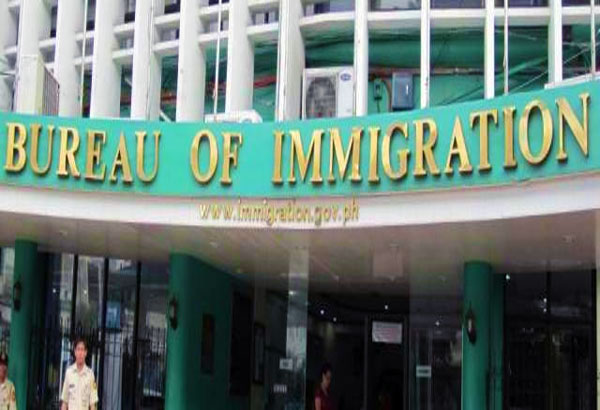
THE BUREAU of Immigration (BI) arrested on Monday 36 foreigners, mostly Koreans, who were illegally staying in the country and involved in illegal online gaming operations. In a press release on Tuesday, Immigration Intelligence Chief Fortunato S. Manahan, Jr. said operations based at the Double Dragon Plaza Tower 3 in Pasay City was discovered to be engaged in illegal live studio gambling.  Of those arrested, 32 are Koreans, two Chinese, and two Indonesians. “Apart from the live studio, they were also conducting illegal and clandestine online gaming operations,” Mr. Manahan said. Immigration Commissioner Jaime H. Morente said they have confirmed from the Philippine Amusement and Gaming Corporation “that this company is unlicensed and has no authority to operate.” The illegal aliens will be subject to deportation proceedings. — Bianca Angelica D. Añago

OFWs: Smugglers of faith and joy

FREEPIK

(Last of three parts)

The multinational bank Morgan Stanley issued a most optimistic forecast for the remittances that Overseas Filipino Workers (OFWs) will send to the Philippines in 2021. As the whole Philippine economy still struggles under the weight of lockdowns and delayed availability of the vaccines against COVID-19, once again Filipinos overseas are expected to deliver the goods by propping up domestic expenditures through an increase in their remittances by an above-average growth of as high 7%. Over the last 10 years, these remittances, which account for as much as 10% of our GDP, have grown by an average of 3% to 5% annually. After the world recovers from the pandemic, I expect that growth rate to accelerate to 5% to 8% annually in the next five to 10 years. My reason for optimism is that the pandemic has highlighted the great need of the developed world for our migrant workers, especially in the sectors of health and wellness and in the care of the aged.

During the pandemic, dozens of articles appeared in the international press about “the severe cost of the world’s baby bust.” In an opinion piece by Jeremy Grantham with the aforementioned title (Financial Times, March 13) we read the following warnings: “We are in a global baby bust of unprecedented proportions. It is far from over and its implications are gravely underestimated… The worldwide fertility rate has already dropped more than 50% in the past 50 years, from 5.1 births per woman in 1964 to 2.4 in 2018, according to the World Bank. In 2020, the 20% shortfall below replacement rate in US fertility, together with low net immigration, produced the lowest population growth on record of 0.35%, below even the flu pandemic in 1918. … Many countries, including Italy, South Korea and Japan, are predicted to see their populations drop by more than half by the end of this century… The coronavirus pandemic is also having a profound incremental impact, with provisional fertility declines of 5 to 15% in most developed countries. South Korea recently reported a 2020 fertility rate of 0.84, the lowest rate ever recorded for a major economy.”

This demographic crisis besetting practically all the developed countries in the world means tremendous pressures on pension programs and social security systems because of the related ageing problem. It also means shrinking domestic markets. For a country like the Philippines that is still enjoying a demographic dividend (half of our population are less than 24 years old), it opens up great opportunities for our unemployed and underemployed workers to supplement the labor forces of these richer countries, especially in those sectors requiring personal services that were most challenged by shortages during the pandemic, i.e., health, wellness, caregiving and domestic services in which Filipino workers have a distinct competitive advantage over other nationalities. It is important for both our Government and the private sector to discern and exploit these opportunities both over the short run (the next two to three years) and in the long run (over the next decade or so).

In an article that will be part of a book that will soon be published, Dr. Bett Esposo Ramirez, a top researcher on OFWs at the University of Asia and the Pacific, asked the question “What jobs await OFWs after the pandemic?” To answer the question, she first examined data on the pre-pandemic placements of OFWs provided by the Philippine Overseas Employment Administration (POEA). The statistics show that before the pandemic, land-based OFWs were mostly in elementary occupations — jobs with simple and routine tasks requiring the use of hand-held tools and physical effort. There was an increase in the top skills in which Household Service Works (HSW) increased by 7.51% annually, Nursing Professionals by 17.96%, while manufacturing laborers decreased by 10.76%. Over the last 10 years or so, the majority of our OFWs were in work that required them to be with people, such as care for the elderly, the sick and children; babysitting; selling goods in streets and public places; serving customers in restaurants or cruise ships. Many others performed tasks that are essential to daily living such as cleaning, washing, and care of apartment houses, hotels, offices, and other buildings.

Will there be a significant change in demand for our OFWs after the pandemic? Dr. Ramirez provides some clues by examining the case of Japan, the large nation with the oldest population in the world with one-third of its citizens already over the age of 65, and a large number of them living up to 100. By 2030, the country’s workforce is expected to fall by 8 million, leading to a serious labor shortage. Even before the outbreak of the pandemic, the Japanese government already identified 14 labor sectors needing low-skilled workers in the next five years. Legislation to this effect was approved by Prime Minister Shinzo Abe. The list includes nursing care and the cleaning of buildings; agriculture; fishing industry; food and beverage manufacturing; seafood processing; construction; ship building; marine industry; car maintenance; airport ground handling; aircraft maintenance; lodging and hospitality.

Such a list could apply to practically all developed countries suffering from similar labor shortages such as France, Italy, Spain, and Germany in Europe and Hong Kong, Macau, Taiwan, and South Korea in Asia. These are the countries we should be especially targeting for our OFWs. In the next two to three years, we should be very proactive in mobilizing our three sectors — Government, business, and the academe — to help retool, upskill and reskill our huge labor force in these and other sectors so that Filipino workers will be on top of the list of those who will be considered by these developed countries for possible short or long-term employment in their respective sectors that will suffer most from labor shortages. We should begin with the more than a million Returning Overseas Filipinos (ROFs) who have survived the pandemic and are healthy enough to return to their former places of work or to other countries in need of their services. They and other aspiring OFWs can be given short courses in the various languages of the countries where they plan to apply for work. To serve as a guide in determining which host countries should be especially targeted, in 2019 of the total remittances of $32.80 billion sent by OFWs, the US accounted for $11.10; Hong Kong (China), $5.36 billion; United Arab Emirates, $4.10 billion; Saudi Arabia, $4.10 billion; South Korea, $2.48 billion; Canada, $2.4 billion and Japan, $1.17 billion.

Already some enterprising work placement firms are importing German, Japanese, and other foreign language instructors to give crash courses to nurses and other health workers in the different languages of the countries that are most affected by labor shortages because of the demographic crisis. We have a large pool of unemployed and underemployed people in our labor force (approximately 13 million) who, in the short run, can be equipped with the low-level and middle-level skills identified by the Japanese Government to address their labor shortage. This means giving the highest priority to the types of educational and skills training programs that are under the purview of the Technical and Skills Development Authority (TESDA). Industry associations, in tandem with educational institutions, can also organize these training programs. The Philippine Business for Education (PBEd) is taking the lead in these initiatives.

A longer-term challenge we have to face is the ongoing educational crisis characterized by the very low quality of education our children and youth are getting in our schools, as evidenced by the very low rating they get in international tests in reading comprehension and numeracy. Our students obtain the lowest scores in the Indo-Pacific region. If we do not meet this challenge, our country is sure to be caught in what is known as the Middle Income Trap which will prevent us from ever graduating to First World status, like many countries in Latin America. This serious educational crisis has been worsened during the pandemic when some 2.7 million students had to drop out of school, when millions of children are suffering even more from malnutrition and undernutrition (damaging their brains permanently) and when those who are enrolled are having serious difficulties adjusting to online learning made necessary by the pandemic because of lack of digital tools and services. This is an issue I will address in a future series of articles.


Bernardo M. Villegas has a Ph.D. in Economics from Harvard, is Professor Emeritus at the University of Asia and the Pacific, and a Visiting Professor at the IESE Business School in Barcelona, Spain. He was a member of the 1986 Constitutional Commission.

bernardo.villegas@uap.asia

Defending maritime commons with stronger alliances

March 7 marked yet another day of China’s many incursions in the West Philippine Sea, when more than 200 Chinese vessels were found anchored and lined up along the Julian Felipe Reef that is part of the Philippine exclusive economic zone (EEZ).

Efforts from the Philippine government to address this issue included the filing of diplomatic protests as well as transmitting formal communications with the Chinese Embassy in Manila. However, despite these efforts, the vessels maintained their visibility in the area while there were reports of similar vessels found scattered within the wider vicinity of the West Philippine Sea. Another diplomatic protest was filed after the National Task Force for the West Philippine Sea (NTF-WPS) confirmed the lingering presence of at least 240 Chinese Maritime Militia ships in different maritime features in the West Philippine Sea despite repeated and strongly worded calls and protests from both the Department of National Defense and the Department of Foreign Affairs (DFA). The DFA also summoned the Chinese Ambassador to the Philippines, Huang Xilian, to reiterate its demand that China withdraw all of its vessels from the Julian Felipe Reef and other maritime zones of the Philippines.

And while security and foreign policy experts strongly urge the current administration to stop its appeasement policy on China, President Rodrigo Duterte has consistently maintained his silence about China’s incursions.

In a recent virtual town hall discussion organized by the Stratbase ADR Institute under its Foreign Policy Forum, leading security experts discussed and shared their thoughts about China’s actions in the West Philippine Sea and the importance of maintaining a maritime rules-based order. During the discussion, Retired Senior Associate Justice Antonio Carpio said that China’s continued aggression in the West Philippine Sea violates not only the United Nations Convention on the Law of the Sea (UNCLOS) but also the UN Charter. If the Philippines continues to downplay these issues, Carpio said that these actions could lead to the collapse of UNCLOS and the start of a maritime order that is shaped by naval guns and the entrenchment of the “might is right” concept.

Liz Derr, CEO and Founder of Simularity, also presented a very striking report on the unoccupied islands and features in the South China Sea within the Philippine EEC. She pressed on the need for the country to find measures and way to be able to create some physical presence “which will prevent foreign countries from occupying more Spratly features and help protect the livelihood and rights of Filipino fishermen to utilize resources within Philippine EEZ.”

It should be noted that China was able to have de facto control over some areas in the South China Sea because of its deliberate reclamation activities as well as sustained presence. Given that removing China’s presence is unlikely, Derr suggested that the most viable option for the Philippines is to claim what is there as stated in the 2016 arbitral ruling.

Additionally, Dr. Chester Cabalza, President of the International and Security Cooperation, emphasized the need for a whole-of-alliance approach to pressure China to align its behavior on a rules-based maritime order and prevent it from exercising its unrestricted aggression and gray zone operations. Through this approach as well, the Philippines may fill in the inherent gaps in terms of limited resources, capacity building and development, and following Derr’s approach, possibly officially marking Philippine territory with physical structures.

This is also a timely opportunity for the Philippines given the convergence of the international community towards the Indo-Pacific. While the “Asian Century” has come, so have the major shifting tides of geopolitics. With China’s rise as a major power, it has become a major disruptor to established and rules-based maritime processes and norms.

The challenge for states like the Philippines is to identify their role in the grander scheme of things by unifying with key allies and partners such as Japan, Australia, India, South Korea, Taiwan, and the ASEAN. If the Philippine government is serious about having a truly independent foreign policy, then it must recognize productive and collaborative opportunities, resources, and partnerships.

The Philippines will never be alone in this battle for the West Philippine Sea. The common vision of democratic-minded states for a free and open Indo-Pacific is a significant step in defending the maritime commons in the region. We should not forget that there is strength in numbers. States have invariably expressed the same concern over China’s alarming behavior in the West Philippine Sea. These countries have reiterated the importance of adhering to the rule of law while reaffirming their support for an international order based on democratic norms and principles.

In the fight to protect our national sovereignty and territorial integrity, the Philippine government must recognize the threat of China’s expansionist agenda in the West Philippine Sea and strategically work with like-minded states through “minilateral” and multilateral alliances. The West Philippine Sea is ours and it is the sworn duty of our leaders and officials to defend it from any foreign threat that undermines the safety and security of our people!


Victor Andres “Dindo” C. Manhit is the President of the Stratbase ADR Institute.

Are vaccines variant-proof? Here’s some good news

VECTORJUICE-FREEPIK

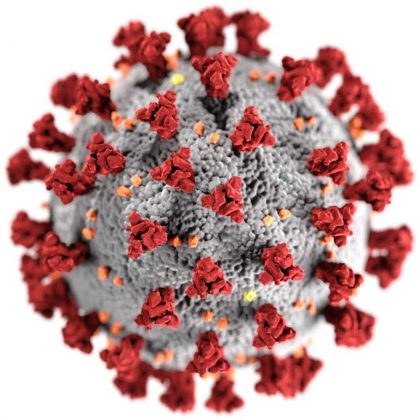
SCIENCE has delivered some incredible achievements in the fight against COVID-19, not least of which is the swift development of several highly effective vaccines. The question is, will the shots continue to offer strong protection even as the SARS-CoV-2 virus mutates and evolves?

We’ve already seen virus variants sprout up, from B.1.1.7 in the UK to B.1.351 in South Africa and P.1 in Brazil. Now we have B.1.617 in India and two variants — B.1.429 and B.1.232 — in California. Some of these variants have been found to be more contagious and potentially deadlier than the original strain, and more variants are sure to arise in any country or region where the virus is left to multiply and infect people at a high rate. Even in places where the virus seems to be under control, variants are a worry. In Israel, there have been reports of “breakthrough” infections among vaccinated people, mostly of the B.1.351 variant. These are big concerns. But there are hopeful signs that vaccine science is staying ahead of the variants in the most important ways.

First, some good news regarding potential “booster” shots. A recent study found that a new vaccine targeting the “spike protein” — the rod-like structure on the surface of the virus — of the South African variant induced a strong immune response in nonhuman primates that had been previously vaccinated against the older virus strain. Moderna, Inc. has also noted, though not published data, that its new mRNA-1273.351 vaccine was able to boost the immune response of previously vaccinated animals to provide increased activity against the B.1.351 variant.

These two studies address a key concern I had around the risk of “original antigenic sin” — that is, that a new vaccine against a slightly different virus variant might induce an immune reaction against the original version of the virus rather than the variant it was targeting. While we need to see data from a human study, which Moderna could have sometime in the second quarter, these results suggest we are one step closer to having a variant vaccine, should we need one.

As for existing vaccines, promising new data suggests that the shot now in use from Pfizer, Inc. and BioNTech SE is effective in protecting against variants. Results from a small South African trial of the Pfizer-BioNTech vaccine showed 100% efficacy against the B.1.351 variant. Though based on only a few cases, it showed that none of those who were vaccinated as part of the trial tested positive, compared with nine who contracted the virus while taking a placebo (six of whom contracted the South African variant). It’s possible that the vaccinated group didn’t encounter the virus and a lot more cases are needed to draw a firm conclusion, but this early data suggests the efficacy against this variant is robust. This may explain why Pfizer and BioNTech have decided to use their original vaccine as a third booster, if it proves necessary, and not develop a shot using the spike protein from the B.1.351 variant.

But what about that news from Israel about breakthrough infections? In a nutshell, I am not that worried about it. We already knew that the vaccines can’t stop all infections. We also knew from several studies by different groups that the B.1.351 variant is not as susceptible to the antibodies generated by the Pfizer-BioNTech or Moderna vaccines as the ancestral versions of the virus are. So infections in vaccinated people in areas where the variant is circulating would be more likely to be by the B.1.351 variant than not. But while people may get infected by variants despite being vaccinated, the critical point is whether they develop anything but mild symptoms. What we truly care about is severe COVID-19 disease and hospitalizations. If all the infected individuals had only mild symptoms, or none at all, then that actually proves the point: The vaccine is doing its job in preventing severe disease and hospitalizations. This appears to be the case.

I am not suggesting that we stop worrying about variants. As I have written before, there needs to be much more genomic sequencing across the world to ensure we are on top of any changes in the virus. But we need not panic. Variants occur when the virus is multiplying at high levels. Having a fully vaccinated population significantly reduces its chances of doing that. What we do need to do is to get vaccines faster to the nations that cannot afford them.

BLOOMBERG OPINION

The state of COVID-19 vaccine procurement by the private sector in the Philippines

The vaccination program in the Philippines is currently underway, but it seems that the virus is spreading faster than the government can vaccinate its people. One of the solutions proposed to ease the burden of the government and augment its current efforts is to allow the private sector to procure and import vaccines directly from the manufacturers and pharmaceutical companies. However, the current Philippine regulations on the sale and importation of vaccines makes this challenging.

Under Philippine laws, only pharmaceutical companies that have been granted an authorization by the Philippine Food and Drug Administration (FDA) are allowed to sell or manufacture any new drug. Particularly, Section 21 of Republic Act No. 3720 (RA 3720), or the “Food, Drug and Cosmetic Act,” as amended, provides that any new drug should have an authorization from the FDA prior to the manufacture, sale, importation, exportation, distribution or transfer thereof.

The authorization is granted based on an application containing full reports of investigations to show whether or not such a drug is safe, efficacious and of good quality for use based on clinical studies. Likewise, the authorization can take the form of a permit, a license, a certificate of registration, of accreditation, of compliance, or of exemption, or any similar document. In general, the authorization required is the authority to register such drug or vaccine (i.e., with a certificate of product registration or CPR).

Unfortunately, due to the limited amount of time to study the efficacy and safety of available vaccines, no foreign or local pharmaceutical company has obtained the necessary authorization from the FDA for the sale and distribution of COVID-19 vaccines. However, in order to address the need for such vaccines, the President of the Philippines issued Executive Order No. 121, series of 2020 (EO 121) entitled “Granting Authority to the Director General of the Food and Drug Administration to Issue Emergency Use Authorization (EUA) for COVID-19 Drugs and Vaccines, Prescribing Conditions therefore and for other Purposes,” which gave the FDA Director General the power to issue EUAs for COVID-19 vaccines. As of this writing, only four vaccines have been issued the necessary EUA, namely: Pfizer BioNTech, Oxford AstraZeneca, Sinovac CoronaVac, and Gamelaya Sputnik V.

Under Republic Act No. 11525 or the “COVID-19 Vaccination Program Act of 2021,” private entities may procure COVID-19 vaccines only in cooperation with the Department of Health (DoH) and the National Task Force Against COVID-19 (NTF) through a multiparty agreement which shall include the DoH and the relevant supplier of the COVID-19 vaccine. Due to this restriction, private entities are trying to convince the government to do away with the multiparty agreement as the government’s monopoly on the supply of the vaccine is creating a bottleneck in the importation of the vaccines into the Philippines.

However, the FDA has already stated that an EUA is not equivalent to a marketing authorization or a CPR. Hence, COVID-19 vaccines are not to be treated as commercial products even if issued with an EUA. Additionally, the vaccines are also still under constant review. As a matter of fact, recent reports of rare cases of blood clots with low platelets detected in some individuals injected with the AstraZeneca vaccine caused the Department of Health to temporarily stop the inoculation of people below 60 years old with the said vaccine.

Admittedly, government regulation is still a big part in ensuring that the vaccines procured meet the minimum standard to be allowed to be sold and imported in the Philippines.

However, in order to address the pressing needs of this nation, private entities should also be given a bigger role in the vaccine procurement. It appears that employers and business owners, especially those that belong to the micro, small and medium enterprises, are not fully aware of the process of procurement of the COVID-19 vaccines. There was even confusion as to the requirement to donate 50% of the procured vaccines by the private entities. This discouraged private entities to procure vaccines through the multi-party agreements because of their inability to cover or shoulder the cost of the additional vaccines to be donated. What added to the confusion is the government asserting that it was the suppliers of AstraZeneca and not the government which required such a donation. In any case, what may be needed right now is transparency in the process of procuring COVID-19 vaccines either by the government or the private sector.

The government is still miles away from reaching its target of vaccinating at least 70% of the population to achieve herd immunity. Since the start of the pandemic, the private sector has proven its capability of filling in the gaps in the government’s pandemic response. Giving the private sector more freedom in their vaccine procurement as well as streamlining the entire process would definitely result in achieving targets and the desired results faster.

This article is for informational and educational purposes only. It is not offered and does not constitute legal advice or legal opinion.


Zyra Frances P. Aquilizan is an Associate of the Corporate and Special Projects Department (CSPD) of the Angara Abello Concepcion Regala & Cruz Law Offices or ACCRALAW.

(632) 8830-8000

zpaquilizan@accralaw.com

China’s Xi calls for fairer world order as rivalry with US deepens

REUTERS/KEVIN YAO
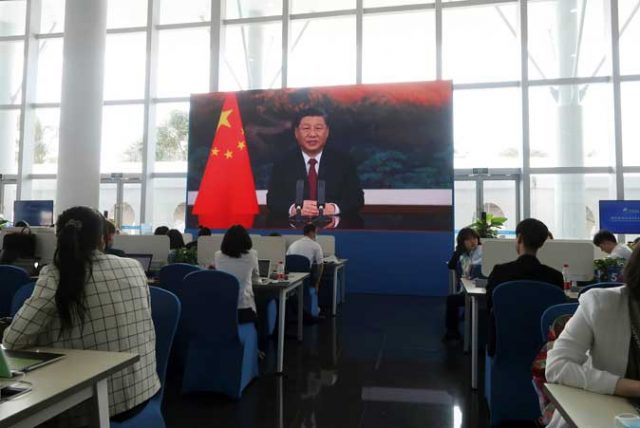
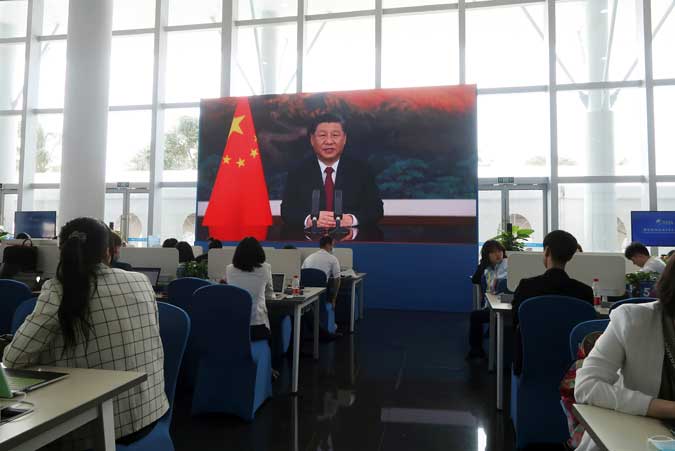
Chinese President Xi Jinping is seen on a giant screen at a media center, as he delivers via video link a keynote speech at the opening ceremony of the Boao Forum for Asia, in Boao, Hainan province, China April 20, 2021. — REUTERS/KEVIN YAO

BOAO, China — Chinese President Xi Jinping on Tuesday called for a rejection of hegemonic power structures in global governance, amid growing tensions between Washington and Beijing over a widening range of issues including alleged human rights abuses.

Speaking at the annual Boao Forum for Asia, Mr. Xi criticized efforts by some countries to “build barriers” and “decouple”, which he said would harm others and benefit no one.

China has long called for reforms of the global governance system to better reflect a more diverse range of perspectives and values from the international community, including its own, instead of those of a few major nations.

It has also repeatedly clashed with the biggest stakeholders in world governance, particularly the United States, over a range of issues from human rights to China’s economic influence over other countries.

“The world wants justice, not hegemony,” Mr. Xi said in remarks broadcast to the forum.

“A big country should look like a big country by showing that it is shouldering more responsibility,” he said. While Mr. Xi did not identify any country in his remarks, Chinese officials have in recent times referred to US “hegemony” in public criticisms of Washington’s global projection of power in trade and geopolitics.

On Friday, US President Joseph R. Biden held his first face-to-face White House summit since taking office, in a meeting with Japanese Prime Minister Yoshihide Suga in which China topped the agenda.

Both leaders said they “share serious concerns” about the human rights situation in Hong Kong and China’s Xinjiang region, where Washington has said Beijing is perpetrating a genocide against Muslim Uighurs. China has denied abuses.

In a display of economic cooperation to the exclusion of China, Mr. Biden said Japan and the United States would jointly invest in areas such as 5G technology, artificial intelligence, quantum computing, genomics and semiconductor supply chains.

As the Biden administration rallies other democratic allies to harden their stance on China, Beijing is seeking to strengthen ties with its autocratic partners and economically dependent neighbors in Southeast Asia.

Chinese speakers at the Boao forum, Asia’s answer to Davos, also affirmed Beijing’s commitment to global free trade.

China’s trade practices were a focus of an intense tariff war between Beijing and Washington under the Trump administration, with the United States accusing Beijing of unfair subsidiaries that give Chinese companies unfair advantage abroad and forced transfers of technology and intellectual property.

“The biggest experience of China’s accession to the World Trade Organization (WTO) 20 years ago is that we Chinese are not afraid of competition,” Long Yongtu, China’s former chief negotiator for China’s WTO entry in 2001, told the forum on Monday.

However, despite the persistent confrontation between the US administration and China, both sides have rediscovered a common interest in tackling climate change, after bilateral talks on fighting greenhouse emissions fizzled out during the Trump era.

Last week, US climate envoy John Kerry flew to Shanghai to meet with his Chinese counterpart in the first high-level visit to China by a Biden administration official.

Both agreed on concrete actions “in the 2020s” to reduce emissions. — Reuters

UN chief warns world is on the verge of climate ‘abyss’

People are silhouetted against the setting sun in Malaga, southern Spain July 24, 2019 — REUTERS

GENEVA/BRUSSELS — 2020 was one of the three hottest years on record, marked by wildfires, droughts, floods and melting glaciers, a United Nations (U.N.) report said on Monday, prompting the U.N. Secretary-General to say the world stands “on the verge of the abyss.”

In a “double blow” to millions hit by the extreme climate events, lockdown restrictions linked to the global coronavirus pandemic also delayed crucial assistance in some regions, said the report by the World Meteorological Organization (WMO).

The ‘State of the Global Climate’ report confirms its preliminary findings, including on land and ocean temperatures, and comes ahead of a US-led summit on April 22-23 where Washington will seek to restore its credibility on climate change through fresh pledges.

“We are on the verge of the abyss… We are seeing record levels in tropical storms, in the melting of ice sheets or glaciers, in relation to drought, heat waves and wildfires,” U.N. Secretary-General Antonio Guterres told Reuters.

The report showed the global average temperature in 2020 was about 1.2 degrees Celsius above the pre-industrial period, ranking it somewhere in the top three hottest years alongside 2016 and 2019 despite cooling La Niña conditions.

A WMO spokeswoman said it was too close to make a call between them because of the margin of statistical error.

Among the indicators highlighted were record low Arctic sea ice extents in two months of 2020. Around 80 percent of the ocean experienced at least one marine heatwave last year.

The United States saw both the largest fires ever and the most hurricanes making landfall. Hurricane Laura alone, which hit Louisiana on Aug. 27, caused $19 billion in economic losses.

Death Valley in California also recorded the world’s highest known temperature for at least 80 years of 54.4 degrees Celsius (129.92°F) in August, the report said.

Measures designed to curb the spread of COVID-19 delayed assistance after Cyclone Harold, one of the strongest storms ever seen in the South Pacific, and after Cyclone Vongfong in the Philippines, where social distancing rules meant residents could not be evacuated in large numbers. — Reuters

Physical inactivity tied to higher COVID-19 risks

PATIENTS with coronavirus disease 2019 (COVID-19) who have been consistently physically inactive have a significantly higher risk of severe outcomes than patients who were getting at least some exercise or regularly met physical activity guidelines prior to the illness, researchers found.

Among the 48,440 patients in their study, 14.4% were consistently inactive in the two years before their COVID-19 diagnosis, 79.1% had some activity, and 6.4% consistently met recommended physical activity guidelines of at least 150 minutes per week.

Compared with those who consistently met activity guidelines, people who were consistently inactive were more than twice as likely to be hospitalized and to die from the virus, according to a report in the British Journal of Sports Medicine. Consistently inactive patients also had worse outcomes than patients who got some exercise without meeting the guideline-recommended minimum.

“It is well known that immune function improves with regular physical activity, and those who are regularly active have a lower incidence, intensity of symptoms and death from viral infections,” said coauthor Dr. Robert Sallis of the Kaiser Permanente Fontana Medical Center in California.

“Regular physical activity is associated with improvements in lung capacity and cardiovascular and muscular functioning that may serve to lessen the negative impacts of COVID-19 if it is contracted,” he added. — Reuters

ASEAN to discuss Myanmar crisis at summit

FLOWERS hang during a nationwide flower campaign against the military coup in Yangon, Myanmar, April 2, 2021. — REUTERS
REUTERS

SOUTHEAST ASIAN countries will discuss the crisis in Myanmar at a summit in Jakarta on Saturday, the ASEAN bloc’s secretariat said on Tuesday, after the European Union (EU) imposed its toughest sanctions yet on the junta that seized power there on Feb. 1.

The 10-member Association of Southeast Asian Nations (ASEAN) has been trying to find a way to guide fellow member Myanmar out of the bloody turmoil that has followed the military coup against an elected government led by Nobel laureate Aung San Suu Kyi.

Romeo Abad Arca, Jr., assistant director of the community relations division of the ASEAN Secretariat, said the summit would take place at its Jakarta headquarters on Saturday under strict health and security protocols due to the pandemic, confirming an earlier advisory.

It remains unclear how many leaders will attend in person though a Thai government official said on Saturday junta chief Min Aung Hlaing would go to Jakarta.

The foreign ministry of Brunei, which holds the ASEAN chair this year, declined to comment on arrangements for the summit on Monday.

Myanmar’s military has shown little willingness to engage with its neighbors and no sign of wanting to talk to members of the government it ousted.

Pro-democracy politicians including ousted members of parliament from Ms. Suu Kyi’s party announced the formation of a National Unity Government (NUG) on Friday.

It includes Ms. Suu Kyi, who has been in detention since the coup, as well as leaders of the pro-democracy protests and ethnic minorities.

The NUG says it is the legitimate authority and has called for international recognition and an invitation to the ASEAN meeting in Min Aung Hlaing’s place.

Former U.N. chief Ban Ki-moon urged his successor to engage directly with Myanmar’s military to prevent an increase in post-coup violence and said Southeast Asian countries should not dismiss the turmoil as an internal issue for Myanmar. U.N. Secretary-General Antonio Guterres’ special envoy on Myanmar, Christine Schraner Burgener, has communicated with the military since the coup, but the junta has not allowed her to visit.

In its firmest response yet to the ousting of the elected government led by Ms. Suu Kyi, the European Union (EU) said on Monday nine members of the junta’s State Administration Council, formed the day after the coup, had been targeted with travel bans and asset freezes. Information Minister U Chit Naing was also sanctioned.

The decision follows similar measures by the United States. Min Aung Hlaing and Myint Swe, who has been acting president since the coup, were blacklisted by the EU last month.

“The military forces and authorities operating under the control of the SAC have committed serious human rights violations since Feb. 1, 2021, killing civilian and unarmed protesters,” the EU said.

Myanmar’s state media said on Monday that 258 civilians have died in violence in the country in anti-military protests since Feb. 1 and that other tolls were exaggerated.

According to the Assistance Association for Political Prisoners (AAPP) activist group, 738 people have been killed by security forces since the coup. — Reuters

ADVERTISEMENT
ADVERTISEMENT