Home Blog Page 8211

Philippines approves J&J, Bharat vaccines for emergency use

THE LOCAL Food and Drug Administration (FDA) on Tuesday said it had approved the emergency use of coronavirus vaccines made by Johnson & Johnson, Inc. and India’s Bharat Biotech.

The benefits of the vaccines outweigh the risks, FDA Director-General Enrique D. Domingo told a televised news briefing. Both vaccines can be used for adults, he said in a mobile phone message.

Meanwhile, the Philippines would take delivery of about 20,000 doses of the coronavirus vaccine made by Moderna, Inc. this quarter, Ambassador to the US Jose Manuel Romualdez told a televised news briefing.

The first batch of Moderna vaccines would arrive by mid-June,

“It will start increasing in succeeding months,” he said of the orders. “They will complete the 20 million before the end of the year.”

Mr. Romualdez said 117,000 doses of the Pfizer vaccine would probably arrive in May.

The country was set to take delivery of its first batch of Pfizer doses by mid-February, but the shipment was delayed after the government failed to sign a document freeing the drug maker from potential lawsuits.

Mr. Romualdez said they expect to finalize the indemnity deal by next month.

The Department of Health (DoH) reported 7,379 coronavirus infections on Tuesday, bringing the total to 953,106. The death toll rose by 93 to 16,141, while recoveries Increased by 21,664 to 809,959, it said in a bulletin.

There were 127,006 active cases, 96.9% of which were mild, 1.3% did not show symptoms, 0.6% were critical, 0.7% were severe and 0.48% were moderate.

DoH traced the lower tally to the fact that 19 laboratories did not conduct tests on Sunday.

The Health department on April 2 reported the highest daily tally of 15,310 cases since the pandemic started last year.

The agency said 18 duplicates had been removed from the tally and 20 recovered cases were reclassified as deaths. Eight laboratories failed to submit data on April 19.

About 10.5 million Filipinos have been tested for the coronavirus as of April 18, according to DoH’s tracker website.

The coronavirus has sickened about 142.7 million and killed three million people worldwide, according to the Worldometers website, citing various sources including data from the World Health Organization.

About 121.3 million people have recovered, it said. — Kyle Aristophere T. Atienza and Vann Marlo M. Villegas

Philippines further slips in World Press Freedom Index

PHILSTAR

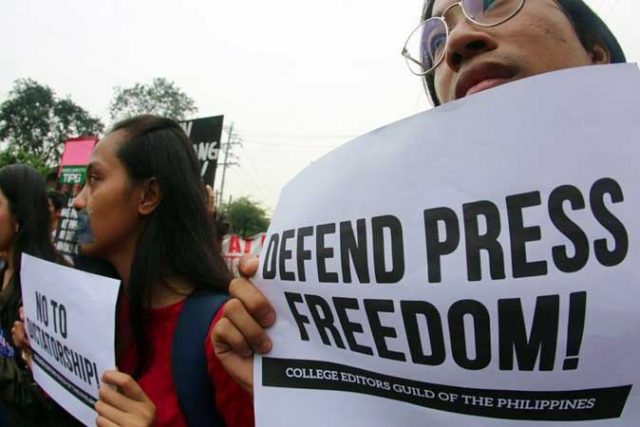
THE PHILIPPINES dropped by two places to 138th in the World Press Freedom Index this year, according to Reporters Without Borders (RSF), which cited “extremely draconian laws or decrees” that allegedly criminalized state criticism.

This marked the fourth straight year that the country slipped in the ranking that covers 180 economies. The Philippines was 133rd in 2018 and 134th in 2019, scored 45.64 out of a worst possible score of 100.

The Philippines placed 21st among 32 economies in the Asia-Pacific region, ahead of Myanmar (140th overall), India (142nd), Cambodia (144th), Pakistan (145th), Bangladesh (152nd), Brunei (154th), Singapore (160th), Laos (172nd), Vietnam (175th), China (177th) and North Korea (179th).

The fall in the country’s press freedom ranking is alarming, said Dennis C. Coronacion, who heads the University of Santo Tomas (UST) Department of Political Science.

“The press and news media contribute greatly in shaping citizens’ informed political opinions and decisions,” he said in an e-mail. “If this trend continues, it will take its toll on Philippine democracy.”

Mr. Coronacion said attacks on press freedom is nothing new in the Philippines, but the scale of attacks under the government of President Rodrigo R. Duterte is “unprecedented in our history, with the exception of the martial law period.”

Reporters Without Borders cited the use of the coronavirus pandemic among authoritarian regimes in the region to “perfect their methods of totalitarian control of information.”

“Dictatorial democracies” have also used the health crisis as a pretext to impose “repressive legislation.”

It cited the government’s “grotesque judicial harassment campaign” against online news website Rappler, Inc., Congress’ rejection of ABS-CBN Corp.’s franchise, red-tagging of and the persistent online harassment carried out by pro-government “troll armies.”

The country’s ranking would “surely continue to slide unless the government ceased from its impunity that aggravates free speech and media practice,” Marlon M. Villarin, a political science professor from UST, said in a text message. — I.B. Celis

Philippines slips further in World Press Freedom Index

Privacy commission, senators castigate police for profiling community pantry organizer

PHILIPPINE STAR/ MICHAEL VARCAS

THE POLICE drew widespread flak after the organizer of the first community pantry, a food aid initiative that has been replicated across the country, reported being questioned by cops. The National Privacy Commission (NPC), in a statement on Tuesday, warned the police against such profiling activities that may violate privacy laws. “We would like to emphasize that collecting personal data must be done fairly and lawfully with respect to the rights of a data subject, including the rights to be informed and object,” NPC Commissioner Raymund E. Liboro said. The NPC said that some individuals have allegedly been asked by the police to provide personal data like email addresses and social media accounts. Mr. Liboro said that the Philippine National Police’s (PNP) data protection arm should look into reports of profiling. Anna Patricia Non, who started the Maginhawa Community Pantry in Quezon City, said in a post on her Facebook page that she feared for her safety after being tagged by government representatives as a member of the communist movement. She temporarily halted the pantry operations on Tuesday, citing safety concerns for the volunteers assisting in the project. “Lalo na po at nagkaproblema kanina ang ibang Community Pantry sa mga kapulisan (Especially since other community pantries were also having problems with the police),” she said. In an online press conference later on Tuesday, she categorically said that she has no communist links but decried that her political views should be an issue. Speaking mostly in Filipino, she said it is irrelevant who she is or what she stands for, and what is important is her clear intention to simply help people in need amid a coronavirus pandemic.

NO ORDER
Police chief Debold M. Sinas, in a statement, said there was no order “to conduct any form of profiling of organizers of community pantries.” “It is beyond the interest of the PNP to delve into purely voluntary personal activities of private citizens… we have no intention to interfere but to serve the best interest of law and order and public safety in such public activities.” Senators slammed the police and expressed support for Ms. Non and the growing grassroots effort. “When common people band together to help those who are in need; when volunteers offer a selfless act of serving the people; and when ordinary Filipinos put up community pantries as a pure form of generosity — I don’t see them as enemies of the state, but as champions who have genuine compassion for our people,” Senator Maria Lourdes Nancy S. Binay said. Senator Panfilo M. Lacson, in an interview over CNN Philippines, said, “I think it is ill-advised even, you know, deplorable that police officers suspect these people of engaging in destabilization.” Senate President Pro Tempore Ralph G. Recto said community pantries “need more food bags, not red tags, nor red tape” after an interior department official said organizers should get a permit. “Community pantries require no state franchise, nor government permit, nor police clearance. The business of helping your neighbor, as God commanded, requires no business permit from man,” Mr. Recto said in a statement. Senators Binay, Recto, Leila M. de Lima, Franklin M. Drilon, Sherwin T. Gatchalian, Risa N. Hontiveros-Baraquel, Grace Poe-Llamanzares also jointly condemned the social media post of the national task force to end communist movement.  “The profiling of organizers must stop. It puts people’s lives in danger, knowing how notorious some police, military officers, and personnel are in red-tagging progressives and now civic-minded citizens who only want to do good for their fellow men and women,” they said in a statement. — Jenina P. Ibañez and Vann Marlo M. Villegas

MIAA warns COVID-positive passengers vs attempting to board flights

FACEBOOK.COM/NAIA TERMINAL-1

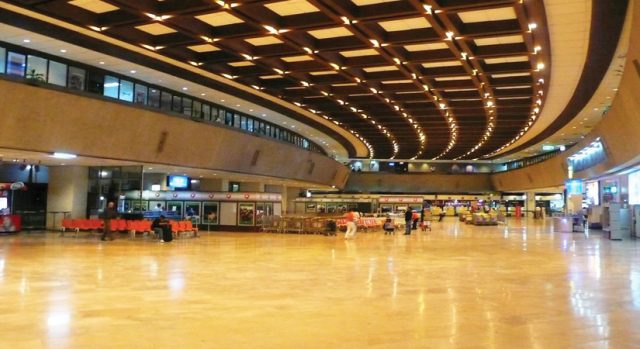
PASSENGERS whose test results show they are positive for the coronavirus should not attempt to board their flights, the Manila International Airport Authority (MIAA) said on Tuesday. As of April 15, MIAA said there have been 138 individuals, mostly bound for international destinations, intercepted at different security and airline checkpoints of the Ninoy Aquino International Airport (NAIA). “They cited several reasons, most common of which is that they just learned about their test result when they were already at NAIA,” MIAA said in a statement. “Others averred that they did not bother to look at their test results while others claimed that their recruitment agencies instructed them to proceed to NAIA and wait for the results there.” MIAA General Manager Eddie V. Monreal said, “Let us not take chances. The airport security and airline check-in staff will always check on your requirements and truth will be known in the process.” The Tourism department is keen on adopting a platform developed by the International Air Transport Association (IATA) that will enable passengers to digitally manage their travel documents and share their test and vaccination results. IATA’s platform also allows passengers to find testing centers and laboratories at their departure or arrival locations that can conduct coronavirus tests in accordance with the requirements of their destination. — Arjay L. Balinbin

Tribunal ruling shows Marcos’ poll fraud allegations ‘appeared bare’

THE SUPREME Court (SC), sitting as Presidential Electoral Tribunal (PET), released on Tuesday the full copy of its decision junking the electoral protest of Ferdinand “Bongbong” R. Marcos, Jr. against Vice President Maria Leonor G. Robredo. The 128-page decision states that Mr. Marcos “failed to substantiate his allegations of massive anomalies and irregularities,” and that his “allegations appeared bare, laden with generic and repetitious allegations and lacked critical information.” The PET also said there was “no substantial recovery of votes in the pilot provinces that he himself had designated,” therefore Mr. Marcos “failed to make out his case.” Associate Justice Marvic Mario Victor F. Leonen who penned the SC decision, said, “specifying the precincts where each violation occurred, and how it transpired, is critical. Failure to do so warrants the protest’s dismissal.” Ms. Robredo’s spokesperson, Barry Gutierrez, said in a statement on Tuesday, “This clearly settles this matter once and for all. Once again, we thank the PET for its wisdom, fairness, and resolve in deciding this issue.” Mr. Marcos filed the protest in 2016 soon after losing in the vice presidential race. — Bianca Angelica D. Añago

Distribution of cash aid in NCR+ area extended until May 15

PHILIPPINE STAR/ MICHAEL VARCAS

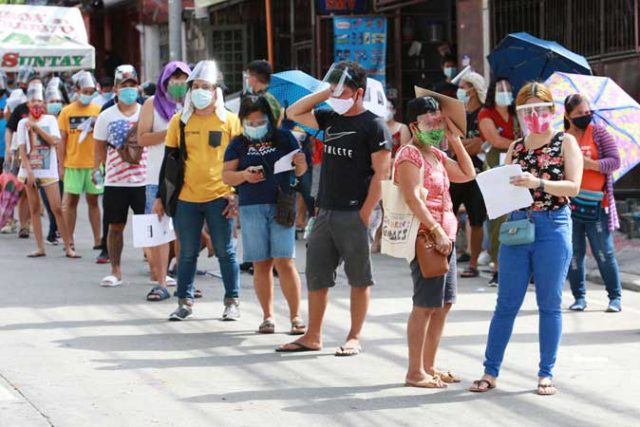
THE national government approved the request of local governments to extend the deadline for the distribution of cash aid in Metro Manila and four neighboring provinces, according to the presidential palace. The Interior and Local Government department extended the deadline until May 15, Presidential Spokesperson Herminio “Harry” L. Roque, Jr. said in a televised news briefing on Tuesday. Mr. Roque said the government considered the delays caused by the ban on mass gathering and adjustments being made to make the distribution efforts more flexible. Local governments were previously given more than two weeks to distribute the government aid for residents in the so-called NCR Plus bubble — composed of the National Capital Region (NCR) and the provinces of Laguna, Cavite, Rizal, and Bulacan — which was placed under a two-week enhanced community quarantine on March 29. Mr. Roque on Monday admitted that the distribution of cash aid to low-income families had been slow. Only about P4 billion of the P23-billion fund had been distributed so far, he said. — Kyle Aristophere T. Atienza

SMC to begin Pasig River cleanup in May

Pasig river — PHILSTAR

SAN MIGUEL Corp. (SMC) said on Tuesday that it will begin cleanup operations of Pasig River next month, with a target of extracting 600,000 metric tons (MT) of waste per year. “This is a very important environmental effort, and we want to do it right. Cleaning up the Pasig River has been a dream for many Filipinos, even our older generations, so we want to make sure our plan is strategic and effective. While we will use science and utilize modern technology, this project can only succeed with the cooperation of all stakeholders,” SMC President Ramon S. Ang said in a news release. A survey of the river’s topography and characteristics has been completed and more intensive studies are underway, the firm said. The cleanup is part of SMC’s P95-billion Pasig River Expressway, an elevated toll road along the river banks that will connect the east and west sides of Metro Manila. The project aims to decongest traffic in Rizal, Cainta and Marikina. Cleanup operations will be jointly undertaken by SMC with the Department of Environment and Natural Resources and the Department of Public Works and Highways. — Angelica Y. Yang

Crop damage from typhoon Bising initially estimated at P46 million

CARGO trucks, totaling 302 and covering a four-kilometer stretch of the highway, that were stranded for a couple of days due to typhoon Bising started moving on April 20 as roll-on roll-off vessels resumed operations at the Matnog Port in Sorsogon. — @COASTGUARDPH

AGRICULTURAL damage caused by the onslaught of typhoon Bising is initially estimated at P45.93 million, the Department of Agriculture (DA) reported. In a bulletin on Tuesday afternoon, the department said 3,009 metric tons (MT) worth of production was lost with 765 farmers affected in the Bicol and Eastern Visayas Regions. “Affected commodities include rice, corn, assorted vegetables and fruits, and livestock. These values are still subject to validation,” the DA said. Corn recorded the biggest loss at 2,548 MT worth P35.08 million across 971 hectares of farmland. Damaged rice reached 461 MT equivalent to P8.37 million, while high value crops were worth P2.46 million and livestock at P15,300. On the other hand, 59,543 MT of rice worth P1.08 billion were harvested following early warnings. For corn, 1,411 MT valued at P18.20 million were also saved. The DA said assistance available to affected farmers include 18,478 bags of rice seeds, 12,530 bags of corn seeds, and assorted vegetable seeds; drugs and biologics for livestock; farmer indemnification; and loans from the Agricultural Credit Policy Council. Typhoon Bising, (international name: Surigae), entered the Philippine area Friday and has been traversing along the eastern Visayas and Luzon parts of the country. As of 5 p.m. Tuesday, weather bureau PAGASA said Bising was maintaining its strength with maximum sustained winds of 175 kilometers per hour (km/h) near the center and gustiness of up to 215 km/h. It was located 475 kms east of Baler, Aurora and moving slowly in a northwest direction. Heavy rains and strong winds were expected in the parts of Aurora, Cagayan, and Isabela which were under storm signal #2. Signal #1, the lowest in a five-level warning system, was up in Batanes, parts of Cagayan and Isabela, Quirino, provinces in the Cordillera Region, parts of Nueva Vizcaya, Aurora, Quezon, Camariñes Norte, and Camariñes Sur. — Revin Mikhael D. Ochave

MVP Group sets up Antipolo quarantine facility for employees

AN EMERGENCY quarantine facility in Antipolo, Rizal has been set up for employees of companies led by businessman Manuel V. Pangilinan (MVP), PLDT, Inc. announced on Tuesday.

The facility was set up to “help care for employees with asymptomatic to mild cases of COVID-19 (coronavirus disease 2019),” PLDT said in an e-mailed statement.

“Select areas within the 10-hectare space of the First Pacific Leadership Academy (FPLA) have been repurposed into makeshift rooms, augmenting FPLA’s existing hotel facilities currently being used to isolate employee-patients,” it added.

The facility houses 240 individual air-conditioned tents and beds.

“Doctors and nurses to be housed in FPLA will work on 8-hour shifts 24/7… Meals, medical supplies, and phone and data connectivity will all be provided. Employees who test positive for COVID-19 will be given Quarantine Leave, separate from standard Sick Leave credits,” it added.

Hastings Holdings, Inc., a unit of PLDT Beneficial Trust Fund subsidiary MediaQuest Holdings, Inc., has a majority stake in BusinessWorld through the Philippine Star Group, which it controls. — Arjay L. Balinbin

36 illegal aliens, mostly Koreans, arrested in Pasay

PHILSTAR

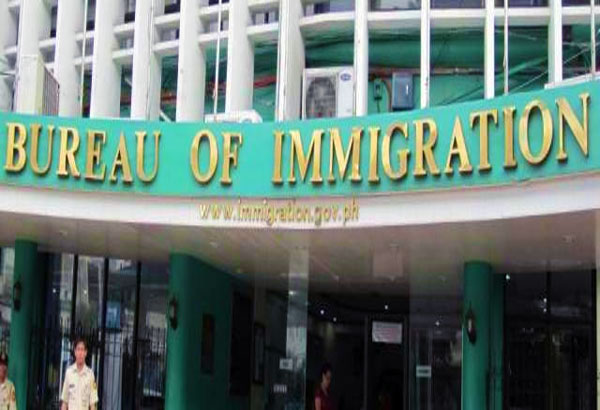
THE BUREAU of Immigration (BI) arrested on Monday 36 foreigners, mostly Koreans, who were illegally staying in the country and involved in illegal online gaming operations. In a press release on Tuesday, Immigration Intelligence Chief Fortunato S. Manahan, Jr. said operations based at the Double Dragon Plaza Tower 3 in Pasay City was discovered to be engaged in illegal live studio gambling.  Of those arrested, 32 are Koreans, two Chinese, and two Indonesians. “Apart from the live studio, they were also conducting illegal and clandestine online gaming operations,” Mr. Manahan said. Immigration Commissioner Jaime H. Morente said they have confirmed from the Philippine Amusement and Gaming Corporation “that this company is unlicensed and has no authority to operate.” The illegal aliens will be subject to deportation proceedings. — Bianca Angelica D. Añago

OFWs: Smugglers of faith and joy

FREEPIK

(Last of three parts)

The multinational bank Morgan Stanley issued a most optimistic forecast for the remittances that Overseas Filipino Workers (OFWs) will send to the Philippines in 2021. As the whole Philippine economy still struggles under the weight of lockdowns and delayed availability of the vaccines against COVID-19, once again Filipinos overseas are expected to deliver the goods by propping up domestic expenditures through an increase in their remittances by an above-average growth of as high 7%. Over the last 10 years, these remittances, which account for as much as 10% of our GDP, have grown by an average of 3% to 5% annually. After the world recovers from the pandemic, I expect that growth rate to accelerate to 5% to 8% annually in the next five to 10 years. My reason for optimism is that the pandemic has highlighted the great need of the developed world for our migrant workers, especially in the sectors of health and wellness and in the care of the aged.

During the pandemic, dozens of articles appeared in the international press about “the severe cost of the world’s baby bust.” In an opinion piece by Jeremy Grantham with the aforementioned title (Financial Times, March 13) we read the following warnings: “We are in a global baby bust of unprecedented proportions. It is far from over and its implications are gravely underestimated… The worldwide fertility rate has already dropped more than 50% in the past 50 years, from 5.1 births per woman in 1964 to 2.4 in 2018, according to the World Bank. In 2020, the 20% shortfall below replacement rate in US fertility, together with low net immigration, produced the lowest population growth on record of 0.35%, below even the flu pandemic in 1918. … Many countries, including Italy, South Korea and Japan, are predicted to see their populations drop by more than half by the end of this century… The coronavirus pandemic is also having a profound incremental impact, with provisional fertility declines of 5 to 15% in most developed countries. South Korea recently reported a 2020 fertility rate of 0.84, the lowest rate ever recorded for a major economy.”

This demographic crisis besetting practically all the developed countries in the world means tremendous pressures on pension programs and social security systems because of the related ageing problem. It also means shrinking domestic markets. For a country like the Philippines that is still enjoying a demographic dividend (half of our population are less than 24 years old), it opens up great opportunities for our unemployed and underemployed workers to supplement the labor forces of these richer countries, especially in those sectors requiring personal services that were most challenged by shortages during the pandemic, i.e., health, wellness, caregiving and domestic services in which Filipino workers have a distinct competitive advantage over other nationalities. It is important for both our Government and the private sector to discern and exploit these opportunities both over the short run (the next two to three years) and in the long run (over the next decade or so).

In an article that will be part of a book that will soon be published, Dr. Bett Esposo Ramirez, a top researcher on OFWs at the University of Asia and the Pacific, asked the question “What jobs await OFWs after the pandemic?” To answer the question, she first examined data on the pre-pandemic placements of OFWs provided by the Philippine Overseas Employment Administration (POEA). The statistics show that before the pandemic, land-based OFWs were mostly in elementary occupations — jobs with simple and routine tasks requiring the use of hand-held tools and physical effort. There was an increase in the top skills in which Household Service Works (HSW) increased by 7.51% annually, Nursing Professionals by 17.96%, while manufacturing laborers decreased by 10.76%. Over the last 10 years or so, the majority of our OFWs were in work that required them to be with people, such as care for the elderly, the sick and children; babysitting; selling goods in streets and public places; serving customers in restaurants or cruise ships. Many others performed tasks that are essential to daily living such as cleaning, washing, and care of apartment houses, hotels, offices, and other buildings.

Will there be a significant change in demand for our OFWs after the pandemic? Dr. Ramirez provides some clues by examining the case of Japan, the large nation with the oldest population in the world with one-third of its citizens already over the age of 65, and a large number of them living up to 100. By 2030, the country’s workforce is expected to fall by 8 million, leading to a serious labor shortage. Even before the outbreak of the pandemic, the Japanese government already identified 14 labor sectors needing low-skilled workers in the next five years. Legislation to this effect was approved by Prime Minister Shinzo Abe. The list includes nursing care and the cleaning of buildings; agriculture; fishing industry; food and beverage manufacturing; seafood processing; construction; ship building; marine industry; car maintenance; airport ground handling; aircraft maintenance; lodging and hospitality.

Such a list could apply to practically all developed countries suffering from similar labor shortages such as France, Italy, Spain, and Germany in Europe and Hong Kong, Macau, Taiwan, and South Korea in Asia. These are the countries we should be especially targeting for our OFWs. In the next two to three years, we should be very proactive in mobilizing our three sectors — Government, business, and the academe — to help retool, upskill and reskill our huge labor force in these and other sectors so that Filipino workers will be on top of the list of those who will be considered by these developed countries for possible short or long-term employment in their respective sectors that will suffer most from labor shortages. We should begin with the more than a million Returning Overseas Filipinos (ROFs) who have survived the pandemic and are healthy enough to return to their former places of work or to other countries in need of their services. They and other aspiring OFWs can be given short courses in the various languages of the countries where they plan to apply for work. To serve as a guide in determining which host countries should be especially targeted, in 2019 of the total remittances of $32.80 billion sent by OFWs, the US accounted for $11.10; Hong Kong (China), $5.36 billion; United Arab Emirates, $4.10 billion; Saudi Arabia, $4.10 billion; South Korea, $2.48 billion; Canada, $2.4 billion and Japan, $1.17 billion.

Already some enterprising work placement firms are importing German, Japanese, and other foreign language instructors to give crash courses to nurses and other health workers in the different languages of the countries that are most affected by labor shortages because of the demographic crisis. We have a large pool of unemployed and underemployed people in our labor force (approximately 13 million) who, in the short run, can be equipped with the low-level and middle-level skills identified by the Japanese Government to address their labor shortage. This means giving the highest priority to the types of educational and skills training programs that are under the purview of the Technical and Skills Development Authority (TESDA). Industry associations, in tandem with educational institutions, can also organize these training programs. The Philippine Business for Education (PBEd) is taking the lead in these initiatives.

A longer-term challenge we have to face is the ongoing educational crisis characterized by the very low quality of education our children and youth are getting in our schools, as evidenced by the very low rating they get in international tests in reading comprehension and numeracy. Our students obtain the lowest scores in the Indo-Pacific region. If we do not meet this challenge, our country is sure to be caught in what is known as the Middle Income Trap which will prevent us from ever graduating to First World status, like many countries in Latin America. This serious educational crisis has been worsened during the pandemic when some 2.7 million students had to drop out of school, when millions of children are suffering even more from malnutrition and undernutrition (damaging their brains permanently) and when those who are enrolled are having serious difficulties adjusting to online learning made necessary by the pandemic because of lack of digital tools and services. This is an issue I will address in a future series of articles.


Bernardo M. Villegas has a Ph.D. in Economics from Harvard, is Professor Emeritus at the University of Asia and the Pacific, and a Visiting Professor at the IESE Business School in Barcelona, Spain. He was a member of the 1986 Constitutional Commission.

bernardo.villegas@uap.asia

Defending maritime commons with stronger alliances

March 7 marked yet another day of China’s many incursions in the West Philippine Sea, when more than 200 Chinese vessels were found anchored and lined up along the Julian Felipe Reef that is part of the Philippine exclusive economic zone (EEZ).

Efforts from the Philippine government to address this issue included the filing of diplomatic protests as well as transmitting formal communications with the Chinese Embassy in Manila. However, despite these efforts, the vessels maintained their visibility in the area while there were reports of similar vessels found scattered within the wider vicinity of the West Philippine Sea. Another diplomatic protest was filed after the National Task Force for the West Philippine Sea (NTF-WPS) confirmed the lingering presence of at least 240 Chinese Maritime Militia ships in different maritime features in the West Philippine Sea despite repeated and strongly worded calls and protests from both the Department of National Defense and the Department of Foreign Affairs (DFA). The DFA also summoned the Chinese Ambassador to the Philippines, Huang Xilian, to reiterate its demand that China withdraw all of its vessels from the Julian Felipe Reef and other maritime zones of the Philippines.

And while security and foreign policy experts strongly urge the current administration to stop its appeasement policy on China, President Rodrigo Duterte has consistently maintained his silence about China’s incursions.

In a recent virtual town hall discussion organized by the Stratbase ADR Institute under its Foreign Policy Forum, leading security experts discussed and shared their thoughts about China’s actions in the West Philippine Sea and the importance of maintaining a maritime rules-based order. During the discussion, Retired Senior Associate Justice Antonio Carpio said that China’s continued aggression in the West Philippine Sea violates not only the United Nations Convention on the Law of the Sea (UNCLOS) but also the UN Charter. If the Philippines continues to downplay these issues, Carpio said that these actions could lead to the collapse of UNCLOS and the start of a maritime order that is shaped by naval guns and the entrenchment of the “might is right” concept.

Liz Derr, CEO and Founder of Simularity, also presented a very striking report on the unoccupied islands and features in the South China Sea within the Philippine EEC. She pressed on the need for the country to find measures and way to be able to create some physical presence “which will prevent foreign countries from occupying more Spratly features and help protect the livelihood and rights of Filipino fishermen to utilize resources within Philippine EEZ.”

It should be noted that China was able to have de facto control over some areas in the South China Sea because of its deliberate reclamation activities as well as sustained presence. Given that removing China’s presence is unlikely, Derr suggested that the most viable option for the Philippines is to claim what is there as stated in the 2016 arbitral ruling.

Additionally, Dr. Chester Cabalza, President of the International and Security Cooperation, emphasized the need for a whole-of-alliance approach to pressure China to align its behavior on a rules-based maritime order and prevent it from exercising its unrestricted aggression and gray zone operations. Through this approach as well, the Philippines may fill in the inherent gaps in terms of limited resources, capacity building and development, and following Derr’s approach, possibly officially marking Philippine territory with physical structures.

This is also a timely opportunity for the Philippines given the convergence of the international community towards the Indo-Pacific. While the “Asian Century” has come, so have the major shifting tides of geopolitics. With China’s rise as a major power, it has become a major disruptor to established and rules-based maritime processes and norms.

The challenge for states like the Philippines is to identify their role in the grander scheme of things by unifying with key allies and partners such as Japan, Australia, India, South Korea, Taiwan, and the ASEAN. If the Philippine government is serious about having a truly independent foreign policy, then it must recognize productive and collaborative opportunities, resources, and partnerships.

The Philippines will never be alone in this battle for the West Philippine Sea. The common vision of democratic-minded states for a free and open Indo-Pacific is a significant step in defending the maritime commons in the region. We should not forget that there is strength in numbers. States have invariably expressed the same concern over China’s alarming behavior in the West Philippine Sea. These countries have reiterated the importance of adhering to the rule of law while reaffirming their support for an international order based on democratic norms and principles.

In the fight to protect our national sovereignty and territorial integrity, the Philippine government must recognize the threat of China’s expansionist agenda in the West Philippine Sea and strategically work with like-minded states through “minilateral” and multilateral alliances. The West Philippine Sea is ours and it is the sworn duty of our leaders and officials to defend it from any foreign threat that undermines the safety and security of our people!


Victor Andres “Dindo” C. Manhit is the President of the Stratbase ADR Institute.

ADVERTISEMENT
ADVERTISEMENT