Home Blog Page 8154

Chinese rocket debris lands in Indian Ocean, draws criticism from NASA

BEIJING – Remnants of China’s biggest rocket landed in the Indian Ocean on Sunday, with most of its components destroyed upon re-entry into the atmosphere, ending days of speculation over where the debris would hit but drawing U.S. criticism over lack of transparency.

The coordinates given by Chinese state media, citing the China Manned Space Engineering Office, put the point of impact in the ocean, west of the Maldives archipelago.

Debris from the Long March 5B has had some people looking warily skyward since it blasted off from China’s Hainan island on April 29, but the China Manned Space Engineering Office said most of the debris was burnt up in the atmosphere.

State media reported parts of the rocket re-entered the atmosphere at 10:24 a.m. Beijing time (0224 GMT) and landed at a location with the coordinates of longitude 72.47 degrees east and latitude 2.65 degrees north.

The U.S. Space command confirmed the re-entry of the rocket over the Arabian Peninsula, but said it was unknown if the debris impacted land or water.

“The exact location of the impact and the span of debris, both of which are unknown at this time, will not be released by U.S. Space Command,” it said in a statement on its website.

The Long March was the second deployment of the 5B variant since its maiden flight in May 2020. Last year, pieces from the first Long March 5B fell on Ivory Coast, damaging several buildings. No injuries were reported.

“Spacefaring nations must minimize the risks to people and property on Earth of re-entries of space objects and maximize transparency regarding those operations,” NASA Administrator Bill Nelson, a former senator and astronaut who was picked for the role in March, said in a statement after the re-entry.

“It is clear that China is failing to meet responsible standards regarding their space debris.”


ANXIETY OVER POTENTIAL DEBRIS ZONE

With most of the Earth’s surface covered by water, the odds of populated area on land being hit had been low, and the likelihood of injuries even lower, according to experts.

But uncertainty over the rocket’s orbital decay and China’s failure to issue stronger reassurances in the run-up to the re-entry fuelled anxiety.

“It is critical that China and all spacefaring nations and commercial entities act responsibly and transparently in space to ensure the safety, stability, security, and long-term sustainability of outer space activities,” Nelson said.

Harvard-based astrophysicist Jonathan McDowell told Reuters that the potential debris zone could have been as far north as New York, Madrid or Beijing, and as far south as southern Chile and Wellington, New Zealand.

Since large chunks of the NASA space station Skylab fell from orbit in July 1979 and landed in Australia, most countries have sought to avoid such uncontrolled re-entries through their spacecraft design, McDowell said.

“It makes the Chinese rocket designers look lazy that they didn’t address this,” said McDowell.

The Global Times, a Chinese tabloid, dismissed as “Western hype” concerns the rocket was “out of control” and could cause damage.

“It is common practice across the world for upper stages of rockets to burn up while reentering the atmosphere,” Wang Wenbin, a spokesman at China’s foreign ministry, said at a regular media briefing on May 7.

“To my knowledge, the upper stage of this rocket has been deactivated, which means most of its parts will burn up upon re-entry, making the likelihood of damage to aviation or ground facilities and activities extremely low,” Wang said at the time.

The rocket, which put into orbit an unmanned Tianhe module containing what will become living quarters for three crew on a permanent Chinese space station, will be followed by 10 more missions to complete the station by 2022. – Reuters

Australia’s most populous state extends COVID restrictions in hunt for outbreak source

SYDNEY – Australia’s most populous state recorded no new COVID-19 infections for a third straight day on Sunday but extended raised social distancing and mask-wearing rules by a week as the authorities hunted for the source of a small outbreak.

After a Sydney couple tested positive to the coronavirus last week, ending a long run without community transmission, the authorities reinstated some social distancing measures until May 10, and a campaign to get more people tested, as they scrambled to determine the source of infection.

On Sunday, the authorities reported a third straight day without a new case, easing concerns about a wider outbreak in the city, but cited the mystery cause of infection as a reason for extending the measures.

“As the ‘missing link’ case hasn’t been identified we’re keen to prevent a super-spreading event,” said New South Wales state premier Gladys Berejiklian in a tweet.

“All safeguards/restrictions will be in place for an extra week, except for shoppers in retail who will no longer be required to wear a mask.”

That means the more than five million people living in and around Sydney must wear masks on public transport and in most public venues, while households are limited to 20 guests at any one time until May 17.

Australia has largely eliminated the virus, with 79 days in 2021 without a locally acquired case, according to the government, as a result of a strategy of closing international and domestic borders, as well as social distancing measures.

As the country awaits vaccine shipments and watches infection spikes in other countries, top lawmakers have said borders now appear likely to reopen in 2022, not 2021 as previously envisaged.

In an interview with News Corp newspapers published on Sunday, Prime Minister Scott Morrison said it was unlikely Australia would reopen its borders soon, although he did not offer a timeline.

“I don’t see an appetite for that at the moment,” he said, referring to border reopening.

“What we’re seeing at the moment is the appreciation of the people that the pandemic isn’t going anywhere. We have to be careful not to exchange that way of life for what everyone else has.”

Putin to review Russian military might as tensions with West soar

STOCK PHOTO

MOSCOW – President Vladimir Putin is expected to review Russia’s traditional World War Two victory parade on Sunday, a patriotic display of raw military power that this year coincides with soaring tensions with the West.

The parade on Moscow’s Red Square commemorating the 76th anniversary of the Soviet Union’s victory over Nazi Germany in World War Two is expected to feature over 12,000 troops, more than 190 pieces of military hardware, including intercontinental ballistic missile launchers, and – weather permitting – a fly-past by nearly 80 military aircraft.

Putin, who has been in power as either president or prime minister since 1999, traditionally watches the display, which is due to start at 0700 GMT, with Soviet war veterans from a review platform.

This year’s parade precedes parliamentary elections in September and comes at a time when Moscow’s relations with the West are acutely strained over everything from Ukraine to the fate of jailed Kremlin critic Alexei Navalny.

The United States and Russia have expelled each other’s diplomats in recent months in a series of retaliatory moves and Moscow and EU member states have been involved in a similar tit-for-tat diplomatic dispute.

Sunday’s parade follows a massive show of Russian military force near the borders of Ukraine and in Crimea, which Russia annexed from Kyiv in 2014, and an uptick in fighting in eastern Ukraine between Russian-backed separatists and Ukrainian government forces.

Moscow said the build-up, which alarmed the West, was a training exercise in response to activity by the NATO military alliance and Ukraine. It has since ordered a withdrawal of some troops.

Smaller military parades are planned on Sunday in cities across Russia, in annexed Crimea, and at Russia’s Hmeymim air base in Syria. – Reuters

Cyber attack shuts down U.S. fuel pipeline ‘jugular,’ Biden briefed

STOCK PHOTO | Image by geralt from Pixabay

NEW YORK – Top U.S. fuel pipeline operator Colonial Pipeline shut its entire network, the source of nearly half of the U.S. East Coast’s fuel supply, after a cyber attack on Friday that involved ransomware.

The incident is one of the most disruptive digital ransom operations ever reported and has drawn attention to how vulnerable U.S. energy infrastructure is to hackers. A prolonged shutdown of the line would cause prices to spike at gasoline pumps ahead of peak summer driving season, a potential blow to U.S. consumers and the economy.

“This is as close as you can get to the jugular of infrastructure in the United States,” said Amy Myers Jaffe, research professor and managing director of the Climate Policy Lab. “It’s not a major pipeline. It’s the pipeline.”

Colonial transports 2.5 million barrels per day of gasoline, and other fuels through 5,500 miles (8,850 km) of pipelines linking refiners on the Gulf Coast to the eastern and southern United States. It also serves some of the country’s largest airports, including Atlanta’s Hartsfield Jackson Airport, the world’s busiest by passenger traffic.

The company said it shut down its operations after learning of a cyberattack on Friday using ransomware.

“Colonial Pipeline is taking steps to understand and resolve this issue. At this time, our primary focus is the safe and efficient restoration of our service and our efforts to return to normal operation,” it said.

While the U.S. government investigation is in early stages, one former official and two industry sources said the hackers are likely a professional cybercriminal group.

The former official said investigators are looking at a group dubbed “DarkSide,” known for deploying ransomware and extorting victims while avoiding targets in post-Soviet states. Ransomware is a type of malware designed to lock down systems by encrypting data and demanding payment to regain access.

Colonial said it had engaged a cybersecurity firm to help the investigation and contacted law enforcement and federal agencies.

The cybersecurity industry sources said cybersecurity firm FireEye was brought in to respond to the attack. FireEye declined to comment.

U.S. government bodies, including the FBI, said they were aware of the situation but did not yet have details of who was behind the attack.

President Joe Biden was briefed on the incident on Saturday morning, a White House spokesperson said, adding that the government is working to try to help the company restore operations and prevent supply disruptions.

The Department of Energy said it was monitoring potential impacts to the nation’s energy supply, while both the U.S. Cybersecurity and Infrastructure Security Agency and the Transportation Security Administration told Reuters they were working on the situation.

“We are engaged with the company and our interagency partners regarding the situation. This underscores the threat that ransomware poses to organizations regardless of size or sector,” said Eric Goldstein, executive assistant director of the cybersecurity division at CISA.

Colonial did not give further details or say how long its pipelines would be shut.

The privately held, Georgia-based company is owned by CDPQ Colonial Partners L.P., IFM (US) Colonial Pipeline 2 LLC, KKR-Keats Pipeline Investors L.P., Koch Capital Investments Company LLC and Shell Midstream Operating LLC.

“Cybersecurity vulnerabilities have become a systemic issue,” said Algirde Pipikaite, cyber strategy lead at the World Economic Forum’s Centre for Cybersecurity.

“Unless cybersecurity measures are embedded in a technology’s development phase, we are likely to see more frequent attacks on industrial systems like oil and gas pipelines or water treatment plants,” Pipikaite added.


PUMP PRICE WORRIES

The American Automobile Association said a prolonged outage of the line could trigger increases in gas prices at the pumps, a worry for consumers ahead of summer driving season.

A shutdown lasting four or five days, for example, could lead to sporadic outages at fuel terminals along the U.S. East Coast that depend on the pipeline for deliveries, said Andrew Lipow, president of consultancy Lipow Oil Associates.

After the shutdown was first reported on Friday, gasoline futures on the New York Mercantile Exchange gained 0.6% while diesel futures rose 1.1%, both outpacing gains in crude oil. Gulf Coast cash prices for gasoline and diesel edged lower on prospects that supplies could accumulate in the region.

“As every day goes by, it becomes a greater and greater impact on Gulf Coast oil refining,” said Lipow. “Refiners would have to react by reducing crude processing because they’ve lost part of the distribution system.”

Oil refining companies contacted by Reuters on Saturday said their operations had not yet been impacted.

Kinder Morgan Inc, meanwhile, said its Products (SE) Pipe Line Corporation (PPL) serving many of the same regions remains in full service.

PPL is currently working with customers to accommodate additional barrels during Colonial’s downtime, it said. PPL can deliver about 720,000 bpd of fuel through its pipeline network from Louisiana to the Washington, D.C., area.

The American Petroleum Institute, a top oil industry trade group, said it was monitoring the situation.

Ben Sasse, a Republican senator from Nebraska and a member of the Senate Select Committee on Intelligence, said the cyberattack was a wakeup call for U.S. lawmakers.

“This is a play that will be run again, and we’re not adequately prepared,” he said, adding Congress should pass an infrastructure plan that hardens sectors against these attacks.

Colonial previously shut down its gasoline and distillate lines during Hurricane Harvey, which hit the Gulf Coast in 2017. That contributed to tight supplies and gasoline price rises in the United States after the hurricane forced many Gulf refineries to shut down. – Reuters

Globe values diversity in the workplace; celebrates women leaders who are also mothers

The role of a mother may be one of the toughest jobs any woman may take in their lifetime. As a strong advocate of gender equality and empowerment of all women towards a more advanced and inclusive world, Globe underscores the importance of welcoming strong women leaders and celebrating their trailblazing contributions to the company.

Out of Globe’s 8,300-strong workforce, 45% are women wherein 2,083 are mothers. Included in this number are half of Globe’s key executives, proving that women-mothers are capable leaders and influencers whether at home or the workplace.

With the most recent appointment of Issa Guevarra-Cabreira as Globe’s first woman Chief Commercial Officer, she joins the ranks of Globe’s women leaders who are also mothers: Rosemarie Maniego-Eala, Chief Finance Officer, Treasurer, and Chief Risk Officer; Rebecca Eclipse, Chief Customer Experience Officer; Marisalve Ciocson-Co, Chief Compliance Officer, Senior Vice President – Law and Compliance, and Assistant Corporate Secretary; Rosalin E. Palacol, Chief Audit Executive; and Yoly Crisanto, Chief Sustainability Officer and Senior Vice President of Corporate Communications.

Globe has taken measures to make sure that the mental health of its employees are well-taken care of, especially for moms who cope with keeping their families safe and provided for 24/7 while balancing their obligations as they continue to work from home with the ongoing health crisis.

Globe encourages their employees to access HopeChat for confidential, free, and 24/7 mental health support as well as engage and respond to DUDE — or Digital Usher for Disasters and Emergencies — Globe Telecom’s chatbot that automatically checks on the health status of its employees every morning.

Globe will continue to advocate for diversity and inclusion in the workplace in line with its support for United Nations Sustainable Development Goals, particularly UN SDG No. 5 in which equal opportunities are given to women for leadership. Globe is committed to uphold the 10 United Nations Global Compact principles and 10 UN SDGs.

Philippine COVID-infections hit 1.09M

PHILIPPINE STAR/MICHAEL VARCAS

The Department of Health (DoH) reported 7,733 coronavirus infections on Friday, bringing the total to 1.09 million.

The death toll rose by 108 to 18,099, while recoveries increased by 4,227 to over one million, it said in a bulletin.

There were 66,626 coronavirus infections,1.1% of which were critical, 94.4% were mild, 2% did not show symptoms, 1.5% were severe and 0.98% were moderate.

DoH said 20 duplicates had been removed from the tally, 14 of which were tagged as recoveries. It added that 64 recoveries were reclassified as deaths.

About 11.4 million Filipinos have been tested for the coronavirus as of May 5, according to DoH’s tracker website.

The coronavirus has sickened about 156.7 million and killed 3.3 million people worldwide, according to the Worldometers website, citing various sources including data from the World Health Organization.

About 134.1 million people have recovered, it said.

Meanwhile, the Health department in a statement said 12 of the 21 Filipino crew members of a vessel with travel history from India had tested positive for the coronavirus. Two of them were in critical condition.

The two who were critical were transferred to a hospital in Metro Manila, while 10 others with mild symptoms were brought to a quarantine facility, along with the rest of the crew members.

In a statement, the Maritime Industry Authority on Friday said MV Athens Bridge left India on April 22 and arrived in Vietnam, where the crew members got tested.

The Philippine Coast Guard received a request from the vessel’s captain on May 6 for a medical evaluation of the two crew members needing medical attention. The vessel was then 12 nautical miles west of Corregidor Island. — Vann Marlo M. Villegas

1.5M more CoronaVac doses arrive

@PCOOGOV

The Philippines on Friday took delivery of 1.5 million more doses of CoronaVac made by China’s Sinovac Biotech Ltd., a task force said in a social media post on Friday.

The country has received 5.5 million doses of vaccines — five million from Sinovac, 525,600 from AstraZeneca Plc. and 15,000 from Russia’s Gamaleya Research Institute of Epidemiology and Microbiology.

The Health department said about 2.1 million doses had been given as of May 4, with 320,586 people having completed their vaccination.

Vaccination continues for healthcare workers, senior citizens and people who are seriously ill.

Vaccine czar Carlito G. Galvez, Jr. earlier said the country would take delivery of about 1.3 million doses of the vaccine developed by Pfizer, Inc. this month.

Mr. Galvez said as many as two million doses of the vaccine made by AstraZeneca, Plc would arrive this month.

Meanwhile, Health Undersecretary Maria Rosario S. Vergeire on Friday said the inter-agency task force on Thursday approved the testing of incoming travelers on the seventh day of their quarantine.

The agency earlier said it wanted travelers to be tested for the coronavirus seven or eight days upon arrival, when viral load is high.

Travelers must also complete 10 days of quarantine before they can go somewhere else where they can continue the remaining four days of quarantine, Ms. Vergeire told a televised news briefing.

Presidential spokesman Herminio L. Roque Jr., told a separate news briefing the task force had also placed Zamboanga City under a modified enhanced community quarantine until May 14 and Tacloban City under a general community quarantine until May 31.

Meanwhile, Senator Panfilo M. Lacson said the government wants a P90-billion budget for vaccine orders under the Health department’s budget next year.

In a statement, Mr. Lacson said he and Senate President Vicente C. Sotto III met with vaccine czar Carlito G. Galvez Jr., testing czar Vivencio B. Dizon, and contact tracing czar Benjamin B. Magalong on Thursday to discuss red tape issues and funding needs hounding the country’s fight against COVID-19.

The government officials wanted to itemize the P90 billion under the Health agency’s budget instead of putting it under unprogrammed funds to ensure availability, Mr. Lacson said.

The officials also said that P20 billion should also be allotted for vaccine procurement under the proposed Bayanihan 3. — Vann Marlo M. Villegas

FDA OK´s ivermectin use vs worm

REUTERS

The local Food and Drug Administration (FDA) has approved the use of ivermectin by humans against a certain type of parasitic worm.

The certificate pf product registration paves the way for the drug to be sold commercially, FDA Director-General Rolando Enrique G. Domingo told an online news briefing on Wednesday.

Lloyd Laboratories applied for the certificate for locally manufactured ivermectin as a drug against roundworm, he said. It was approved after the company submitted data on the quality and stability of the product.

Some doctors and politicians have been pushing for the use of ivermectin as a treatment for the coronavirus.

The Health department earlier said there was insufficient evidence to recommend the use of ivermectin against COVID-19. It added that only hospitals given a compassionate special permit could distribute the drug. —
Vann Marlo M. Villegas

Duterte backs out of debate on China

PRESIDENTIAL PHOTO/ KING RODRIGUEZ

President Rodrigo R. Duterte has backed out of a debate with a critic of his China policy and asked his spokesman to represent him instead.

The President heeded the advice of Cabinet members and two senators not to proceed with the debate because nothing good would come out of it, presidential spokesman Herminio L. Roque, Jr. told a televised news briefing on Friday.

Mr. Duterte earlier dared retired Supreme Court Justice Antonio T. Carpio, who has criticized him for failing to stop China´s militarization of the South China Sea, to a debate.

Mr. Roque said said it would not be fair to the President to debate with Mr. Carpio, who is now just an ordinary citizen.

He said the Philippine Bar Association, which volunteered to host the debate, should tell the time and venue and he would be there.

Mr. Duterte on Wednesday night belittled the country’s 2016 legal victory against China, saying an international tribunal’s decision rejecting China’s claim to more than 80% of the South China Sea was just a piece of paper that could end up in a trash bin.

He also challenged Mr. Carpio, a critic of the government’s response in the South China Sea, to a debate on the issue. The retired justice accepted the challenge. — Vann Marlo M. Villegas

Gov´t asked to fast-track probe of killings

@DOJPHILIPPINES

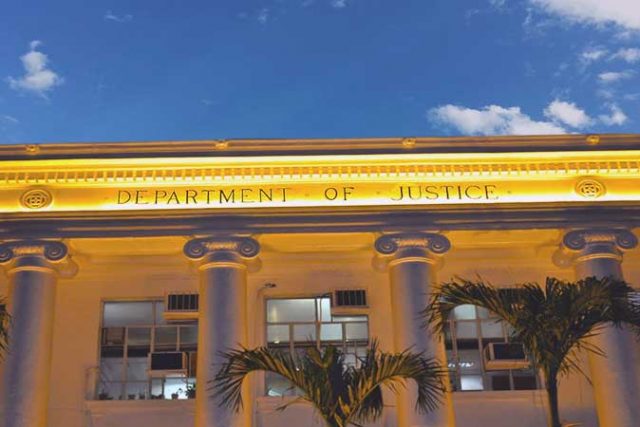
Human rights activists on Friday asked the Justice department and Supreme Court to hasten the probe of activist killings.

“Two months is too long. This is discouraging for relatives,” Karapatan Secretary General Cristina Palabay said at an online news briefing on Friday. “Lives and security are at stake here,” she added.

Two months have passed since almost a dozen activists were killed in a police raid in Southern Luzon.

Ms. Palabay asked Justice Secretary Menardo I. Guevarra to fulfill his promise before the United Nations Human Rights Council in February to look into the killings.

She added that Mr. Guevarra had offered to protect the relatives of slain activists, but they were not comfortable and “would rather seek protection elsewhere.”

Defend-Southern Tagalog Spokesperson Charm Maranan also called on Chief Justice Alexander G. Gesmundo to look into the “factory of warrants” to stop the unjustified killings and arrests of activists.

The activists said four more activists had been arrested in the provinces of Rizal and Quezon, and three others in the Bicol region. Families were allegedly “held at gunpoint” while law enforcers planted evidence of illegal gun possession.

In March, the high court said it would issue a rule that would require the police to use body cameras when serving warrants.

Meanwhile, government agents arrested five people in Cebu City for operating an abortion clinic.
In a report, the National Bureau of Investigation (NBI) said the suspects were offering abortion services online for P9,500 to P30,000.

They were arrested in different locations through an entrapment operation, where an NBI agent posed as an abortion customer.

The suspects are facing charges of violating the law against “ntentional abortion and conspiracy” and the Cybercrime Prevention Act of 2012. — Bianca Angelica D. Anago

Senator seeks import probe

PHILIPPINE STAR/ MICHAEL VARCAS

A senator has sought an investigation of the importation of goods at lower tariffs.

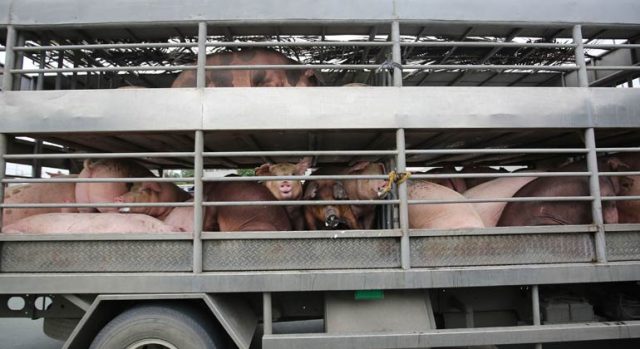
Senator Imee Marcos lauded the compromise on the tariff for pork imports but said all minimum access volume (MAV) or imports subject to lower tariff, should be probed.

“The MAV issue doesn’t stop there because our agricultural industry continues to struggle,” she said in a statement. “It seems we are still forced to import all kinds of basic commodities.”

“Let us use this opportunity to fix the country’s twisted system of food importation — whether it’s rice or corn, pork, chicken, fish, sugar, vegetables, X’mas goodies, or fruits,” Ms. Marcos said.

“There’s no end to racketeering, it’s exasperating. Despite the entry of pests and disease, we still haven’t learned our lesson,” she added.

The Finance department has agreed to change an executive order that cut the tariff for pork imports after the Senate and the country’s economic managers reached a compromise on the issue, Senate President Vicente C. Sotto III said on Wednesday.

Mr. Sotto said they agreed to place the cap on the minimum access volume for pork imports at 254,000 metric tons (MT).

He said they also agreed to set the tariff on pork imports under the MAV quota at 10% for the first three months, and increase it to 15% in the succeeding nine months.

Under EO 128 signed by President Rodrigo R. Duterte in April, the original 30% tariff rate of the pork imports under the MAV quota would be cut to 5% in the first three months and will be raised to 10% for the succeeding nine months. — VMMV

Shares decline on latest jobs data, pandemic concerns

Philippine Stock Exchange index

Philippine shares closed the week in the red after data showed that the country’s unemployment rate went down in March and as the country’s pandemic situation continue to cloud investor sentiment.

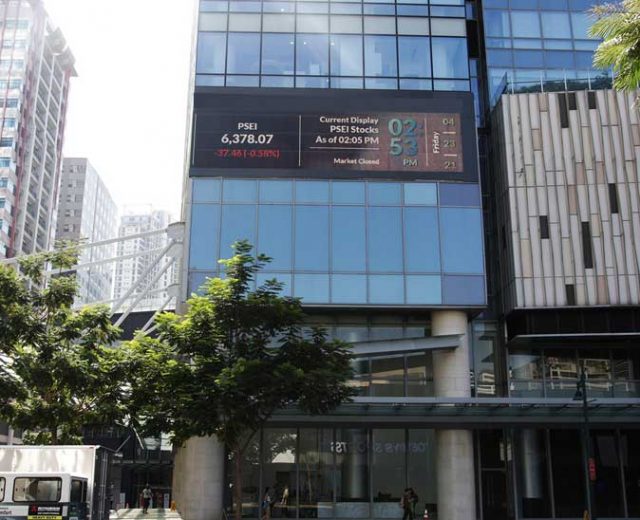
The Philippine Stock Exchange index (PSEi) went down by 24.07 points or 0.38% to close at 6,258.71 on Friday, while the all shares index decreased by 2.22 points or 0.05% to finish at 3,877.43.

“Philippine shares closed lower as investors focused their attention on the highly anticipated jobs data, while fund managers continued to assess the new set of earnings that came out,” Regina Capital Development Corp. Head of Sales Luis A. Limlingan said in a Viber message.

The preliminary results of the Philippine Statistics Authority’s Labor Force Survey for March this year showed that around 3.441 million Filipinos are unemployed, lower than the 4.187 million recorded in February.

The country’s unemployment rate for the month was at 7.1%, the lowest since the 5.3% seen in January last year.

Philstocks Financial, Inc. Senior Research Analyst Japhet Louis O. Tantiangco said the decline “[reflects] investors’ declining confidence towards the market amid the pandemic and economic concerns.”

“Investors continue to worry about the pace and the strength of our economic recovery due to the setbacks brought by the pandemic and the consequent strict quarantine measures reimposed in the NCR Plus,” Mr. Tantiangco said, referring to the National Capital Region and nearby provinces.

“Tailwinds that can boost sentiment remain missing,” Mr. Tantiangco said. in a Viber message.

Sectoral indices remained split on Friday. Mining and oil gained 136.89 points or 1.44% to 9,588.36; services climbed 18.98 points or 1.33% to 1,444.40; and industrials improved by 18.37 points or 0.21% to end at 8,628.65.

Meanwhile, property declined by 29.98 points or 0.97% to 3,044.26; holding firms fell by 42.47 points or 0.67% to close at 6,226.53; and financials inched down by 7.44 points or 0.53% to 1,390.35.

Value turnover went down to P4.66 billion on Friday with 2.10 billion shares traded, from the P5.28 billion seen the previous trading day with 13.84 shares switching hands.

Decliners narrowly outnumbered advancers, 106 to 104, while 35 names closed unchanged.

Net foreign selling increased to P637.59 million on Friday from the P460.67 million seen in net outflows recorded on Thursday. — Keren Concepcion G. Valmonte