Home Blog Page 8153

Gov’t directs nuclear energy education campaign on high school students, teachers

PNRI.DOST.GOV.PH

THE DEPARTMENT of Energy (DoE) and Department of Science and Technology’s Philippine Nuclear Research Institute (DOST-PNRI) have rolled out a series of educational materials on nuclear science and technology to broaden public awareness and improve public perception on the fuel source.

The learning materials, geared towards high school teachers and students, consist of online booklets and videos, and modules for exclusive use in the DOST-Science Education Institute’s Science Explorer Bus.

“I’m optimistic that through the projects… our youth will gain unbiased knowledge that would serve as a strong foundation before they proceed to higher levels of learning,” Energy Secretary Alfonso G. Cusi said in a taped message shown during the launch.

“We decided to develop this project (beginning in) 2019 as part of our efforts to promote nuclear energy awareness and improve public perception on the acceptance of the subject,” he added.

An advocate of integrating nuclear energy in the country’s power mix, Mr. Cusi said the mothballed Bataan Nuclear Power Plant (BNPP) has been “unfortunately demonized” into dormancy.

“In my opinion, had we been able to seize the opportunity to operate the BNPP, our present economic landscape would probably resemble those of our more industrialized neighbors like South Korea (and) countries that were able to pursue nuclear power programs despite the socioeconomic challenges of those times,” he said.

Mr. Cusi added that the decision on whether the country will go nuclear will entail a national consensus, including strong acceptance from the public on the fuel source.

He said the most effective way to get broader support is through education.

During the event, PNRI Director Carlo A. Arcilla said educating teachers and students under the K-12 curriculum was crucial in overcoming misunderstandings on nuclear power.

In December last year, the DoE said its nuclear energy program inter-agency committee had submitted its recommendations to President Rodrigo R. Duterte.

The group was tasked to conduct a study adopting a national position on a nuclear energy program. — Angelica Y. Yang

Duterte, Saudi crown prince tackle Kafala system, workers’ welfare

DFA-OUMWA
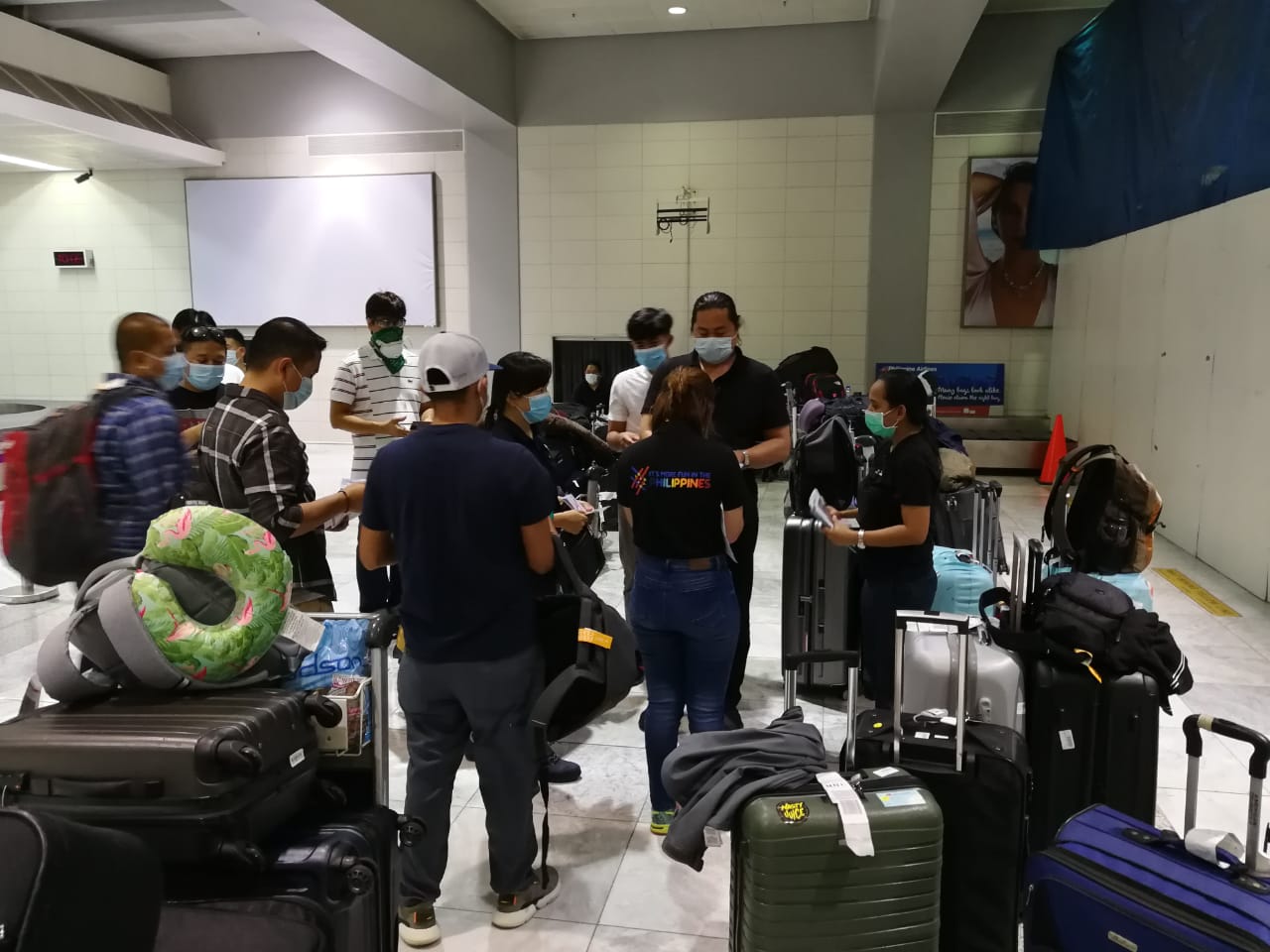
Employees of the Nasser S. Al Hajri Corporation in Dammam, shown here arriving in Manila in May 2020 with assistance from the Department of Foreign Affairs, are among the over 980,000 Filipinos working in Saudi Arabia. — DFA-OUMWA

PHILIPPINE President Rodrigo R. Duterte and Saudi Arabia Crown Prince Mohammed bin Salman spoke on the phone Wednesday night where they discussed the welfare of Filipino workers in the Middle Eastern country and the Kafala system, according to the presidential palace.

Presidential Spokesman Herminio “Harry” L. Roque, Jr. told a televised news briefing on Thursday that Saudi Arabia is leading the campaign against the Kafala system.

“So the discussion was centered on that and how to strengthen the protection given to Filipino workers in Saudi Arabia,” he said in Filipino.

The Council on Foreign Relations defines the Kafala as a sponsorship mechanism that gives private employers almost total control over the migration and employment status of overseas workers.

Mr. Duterte last month described Kafala as “unjust and exploitative” and called for its abolition.

There are more than 983, 000 Filipinos workers in Saudi Arabia, according to the Labor department.

Mr. Roque said the two leaders also talked about viable ways to end the pandemic, noting that the two leaders agreed that a “system” must be created to ensure that poor and rich nations will have access to vaccines. — Kyle Aristophere T. Atienza

Senate leader eyes hearing on ivermectin

SENATE.GOV.PH

THE SENATE might conduct a hearing on the use of anti-parasitic drug ivermectin as potential treatment for coronavirus.

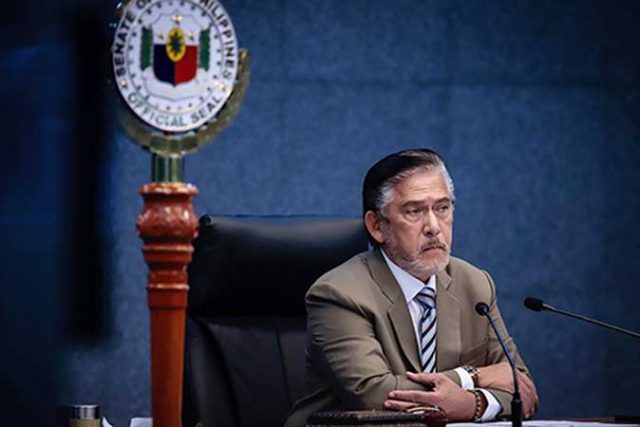
Senate President Vicente C. Sotto III, who admitted that he takes ivermectin every two weeks, said those who want to use the drug should be allowed to do so.

“Ang sinasabi ko, yung gustong gumamit, hayaang gumamit (What I am saying is, those who want to use it, let them use it),” he told an online briefing.

Ivermectin is authorized by the Philippine Food and Drug Administration (FDA) for animal use.

The FDA recently issued a so-called Compassionate Special Permit for its use as treatment for coronavirus patients, but only to six hospitals.

Mr. Sotto, speaking in a mix of English and Filipino, cited that there are many other “food and drugs” that do not go through the FDA but have long been used by “people worldwide.”

He questioned why there is a sudden heated debate over the drug, noting that some doctors recommend its use.

FDA and Department of Health officials as well as various groups of medical practitioners have said that there is no conclusive scientific evidence indicating ivermectin’s efficacy against the coronavirus.

Mr. Sotto said he might be “tempted” to deliver a privilege speech on the matter within the first or second week after Congress sessions resume on May 17.

“Maganda niyan magkaroon tayo ng hearing tungkol diyan (It would be good that we have a hearing on that),” he said. — Vann Marlo M. Villegas

Davao City airport reopens to all types of flights

BW FILE PHOTO/ LSDAVAL JR.

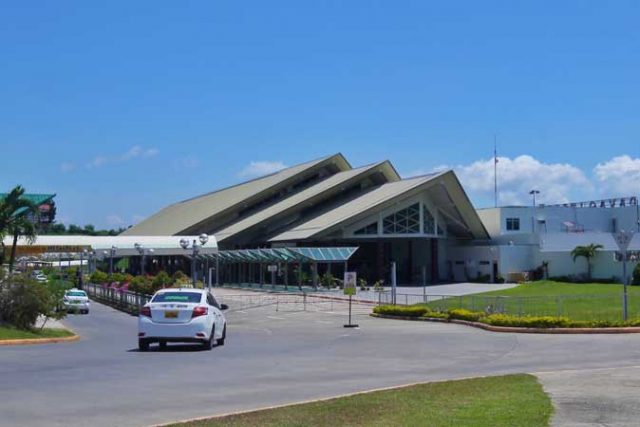
THE DAVAO International Airport is now open to all kinds of flights after the city government issued an order on May 5 lifting earlier restrictions imposed to mitigate the spread of coronavirus.

“The resumption of all kinds of flights, such as scheduled international flights, unscheduled domestic commercial flights (chartered), and other general aviation flights to and from Davao City is hereby allowed,” reads Executive Order No. 26 signed by Davao City Mayor Sara Duterte-Carpio.

The order comes after the Civil Aviation Authority of the Philippines, which manages the airport, requested in a May 4 letter to the mayor for a resumption of full operations to “allow for more economic activities insofar as civil aviation is concerned.”

All incoming passengers are still required to have a negative RT-PCR test result for coronavirus disease 2019 (COVID-19) taken within 72 hours before arrival.

Those who are unable to bring a result will be subject to testing at the airport and pay the P4,500 cost.

Passengers who present a false or tampered result will also be required to undergo testing at their own expense, placed in a quarantine facility, and pay fines based on local and national laws.

The Davao airport, formally named Francisco Bangoy International Airport, is the only one in Davao Region and serves as one of the main gateways in Mindanao.

Davao Region, with a population of at least five million, has managed to keep COVID-19 cases relatively low with 912 active patients as of May 5 out of the 23,613 total recorded since the start of the pandemic. There were 987 deaths and 21,752 recoveries.

Of the active cases, Davao City had the highest at 356, followed by Davao del Norte with 257 and Davao de Oro with 159. The rest are in Davao del Sur, 68; Davao Oriental, 23; and Davao Occidental, 11. — Marifi S. Jara

Undeclared drugs, including ivermectin, seized at Manila airport

BOC

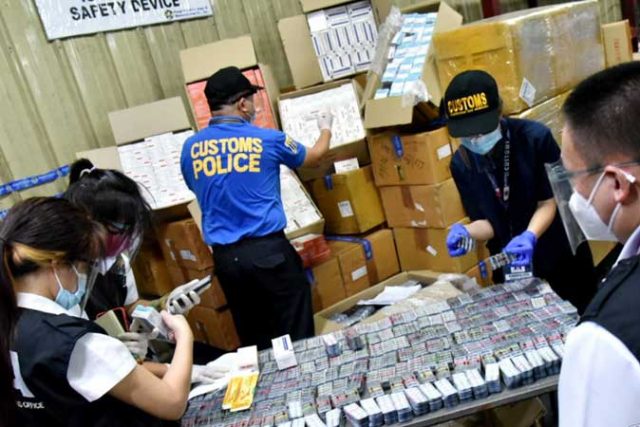
THE BUREAU of Customs intercepted thousands of regulated drugs, including the currently controversial ivermectin, which were undeclared in a shipment coming from India.

In a statement on Thursday, the bureau said the Customs examiner at the Ninoy Aquino International Airport found the regulated drugs “concealed in the inner portion of the subject shipment and covered by other declared regulated items.”

The shipment, imported by Finstad, Inc. from New Delhi, was declared as “Food Supplements, Multivitamins and Multi-Mineral Capsules,” according to the bureau.

Among the confiscated items were 20,000 capsules of ivermectin, an anti-parasitic drug authorized for animal use in the Philippines but is being promoted by some politicians and medical practitioners as a preventive or treatment medicine against coronavirus disease 2019 (COVID-19).

Food and Drug Administration Director Jesusa Joyce N. Cirunay of the Center for Drug Regulation and Research has informed the Customs bureau that ivermectin “is under compassionate use in Specialized Institutions authorized by FDA through the issuance of Compassionate Special permit.”

It’s importation, she added, should come with a license to operate as a drug importer and a product registration certificate

The FDA has so far given only six hospitals special permit for the  use of ivermectin, FDA Director General Rolando Enrique D. Domingo told an online forum on Wednesday. — with a report from Vann Marlo M. Villegas

Farmers declare ‘moral victory’ after revisions to pork import EO

REUTERS

THE agriculture industry said the government’s decision to moderate drastic tariff reductions represents a “moral victory” for hog raisers, who will need to compete with the increased volume of imports.

The Samahang Industriya ng Agrikultura (SINAG) said in a statement on Thursday that the Department of Agriculture (DA) also needs to revoke all sanitary and phytosanitary import clearances that had been issued under the original terms of Executive Order (EO) 128.

“This is a moral victory for the local hog industry and a slap in the face of the pro-importation and anti-local hog raiser Secretary of Agriculture,” SINAG said.

“The Bureau of Customs must be alerted immediately on this compromise and be guided on the tariffs that should be collected once these imports arrive,” it added.

“More importantly, we demand the full implementation of the first border inspection as mandated by Republic Act No. 10611 or the Food Safety Law,” it said.

The DA said late Wednesday that the Senate and the economic team of President Rodrigo R. Duterte had agreed on final revisions to EO 128.

They include tariff rates for pork imports within the minimum access volume (MAV) quota of 10% in the first three months and increasing to 15% over the following nine months.

Tariff rates for out-of-quota pork imports were also recommended for resetting to 20% for the first three months and up to 25% in the succeeding nine months.

The proposed tariff rates are higher than those previously set by EO 128, which were 5% in the first three months and 10% in the following nine months for pork imports within the quota, and 15% in the first three months and 20% in the succeeding nine months for out-of-quota pork imports.

Before the EO, in-quota pork imports paid 30% while out-of-quota pork imports were charged 40%.

The rest of the pork value chain has indicated that the changes to the EO are acceptable.

Jesus C. Cham, Meat Importers and Traders Association (MITA) president, said in a mobile phone message that the proposed adjustments are “manageable,” adding that the market will find equilibrium at a higher price point.

Mr. Cham said the increased tariffs on pork imports will result in a corresponding adjustment in retail prices.

“The market will just find an equilibrium at a higher price point,” Mr. Cham said.

Mr. Cham said a reduction in the MAV quota allocation for pork imports will result in “disturbances” to the market, noting that the DA was never given the chance to manage import volumes.

“More volume is more comfortable. If the guidelines to be set are on a first come-first served basis, I would expect importers to try to be first in line,” Mr. Cham said.

“The additional MAV allocation has always been intended for gradual release, with a substantial volume held as contingency. Unfortunately, there is a lot of distrust and changes bring about disturbances,” he added.

MITA recently recommended that the government extend the implementation of lower tariffs on imported pork until 2025 to ensure supply while the hog industry recovers from the African Swine Fever (ASF) outbreak.

The DA has said that the economic team and the Senate agreed to cut the proposed increase on pork imports within the MAV quota to 254,210 metric tons (MT), from the previous 404,000 MT. MAV is applied to farm commodities that are charged lower tariffs under the World Trade Organization trading system.

In a statement Thursday, the Philippine Association of Meat Processors, Inc. (PAMPI) urged Mr. Duterte to sign the amended executive order as soon as possible.

“The joint legislative-executive action on tariff cuts and the MAV volume of 254,210 MT has prevented the national economy from being held hostage by vested interest groups,” PAMPI said.

“When leaders in government and the private sector allow reason to prevail, a rational solution to a controversy can be reached without sacrificing the interest of any party,” it added.

In a virtual briefing Thursday, DA Spokesperson Noel O. Reyes confirmed that Agriculture Secretary William D. Dar forwarded the recommended revisions to the National Economic and Development Authority (NEDA), led by Socioeconomic and Planning Secretary Karl Kendrick T. Chua.

“The NEDA board will convene on the recommended revisions for EO 128. Once approved by the NEDA Board, the revisions will be endorsed to the President,” Mr. Reyes said.

“There is no timeline yet on when the revisions will be endorsed to the President. Meanwhile, the tariffs provided under EO 128 are still in effect,” he added.

Mr. Duterte originally submitted a recommendation to Congress to increase the MAV allocation by 350,000 MT, on top of the current 54,210 MT, in order to address the DA’s projected pork deficit of around 400,000 MT after the decline in hog populations following the ASF outbreak.

In a virtual briefing Thursday, Senate President Vicente C. Sotto III said the revisions to EO 128 are a “done deal” and are as good as approved.

“I think it is good as approved since I talked with Finance Secretary Carlos G. Dominguez III and I gave him the go signal as far as the Senate is concerned and some of the leaders of the hog raisers that we talked to,” Mr. Sotto said. — Revin Mikhael D. Ochave


PAGCOR sees P7B in additional revenue from e-cockfights

PHILSTAR

THE Philippine Amusement and Gaming Corp. (PAGCOR) is expecting to collect P7 billion in fresh revenue each year from electronic cockfight betting, known as e-sabong, assuming that eight operators start operations as scheduled.

“We’re expecting about P7 billion of revenue a year… if we get at least eight operators getting licenses for e-sabong,” Jose S. Tria, Jr., PAGCOR’s assistant vice-president for offshore gaming and licensing, said in an interview with BusinessWorld Live.

Mr. Tria said there were eight operators that have expressed interest in being licensed but only five have applied so far.

Four have won approval but only two have been able to launch operations because they were the only compliant licensees, he said.

“When we examined their operations, processes, there were a lot of changes that we had to impose, especially on compliance with anti-money laundering laws, the manner by which the bets are deposited, (and) the manner by which players collect their bets,” he said.

He added operators have to tighten their restrictions and to accept only players who are of legal age with verified sources of income.

The regulator wants operators to comply with age requirements and to raise the minimum bets for e-sabong to ensure that only targeted players can participate. He said PAGCOR also wants to include a “buy-in” operation in which players need to make sizable deposits to weed out the ones who cannot afford to gamble.

E-sabong is currently gaining traction, Mr. Tria said, with operators reporting a take of about 5% on bets, which range from P500,000 to P5 million per fight. PAGCOR collects a regulatory fee based on the operators’ commissions, he said.

“When we review the figures, this is continually growing, e-sabongs were big during the pandemic (because there was no) in-person betting in cockpits,” he said.

“We’re expecting now with PAGCOR coming in and exercising regulation over the industry (that) player confidence in the game will rise further,” he added.

Gaming and technology company DFNN Group also announced Thursday that it will include e-sabong to its product offerings.

“With the legalization of e-sabong, regulator PAGCOR is ready to tap revenues from electronic cockfights or e-sabong,” the company said in a disclosure.

DFNN said this will allow it to tap a new income stream and contribute more to government revenue.

“Given the experience and reach of the group’s gaming platforms, it is well positioned to take on this new vertical in line with the PAGCOR rules of their approved content, as it has unparalleled capabilities in secure payment solutions, KYC (know your customer) solutions, logistics capabilities, and proprietary IT (information and technology) knowledge to be able to scale rapidly and seamlessly integrate the technology with its other content,” it said.

PAGCOR’s net profit in the first quarter dropped 80% from a year earlier to P152.62 million due to pandemic restrictions on gaming.

Gross income from gaming operations fell 54% year on year to P8.363 billion. — Beatrice M. Laforga

WiFi contractor’s reply to demand for return of funds expected soon

THE SATELLITE company hired to implement the P1.3-billion free WiFi project is expected to respond to a letter from the Department of Information and Communications Technology (DICT) seeking the return of the leftover funds allocated for the initiative, a Palace official said.

Hong Kong-based SpeedCast International Ltd. has until Friday to reply to a demand to return the unused funds, the President’s spokesman, Herminio L. Roque, Jr. said at a televised news briefing Thursday.

“Well nakipag-ugnayan po tayo kay Usec. (Emmanuel Rey R.) Caintic ng DICT at ang nalaman po natin unang-una, iyong contractor po has until tomorrow to respond to their demand letter (What we learned from Undersecretary Caintic is that the contractor has until tomorrow, Friday, to respond),” he said.

Ang demand po nila ay itigil na ang proyekto dahil DICT na po ang gagawa ng proyekto at iyong mga pera na naibayad na sa kanya na hindi naman niya naikabit by way of WiFi spots ay dapat ibalik (The contractor has also been told to suspend work on the project because the DICT can take it on, and it needs to return the funds meant for the WiFi spots that have not been installed).”

Mr. Roque said government accountants involved in the project have yet to determine the amount of money that the contractor needs to return to the government.

The Palace has asked the DICT to terminate its contract with SpeedCast due to the slow rollout, and after reports that the company had undervalued six shipments in its Customs declarations.

The DICT on Tuesday said it has created a task force to investigate the allegations against the company.

Mr.  Roque has said it was unacceptable that only 10,000 of the 120,000 target sites have been provided free wireless internet access, nearly four years after President Rodrigo R. Duterte signed Republic Act No. 10929, which authorized the government to offer the public free internet access.

In 2018, the United Nations Development Programme tapped SpeedCast for the project after the President signed RA 10929. — Kyle Aristophere T. Atienza

Asia renewables transition too slow to reverse emissions damage — ANZ

Asia’s transition to renewable energy is in progress but the pace of change is insufficient to curb carbon emissions with the region still dependent on coal-fired power, ANZ Research said Wednesday.

“While some economies have made more progress than others, all have a long runway before climate change objectives can be attained,” ANZ Research said in its Asia Insight report.

Of the nine countries cited in the study, the Philippines has increased its share of coal power in the four-year period after 2015.

ANZ Research estimated that renewables took up 10.5% of the Philippines’ primary energy in 2019 while coal made up 36%. In 2015, renewables accounted for 12% of the primary energy supply while coal took up 30.6%. ANZ Research described this as a “setback” in terms of decarbonization efforts.

ANZ Research described Asia’s heavy reliance on coal as its Achilles’ heel. “Notably, coal accounts for 55% of Asia’s CO2 emissions compared with the global average of 40%,” it said.

According to the report, the Philippines has seen “encouraging developments” such as the Department of Energy’s moratorium on greenfield coal-fired projects.

ANZ Research noted a strong push towards the use of renewables in Asia from 2010 to 2019, with South Korea achieving the fastest growth in installed capacity.

Countries that have been stepping up their renewable capacity also include China and India. China is set to reach its net zero target by 2060, and South Korea will hit its goal by 2050.

“Still, the overall market penetration for renewables remains low in Asia. Renewable energy sources accounted for more than 8% of Asia’s primary energy mix in 2019, some way below the global average of above 11%,” ANZ Research said, adding that falling costs for solar and onshore wind, as well as government policy, will determine the pace of the clean energy transition. 

Asia is under increasing pressure to move faster on its energy transition, ANZ Research noted.

“Reducing reliance on coal, accelerating the deployment of renewable energy sources and improving energy efficiency are three critical aspects that Asian economies must address if they want to cut their carbon footprints,” it added.

In March, Bangko Sentral ng Pilipinas Governor Benjamin E. Diokno said that the country needs to assess the financial risks that may come with a shift away from coal energy. He said it will take a long time to properly move towards achieving low greenhouse gas emissions, particularly for a country that is traditionally dependent on fossil fuels. — Angelica Y. Yang

Government urged to review restrictions on digital platforms

The GOVERNMENT needs to review the foreign investment restrictions on digital platforms to remove obstacles to their growth, a researcher for the Philippine Institute for Development Studies (PIDS) said.

Aiken Larisa Serzo, a consultant with the University of the Philippines Law Center, said digital platforms are classified as mass media or service providers under the telecommunications industry, subjecting them to foreign equity restrictions.

“Various pronouncements have set a rule wherein if you’re an internet business, communicating any message to the public, whether or not you’re the author of those messages, is mass media, and thus, subject to the foreign equity restriction of 100%,” Ms. Serzo said in a PIDS statement.

Ms. Serzo wrote the paper Cross-Border Issues for Digital Platforms: A Review of Regulations Applicable to Philippine Digital Platforms, published by PIDS.

She added that there are regulatory overlaps because technology products fall under the jurisdiction of various regulators.

Motorcycle carriers and taxis, for example, are overseen by the Department of Information and Communications Technology, which regulates postal services. But public transportation is regulated by the Department of Transportation.

“However, motorcycle taxis and other ride-hailing applications usually provide both courier and transportation services, thus placing them under the jurisdiction of both,” the report said, adding that motorcycle taxis granted postal service authority could be apprehended by the Transportation department for violating its regulations.

The expansion of digital platforms outside the country, Ms. Serzo added, could be impeded because data privacy regulations vary among jurisdictions.

“If you’re a platform, you must do some level of due diligence to identify what regulations apply to you and engage the services of a lawyer or compliance services in the jurisdictions where you operate,” she said, noting that this adds to operating costs.

She said that restrictive regulations lead firms to relocate elsewhere, and asked the government to reevaluate what she called restrictive policies.

“Most of the investment restrictions we have were written decades ago and may have to be reconsidered in light of the existing technology these days and the fact that the harms that existed long ago may (no longer) be relevant today,” Ms. Serzo said. — Jenina P. Ibañez

Regulatory conflicts flagged with creation of power agency

GOVERNMENT agencies raised the possibility of regulatory overlap in the creation of a new office tasked with ensuring power rates for consumers.

In a hearing Thursday, the National Electrification Administration (NEA) said that the proposed Energy Counsel Office (ECO) or Energy Advocacy Office (EAO), as outlined in House Bill No. 7608 or the proposed Energy Advocate Act, and House Bill No. 8786 respectively, will strip away some of the NEA’s functions.

NEA Deputy Administrator Rossan Rosero-Lee said: “As presently couched in the proposed House bill, the EAO or the ECO is empowered to initiate, intervene, and represent all end-users in cases falling within the jurisdiction that is now (overseen by) the NEA administrative committee.”

She added that giving the ECO/EAO sole authority to investigate cases involving power companies that may have committed violations “would directly be in conflict with the primary and exclusive jurisdiction of the NEA.”

She said that the proposed new office will add further obstacles to resolving issues that affect consumers.

“The grant of powers exclusive to the EAO and ECO would delay the powers of the NEA (to oversee) errant electric cooperatives and diminish the efficacy of intervention measures otherwise urgent for the protection of the consumer,” Ms. Rosero-Lee said.

Another agency with a potential conflict with the proposed ECO/EAO is the Energy Regulation Commission and other entities created under Republic Act 9136 or the Electric Power Industry Reforms Act of 2001.

The House Committee on Energy resumed deliberations Thursday on the substitute bill that will consolidate both bills.

The proposed new office will be attached to the Department of Justice (DoJ). However, the DoJ said it believes the ECO/EAO would be better handled by another government department.

State Counsel Jenny A. De Castro said at the hearing: “The mandate of the proposed office… may be more aligned to the mandate and function of the Department of Trade and Industry (in terms of) the protection and promotion of consumer rights of end-users of electricity, which is being provided by the energy sector.” — Gillian M. Cortez

Finance dep’t backs vaccine tie-ups between gov’t, private sector

GOVERNMENTS need to be open to private sector help in implementing immunization programs, as well as in producing vaccines, Finance Secretary Carlos G. Dominguez III said.

“The private sector brings in efficiency, and frankly in my experience as a government minister, efficiency is not number one in (the government’s) DNA. I think it should be a partnership, where the goals and the profits — the return on investment — are very, very clearly defined,” Mr. Dominguez said during the Asian Development Bank’s (ADB) 54th annual meeting.

He said such an approach will ensure a more efficient rollout of vaccines as the private sector brings in its expertise while the government serves as regulator and moderator in case companies start prioritizing profit over the program’s main objectives.

He had also called on for a stronger cooperation between the ADB and Southeast Asia in boosting the region’s capacity to manufacture vaccines.

Nirmala Sitharaman, India’s Minister of Finance, concurred, saying at the meeting that the Indian government and the private sector have worked closely in boosting the country’s supply of vaccines and healthcare capacity.

In a blog post Tuesday, experts from the World Bank and World Health Organization said an “efficient and equitable vaccine rollout” will need the private sector’s involvement as it can supply services that governments do not have the capacity for, can expand the program’s reach to remote areas, bring down costs, ensure that the supply chains are flowing, and expand vaccine supply.

However, they warned that poor cooperation between governments and the private sector, conflicts of interest, gaps in regulation, and low-quality services could emerge as potential challenges.

“Engaging and integrating the private health sector is a challenge, but countries should not shy away from it. Effective governance is not a choice — it is a necessity to overcome bottlenecks and guarantee a rapid, safe and equitable delivery of the COVID-19 vaccine,” according to the blog post.

In the Philippines, private companies were allowed to import their own vaccines through tripartite agreements with the government and drug manufacturers. — Beatrice M. Laforga