Home Blog Page 8082

ARTA issues show-cause order to FDA drug center over inaction on drug applications

THE Anti-Red Tape Authority (ARTA) issued a show-cause order to the Food and Drug Administration’s (FDA) drug testing center for alleged inaction on more than 600 drug applications.

In a statement Tuesday, ARTA confirmed that Investigation Enforcement and Litigation Director Jedrek C. Ng sent the order to the FDA’s Center for Drug Regulation and Research Director Jesusa Joyce N. Cirunay.

ARTA said the show-cause order was a result of 23 affidavits of various pharmaceutical firms that detailed the alleged delays, some involving applications filed starting 2014.

ARTA Director General Jeremiah B. Belgica said the applications are not considered complex — one of the standards that allow for extended review. — Revin Mikhael D. Ochave

Mobile phones generate P2 billion in BoC collections year to date, up 27% 

BUREAU OF CUSTOMS (BoC) collections generated by imports of mobile phones rose 27% year on year to P2 billion in the four months to April following the adoption of an improved valuation system.

The Department of Finance (DoF) said in a statement Tuesday that the increased revenue was accompanied by a 30.4% drop in import volume.

Customs Commissioner Rey Leonardo B. Guerrero said the new valuation system charges tax per device and takes into account the brand of device, and the result reflects the import of higher-end units as well.

The DoF said Customs also generated higher collections from other devices and accessories in the four months.

It collected P24.79 million from mobile phone parts, up 78% year on year, and P3.46 billion from other types of telecommunication devices, up 28%.

This brought the total collections from the telecommunications sector to P5.49 billion as of April, up 28%.

Meanwhile, the BoC’s rice tariff collections rose 3.8% to P5.67 billion.

Volume of rice imports fell 9.2% to 804,360 metric tons in the January-April period.

Mr. Guerrero said the decline in the volume of imported grain coincided with the domestic harvest season.

The collections in those four months accounted for 57% of the P10 billion the BoC must remit to the Rice Competitiveness Enhancement Fund (RCEF) as required by Republic Act 11203, or the Rice Tariffication Law.

RCEF supports farm mechanization and other programs to enable farmers to better compete against imports. — Beatrice M. Laforga

Microfinance regulator eases compliance requirements for NGOs 

FREEPIK

THE Microfinance NGO Regulatory Council (MNRC) said it has eased the requirements for non-government organizations (NGOs) engaged in such lending in order to avert any failure to comply with the law governing the industry.   

Memorandum Circular No. 1 Series of 2021 detailed prudential relief measures such as the relaxation of the P1 million minimum fund balance requirement, the minimum 50% rating in financial performance indicators, and the minimum 60% weighted average rating for all performance indicators.

“The MNRC recognized the request of the microfinance industry for prudential relief measures aimed at encouraging accredited (microfinance) NGOs to concentrate their operations and resources in the continuous delivery of microfinance services during this extraordinary situation,” the MNRC said in the memorandum circular, published Monday. 

The regulatory relief measures will allow NGOs to remain compliant with Republic Act (RA) No. 10693 or the Act Strengthening Nongovernment Organizations (NGOs) Engaged in Microfinance Operations for the Poor, and its implementing rules and regulations.

“Reports and other documents to be submitted to the MNRC covering calendar year 2020 under Item 3 of MNRC M.C. No. 2, Series of 2020 shall be extended to (Dec. 31),” the MNRC said.

Reports or documents submitted to the MNRC Secretariat’s official e-mail address during the lockdowns will be recognized as valid and authorized submissions, “provided that they are consistent with the applicable provisions of RA 8792, or the Electronic Commerce Act of 2020.” 

“The MNRC shall thereafter require physical copies of required reportorial submissions according to the established rules and regulations once the state of public health emergency has been lifted,” it said.

Those seeking regulatory relief are required to submit to the MNRC a letter detailing their intention to avail, the specific measures to be availed of, their reasons, information on their operations, and a statement of good standing from the relevant government agencies.

“Accredited NGOs shall ensure that the measures to be availed of are suitable to their operations, situation and condition,” the MNRC said.

Applications for the relief measures may be submitted personally or through registered mail or courier. — Keren Concepcion G. Valmonte

SEC signs on to framework enabling cross-border retail sales of funds

THE Securities and Exchange Commission (SEC Philippines) said Tuesday that it joined the ASEAN Collective Investment Schemes (CIS) Framework, which will allow institutions to offer investment funds to retail investors in other jurisdictions.

The accession to the framework was effected via a supplemental memorandum of understanding with its counterparts in Thailand (SEC Thailand), Securities Commission Malaysia (SC), and the Monetary Authority of Singapore (MAS).

The framework streamlines the approval process for offering funds to retail investors across borders and will regulate qualified investment companies in the Philippines and their fund managers as well as their counterparts in the other ASEAN countries.

“We deeply appreciate the tireless efforts and dedication of SC, MAS, and SEC Thailand in facilitating the admission of the Philippines into the ASEAN CIS Framework… (which allows) us to participate and be able to showcase our collective investment schemes,” SEC Philippines Chairman Emilio B. Aquino said in a statement.

The framework is an initiative under the regional capital markets integration plan endorsed by the region’s finance ministers in 2009 “to facilitate cross-border product access and fund distribution for investors and issuers respectively.”

It allows retail investors to “tap into a wider choice of funds.”

“The addition of the Philippines to the three existing jurisdictions under the framework broadens the range of regional funds for portfolio diversification, and we hope for more participation from our ASEAN counterparts in (the) future,” SC Chairman Syed Zaid Albar said.

Lim Tuang Lee, the capital markets assistant managing director of MAS, said the Philippines’ participation “marks a progressive step” in the region’s capital market integration. — Keren Concepcion G. Valmonte

UNDP extends Philippine renewable energy program

THE United Nations Development Programme (UNDP) has extended the Development for Renewable Energy Applications Mainstreaming and Market Sustainability (DREAMS) program to January 2023, the Department of Energy (DoE) said.

“Energy Undersecretary Emmanuel P. Juaneza informed the Secretary (Alfonso G. Cusi) that the UNDP has extended the DREAMS Project’s duration from July 2021 to January 2023,” the energy department said in a statement last week, referring to a virtual event attended by DoE officials and UNDP Resident Representative Selva Ramachandran.

The DoE is currently implementing the project through its Renewable Energy Management Bureau (REMB). DREAMS have experienced delays due to the pandemic.

“The project was (supposed) to end on July 2022… however due to the 2020 health pandemic that affected all activities, an additional six-month extension (was) added,” DoE-REMB Director Mylene C. Capongcol told BusinessWorld in an e-mail Monday. She is also the National Project Director of the DREAMS.

Ms. Capongcol said DREAMS provides technical assistance to the DoE in drafting and implementing policies to leverage renewable energy (RE) investment and remove barriers to the industry’s growth.

Other major projects under DREAMS include a Support Facility for RE (SF4RE) which aims to fund services and goods to help institutions implement RE projects in their communities; the Local Renewable Energy Planning program which is working with at least 11 municipalities to integrate RE policies and programs in their agenda; and the Philippine Renewable Energy Market System which will be used to track compliance with the Renewable Portfolio Standards (RPS) program, she added.

The RPS program requires distribution utilities to tap qualified RE facilities for a portion of their supply needs.

“DREAMS is also assisting the REMB, in the preparation of the NREP (National Renewable Energy Program) 2020-2040. NREP has defined the RE targets and strategies to achieve overall 35% RE in the energy mix,” Ms. Capongcol added.

Asked how the extension of the DREAMS will help improve the RE market, she said the project aims to complete at least a dozen RE projects under SF4RE, implement support activities under NREP, and continue technical support for the RE market.

She said some $5.2 million has been earmarked for all projects under DREAMS, with $1 million going to SF4RE. She added that the Global Environment Facility is the main source of the $5.2-million grant, adding that the DoE has also committed another $2.2 million in counterpart funds covering management, technical support and office.

According to a midterm review of the program in June 2020, DREAMS is meant to address issues surrounding RE development, focusing on regulatory approvals for RE projects at the local and national levels.

“The objective of the DREAMS project is to reduce GHG (greenhouse gas) emissions through promotion and facilitation of the commercialization of RE markets. This is to be done through the removal of barriers to increase investments in RE-based power generation projects,” it said. — Angelica Y. Yang

PHL COVID-19 response package lags region

PHILSTAR

FISCAL and monetary measures implemented by the Philippines last year in response to the pandemic lagged the packages rolled out elsewhere in the region, the Asian Development Bank (ADB) said in a report Monday.

The ADB estimated that the combined value of the policy measures rolled out by the government and the central bank at $22 billion or $200 per capita between March and December, equivalent to 5.9% of gross domestic product (GDP).

In its report, “One Year of Living with COVID-19: An Assessment of How ADB Members Fought the Pandemic in 2020,” the ADB said: “The packages of the Philippines and Indonesia appear similar in terms of their monetary values,” noting that Indonesia spent about $426 per capita, while Malaysia, Thailand and Singapore spent $2,528, $1,208 and $15,629, respectively.

The bank said the Philippines spent more than expected, having been projected initially to be capable of mobilizing only $145 per capita.

While the ADB said it is difficult to determine whether a package is sufficient to address the crisis, it said most economies studied were able to increase their spending above the predicted levels. However, richer countries were able to roll out much larger packages than the rest of the region.

Globally, the value of health and income support by governments amid the pandemic hit 10.4% of GDP, more than the 2% mobilized during the global financial crisis of 2007-2008.

“The idea of austerity has sharply reversed from the policy response to the previous crisis only 12 years ago. Fiscal demand management was already gaining popularity, but the pandemic has thrown remaining budgetary caution to the wind — governments have spent vast sums to manage the current crisis and promote recovery,” it said.

“The government-imposed lockdowns were a severe shock to supply chains. In that respect, government efforts to support businesses and households in maintaining their pre-pandemic financial positions during the lockdowns in what they hoped would be temporary layoffs were by far the best targets for macroeconomic policy responses to the pandemic,” it added.

As of April 26, the Philippines’ pandemic spending was $30.32 billion or $280.5 per capita, equivalent to 8.24% of GDP, according to ADB estimates.

The Philippine package was bigger than Vietnam’s $279.6 per capita and behind Indonesia’s $426. Singapore and Malaysia spent $17,621 and $3,064, respectively.

The ADB said in the report that the policy measures rolled out by governments and central banks were focused on providing liquidity, encouraging lending, and direct funding, through lending programs, loan moratoriums, cash handouts, and tax breaks, among others.

Amid calls for a third stimulus package to help the Philippine economy recover this year, Economic Planning Secretary Karl Kendrick T. Chua said in a briefing Tuesday that the government should prioritize spending funds from the previous and current budgets and the leftover amounts from the second stimulus package to fully implement the relief measures authorized by those programs.

Mr. Chua said the P4.5-trillion budget for this year has P284 billion in subsidies, while funds remaining from the extended 2020 budget and the Bayanihan to Recover as One Act, known informally as Bayanihan II.

“On the proposed third stimulus package, we support the proposal to help the people, especially those afflicted by hunger and joblessness. (But) we have to be prudent in finding a revenue source or savings to fund these important programs,” he added.

The Department of Budget and Management said Tuesday that it had released P646.97 billion for pandemic-related programs as of mid-April.

This includes P387.17 billion from the first stimulus package as authorized by Republic Act 11469 or the Bayanihan to Heal as One Act (Bayanihan I); P260 billion from Bayanihan II. Some P6.46 billion was released from other sources.

Funds from the extended 2020 budget are valid until the end of the year but Bayanihan II is set to expire by June 30. — Beatrice M. Laforga

Philippines expects to benefit from sustainable finance framework

THE international framework for sustainable finance could serve as a benchmark guiding the Philippines towards more appropriate goals in terms of climate change risk management, Finance Assistant Secretary Paola Sherina A. Alvarez said.

“The Sustainable Finance Integrity Framework is actually useful as a metric in terms of measuring the developing countries’ ambitions, and what we have been doing is relatively ambitious in the context of our own economic development progress,” Ms. Alvarez said in a forum late Monday.

The government set a target of a 75% reduction in greenhouse gas emissions by 2030 as part its commitment to the Paris Agreement on climate change mitigation.

She said the goal is “ambitious” enough in the context of a large low-income population, adding that the Philippines cannot yet afford to achieve net-zero emissions.

“But from the non-government organizations’ point of view… this ambition might not seem to be too ambitious. So for them, we’re not being ambitious enough,” Ms. Alvarez said.

The Climate Policy Initiative think tank published a consultation draft of the Sustainable Finance Integrity Framework late Monday to solicit input from an advisory council, which consists of officials and organizations worldwide.

Follow up analysis will be conducted by November to further refine the framework. The updated framework and benchmarks will also be published that month.

Aside from the government, Ms. Alvarez said the framework can also help the private sector measure whether their commitments to sustainability and climate change mitigation are enough or exceed their actual capacity.

“The draft framework is intended as a contribution to a clear pathway to financial system integrity and materiality that will help smooth the financial sector’s move to sustainability and net zero and reinforce the multiplier effect these actions will have on achievements in the real economy,” according to the document. — Beatrice M. Laforga

Philippines detects Indian coronavirus variant

PHILIPPINE STAR/ MICHAEL VARCAS

By Vann Marlo M. Villegas and Kyle Aristophere T. Atienza, Reporters

PHILIPPINE health authorities on Tuesday said a least two people have tested positive for the coronavirus variant first detected in India, a day after the World Health Organization (WHO) classified it as a variant of concern.

One was a 37-year-old migrant Filipino from Oman, while the other is a 38-year-old who came from the United Arab Emirates, Health Undersecretary Maria Rosario Vergeire told an online news briefing.

Both patients have recovered.

The first patient arrived on April 10 and recovered from COVID-19 16 days later. The other arrived on April 19 and recovered 17 days later, Alethea De Guzman, director of the Health department’s epidemiology bureau, told the briefing. Both had not traveled to India.

Their co-passengers have tested negative for the virus.

The Department of Health (DoH) reported 4,734 coronavirus infections on Tuesday, bringing the total to 1.11 million.

The death toll rose by 59 to 18,620, while recoveries increased by 7,837 to 1.04 million, it said in a bulletin.

There were 56,752 active cases, 1.4% of which were critical, 93.4% were mild, 2.2% did not show symptoms, 1.8% were severe and 1.17% were moderate.

The agency traced the low tally to fewer samples from laboratories on Sunday. Twelve laboratories failed to submit data.

Thirteen duplicates had been removed from the tally, 10 of which were tagged as recoveries and one as death. Nineteen recoveries were reclassified as deaths.

About 11.6 million Filipinos have been tested for the coronavirus as of May 9, according to DoH’s tracker website.

The coronavirus has sickened about 159.6 million and killed 3.3 million people worldwide, according to the Worldometers website, citing various sources including data from the World Health Organization (WHO).

About 137.3 million people have recovered, it said.

The government earlier banned travelers from India until May 14 to prevent the entry of the coronavirus variant blamed for the surge in infections there. Travelers from nearby Bangladesh, Pakistan, Nepal and Sri Lanka were also barred.

The Indian variant is said to be a “double mutant” because it has two mutations in the spike protein of the virus, allowing it to multiply faster.

Other coronavirus variants that have reached the Philippines are those first detected in the United Kingdom, South Africa and Brazil.

MORE VACCINES
Also on Tuesday, the presidential palace said the government would take delivery of more than 11 million doses of coronavirus vaccines from different drug makers this month.

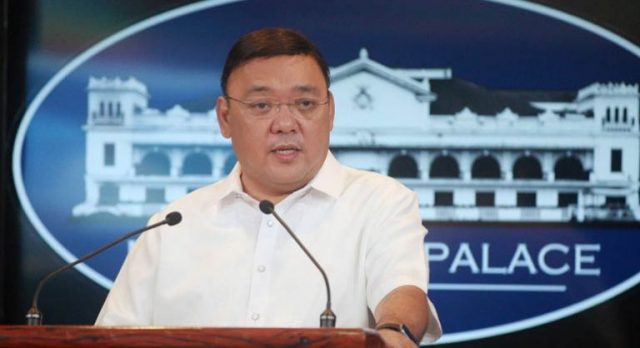
The Philippines would take delivery of about 1.1 million doses of the vaccine made by Pfizer, Inc. this month, as well as half-a-million doses of CoronaVac made by Sinovac Biotech, Ltd. and about two million doses of Sputnik V made by Russia’s Gamaleya Research Institute of Epidemiology and Microbiology, presidential spokesman Herminio L. Roque, Jr. told a televised news briefing.

He earlier said the government would take delivery of at least seven million doses of coronavirus vaccines this month.

Mr. Roque said the decision of the WHO to include the vaccine developed by China’s Sinopharm Group Co., Ltd. on its emergency use list would boost the country’s access to effective vaccines.

“This development would strengthen our diversified vaccine portfolio as we continue to work on improving access to safe and effective vaccines, including Sinopharm,” he said in a statement.

The Philippine Food and Drug Administration has granted emergency use authorization to the coronavirus vaccines made by AstraZeneca Plc, Sinovac, India’s Bharat Biotech International Limited, Gamaleya, Johnson & Johnson, Pfizer and Moderna, Inc.

The government on Monday night got its first batch of 193,050 doses of Pfizer vaccines under a global initiative for equal access.

Meanwhile, vaccine czar Carlito G. Galvez, Jr. said the country would have vaccinated about 25 million Filipinos to achieve herd containment by September.

The target is composed of healthcare workers, senior citizens and seriously ill people, he said at a televised meeting with Cabinet officials on Monday night

“Once we already have the science that we can give the vaccine even to the children, we will target the 110 million population.”

Mr. Galvez on Monday said the Philippines would take delivery of as many as 40 million doses of the coronavirus vaccine made by Pfizer, Inc. by the third quarter, as it tries to boost its vaccination drive.

The first shipment of Pfizer vaccines should have arrived in February but was delayed due to logistical problems and after the government failed to sign a document freeing the drug maker from potential lawsuits.


Palace says Manila didn’t lose territory to China under Duterte

PHILIPPINE STAR/ JOVEN CAGANDE

THE PHILIPPINES did not lose new territories to China during the term of President Rodrigo R. Duterte, pursuant to an agreement between the two to keep the status quo, according to the presidential palace.

China did not reclaim islands, reefs and other sea features under Mr. Duterte’s leadership, his spokesperson Herminio L. Roque, Jr. told a televised news briefing on Tuesday.

The Philippines did lose Scarborough Shoal to China under his predecessor Benigno S.C. Aquino III, he added.

“What’s important is the deal between the President and President Xi for a status quo did not change,” Mr. Roque said in Filipino. “There were no new reclamations and they did not get new territories and we didn’t lose any.”

“As of now, the agreement holds. That is the legacy of the Duterte administration.”

Mr. Duterte has blamed his predecessor for ordering the withdrawal of a Philippine Navy ship from the disputed area.

Mr. Roque also belied retired Supreme Court Justice Antonio T. Carpio’s claim that China seized a sand bar just two nautical miles from Thitu Island near Palawan province in 2017.

The Philippines abandoned a plan to set up structures at Sandy Cay, while China did not try to seize it from the Southeast Asian nation, he said.

Mr. Roque also downplayed the presence of Chinese vessels at Whitsun Reef, which the country calls Juan Felipe. Geospatial intelligence firm Simularity earlier told the ABS-CBN News Channel more than five Chinese ships had been spotted at the reef as of May 3.

“I repeat, the fishing boats at Julian Felipe are too far from us,” Mr. Roque said.

A Philippine task force earlier said more than 200 Chinese ships had been scattered in waters within the country’s exclusive economic zone.

About 15 vessels either manned by Chinese militia, the People’s Liberation Army Navy or the Chinese Coast Guard had also been spotted at Scarborough Shoal. — Kyle Aristophere T. Atienza

Marcos asks court to reconsider dismissal of 2016 poll protest

PHILIPPINE STAR/EDD GUMBAN

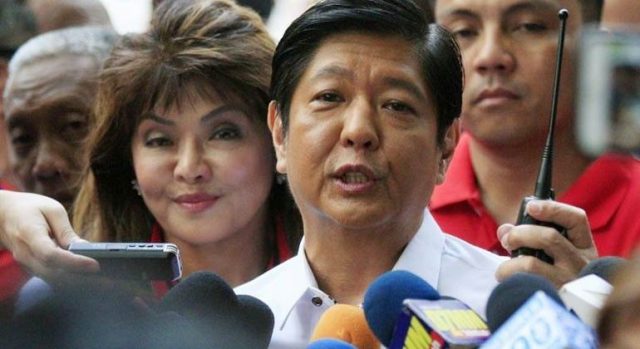
DEFEATED vice presidential candidate Ferdinand “Bongbong” R. Marcos, Jr. has asked the Supreme Court to reconsider the dismissal of his election protest, saying he was not given the chance to present all evidence.

“It is an integral part of procedural due process that the parties be given the opportunity to present all evidence relevant to settle all the issues involved,” he said in a 95-page motion for reconsideration.

In a separate statement, the son of the late dictator Ferdinand E. Marcos said the court sitting as the Presidential Electoral Tribunal had sacrificed his right to due process “in exchange for expediency.”

“What is at stake here is the second-highest position in the country,” he said. “This is not something to be taken lightly. To dismiss such an important election protest because of the absence of procedural rules is an affront to our constitutional right of due process.”

The 15-member tribunal in February rejected Mr. Marcos’s election case unanimously for lack of merit, as it ruled his claims “appeared bare, laden with generic and repetitious allegations and lacked critical information.”

Mr. Marcos filed the protest in June 2016 after narrowly losing to Ms. Robredo, alleging widespread fraud.

In the Philippines, the President and vice president are elected separately and can come from different political parties. Both are barred by law from seeking reelection. Their six-year terms will end in 2022.

A resolution released in Oct. 2019 showed that Ms. Robredo’s lead against Mr. Marcos in the pilot provinces of Camariñes Sur, Iloilo, and Negros Oriental — where he alleged cheating took place — rose by about 15,000 votes after the initial recount.

“Mr. Marcos would be the luckiest man in the world if he could reverse the unanimous decision by merely repeating the same issues and arguments already decided by the entire court,” Romulo B. Macalintal, Ms. Robredo’s lawyer, told reporters on Tuesday.

Justice Marvic Mario Victor F. Leonen, who wrote the decision, earlier said Mr. Marcos had failed to specify the precincts where fraud took place and how it happened. Bianca Angelica D. Añago

Senators deplore President’s South China Sea ‘joke’ during campaign

PCOO

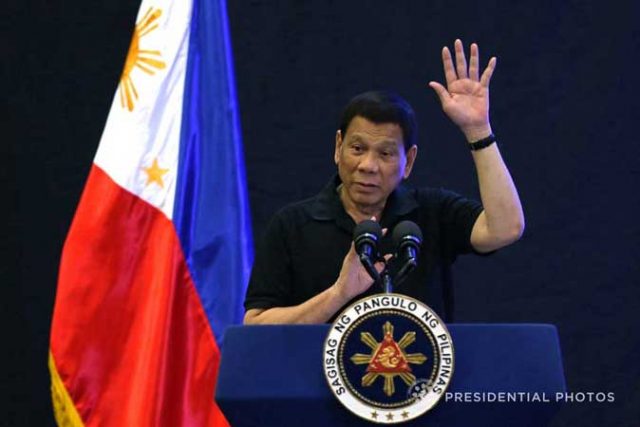
SENATORS on Tuesday slammed President Rodrigo R. Duterte’s statement that he was only joking about his promised action to protect the country’s claim on the West Philippine Sea during his campaign.

In another development, retired Senior Associate Justice Antonio T. Carpio called on Mr. Duterte to retract his recent pronouncements relating to the West Philippine Sea and China to ensure that it does not become binding as policy.

Senator Panfilo M. Lacson said the presidency is “no joking matter” and that the president should not make confusing statements on national policy.

“I think the presidency is serious business. Paghinaluan mo ng joke and hindi na alam ng tao kung biro o totoo o seryosomay mga implication ‘yan (If you mix in jokes and people can no longer tell what’s said in jest or in seriousness… there are implications),” he told an online briefing.

He noted that the President’s statements would also have implications with other government bodies. It would also “diminish” the strong message of other officials on the issue in the South China Sea.

“Whatever strong policy statement” that comes from the secretaries of Defense and Foreign Affairs, the senator said, gets overridden by what the President says.

Senator Risa N. Hontiveros-Baraquel, in a statement, questioned where Mr. Duterte’s “bravado” is when it comes to China.

“No country, not even his best friend, will take us seriously when we have a leader who cannot honor his word,” she said.

In a campaign forum for the 2016 election, Mr. Duterte said he will ride a jet ski and carry the Philippine flag in its territory in the South China Sea when asked by a fisherman on the issue.

On Monday, the President said that statement was a “pure campaign joke.” He also called those who believed him “stupid.”

Ms. Hontiveros said the South China Sea issue is no laughing matter, noting that the Armed Forces of the Philippines, Philippine Navy, Philippine Coast Guard, and Bureau of Fisheries and Aquatic Resources are patrolling the area where Filipino fishermen source their livelihood.

“Huwag niyang gawing punchline ang mismong buhay at hanapbuhay ng mga Pilipino (He should not make a punchline out of the lives and livelihood of Filipinos).”

Senator Leila M. de Lima, in a separate statement, said the President’s remark affirmed that “he really has no plans to invoke our sovereign rights over the West Philippine Sea.”

“Duterte’s campaign in the 2016 elections was waged on pure gimmickry with no solid program of government on which to anchor his outlandish promises that’s why all we can hear now are his excuses why he cannot execute. And he even has the gall to call those who believe in his campaign promise as stupid. Classic Duterte!,” she said.

CARPIO
Mr. Carpio, meanwhile, warned that “if the President does not retract these statements that he made publicly, then he knows that these statements could bind the Philippine government under present and future administrations.”

He was referring to Mr. Duterte’s statements that “China is in possession of the West Philippine Sea,” that “Chinese fishermen can fish in the exclusive economic zone of the Philippines in the West Philippine Sea,” and that the arbitral award of July 12, 2016 is a “scrap of paper to be thrown into the waste basket.”

“Now that the President acknowledges that what he says could bind the government, under the present or future administrations, then he must now retract the… statements,” Mr. Carpio told reporters on Tuesday.

The former Supreme Court justice cited that Mr. Duterte’s reason for backing out from a debate between them that he himself initiated is that his “answers might be taken as policy statements, and I might affect the future actions of the government when it comes to the West Philippine Sea.” — Vann Marlo M. Villegas and Bianca Angelica D. Añago

Lawmaker bats for non-tax incentives to help small private schools

A LAWMAKER is calling on the government to consider giving non-tax incentives to small private schools alongside his appeal for academic institutions to suspend tuition fee hikes until next year.

In a statement on Tuesday, Agusan del Norte Representative Lawrence H. Fortun said the Inter-Agency Task Force Against Emerging Infectious Diseases (IATF-EID) should introduce measures that will lessen the burden on small private schools and small businesses.

“The IATF should come up with non-tax incentives which can reduce operations costs of small private schools and other small businesses. Faster processing and fewer approval or endorsement signatures are examples of non-tax incentives,” he said.

Mr. Fortun also called on all schools for a tuition fee hike moratorium until 2022 as the country faces a pandemic-induced recession.

He also asked the Department of Education and Commission on Higher Education to urge private schools to refrain from increasing fees.

Ako Bikol Party-list Rep. Alfredo A. Garbin Jr. backed Mr. Fortun’s proposals. — Gillian M. Cortez