Home Blog Page 8081

Spokesman asserts Duterte never said China is ‘in possession’ of West Philippine Sea
PCOO

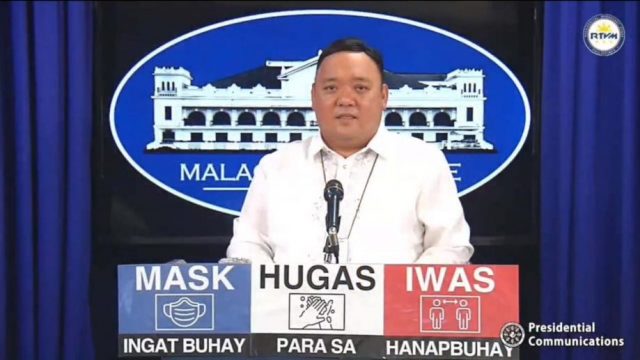
PRESIDENTIAL Spokesperson Herminio “Harry” L. Roque, Jr. on Monday said the debate on the South China Sea dispute between him and an opposition leader should focus on whether or not President Rodrigo R. Duterte’s foreign policies have resulted in the loss of the country’s territories.

Retired Supreme Court Associate Justice Antonio T. Carpio earlier said the debate originally called by Mr. Duterte should focus on the “factual accuracy and adverse legal implications” of the President’s claim that China is in possession of the West Philippine Sea.

In several of his late-night public appearances, Mr. Duterte had repeatedly said that China is “in possession” of the country’s claims in the South China Sea. Mr. Roque, however, denied that the President had made such claims.

The spokesman said this subject matter, which Mr. Carpio wants to be the point of discussion, is “impossible to debate on” because Mr. Duterte never made the statements.    

“I am very keen. My request to members of the Philippine Bar Association, we have to agree on what will be debated on because we can’t debate on things the President did not mention,” the Palace official said.

Mr. Roque, meanwhile, said he’s also willing to have a debate with another opposition figure, referring to Vice President Maria Leonor G. Robredo.

“Once and for all, mayroong dapat tumayo sa hanay ng oposisyon para mag-debate kung talagang ang Presidente Duterte ang namimigay ng teritoryo sa Tsina or mga ibang administrasyon ‘yan (there should be someone from the opposition who will take on a debate that will settle whether it was President Duterte or another administration who has been giving away our territory to China),” he added.

Ms. Robredo earlier said the President’s recent remarks on the South China Sea dispute may affect the country’s territorial integrity.

Meanwhile, Retired Senior Associate Justice Antonio T. Carpio warned of the unilateral declaration doctrine, which means that “once the head of state makes a statement adverse to the nation on an ongoing dispute, that statement binds his nation if accepted by the other country.”

He was referring to Mr. Duterte’s statement during a pre-recorded message televised on May 5 that the arbitral award is “just a piece of paper” and that he will just “throw it away in the wastebasket.”

“If China agrees (on throwing away the arbitral award), later on, when we try to assert the ruling, China will say we already abandoned it,” Mr. Carpio said in an interview on Monday over the ABS-CBN News Channel. — Kyle Aristophere T. Atienza and Bianca Angelica D. Añago
Application closed for tourism sector cash aid   

PHILSTAR

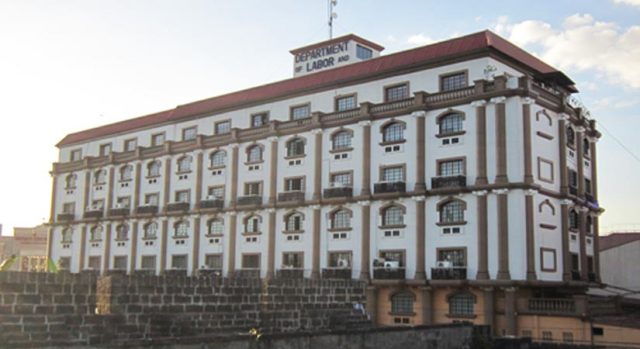
THE DEPARTMENT of Labor and Employment (DoLE) on Monday said it has closed the application for cash assistance among tourism sector workers as the target number of beneficiaries has been reached.

In a briefing on Monday, DoLE said Labor Secretary Silvestre H. Bello III issued an advisory, in coordination with the Department of Tourism, terminating the acceptance of applications for cash aid under the COVID-19 Adjustment Measures Program (CAMP) for affected tourism workers.

“The Department has reached the target beneficiaries and is currently evaluating and processing payment of the remaining applications,” Mr. Bello said in the advisory dated May 10.

DoLE reported that it has already given out P2.6 billion worth of CAMP assistance to over 520,000 tourism workers. It currently has nearly P500 million left of its P3.1 billion budget for the program. — Gillian M. Cortez

Lawmaker pushes for immediate use of body cams to regain public trust in police

REUTERS

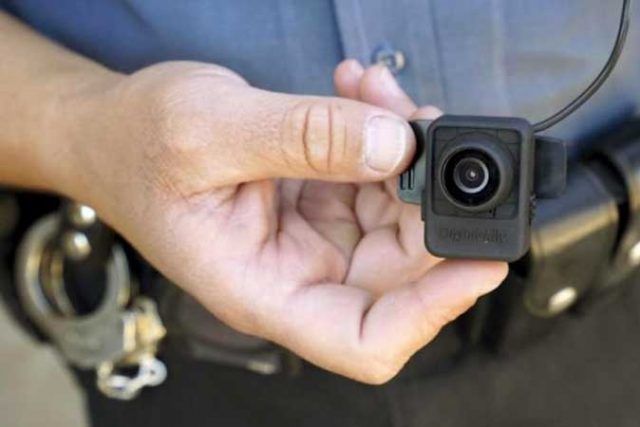
A LAWMAKER called on the Philippine National Police, with a new chief taking post over the weekend, to immediately implement the use of body cameras to help regain public “trust” in the force that has been accused of extra-judicial killings and abuses in the implementation of health protocols amid the pandemic.

Deputy Speaker and Bagong Henerasyon Party-list Rep. Bernadette Herrera-Dy, said in a statement on Monday, “The required use of body cams in Philippine law enforcement is long overdue. We need to provide Filipinos with ample, appropriate, and technology-updated law enforcement and protection of civil liberties.”

Newly-appointed police chief Lieutenant General Guillermo T. Eleazar has said that the police is finalizing protocols on the use of body camera recordings as evidence in court.

Almost 2,700 body camera units were already purchased in 2019 and Mr. Eleazar said procurement is continuing. — Gillian M. Cortez

DoJ drafts guidelines on arrest of face mask violators 

PHILIPPINE STAR/ MICHAEL VARCAS

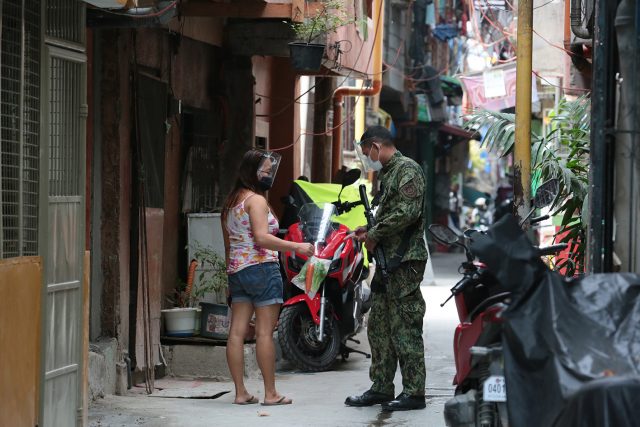
THE DEPARTMENT of Justice (DoJ) has finished drafting the guidelines on arresting those caught violating face mask rules and will be coordinating with the Department of the Interior and Local Government (DILG) for implementation.

“The DoJ is ready with its guidelines. We’ll just have to coordinate with the DILG in the next couple of days,” Justice Secretary Menardo I. Guevarra told reporters on Monday.

He added that the guidelines will “hopefully” be implemented within the week, although arrests are already being undertaken by the police.    

The Justice chief explained that existing laws and ordinances of local governments “define the prohibited acts and impose the corresponding penalties therefore, and the relevant rules of court govern the procedure.”

The guidelines, he said, will only add “to the procedure on arrest and detention until the filing of charges, if warranted,” such as “determining the manner, time, or place of booking, detention, and investigation” to avoid overcrowding and to further prevent the spread of the virus.

President Rodrigo R. Duterte tasked the two departments last May 5 to draft the guidelines after ordering the police to arrest those who are not wearing a face mask or doing it improperly.

“The president’s directive is part of the government’s strategy of strictly implementing health protocols, such as wearing of face masks, so that the spread of the disease is put under control and the full opening of the economy is accelerated,” Mr. Guevarra told reporters a day after Mr. Duterte’s instructions.

Meanwhile, the Department of Trade and Industry announced Monday that it has turned over 50,000 face masks to the police for distribution to detained violators.

Trade Secretary Ramon M. Lopez, in a statement, said the washable face masks come from the Libreng Mask para sa Masa project. — Bianca Angelica D. Añago

Cagayan back to 2nd strictest lockdown as COVID-19 cases spike

CAGAYAN has been placed under the second strictest quarantine level for two weeks starting May 10 due to a continued spike in coronavirus cases, the provincial government announced late Sunday.

Governor Manuel N. Mamba, in a statement, said the national task force handling the pandemic response has approved the placement of the entire province under the modified enhanced community quarantine (MECQ) level until May 23.    

Mr. Mamba cited the increase in cases in Tuguegarao City, the provincial and regional capital, which is affecting other towns.

He also pointed to the “alarming” situation in public and private medical facilities.

Cagayan Valley Medical Center Chief Glenn Mathew Baggao, in a separate statement, supported the stricter lockdown and called for a more stringent implementation of all health protocols.

The doctor noted in particular the importance of following the “no home quarantine” policy to avoid community transmissions.

Under MECQ, only essential travels such as for work and purchasing of basic items are allowed outside of residence.

As of May 9, the province had 1,886 active coronavirus disease 2019 (COVID-19) cases, of which 1,017 are in Tuguegarao, according to local government data.

The Department of Health’s COVID-19 tracker indicates 1,317 active cases in the province out of the total 10,504 recorded since the start of the pandemic. Of the total, 9,084 recovered while 103 died. The continued spike in cases started in April.

Ayala Group funds COVID-19 test lab in Marinduque

THE AYALA Group of Companies turned over a new coronavirus laboratory to Marinduque, the first molecular lab in the island province.

In a statement, Ayala said the laboratory will allow faster releasing of test results for the coronavirus disease 2019 (COVID-19), cutting down the waiting period of up to 14 days when samples had to be brought to Manila-based laboratories, particularly the government-run Research Institute for Tropical Medicine

The laboratory is housed within the Marinduque Provincial Hospital in Boac town.

“This molecular laboratory is a very vital tool for Marinduque to be able to contain and eventually defeat the very deadly virus,” Marinduque Governor Presbetiro J. Velasco, Jr. said in the statement after formally receiving the facility.

AC Health President and Chief Executive Officer Paolo Maximo F. Borromeo, who was among those who joined the virtual turn-over ceremony, said, “Testing is a vital component of the country’s public health response, and we are happy to support Marinduque’s initiatives to improve access to testing.”

Ayala Foundation also turned over 1,250 face masks and 250 personal protective equipment (PPE) for the healthcare workers at the Marinduque Provincial Hospital.

Marinduque has recorded 485 COVID-19 infections as of May 9, of which 36 were active cases, 431 recovered, and 18 died, according to the Department of Health’s tracker website. — Vann Marlo M. Villegas

8 Abu Sayyaf members caught in Sabah

MALAYSIAN troops arrested eight members of the kidnap-for-ransom Abu Sayyaf group in Sabah on May 8, the Philippine military reported on Monday.

The Eastern Sabah Southern Command (ESSCOM) launched a police operation in Jalan Taman Sri Arjuna, Beaufort based on information provided by the Philippine military, according to the Philippine’s Western Mindanao Command head, Lt. Gen. Corleto S. Vinluan, Jr.

In a statement, Mr. Vinluan said two of those caught are ranked as sub-leaders of the Abu Sayyaf.

All eight were involved in kidnapping operations, including several Indonesians who were among those rescued late last year, other foreign nationals such as Swiss Lorenzo Vinciguerra and Dutch Ewold Horn, and Filipinos.   

Col. Hernanie S. Songano, 4th Marine Brigade commander, said the Abu Sayyaf group set up a “cell” in Sabah as they have been largely driven out of their strongholds in Sulu province “due to the sustained intelligence, focused military operations, and civil-military cooperation.”

The kidnap-for-ransom group has in recent years forged links with the extremist Islamic State and been involved in bombings in Sulu. — MSJ

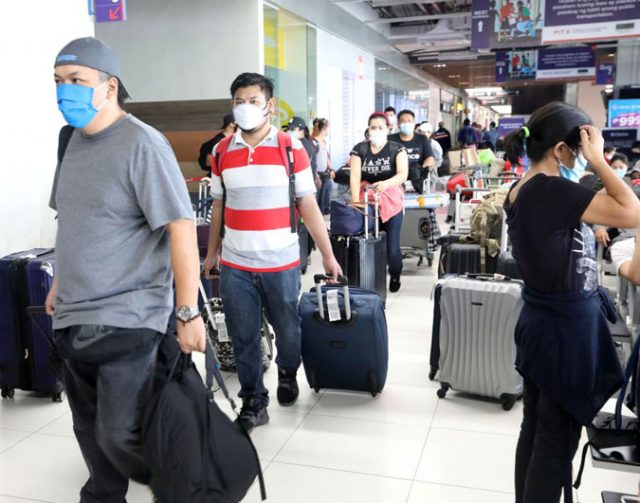
Industry seeking guidance on plans for reopening air travel

REUTERS

THE GOVERNMENT and private sector need to agree on a plan to open up international and domestic air travel once more, an industry official said Monday.

“We have been calling on the government (and private sector) to work together towards a roadmap to restart international and domestic aviation,” International Air Transport Association Country Manager Samuel S. David said at an online forum organized by the American Chamber of Commerce of the Philippines, Inc.

“We have to start talking about the time when aviation will restart, when we can once again lower our borders,” he noted.

“It took just one night to shut down aviation. It does not take the same amount of time to restart it. It takes a while. We do need a roadmap to restart this industry,” Mr. David said.

House Transportation Committee Chairman and Samar Rep. Edgar Mary S. Sarmiento said at the forum: “It’s a collective effort… (between) the government and the private sector.”

“Once we have the opportunity again, there should be a roadmap on how to address (reopening). I am with you guys. I am hoping that we can see this opportunity…” he added.

Mr. Sarmiento has filed House Bill No. 8700 that seeks to strengthen the Civil Aviation Authority of the Philippines.

The bill intends to amend Republic Act 9497 or the Civil Aviation Authority Act of 2008.

Among the amendments sought are: extension of the director general’s term from four years to seven in order to insulate the Civil Aviation Authority of the Philippines (CAAP) leadership from changes in National Government, expansion of the board to nine members from seven to include the secretaries of Tourism and Defense in order to enhance tourism and security, and exemption of CAAP personnel from the requirements of the Career Executive Service to allow the agency to more easily hire workers in accordance with international standards.

Two more bills seeking to reform the aviation sector are the proposed Philippine Transportation Safety Board Act, which is now under review by the House Management Committee, and the proposed Philippine Airports Authority Act, which has been passed at the House committee level. — Arjay L. Balinbin

Transpacific Broadband targets 10,000 sites, towers for ‘third telco’

BW FILE PHOTO

LISTED Transpacific Broadband Group International, Inc. (TBGI) said it has set a target to install 10,000 sites and towers for what it identified as the third player in the telecommunications industry.

“TBGI plans to install 10,000 sites and towers of the third telco through its network of affiliate organizations,” the company said in its 2020 annual report released Monday.

TBGI Vice-President Paul B. Saria clarified in a phone interview that the company has “no direct contract” with DITO Telecommunity Corp., which is commonly referred to as the third telco.

“We are already starting the installations for that,” he added.

The company said in its annual report that it “supports the long-distance haul of signals of the third telco, including provisions for remote sites and towers.”

It said the coronavirus pandemic has further amplified the need for communication and connectivity.

“The COVID-19 pandemic showed the urgency of staying connected despite distance. The bulk of TBGI’s customer base has requested activation during the onset of the pandemic,” the company said.

“With the fast-growing demand for connectivity, TBGI has invested in new satellite infrastructure (Ka-Band) to provide the most reliable and cost- efficient connectivity to its subscribers, thereby increasing shareholder value and economic performance,” it added.

TBGI said it generates revenue mainly from internet, intranet, and local loop services subscriptions for schools, the private sector and government agencies.

It is also developing a niche as a telecommunications tower infrastructure provider. — Arjay L. Balinbin

WiFi contractor asked to return over $21 million

FREEPIK

THE GOVERNMENT is asking the Hong Kong contractor hired to implement the P1.3-billion free WiFi project to return more than $21 million in unused funds, the Palace said Monday, with the Department of Information and Communications Technology (DICT) poised to take over the program.

Hong Kong satellite firm SpeedCast International Ltd. should return about $21,855 to the DICT after it failed to deploy free WiFi to 120,000 target sites, the President’s spokesman Herminio L. Roque, Jr. said at a televised news briefing.

Ang kailangan ibalik ay ‘yung pera at kontrata dahil DICT na ang magpapatupad (The money should be returned and the contract abandoned because the DICT is in charge now),” he said, noting that the DICT was able to establish more WiFi sites in a year than SpeedCast managed to install in four years.

Mr. Roque last week said the company was given until May 7 to respond to a letter from the DICT seeking the return of the leftover funds allocated for the initiative.

Mr. Roque has said it is unacceptable that only 8.3% of the 120,000 target sites have been provided free wireless internet access, nearly four years after President Rodrigo R. Duterte signed Republic Act No. 10929, which authorized the government to offer the public free internet access.

The law enabled the government to partner with the United Nations Development Programme for the initiative. It was the international agency that selected SpeedCast from a list of bidders.

Aside from inefficiency issues, the company also faces allegations that it had undervalued six shipments in its declarations to the Bureau of Customs.

The DICT last week said it created a task force to investigate the allegations against the company.

The project began in 2018 under the leadership of former DICT Secretary Eliseo M. Rio, Jr. who, at that time, said the agency was incapable to implement the program on its own.

The DICT was created in 2016. — Kyle Aristophere T. Atienza

DBM backs expanded repatriation budget due to longer quarantine period

PHILIPPINE STAR/EDD GUMBAN

THE DEPARTMENT of Budget and Management (DBM) recommended to President Rodrigo R. Duterte the provision of an additional P5.2 billion to fund the overseas worker repatriation program, the Labor department said Monday.

“In our last IATF (Inter-Agency Task Force) meeting, the DBM clearly stated that it has recommended to the President the budgetary allocation for repatriation of the amount of P5.2 billion,” Labor Secretary Silvestre H. Bello III told a Senate Labor committee hearing.

Mr. Bello said the Overseas Workers Welfare Administration (OWWA) had requested some P9 billion in additional repatriation funds due to the longer accommodation period required for returning overseas Filipinos.

OWWA Administrator Hans Leo J. Cacdac said at the hearing that the additional P5.2 billion from the National Government is meant for food, transport, quarantine, hotel, and accommodations for the returning workers.

Mr. Cacdac said the OWWA only had P6.2 billion allocated this year for repatriation, putting it under pressure to find new money after new quarantine protocols were imposed for returning Filipinos due to new coronavirus variants.

He said the old quarantine period of one to three days was extended to seven to nine days and was now set at 10 days, as decided by the task force.

“So tumagal po ang OFWs sa hotels, therefore tumagal by three times even four times longer, ganon rin po, triple and quadruple din ang aming cost (The prolonged stay at hotels has tripled or quadrupled our cost),” he said.

The IATF last week required arriving travelers to complete 10 days of quarantine, while also requiring them to complete a further four days in their respective municipalities.

The task force also approved a recommendation for travelers to be tested on the seventh day of their quarantine.

The Health department had said the reason for testing on the seventh or eighth day of quarantine is to catch test subjects when the viral load is likely to be high. — Vann Marlo M. Villegas

NEA electrifies 362 rural villages in first four months

PHILSTAR FILE PHOTO

THE National Electrification Administration (NEA) said that it has brought electricity to 362 rural villages under its Sitio Electrification Program (SEP) in the four months to April, the majority of which were in Mindanao.

“Of which, 200 sitios were in Mindanao, 106 sitios in the Visayas, and 56 sitios in Luzon. These sitios’ (electrification was) funded by previous years’ General Appropriations Act[s] (GAA),” the NEA’s communications office told BusinessWorld in an e-mail last week.

The overall number of rural villages that were energized stood at 125,581 or 84.46% of the total that are within the coverage areas of 121 electric cooperatives, as of Feb. 28.

Two months ago, the agency said it will be seeking P16.76 billion in additional funding from the budget department until 2026 to power up over 11,000 rural villages under the SEP. It added that its current budget of P1.63 billion under the 2021 GAA can only energize 1,085 sitios.

On May 5, NEA said that this year’s allocation has not yet been released. It clarified that the P1.63-billion budget is “only intended for the implementation of SEP, and the figure does not include the off-grid electrification projects.”

The agency added that its two main renewable energy (RE) programs, the Strategized Sitio Electrification Program (SSEP) and the Strategized Household Electrification Program (SHEP) are facing delays.

“The implementation of these RE programs has faced delays due to COVID-19 (coronavirus disease 2019). However, the NEA-TEREDD (Total Electrification and Renewable Energy Development Department), together with its partner ECs (electric cooperatives), is continuously looking for ways to work around the difficulties brought about by the pandemic,” it said.

The SSEP hopes to develop mini-grid systems powered by RE in the off-grid areas, while the SHEP aims to electrify dispersed and isolated households using Solar Home Systems. — Angelica Y. Yang