Home Blog Page 8

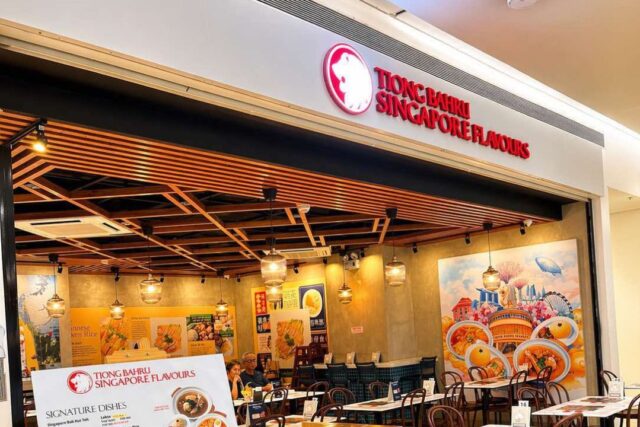
Tiong Bahru Singapore Flavours expands footprint in PHL

The Gateway Mall 2 branch in Cubao, Quezon City — Tiong Bahru Singapore Flavours

TIONG BAHRU Singapore Flavours said it is continuing to expand its presence in the Philippines, adding new locations as it builds its network across Metro Manila and nearby areas.

The Singaporean franchise entered the Philippine market in 2019 with its first branch at MetLive Mall in Pasay. It has since opened stores in key commercial areas, including Bonifacio Global City, Estancia Capitol Commons, Eastwood, Alabang Town Center, SM North EDSA, Greenhills, One Ayala, TriNoma, Robinsons Antipolo, Mitsukoshi BGC, and Gateway Mall 2.

More recent branches in UP Katipunan and Landmark by the Bay in Parañaque have brought its total to 16 locations.

During the pandemic, the restaurant chain opened additional branches in Makati and Quezon City and expanded its takeaway and delivery services.

“Our journey reflects more than expansion — it’s a testament to resilience and passion. Even during the pandemic, we never stopped serving authentic Singaporean cuisine to every Filipino,” said Kathryna Yu-Pimentel, co-owner and director of Tiong Bahru Singapore Flavours.

The company serves Singaporean dishes such as Hainanese chicken rice, bak kut teh, and laksa. — ALB

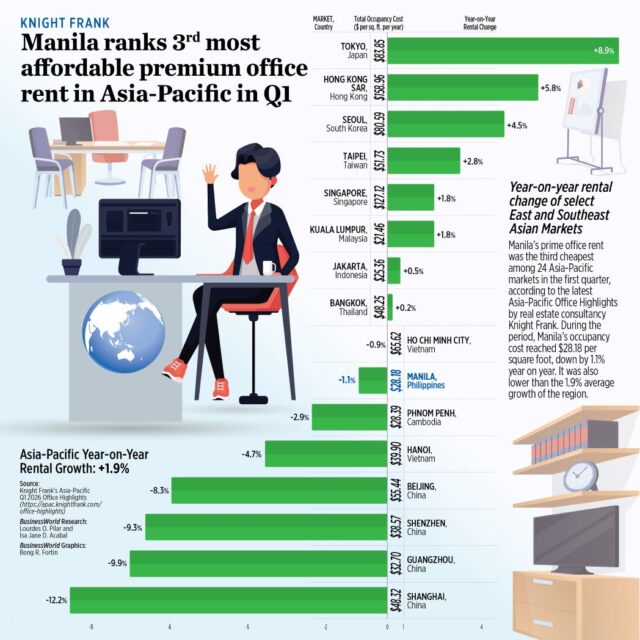
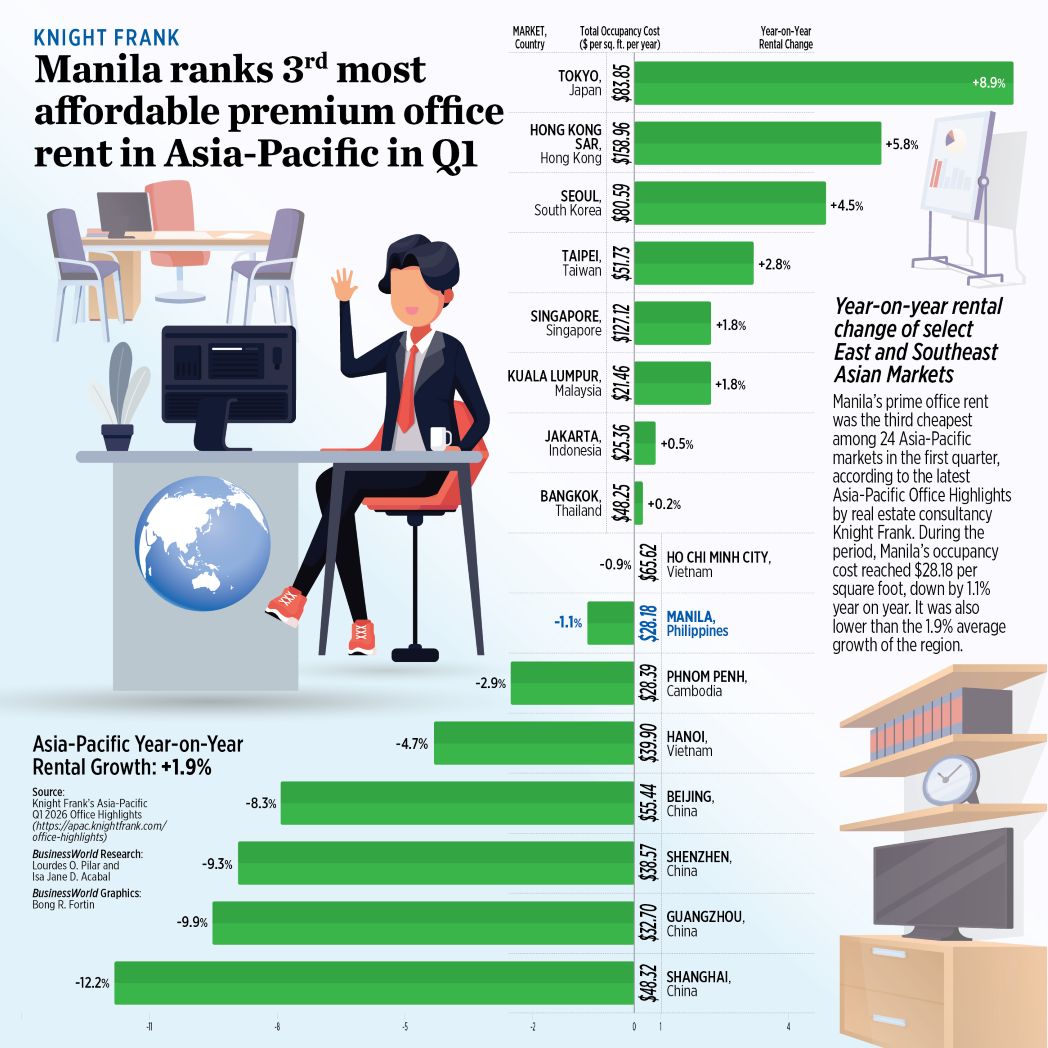
Knight Frank: Manila ranks 3rd most affordable premium office rent in Asia-Pacific in Q1

Discovery and nostalgia

OFFICIAL PHOTO BY MAKY SALAMAT

Orange & Lemons looking to attract old fans
and new while embarking on Europe tour
and readies all-English album

OPM band Orange & Lemons (O&L) released their new single, “Too Young To Be Old,” and are getting ready for their European tour that will run from May to June.

Known for hits like “Hanggang Kailan (Umuwi Ka Na Baby)” and “Heaven Knows – This Angel Has Flown,” the group teased the new track in a press event on April 16 in San Juan City. It is set to be part of an upcoming album, VI-SIONS OF AMBER, their first all-English body of work.

The band was founded in 1999 and was a staple in the Pinoy rock scene until they disbanded in 2007. Since their return in 2017, they’ve been composed of vocalist, guitarist and O&L founding member Clem Castro, drummer Ace del Mundo, bassist JM del Mundo, and keyboardist Jared Nerona who joined the band when it was reconstituted.

NEW MUSIC
While the 2022 album La Bulaqueña saw the band take inspiration from artist Juan Luna and champion local kundiman sounds, O&L’s new track takes a more global tack.

“We decided to go back to a ’60s and ’70s-influenced album. True original indie pop is inspired by the ’60s, even the ’50s, and we wanted to do it all in English,” he said at the press event.

“There’s a certain resurgence of the old sound even among new artists,” Mr. Castro said. “We did this just to see how it will travel.”

“Too Young To Be Old” explores the complexities of transition and self-awareness, according to Mr. Castro, who is the chief songwriter. Though it is inspired by a relationship experienced differently by two people, he described the song as depicting “the strange middle space where you’re no longer reckless, but not quite settled either.”

The track was produced at his hybrid studio, LILYPOD AUDIO, and serves as O&L’s first release mixed in Dolby Atmos, surround sound technology that creates an immersive sonic experience.

For keyboardist Mr. Nerona, has his first songwriting credit on the album, there is a “good vibe” that fans can look forward to.

“It’s very ’60s,” he said. “We have a song that I co-wrote with Clem about a car and about my daughter as well. There’s an overall modern vintage quality to it.”

As for their expectations for how the new songs will be received, Mr. Castro explained that they are at the stage where they are simply doing what they want.

“It’s not about instant success. It took ‘Heaven Knows’ 20 years before it became a hit. It’s about the legacy of the band, what we leave our families and fans, how we want to be remembered,” he said.

EUROPE TOUR
The group will be embarking on their European tour next month, with stops in major cities like London, Milan, Madrid, Paris, and Amsterdam. The first stop will be Dublin on May 14.

“A lot of OPM acts are touring Europe now, but it isn’t as convoluted as the scene in the US,” Mr. Castro said of their venture. “There are already so many concert producers in the US.”

The tour, aside from being geared towards the Filipino community abroad, is meant to attract new listeners from varying backgrounds and ethnicities.

“What excites us most is the contrast — you’re playing for people who may be hearing you for the first time, alongside Filipinos who’ve carried the music with them wherever they are,” said Mr. Castro. “There’s something spe-cial about that mix. For Filipinos abroad, the songs become a connection to home. For new listeners, it’s a fresh introduction.”

As for the set list, O&L emphasized that it will be a balance of essential songs and newer material, with the two-pronged goal of “discovery and nostalgia.”

“We were kids from Bulacan who rose from nowhere and couldn’t handle the fame and money. That’s what showbiz did to O&L, and we don’t regret that because it’s a very expensive lesson in life,” Mr. Castro explained, when asked about how they see their fame.

While the Europe tour represents O&L at the stage of being young enough to “just have fun with it,” they are also already old enough to be wiser.

“All of that has made us aware that music is a business, and we’re now mindful of how we preserve our legacy, how we control our songwriting and masters,” he said, adding half-jokingly that there could be enough material for a tell-all au-tobiography.

“We even have a legacy contract. We’re forward thinkers now!”

O&L’s “Too Young To Be Old” is available on all digital music platforms worldwide. Their Europe tour runs from May 14 to June 7. — Brontë H. Lacsamana

Old-school vs process-oriented hiring

I’ve been promoted to oversee recruiting after a major reorganization, even if I don’t have the experience other than hearing oft-repeated interview questions. What’s the first thing to do? — Northern Bridge.

The first thing to do is to treat recruitment like a production line. Recruitment is often less about finding talent and more about creating a dynamic process to get maximum results at minimum cost. Any step that doesn’t add value to the hiring process is wasteful and should be eliminated or reduced.

You can do this by reviewing the current process and adjust the policy with management approval. That’s the essence of Lean HR, which applies waste elimination techniques. As a neophyte on the job, I recommend you follow the first few critical steps:

One, review the job description. Analyze and compare it with model form and substance you can find on the internet. Don’t just dust off an old description. Be critical about the role by asking the following questions: Could you outsource the job?

What are the “must-have” technical skills and the “nice-to-have” attributes? What are the key performance indicators? What important things should be done in the first 45 to 60 days?

Two, create a process map. Draw the simplest workflow of the screening process. Focus on digital review of every CV and do online interviews of candidates who passed it. Not every applicant deserves to be interviewed face-to-face.

Limit asking for a truckload of certificates only from shortlisted candidates. Then, define the general timeline when the “time-to-hire” is to be made.

Three, maximize the current manpower structure. When somebody resigns, becomes seriously ill or decides to retire, be the first one to look for an internal replacement. Spread the gospel of “promotion from within.”

Without you knowing it, there could be high-potential people ready for promotion. If none, then that’s the only time to tap outsiders.

Four, reflect on every candidate’s experience. Treat applicants like the company’s valuable customers. In a competitive market, your function is as important as those of sales and marketing. Respect applicants by ensuring they receive a timely response, even if it’s a rejection.

If you can’t do it manually, include a disclaimer in your job ad or use a free version of applicant tracking systems like Dover, BreezyHR, and Giig Hire.

Five, be transparent about the salary range. This saves you and the applicants a lot of time. Not only that, be open about your company’s background, its people, and the process. Include them in the job ad as well.

Clarity builds trust, filters mismatched expectations early, and attracts candidates who value honesty over guesswork and corporate mystery.

SOME OLD-SCHOOL
INTERVIEW QUESTIONS

Now that we’re done with the hiring process, be mindful of oft-repeated but are now considered ineffective or outdated interview questions and the reasons why modern HR professionals avoid them. Here are some:

One, “tell me something about yourself.” This is too broad and vague. It invites candidates to talk about irrelevant life stories and creates imbalanced answers across all candidates. If you want to establish rapport, the best option is to talk about neutral topics like the weather, sports or traffic.

Two, “what is your greatest weakness?” Almost all applicants have already memorized their script on this. Besides, that question encourages exaggerated performance rather than the applicant’s honesty. It’s better to ask the applicant’s recent mistakes, lessons learned, and how they overcame such adversity.

Three, “where do you see yourself in five years?” Nearly all people don’t know their future plans and programs, except when you’re interviewing executive applicants. One approach is to ask about skills they want to develop, problems they want to solve, or milestones they want to achieve.

Four, “why should we hire you?” It encourages scripted sales pitches. Even if you ask follow-up questions, some candidates may resort to strong self-promotion that could overshadow quiet but talented applicants. One solution is to ask for specific examples of results achieved and the reward they got from their employers.

DYNAMIC HIRING PROCESS

Modern hiring processes focus on behavioral and evidence-based interviewing. Instead of asking hypothetical or self-promotional questions, companies these days ask candidates to describe actual past behavior, show measurable results, and demonstrate potential ability.

Look for past work behavior that could predict future performance better than scripted answers. Past behavior predicts future performance better than rehearsed answers.

To do this, dynamic hiring managers use the STAR (Situation, Task, Action, Result) model to measure the applicants’ response. Ditch rehearsed brilliance; only proven behavior separates real performers from polished but empty interview talk.


Consult REY ELBO for his free insights on people management. Send your workplace questions to elbonomics@gmail.com or DM him on Facebook, LinkedIn, X or https://reyelbo.com.

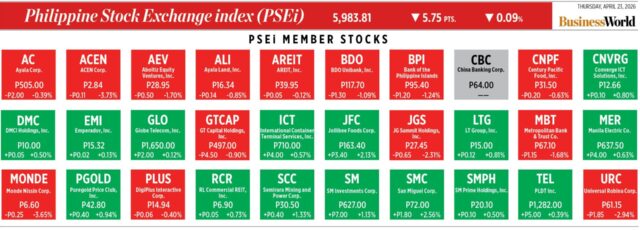
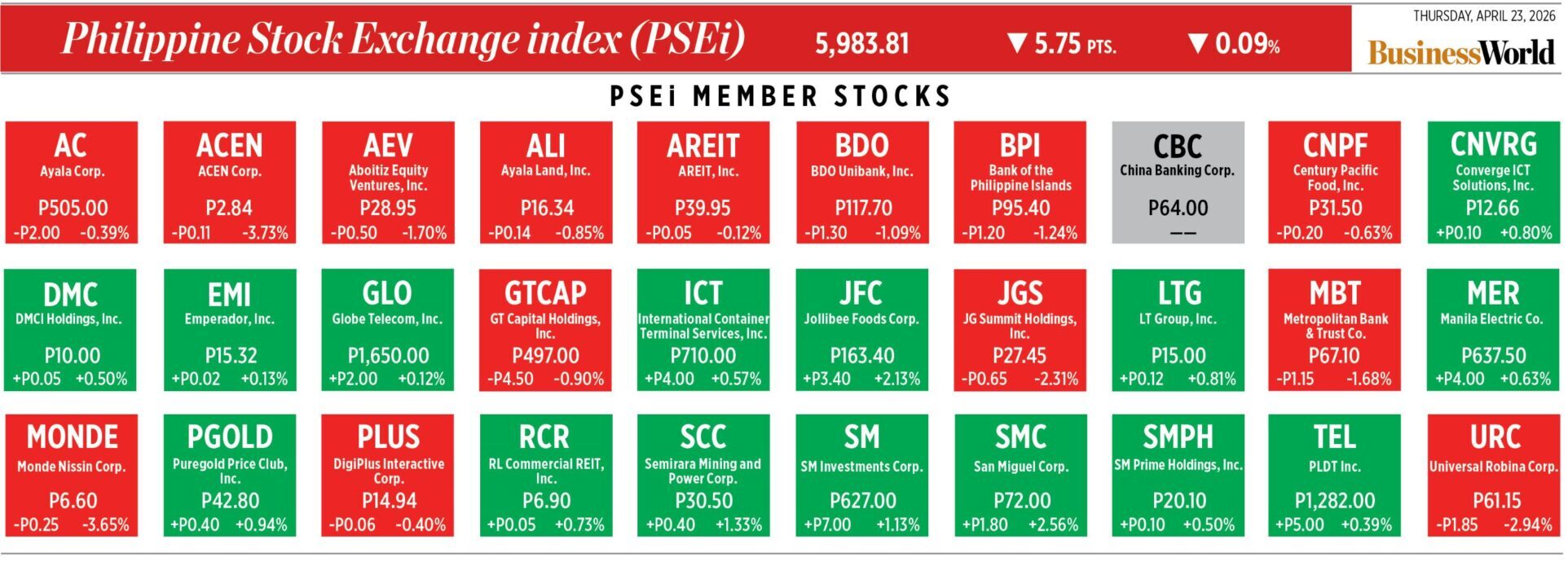
How PSEi member stocks performed — April 23, 2026

Here’s a quick glance at how PSEi stocks fared on Thursday, April 23, 2026.


Economic target adjustments likely due to energy shock, Balisacan says

OFFICIALGAZETTE.GOV.PH

THE GOVERNMENT will adjust its economic targets due to inflationary and growth pressures stemming from the Middle East war, Economy Secretary Arsenio M. Balisacan said.

“Definitely, yes,” Mr. Balisacan said when asked if the Development Budget Coordination Committee (DBCC) will have to recalibrate economic targets at its next meeting.

“But of course it will depend on the first quarter (growth data). So that will of course help inform our decision. Those disruptions will certainly lead us to revisit the assumptions that we had about the economy moving forward,” he told BusinessWorld on the sidelines of a SEAMEO INNNOTECH seminar.

The DBCC usually meets after every release of quarterly gross domestic product (GDP) growth data, with first quarter economic data scheduled to come out on May 7.

It last met on Dec. 9, 2025 to lower economic targets to reflect the impact of the flood control scandal on business sentiment.

The government last year lowered its GDP growth targets to 5%-6% for 2026 and to 5.5%-6.5% for 2027. The previous setting had been 6-7% for 2026-2028.

Mr. Balisacan said the government is focusing on implementing measures for addressing the oil crisis.

“That’s our focus, to make sure that the assistance is provided, the support for the transport sector, vulnerable farmers and fisherfolk, for the poor and near-poor households.”

However, these measures add to the government’s burden in addressing governance issues and repairing sentiment following the flood control scandal last year, Mr. Balisacan said.

“What’s really complicated the issue, of course we are still trying to emerge from the scandal when the Middle East crisis [started]. So that adds to the challenge,” he said.

“We hope that these are temporary disruptions and we have learned clear lessons from the (flood control) scandal. We have to strengthen our governance and that’s what we’ve been pushing now. We have to ensure that the public trusts the government again.” Mr. Balisacan.

Mr. Balisacan has said that inflation could exceed 7% and slow economic growth by as much as 0.3 percentage points this year if the oil price crisis escalates further. — Aaron Michael C. Sy

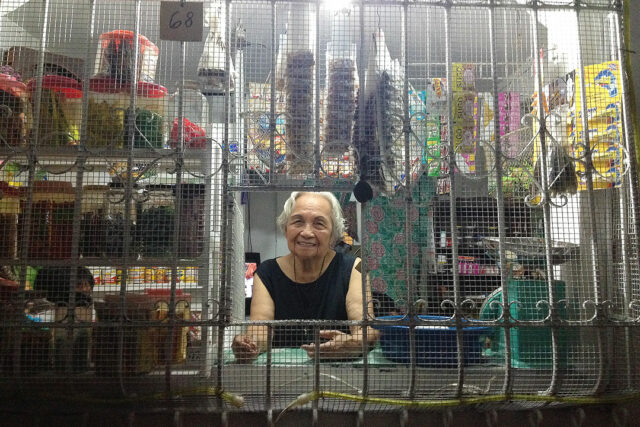
Inventory buildup at micro-retailers reflects expectations of price shocks — Packworks

BW FILE PHOTO

MICRO-RETAILERS as well as consumers are stocking up on basic goods in anticipation price hikes and longer delivery times as a consequence of the war in the Middle East, according to a study by Philippine tech startup Packworks.

In a report on Thursday, Packworks added that consumer purchasing activity also picked up for the same reason. Sales of the mom-and-pop segment, known in the Philippines as sari-sari stores, jumped 90% in March, according to transaction data generated by the Sari.PH Pro application.

Gross merchandise value (GMV) across Packworks’ network of 300,000 sari-sari stores linked to the app jumped 89.34% month on month to P3.73 billion in March.

Sari-sari stores GMV peaked on March 21 as oil firms announced a double-digit increase in diesel and kerosene prices.

Packworks Chief Data Officer Andres Montiel said that sari-sari store owners are stocking up to prepare for potential supply disruptions and rising costs due to the ongoing Iran war.

“With growing uncertainty and rising oil and commodity prices, our data suggests that sari-sari store owners are proactively adjusting their purchasing strategies,” he said.

He noted that delivery timelines in some regions have extended to three weeks, with retailers forced to purchase fast-moving goods in bulk.

The Cordillera Administrative Region posted the strongest increase in basket size at 101.7% (P773 to P1,560), followed by the National Capital Region at 85% (P396 to P733) and the Bangsamoro Autonomous Region in Muslim Mindanao at 80.2% (P495 to P892).

The study also noted that households increased their purchases from sari-sari stores to cut travel spending, as fuel price hikes have also raised transportation costs.

The average basket size amounted to P1,560 in March from P1,097 in February.

Transaction volume grew by 17%, Packworks said.

Traditionally driven by tingi, or small-quantity, daily purchases, households are now consolidating trips to offset rising transportation costs, according to the study.

The startup also recorded high sales of cigarettes (around P234 million), followed by detergent (P116 million), gin (P66 million), powdered coffee (P55 million), and chips and dip (P45 million).

Households are also stocking up on goods like soda, biscuits, powdered milk, and canned items, which showed increased sales, Packworks said.

Packworks Chief Platform Officer Hubert Yap said sari-sari stores are vulnerable to price and logistical irregularities.

“As the backbone of local communities, sari-sari stores continue to demonstrate resilience in times of disruption. However, they remain highly vulnerable to price fluctuations and logistical challenges, highlighting the need for continued support,” he said.

Sari-sari stores fall under the category of micro, small and medium enterprises — which account for 99% of businesses operating in the Philippines — and typically have limited capacity to absorb shocks. — Beatriz Marie D. Cruz

PEZA, Schneider Electric to boost capacity-building in economic zones

SCHNEIDER PHILIPPINES

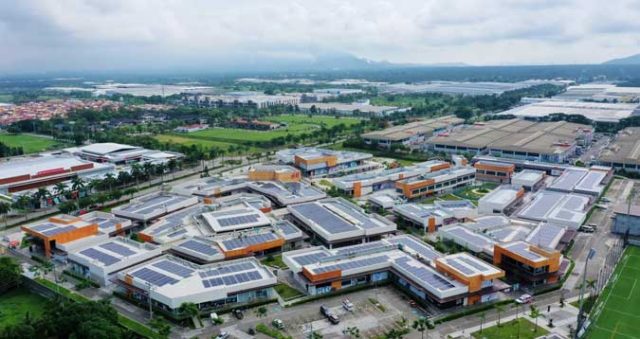
THE Philippine Economic Zone Authority (PEZA) said it signed a memorandum of understanding (MoU) with Schneider Electric Philippines to boost capacity-building for locators operating within PEZA’s economic zones.

The partnership seeks to build a framework for capability-building, joint events, knowledge-sharing, and co-branded initiatives aimed at advancing energy management, digitalization, and industrial automation across PE-ZA-registered enterprises, PEZA said in a social media post on Thursday.

Schneider Electric has agreed to support PEZA in promoting best practices and future-ready operations, while introducing solutions that address locator pain points and enhance operational efficiency.

The partnership is also expected to help strengthen investment promotion efforts by positioning the Philippines as a hub for smart and competitive manufacturing, PEZA said.

“This collaboration will help us attract more innovation-driven investments and position the Philippines as a viable investment destination in the region,” PEZA Director General Tereso O. Panga said.

Schneider Electric became a registered logistics enterprise in the Cavite Economic Zone (CEZ) in 2011. The company specializes in energy technologies, automation, and digitalization for residential and industrial markets.

Meanwhile, PEZA said the Bureau of Customs’ move to exempt qualified exporters from the Electronic Tracking of Containerized Cargo (E-TRACC) System is expected to lower the cost of doing business and streamline export processes.

“We welcome this development most especially at a time when ongoing tensions in the Middle East are exerting pressure not only on global oil prices but also on trade flows and economic stability,” Mr. Panga said.

Launched in 2020, E-TRACC is a web-based, real-time monitoring system that uses GPS (global positioning system)-enabled locks to track container movement from port to destination.

PEZA said the exemption eases the burden on exporters as they face external risks like high fuel prices and supply chain disruptions. — Beatriz Marie D. Cruz

NCR economy grows 4.4% in 2025, weakest in 5 years

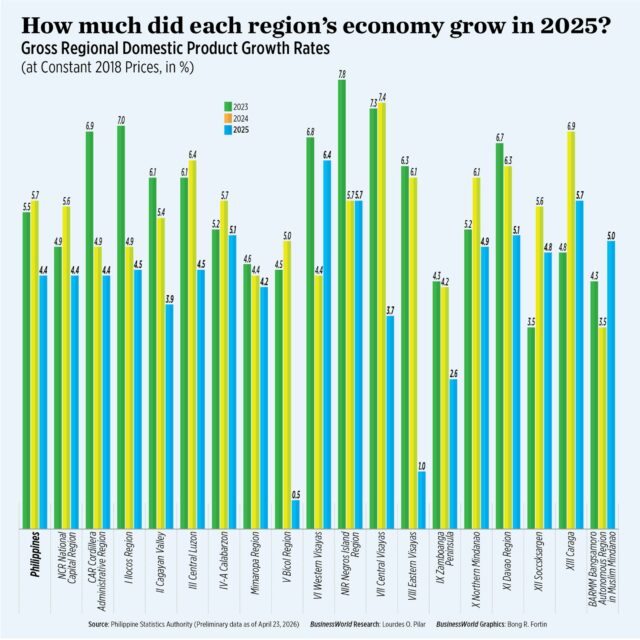
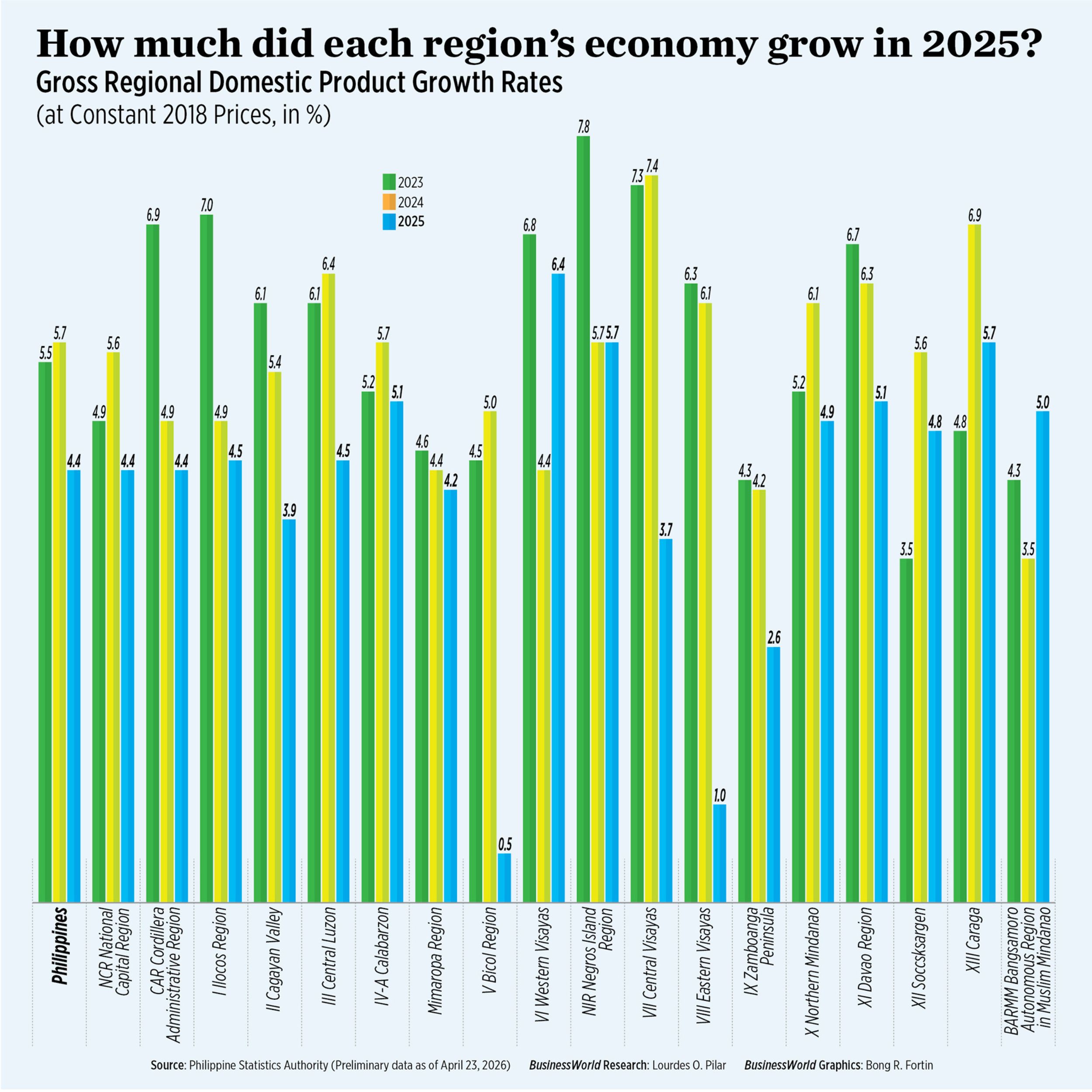
GROWTH in Metro Manila’s economic output slowed to a five-year low of 4.4% in 2025, dragged down by the flood control scandal and severe weather effects, the Philippine Statistics Authority (PSA) reported on Thursday.

Citing preliminary results, the PSA said the National Capital Region’s (NCR) economic output slowed from a 5.6% expansion in 2024.

In 2020, at the height of the pandemic, the NCR economy contracted 10%.

The NCR’s economic growth was in line with the revised 4.4% national gross domestic product (GDP) in 2025.

At constant 2018 prices, NCR economic output amounted to P7.24 trillion in 2025, against P6.94 trillion in 2024.

“NCR’s slower growth picture mainly reflected losses in economic confidence and dynamism following severe weather and the flood control scandal,” Marco Antonio C. Agonia, an economist at the University of Asia and the Pa-cific, said in an e-mailed response to questions.

Mr. Agonia noted that, with the other regions, economic growth eased as spending appetite among households and firms weakened.

“The NCR remains the country’s primary services hub, accounting for about 41% of total services output nationwide, which makes overall growth highly sensitive to changes in household demand, business activity, and urban services,” Union Bank of the Philippines Chief Economist Ruben Carlo O. Asuncion said via Viber.

“Growth was further tempered by weaker investment conditions during the year, as capital spending declined, limiting spillover effects to construction, real estate‑related activity, and supporting services,” Mr. Asuncion added.

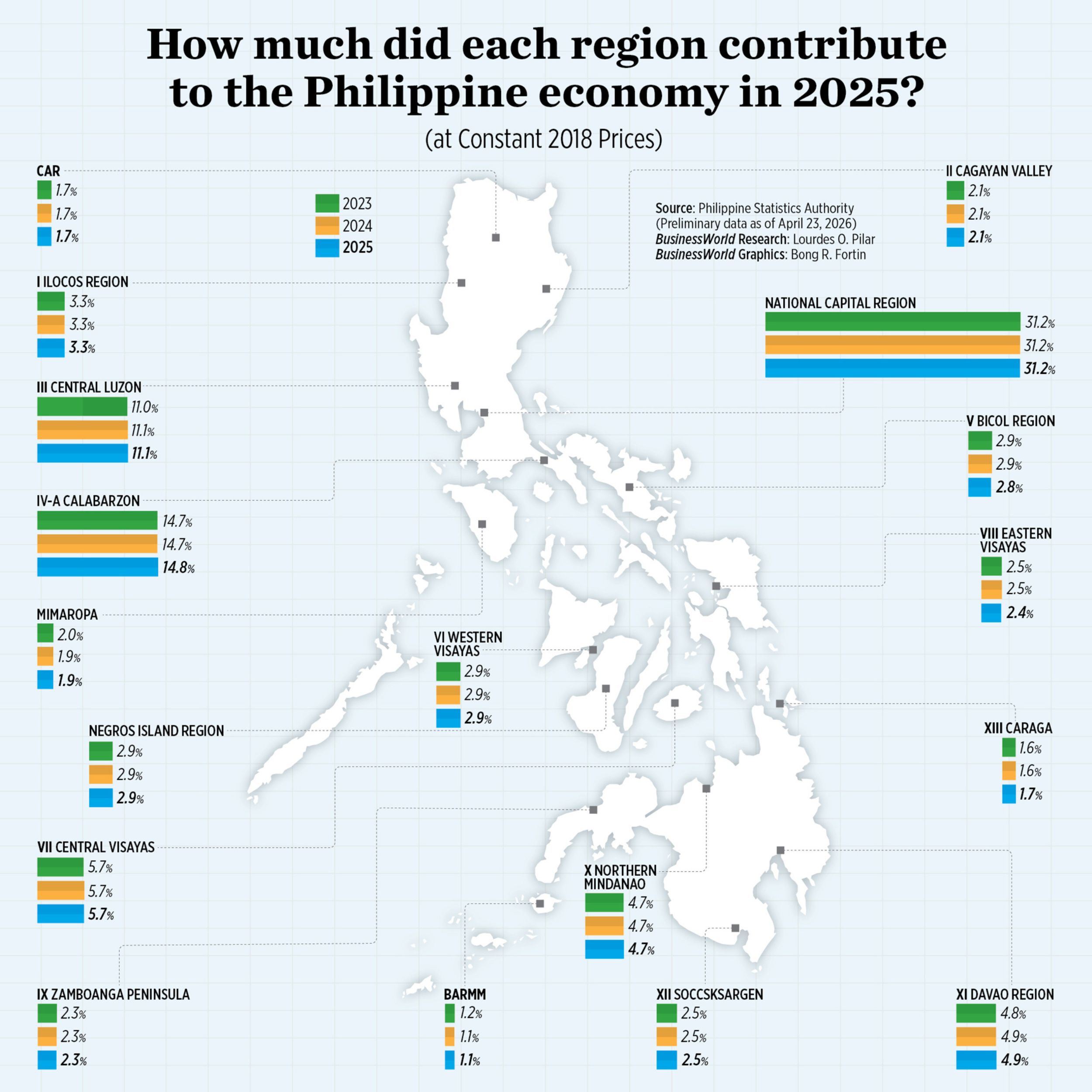
Metro Manila remained the top contributor to the overall Philippine economy last year at 31.2%, followed by Calabarzon (14.8%) and Central Luzon (11.1%).
Among the 18 regions, Western Visayas posted the strongest growth at 6.4% in 2025. This was followed by Caraga (5.7% from 6.9% in 2024) and Negros Island Region (NIR, 5.7% from 5.7%).

On the other hand, Bicol Region posted the weakest growth at 0.5% in 2025, easing from 5% in the previous year. The Eastern Visayas (1% from 6.1% in 2024) and Zamboanga Peninsula (2.6% from 4.2%) followed.

“The large variation in regional growth in 2025 — from Western Visayas (6.4%) at the top to Bicol (0.5%) at the bottom — largely reflects differences in agriculture performance, tourism recovery, infrastructure activity, and ex-posure to weather disturbances,” Ateneo Center for Economic Research and Development Senior Research Fellow Ser Percival K. Peña-Reyes said via Viber.

Mr. Asuncion said the growth in the Western Visayas was mainly driven by strong overall economic activity and per-capita output, while Caraga and the NIR were supported by faster growth in household spending.

“In contrast, regions such as Bicol, Eastern Visayas, and Zamboanga Peninsula experienced slower growth as investment activity weakened sharply, with these areas registering double‑digit contractions in gross capital for-mation,” he added.

In 2025, 83.6% of NCR’s output was driven by the services sector, which grew 5.1%, easing from 6% in 2024.

Wholesale and retail trade, which accounted for 22.4% of the services sector, eased to 3.9% from 4% in 2024.

With a 20.6% share of Metro Manila’s services sector, the financial and insurance activities sector slowed to 5.8% from 8.4% in 2024. Meanwhile, professional and business services (13.2% share) grew 4.9% in 2025, slower from the 6.7% posted in the previous year.

The total value of NCR’s service industry hit P6.05 trillion in 2025, up from P5.76 trillion in 2024.

Meanwhile, the industry sector, which accounted for 16.4% of the NCR economy also slowed to 0.7% in 2025 from 3.6% in 2024.

The PSA mainly attributed the slowdown in NCR’s industry sector to the 1.8% contraction in construction, against the 7.5% growth registered in 2024.

PSA NCR Regional Director Paciano B. Dizon said that, though there are contributions from private building construction, the decline in the construction subsector was due to the government spending freeze at the height of the flood control scandal in 2025.

“With construction, we can see how corruption would slow down not only the economy of the NCR, but it also affects, if not all, most of the economies of the other regions and the growth of the Philippines as a whole,” Mr. Di-zon said during the briefing.

Mr. Peña-Reyes said slower growth in construction was a mix of “delayed public infrastructure spending, high costs and expensive financing, weaker private real estate demand and execution challenges (weather, congestion, permitting).”

“Because construction feeds into manufacturing, real estate, and employment, its decline significantly dragged down the entire industry sector — and ultimately NCR’s overall GDP growth,” Mr. Peña-Reyes added.

Apart from the flood control scandal, Mr. Agonia said periodic bad weather also affected construction growth for public works projects.

“On the private sector side, property developers deferred projects in the metro following relatively high interest rates and the condo oversupply. In a similar vein, the government spending freeze also lowered spending appetite for private firms who usually benefit from infrastructure multiplier effects, dragging growth in the services sector,” he added.

The agriculture sector, which comprised 0.01% of NCR’s economic output, grew 4.2% in 2025 from 0.8% in 2024.

The Bangsamoro Autonomous Region in Muslim Mindanao posted the strongest growth in services at 8.5% in 2025 (from 6.1% in 2024), followed by Northen Mindanao (8% from 7.4%) and Cagayan Valley (7.4% from 6.5%).

In the industry sector, Caraga posted the strongest growth at 4.8%, against 6.1% in 2024.

Meanwhile, the Western Visayas agriculture sector posted the strongest growth among the 18 regions at 9.5%, a turnaround from the 7.4% contraction in 2024.

On the expenditure side, Caraga logged the fastest growth in household spending at 6.7% in 2025 from 4.6% in 2024.

Meanwhile, growth in government spending was fastest in the Ilocos Region, surging 15.6% last year from 4% in 2024.

Caraga posted the strongest expansion in gross capital formation at 8.5%, against 11.6% in 2024.

On a per-capita basis, Metro Manila logged the largest gross regional domestic product at P522,564 in 2025, up 3.8%.

This year, Mr. Peña-Reyes sees stable but slower economic growth for NCR “with services-led resilience offset by inflation, high rates, and global uncertainty.”

“It is not a recession scenario, but rather a compressed-growth environment, where demand is still there, but expansion is cautious and cost-constrained,” he said.

Mr. Agonia expects a “muddled growth outlook” for the NCR and the rest of the country this year.

“We expect higher oil prices and supply chain disruptions harming growth and raising inflation for the entire country. However, AONCR (areas outside of NCR) may suffer more than the capital region due to weaker regional sup-ply chains and poorer infrastructure,” he added.

Mr. Asuncion said sustained growth in the NCR will depend on household spending resilience and a recovery in investment activity.

“While services provide a stable base, renewed capital formation will be key to lifting growth toward firmer levels, especially for construction‑linked and investment‑driven segments of the regional economy,” he added. — Isa Jane D. Acabal


Budget utilization rate hits 98.5% at end of March

GOVERNMENT AGENCIES posted a budget utilization rate of 98.5% in March, behind the year-earlier pace of 99%, the Department of Budget and Management (DBM) said.

In its Notice of Cash Allocations (NCAs) Utilization Report, the DBM said that the National Government, local governments, and state-owned companies used P1.22 trillion out of P1.24 trillion issued NCAs as of the end of March.

Unused NCAs stood at P19.14 billion, the DBM said.

NCAs are quarterly disbursement authorities issued by the DBM to agencies, allowing them to withdraw funds from the Bureau of the Treasury for their spending needs.

In March, line departments used P749.19 billion, or 97.5% of their allotments, while P19.11 billion remained unused.

Six agencies posted a 100% budget utilization rate: the Office of the Vice-President, the Judiciary, the Commission on Audit, the Commission on Elections, the Office of the Ombudsman, and the Commission on Human Rights.

Four had 99.9% utilization rates: State Universities and Colleges and the departments of Foreign Affairs, Migrant Workers, and Transportation.

The departments of Energy, National Defense, and Tourism used 99.8% of their NCAs, while the departments of Education, Health, Human Settlement and Urban Development, Interior and Local Government, and Labor and Em-ployment used up 99.7%.

The Civil Service Commission posted the lowest utilization rate of 58.2% at the end of March.

The other departments with the lowest utilization rates were the departments of Agriculture (84.5%), Social Welfare and Development (86.3%), and Economy, Planning, and Development (87.3%).

Budgetary support to state-run firms, amounting to P87.5 billion, was fully utilized as of the end of March.

Allocations to local government units (LGUs) were 100% utilized, along with NCAs issued to the Metropolitan Manila Development Authority.

Michael L. Ricafort, chief economist at Rizal Commercial Banking Corp., said that the utilization rate still reflects some underspending since the latter part of 2025.

“But the latest improvements may have to do with some government catch-up spending,” he said via Viber, citing the increase of utilization from 87% in February.

However, he said government agencies should spend approved funds faster and more effectively.

“There is a need to maximize the use of government funds … since some of these are financed by loans that charge interest rate costs and amid the policy to optimize the use of funds,” he added. — Justine Irish D. Tabile

Calabarzon working to ‘localize’ Trabaho Para Sa Bayan strategy

LIMA Estate’s 30-hectare commercial area in Batangas. — BW FILE PHOTO

By Erika Mae P. Sinaking, Reporter

CALAMBA, Laguna — Regional economic and employment planners said they are working to make a nationwide government livelihood plan better reflect local conditions, citing the need to align workforce skills with the industrial demands of the Philippines’ most populous region.

The Calabarzon region, a major industrial hub, continues to grapple with persistent skills mismatches that risk undermining its competitiveness and ability to generate stable, quality employment, officials said on Thursday.

The localization of the Trabaho Para sa Bayan Plan, a 10-year master framework designed to guide labor market development, is being positioned as a critical intervention to bridge these gaps and strengthen coordination be-tween education, industry, and government institutions.

Assistant Secretary Agnes E. Tolentino of the Department of Economy, Planning, and Development (DepDev) Regional Development Group told BusinessWorld that aligning workforce capabilities with industry re-quirements remains a central concern for planners in the region.

The Philippine Statistics Authority (PSA) also on Thursday reported that Calabarzon’s economy grew 5.10% in 2025, exceeding the national average growth rate of 4.40%.

The region remains the country’s primary industrial center, accounting for a 25.4% share of the national industrial sector. It also accounts for 10.9% of services sector output.

“Since this is an industrial region, our demand here has to be addressed under the Trabaho Para sa Bayan to really complement or to provide for the support to our industries,” Ms. Tolentino said. “The mis-match between the skills of the graduates as compared to what is actually being required by the industry (makes it) very crucial for us to create jobs that are stable and decent.”

“When we localize the plan, we have to come up with other strategies not just at the provincial level, but even at the municipal and city level, for us to come up with manpower that is ready for absorption in the industry,” she added.

The DEPDev official said that reducing training costs for employers is also a key consideration, noting that improving baseline skills among graduates could make workforce integration more efficient.

“It doesn’t have to be very expensive on the part of the industry, just to get the level of skills that they need,” she said, in calling for stronger alignment between academic preparation and actual job requirements.

“Of course, we also have to enhance investments in the region, to support the needs of industries and other sectors. We also have agriculture, which is also promising in terms of its contribution,” she added.

Jorge Manuel C. Laude, a senior labor and employment officer at Department of Labor and Employment (DoLE) Region IV-A, said the Trabaho Para sa Bayan Plan serves as a blueprint to guide employment strategies over the next decade.

“This is a 10-year master plan. But we acknowledge that there are pressing challenges and issues that we need to immediately address so that we can mitigate possible adverse effects on the labor market,” Mr. Laude said in a separate interview.

He noted that identifying urgent priorities at the regional level is crucial to ensure that the broader plan remains responsive to current conditions.

“Although these may not yet be fully highlighted in the plan, we need to identify which ones are more pressing that we need to act on,” he said.

“We also want to encourage our applicants to stay and work here in Calabarzon, so they no longer need to go to other regions to find employment,” Mr. Laude said. “Through this plan, we envision generating quality jobs within the region.”

Agriculture dep’t forms office to manage World Bank programs

DA.GOV.PH

THE Department of Agriculture (DA) said it created a dedicated project management office (PMO) to oversee two World Bank-supported programs.

In Department Order No. 13, the DA consolidated the management of the Philippines Sustainable Agriculture Transformation (PSAT) program and the Technical Assistance for Sustainable Agricultural Transformation (TASAT) project in a single office.

The $1-billion PSAT program, structured as a policy-based loan, links the release of funds to performance targets, while the $24.5-million TASAT project provides technical support for institutional reforms in agriculture.

Both programs are financed through official development assistance from the World Bank.

In a statement on Thursday, the DA said the restructuring is intended to streamline execution and address coordination gaps across multiple units involved in delivering the programs.

“The creation of a unified PMO is critical to ensure that these programs are implemented efficiently, transparently, and in full alignment with our reform agenda,” Agriculture Secretary Francisco P. Tiu Laurel, Jr. said in the statement.

Under the new setup, a project director will lead the PMO, supported by a deputy who will handle day-to-day operations and compliance.

The office will also include specialized units tasked with delivering specific reform outcomes tied to disbursement-linked indicators required by the lender.

The units will be supported by technical working groups drawn from across the DA, including divisions handling rice systems, high-value crops, logistics, procurement, and audit functions.

The DA said a project support team will manage finance, procurement, and human resources, with dedicated units expected to help minimize delays that have tended to affect publicly funded projects. — Vonn Andrei E. Vil-lamiel

ADVERTISEMENT
ADVERTISEMENT