By Erika Mae P. Sinaking, Reporter
CALAMBA, Laguna — Regional economic and employment planners said they are working to make a nationwide government livelihood plan better reflect local conditions, citing the need to align workforce skills with the industrial demands of the Philippines’ most populous region.
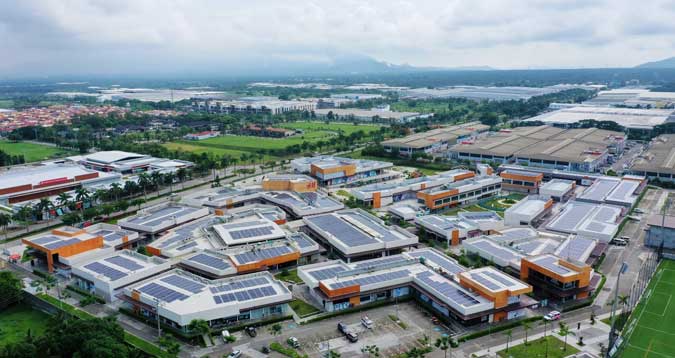
The Calabarzon region, a major industrial hub, continues to grapple with persistent skills mismatches that risk undermining its competitiveness and ability to generate stable, quality employment, officials said on Thursday.
The localization of the Trabaho Para sa Bayan Plan, a 10-year master framework designed to guide labor market development, is being positioned as a critical intervention to bridge these gaps and strengthen coordination be-tween education, industry, and government institutions.
Assistant Secretary Agnes E. Tolentino of the Department of Economy, Planning, and Development (DepDev) Regional Development Group told BusinessWorld that aligning workforce capabilities with industry re-quirements remains a central concern for planners in the region.
The Philippine Statistics Authority (PSA) also on Thursday reported that Calabarzon’s economy grew 5.10% in 2025, exceeding the national average growth rate of 4.40%.
The region remains the country’s primary industrial center, accounting for a 25.4% share of the national industrial sector. It also accounts for 10.9% of services sector output.
“Since this is an industrial region, our demand here has to be addressed under the Trabaho Para sa Bayan to really complement or to provide for the support to our industries,” Ms. Tolentino said. “The mis-match between the skills of the graduates as compared to what is actually being required by the industry (makes it) very crucial for us to create jobs that are stable and decent.”
“When we localize the plan, we have to come up with other strategies not just at the provincial level, but even at the municipal and city level, for us to come up with manpower that is ready for absorption in the industry,” she added.
The DEPDev official said that reducing training costs for employers is also a key consideration, noting that improving baseline skills among graduates could make workforce integration more efficient.
“It doesn’t have to be very expensive on the part of the industry, just to get the level of skills that they need,” she said, in calling for stronger alignment between academic preparation and actual job requirements.
“Of course, we also have to enhance investments in the region, to support the needs of industries and other sectors. We also have agriculture, which is also promising in terms of its contribution,” she added.
Jorge Manuel C. Laude, a senior labor and employment officer at Department of Labor and Employment (DoLE) Region IV-A, said the Trabaho Para sa Bayan Plan serves as a blueprint to guide employment strategies over the next decade.
“This is a 10-year master plan. But we acknowledge that there are pressing challenges and issues that we need to immediately address so that we can mitigate possible adverse effects on the labor market,” Mr. Laude said in a separate interview.
He noted that identifying urgent priorities at the regional level is crucial to ensure that the broader plan remains responsive to current conditions.
“Although these may not yet be fully highlighted in the plan, we need to identify which ones are more pressing that we need to act on,” he said.
“We also want to encourage our applicants to stay and work here in Calabarzon, so they no longer need to go to other regions to find employment,” Mr. Laude said. “Through this plan, we envision generating quality jobs within the region.”