Home Blog Page 7961

China arrests over 1,100 suspects in crackdown on crypto-related money laundering

PIXABAY

SHANGHAI  Police in China arrested over 1,100 people suspected of using cryptocurrencies to launder illegal proceeds from telephone and Internet scams in a recent crackdown, the Ministry of Public Security said. 

The arrests came as authorities in China step up their crackdown on cryptocurrency trading. Last month, three industry bodies banned crypto-related financial and payment services, and the State Council, China’s cabinet, vowed to clamp down on bitcoin mining and trading. 

The public security ministry said that by Wednesday afternoon police had busted more than 170 criminal groups involved in using cryptocurrencies to launder money. 

The money launderers charged their criminal clients a commission of 1.5% to 5% to convert illegal proceeds into virtual currencies via crypto exchanges, the ministry said via its official Wechat account. 

China’s Payment & Clearing Association said on Wednesday that the number of crimes involving the use of virtual currencies is on the rise. 

Because cryptocurrencies are anonymous, convenient and global in nature, “they have increasingly become an important channel for cross-border money laundering,” the association said in a statement. 

Cryptocurrencies have already become a popular means of payment in illegal gambling activities. Nearly 13% of gambling sites support the use of virtual currencies, and blockchain technology has made it more difficult for authorities to track the money, according to the association. — Reuters 

Britain’s airlines say extra support needed if travel stays shut

Image via British Airways/Stuart Bailey

LONDON  Airlines based in Britain have told the government they will need industry-specific support to help them survive if coronavirus disease 2019 (COVID-19) rules continue to keep travel markets shut. 

Companies including British Airways, easyJet and Ryanair are in a deepening crisis after Britain’s plans to restart travel on May 17 following a 4-1/2 month ban on foreign holidays fell far short of their hopes. 

Britons are still discouraged from traveling to most countries, and since the May reopening, the government has tightened the rules, removing one of the few destinations that was open, Portugal, from a safe travel list. 

As July and August approach, the months when airlines make most of their profits, there are worries the summer season may be lost for a second year in a row, risking airline viability and jobs. 

“If a meaningful reopening is not possible during the summer … then targeted economic support will be essential to ensure UK airlines are able to reach the point when a restart is possible, in order to protect many tens of thousands of jobs,” industry lobby Airlines UK said in a letter to finance minister Rishi Sunak on Thursday. 

Come the end of September, government support schemes to protect jobs are also due to end, a worry for airlines that might still be grounded due to foreign travel restrictions. 

Airlines UK said it wanted Mr. Sunak to extend furlough for aviation workers to the end of April 2022, give airlines longer to repay COVID-19 government loans, and launch a “restart grant” scheme to help airlines pay to maintain planes they cannot use. 

In the letter, the airlines said their preference would be for travel to restart and be unrestricted for vaccinated people. But recent government policy and comments suggest this is unlikely. 

That puts UK airlines at a disadvantage to peers in Europe, as countries there begin to allow more travel, while Britain sticks with its 10-day quarantine and testing requirements. — Reuters 

Biden warns Russia it faces ‘robust’ response for harmful actions as he begins European visit 

Official White House photo by Adam Schultz

MILDENHALL  President Joseph R. Biden, Jr., on Wednesday began his first trip abroad since taking office by hailing America’s unwavering commitment to the NATO alliance and warning Russia it faced “robust and meaningful” consequences if it engaged in harmful activities. 

Mr. Biden, speaking to about 1,000 troops and their families at a British air base, said he would deliver a clear message to Russian President Vladimir Putin when they meet next week after separate summits with NATO, G7, and European leaders. 

“We’re not seeking conflict with Russia,” the Democratic president said at the start of his eight-day visit to Europe. “We want a stable and predictable relationship … but I’ve been clear: The United States will respond in a robust and meaningful way if the Russian government engages in harmful activities.” 

Mr. Biden has said he is determined to rebuild trans-Atlantic ties and reframe relations with Russia after four rocky years under Republican former President Donald J. Trump, whose tariffs and withdrawal from treaties strained relations with major allies. 

“This is my first overseas trip as president of the United States. I’m heading to the G7, then the NATO ministerial and then to meet with Mr. Putin to let him know what I want him to know,” Mr. Biden said, drawing cheers from the troops. 

“At every point along the way, we’re going to make it clear that the United States is back and democracies of the world are standing together to tackle the toughest challenges, and the issues that matter most to our future.” 

Mr. Biden told reporters as he left for Europe that his goals were “strengthening the alliance, making it clear to Putin and to China that Europe and the United States are tight.” 

His summit with Mr. Putin on June 16 in Geneva is the capstone of the trip, an opportunity to raise US concerns directly with the Russian leader about ransomware attacks emanating from Russia, Moscow’s aggression against Ukraine and a host of other issues. 

In a development further straining US-Russia ties, a Russian court on Wednesday outlawed groups linked to jailed Kremlin critic Alexei Navalny, after declaring them “extremist.” Condemning the decision, the US State Department said it “effectively criminalized one of the country’s few remaining independent political movements.” 

Speaking to US troops based at Royal Air Force Mildenhall base, a huge American flag behind him, Mr. Biden underscored the US commitment to the NATO alliance but said it needed to modernize and expand its cyber capabilities. 

Mr. Biden also comes to Europe with a goodwill gesture, the planned announcement that the United States will buy and donate 500 million Pfizer Inc/BioNTech coronavirus vaccine doses to about 100 countries over the next two years, three sources familiar with the matter told Reuters. 

Mr. Biden is expected to announce the deal on Thursday. The United States has faced criticism over securing access to much of the initial stockpile of the most promising vaccines. 

G7 SUMMIT, MEETING WITH JOHNSON
Mr. Biden will make his first stop of the trip at the seaside village of St. Ives in Cornwall where he will participate in the G7 summit. The meeting is expected to be dominated by vaccine diplomacy, trade, climate and an initiative for rebuilding infrastructure in the developing world. US officials see that effort as a way to counter China’s growing influence. 

His push for a global minimum tax on multinational corporations faces opposition at home. G7 finance ministers agreed before the summit to pursue a global minimum tax rate of at least 15% and to allow market countries to tax up to 20% of the excess profits  above a 10% margin  generated by about 100 large, high-profit companies. 

Republicans came out against the plan this week, potentially complicating the US ability to implement a broader global agreement. 

Mr. Biden will have a meeting with British Prime Minister Boris Johnson on Thursday in Cornwall, a chance to renew the US-British “special relationship” after Britain’s Brexit break from the European Union. The two countries will issue an updated joint statement of principles between the two countries in honor of the original Atlantic Charter from 1941. 

But the two have deep policy issues to discuss, with Mr. Biden set to reinforce stalwart US support for the 1998 Good Friday peace agreement that ended decades of bloodshed in Northern Ireland, according to White House national security adviser Jake Sullivan. 

The agreement has come into question with the United Kingdom’s exit from the European Union. 

Messrs. Biden and Johnson will also discuss climate change, a proposal to counter China’s global influence on infrastructure and the withdrawal of Western troops from Afghanistan. 

The Russian Nord Stream 2 pipeline will also be on the agenda when Biden meets with German officials. The Biden administration opposes the $11 billion natural gas pipeline, but Germany wants it finished. 

After three days of G7 summitry, Mr. Biden and his wife, Jill, will visit Queen Elizabeth at Windsor Castle. The 78-year-old Mr. Biden met the queen back in 1982 when he was a US senator from Delaware. 

RUSSIA AND CHINA
Mr. Biden then travels to Brussels for talks with leaders of NATO and the European Union. The agenda is expected to be dominated by Russia, China and the perennial issue of getting NATO allies to contribute more to the common defense. 

Mr. Biden closes out the trip in Geneva for what could prove to be the most difficult meeting of the trip  a session with Mr. Putin, who enjoyed friendly relations with Mr. Trump. 

No major breakthroughs are expected from the summit. 

Asked by reporters if his meeting with Mr. Putin would yield some accord on cybersecurity, Mr. Biden was non-committal. 

“Who knows?” said Mr. Biden. “It’s going to be a subject of our discussion.”  Steve Holland and Trevor Hunnicutt/Reuters 

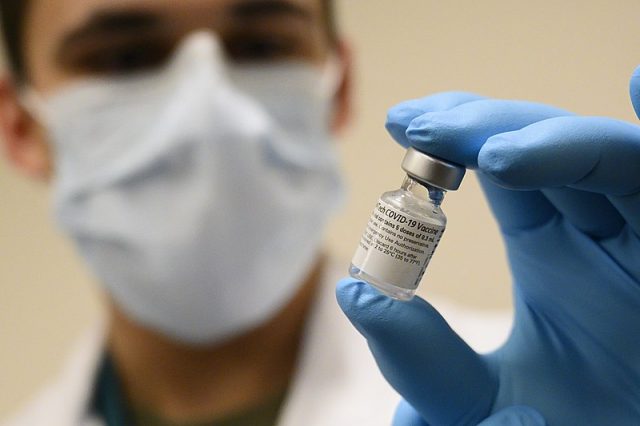
US to donate 500 million Pfizer vaccine doses to the world — sources 

Image via US Secretary of Defense/CC BY 2.0/Wikimedia Commons

WASHINGTON — The Biden administration plans to donate 500 million Pfizer coronavirus vaccine doses to nearly 100 countries over the next two years, three sources familiar with the matter told Reuters on Wednesday. 

The United States is likely to distribute 200 million shots this year and another 300 million in the first half of next year to 92 lower-income countries and the African Union, they said. 

The donations will go through the COVAX vaccine program that distributes coronavirus disease 2019 (COVID-19) shots to low- and middle-income countries. The program is led by the World Health Organization and the Global Alliance for Vaccines and Immunization (GAVI). 

GAVI did not respond to a request for comment. 

US President Joseph R. Biden, Jr., will announce the deal on Thursday at the Group of Seven meeting of the world’s wealthiest countries in Britain, one of the people said. 

The deal was negotiated over the past four weeks by White House COVID-19 response coordinator Jeff Zients and the coronavirus task force team, one of the sources said. 

CNBC reported on Wednesday that the United States is also talking with Moderna Inc. about buying some of its shots to donate to other countries. 

A Moderna spokesperson said the company is interested in possibly providing the US government with COVID-19 shots to give to low- and middle-income countries but declined to comment on any discussions. 

The White House and Pfizer declined to comment. 

The US president told reporters before boarding Air Force One for Britain that he had a global vaccine strategy and would be announcing it but did not offer details. 

The White House has been under mounting pressure to boost donations of COVID-19 shots to other countries. 

The United States has given at least one shot to around 64% of its adult population and has begun vaccinating adolescents, while other countries like Brazil and India are struggling to get desperately needed doses. 

“This action sends an incredibly powerful message about America’s commitment to helping the world fight this pandemic,” said Tom Hart, acting chief executive of The ONE Campaign, a nonprofit working to end extreme poverty and preventable disease by 2030. 

The administration is also using the US vaccine supply as a tool to counter Chinese and Russian vaccine diplomacy. 

The Biden administration had said it would share 80 million vaccine doses worldwide by the end of June. The White House earlier this year also pledged $4 billion to COVAX and urged other countries to boost donations as well. 

Pfizer has said it expects to produce as many as 3 billion COVID-19 shots in 2021 and upwards of 4 billion next year. 

The New York Times reported that the United States will buy the doses at a “not-for-profit” price, citing people familiar with the deal. They also reported that Pfizer Chief Executive Officer Albert Bourla will accompany Mr. Biden during the announcement. 

The agreement is in addition to the 300 million shots the United States has already purchased from Pfizer and brings the total number of Pfizer/BioNTech shots purchased by the United States to 800 million, the Times said. — Trevor Hunnicutt and Carl O’Donnell/Reuters

Habitat for Humanity calls for inclusive business solutions to solve the Philippine housing gap

As the country continues to grapple with the pandemic’s economic, social, and health impacts, the housing crisis continues to intensify due to COVID-19. To address this challenge, Habitat for Humanity is calling onto the private sector to help bridge this gap in the third series of the ‘BAHAYnihan: Rising Together through Housing’ forum on June 16 at 10 a.m.

Before the COVID-19 health crisis, the housing backlog was already at 6.7 million. By 2040, it’s expected that the housing need of the Philippines will hit over 22 million. To close the gap, the housing sector needs to build 250,000 houses a year.

Making up this unserved segment are over three million low-income Filipinos who build their homes incrementally over decades but have no access to quality building materials, formal financing channels, and training and information on appropriate construction technologies. Unfortunately, many of them have lost their jobs and depleted funds set aside for housing during the pandemic. With the continuing threats of COVID-19and severe weather events, the need for safe and sturdy houses has never been more urgent.

The BAHAYnihan forum, organized in partnership with BusinessWorld Insights, aims to build awareness of the Philippines’ housing needs, with special attention to the unserved population and how the business sector can explore viable, inclusive, and mutually beneficial business solutions to help address the housing gap.

“Based on the research by the University of Asia and the Pacific’s Center for Research and Communication, the unserved population is a market worth tapping into, due to its promising size and concentration in certain areas, which can provide the necessary economies of scale lucrative of the business sector to invest in while creating positive community and economic impact, “Jessan Catre, Country Lead for the Philippine Lab of Habitat for Humanity’s Terwilliger Center for Innovation in Shelter, said.

Keynote Speaker Secretary Eduardo Del Rosario of the Department of Human Settlements and Urban Development will present the accomplishments and interventions needed by the government.

Meanwhile, the panelists will be led by Cary Evert, former Hilti North America CEO and Board Member of Habitat’s Terwilliger Center for Innovation in Shelter Advisory Board; Horia Adrian, President, and CEO of Holcim Philippines; Noel “Toti” Cariño, President of the Chamber of Real Estate and Builders Associations, Inc. They will discuss the key drivers and barriers in the market and institutional environment that hinder or undermine private sector investments in affordable housing.

Also to be tackled are institutional reforms and capacity-building initiatives for greater private sector involvement in housing for the unserved market. Businesses will also learn about investment opportunities for private financing on socialized housing and owner-driven construction.

Over 150 key leaders in government, business, and civil society are expected to attend the forum. Interested participants may register at www.bit.ly/BWBahaynihan.


A reliable basis for trust

Insights to Inspire aims to spark ideas that empower businesses to pursue bigger goals through data and information. Read our insights on current issues and learn new ways to make an impact in your industry.

With the world still dealing with the effects of the COVID-19 pandemic over a year after it started, we conducted a Consumer Pulse study to quantify its financial impact on Filipino consumers. The goal is to better understand the phenomenon to inform consumers, businesses, and government decisions during these unprecedented times.

Topline results showed that 93% of those we surveyed had seen their household income negatively impacted by the pandemic, and 49% said they expected it to be negatively impacted in the future. Our GDP hence contracted by 9.5% YoY in 2020, the worst since 1947 after World War II.

We’re now in the middle of another world-defining moment as financial hardship due to the pandemic is broadly felt across all markets we surveyed. The task of charting a recovery is upon us, and we must use every resource available to succeed. Our solution? Data! In this age of accelerated digital transformation, harnessing the power of information might just be our best weapon.

Since data is constantly generated and processed, it delivers timely and accurate insights that reveal patterns and opportunities. Data allows us to make more informed decisions and forms a reliable basis for trust. In an uncertain environment such as this, trust is important to successfully manage risk especially for businesses, the key to our recovery.

The data that TransUnion stewards has infinite uses, but there are at least three things that businesses can learn that will allow you to improve operational efficiency, address your customers’ pain points, and still manage risk. Let’s look at them in the context of our survey’s results:

  1. Pick the right customer based on the data to achieve your business goals.

Of the 93% who reported their household income was negatively impacted by the pandemic, 65% is currently being negatively impacted while 28% had been negatively impacted but not currently. Data can help businesses segmentize customers and determine whom to trust, allowing you to prioritize areas of growth and support that can deliver results both for you and the consumers you serve. It’s not just about attracting new customers but helping and offering new opportunities to the ones you already have while also safeguarding against fraud.

  1. Offer payment terms or solutions to identified distressed customers.

A large number of respondents said they were concerned about their ability to pay their current bills and loans in full in the next four weeks, specifically their mortgage (47% of those financially impacted) and auto lease (41%). In addition, there were those who had or would need to seek financial accommodation such as deferral, forbearance, or a payment holiday. These are distressed customers who could use some consideration from businesses as they tide the impact of the pandemic on their finances. By using data, lenders can not only suggest possible options for them but also identify those that might soon be in financial stress and reach out to them proactively.

  1. Create new products based on consumer behavior.

Affected consumers reported they had made changes in their approach to savings and debts. Some cut back on discretionary spending, canceled/reduced services, and saved more for emergency funds. These insights allow you to tailor offerings in response to the current realities of your customers.

Data essentially gives businesses the confidence to pursue growth again for eventual recovery. Beyond finding the right business-consumer fit, our data can be used to solve issues of national scale such as financial inclusion and even fight fraud. It’s just a matter of finding solutions that benefit everyone based on their own specific circumstances, especially during difficult times like these.

Pia Arellano is a seasoned financial services leader with over 25 years of industry experience across banking, payment solutions, telecommunications, and remittance services. She is instrumental in establishing TransUnion as a risk management and data solutions and insights partner of financial institutions in the Philippines.

For questions, email tuphmarketing@transunion.com


PHL imports, exports surge in April

REUTERS

By Ana Olivia A. Tirona, Researcher

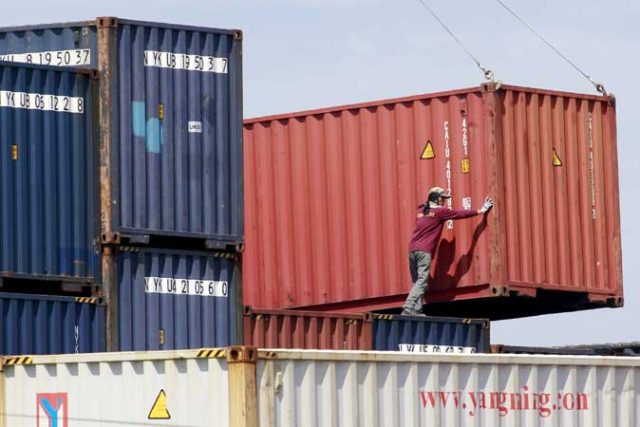
PHILIPPINE international trade value doubled in April as both exports and imports of merchandise goods posted record growth, the Philippine Statistics Authority (PSA) reported on Wednesday.

Preliminary data by the PSA showed the country’s total external trade in goods — or the sum of merchandise exports and imports — stood at $14.16 billion in April, more than double the $6.83 billion in the same month last year.

Merchandise exports during the month went up by 72.1% year on year to $5.71 billion, compared with a revised 33.3% expansion in March and a 41.3% decline in April 2020.

Philippine trade year-on-year performance (Apr. 2021)

Meanwhile, merchandise imports grew by 140.9% to $8.45 billion versus the 22% year-on-year expansion in March and the 62.9% decline in April last year.

The April growth figures were the fastest recorded since at least 1991 — the earliest year with available PSA trade data. This also marked the second and third consecutive month of growth for exports and imports, respectively.

The trade deficit stood at $2.73 billion in April. This was a tad smaller than the $2.75-billion shortfall in March, but was bigger than the $187.10-million gap in April 2020.

Year to date, the trade balance widened to a $11.09-billion deficit, from $8.64-billion trade gap in 2020’s comparable four months.

For the same four-month period, exports and imports grew by an annual 19% (to $23.37 billion) and 21.9% (to $34.46 billion), respectively. These surpassed the Development Budget Coordination Committee’s revised growth targets for exports and imports at 8% and 12% for the year.

Exports of manufactured goods grew by 88.1% to $4.71 billion in April. These goods accounted for 82.3% of total export sales that month.

The exports of electronic products grew by 62.6% to $3.22 billion in April, with semiconductors chipping in $2.41 billion, up 40.4%. Electronic products made up 68.5% of manufactured goods exports and 56.4% of total exported goods.

Exports of forest products grew around three times to $25.31 million in April from $7.70 million in the same month last year. Likewise, sales of mineral products increased by 50.2% to $525.42 million from $349.81 million.

Outbound sales of agro-based products were flat, up 0.05% to $350.03 million.

On the other hand, exports of petroleum products plunged to $668,218 from last year’s $66.78 million.

All major import items saw significant annual growth in April. Purchases of raw materials and intermediate goods surged by 118.6% to $3.40 billion from last year’s $1.56 billion. These goods account for 40.2% of the country’s import goods that month.

Capital goods, which comprised 32% of the total, more than doubled to $2.71 billion from $1.32 billion in the same period last year.

Imports of consumer goods were valued at $1.43 billion in April, around 3.3 times more than the $429.54 million.

Purchases of mineral fuels, lubricant and related materials also shot up by almost five times to $841.90 million from $172.57 million previously.

In a note sent to reporters, the Department of Trade and Industry (DTI) said the country’s 72.1% export growth rate in April was the highest among select Asian economies, beating the performances of Malaysia (62.7%), Indonesia (52%), and Vietnam (51%).

It also surpassed outbound sales growth of South Korea (41.2%), Taiwan (38.7%), Japan (38%), China (32.3%), Hong Kong (24.4%), Thailand (13.1%), and Singapore (6%).

“Our latest export growth rate shows that we are steadily recovering from the negative impact of the COVID-19 (coronavirus disease 2019) pandemic. It can be considered a solid growth considering that the performance was even stronger than the pre-pandemic levels in 2019, and not just due to the low base in 2020,” Trade Secretary Ramon M. Lopez was quoted in the statement as saying.

Mr. Lopez added the $5.71-billion export earnings recorded in April was higher compared with the $5.65 billion in the same month in 2019.

At the same time, the Trade chief said the doubling of imports of capital goods, raw materials and intermediate goods during the month indicated a pickup in the country’s manufacturing sector.

In a Zoom video interview, Semiconductor and Electronics Industries in the Philippines, Inc. (SEIPI) President Danilo C. Lachica attributed the results in April to an uptick in aggregate demand.

“[C]ompared to last year, manufacturers were not as rampant due to the start of the pandemic [and that there were order cancellations.] But now that demand is high, the equipment manufacturers were not ready to cope with the demand,” Mr. Lachica said.

IHS Markit Chief Economist for Asia-Pacific Rajiv Biswas likewise noted the increase in demand.

“This buoyant growth in electronics exports reflected the global boom in electronics demand since mid-2020, as households in the US and the [European Union] have ramped up their purchases of electronics goods,” Mr. Biswas said in an e-mail to BusinessWorld.

“Meanwhile imports of electronics rose from $1.3 billion in April 2020 to $2.4 billion in April 2021, driven by strong demand for intermediate electronics components in order to meet surging new export orders for electronics,” he added.

In a statement, ING Bank N.V. Manila Senior Economist Nicholas Antonio T. Mapa attributed April’s performance to base effects given the stringent lockdowns imposed in April last year at the onset of the pandemic.

Mr. Mapa also pointed out that despite the stellar year-on-year growth, exports and imports in April were actually down from March as the government reinstated tighter restrictions to try to slow the surge in COVID-19 cases.

Metro Manila, Cavite, Laguna and Rizal were placed under an enhanced community quarantine from March 29 to April 11. This was later relaxed to a more lenient modified enhanced community quarantine from April 12 to 30.

“April trade data suggests that lockdowns hindered both inbound and outbound shipments as well and we can expect a sustained pickup for both exports and imports in the near term as mobility curbs are relaxed… although the trade balance will likely remain at manageable levels of roughly $3.0 billion with capital-intensive imports not likely to pick up considerably given still subdued investment appetite,” Mr. Mapa further noted.

DTI’s Mr. Lopez was similarly upbeat: “As we gradually and safely reopen our economies both locally and abroad, we are confident that we will see a sustained improvement in our export growth rate this year,” he said.

SEIPI’s Mr. Lachica reiterated their target for exports to grow by 7% this year.

“By luck, it still depends on the availability of raw materials… [T]o sustain the momentum, we need to make sure the vaccination deployment is going as planned. The problem is, if we have another surge, we have to scale down our operations again,” said Mr. Lachica.


Government plans to spend P2.3-T in 2nd half

PHILIPPINE STAR/ MICHAEL VARCAS

THE GOVERNMENT is set to spend P2.3 trillion in the last two quarters of the year, slightly lower than the first-half program as the start of the rainy season may hamper infrastructure projects.

The Development Budget Coordination Committee (DBCC) set a P1.123-trillion disbursement target for the third quarter, and a P1.175-trillion spending goal for the fourth quarter, during its 179th meeting on May 20, an official document showed.

The P2.3-trillion spending goal for the second half is 5.9% lower than the P2.442-trillion target in the first semester, but 3.9% higher than the P2.214 trillion spent in July-December 2020.

The government spent P1.02 trillion in the first three months, up 20% year on year, but short of its P1.18-trillion target by 14%.

For the second quarter, the DBCC is spending P1.422 trillion, which accounts for 30% of the P4.737-trillion programmed spending plan for 2021.

This year, the government is planning to ramp up spending to stimulate economic recovery, create more jobs and complete big-ticket infrastructure projects.

Ruben Carlo O. Asuncion, chief economist at UnionBank of the Philippines, Inc., said economic managers may have lowered the spending target for the last two quarters on expectations that bad weather conditions may slow down spending.

Mr. Asuncion said it is normal for the government to frontload spending in the first half as the dry season provides favorable conditions for construction works.

Quarterly spending target for infrastructure was highest in the second quarter at P324.974 billion, following the P243 billion spent in the first three months.

For the third quarter, the government aims to spend P229.54 billion on infrastructure and another P221.6 billion in the fourth quarter. This will bring the total infrastructure program to P1.02 trillion this year.

While spending is expected to soften, the DBCC projected revenues will pick up by 2.82% in the second half to P1.46 trillion, from P1.42 trillion programmed this semester.

“I think the higher revenue target in the second half banks on expectations that the environment will be better,” Mr. Asuncion said.

Overall revenues are seen to rise by 4.2% to P725.36 billion in the second quarter from the actual first- quarter income of P696.46 billion.

The government set P714.77-billion revenue target next quarter and P744.9 billion in the fourth quarter.

For tax collections alone, the DBCC expects tax revenues to reach P694.1 billion this quarter, P681.5 billion in the third quarter and P713.2 billion in the last three months of the year.

Total tax collections hit P626 billion in the first quarter, up by 0.9% year on year and exceeded the P602.1-billion target by 4%.

The DBCC has set a 6-7% growth target for the economy this year to recover from the deep 9.6% slump last year. — Beatrice M. Laforga

PEZA sets sights on Saudi Arabia fund investment

REUTERS
A Saudi flag flutters atop Saudi Arabia’s consulate in Istanbul, Turkey, Oct. 20, 2018. — REUTERS/HUSEYIN ALDEMIR

By Jenina P. Ibañez, Reporter

THE PHILIPPINE Economic Zone Authority (PEZA) is looking to attract Saudi Arabia’s sovereign wealth fund for potential foreign direct investments into key areas in the Philippines.

PEZA Director-General Charito B. Plaza in a mobile message on Friday said the agency wants to attract the sovereign wealth fund, but it is still studying what form that would take.

“We want to avail of the sovereign wealth fund of Saudi government,” she said. “We’re studying (it because) Saudi investors want big-ticket investments, not medium or small.”

This would be the first time PEZA would try to tap a sovereign wealth fund for investments, she added.

Saudi Arabia in January announced that it plans to double its Public Investment Fund (PIF) to 4 trillion riyals (around $1.1 trillion) by 2025. The fund would invest 3 trillion riyals in new sectors over the next decade, Reuters reported.

The fund recently raised holdings of US stocks by a fifth to $15.4 billion in the first quarter, buying additional shares in video game firms Activision Blizzard, Inc. and Electronic Arts, Inc. It also bought shares in South Korean e-commerce firm Coupang, Inc.

Saudi Arabia’s gross domestic product fell 3.3% in the first quarter due to lower oil production, but its non-oil economy rose 3.3%.

PEZA last month virtually met with Philippine Embassy to the Kingdom of Saudi Arabia to work together on attracting more foreign investments to the Philippines. Saudi Arabian firms in Philippine economic zones are in the engineering, architecture, design, and outsourcing sectors.

“We aim to have more investors from Saudi Arabia and widen our reach for industries unique only in the Middle East,” Ms. Plaza had said in a statement.

“Once the pandemic is over, we will invite our Saudi Arabian investors to visit the economic zones where they can locate their industries once they decide to invest in the Philippines.”

PEZA-approved investment pledges increased by almost 54% to P25.82 billion in the first quarter of 2021 after coming off a low base last year. The 57 projects could create more than 5,600 jobs, the agency said.

The bulk of the investments are in the export manufacturing and information technology sectors.

Pasig is world’s most polluting river — study

HIVEMINER

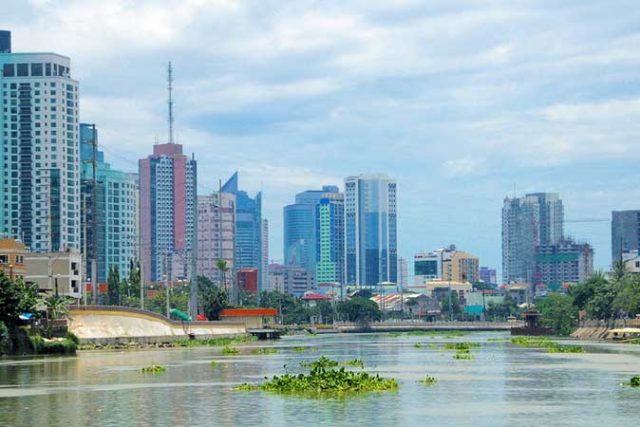
PASIG RIVER is considered the world’s most polluting river when it comes to plastic waste, according to research published by the American Association for the Advancement of Science (AAAS).

At the same time, San Miguel Corp. (SMC) and International Container Terminal Services, Inc. Group (ICTSI) Foundation on Wednesday launched initiatives to help rehabilitate the polluted river.

An April study published by the AAAS’ Science Advances journal showed the 28% of the rivers responsible for global plastic pollution are in the Philippines.

The Philippines had 466 rivers out of the 1,656 rivers that accounted for 80% of ocean plastic waste, followed by India with 211 and Malaysia with 105.

“The world’s most polluting river when it comes to plastic is the 27-kilometer Pasig River which runs through Metro Manila, accounting for 63,000 tons of plastic entering oceans from rivers per year,” a statement from the Climate Change Commission (CCC) read.

Aside from Pasig, the list of top 50 rivers that carry the most trash into the ocean included 18 more from the Philippines.

These rivers are Tullahan, Meycauayan, Pampanga, Libmanan, Rio Grande de Mindanao, Agno, Agusan, Parañaque, Iloilo, Imus, Zapote, Cagayan de Oro, Davao, Malaking Tubig, Tambo in Pasay, Jalaur, Cagayan and Hamulauon.

The Philippines is also said to be the country with the highest averaged probability for a plastic particle to reach the ocean in a year, at 7.2%.

“The study findings raise extreme concern on the issue of mismanaged plastic wastes in the country, and supports the call…for urgent efforts to solve the plastic crisis by implementing measures to regulate and in turn, halt the production of unnecessary plastics-made straws and stirrers, spoon and fork, and plastic labo, among others,” CCC said.

REHABILITATION PLAN
Meanwhile, SMC on Wednesday said it is allocating P2 billion for its five-year plan to clean up the Pasig River.

Described as the “largest-ever river rehabilitation project in the country,” it will involve extracting 50,000 metric tons of silt and solid waste per month from the river, or 600,000 metric tons a year using advanced and specialized equipment.

The project is supported by the departments of Environment, Public Works, Interior and Local Government, Philippine Coast Guard, and local government units, including Manila, Mandaluyong, Makati, and Pasig.

“There have been many cleanup efforts in the past, and government has successfully implemented a number of programs these past few years. But decades of pollution and compounding problems that have rendered the river biologically dead since the 1990s are too significant and complex to overcome — even for the best-intentioned advocates and organizations,” SMC President Ramon S. Ang said in a statement.

“We hope that with the resources and technical know-how that we are bringing into the effort today — along with the continued support of our National Government agencies and local government units — we can all make a bigger difference,” Mr. Ang added.

Also, the ICTSI Foundation said it has partnered with Finnish company Riverrecycle Oy to introduce a sustainable river waste collection system along Pasig River.

ICTSI Foundation said it will allot $1 million for the implementation of Rivercycle, adding that this will complement existing efforts in restoring the 27-kilometer river.

The project will involve collecting plastic waste using a device to capture between 70 to 200 tons of waste per day, as well as raising awareness of waste management practices in the communities.

“The collected plastic waste will be converted into oil before being converted back into plastic,” ICTSI Foundation said. — A.Y. Yang

Ayala Land swaps properties for shares in AREIT

AYALA Land, Inc. (ALI) has executed the deed of exchange for the property-for-share swap transaction with its real estate investment trust AREIT, Inc., both listed companies told the exchange on Wednesday.

The transaction will issue Ayala Land and its subsidiaries, Westview Commercial Ventures Corp. and Glensworth Development, Inc., 483,254,375 primary common shares of AREIT at P32 apiece in exchange for Ayala Land’s properties valued at P15.46 billion altogether.

The shares will be sourced from AREIT’s authorized capital stock, which it seeks to raise to P29.5 billion from P11.74 billion, pending approval from the Securities and Exchange Commission (SEC).

“Following the execution of the deed of exchange, the involved parties will submit the application for the increase in authorized capital stock, and the property-for-share swap, specifically the request for confirmation of valuation, and exemption from registration, to the SEC within the month,” Ayala Land and AREIT said in their disclosures.

Once regulatory approval is received, both companies will apply for a certificate authorizing registration with the Bureau of Internal Revenue and the listing of the additional shares with the Philippine Stock Exchange within this year.

“The infusion of the commercial assets is part of ALI’s commitment as AREIT’s sponsor to support AREIT’s growth plans of building a larger and more diversified portfolio,” Ayala Land said.

The properties in the property-for-share swap include the following: Vertis North Commercial Development, Evotech Buildings 1 and 2, Bacolod Capitol Corporate Center, Ayala Northpoint Technohub, and office condominium units at BPI-Philam Life Buildings in Makati and Alabang.

This will expand AREIT’s portfolio to 549,000 square meters (sq.m.) from 344,000 sq.m., as its deposited property value will also increase to P52 billion from P37 billion.

Meanwhile, the transaction bumps up Ayala Land’s ownership in AREIT to 66% from 50.1%.

Shares of Ayala Land at the stock exchange went up by 3.65% or P1.35 to close at P38.30 each, while AREIT stocks declined by 1.93% or 70 centavos to close at P35.65 each. — Keren Concepcion G. Valmonte

Revolution Precrafted shifts to selling home designs

EMBATTLED startup Revolution Precrafted Philippines, Inc. said it is planning to focus its business pivot to selling designs from offering property developers prefabricated designer homes, following issues with partners.

“How we pivot now involves leveraging on our IP or intellectual property, the compelling designs that are really at the heart of our enterprise, and licensing them to any developer or end user who would like the designs for their own homes or projects using their own contractors,” Jose Roberto “Robbie” R. Antonio, founder and chief executive officer of Revolution Precrafted, said in a statement on Wednesday.

Several of Revolution Precrafted’s suppliers and contractors filed complaints with the National Bureau of Investigation earlier this year after finding issues in project contracts.

“Majority have since been put to rest and we are fulfilling our obligations to clients and suppliers where these contracts are deemed due or expired indeed,” said Mr. Antonio, who had to resign from his position as co-managing director and member of the board of directors of Century Properties Group, Inc. to resolve these issues.

The company earlier said that the coronavirus disease 2019 (COVID-19) pandemic activated force majeure stipulations in business dealings. These clauses free parties from liability should unforeseen events occur, which would make them unable to fulfill responsibilities as stated in the contract.

BusinessWorld asked how much the company has settled so far but was told that figures are not available yet.

“All settlements for all obligations are ongoing and on various fronts — both suppliers and buyers at different projects,” Revolution Precrafted said.

The company, along with partner property developers, has advised homebuyers to contact developers regarding concerns. Christina Adrales, a buyer in the Puerto Azul project of the company, said she was able to settle things with Revolution Precrafted quickly and amicably.

Revolution Precrafted will now be focusing on the business of selling designs instead of being involved in the process of construction.

“Revolution Precrafted is an asset-light intellectual property-based company founded on the idea of making world-class designer houses accessible, practical, fast, and affordable especially for a rapidly expanding middle class,” Mr. Antonio said.

“The vision to utilize IP and technology for the future remains the same,” he added. — Keren Concepcion G. Valmonte

ADVERTISEMENT
ADVERTISEMENT