Home Blog Page 7942

Medgate to roll out AI-assisted teleconsultation   

PIXNIO

MEDGATE Philippines is integrating artificial intelligence (AI) into its telemedicine platform. Called AIDA, the chatbot-like system allows patients to self-triage and accounts for risk factors such as allergies and age.

“This helps determine whether a patient should have a teleconsultation, or go to a clinic, or an emergency room,” said Ronald T. Estrella, Medgate Philippines country manager, at a recent event.

Open Web Technology, which developed Medgate’s Android and iOS apps, summarized how AIDA works on its website: it takes as input the patient’s symptoms; then, it goes through a question-and-answer phase to gather more data; ultimately, a recommendation is provided.

Open Web Technology collaborated with technology firm IBM to leverage Medgate’s 11 million historical medical cases collected over two decades to build AIDA. The machine learning–powered symptom checker has already been integrated in Switzerland, where Medgate was founded. It will be rolled out in stages in the Philippines this year.

“Patients suffering from conditions treatable remotely (e.g., the flu) are suggested telemedical cares, those requiring physical attention (e.g., a broken foot) are directed to a family doctor, and those in need of immediate help (e.g., heart attack) are urged to call an emergency line,” according to Open Web Technology.

The local platform saw its number of consultations jump to at least 500 calls per day in 2021 year from 100 calls per day in 2019, leading to a total patient base of 1.5 million.

“You can view Medgate as a virtual hospital,” said Mr. Estrella, who added that Medgate has a resolution rate of 80% — 4/5 of the cases that come through the portal are successfully treated by telemedicine — the rest of the cases are referred to clinics (16%) and emergency rooms (4%).

In these consultations, Medgate employs a medical co-management approach where doctors with multiple specializations consult on a single case. An internist, for example, may also treat a pediatric case to get a better background of and solution for a patient’s condition, contributing to high treatment rate for the provider. Doctors undergo a minimum of 80 hours of training on the platform’s tools and methodology. There is also refresher course every quarter.  

In Switzerland, the platform handles 10,000 daily calls. “We could deliver that number of daily consultations in the Philippines too. We could mirror the Swiss volume with appropriate partnerships,” said Stavros Athanasiou, president of Medgate Philippines.

To achieve this scale, the Philippines has to address infrastructure gaps and increase the number of healthcare professionals in the country, said Mr. Estrella.

“If our government can graduate more doctors and nurses, this will help the healthcare industry in general,” he said. “The government will have to look at telemedicine as a key component of universal health coverage. There are not enough doctors. You have to leverage technology to deliver medicine.”

As of 2019, the doctor-to-patient ratio in the Philippines was 1:33,000 — significantly worse than the global average of 1:6,600.

“If you look at the whole landscape, there are discrepancies,” added Mario M. Silos, chairman and president of Intellicare, a health maintenance organization that has partnered with Medgate. “In the cities, [the ratio might be] one doctor to every 5,000 patients. In the boondocks, that ratio could actually be 1:100,000.”

While advances in 5G and wearables could lead to “immersive high-resolution video experiences” informed by data captured by smartwatches, telemedicine, at its core, is about connecting doctors with patients using whatever technology is available, including basic mobile phones.

Said Medgate’s Mr. Estrella: “We actually don’t need the Internet to use telemedicine. With Medgate, all you need is a phone. You don’t even need to have load. Send us a message and we’ll call you back and bear the cost of that call.”

And if people don’t have phones? Intellicare’s Mr. Silos suggested that barangay centers in rural areas be equipped so that people can call telemedicine providers. “If they don’t have phones, they can access telemedicine through these barangay centers,” he said. “We can begin giving people [remote healthcare] access at the primary level … Telemedicine will probably be the great equalizer.”  P. B. Mirasol

How spare bike parts can help heritage conservation efforts

PAMANA WHEELS PROJECT

MOVING around the city has been difficult since public transportation was limited last year in response to the ongoing coronavirus disease 2019 (COVID-19) pandemic. Many people adapted by taking to bicycles. But not everyone can afford a bicycle, among them heritage conservation workers of Escuela Taller. This is where a project that creates bikes from spare parts saved the day.

Since 2009, Escuela Taller de Filipinas Foundation, Inc. (ETFFI) has been raising awareness on the importance of preserving Filipino heritage and has been training unemployed and out of school youth on the technical skills needed in conservation work. Its trainers, students, and graduates have been affected by the transportation issues brought about by the pandemic.

“…Moving around using public transportation had been difficult… there’s always a chance and potential exposure [to COVID-19] using these types of transportation,” Escuela Taller Communications and Special Projects Officer Philip Paraan told BusinessWorld in an e-mail. “Using bicycles by far is the safest [mode of transportation] and through this bike project [we] want to ensure mobility of our heritage conservation workers,” he said.

So, Escuela Taller teamed up with BeSeekLeta For Every Juan and Bambike for the Pamana Wheels Project to build bikes for heritage workers.

Bicycles will be assembled out of spare parts from BeSeekLeta For Every Juan, a non-profit organization established in June 2020 that upcycles old and unused bike parts to build functional bikes for those who need to go to work.

For this project, Escuela Taller also partnered with socio-ecological enterprise Bambike, which runs the Bambike Ecotours, a guided bike tour goes through major historical and cultural sites inside Intramuros.

“Initially, we thought of assembling only 20 bikes with the conservation team (made up of Escuela Taller graduates) who are about to start work in La Loma Chapel. However, there are other projects that will also soon start, so we decided to double our current targets and build 40 in total,” Mr. Paraan said.

The project is in need of bike frames and forks, wheelsets, interiors and exterior tubes, handle bars, brake pads and levers, and chains. Donations can be dropped off at the Escuela Taller at in Revellin de Recoletos, Victoria St., Intramuros, Manila. Donations of complete bicycle units are also welcome.

The bikes will be used by the team of conservation workers who will be working on heritage projects located in Manila including the La Loma Chapel, the Luneta Hotel, and a possible project inside UP Diliman.

“We target to assemble the 40 bikes around June to July.  If we don’t complete them all by that time, we may have to relaunch another phase of the project,” Mr. Paraan said.

Those who are interested in contributing bike parts or units can send a message to the Escuela Taller Facebook page (fb.com/escuelataller.defilipinas) or text Philip (0945-133-9920) and Roy (0995-472-7778) before sending donations. — Michelle Anne P. Soliman

Interest in birth control rises, but unplanned pregnancies remain high

Source: iPrice
Source: iPrice

FILIPINOS’ interest in contraceptives and birth control methods surged by 96% in the first trimester of 2021 compared to the same period of 2019, according to a recent study that tracked the Google search volume of related keywords in the Philippines.

Birth control pills garnered the most attention online, with a 91% increase in 2021 from 2019, data collected by Southeast Asian e-commerce platform iPrice Group showed, with interest peaking in March 2021, resulting in over 180,000 searches. Meanwhile, searches on condoms, the most accessible form of birth control, rose by 79%. Emergency contraceptives, known as “morning after” pills, increased by 76%.

Even vasectomy, a permanent sterilization for men, experienced a 211% increase in Google searches over the study’s two-year span. It saw an all-time high in November and Dec. 2020.

The iPrice study noted peaks during the last four months of 2020 (also called the “–ber” months). Since then, search volume has continued on a steady upward slope, raising the question of whether Filipinos are being more cautious than ever when it comes to family planning.

INTEREST USAGE
While iPrice data on online searches show that Filipinos are wary of the consequences of having unwanted children during the coronavirus disease 2019 (COVID-19) pandemic, statistics from population agencies paint a different picture.

The Philippines has one of the highest population growth rates in Southeast Asia, according to the Commission on Population and Development (POPCOM), especially with birth control being less accessible due to the lockdown. In June 2020, the commission projected a 2.2% decline in contraceptive prevalence rate (CPR), meaning a decline in women who use modern contraception and family planning methods.

POPCOM also cited the University of the Philippines Population Institute (UPPI) and the United Nations Population Fund (UNFPA), which predicted nearly 2 million Filipino women between 15 to 49 years old getting pregnant — leading to 214,000 unplanned births.

More alarming is the projection of 10% of births being among women below 20 years of age. POPCOM corrected their estimate of teen pregnancies to 178,000 from the initial 163,000, an increase of 9.3% brought about by the lockdown hampering family planning programs and accessibility to contraceptives.

TEEN MOMS
In order to address teenage pregnancies in the country, POPCOM recently teamed up with the Department of Social Welfare and Development (DSWD) to undertake the Social Protection Program for Teenage Mothers and their Children (SPPTMC). The two parties signed a memorandum of agreement on June 10 to formalize the partnership.

“Through this linkage for the SPPTMC, let it be known by all Filipinos that the government is responsive to the call of its people in addressing the most important problem of women today, which is early childbearing and motherhood, as evidenced by more than 160,000 adolescent minors who are projected to be heads of families this year,” said Undersecretary and POPCOM executive director Juan Antonio A. Perez III during the signing.

The SPPTMC aims to significantly reduce the number of teenage pregnancies by half in the next few years through data gathering, research, mobilization, and sharing and exchange of databases and advocacy campaigns.

As of now, it remains to be seen if teenage pregnancies and population growth will slow down in the future. Though the study on Filipinos’ Google searches doesn’t directly relate to an increase in access or usage of contraception in the Philippines, there is — at the very least — growing interest in it. — Brontë H. Lacsamana

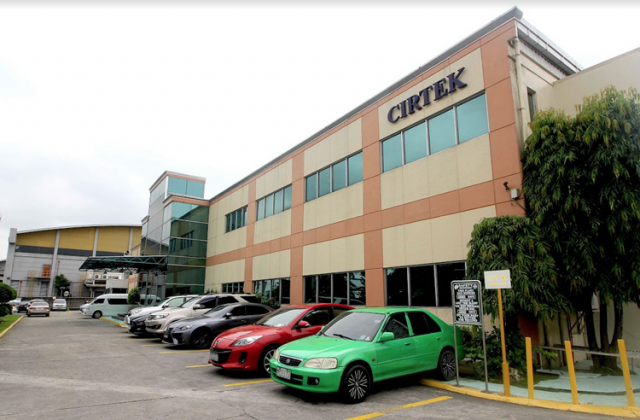
Cirtek approves issuance of P3.5-B peso-denominated shares

CIRTEK

LISTED technology firm Cirtek Holdings Philippines Corp. said that its management had recently approved the issuance of perpetual peso-denominated shares of up to P3.5 billion, including an oversubscription option of P1 billion.

In a disclosure on Tuesday, Cirtek said that its board of directors had given the greenlight for the firm to issue up to P70-million “Preferred Class B-2 Shares” with a par value of P1 apiece and an offer price of P50 per share.

The offer size will reach up to P2.5 billion in aggregate value, consisting of 50 million preferred shares, and an oversubscription option of 20 million shares valued at P1 billion.

Cirtek’s preferred shares will be issued in two series, namely: the “Preferred B-2 Subseries C Shares” and “Preferred B-2 Subseries D Shares.”

Separately, the Securities and Exchange Commission (SEC) said in a statement that it had “considerably favored” Cirtek’s public offering of entitlement rights worth up to P1.81 billion, subject to certain requirements.

“Cirtek will offer entitlement rights to 250 million common shares of the company, 250 million bonus detachable warrants that will be free of charge, and 250 million common shares underlying the bonus detachable warrant, with an exercise price of P4.50 to P7.25 each,” the SEC said on Tuesday.

The firm expects to raise up to P1.79 billion from its entitlement rights offer based on the highest offer price per share.

Proceeds from the offer will be used to refinance existing debt or pay out the short-term obligations of the company’s subsidiary, Cirtek Electronics Corp. (CEC), and fund the working capital of the listed company’s units Quintel USA, Inc., CEC, and Cirtek Advanced Technologies and Solutions, Inc.

Proceeds from the exercise of the bonus detachable warrants will be used to finance the working capital of the abovementioned subsidiaries, the corporate regulator said.

The offer period for the entitlement rights will run from July 9 to 21, with the shares scheduled to be listed and traded in the Philippine Stock Exchange.

On Tuesday, shares in Cirtek slipped by 0.7% to close at P5.68 each at the stock exchange. — Angelica Y. Yang

Fête de la Musique returns to PHL online

COUNTRIES all over the world will come together on June 21 to commemorate the annual global French tradition, Fête de la Musique. In the Philippines, this year’s edition will take its audience on a nationwide musical journey from June 18 to 21. #FeteFromMyIsland will celebrate not only the artists and music from various parts of the Philippines but also the natural beauty and rich culture of Boracay, El Nido, La Union, and Metro Manila.

The free online event will be streamed on the Facebook pages of Fête de la Musique PH, Alliance Francaise de Manille, and B-Side Productions, and on the account of Fete de la Musique in Kumu.

“With the health crisis affecting the Philippines for more than a year now, Fête de la Musique still endeavors to stay connected with our audience who has been celebrating music with us every year,” Jean-Pierre Dumont, Executive Director of Alliance Francaise de Manille said in a statement. “Together with the Department of Tourism, we will give them great music as we also celebrate the talents and the beauty of the different corners of this amazing country.”

Before the big virtual show on June 21, Fete de la Musique will showcase OPM (original Pilipino music) legends and up-and-coming artists from Luzon, Visayas, and Mindanao.

The celebration begins on June 18 with a Luzon pocket stage which will feature performances by Pedicab, Radha, Parallel Uno, Celeste Legaspi, Maegan Aguilar, Zsaris, 10 a.m. Departure, Buwi, and Kayden Umali.

On June 19, talents from the Visayas will take centerstage with performances by Kate Torralba, Project Yazz, Vanessa Monot, doods, soundslikefiona, Vanya, and Dumaguete Trio.

On June 20, Mindanao takes the spotlight with music from homegrown talents including KRNA, Moro Beats, Conscious & The Goodness, Joee & I, Levi, and Manic Mundane.

On June 21, the Philippines will join the rest of the world in celebrating music with four main stages in Metro Manila, Boracay, El Nido, and La Union.

The Metro Manila stage will present music by Barbie Almalbis, Joey Ayala, Bayang Barrios, Curtismith, and Leanne & Narra. They will also be joined by Jason Dhakal, The Hernandez Brothers x Lustbass, and Fatima Loo. For the Boracay stage, there will be performances by I-Dren Artstrong, Trespeace, Mami Beth & Sajid Perez Pelayo. The El Nido stage will feature music by Jako Mandala, Eric Tarre, Robin, Mike & The Wolf, Bathala Na Groove and Jams with Dona & David, and the Jewelmer Jazz Band. Manskee, Roe Santos, and Jose x Gats Talamak will take over the La Union stage.

As part of the Fête de la Musique tradition in the country, two foreign acts will play alongside Filipino musicians. This year, multi-awarded singer, composer, and actor Raphaël and the Swiss Jazz band B Connected will be among the highlights of the June 21 concert.

Fête de la Musique 2021 will also feature a donation drive in support of Bayanihan Musikahan. The funds to be raised will be used to address a vulnerable sector of  society that has been seriously affected by the pandemic.

There will also be a Facebook photo contest supported by AirSwift. Details will be announced on the Fete de la Musique PH social media.

To know more about this year’s celebration and the line-up of activities and musical performances, follow www.facebook.com/FetePH and @fetedelamusiqueph on Instagram.

Aboitiz group’s LIMA Estate expansion to create 20,000 new jobs

ABOITIZ GROUP

THE Aboitiz group is expected to create new job opportunities through its expansion plans in its Batangas project, LIMA Estate.

Once completed, the company is expecting to offer up to 20,000 more employment opportunities for the province and those residing in nearby areas.

The LIMA Estate is a 794-hectare development registered with the Philippine Economic Zone Authority. It features 130 international and domestic locators, which have around 60,000 employees. It is also home to 2,500 households.

A 4-star hotel, which houses 138 rooms, is also part of the development. Meanwhile, the estate’s mall establishments already have 167 shops.

As the company continues with its expansion plans, it is also keen on welcoming potential talents from Edustria High School. The campus is located in the development’s central business district at “The Outlets at Lipa,” in Lipa-Malvar, Batangas.

“Edustria came in at the perfect time as we are ramping up our expansion at LIMA Estate,” Aboitiz Integrated Economic Centers First Vice-President Rafael Fernandez de Mesa said in a statement on Tuesday.

“This gives them a unique opportunity to mold young Batangueños amongst some of the top multinational companies in the world,” he added.

Edustria, a joint venture between Far Eastern University and the Technological Institute of the Philippines, is open to Grade 7 to Grade 12 students. Graduates of Edustria may continue with their college education at either schools without having to take entrance exams.

“More than producing a competitive, technology-based work force, Edustria seeks to contribute to nation-building by cultivating and optimizing the potential of the Filipino youth and the local opportunities available for them,” Jemuel Castillo, executive director of Edustria High School, said.

The school is working with companies at LIMA Estate, giving students the opportunity to train for and possibly work with local and multinational firms.

The Aboitiz group said it would offer special discounts to siblings and children of employees of any establishment in LIMA Estate.

On Tuesday, shares of Aboitiz Equity Ventures at the stock exchange went up by 3.43% or P1.45 to close at P43.70 each. — Keren Concepcion G. Valmonte

How to get over needle phobia

UNSPLASH

By Amy Baxter

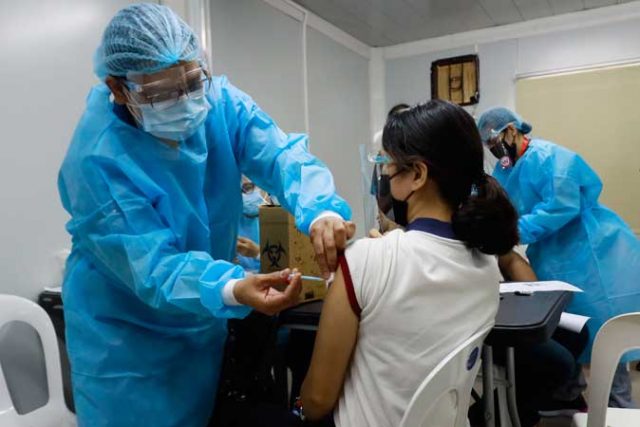
IF YOU’RE among the 25% of Americans averse to needles, you’re probably not surprised by the coronavirus disease 2019 (COVID-19) immunization stall. Even for those who want immunity, bribes with beer or lottery tickets may not be enough to override anxiety made worse by pervasive images of needles in the media.

As a physician specializing in pain management, I study the impact of pain on vaccination. Research-proven adult interventions for pain, fainting, panic and fear can make vaccination more tolerable. At a minimum, understanding the reasons needle fear has become common might make the embarrassment easier to bear.

NEEDLE ANXIETY
Needle fear has increased dramatically since a landmark 1995 study by J.G. Hamilton reported that 10% of adults and 25% of children feared needles. In that paper, adult patients who remembered when their fear began described a stressful needle experience around age 5.

The childhood experiences of the patients usually related to an unexpected illness; at the time the Hamilton participants were in preschool, vaccines were scheduled only until age 2. For most people born after 1980, however, booster injections given between ages 4 to 6 years became a routine part of the vaccine experience. The timing of boosters maximizes and prolongs immunity, but unfortunately falls within the age window when phobias form. A 2012 Canadian study of 1,024 children found that 63% of those born in 2000 or later now fear needles. In a 2017 study, my colleagues and I confirmed this increase in prevalence: Half of preschoolers who got all their boosters on one day often four or five injections at once were still severely afraid of needles as preteens.

Unsurprisingly, needle fear affects how willing teens and adults are to get vaccinated. A 2016 study found needle fear to be the most common reason teens didn’t get a second HPV vaccine. Health care workers are no exception: A 2018 study found that 27% of hospital employees dodged flu vaccines due to needle fear. And most recently, an April 2021 national survey of 600 not-yet-COVID-19-vaccinated US adults found that 52% reported moderate to severe needle fear.

POTENTIAL SOLUTIONS FOR ADULTS
For children, evidence shows that addressing their fear and pain while distracting them from the procedure is most effective in reducing distress.

While adults are not just big children, combining these concepts with findings from available adult injection studies suggest a few potential interventions. For the many who want a vaccine but need some support, here’s what we know:

1. Pain reduction

Relieving injection pain may reduce needle fear by giving patients a feeling of control. For example, a group of patients in New Zealand were repeatedly missing their monthly antibiotic injections for rheumatic heart disease. Their doctors created a special clinic, offering either anesthetics, a vibrating cold device or both during the shot. The interventions in 107 adults reduced pain and fear by 50% after three months. Six months later, half the patients still used the interventions, and the special “missed dose” clinic was no longer needed.

Specifically for vaccination, applying a vibrating cold device to the injection site a minute prior to injection, then pressing just above the site during injection, relieved pain and improved satisfaction for adults, and was most effective for those with needle fear. A horseshoe-shaped plastic device using sharp prongs to confuse the nerves also reduced injection pain but increased anxiety, possibly due to discomfort from the prongs themselves.

Cold spray doesn’t help reduce vaccination pain for children, but has been shown to be more effective than topical anesthetics for adult injections.

2. Psychological therapy

Exposure-based therapy involves asking a patient to rank anxiety caused by parts of a procedure, like seeing a picture of a tourniquet or thinking about sharp things, and gradually exposing them to these parts in a controlled environment. Free self-guided resources are available for fears ranging from flying to spiders. However, none of the three studies testing this approach on adult needle fear showed long-term fear reduction.

One of the studies that taught techniques to reduce fainting, however, was considered a success. Fainting, or vasovagal syncope, and needle fear are often conflated. While passing out due to injections is more common with anxiety, it is often a genetic response. Tensing the stomach muscles increases the volume of blood the heart can pump, keeping blood in the brain to prevent lightheadedness during needle procedures.

3. Distraction

Surprisingly, there are no studies on adults using distraction for injections. Two studies, however, have found that pretending to cough reduces pain from blood draws.

Dropping F-bombs could also help: A recent study found that swearing reduced pain by one-third compared to saying nonsense words. Distraction with virtual reality games or videos has been shown to be more effective in children, although there have been mixed results in adults.

Mentally engaging tasks may also help. A visual finding task given to children during intramuscular shots has been shown to reduce pain and fear, with 97% rating the experience more pleasant than previous blood draws. Adults may need a more complicated task, but a similar intervention could work for them as well.

GO IN WITH A PLAN
To reduce needle fear, research suggests the more interventions, the better. A 2018 study summarizing research on vaccine pain concluded that patient-operated cold and vibration devices combined with distraction techniques were most effective. Canada has implemented a practical national needle fear intervention for their vaccine rollout, emphasizing preparing ahead to help make vaccine day more comfortable.

Adults who don’t like needles are in the majority. Taking control of your vaccination experience may be the best way to combat needle anxiety. The Conversation


Amy Baxter is a clinical associate professor of emergency medicine at Augusta University, Atlanta, Georgia. She is also the founder and owner of Pain Care Labs.

This article is republished from The Conversation under a Creative Commons license. Read the  original article.

PETA launches Rak the Vote campaign

THE PHILIPPINE Educational Theater Association (PETA) has launched a creative voters’ education campaign using theater and video called Rak the Vote: Mobilizing the Youth for Change, or #RakTheVote, which will run from June to October. The campaign aims to encourage young people to register and vote in the national elections in May 2022.

According to data from the Philippine Statistics Authority (PSA) and Commission on Elections (Comelec), 40 million youths aged 18- to 39-years-old are eligible to vote in May 2022. Rak the Vote’s efforts are part of an overall drive to register an additional 4 million youth voters by Sept. 30.

“PETA has always believed that art and theater has a greater purpose than just being a form of entertainment. In our 50-year history, we have always stood for democracy. Every election is an opportunity to remind every Filipino of each one’s power to choose the leaders who will chart the path of our future,” Rak the Vote project proponent and PETA Executive Director Maria Gloriosa “Beng” Santos-Cabangon said in a statement.

“We know that the youth can make a difference. Using the arts and creative approaches, PETA hopes to engage the young voters in meaningful dialogue and reflection about the elections. The goal is to encourage them to let their voices be heard and exercise their right to vote towards effective and meaningful youth participation,” she added.

PETA is using a mix of existing videos from its past voters’ education campaigns, and new materials created specifically to address the youth during this time.

The campaign kicks off with an online streaming of the vaudeville musical about elections, Vincent De Jesus’ Si Juan Tamad, ang Diyablo at ang Limang Milyong Boto, exclusively to partner schools and communities via Ticket2Me from June to August. The musical underscores the significance of “every Juan’s vote.”

Each time the musical is streamed, it will be followed by a discussion with PETA artists as well as influencers from PETA’s partners in the project We The Youth Vote and Impact Leadership network such as Miss Trans Global 2020 Mela Habijan, actress Ria Atayde, and content creators Janina Vela, Macoy Averilla (a.k.a. Macoy Dubs), and Thysz Estrada.

PETA and its partner organizations in the campaign will fill their official social media pages with young actors, led by select cast members from PETA’s hit OPM musical Rak of Aegis, as well as young and inspiring Filipino influencers, urging the youth to register and vote.

PETA will also produce a series of videos and informative materials that encourage local voters’ registration initiatives on the ground and through social media.

The project is supported by the Friedrich Naumann Foundation for Freedom Philippines, and MISEREOR Germany.

For more information about Rak the Vote, search the hashtags #RakTheVote, #40Mstrong, #RegiToVote, or follow PETA’s social media pages: https://www.facebook.com/PETATHEATER and https://www.facebook.com/LingapSining. To register to vote, visit bit.ly/irehistro.

Campaign aims to alleviate vaccine fears

PHILIPPINE STAR/ MICHAEL VARCAS

A CAMPAIGN launched by the Philippine Alliance of Patient Organizations (PAPO) addresses vaccine hesitancy and coronavirus disease 2019 (COVID-19) misinformation among seniors and persons with co-morbidities.   

“Patients either refuse vaccination outright due to lack of trust in the vaccine or provider, or they’re lenient and don’t see the need to get vaccinated right away,” said Karen Alparce-Villanueva, treasurer of PAPO and campaign project head of “Bakuna, Now Na.”

A survey conducted by the Social Weather Stations (SWS) from April 28 to May 2 revealed that only 3 out of 10 Filipinos are willing to get vaccinated. The top reason cited by those not willing was fear over possible side effects.

In response, PAPO is producing a vaccination webinar series called “Kwentong Bakuna.” The upcoming episode, to be streamed on June 23, speaks to the concerns of patients with liver disease or hepatitis. “There’s a high rate of hesitancy from these groups with good reason they are sickly, so they have deeper fears,” said Ms. Alparce-Villanueva.

Seniors (priority group A2) and persons with co-morbidities (priority group A3) are also easy targets of misinformation. “Sometimes, we don’t vet the information that we see, or we see that since it comes from family and friends, it’s reliable,” said Ms. Alparce-Villanueva, “Often, false information is spread accidentally or out of genuine concern.”

PAPO is countering the spread of misinformation with a social media campaign that uses common language and non-intimidating visuals. As a coalition of 39 disease-specific patient organizations, PAPO also has the advantage of having as its members people who know the deep-seated fears that come with illness.

Reynaldo “Rey” Sarmenta of the Hemophilia Association of the Philippines for Love and Service (HAPLOS) shared his vaccination journey from the perspective of an individual who initially had reservations about getting vaccinated himself.

As a senior citizen in a house full of people with co-morbidities including himself with hypertension, his wife who was a stroke victim, and his child with hemophilia he realized getting COVID-19 would be disastrous for his high-risk family. “Mas malaki ang takot ko sa virus kaysa sa vaccine [I am more scared of the virus than the vaccine],” he said.

To expound on reservations that patients usually have regarding the vaccine, Ara Lonorio, President of the Neurofibromatosis Friends Philippines, added, “Marami kaming agam-agam sa epekto ng bakuna sa aming katawan kaya malaking tulong na nabibigyan kami ng mas malawak na kaalaman [We have a lot of worries about the effect of the vaccine on our bodies, so it’s a great help to have access to a lot of information].”

According to the US Centers for Diseases Control and Prevention (CDC), adults of any age with certain underlying medical conditions are at increased risk for severe illness from the virus that causes COVID-19. Thus, they recommend COVID-19 vaccines for such people.

A2 AND A3 STILL A PRIORITY
Dr. Nina G. Gloriani, head of the Department of Science and Technology’s (DoST) vaccine development panel, acknowledged during the launch that even though essential workers belonging to the A4 priority group are now being vaccinated, there are still many from the A2 and A3 groups who have to yet to get their shots.

She added that 5 million Filipinos have already gotten a first dose, and by the end of June, some 9 to 10 million additional doses will be available. As for concerns regarding the availability of second doses for patients who have already received a first dose, Dr. Beverly Lorraine C. Ho, head of DoH’s health promotion bureau, assured there are mechanisms put in place.

“Every morning, NCR [National Capital Region] representatives meet with the vaccine cluster operations team to check on each one’s available stocks,” she said, “We made sure that the succeeding doses that arrived will be reserved for whichever cities or populations needed them.”

Despite the reservations of many Filipinos, people like Ms. Lonorio of Neurofibromatosis Friends Philippines are looking forward to their appointment for a first dose. Mr. Sarmenta of HAPLOS, another person with co-morbidities, expressed that their refusal to get vaccinated would add to the transferability of the virus.

As of June 13, more than 5.9 million coronavirus vaccines have been administered, about 1.5 million of which were second shots. Brontë H. Lacsamana

SEC clears San Miguel’s P50-B bond offering

THE Securities and Exchange Commission (SEC) has given its nod on San Miguel Corp.’s (SMC) offering of up P50-billion fixed-rate bonds in one or more tranches over a three-year period.

For the first tranche, the firm plans to offer P20-billion worth of six-year fixed-rate bonds due 2027, with an oversubscription option of up to P10 billion.

SMC hopes to net P19.74 billion from the base offer, with an additional P9.88 billion if shares are oversubscribed.

“Proceeds will be used to re-dominate existing dollar-denominated obligations of SMC,” the regulator said.

SMC plans to offer the bonds at face value, and will list and trade them on the Philippine Dealing & Exchange Corp.

PETRON TO PLANT 50,000 SEEDLINGS
Separately, SMC said its subsidiary Petron Corp. is looking to plant at least 50,000 seedlings in the Sarangani Bay protected seascape over 10 years and regularly clean up the area in a bid to rehabilitate the site.

SMC said in an e-mailed statement that Petron’s proposed projects for the Sarangani Bay’s seascape include the rehabilitation of coral reefs, sustained shoreline clean-up activities along the bay, and the regular cleanup initiatives in Changco Creek.

The Sarangani Bay protected seascape, which is under the National Integrated Protected Areas System, is made up of Sarangani Bay and a portion of the municipal waters of Maitum, Kiamba, and Maasim.

SMC President Ramon S. Ang said the company remains committed in pursuing its environmental programs despite the limitations brought about by the pandemic.

Some of the listed firm’s other environmental programs are its P1-billion Tullahan River clean-up, and the P2-billion Pasig River rehabilitation project.

Last month, SMC’s unit San Miguel Global Power Holdings also made a commitment to plant 1.1 million trees across eight provinces this year.

“The longevity and success of these programs are a testament to their soundness and the importance of promoting environmental stewardship. This also emphasizes our culture of ‘malasakit’ (concern) as shown by the dedication of our employees to see these projects through,” Mr. Ang said.

SMC shares at the local bourse inched down by 0.25% or 30 centavos to finish at P117.70 apiece on Tuesday. Petron shares improved by 1.18% or four centavos to close at P3.43 apiece. — Angelica Y. Yang

Gov’t fully awards 10-year bonds as rate drops

BW FILE PHOTO
THE GOVERNMENT fully awarded its offer of reissued 10-year Treasury bonds on Tuesday as the rate of the tenor dropped. — BW FILE PHOTO

THE government fully awarded the reissued Treasury bonds (T-bonds) it offered on Tuesday at a lower rate as the financial system remains liquid and on expectations of supportive monetary policy here and abroad.

The Bureau of the Treasury (BTr) borrowed P35 billion as planned via the reissued 10-year T-bonds it offered on Tuesday as the offering was 2.4 times oversubscribed, with bids reaching P84.24 billion.

The debt papers, which have a remaining life of nine years and 24 days, fetched an average rate of 3.719%, down by 89.5 basis points (bps) from the 4.614% quoted when the bond series was last offered on March 23.

The rate fetched on Tuesday was also lower by 1.47 bps compared with the 3.866% quoted for the 10-year papers at the secondary market before the auction on Tuesday, based on PHL Bloomberg Valuation Reference Rates published on the Philippine Dealing System’s website.

The low rate and strong demand caused the Treasury to open its tap facility to raise another P10 billion from the reissued 10-year papers.

National Treasurer Rosalia V. de Leon said high liquidity in the market caused the 10-year bond’s rate to go down as players were looking to reinvest their extra cash following the recent maturity of P131 billion worth of retail Treasury bonds (RTB).

Meanwhile, a trader attributed the lower T-bond rate to market expectations that central banks here and abroad will keep borrowing costs low to support economic recovery.

“The market picked up where it left off following the strong bond auction last week. Investors continue to reach for yields amid a relatively low interest rate backdrop, with both the Fed (US Federal Reserve) and BSP (Bangko Sentral ng Pilipinas) seen to keep their monetary policy settings steady to support the economic rebound,” a trader said in a Viber message.

The US central bank’s Federal Open Market Committee is meeting on June 15-16 to review its policy stance and is expected to keep its rates at near zero as the world’s largest economy continues to recover.

Fed officials, led by Chair Jerome Powell, have stressed that rising inflationary pressures are transitory and ultra-easy monetary settings will stay in place for some time to come but recent economic data has raised concerns that price pressure could force an earlier stimulus withdrawal, Reuters reported.

Meanwhile, at home, BSP officials have said they would keep borrowing costs steady until the economy’s recovery becomes more solid. Benchmark interest rates have been at record lows since November.

The BSP Monetary Board will meet to review its own policy stance on June 24.

The BTr wants to raise P215 billion from the local debt market this month: P75 billion via weekly offers of Treasury bills and P140 billion from weekly auctions of T-bonds.

The government is looking to borrow P3 trillion from domestic and external sources this year to help fund a budget deficit seen to hit 9.4% of gross domestic product. — L.W.T. Noble with Reuters

Christie’s to sell teenager’s NFT art about gender transition

It Hurts To Hide, single-channel video (non-fungible token) — CHRISTIES.COM

LONDON — Christie’s is to auction artwork by 18-year-old trans artist FEWOCiOUS in the form of non-fungible tokens (NFTs) it said on Monday, as the world’s major auction houses ramp up their sales of NFTs. An NFT is a form of crypto asset, which records ownership of a digital object such as an image, video, or text. While anyone can view the item, only the buyer of an NFT has the official status of being the owner. FEWOCiOUS — real name Victor Langlois — has five lots going on sale with each one representing a year of his life as he discovered his gender identity between the ages of 14 and 18. They will be sold at Christie’s from June 23-30, in an online auction called “Hello, I’m Victor (FEWOCiOUS) and This Is My Life,” which coincides with Pride month. Each lot consists of a video artwork which exists in digital form only, sold as an NFT, a set of doodles, drawings, and journal entries from the corresponding year in both physical and NFT form, as well as a physical-only painting. FEWOCiOUS, who first started making art aged 13, said digital art was a refuge and escape from his conservative household where he had to hide his true self. His NFT sales to date have fetched more than $18 million, Christie’s said. He sold his first NFT in 2020 for just $1,000. NFT sales gave FEWOCiOUS the funds to move out of his childhood home in Las Vegas, he said. He now lives in Seattle. — Reuters