Home Blog Page 7933

Complete player

There was a time when Novak Djokovic still had some quit in him. His talent was evident even in his junior years; all of 14, he reached the singles final of the Junior Davis Cup shortly after the turn of the millennium. His now-legendary fighting spirit, however, was not as apparent; in fact, withdrawals dotted the early part of his pro career. Of his 13 all told, six have been in Grand Slam tournaments. And of the six, two have been against clay court king Rafael Nadal. Which, in a nutshell, is why he has earned a reputation, if unfairly and from critics, as a slacker.

To be sure, Djokovic is anything but a wimp. There’s a reason he owns 19 major singles titles, and is halfway to a coveted calendar-year-Grand Slam. It’s not because he jumps at the slightest opportunity to accept defeat. To the contrary, it’s due to his never-say-die mind-set. And it’s certainly why he’s an astounding 32 and nine in five-setters on the sport’s grandest stages; no one else in the annals of tennis has more marathon victories.

Speaking of marathons, Djokovic’s quest for greatness can be termed as one. Roger Federer and Nadal, the other members of the vaunted Big Three, had a head start in terms of compiling Grand Slam hardware, and, for a while there, it appeared as if he would not have enough time to catch up. And then he flipped a switch; as the calendar turned to the 2010s, he compiled major wins just like a child would amass sweets in a candy store. Only a lengthy bout with injury in 2017 and subsequent surgery early the next year halted his attempt to keep pace.

These days, Djokovic is on top of the world, the owner of the record for most weeks at the top spot in world rankings, not to mention countless other marks in history books. As all and sundry know, though, he’s after claiming a single distinction: He wants to have the highest number of major championships of all time. It’s why he didn’t fold when unheralded Lorenzo Musetti had him on the ropes in the fourth round of the French Open, and why he continued to plod on even when fifth-seed Stefanos Tsitsipas appeared to be well on the way to an upset.

Indeed, Djokovic is just one back of Federer and Nadal precisely because of his unparalleled determination. His self-confidence under pressure is without peer, and backstopped by an uncanny capacity to summon his best in the throes of defeat. Quitter? Yeah, right. He’s not perfect, but if he’s arguably the most complete player of any era, it’s due to his keen understanding that, on the court, his most fearsome opponent is himself.


Anthony L. Cuaycong has been writing Courtside since BusinessWorld introduced a Sports section in 1994. He is a consultant on strategic planning, operations and Human Resources management, corporate communications,  and business development.

Globe maintains ISO standards for higher level efficiency in safeguarding customers

Implementing ISO-certified standards safeguards consumers and end-users of products and services, ensuring that certified products conform to the minimum standards set internationally. This also aids in the creation of products and services that are safe, reliable and of good quality.

Guided by its policies on environmental sustainability, health and safety, and business continuity, Globe constantly endeavors to implement an ISO-certified Integrated Management System (IMS) to ensure streamlined operations and improved organizational efficiency.

Globe pursued adopting an IMS with the thrust of ISO to standardize the structure of the management systems enabling the sharing of processes across multiple standards. Adopting an IMS enables the company to remain competitive while keeping overhead costs low by reducing duplications and consolidating various management systems.

“We are constantly on the lookout for processes that will make our operations better and more organized in order to deliver the best value to our stakeholders. Through IMS, we can continuously work towards operational excellence while improving the performance of the entire organization,” said Rizza Maniego-Eala, Globe Chief Risk Officer.

Globe’s IMS unifies common document requirements from different management systems, establishes a single governance structure monitoring activities across these systems, and integrates periodic audits.

Globe endeavoured British Standards Institution (BSI) Singapore, to do a combined audit of the management systems to address audit fatigue. Globe achieved an enterprise-wide certification of its management systems under the IMS in 2018 and passed its recertification audit this year conducted by British Standards Institution (BSI). Its IMS currently consists of ISO 22301:2019 for Business Continuity Management (BCM), ISO 14001:2015 for Environmental Management, and ISO 4500:20181 for Occupational Health and Safety Management.

The company’s investment in BCM represents an integral foundation of its operational resilience and excellence, making sure that employees, processes, and infrastructure are always ready to effectively respond to disasters.

Globe has also set high standards of environmental management and stewardship in order to reduce its impact on natural capital.

At the same time, Globe lessens its people’s exposure to risks through occupational health and safety management which looks out for the physical and mental well-being of the workforce.

To ensure the effectiveness and suitability of the IMS, an assessment is done by an external audit team on an annual basis. This is complemented by a separate review conducted by the internal audit team yearly.

Globe strongly supports the United Nations Sustainable Development Goals, particularly UN SDG No. 9 which highlights the roles of infrastructure and innovation as crucial drivers of economic growth and development as the company invests in technology to achieve operational excellence. Globe is committed to upholding the 10 United Nations Global Compact principles and has committed to contribute to 10 of 17 UN SDGs.

To know more about Globe, visit www.globe.com.ph.

Meralco strengthens its Pulilan substation

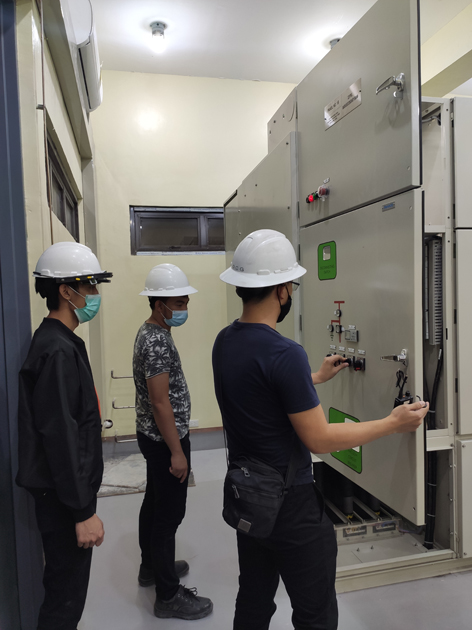
Meralco recently commissioned its new 50 MVA transformer bank no. 2 in its Pulilan 69 kV – 13.8 kV Substation located along the Plaridel-Pulilan Diversion Road, Pulilan, Bulacan, providing additional capacity to its existing 33 MVA transformer bank. Likewise, this project provides switching flexibility during contingencies, ensuring continuous power supply of the customers served by the said substation in the areas of Pulilan, Bustos, Baliwag, and Plaridel in Bulacan.  The newly installed transformer bank will also improve voltage regulation and reduce technical system loss in the area.  Despite the continued implementation of community quarantine measures throughout the country due to the COVID-19 pandemic, Meralco and its subsidiaries are continuously working hard to improve its distribution system in order to provide safe, adequate, and reliable electric service to its customers.


U.S. Navy says carrier group operating in S.China Sea

TAIPEI – A U.S. aircraft carrier group led by the USS Ronald Reagan has entered the South China Sea as part of a routine mission, the U.S. Navy said on Tuesday, at a time of rising tensions between Washington and Beijing, which claims most the disputed waterway.

China frequently objects to U.S. military missions in the South China Sea saying they do not help promote peace or stability, and the announcement follows China blasting the Group of Seven nations for a statement scolding Beijing over a range of issues.

“While in the South China Sea, the strike group is conducting maritime security operations, which include flight operations with fixed and rotary wing aircraft, maritime strike exercises, and coordinated tactical training between surface and air units,” the U.S. Navy said.

“Carrier operations in the South China Sea are part of the U.S. Navy’s routine presence in the Indo-Pacific.”

The carrier is being accompanied by the guided-missile cruiser USS Shiloh and the guided-missile destroyer USS Halsey, it added.

China has ramped up its military presence in the South China Sea in recent years, including building artificial islands and air bases.

The South China Sea has become one of many flashpoints in the testy relationship between China and the United States, with Washington rejecting what it calls unlawful territorial claims by Beijing in the resource-rich waters.

U.S. warships have passed through the South China Sea with increasing frequency in recent years, in a show of force against the Chinese claims. – Reuters

International Criminal Court prosecutor requests green light for probe into Philippines killings

PRESIDENTIAL PHOTO/ JOEY DALUMPINES

THE HAGUE – The prosecutor of the International Criminal Court asked it on Monday for authorization to open a full investigation into drug war killings in the Philippines, saying crimes against humanity could have been committed.

According to Philippines government data, from the time President Rodrigo Duterte took office in 2016 until the end of April this year, security forces killed 6,117 drug dealers in sting operations.

Rights groups say authorities have summarily executed drug suspects, but police say drug dealers fought back violently.

“I announce that the preliminary examination into the situation in the Republic of the Philippines has concluded and that I have requested judicial authorisation to proceed with an (formal criminal) investigation,” ICC chief prosecutor Fatou Bensouda said in a statement.

Bensouda had said last December that there were reasonable grounds to believe crimes against humanity had been committed during Duterte’s bloody anti-narcotics crackdown, whose death toll has stirred international outrage.

In an address recorded this week before the news of Bensouda’s request broke, Duterte called on human rights organisations to take a closer look into his war on drugs.

“You would notice that there are really persons who die almost daily because they fought back,” he said, warning drug dealers: “Do not destroy the country. I will kill you.”

The Philippines Justice ministry declined to comment on the announcement from the ICC in The Hague.

Bensouda, in concluding her preliminary inquiry in December last year, said there was a “reasonable basis to believe that the crimes against humanity of murder, torture (…) and other inhumane acts were committed” between 2016 and 2019.

Many people killed in Duterte’s crackdown had been on a drug watch list compiled by authorities or had previously surrendered to police, while a significant number of minors were victims, Bensouda’s office said in a report six months ago.

Human rights groups accuse Duterte of inciting deadly violence and say police have murdered unarmed suspects and staged crime scenes on a massive scale. Police deny this and Duterte insists he told police to kill only in self-defence.

Under the ICC statute, the prosecutor must ask judges for permission to open an official investigation into alleged crimes. The tribunal’s judges have up to four months to issue a decision on such a request.

In March 2018, Duterte cancelled the Philippines’ membership of the ICC’s founding treaty just weeks after Bensouda announced the preliminary examination was under way. He said the ICC was prejudiced against him.

Under the ICC’s withdrawal mechanism the court keeps jurisdiction over crimes committed during the membership period of a state, in this case between 2016 and 2019 when the Philippines’ pullout became official. – Reuters

S.Korea holds drills around disputed islets amid row over cancelled Japan talks

SEOUL – South Korean’s military began annual drills on Tuesday around a set of islands also claimed by Japan, days after planned talks between the two countries’ leaders were called off amid a spat over an Olympics map.

Seoul and Tokyo have been at odds over the sovereignty of the islets called Dokdo in South Korea and Takeshima in Japan, which lie about halfway between the neighbours in the Sea of Japan, also known as the East Sea.

The decades-long territorial row was rekindled after South Korea lodged a protest over a map on the Tokyo Olympics website marking the islands as Japanese territory.

Tokyo rejected Seoul’s demand to remove the depiction of the islets in the Olympics map. South Korea asked the International Olympic Committee to mediate the dispute, and some South Korean politicians called for a boycott of the Games.

Relations between the two Asian neighbours have been frosty amid feuds over the islets, trade and the issue of compensation for victims who were forced work in Japanese firms and military brothels during Japan’s 1910-45 colonial rule.

Naval, air and coast guard forces will join the drills which will be staged mostly on the sea with minimal contact between troops due to coronavirus concerns, Seoul’s defence ministry said.

South Korea’s Yonhap news agency earlier reported Japanese Prime Minister Yoshihide Suga took issue over the drills and called off planned talks with President Moon Jae-in at the Group of Seven summit in England over the weekend.

An official at South Korea’s foreign ministry told Reuters on Tuesday that the meeting could not be held, without specifying why.

When asked if a dispute over the drills was the reason, the official said: “the exercises are regularly held every year for the purpose of defending our territory.”

The Korean drills around the islets have taken place twice a year since 1986, prompting frequent protests from Japan.

Japan’s chief cabinet secretary Katsunobu Kato on Monday denied the Yonhap report, saying it was “one-sided” and the talks did not come off due to scheduling difficulties.

On Tuesday, Kato said Tokyo had lodged a protest with Seoul over the exercises, saying the islands are Japanese territory under history and international law.

“This sort of drill is unacceptable and extremely regrettable,” he told a news conference. “We’ve protested to the South Korean government and called for them to be halted.” – Reuters

World’s most bubbly housing markets flash 2008 style warnings

The West End is seen on the mountain-backed skyline of Vancouver, British Columbia, Canada September 30, 2020. -- REUTERS/Jennifer Gauthier/File Photo

Real estate prices around the world are flashing the kind of bubble warnings that haven’t been seen since the run up to the 2008 financial crisis, according to Bloomberg Economics.

New Zealand, Canada and Sweden rank as the world’s frothiest housing markets, based on the key indicators used in the Bloomberg Economics dashboard. The U.K. and the U.S. are also near the top of the risk rankings.

“A cocktail of ingredients is sending house prices to unprecedented levels worldwide,” economist Niraj Shah wrote in the report. “Record low interest rates, unparalleled fiscal stimulus, lockdown savings ready to be used as deposits, limited housing stock, and expectations of a robust recovery in the global economy are all contributing.”

Stay-at-home workers in need of more space and tax incentives offered by some governments to home buyers are also stoking demand.

Bloomberg Economics’ dashboard compiles five indicators to estimate a country’s ‘bubble rank,’ with a higher reading indicating greater risk of a correction. Among the indicators, price-to-rent and price-to-income ratios help assess the sustainability of price gains. House price growth measures current momentum.

For many countries in the Organisation for Economic Co-operation and Development, the price ratios are higher than they were ahead of the 2008 financial crisis, according to the Bloomberg Economics analysis.

Even as risk metrics rise, with interest rates still low, lending standards generally higher than in the past, and macro-prudential policies in place, the trigger for a crash isn’t obvious, according to the analysis. Shah said the period ahead will more likely be characterized by cooling rather then collapsing.

Yet the risk is greater when there’s a synchronized boom in house prices — as is the case in the current cycle, according to Shah.

“When borrowing costs do start to rise, real estate markets — and broader measures put in place to safeguard financial stability — will face a critical test,” Shah wrote. — Bloomberg

Philippines tops Asian forecasts for lower GDP, faster inflation

Photo by Michael Varcas, The Philippine Star

Philippine inflation may remain above 4% this year, complicating government efforts to salvage the economy from the havoc wrought by the pandemic.

Economists have raised their forecasts for Philippine consumer price inflation by the most in Asia since December, by 1.2 percentage points to 4.1%, according to the median estimate in a Bloomberg survey. They’ve also slashed the country’s economic growth outlook by the most in Asia, following a recent downgrade by the World Bank.

The higher inflation estimate comes as the country’s gross domestic product shrank more than expected in the first quarter, leading the government to cut its growth outlook. Domestic consumer demand could recover as movement curbs are relaxed after a strict lockdown this spring, but higher prices could restrain spending. With millions of jobless Filipinos struggling for income, households are likely to cut back on non-essential purchases, a survey by McKinsey & Co. showed.

As in other countries, the latest inflation figures for the Philippines come amid higher prices of food and commodities. May marked the fifth straight month inflation has been above the central bank’s 2%-4% target.

That constrains the central bank from cutting policy rates further, while the disappointing first-quarter GDP reading is likely enough to convince the central bank “that rates should stay where they are for now,” Nicholas Mapa, a senior economist at ING Bank in Manila, wrote in a research note.

Analysts expect the Philippine economy to grow 5.5% this year, less than the government’s 6%-7% forecast. The central bank, which reviews monetary settings every six weeks, is scheduled to meet June 24. — Bloomberg

Sitel Philippines champions the language of inclusion at Philippine Workplace Inclusion Forum 2021

The global BPO sponsored the first workplace inclusion forum about inclusion in the new normal’

Sitel Group supports the first Philippine Workplace Inclusion Forum sponsoring the session, “The Language of Inclusion,” with Jorelle Robles, Head of Marketing – Asia Pacific Region, opening the session and panel.

Sitel Group®, a global leader in end-to-end customer experience (CX) products, and solutions threw its full support behind the first Philippine Workplace Inclusion Forum with gold sponsorship. The forum was presented by the Philippine Financial Inter-Industry Pride (PFIP) in partnership with the Women Inter-Industry Network (WIN)) and the Global In-House Center Council of the Philippines. The forum’s inaugural theme – “Inclusion and the New Normal” – explored what it means to be an inclusive organization in the Philippines during this transitional period.

“We have been a strong supporter and partner of PFIP for several years,” said Jorelle Robles, Head of Marketing – Asia Pacific Region, Sitel Group. “Inclusion and Diversity is a pillar of how we do business at Sitel and one of our Employee Value Proposition pillars is ‘BE BOLD, BE YOU’ or KadaPagkakaiba, Kabarkada. We strive to create a work environment that is safe and supportive of underrepresented groups in the workforce. That’s why we proudly participate in forums and events like these that provide venues for colleagues in the industry to discuss workplace inclusion and share best practices.”

The Philippine Workplace Inclusion Forum is the first of its kind and brought together practitioners, allies, and champions of women empowerment, LGBTQ+ inclusion and persons with different abilities in Philippine workplaces. It focused on mapping out the way forward towards a more sustainable and equitable new normal for Filipino professionals.

The forum was divided into several consecutive sessions throughout the day with a wide range of important topics such as “HR as a Tool for Inclusion” and “Technology and Inclusivity.” Sitel® Philippines’ breakout session entitled “The Language of Inclusion” focused on leveraging communication skills and tools in the workplace to promote cooperation and establish a sustainable and inclusive work environment.

“Communication is such an important tool for inclusion,” Robles shared. “And in these uncertain times especially, we need to ensure our communication and strategies are designed to make our associates feel safe, seen, and leave a positive impact on the workforce.”

“Collaboration is a critical component of fostering a sustainable culture of inclusion,” explained Vina Vicente, Forum Moderator, PFIP. “As a culture-building tool, open collaboration can be used to build on inclusion by examining and leveraging common goals, interdependence, parity, exchange and dialogue, problem-solving and so much more.”


PHL firms facing higher import costs

ICTSI

By Jenina P. Ibañez, Reporter

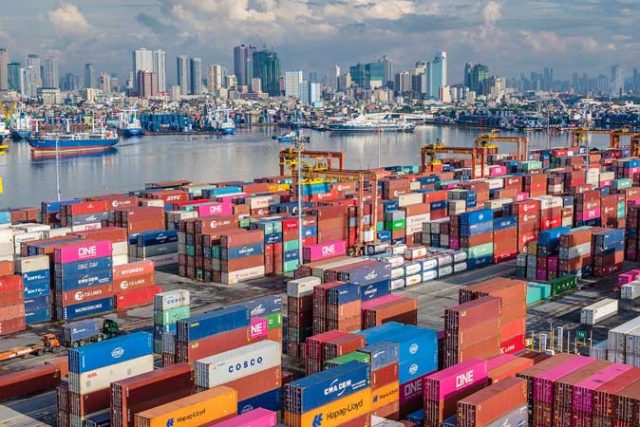
PHILIPPINE INDUSTRIES are struggling with higher import costs caused at least in part by global supply chain constraints amid the coronavirus pandemic.

The local steel industry, being relatively small, is not experiencing shortages seen by larger economies like the United States. However, the industry is affected by soaring prices, Philippine Iron and Steel Institute (PISI) President Ronald C. Magsajo said in an e-mail.

“The flat products sector is seriously affected by the worldwide shortage of containers,” he said. The container shortages pushed the prices of tinplate, hot-rolled coil steel, and cold rolled steel higher.

“There’s a logistics issue. There’s a demand issue. For a lot of economies including ours, the primary stimulus to get back from COVID-19 is usually incentives on construction and infrastructure,” he said in a phone interview on Saturday.

“Demand is up on one side, and on the supply side, the price of raw materials went up.”

Mr. Magsajo said costs have been consistently increasing for all imported inputs, including raw materials for rebars, in the steel industry.

“There are many factors that drive up the price. Depending on who you’re talking to, they’ll have a different opinion on why the price is up.”

This cost hike has dampened construction activities with the implementation of some projects having slowed down or even suspended, Mr. Magsajo said.

Delays have hampered both inbound and outbound trade. An export industry group recently flagged logistics issues as vessel space and container shortages cause freight rate surges and shipment delays and losses. Shipment waiting times continue to be long as export market demand recovers, a Philippine Exporters Confederation, Inc. (Philexport) official said.

“Definitely, (the) cost of import and export have increased very much because of logistics issues,” Philexport President Sergio R. Ortiz-Luis, Jr. said in a mobile message on Monday.

Various industries globally are reporting supply chain constraints and shortages as economies bounce back from the pandemic. Labor shortages, demand spikes, and logistics backlogs are some of the problems being experienced by firms around the world.

Large economies like the United States are experiencing shortages for various products including tapioca pearls used in beverages as consumer demand rebounds.

Chatime Philippines Finance and Marketing Director Christopher Cua said that their stores are not experiencing shortages of tapioca pearls or other raw materials but import costs from Taiwan — where the headquarters of the global franchise is based — are up.

“The biggest issue is more of the lead time, because a lot of the items got delayed especially because the Taiwanese also ship in from other places, so that affects our lead time,” he said in a virtual interview last week.

“The problem is not with the supplier. The problem is with shipping. When our container is ready to go, the port in Taiwan can’t release it because there’s traffic. And then when it arrives here, it’s also traffic.”

Mr. Cua said that he is not sure about the reasons behind the cost spikes for imported tapioca pearls and raw materials for paper packaging. The stores’ buffer inventory can so far address delays, but the need for buffer stock heightens costs while demand is slim.

PISI’s Mr. Magsajo said that it is time that the Philippine steel industry, which imports 80-90% of its requirements, become less import reliant.

“The global market dictates prices of steel here. If we achieve some level of self-sufficiency, which is the goal, then we’re not as hard hit when times like these come,” he said.

Electronics industry could surpass growth target this year

A woman visits a semiconductor device display at the Appliance and Electronics World Expo (AWE) in Shanghai, China, March 23. — REUTERS

ELECTRONICS EXPORTS growth this year could exceed the initial target if supply chain limitations are resolved, the industry group’s top official said.

Semiconductor and Electronics Industries in the Philippines, Inc. (SEIPI) President Danilo C. Lachica told ANC on Monday that the industry group had accounted for the ongoing global chip shortage when it set the 7% growth target for 2021.

“We’ve factored that in. And if anything else, getting a reprieve on the limitations that we’re facing today could even translate to higher growth for 2021,” he said.

A global shortage of semiconductor chips has led to supply chain constraints among local electronics manufacturers that are dealing with long lead times for manufacturing equipment deliveries.

Equipment production slowed down during the pandemic, Mr. Lachica said, delaying reaction time to increased demand in consumer electronics and a rebound in car sales.

“We import wafers which are needed for the assembly, test, and packaging of semiconductors, which eventually translates to the chips needed by our electronics manufacturing services,” he said.

The semiconductor wafer shortage caused by limited equipment capacity reduced the local industry’s ability to cope with increased global demand, the SEIPI official added.

Mr. Lachica said it would take a year before the industry could match global demand.

Local pandemic-related concerns have also impacted the industry, including travel restrictions barring foreign engineers from entering the country.

The industry set a 7% growth goal for the year due to an expected rebound in demand in the industrial, mobility, consumer, and medical electronics sectors.

At its growth rate so far, the industry could fall short of 2019 levels by the end of the year, Mr. Lachica said.

“However, if we get an upside in materials deliveries and stability in our supply chain and resources, we could pretty much eclipse our 2019 numbers,” he said.

Electronics exports grew by 62.6% to $3.22 billion in April, making up 68.5% of manufactured goods exports and 56.4% of total exported goods.

Electronics exports fell by 8.8% to $39.67 billion in 2020, versus the pre-pandemic forecast of 5% growth. — Jenina P. Ibañez

Car sales recover in May

PHILIPPINE STAR/ MICHAEL VARCAS

CAR SALES in May increased by more than four times from the same month last year after coming off a low base.

A joint report from the Chamber of Automotive Manufacturers of the Philippines, Inc. (CAMPI) and Truck Manufacturers Association (TMA) on Monday showed that industry sales went up by 360.8% to 22,062 units in May from 4,788 in the same month in 2020.

Restrictions during the start of the pandemic had dampened consumer activity, with some dealerships just starting to reopen in mid-May 2020 after lockdown rules were relaxed.

Auto Sales

This year, May sales jumped by 23.6% from April, when tighter quarantine measures were in place.

Metro Manila and adjacent provinces were under a modified ECQ (MECQ) to curb a spike in coronavirus disease 2019 (COVID-19) infections until May 14.

“The industry remains optimistic of a nascent recovery but at the same time on guard for any downside risks of the pandemic particularly if lockdowns are reimposed in NCR Plus and in other regions resulting in a tepid consumer confidence,” CAMPI President Rommel R. Gutierrez said.

Sales of all vehicle categories improved in May. Commercial vehicle sales went up by 325.5% to 14,463 units in May compared with 3,399 in the same month a year ago, while also climbing by 17.8% from the April figure.

Passenger car sales surged by 447.1% to 7,599 in May from 1,389 units a year ago, up by 36.43% from the 5,570 sold in April.

For the first five months of the year, CAMPI data showed vehicle sales rose by 58.7% to 110,217 units, from 69,463 units in the same period in 2020.

Year to date, commercial vehicle sales increased by 49.6% to 75,193 units, while passenger car sales jumped by 82.4% to 35,024 units.

Toyota Motors Philippines Corp. (TMP) continued to have the largest market share at 48.86% in May after selling 10,799 units.

Mitsubishi Motors Corp. followed with 3,229 units sold at 14.64% market share, while Suzuki Philippines, Inc. sold 1,802 units, with 8.17% market share.

The car industry could recover to pre-pandemic sales as late as 2023, Mr. Gutierrez said earlier this year.

He added that recovery would be achievable if there are certainties in the market, consistent government policies, and widespread inoculation against COVID-19.

The best-case scenario for the industry in 2021, he said, is a 30-35% sales growth, but the provisional safeguard duties on imported cars could lower growth to 20-25% compared with last year’s figure. — Jenina P. Ibañez