Home Blog Page 7910

BoC sets rules for goods cleared via informal entry
COURTESY OF BUREAU OF CUSTOMS

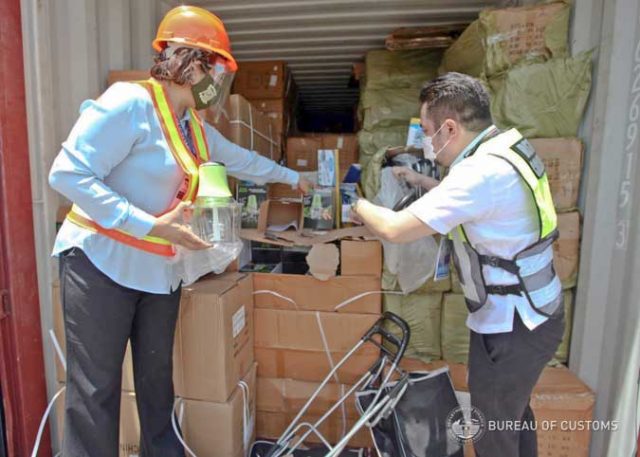
THE BUREAU of Customs (BoC) said imported goods for personal use worth less than P50,000 will be cleared through an informal entry process to separate it from bigger commercial shipments.

Customs Administrative Order (CAO) 02-2021 sets the rules for importations that will undergo an informal entry process. This covers imported goods with “free on board” or “free carrier” value of less than P50,000, and are used for personal consumption only. Shipments with declared value exceeding the amount will have to undergo a formal entry process.

The BoC said the threshold can be raised or lowered by the commissioner and with the approval of the Finance secretary.

“[The CAO was issued] to identify and segregate the importation of personal and household effects and other qualified non-commercial goods, not intended for sale and commerce, from the mainstream of commercial importation of highly dutiable goods intended for commercial purposes,” the order read. A copy of the order was published in a newspaper on Sunday.

The informal entry process also covers conditionally taxed or duty-exempt imports such as those of returning residents and overseas Filipino workers (OFWs), and balikbayan boxes sent by OFWs. Also covered are shipments of personal effects of foreign consultants and experts, foreigners or Filipinos resettling in the Philippines, foreign diplomats and their families, and officers and employees of the Department of Foreign Affairs and other departments assigned abroad. 

Goods declaration will be lodged in the BoC’s electric-to-mobile (e2m) system for the meantime, while the bureau has yet to set up its informal entry system.

The bureau said goods declaration must be lodged within 15 days from its removal from the vessel or aircraft, but the deadline can be extended for another 15 days if the request of the importer is valid.

Grounds for extension include fraud against the owner, importer or consignee; force majeure; technical issues; or if there was an accident, mistake or negligence.

Shipments cleared through the informal entry process will be inspected through an X-ray machine or by a mandatory physical examination if there is no equipment.

Containerized cargo and all goods that will be placed for airport warehouses will also undergo mandatory X-ray inspections, except for the personal baggage of diplomats. — Beatrice M. Laforga

Wilcon Depot set on 100 store count by 2025

WILCON Depot, Inc. is determined to continue opening new stores this year to reach its goal of having 100 stores by 2025.

“We plan to hit 72 stores this year,” Chief Operating Officer Rosemarie Bosch Ong told reporters in a press briefing on Monday. “We plan to open an average of seven to eight stores in the next years.”

Wilcon Depot currently has 66 stores, with another branch set to open this week. The company will be launching new stores in Isabela, Sorsogon, Laguna, Bukidnon, Bohol, and Davao this year.

The company said it secured the sites for its expansions until 2023.

“For after that, we are currently still looking around different locations all over the Philippines, though mostly I think [the] opportunity will mostly be in Luzon as our sales mostly it’s really north and south Luzon that’s growing,” Wilcon Depot President Lorraine Belo-Cincochan said.

Wilcon Depot said it usually chooses big lots for its stores, making space for possible expansion, and that it has to be in an area that is accessible.

“We usually look for an accessible site that is along the highway or the main road and normally, it’s not within the central business district, it’s not within the city center,” Ms. Belo-Cincochan said.

In the January-to-March period, Wilcon Depot posted an 84% net income growth to P604.41 million in the January-to-March period. The company said it hopes to keep this momentum.

Ms. Belo-Cincochan also said that the company is “not that worried” about the entry of furniture and home accessory giant Ikea into the Philippine market later this year.

“That’s only a fraction of what we do, 50% of our business are concentrated on the hard lines,” Ms. Ong added.

It earmarked P3.2 billion for capital expenditures for the year, with P2.9 billion allocated for the construction of new stores, warehouses, and renovations. The company previously said most of the P595 million it spent in the first quarter was used for new stores and warehouses.

Wilcon Depot stocks at the local bourse closed unchanged on Monday at P18.30 apiece. — Keren Concepcion G. Valmonte

Megaworld seeing uptick in residential sales

MEGAWORLD CORP. is seeing an uptick in residential sales, mainly from local buyers who are keen on projects outside of Metro Manila.

Megaworld Executive Vice-President and Chief Strategy Officer Kevin Andrew L. Tan said they have seen “a lot” of domestic sales in the last two months.

“(There’s) a lot of domestic sales. We’re not the same level as 2019 but I think despite that, we’re managing pretty well. We are able to deliver good volumes,” he said in a roundtable interview last week.

Most of the buyers are looking for projects outside of Metro Manila, he added.

Launches of new projects in Metro Manila were put on hold when the pandemic began in 2020.

“For residential, as soon as the pandemic came, we immediately (put on hold) all the launches in Metro Manila. We saw it already. It’s not that the demand in Metro Manila has waned, it was put on hold. It wasn’t wise for us to launch any more projects in Metro Manila, so we just finished what we had. We pivoted right away to the provinces,” Mr. Tan said.

Despite the economic challenges brought by the pandemic, the Megaworld official noted sales from overseas Filipino workers have been “resilient.”

“It wasn’t affected and I think a lot of these countries are recovering ahead of us. We saw a bit more uptick in international sales, faster than the locals,” Mr. Tan said.

‘VERY LITTLE’ EFFECT
Meanwhile, the exit of Philippine Offshore Gaming Operators (POGOs) has not significantly affected Megaworld’s office leasing revenues.

Mr. Tan said POGOs currently make up around 6-7% of office occupancy, from a peak of 11-14% before the pandemic.

“Office occupancy in POGOs has dropped to less than single digits now, 6 to 7%. It’s very low,” he said.

Other companies, mainly business process outsourcing (BPO) firms, were quick to occupy the spaces vacated by POGOs in Philippine Economic Zone Authority-accredited buildings.

Mr. Tan said there are signs some POGOs are looking to return to the Philippines, once a measure imposing taxes on Philippine Offshore Gaming Operators and their foreign employees becomes a law.

“Today the new tax regime actually gives the entire sector a little bit more clarity. A lot of them are starting to come back… They are starting to inquire with other developers. The only challenge for them is to bring back their workers, since there’s a travel ban. You need the Chinese workers… There is renewed interest because of this tax regime,” he said.

But for Megaworld, the company is pinning its growth hopes on the BPO industry’s expansion.

“We’re more committed to BPOs now. We do see this as an industry we want to develop further,” he said, noting there is BPO expansion in finance, medical, e-commerce and technology sectors. — Cathy Rose A. Garcia

Vivant unit bags Cebu bulk water supply deal 

STEVE JOHNSON FROM PEXELS

A VIVANT Corp. subsidiary has been awarded a 25-year bulk water supply agreement by the Metropolitan Cebu Water District (MCWD).

Vivant Hydrocore Holdings, Inc. was awarded the agreement after its solicited proposal to the Cordova Bulk Water Supply project, the company said in a disclosure to the stock exchange on Monday.

With Watermatic Philippines Corp. as its technical partner, Vivant Hydrocore will build a utility scale desalination plant to augment limited supply from MCWD by 20,000 cubic meters of treated and potable water each day.

“This investment in bulk water supply is a key milestone for the Vivant group to deliver on its promise to provide forward-looking and adaptable solutions for its communities,” the Cebu-based firm said.

The Vivant group will sign a joint venture partnership agreement with MCWD.

Vivant Hydrocore holds the Vivant group’s water infrastructure investment portfolio as a wholly owned subsidiary of Vivant Infracore Holdings, Inc., which in turn is wholly owned by Vivant.

The Garcia-led holding firm is also in the electricity distribution and power retail sectors. The company last year said it was looking for opportunities in bulk water supply, water distribution, wastewater treatment, and water engineering.

Vivant last week said it set aside P5 billion in capital expenditures to fund power projects until 2023. Its net income attributable to its parent firm fell 38% to P1.4 billion in 2020 as revenues declined.

Shares in Vivant went up 2.67% or 40 centavos to P15.40 apiece on Monday. — Jenina P. Ibañez

Villar-led memorial park firm starts 6th project in Mindanao

COMPANY HANDOUT

DAVAO CITY — Listed firm Golden MV Holdings, Inc., the Villar group’s memorial park developer, has started working on its 6th project in Mindanao located in Tagum City, Davao del Norte.

Anna Mae D. Escalante, south Mindanao cluster head of the Golden Haven brand, said the upcoming park will be a seven-hectare complex along the new bypass road in the city.

“Golden Haven has always been known for its picturesque landscaped gardens. You can also expect the same lush greeneries and fresh air at Golden Haven Tagum,” she told BusinessWorld in an online interview.

She added that the greenery will blend with Tagum’s palm tree-lined highways.

The company develops and sells memorial lots as well as builds and operates columbarium facilities across the Philippines. It currently has 35 developments in 32 locations.

Its projects in Mindanao are located in Zamboanga City, Cagayan de Oro City, Bukidnon, South Cotabato, and General Santos City.

Ms. Escalante said the company’s memorial parks attract buyers not just for family use but also as an investment.

“We have investors who are not even from the city where our park is located. The high-value appreciation of our lots makes it attractive to investors,” she said. — Maya M. Padillo

Globe 5G network now covers ‘at least 88%’ of NCR

GLOBE Telecom, Inc. said on Monday that its fifth-generation (5G) network now covers at least 88% of the National Capital Region (NCR).

“Based on Globe’s latest report, at least 88% of the National Capital Region now has Globe 5G outdoor coverage with Bonifacio Global City Central Business District (CBD) and Ortigas CBD having the highest coverage with similar 97%,” Globe said in an e-mailed statement.

“Makati CBD is third with 96% coverage while Pateros is fourth with 92% coverage,” it added.

The Ayala-led telco’s 5G network is also available in “at least 82% or more in 13 cities in Metro Manila.”

Citing data from Ookla, the company behind Speedtest, Globe said its 5G network was the “most available” to users of 5G-capable devices in the first three months of the year.

“The Ookla data underscores the company’s expanding 5G coverage, which makes it possible for customers to latch on Globe’s 5G network much longer than competition,” it said.

Issa Guevarra-Cabreira, Globe chief commercial officer, said more customers are now adopting 5G, which promises faster speeds, higher bandwidth, and more stable internet connections than 4G.

“We expect more installations of 5G cell sites for the remaining six months of the year as the demand for 5G technology will continue to rise even further,” she added.

Globe said its 5G is also available in 81% of Cebu City, 68% of Boracay Island, 67% of Bacolod City, and 53% of Iloilo City.

“In Mindanao, 5G is now available in 73% of Davao City and 72% of Cagayan De Oro City.”

It also said six additional 5G cell towers are being installed in General Santos City. — Arjay L. Balinbin

More micro retailers opening in Eton Centris

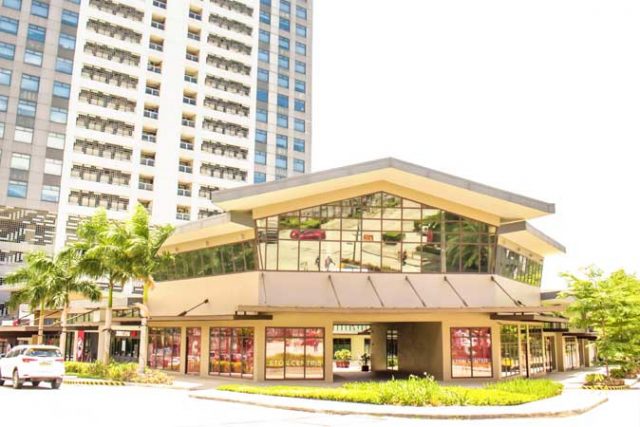
ETON PROPERTIES is seeing an increase in micro retailers opening physical stores at Eton Centris in Quezon City.  Eton Properties Chief Operating Officer Karlu Tan Say said there are signs the retail sector is “gaining pace” but has adapted to the “new normal.”

“Most commercial tenants prefer units with smaller cuts to complement their e-commerce strategies and save on operational costs. With the retail sector as one of the hardest hit in this ongoing pandemic, we’re pleased to see this boost in market confidence as we enter the second half of 2021,” she said in a statement.

Three new physical stores opened in Eton Centris this month, namely Brother’s Burger at Centris Cyberpod 3 and Chizmozza and Glory’s Empanada, which are both located in Centris Station.

Nine more retail stores set to open in the next few months. These include Bella Moda, Coco Fresh Tea and Juice, Glimpse, Nicatto Health Dynamics Corporation Health Clinic, Dragon’s Nest Cafe, Dragon’s Nest Restaurant, Empanada Nation, Jing Jing’s Balut, and Carinderia Hits.

However, retailers have shifted to kiosks or smaller shops with spaces averaging 32 to 59 square meters (sq.m.), from the usual cuts of 144 sq.m.

Da Vinci Capital, Cosco Capital execute share-for-share swap

SNOWING/FREEPIK.COM

DA VINCI Capital Holdings, Inc. and Cosco Capital, Inc. have executed a deed of exchange on June 18 for a share-swap transaction, Da Vinci Capital disclosed to the exchange on Monday.

The company earlier said that it would revive its operations through a liquor distribution business.

Cosco Capital will be transferring all of its shares in Montosco, Inc., Meritus Prime Distribution, Inc., and Premier Wine and Spirits, Inc. (PWSI) to Da Vinci Capital.

The transaction includes 7.5 million shares in Montosco, 7.5 million shares in Meritus Prime Distribution, and 1.5 million PWSI shares.

In exchange, the company will issue Cosco Capital 11.25 billion common shares priced at P2 each.

Da Vinci Capital will be seeking approval from the Securities and Exchange Commission (SEC) for an increase in authorized capital stock and the subscription of Cosco Capital of shares in the company following the share-swap deal.

“[The company] shall likewise seek SEC confirmation on its exemption from registration of securities and the valuation of the shares which shall stand as consideration to be received from Cosco Capital pursuant to the share-for-share swap,” Da Vinci Capital said.

Once it receives the go signal from the SEC, both companies will apply for the certificate authorizing registration with the Bureau of Internal Revenue and the listing of the additional shares with the Philippine Stock Exchange within the year.

Da Vinci Capital previously said it would change its name to The Keepers Holdings, Inc., subject to stockholders’ and regulatory approval.

On Monday, shares of Da Vinci Capital at the stock exchange went down by 0.68% or two centavos to close at P2.94 each. — Keren Concepcion G. Valmonte

Russian homebuilder confident in PHL real estate sector’s growth

RUSSIAN HOMEBUILDER PIK expects demand for condominiums in Mandaluyong City to continue growing, as the country recovers from the pandemic.

“The Philippine real estate sector continues to grow, which is why we are so confident in our expansion plans,” PIK Country Manager Mai Yang said in a statement.

Ms. Yang said public infrastructure projects such as the BGC-Ortigas Center Link Road, rehabilitation of the Metro Rail Transit Line 3 and EDSA Greenways will help boost Mandaluyong’s connectivity with other parts of Metro Manila.

PIK is developing its first residential condominium project, One Sierra, in Mandaluyong City.

“With One Sierra, we offer relaxed urban living at the center of this bustling city. We named the building after the quaint Sierra Madre Street that provides balance to our central location with easy access to EDSA with a quieter neighborhood behind our property,” PIK Marketing Director for International Projects Elena Petropavlovskaya said.

GrowSari raises over $30M in funding from global investors

E-COMMERCE platform GrowSari said on Monday that it had raised over $30 million so far this year for funding in two rounds of capital raising efforts.

Series A investors include Robinsons Retail Holdings, Inc., JG Digital Equity Ventures, and Wavemaker Partners LLC.

Meanwhile, Singapore-based investment company Pavilion Capital Fund Holdings Pte. Ltd. and growth fund Saison Capital Pte. Ltd., Tencent Holdings Ltd. in China, and International Finance Corp. make up the list of Series B investors.

“With the fresh funds, we aim to more than double GrowSari’s existing coverage and service more than 300,000 sari-sari stores, including those in Visayas and Mindanao,” GrowSari Co-Founder Reymund Rollan said in a statement on Monday.

“This will also help us broaden our supplier marketplace with new third-party partners and scale our financial service pilots,” he added.

GrowSari is a mobile app connecting sari-sari stores, or neighborhood mom-and-pop shops, to products of FMCG (fast-moving consumer goods) brands at distributor prices. Products by Unilever, Procter & Gamble, Alaska, and Nestle are included in GrowSari’s offerings. It also has flexible payment options.

Meanwhile, orders from the app will be delivered straight to each store without additional costs and minimum order requirements.

The app also gives them access to become online shopping ordering hubs in their communities, as well as giving them access to payment services.

GrowSari also has microfinancing support and assistance options, and e-services in telco and remittance.

“GrowSari aims to empower and significantly increase the earnings of sari-sari stores in the Philippines by providing direct access to a wide assortment of affordable products, e-businesses, and financial assistance,” Mr. Rollan said.

Founded in 2016, the mobile app aims to tap the local stores’ potential to be the biggest and most accessible distribution channel in the Philippines.

“Through GrowSari, we want to use proprietary technology to accelerate financial health for Filipino sari-sari store owners, helping them to use, protect, and grow their business in the long run and transforming sari-sari stores into comprehensive service hubs for the Philippines’ grassroots communities,” Siddhartha Kongara, chief technology officer of GrowSari, said.

As of end-2020, the app had a user base of 50,000 stores in over 100 municipalities across the Luzon island. The company aims to expand to 200 cities and serve over 300,000 sari-sari stores, including those in the Visayas and Mindanao. — Keren Concepcion G. Valmonte

So it shall sound

HIT PRODUCTIONS mobile recording

Audio company goes for remote recording during pandemic

WHEN the country went under COVID-19 (coronavirus disease 2019) lockdown last year, like many other activities, the recording and mixing of new music and sound by a team in a studio had to take a break. For many of these recording businesses, the transfer to a digital platform enabled them to continue operations despite the restrictions.

Audio production house Hit Productions was one of the studios that were able to sustain their operations and expand their portfolios, attracting more clients and projects amidst a global crisis.

Established in 1991, Hit Productions has created award winning audio for local and international brands such as Unilever, Coca Cola, Nestle, Globe, P&G, J&J, McDonald’s, and Jollibee. It has also recorded albums for bands such as Ben & Ben, Razorback, and South Border, as well as  produced surround sound audio for films including On the Job, Heneral Luna, and Ang Larawan,

According to Hit Productions President and Managing Partner Vic Icasas, it helped that the studio has had remote work protocols in place since 2013. The team was using Slack, Source Connect, and Zoom, all of which enabled employees to conduct online meetings and contactless recordings. In 2019, the company launched a mobile recording van that would go to the talents, enabling them to record their music or speech despite busy schedules that would keep them away from a normal studio.

To record with a remote set up during the lockdown, the company prepared tablet-powered portable recording kits that included a pair of professional headphones, a microphone, and files preloaded with all the scenes or the scripts for the voice actor.

“We deliver it by courier, [the device] is self-operated. Our engineers will be on Zoom with the talent to help set it up and [get] tested. And then the client and the agency supervise the recording over Zoom,” Mr. Icasas said during an online press conference on June 14.

The arrangement was fruitful. Hit Productions was able to handle the sound production for ad campaigns in 2020 such as “Ingat Angat,” a private sector-led health and safety campaign during the pandemic.

“The van that we envisioned to be able to reach out to remote talents has now become an [iPad] in a hardcase. The surround sound room that we use to mix local movies is now actually fully booked,” said Mr. Icasas. They even found themselves working with international clients in the past year. “We are mixing feature films, TV shows for streaming services in Malaysia and Indonesia,” he said. They are also producing voiceovers for a foreign video game company and audio books for Hong Kong-based clients.

THE FUTURE FOR AUDIO RECORDING
Mr. Icasas noted that the accessibility provided by digital tools, remote working, and communication platforms may continue to promote audio production in the Philippines.

“The democratic nature of tools being available, [and] of knowledge being available — watching YouTube lessons — has actually managed to scale up people to the point that we’re seeing more talented applicants coming our way which we didn’t used to see before,” he said.

Prior to the advancements in digital technology and social media, television and radio advertisements “took forever to produce,” he noted.

“[It took] a couple of months to shoot, to color grade, and to produce the music. For radio, [it was] probably quicker because there is no (video) shoot involved. But still was not [at] the amazing pace that social media comes out with new content [and] ads nowadays,” he said.

While television and radio allot airtime of 30 seconds to a minute for ads, “Now you have three to six second ads or bite-sized ads coming out of TikTok, and three or five minutes of mini movies coming out on YouTube,” he said.

“The opportunities for the audio production industry are quite exciting, because of all the different media channels and all the different lenses of advertising that we now have to work with,” Mr. Icasas said.

“Audio [production] is definitely a mature medium, but it’s a moving target. And it is an exciting time to be in the audio business. This is the time to be agile.”

For more information, visit https://www.hitproductions.net/ and https://www.facebook.com/HitProductions/. — Michelle Anne P. Soliman

More Robinsons malls get safety seals

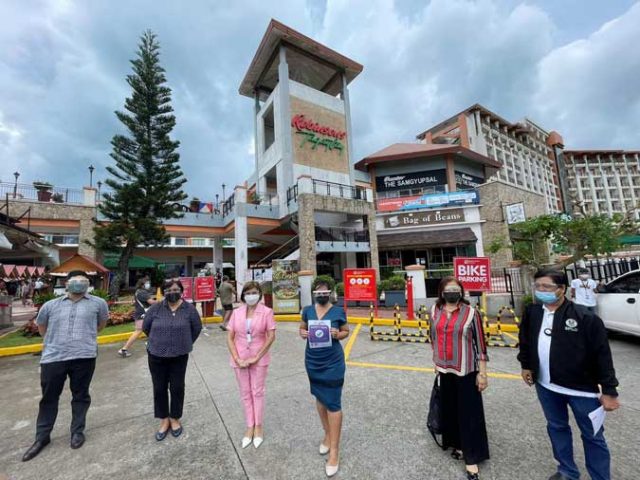
TWO MORE Robinsons malls have received the “safety seal” from the government.

In a statement, Robinsons Malls said its malls in Tagaytay and Quezon City have been given the safety seal by the departments of Interior and Local Government, Health, Trade, Tourism and Labor.

With the safety seal, Robinsons Tagaytay and Robinsons Magnolia are considered “safe to the public and compliant with the health and safety protocols mandated by the government.”

This brings to seven the number of Robinsons malls with the safety seal.

ADVERTISEMENT
ADVERTISEMENT