Home Blog Page 787

Cultivating a security-first culture in the workplace

GCash Chief Information Security Officer Miguel Geronilla

GCash advocates for people-first approach to cybersecurity in BusinessWorld forum

Embracing digital transformation is not without risks. Beyond software firewalls, cybersecurity demands collective vigilance from executives to every employee. As cyber threats grow more sophisticated, digital resilience is achieved when employees are empowered to deal with these threats and even prevent them. 

This was the message Miguel Geronilla, Chief Information Security Officer (CISO) of GCash, brought to the first leg of BusinessWorld’s Cybersecurity forum series.

By fostering awareness, encouraging accountability, and equipping employees with the right knowledge, businesses can cultivate a culture where security becomes second nature.

“Trust and security are top of mind for our leaders,” he said. “We’re serious about this.”

He added that commitment from top executives is central to sustaining robust security practices, positioning cybersecurity as a shared responsibility.

“We make sure it’s a top-down approach, but not authoritative. You have to champion work integration, make sure it’s part of their lives,” he added. 

Furthermore, while advanced systems can provide critical defense, Mr. Geronilla underscored that security values have to be integrated within the everyday experience of workers, as they are the frontliners of defense.

“People just want to do their jobs,” he explained. “You don’t want cybersecurity to be so authoritative that it makes people not want to do it. It should be part of their life and what they do. We must be secure by default, and that means being able to do secure practices on our own. It’s not about the usual awareness, but embedding it into everyday practices.” 

This, he argues, is where businesses can shift from imposing rules to enabling resilience. By advocating for a human-centric approach, the GCash CISO posed a challenge for organizations to reconsider how they present cybersecurity. That is, when protective measures are seamlessly embedded and aligned with employees’ daily work, they are more likely to engage. 

He also believes that organizational success relies on workers with the right understanding of security. Recognizing that an attack can happen anytime, by empowering the workforce through education, defenses are strengthened. 

For GCash—with Mr. Geronilla as their CISO—and other organizational leaders, the challenge in confronting cyber threats is not only in deploying advanced technology but also in encouraging a culture where security is lived to practice. He envisions cybersecurity that is comprehensive and forward-looking. This, he concludes, is how Philippine businesses can sustain both trust and competitiveness in the digital age. 


Spotlight is BusinessWorld’s sponsored section that allows advertisers to amplify their brand and connect with BusinessWorld’s audience by publishing their stories on the BusinessWorld Web site. For more information, send an email to online@bworldonline.com.

Join us on Viber at https://bit.ly/3hv6bLA to get more updates and subscribe to BusinessWorld’s titles and get exclusive content through www.bworld-x.com.

AUB to launch MySSS Card via HelloMoney e-wallet

Officials of Asia United Bank Corp. and the Social Security System led the signing of the memorandum of agreement for the bank’s rollout of the MySSS Card. — ASIA UNITED BANK CORP.

ASIA United Bank Corp. (AUB) has partnered with the Social Security System (SSS) to roll out the MySSS Card through its e-wallet HelloMoney.

Under their memorandum of agreement, SSS members can receive their benefits, loan proceeds, and pension via HelloMoney.

AUB President Manuel A. Gomez said in a statement that the partnership aims to make financial services more accessible, especially to the unbanked or underserved.

“The MySSS Card powered by HelloMoney ensures that members and pensioners can receive and manage the benefits they’ve worked hard for,” Mr. Gomez said.

The card serves as a valid ID and an ATM card and is available for a one-time fee of P250.  There are no charges such as annual or dormancy fees or maintaining balance requirements. Once approved, SSS members can go to a HelloMoney kiosk to get their card.

“For current HelloMoney ATM cardholders, the MySSS Card serves as a direct replacement, offering the same features of HelloMoney with the added advantage of being co-branded with SSS. Linking the MySSS Card will automatically deactivate their HelloMoney ATM Card,” AUB said.

With the card, SSS members can get access to cash-in facilities through 7-Eleven, EcPay, and AUB branches nationwide. It is also integrated with HelloMoney’s digital service offerings like bills payment, fund transfers, load purchases and remittance services, access to a Virtual MasterCard for online transactions, QRPh functionality, and AliPay+ payment support in Japan, Korea, Singapore, Hong Kong, and Malaysia.   

AUB is also set to launch the Annual Confirmation of Pensioners (ACOP) Program within its mobile app, where its clients who are SSS pensioners can complete their annual ACOP compliance through a mobile liveness test.

“This initiative addresses common challenges faced by pensioners, particularly mobility and accessibility, ensuring that they can comply with requirements to continue receiving their pensions,”it said.

“AUB and SSS are also addressing a long-standing challenge for former Filipino SSS members (overseas members and non-Filipino residents), many of whom are unable to open local bank and e-wallet accounts due to expired Philippine IDs or missing citizenship requirements. With HelloMoney’s digital account opening process, members abroad can now secure an account by submitting their current overseas ID, and a letter of endorsement from SSS. This process allows them to receive their benefits and pensions,” AUB added. “In addition, HelloMoney’s international remittance capabilities enable them to transfer funds securely to their bank accounts overseas.”

AUB’s net income rose by 3.24% to P2.99 billion in the second quarter, bringing its first-semester earnings to P6.13 billion, up 17.18% year on year.

Its shares went down by 35 centavos or 0.85% to end at P40.90 each on Monday. — A.M.C. Sy

AI promises productivity. It’s delivering ‘workslop’

STOCK PHOTO | Image from Freepik

By Catherine Thorbecke

MOST OF US have encountered “AI slop,” the deluge of low-quality content produced by generative artificial intelligence (AI) tools that has inundated the internet. But is this computer-made hogwash taking over our work as well?

News that Deloitte Australia will partially refund the government for a report sprinkled with apparent AI-generated errors has caused a local furor and spurred international headlines. Barbara Pocock, an Australian senator, said in a radio interview that the A$440,000 ($289,000) taxpayer-funded document misquoted a judge and cited non-existent references. The alleged AI mistakes are “the kinds of things that a first-year university student would be in deep trouble for,” she said.

Deloitte Australia didn’t immediately respond to my request for comment, but has said the corrections didn’t impact the report’s substance or recommendations, and told other outlets that: “The matter has been resolved directly with the client.” Besides being a bad look for the Big Four firm at a time when Australians’ trust in government-use of private consulting firms was already fraught, there’s a reason it has struck such a nerve.

It has re-opened a global debate on the current limitations — and high cost — of the technology backfiring in the workplace. It isn’t the first case of AI hallucinations or chatbots making things up, to surface in viral ways. It likely won’t be the last.

The tech industry’s promises that AI will make us all more productive are part of what is propping up their hundreds of billions of dollars in spending. But the jury is still out on how much of a difference it’s actually making in the office. Markets were rattled in August after researchers at the Massachusetts Institute of Technology said that 95% of firms surveyed have not seen returns on investments into generative AI. A separate study from McKinsey found that while nearly eight in 10 companies are using the technology, just as many report “no significant bottom-line impact.”

Some of this can be attributed to growing pains as business leaders work out the kinks in the early days of deploying it in their organizations. Tech companies have responded by putting out their own findings suggesting AI is helping with repetitive office tasks and highlighting its economic value.

But fresh research suggests some of the tension may be due to the proliferation of “workslop.” The Harvard Business Review (HBR) defines this as: “AI generated work content that masquerades as good work, but lacks the substance to meaningfully advance a given task.” It encapsulates the experience of trying to use AI to help with your job, only to find it has created more work for you or your colleagues.

Some 40% of US desk workers have received workslop over the past month, according to a September survey from researchers at BetterUp and the Stanford Social Media Lab. The average time it takes to resolve each incident is two hours, and this phenomenon can cost $9 million annually for a 10,000-person company.

It can also risk eroding trust at the office, something that’s harder to rebuild once it’s gone. Roughly a third of people (34%) who receive workslop notify their teammates or managers, according to HBR, and about the same share (32%) say they’re less likely to want to work with the sender in the future.

There are ways to smooth out this transition. Implementing clear policies is essential. Disclosures of when and how AI was used during workflows can also help restore trust. Managers must make sure that employees are trained in the technology’s limitations, and understand that they are ultimately responsible for the quality of their work regardless of whether they used a machine’s assistance. Blaming AI for mistakes just doesn’t cut it.

But the growing cases of workslop should also be a broader wake-up call. At this nascent stage of the technology, there are serious hindrances to the “intelligence” part of AI. These tools may seem very good at writing because they recognize patterns in language and mimic them in their outputs, but that shouldn’t be equated with a true understanding of materials. In addition, they’re sycophantic — they are designed to engage and please users — even if that means getting important things wrong. As mesmerizing as it can be to see chatbots instantaneously create polished slides or savvy-sounding reports, they aren’t reliable shortcuts. They still require fact-checking and human oversight.

And despite the big assurances that AI will improve productivity, and is thus worth businesses paying big bucks for, people seem to be using it more for lower-stakes tasks. Data suggests that consumers are increasingly turning to these tools outside of the office. A majority of ChatGPT queries (73%) in June were non-work related, according to a study published last month from OpenAI’s own economic research team and a Harvard economist. That’s up from 53% in 2024.

An irony is that all this may end up being good news for some staff at consulting giants like the one caught up in the current backlash. It turns out AI might not be so good at their jobs just yet.

The more workslop piles up in the office, the more valuable human intelligence will become.

BLOOMBERG OPINION

Apple sued over use of copyrighted books to train Apple Intelligence

APPLE was hit with a lawsuit in California federal court by a pair of neuroscientists who say that the tech company misused thousands of copyrighted books to train its Apple Intelligence artificial intelligence (AI) model.

Susana Martinez-Conde and Stephen Macknik, professors at SUNY Downstate Health Sciences University in Brooklyn, New York, told the court in a proposed class action on Thursday that Apple used illegal “shadow libraries” of pirated books to train Apple Intelligence.

A separate group of authors sued Apple last month for allegedly misusing their work in AI training.

TECH COMPANIES FACING LAWSUITS
The lawsuit is one of many high-stakes cases brought by copyright owners such as authors, news outlets, and music labels against tech companies, including OpenAI, Microsoft, and Meta Platforms, over the unauthorized use of their work in AI training. Anthropic agreed to pay $1.5 billion to settle a lawsuit from another group of authors over the training of its AI-powered chatbot Claude in August.

Spokespeople for Apple and Ms. Martinez-Conde, Macknik, and their attorney did not immediately respond to requests for comment on the new complaint on Friday.

Apple Intelligence is a suite of AI-powered features integrated into iOS devices, including the iPhone and iPad.

“The day after Apple officially introduced Apple Intelligence, the company gained more than $200 billion in value: ‘the single most lucrative day in the history of the company,’” the lawsuit said.

According to the complaint, Apple utilized datasets comprising thousands of pirated books as well as other copyright-infringing materials scraped from the internet to train its AI system.

The lawsuit said that the pirated books included Ms. Martinez-Conde and Mr. Macknik’s Champions of Illusion: The Science Behind Mind-Boggling Images and Mystifying Brain Puzzles and Sleights of Mind: What the Neuroscience of Magic Reveals About Our Everyday Deceptions.

The professors requested an unspecified amount of monetary damages and an order for Apple to stop misusing their copyrighted work. — Reuters

ALI targets rising affluent market with P10.3-B Ascenda estate in Davao

Virendo — AYALA LAND PREMIER

AYALA LAND, INC. (ALI) is positioning its 204-hectare Ascenda estate in Davao City to cater to the growing middle to affluent segment in the region.

The developer has allocated P10.3 billion for the mixed-use project, which features a 65-hectare town center and a 139-hectare upscale residential village slated for phased completion by 2031.

“Ascenda caters to Davao’s rising middle to affluent segment — business owners and professionals with disposable wealth and investors seeking first-mover positioning,” Crystal Gale Evaristo, Mindanao estate development manager at Ayala Land Estates, said in an e-mail.

The estate was launched on Sept. 27.

ALI targets completion of the town center land development works by 2029.

The first phase of the residential village Virendo will be finished by the first quarter of 2029, while the second phase is scheduled for completion by the second quarter of 2031, Ms. Evaristo added.

Virendo will be developed under ALI’s flagship luxury brand Ayala Land Premier.

Ascenda is ALI’s largest mixed-use estate in Mindanao.

The 65-hectare town center will feature key amenities such as an eco-park, prime commercial lots, greenways, restaurants, cafés, shops, and a community church.

The 139-hectare residential district will offer upscale housing options.

Ms. Evaristo noted that the P10.3-billion allocation covers development of the town center but excludes future planned unit developments within the estate.

Funding will come from retained earnings and bank loans.

ALI is capitalizing on the Davao region’s economic growth, expanding road network, and rising demand for peaceful, nature-inspired communities through Ascenda.

It is also the company’s fourth development in Mindanao, following Insular Village launched in 1976, Abreeza in 2007, and Azuela Cove in 2017.

ALI President and Chief Executive Officer Anna Ma. Margarita B. Dy said Ascenda’s value is expected to appreciate, noting that the estate’s prime commercial lots will provide opportunities for investors.

The developer earlier said it expects to launch P57 billion worth of property development projects in the second half of the year.

Ayala Land currently manages over 50 estates nationwide, including high-profile developments in the Makati Central Business District, Bonifacio Global City, Cebu Business Park, Nuvali in Laguna, and Alviera in Pampanga. — B.M.D. Cruz

CitiHomes targets Paseo de Lipa build in 2026

CBDI.COM.PH

HOUSING DEVELOPER CitiHomes Builder and Development, Inc. (CBDI) is targeting to start housing construction in early next year at its 100-hectare mixed-use development Paseo de Lipa in Batangas.

“For Estella and Madeira, we’re still doing land development,” CBDI Executive Vice-President John Philip Wang said on the sidelines of an event last week.

The township will feature five residential villages — Estella, Madeira, Abrego, Verdeza, and Marbella.

Land development for Estella and Madeira began in December last year, Mr. Wang added.

“We had a very punctual and very high volume rainy season, which we’re still in. So that’s going to slow down the land development a bit,” he said.

CBDI plans to construct 763 housing units for the nine-hectare Estella village and 934 units for the 15-hectare Madeira village, Mr. Wang noted.

“We’re looking to start housing construction by the first quarter of next year,” he added.

The property will offer starter townhouses, single-attached homes for growing families, and single-detached homes for larger households.

Paseo de Lipa will also feature four commercial zones, leisure and recreational spaces, and two main entrance gates.

Key amenities include sports facilities, swimming pools, parks, playgrounds, a multi-purpose clubhouse, and a chapel.

It will also have pedestrian walkways and 1.3-meter bicycle lanes beside its major roads. CBDI will construct three bridges designed by DCCD Engineering Corp.

The property will have a 2.1-kilometer spine road linking Lipa-Ibaan and Adya roads, allowing easier travel to nearby towns in the province.

Paseo de Lipa will also include sustainability features such as solar panels, rainwater harvesting systems, and freshwater tanks.

“It (Paseo de Lipa) will evolve over time… we try to keep in pulse with what our investors and our buyers tell us, and then we adjust accordingly,” Mr. Wang said.

To date, CBDI has developed 200 hectares of land across 20 housing communities. It has four ongoing projects in Cavite: Sabella in General Trias, Kaia Homes, Inc. in Naic, Kaia Homes Plus Naic, and Liora Homes Naic. — Beatriz Marie D. Cruz

Megawide nears launch of P2.97-B preferred share sale

MEGAWIDE.COM.PH

MEGAWIDE Construction Corp. is moving closer to launching its P2.97-billion preferred shares offering after receiving a pre-effective approval from the Securities and Exchange Commission (SEC).

In a stock exchange disclosure on Monday, Megawide said it received a pre-effective letter from the SEC dated Oct. 10 for its proposed issuance of Series 7 preferred shares.

The letter forms part of the regulatory process for the offering of 20 million shares, with an oversubscription option of up to 10 million additional shares.

The Series 7 preferred shares are cumulative, non-voting, non-participating, non-convertible, redeemable, and perpetual, and will be offered at up to P100 apiece.

If fully subscribed, the offering is expected to raise net proceeds of up to P2.97 billion, which Megawide plans to use to refinance debt, partially fund projects in the pipeline, and for general corporate purposes.

In a separate statement on Friday last week, the SEC said it had authorized the company’s follow-on offering of up to 30 million preferred shares, subject to Megawide’s compliance with remaining requirements.

At the local bourse on Monday, Megawide shares climbed by three centavos or 0.98% to close at P3.08 apiece. — Alexandria Grace C. Magno

Asialink renews partnership with Carmudi as it expands its auto loan portfolio

ASIALINK Finance Corp. (AFC) has renewed its partnership with automotive marketplace Carmudi Philippines to help drive growth in its auto loan portfolio.

“Our continued partnership with Carmudi allows us to strengthen our role in empowering more Filipinos to own vehicles and support their livelihoods. By combining Asialink’s financing expertise with Carmudi’s digital marketplace reach, we’re creating simpler, faster, and more inclusive ways for customers to access mobility and financial opportunities,” Asialink President and Chief Executive Officer Samuel Z. Cariño said in a statement on Monday.

Asialink said it aims to finance 5,557 vehicles through enhanced digital channels and loan programs for first-time car buyers and micro, small, and medium enterprises (MSMEs) as it seeks to grow its auto loan portfolio by over 200%.

“Under the renewed contract, AFC and Carmudi Philippines will continue integrating their services to enhance the vehicle marketplace and streamline auto financing for Filipino car owners. Since partnering in 2021, they have financed over 1,807 vehicles nationwide, with loan applications through Carmudi Philippines growing by 16% average growth rate year on year,” it said.

“This extended collaboration reflects both organizations’ confidence in the country’s auto financing sector and their shared goal to set higher standards in trust, accessibility, and innovation.”

Asialink disbursed over P15.5 billion in loans in 2024, with 77% of the total supporting MSMEs. The company targets to reach P24 billion in loan releases this year, Mr. Cariño earlier said. — A.M.C. Sy

Today’s AI hype has echoes of a devastating technology boom and bust 100 years ago

STOCK PHOTO | Image by Pressfoto from Freepik

The electrification boom of the 1920s set the United States up for a century of industrial dominance and powered a global economic revolution.

But before electricity faded from a red-hot tech sector into invisible infrastructure, the world went through profound social change, a speculative bubble, a stock market crash, mass unemployment, and a decade of global turmoil.

Understanding this history matters now. Artificial intelligence (AI) is a similar general purpose technology and looks set to reshape every aspect of the economy. But it’s already showing some of the hallmarks of electricity’s rise, peak and bust in the decade known as the Roaring Twenties.

The reckoning that followed could be about to repeat.

1ST CAME THE ELECTRICITY BOOM
A century ago, when people at the New York Stock Exchange talked about the latest “high tech” investments, they were talking about electricity.

Investors poured money into suppliers such as Electric Bond & Share and Commonwealth Edison, as well as companies using electricity in new ways, such as General Electric (for appliances), AT&T (telecommunications) and RCA (radio).

It wasn’t a hard sell. Electricity brought modern movies, new magazines from faster printing presses, and evenings by the radio.

It was also an obvious economic game changer, promising automation, higher productivity, and a future full of leisure and consumption. In 1920, even Soviet revolutionary leader Vladimir Lenin declared: “Communism is Soviet power plus the electrification of the whole country.”

Today, a similar global urgency grips both communist and capitalist countries about AI, not least because of military applications.

THEN CAME THE PEAK
Like AI stocks now, electricity stocks “became favorites in the boom even though their fundamentals were difficult to assess.”

Market power was concentrated. Big players used complex holding structures to dodge rules and sell shares in basically the same companies to the public under different names.

US finance professor Harold Bierman, who argued that attempts to regulate overpriced utility stocks were a direct trigger for the crash, estimated that utilities made up 18% of the New York Stock Exchange in September 1929. Within electricity supply, 80% of the market was owned by just a handful of holding firms.

But that’s just the utilities. As today with AI, there was a much larger ecosystem.

Almost every 1920s “megacap” (the largest companies at the time) owed something to electrification. General Motors, for example, had overtaken Ford using new electric production techniques.

Essentially, electricity became the backdrop to the market in the same way AI is doing, as businesses work to become “AI-enabled.

No wonder that today tech giants command over a third of the S&P 500 index and nearly three-quarters of the NASDAQ. Transformative technology drives not only economic growth, but also extreme market concentration.

In 1929, to reflect the new sector’s importance, Dow Jones launched the last of its three great stock averages: the electricity-heavy Dow Jones Utilities Average.

BUT THEN CAME THE BUST
The Dow Jones Utilities Average went as high as 144 in 1929. But by 1934, it had collapsed to just 17.

No single cause explains the New York Stock Exchange’s unprecedented “Great Crash,” which began on Oct. 24, 1929 and preceded the worldwide Great Depression.

That crash triggered a banking crisis, credit collapse, business failures, and a drastic fall in production. Unemployment soared from just 3% to 25% of US workers by 1933 and stayed in double figures until the US entered the second world war in 1941.

The ripple effects were global, with most countries seeing a rise in unemployment, especially in countries reliant on international trade, such as Chile, Australia, and Canada, as well as Germany.

The promised age of shorter hours and electric leisure turned into soup kitchens and bread lines.

The collapse exposed fraud and excess. Electricity entrepreneur Samuel Insull, once Thomas Edison’s protégé and builder of Chicago’s Commonwealth Edison, was at one point worth $150 million — an even more staggering amount at the time.

But after Insull’s empire went bankrupt in 1932, he was indicted for embezzlement and larceny. He fled overseas, was brought back, and eventually acquitted — but 600,000 shareholders and 500,000 bondholders lost everything.

However, to some Insull seemed less a criminal mastermind than a scapegoat for a system whose flaws ran far deeper.

Reforms unthinkable during the boom years followed.

The Public Utility Holding Company Act of 1935 broke up the huge holding company structures and imposed regional separation. Once exciting electricity darlings became boring regulated infrastructure: a fact reflected in the humble “Electric Company” square on the original 1935 Monopoly board.

LESSONS FROM THE 1920s FOR TODAY
AI is rolling out faster than even those seeking to use it for business or government policy can sometimes manage properly.

Like electricity a century ago, a few interconnected firms are building today’s AI infrastructure.

And like a century ago, investors are piling in — though many don’t know the extent of their exposure through their superannuation funds or exchange traded funds (ETFs).

Just as in the late 1920s, today’s regulation of AI is still loose in many parts of the world — though the European Union is taking a tougher approach with its world-first AI law.

US President Donald Trump has taken the opposite approach, actively cutting “onerous regulation” of AI. Some US states have responded by taking action themselves. The courts, when consulted, are hamstrung by laws and definitions written for a different era.

Can we transition to AI being invisible infrastructure like electricity without another bust, only then followed by reform?

If the parallels to the electrification boom remain unnoticed, the chances are slim


THE CONVERSATION VIA REUTERS CONNECT

How PSEi member stocks performed — October 13, 2025

Here’s a quick glance at how PSEi stocks fared on Monday, October 13, 2025.


How Protected Is the Philippines Against Fraud?

The Philippines ranked 84th out of 112 countries in the 2025 Global Fraud Index by verification service firm Sumsub, scoring 3.38 — above the global average of 2.79. The index provides a comprehensive analysis of each country’s susceptibility to fraud across four weighted pillars: fraud activity (50%), resource accessibility (20%), government intervention (20%), and economic health (10%).

How Protected Is the Philippines Against Fraud?

Philippines says five Chinese ships entered its EEZ in South China Sea

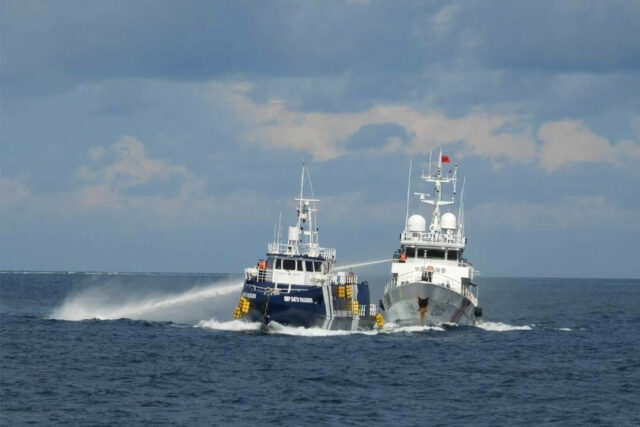
FILE PHOTO of a China Coast Guard vessel fires a water cannon at the BRP Datu Pagbuaya near Thitu Island, in the latest flare-up between Manila and Beijing in the disputed South China Sea. — PCG

FIVE CHINA Coast Guard (CCG) ships entered Manila’s territorial waters on Sunday, during an incident where a Philippine government ship was hit by a Chinese vessel near Thitu Island in the South China Sea, a Philippine Coast Guard (PCG) official said on Monday.

The Sunday incident was the closest encounter yet between Chinese maritime forces and Philippine vessels within the country’s exclusive economic zone (EEZ), as a CCG ship rammed a government vessel about 2.8 kilometers away from Thitu.

The Philippines maintains a military outpost on Thitu Island in the disputed Spratlys, PCG spokesman Jay Tristan Tarriela told a news briefing.

“This is the closest that the Chinese Coast Guard harassed and bullied a Bureau of Fisheries and Aquatic Resources vessel (BFAR),” he said.

The Philippines on Sunday accused Chinese vessels of conducting “dangerous and provocative maneuvers” against its ships near Thitu. A CCG spokesman said Beijing took “necessary control measures” to expel the ships that allegedly intruded into the disputed Sandy Cay.

Mr. Tarriela said the government ships near the Philippine island were operating in the area to ensure the safety and security of Filipino fisherfolk, “knowing for a fact that they are always subject to harassment and bullying activities.”

China on Monday urged the Philippines not to challenge its efforts to “safeguard its territorial sovereignty and maritime rights and interests.”

China urges the Philippines to immediately stop “violations and provocations,” Lin Jian, a spokesperson for the Foreign Ministry, told a press briefing in Beijing.

China and the Philippines traded accusations on Sunday over a maritime confrontation near Sandy Cay, a coral reef within the Spratly Islands.

Thitu, which the Philippines calls Pag-asa, is part of the resource-rich Spratly Islands. It is about 12 nautical miles (22 kilometers) from China’s air and naval base at Subi Reef. The island is the largest of the Philippine-occupied islands in the Spratlys and is the only one with a permanent civilian settlement.

Competing claims between the Philippines and China in the disputed waters have led to frequent confrontations involving repeated use of water cannons and sideswiping maneuvers against Philippine ships.

Beijing claims nearly all of the South China Sea via a U-shaped, 1940s nine-dash line map that overlaps with the exclusive waters of the Philippines and neighbors like Vietnam and Malaysia despite a 2016 ruling by the Permanent Court of Arbitration in The Hague that voided its claims.

Mr. Tarriela said the PCG also monitored 15 Chinese maritime militia vessels and a People’s Liberation Army-Navy warship near where the BFAR ship was rammed.

The Philippine government earlier this year launched a program aimed at sustaining the presence of Filipino fishers near contested areas in the country’s western seaboard, which have become flashpoints amid China’s increasingly assertive claims over the South China Sea.

RESUPPLY MISSION
The PCG and BFAR resupplied Filipino fishermen operating near disputed maritime features in the South China Sea on Oct. 8, defying heightened Chinese presence in the contested waters.

In a statement on Wednesday, the coast guard said it had delivered thousands of liters worth of fuel, tons of crushed ice and hundreds of food packs to fishermen off Scarborough and Sabina shoals, despite what it described as “aggressive actions” by Chinese vessels.

Access to Scarborough Shoal has been restricted for Filipinos after China seized control of the atoll in 2012 following a standoff with Philippines forces. It is a vast fishing lagoon that lies within the Philippines’ 200-nautical-mile exclusive economic zone.

Philippine Coast Guard said it deployed the 96.6-meter BRP Teresa Magbanua, its biggest multi-role ship, and the 44-meter patrol ship BRP Cape San Agustin to Scarborough Shoal to support six BFAR vessels that distributed aid to Filipino fishing boats.

Manila’s coast guard said it monitored seven China Coast Guard ships and 10 Chinese militia vessels in the disputed feature, with a Chinese Navy ship issuing a radio warning of a live-five exercise near the Philippine resupply point.

Philippine authorities also distributed about 48,000 liters of fuel to more than 35 fishing boats at Sabina Shoal within the heavily contested Spratly Islands, which are claimed by Taiwan and Vietnam aside from China.

The PCG deployed its second 96.6-meter multi-role ship BRP Melchora Aquino and the 44-meter patrol ship BRP Cabra to Sabina, where it accused a Chinese military helicopter of intimidating the Filipino fishing party by performing “low-altitude monitoring flights.”

Manila’s fishery bureau sent five ships to the disputed shoal, where eight Chinese Coast Guard ships and nine militia vessels were observed during the resupply mission, the PCG said.

The Marcos administration has recalibrated the Philippines’ South China Sea strategy, deepening security ties with allies and launching missions to support fishers in contested waters, all while pursuing upgrades to the country’s aging fleet. — Kenneth Christiane L. Basilio with Reuters