Home Blog Page 7781

Vaccine hoarding may backfire on rich nations as India reels

REUTERS

FOR MONTHS, developed economies have hoarded COVID-19 vaccines and the raw materials needed to make them. Now, they’re being forced to act as an explosive outbreak in India raises the risk of new virus mutations that could threaten the wider world.

Under mounting criticism for dominating vaccine resources, the US said this week that it will help India by sending items needed to manufacture vaccines as part of an aid package. European countries are also pledging help as new cases in the South Asian country smash world records. President Joseph R. Biden’s administration is separately vowing to share its stockpile of AstraZeneca Plc vaccines — which the US hasn’t even approved for use — and meeting with drug companies about boosting supply and waiving intellectual property protections on Covid-19 shots, a shift India and South Africa have been pushing for.

The moves show a growing realization that the vaccine nationalism many wealthy nations have embraced has the potential to backfire, prolonging the global pandemic. While those countries have been cornering supplies of the first vaccines for their world-leading rollouts, places like India have run short, allowing the virus to run wild. Some scientists have linked the nation of 1.3 billion people’s second wave to a more virulent strain, with the out-of-control outbreak providing a petri dish for further mutations to evolve that could challenge the vaccines now being distributed from the UK to Israel.

“There is certainly potential for new variants to emerge in a country the size of India that could pose a threat elsewhere,” said Ramanan Laxminarayan, founder of the New Delhi and Washington-based Center for Disease Dynamics, Economics & Policy. “It is in the world’s interest to ensure that India exits the pandemic at the earliest, and vaccination is the only way.”

The pink countries are trying to prevent the yellow countries from making vaccines that would save thousands of thousands, possibly millions from unnecessary deaths.

While viruses undergo changes all the time, not all are significant. But some new strains in other parts of the world have ignited concerns because they could be more contagious. Earlier this year, data showed that AstraZeneca’s vaccine was less effective against one variant that emerged in South Africa.

India’s variant — a strain named B.1.617 — is already raising alarms. It has two critical mutations that make it more likely to transmit and escape prior immunity that has been built up, Anurag Agrawal, the director of India’s Council of Scientific and Industrial Research’s genomics institute, told Bloomberg last week.

Rakesh Mishra, the director of the Centre for Cellular and Molecular Biology in Hyderabad, one of the labs working to sequence virus samples in India, said this variant appears to be more infectious, but it isn’t likely to cause more deaths.

Also, the AstraZeneca vaccine and another from India’s Bharat Biotech International Ltd. have been shown to be effective against it in preliminary data, he said. India’s health ministry hasn’t confirmed if this variant is more transmissible, and a spokesperson for the federal health ministry could not be immediately reached.

And at the rate infections are occurring in India, B.1.617 won’t be the only or last variant of concern out of India’s second wave.

“I fear there may be more trouble coming,” said William Haseltine, a former Harvard Medical School professor and HIV researcher who now chairs think tank Access Health International. “There are already second and possibly third generation variant of the B.1.617 circulating in India. These may be more dangerous than is the B.1.617 variant itself.”

India’s second wave is certainly more destructive. Hospitals and crematoriums are cracking under pressure, while Indians are begging on social media for everything from oxygen cylinders to drugs. Almost 3,000 people are dying every day, with experts saying that figure likely underplays the real toll. The daily death rate is almost double what it was at the height of the first wave, stoking speculation the new variant, or other mutations, are to blame. Brazil, another developing country that has struggled to ramp up vaccines, suffered from a virus strain that’s said to be responsible for a much higher Covid death rate.

“We are fighting a virus that is not standing still,” Stéphane Bancel, the chief executive officer of Moderna, Inc., told reporters at a briefing held on Friday by a number of vaccine makers and industry bodies. “If you think about the variants that are emerging, the UK, Brazil, South Africa and now we are hearing about the double mutant variant in India, there are more appearing everywhere. I’m worried deeply about the next six months.”

Public health experts now see a ramped up vaccination effort as key to quelling outbreaks like the one in India.

But despite being home to the world’s largest vaccine industry, India’s immunization drive has slowed in recent weeks and many states are warning that their supplies have almost dried up.

The shortages have partly been blamed on bottlenecks related to a few key items, with Adar Poonawalla — the chief executive officer of the Serum Institute of India Ltd., the country’s biggest vaccine producer and AstraZeneca’s manufacturing partner — increasingly pointing to the US.

Mr. Poonawalla has repeatedly called on the US to release shipments of critical raw materials, saying the US invoking the Defense Production Act to curb exports of some ingredients and bolster its own industry is one of the main reasons behind the slowdown in shots.

“It’s the shortage of critical input materials that is becoming a real bottleneck,” Rajinder Suri, chief executive officer of the Developing Countries Vaccine Manufacturers’ Network, said at Friday’s briefing. “If anyone of the components is missing, the entire chain comes to a grinding halt. The problem is that most of these materials are coming from the US.”

The items that many vaccine makers have been struggling to get hold of include glass vials, single-use filters and bioreactor bags, according to the majority of 15 suppliers, developers and contract manufacturers surveyed ahead of a Chatham House summit last month. However, the scale of the problem, even within industry groups, has been hard to quantify due to a lack of data.

As the scale of India’s virus emergency rose to global prominence this week, the offers of aid and doses started to come. Besides the US’s commitments, the UK, France and Germany have also pledged aid and much needed oxygen tanks for India.

Mr. Biden said Tuesday that in a call with Indian Prime Minister Narendra Modi, he discussed “when we’ll be able to send actual vaccines to India, which would be my intention to do.” In the meantime, the US is providing other aid, Mr. Biden said. The US government has said it plans to send about 60 million doses of the AstraZeneca vaccine overseas.

Still, a more marked shift in the way developed countries view vaccines will likely be needed. Even if the US did send all of its AstraZeneca doses to India, it would have a limited impact on a population of its size. There are also other parts of the vast developing world that are yet to see shots, or consistent supplies.

“Many parts of the world still remain deeply at risk,” Jennifer Nuzzo, a senior scholar at the Johns Hopkins Center for Health Security, said in a Bloomberg TV interview last week. “I worry about these headlines continuing for a year or more unless international partners get together and help share some of the vaccines that are there.” — Bloomberg


Heading back to the office? Ask for air filters, not bleach

REUTERS
OFFICE WORKERS wearing protective masks work at a building in Tokyo, Japan, Nov. 27, 2020. — REUTERS

As VACCINATIONS speed up and companies look to reopen their offices, workers want something in return: confidence that it’s safe to be there, elbow to elbow with colleagues they’ve encountered only on screens for months.

Employers are touting measures to curtail the risk of infection with coronavirus disease 2019 (COVID-19), but not every action is equally effective, according to experts. Some of the most widely adopted steps may not help much at all.

More than a year into the pandemic, scientists are increasingly focusing on airborne transmission as the biggest culprit. For the office-bound, that raises the importance of better ventilation and air filtration, and undercuts the rationale for the ceaseless scrubbing of surfaces with disinfectants that many employers have adopted.

“I don’t want to hear about your surface cleaning procedures, because that is a waste of time and money,” said Linsey Marr, a professor of civil and environmental engineering at Virginia Tech who studies the interaction of viruses with the atmosphere. “But tell me about your ventilation. How often is the air changing out in the space? And tell me about your filtration.”

While flexible working arrangements may outlast the pandemic, many people will soon be commuting again. In the UK, where vaccinations are outpacing most of the world, employees last week returned to offices in numbers not seen since last March. JPMorgan Chase & Co. this week became the first major US bank to mandate a return for its entire US workforce, on a rotational basis, as soon as July.

After all these months, it may seem surprising that there’s still a debate over how the coronavirus spreads, and how best to stop it. That’s partly because of an overemphasis on the risk of so-called “fomite” transmission, which involves picking up the virus from a contaminated surface like a doorknob or elevator button, according to Ms. Marr and other scientists.

Earlier this month, the US Centers for Disease Control and Prevention (CDC) issued guidelines downplaying that threat. Each contact with a contaminated surface may have less than a one-in-10,000 chance of causing Covid-19, the agency said.

“There is little scientific support for routine use of disinfectants in community settings, whether indoor or outdoor,” the agency concluded.

For airborne transmission, the threat isn’t from large, virus-laden droplets that quickly fall to the ground, but from small particles that can linger in the air for hours, building up in poorly ventilated indoor spaces, while quickly dispersing outdoors.

Confusion over that has exacerbated the pandemic, creating policies that often punish people for meeting outside and increasing the likelihood of them gathering in homes and offices that are breeding grounds for Covid, according to Germany’s Association for Aerosol Research.

The group recently published an open letter to Chancellor Angela Merkel, saying politicians need to stop worrying about parks and beer gardens and focus on getting schools, nursing homes and workplaces to install air cleaners and filters.

Still, not all scientists are convinced that airborne transmission is the most important path, with some pointing to a lack of data. Yet others respond that hasn’t stopped public health officials from concluding in the past that diseases, including measles and tuberculosis, are primarily spread by particles in the air.

“The airborne route is likely to be dominant,” wrote a collection of experts, led by Trisha Greenhalgh, a professor of primary care health sciences at the University of Oxford, in a recent commentary in The Lancet.

One of the 10 reasons they cited to support that view was that many infections are touched off by people who have no symptoms. Because they aren’t coughing or sneezing, they primarily emit the virus while talking. And talking produces mostly tiny particles that spread by air, rather than projectiles that quickly fall to surfaces.

‘HYGIENE THEATER’
Ultimately, the risk of infection boils down to the intensity, duration and frequency of exposure to the virus, according to Joseph G. Allen, an associate professor at Harvard and director of the university’s healthy buildings program. He has worked with companies and groups on re-opening plans, from big finance and technology firms to Broadway theaters and prisons.

He sympathizes with organizations that have resorted to deep cleaning in recent months, despite the fact that he considers it “hygiene theater.” It’s highly visible, and reassuring to people returning after months away.

With the CDC’s pivot toward the threat of airborne transmission, the agency rolled out detailed guidelines on matters like ventilation and filtration. Employees worried about coming back to the office should ask employers whether they’re meeting those standards, which are tougher than most building codes, Mr. Allen said.

Another increasingly popular precaution is the installation of plastic dividers between desks in open-plan offices. For Mr. Allen, the plexiglass barriers are of questionable benefit in most cases, and could impede the air flow needed for proper ventilation. He cited an instance at a school office in Massachusetts where investigators, using a smoke test after a number of infections, found that the dividers had contributed to a buildup of coronavirus.

Over time, infections will diminish as more people get vaccinated, and concerns about catching Covid-19 at the office will probably recede, according to Ms. Marr. But the lessons learned in battling the virus could continue to reduce the incidence of colds and flu, she said.

As for elevators, one of the more worrying spaces in large buildings, Mr. Allen said they aren’t necessarily high-risk areas for infection. Lifts often have decent air flow, and people typically don’t ride in them for very long, nor very frequently. The bigger risk? Limiting the number of people in them, leading to crowds waiting in a building’s entryway. 

“I recommend putting a sign in there that says, ‘Space as much as you can. Wear a mask. Don’t talk,’” Allen said. “People will probably appreciate that anyway.” — Bloomberg

Taiwan says China waging economic warfare against tech sector

WINSTON CHEN/UNSPLASH

TAIPEI — Taiwan’s government on Wednesday accused China of waging economic warfare against the Chinese-claimed island’s tech sector by stealing technology and enticing away engineers, as parliament considers strengthening legislation to prevent this.

Taiwan is home to a thriving and world-leading semiconductor industry, used in everything from fighter jets to cars, and the government has long worried about China’s efforts to copy that success, including by industrial espionage and other underhand methods.

Four Taiwanese lawmakers from the ruling Democratic Progressive Party are leading a proposal to amend the commercial secrets law to widen the scope of what is considered a secret and toughen penalties.

In a report to parliament about the proposed amendments, Taiwan’s National Security Bureau blamed China for most cases of industrial espionage by foreign forces discovered in recent years.

“The Chinese Communists’ orchestrated theft of technology from other countries poses a major threat to democracies,” it said.

“The aim of the Chinese Communists’ infiltration into our technology is not only about economic interests, but also has a political intention to make Taiwan poorer and weaker.”

China’s Taiwan Affairs Office did not immediately respond to a request for comment.

Taiwan’s Economy Ministry, in its report, said China was trying to boost its semiconductor industry by “poaching” Taiwanese talent “as well as obtaining our country’s industry’s commercial secrets, to harm the country’s competitiveness.”

The Cabinet has met many times to work out how to address the problem, the ministry added.

Lawmaker Ho Hsin-chun, one of the legislators who has proposed the amendments, said the need was urgent.

“The infiltration of China’s red supply chain is everywhere,” she told a parliament committee meeting.

It is not clear when or if the amendments could be passed into law, and the Justice Ministry in its report suggested further discussion of the wording was needed.

Hu Mu-yuan, deputy head of Taiwan’s National Security Bureau, expressed broad backing for the measure.

“As long as it’s helpful for our country’s security and interests, we support it,” he said. — Reuters

S.Korea to lift mandatory quarantine for residents fully vaccinated against COVID-19

REUTERS

SEOUL — South Korea said on Wednesday it will offer some exemptions to mandatory quarantine measures for people who have been fully inoculated against coronavirus disease 2019 (COVID-19), in an effort to encourage more vaccinations.

South Korea has so far vaccinated 4% of its 52 million strong population, but has set an ambitious target of giving shots to 70% of its people by September and reaching herd immunity by November.

From May 5, residents who have had both coronavirus vaccine shots will not have to undergo the mandatory two-week quarantine for people who have been in contact with a confirmed patient or have returned from overseas travel, ​Yoon Tae-ho, a senior health ministry official, told a briefing.

The exemption will only apply for those with a negative COVID-19 test and who show no related symptoms.

It will not apply to residents arriving from nations such as South Africa and Brazil where coronavirus variants are prevalent and to people who are vaccinated in foreign countries.

South Korea has procured a total 192 million doses of COVID-19 vaccines, enough to administer close to twice its population, including those from Pfizer, AstraZeneca Plc , Moderna, Inc, Johnson & Johnson and Novavax.

It has inoculated around 2.68 million people so far with AstraZeneca or Pfizer vaccines and aims to vaccinate 12 million people by June, although there has been growing vaccine hesitancy due to concerns over reports of blood clotting disorders.

South Korea reported 775 new COVID-19 cases on Tuesday, bringing the total number of confirmed cases to 120,673, with 1,821 deaths. — Reuters

Saudi crown prince says kingdom has no plans to introduce income tax

REUTERS

DUBAI — Saudi Arabia’s Crown Prince Mohammed bin Salman said in televised remarks on Tuesday that the kingdom had no plans to introduce income tax and a decision last July to triple value-added tax to 15% was temporary.

The kingdom had tripled VAT to offset the impact of lower oil revenue on state finances in a move that had shocked citizens and businesses expecting more support from the government during the coronavirus pandemic.

“Raising VAT was a painful measure and I hate to hurt any Saudi citizen, but it is my duty to build Saudis a long-term sustainable future,” the prince said in an interview aired on Saudi TV to mark the fifth anniversary of Vision 2030.

“Raising VAT to 15% is a temporary decision that will last one to five years and then it will go down to between 5% to 10%,” he said.

Prince Mohammed also said the kingdom aims to reduce unemployment to 11% this year. Unemployment among Saudi citizens fell to 12.6% in the fourth quarter of 2020 from 14.9% in the third quarter.

The government has been pushing through economic reforms since 2016 to create millions of jobs and reduce unemployment to 7% by 2030.

The plans were disrupted by the coronavirus crisis that sent oil prices plummeting last year. — Reuters

Gilas Pilipinas 3×3 team begins OQT bid on May 26 in Austria

RICHARD ESGUERRA
CJ PEREZ (#17) and the rest of the Gilas Pilipinas 3×3 team will begin their FIBA Olympic Qualifying Tournament in Austria on May 26. — RICHARD ESGUERRA

By Michael Angelo S. Murillo, Senior Reporter

THE Philippine 3×3 national team will begin its bid in the FIBA Olympic Qualifying Tournament (OQT) in Graz, Austria, on opening day on May 26 in Pool C.

Composed of young Philippine Basketball Association (PBA) veterans CJ Perez and Mo Tautuaa of San Miguel and incoming rookies Joshua Munzon (Terrafirma) and Alvin Pasaol (Meralco), Gilas Pilipinas 3×3 will try to notch one of the three tickets up for grabs in the qualifiers for the Tokyo Games, where the sport is making its debut.

The nationals play in the tough Pool C, which also has Slovenia (Europe Cup 2016 winner), France (second at Europe Cup 2019), Qatar (2014 World Champ), and the Dominican Republic.

OQT format calls for each team playing the other four in their respective pools. The top two teams from each pool qualify for the crossover quarterfinals and then play knockout games all the way to the semifinals.

The semifinals and the third-place games will be known in the FIBA 3×3 OQT as the Olympic Ticket games.

Gilas Pilipinas 3×3 will first play Qatar on May 26 at 8 p.m. (Manila time) to be followed by the game against Slovenia at 9:45 p.m.

It will take a break the following day before resuming its campaign on May 28 against the Dominican Republic at 6 p.m. and France at 8 p.m.

The Philippine team is set to start its “bubble” training at the Inspire Sports Academy in Calamba, Laguna, in the first week of May. They will stay there before flying to Graz for the OQT.

Messrs. Perez and Tautuaa were members of the gold medal-winning 3×3 team in the 30th Southeast Asian Games held here in 2019.

The duo is looking at building on that success notwithstanding the long break they had in the sport because of the pandemic.

“The last time we played 3×3 was before lockdown and that was last year, so it’s been a while. We are not able to play, that’s the hard thing for us,” Mr. Perez admitted in an interview with the official International Basketball Federation (FIBA) website.

“We are doing our best to be in shape. Our coaches never stopped working for the program for us and they keep pushing every day,” he added.

Messrs. Munzon and Pasaol, meanwhile, are the top 3×3 players in the country and played a big role in the Philippines securing a spot in the OQT, being part of teams which saw action and gained qualifying points in various FIBA tournaments.

They have decided to take their talent to the PBA by applying for the rookie draft early this year where they were selected in the first round, but expressed their commitment for the country’s 3×3 cause in the OQT.

The Samahang Basketbol ng Pilipinas (SBP) and the PBA have vowed full support for the team, which also includes Rain or Shine rookie Santi Santillan and free-agent Karl Dehesa.

The FIBA 3×3 OQT happens from May 26 to 30.

GILAS TEAM IN PHILIPPINE CUP
Meanwhile, if plans push through, the Gilas Pilipinas national team will be featured in the PBA Philippine Cup.

League commissioner Willie Marcial shared the news during the online Philippine Sportswriters Association Forum on Tuesday.

He said it is the PBA’s way of helping Gilas train for its international competitions, namely, the FIBA Olympic Qualifying Tournament in Serbia in June and FIBA Asia Cup in Indonesia in August, in light of the many restrictions currently in place because of the pandemic.

The league chief said they will be coordinating with the SBP in accommodating Gilas, which he sees could play eight to 10 games at least in the Philippine Cup as part of its preparation.

The PBA is looking to begin its delayed Season 46 hopefully in late May or in June.

League officials were to meet government officials on Wednesday to discuss the staging of its new season.

Jerwin Ancajas wants a shot at fellow champion Estrada

ALVIN S. GO
IBF super flyweight champion Jerwin Ancajas wants a shot at WBA champ Juan Francisco Estrada of Mexico in a unification fight. — ALVIN S. GO

FRESH from his successful title defense of the International Boxing Federation (IBF) super flyweight title, Filipino champion Jerwin Ancajas is now eyeing possible bouts against top fighters in his division, including versus fellow champ Juan Francisco Estrada of Mexico.

Speaking at the media conference hosted for him by the Games and Amusements Board on Wednesday, Mr. Ancajas shared that there is nothing definite yet on when his next fight will be and against who, but given the opportunity, he would like to battle Mr. Estrada, the World Boxing Association (WBA) and World Boxing Council (WBC) champion.

“Even before I became a champion, I was already following his career; watching his fights. Now I have a chance to fight them (top fighters in the division) and I want to take a shot at them,” said Mr. Ancajas in Filipino.

The IBF champion recently came back to the country after successfully defending his title for the ninth time against Mexican Jonathan Javier Rodriguez by unanimous decision on April 11 in Uncasville, Connecticut.

It is something the Davao del Norte native Ancajas (32-2) looks to build on in trying to further solidify his standing as a champion in the sport.

But while he wants to face Mr. Estrada (42-3), the Filipino champion admits that at least for this year, a unification bout against any of the other champions might be hard to set up, but he is still not losing hope just as he said that he will welcome any fighter who will pitted against him.

“Maybe this year, a unification fight might not happen because the other champions have their own schedules and have something lined up. But from our end, whether it is Estrada or any fighter, we will just train and be ready when called up,” Mr. Ancajas said.

Team Ancajas said it is looking at a September return to action.

ASIAN ELITE TILT MOVED
Meanwhile, in other boxing news, the Association of Boxing Alliances in the Philippines (ABAP) announced on Wednesday that the Asian Elite Men and Women Boxing Championships have been moved to the United Arab Emirates, capital of Dubai from May 21-June 1.

Originally set to take place in New Delhi, India, the boxing event was forced out because of the massive surge in coronavirus cases in said country.

Filipino boxers were eyeing to see action in the championships as part of their preparation for big international tournaments this year, including the Olympic Games, but were forced to rethink over health and safety concerns.

But the ABAP said it is now looking at reconsidering its decision since the boxing tilt will now be held in Dubai.

“We will make that determination in a few days,” said ABAP secretary-general Ed Picson.

Currently, most of the elite national boxers are in Muaklek, Thailand, in a joint training camp with the Thai national boxing team. They have been in Thailand since March 10 of this year. — Michael Angelo S. Murillo

How the government plans to make Clark’s sports facilities pay their way 

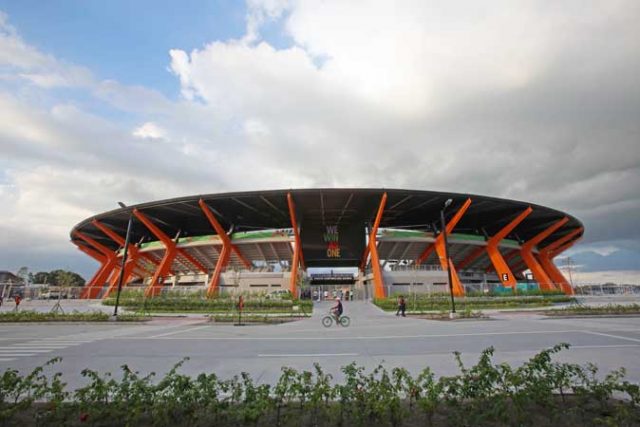
NEW Clark City is a fully master-planned development with the world-class sports complex as one of its components. — BCDA AND JUN MENDOZA

By Michael Angelo S. Murillo, Senior Reporter

SPORTS STADIUMS are expensive and need to be booked for as many days of the year as possible to be viable, which is why the Rizal Memorial Sports Complex fell into decay, while more commercially oriented venues like the Araneta Coliseum and the Mall of Asia Arena are thriving. Which brings up some questions about the sustainability of a recent jewel in the crown of the Philippine infrastructure program — the sports facilities at New Clark City.

The P9.5-billion complex includes a 20,000-seat Athletics Stadium with an International Association of Athletics Federations (IAAF)-certified track; a 2,000-seat International Swimming Federation (FINA)-certified Aquatics Center; and an Athletes’ Village. The complex was built to serve as the showpiece of the 30th Southeast Asian Games in December 2019.

The Bases Conversion and Development Authority (BCDA), aware of the fate of Olympic venues in places like Athens and Beijing which have gone derelict or have yet to be self-sustaining, essentially believes that the sports complex will be a big draw for locators to the Clark Special Economic Zone (CSEZ). At the risk of oversimplifying, the strategy might be summed up as: “If you build it, they will come.”

“New Clark City is a fully master-planned development with the world-class sports complex as one of its components… The sport facilities play a huge part in creating strong interest for local and foreign investors looking to locate in a regional hub that adopts a work-and-play environment,” Vivencio B. Dizon, BCDA president and CEO said in an e-mail interview.

Mr. Dizon said the labor and services, business, education, government, and tourism sectors will benefit from having the sports complex in New Clark City in Tarlac.

He said tourism promoters, for one, can develop sport tourism offerings, and the Department of Tourism sees its place in the greater strategy of building regional resilience.

“The national government is aiming for a more resilient economy by building regional growth centers across the country, and part and parcel of this outlook is ensuring the availability of public infrastructures and facilities to enable and support the economic progress,” Tourism Secretary Bernadette Romulo-Puyat said in a statement on the New Clark City development.

In building the sports hub, BCDA partnered with infrastructure developer MTD Philippines, a unit of MTD Capital Bhd. of Malaysia.

The construction of the facilities was controversial, not just because of the expense, but also because of questions about their long-term viability. Observers advocated the renovation of existing facilities, but the fiscally responsible choice was ultimately overruled by the sports community, judging from the satisfaction expressed by it about the stadiums during the games.

“Our athletes have waited so long for world-class sports facilities. BCDA is thrilled to be part of the creation of the National Academy of Sports (NAS), and the development of the country’s athletes who will study and train there. With a sports-centered academic program and facilities at par with international standards, we envision NAS to be a cradle for future world champions,” Mr. Dizon said.

The BCDA is confident that the sports complex will not turn into a “white elephant” because of its role as an attraction for locators to New Clark City (NCC). NCC itself is designed to be a driver of Central Luzon’s development, while serving as an alternative capital should a calamity impair the national government’s ability to function in Metro Manila.

The sports facilities will serve as the main training hub for national athletes, as well as that of future generations of elite athletes to be produced by the NAS, a secondary school tailored for the needs of high-performance athletes.

  The NAS, created under Republic Act No. 11470, is scheduled to open later this year in coordination with the Department of Education and the Philippine Sports Commission.

 The Athletes’ Village itself has performed valuable national service by standing in as a quarantine center during the pandemic, while also housing healthcare workers.

To date, over 15,000 coronavirus positive and quarantine patients have been admitted to four treatment and medical facilities there.

The BCDA said the continued use of the Athletes’ Village as a quarantine facility will be determined by need, and will be decided by the Inter-Agency Task Force for the Management of Emerging Infectious Diseases (IATF-EID).

RECOUPING INVESTMENT
Mr. Dizon said the New Clark City sports facilities will ultimately pursue the broader approach taken by the BCDA in tapping public-private partnerships to ensure that the investment poured into them will be recouped and the hub’s world-class certifications maintained. 

He said, however, that the pandemic has forced a rethink of the plans and projections for the complex.

 “In early 2020, we estimated a (payback period) in the 8- to 10-year range, but this had to be pushed back because of the pandemic. No one can truly predict when we are returning to normal. Once the pandemic is over, projections will be subject to another study to determine the expected return,” Mr. Dizon said.

“Because of the pandemic as well, BCDA is currently reevaluating the timing for privatizing the operations and maintenance of the facilities, but that is still in the pipeline. In the meantime, we’re trying to make sure that the facilities are in good condition,” he added.

Considering the resources channeled to building the facilities, Robert Dan J. Roces, chief economist at Security Bank Corp., said a well-thought-out plan is needed for the returns to measure up.

“As with facilities of this magnitude, maintenance costs can easily overtake the original cost to build these even only after a few years, and run the risk of becoming a drain on taxpayers. That’s why it’s laudable that the BCDA has long-term plans for the facilities to prevent wastage even before construction begins so that these do not become one-off use facilities,” Mr. Roces said in an e-mail interview.

 “A public-private partnership seems the best option, as such deals have a higher chance of success in terms of managing costs, hitting the RoI on time, and attracting complementary investments that provide positive multiplier effects and employment all around, while at the same time maintaining the original vision for the surrounding areas with the sports complex as the centerpiece,” he added.

He said that if the plans for the facilities succeed, such an approach could form the template for future development.

“And as with any infrastructure spending program — especially now with the pandemic — it bodes well for economic recovery,” he added.

GENERATING INTEREST
After the success of the Games, Mr. Dizon said the immediate interest in the facilities centers on their suitability for hosting training and tournament “bubbles” due to the pandemic.

The PSC, for one, has requested the use of the site for training bubbles in preparation for the Southeast Asian Games in Vietnam in November.

The Philippine Athletics and Track and Field Association has also requested the complex’s use as an Olympic training bubble and hopes to stage the annual Philippine Athletics Championship/National Open there. Its request is awaiting IATF approval.

Other organizations studying the use of the venue are the Triathlon Association of the Philippines and the Asia Swimming Federation.

The NCC was cited as the 2019 Sports Tourism Venue of the Year at the 4th Philippine Sports Tourism Awards.

“So in terms of confidence in the facilities including the onsite implementation of the health protocols, I’d say that NCC is in good shape,” Mr. Dizon said.

Further developments are in the works, including a high-performance gym and sports museum and a center for sports medicine and holistic wellness.

Additional facilities due to be constructed include a FIFA-certified football stadium, an arena for sports like basketball, volleyball, and tennis, as well as a softball stadium and a skate park.

Wimbledon to become 14-day tourney from 2022 with play on Middle Sunday

BENGALURU — The Wimbledon Championships will become a 14-day tournament from 2022, with matches set to be played on Middle Sunday, traditionally a day off at the grasscourt Grand Slam, the All England Lawn Tennis Club (AELTC) said on Tuesday.

The first Sunday of Wimbledon is normally a rest day, on which tournament organizers work to get the courts back into top shape for the latter rounds, resulting in a so-called Manic Monday featuring the entire fourth round of both the men’s and women’s singles.

“From 2022, to coincide with the centenary of center court, Middle Sunday will become a permanent part of the tournament schedule, turning the Championships into a 14-day event,” AELTC chairman Ian Hewitt said.

“Thanks to improved grass court technology and maintenance over the past five years… we are comfortable that we are able to look after the courts, most particularly center court, without a full day of rest.”

Middle Sunday has rarely been needed and only when bad weather has required some catch-up time for organizers. It featured in 1991, 1997, 2004, and 2016 — allowing fans a rare chance to buy on-the-day tickets.

Wimbledon is the only one of the four Grand Slams that includes a rest day in the middle.

Hewitt said there had been no pressure from the ATP or WTA to alter the scheduling.

“The most logical thing is that the fourth round will be split over two days to do justice to that important part of the tournament,” he told a news conference.

“We are confident we can make it a special day.”

No private housing

This year’s tournament is eagerly awaited after Wimbledon was canceled last year for the first time since World War II because of the coronavirus pandemic.

But it will feel different.

Organizers have had to ensure a Minimized Risk Environment to satisfy health protocols, meaning players will be limited to a maximum of three in their entourage and they will have to stay in designated hotels, rather than the plush private housing the top players generally prefer.

“The minimized risk environment we created for the players is a requirement from the government to bring athletes without them going into quarantine upon entry into the UK,” AELTC chief executive Sally Bolton said.

“Players enjoy private housing and we hope to bring it back next year, but it’s just not possible this year.”

The rule applies even to British players such as Andy Murray, who lives a short drive away from the grounds, and instead will have to stay in a hotel this year.

Wimbledon is planning for a 25% capacity, but hopes that will be increased as lockdown restrictions ease.

The tournament starts on June 28, a week after the government hopes to free the country of coronavirus restrictions.

However, organizers say that even if the country is unlocked, players will still have to remain in a bubble.

“What might happen in the UK is different to what happens to international travel,” Bolton said. “The minimized risk environment is part of the permission for staging the tournament.”

Ticket prices will be the same as last year while prize money allocations will be announced in June.

“It’s premature to make a judgment on prize money,” Hewitt said. “We will take a sensible judgment in June.”

Wimbledon was the only Grand Slam canceled last year and Hewitt said the tournament had collected an insurance payout of 180-million pounds ($250.15 million), of which 36 million pounds went to the Lawn Tennis Association. — Reuters

ONE Championship stages last installment of TNT series in Singapore

ONE CHAMPIONSHIP
“ONE on TNT IV” will be headlined by the re-engagement of ONE light heavyweight champion Aung La N Sang of Myanmar and middleweight champ Reinier De Ridder of the Netherlands this time for the light heavyweight title. — ONE CHAMPIONSHIP

THE final installment of the four-part “ONE on TNT” series of ONE Championship happens on Thursday at the Singapore Indoor Stadium.

The concluding event will be headlined by the world light heavyweight title clash between reigning champion “The Burmese Python” Aung La N Sang and replacement opponent and middleweight champ Reinier De Ridder of the Netherlands.

Also seeing action is Filipino mixed martial arts (MMA) veteran Eduard “Landslide” Folayang against Japanese legend Shinya Aoki in the third encounter of their trilogy as well as Filipino-American muay thai fighter Jackie Buntan against Ekaterina Vandaryeva of Belarus.

The “ONE on TNT” series started on April 8 where the promotion’s fights are broadcast across various platforms in the United States on prime time.

Aung La faces Mr. De Ridder for the second time in seven months.

The two collided in October last year where the Dutch submitted the Burmese fighter (rear-naked choke) in the first round to win the ONE world middleweight title.

Aung La is hoping that he could exact payback and prevent Mr. De Ridder from doubling up on him and taking the light heavyweight title this time.

It is a quick pivot for Aung La though as he saw his original opponent Vitaly Bigdash of Russia pull out in fight week after contracting the coronavirus.

Messrs. Folayang and Aoki, meanwhile, found themselves in an instant trilogy after their respective opponents backed out for varying reasons.

Team Lakay’s Folayang was supposed to face Japanese Yoshihiro Akiyama while Mr. Aoki was to face American Sage Northcutt.

The two former lightweight champions split their first two encounters with Mr. Folayang taking the first fight back in 2016 by knocking out then ONE lightweight champ Aoki in the third round to become the new champion.

The Japanese then exacted payback in 2019 when he submitted the Filipino by way of arm triangle choke in the opening round to reclaim the lightweight belt.

“This is a crucial fight for both men, to be honest. We have to factor in age and their current mentality as well as the technique that they will employ in this fight. These two have fought twice, and are very familiar with one another,” said local fight analyst Nissi Icasiano when asked by BusinessWorld for his thoughts.

“It’s a matter of who has the better game plan coming into the fight. In the case of Folayang, he needs to sport a more cautious and patient approach, leaning on snap kicks and telegraphing long-distance strikes. He has to do this repeatedly for at least two rounds to wear out Aoki, who will try to hunt for a takedown right off the bat and sink the Filipino on the ground,” he added, underscoring that the longer the fight, goes the better for the Filipino’s chances.

Ms. Buntan, for her part, will make her second appearance in ONE Championship and try to solidify her standing as a contender.

Also seeing action in the event is MMA veteran Eddie Alvarez of the United States against Ok Rae Yoon of South Korea.

“ONE on TNT IV” will be broadcast live here over One Sports at 8:30 a.m. with an encore telecast on the same channel on April 30 at 8:30 p.m., and on May 2 at 12 a.m. on TV5. — Michael Angelo S. Murillo

Trail Blazers pound Pacers; Bucks offer in-game vaccines

PORTLAND TRAIL BLAZERS FACEBOOK PAGE
THE Portland Trail Blazers snapped a five-game losing streak after a dominant 133-112 win over the Indiana Pacers on Tuesday. — PORTLAND TRAIL BLAZERS FACEBOOK PAGE

ANFERNEE Simons’ 27 points on 9-of-10 shooting from three-point range led a dominant effort by the Portland Trail Blazers during a 133-112 win over the Indiana Pacers on Tuesday night in Indianapolis.

The Blazers (33-28) snapped a five-game losing streak as seven players scored in double figures, including Damian Lillard (23 points) and CJ McCollum (20).

The nine made triples were a career-high for Simons and the scoring output was the second-highest ever for the Blazers’ 2018 first-round pick.

Indiana (29-32) had its three-game winning streak snapped and took its 18th defeat at home this season, which guaranteed a .500 or worse record in Bankers Life Fieldhouse. That snapped a streak of 31 consecutive seasons with a winning home record for the Pacers.

Oshae Brissett and Malcolm Brogdon led the Pacers with 18 points each. Brissett also grabbed 10 rebounds. Caris LeVert had 16 points and Doug McDermott finished with 13.

Lillard was held under his season scoring average of 28.4 points per game, but he didn’t need to be spectacular as Portland opened things up by outscoring Indiana (79-43) over the second and third quarters.

Lillard contributed six assists and four rebounds in 31 minutes for the Blazers, who led by as many as 43 points in the fourth quarter. McCollum hit 9 of 13 field-goal attempts.

The Pacers continued to compete without a player taller than 6 feet 7 as Domantas Sabonis missed his fifth consecutive game with a lower back strain. Indiana was also without Myles Turner (foot) and Goga Bitadze (ankle) in addition to Jeremy Lamb (knee) and T.J. Warren (foot), who is out for the season.

Portland took advantage of its size advantage as three frontcourt players — Robert Covington (15 points and 11 rebounds), Enes Kanter (12 points and 14 rebounds) and Jusuf Nurkić (11 points and 10 rebounds) — recorded double-doubles. Carmelo Anthony added 13 points.

BUCKS VACCINE
Meanwhile, basketball fans can obtain their first coronavirus vaccine dose in an unusual venue this weekend — at a Milwaukee Bucks game.

Those aged 16 years and older attending Sunday’s game against the Brooklyn Nets will be able to obtain their first dose of the Pfizer vaccine at a mobile vaccination site inside Fiserv Forum, which the Bucks are opening in partnership with the Milwaukee Health Department.

Tip-off is at 2:30 p.m. but doses will be available from 1 p.m. through the end of the game inside the Panorama Club, one of the 17,341 capacity arena’s VIP lounge areas.

“This is a critical time for all of us to take the necessary step that will help return our lives to normal,” Bucks President Peter Feigin said in a written statement on Tuesday. “Let’s make this happen together.”

The team is widely believed to be the first in the National Basketball Association to offer in-game vaccinations, though numerous stadiums and arenas across the United States opened their doors to inoculate residents during the pandemic, when not performing their usual functions. — Reuters

AkadsPH streamlines process of booking an online tutor

STOCK PHOTO | Image by Compare Fibre from Unsplash

AkadsPH, an online tutoring service, offers one-on-one tutorial sessions to students who undergo its matching system. Clients can book and pay on a single platform.

“Most of the tutorial services that transitioned to offer online tutorials have unorganized booking systems and limited payment modes,” said Angela Nicole M. Mercado, chief executive officer of AkadsPH. “They operate mainly on Facebook and Zoom, which could be time-consuming for busy parents who wouldn’t want to go through multiple platforms just to book a tutor.”

Students are matched to a tutor in the AkadsPH platform based on the details they include in their profile. All eligible tutors are notified afterwards, with the first one to accept getting the booking. 

The platform also has a chat feature, which allows for easy communication among parents, tutors, and students; email and text notifications, to remind parents of upcoming tutorial sessions for their children; a files drive similar to Google Drive, to help a tutor align with the current lessons of the student; and a favorite tutor function, for parents who prefer to book a particular tutor.

Akads Meet, the platform’s video call component, provides a stable learning experience by adjusting each call’s video quality based on the tutor and the student’s Internet connection.

“Being software scalable, we can easily add helpful features that can make this experience better for both parents and tutor,” said Gabriel Lucas M. Reganit, chief sales officer of Akads. 

AkadsPH, which launched with the help of startup incubator QBO Innovation Hub, targets parents of students in grades 1 to 10 who are affected by the closure of tutorial centers due to the pandemic. It has conducted over 180 sessions with 26 students since its launch in January, with most of its clients coming from private schools in Metro Manila. It has also onboarded 84 college-student tutors. 

A rigorous application process is conducted for its tutors, which includes assessments that weigh heavily on mock tutorials, said Ms. Mercado. “Most of our tutors are college students who can teach Math, English, Filipino, and Science, which is why we only offer these subjects for now.”

Parents usually book math tutorials for their children, added Mr. Reganit. “We ensure that we enrich the student’s knowledge by giving exercises during and after the session to promote mastery and constant practice,” he said. “Parents are satisfied because of the improvement of their kid’s grades.”

TUTORING INDUSTRY
Technavio, a global technology research and advisory company, forecasts the global K-12 online tutoring market to grow by $60.03 billion during 20192023, progressing at a compound annual growth rate of 12% during the forecast period. Forty-eight percent of this growth will originate from the Asia Pacific region. One of the key drivers for this market will be the importance of STEM (science, technology, engineering, and mathematics) education.

A report released in December 2020 by the International Association for the Evaluation of Educational Achievement (IEA) said that the Philippines fared worst among 58 countries in an assessment for mathematics and science for Grade 4 students. The Philippines scored 297 in math and 249 in science, according to the IEA’s Trends in International Mathematics and Science Study (TIMSS) 2019.

“Seeing as students in this generation live in a digital age, schools and tutorials would be able to teach better by adapting technology in their education programs,” said Mr. Reganit. “We aim to address these gaps starting with online tutoring. Looking forward, we believe that digitizing education will empower students to help them achieve their academic goals and beyond.” 

AkadsPH offers a free one-hour trial session. Rates range from P500 for an hour to P6,760 for 15 hours. — Patricia B. Mirasol