Home Blog Page 778

SEC says no ban on crypto trading
BW FILE PHOTO

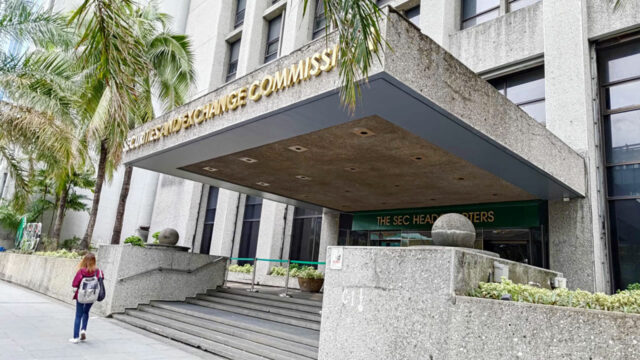
THE Securities and Exchange Commission (SEC) said its new rules on crypto asset service providers (CASPs) do not ban cryptocurrency trading in the Philippines but require platforms to register to safeguard investors and uphold market integrity.

“The CASP rules do not prohibit cryptocurrency trading or investment. Rather, they require platforms to obtain the appropriate registration and licenses before offering their services in the Philippines,” the corporate regulator said in an advisory on its website issued on Aug. 14.

“This ensures that investors are protected, market integrity is upheld, and all market participants operate on a level playing field,” it added.

The SEC said the CASP rules, which took effect on July 5, apply to all entities, local or foreign, that offer crypto asset services in the Philippines. With this, the commission urged local and foreign platforms to register and comply.

“We recognize the importance of a free, competitive market, but one that is responsibly regulated to protect investors and support the sustainable growth of the crypto industry in the Philippines,” the SEC said.

The commission said the enforcement of the CASP rules is within its legal mandate to investigate and act against unregistered entities, which may include measures to limit access to noncompliant platforms.

“These actions are designed to safeguard the public from risks such as fraud, loss of funds, and money laundering risks that often increase during periods of heightened market activity,” it said.

On May 30, the SEC issued Memorandum Circular Nos. 4 and 5, providing for the CASP rules and the guidelines on CASP operations, respectively.

Under the guidelines, CASPs must be registered as corporations with a minimum paid-up capital of P100 million in cash or property, excluding crypto assets. They must also have a physical office that is appropriately staffed during regular business hours.

Applications for registration will come with an initial filing fee of P50,000. CASPs will also pay a supervision fee to the SEC based on their gross revenue during the preceding year, for the privilege of doing business.

The SEC warned that violators may be punished with imprisonment of one to five years, or with a fine of P50,000 to P10 million.

Earlier this month, the SEC issued an advisory warning the public against ten crypto platforms providing crypto asset services without the necessary licenses. These platforms include OKX, Bybit, Mexc, Kucoin, Bitget, Phemex, Coinex, Bitmart, Poloniex, and Kraken.

“These platforms have no license, registration, or authorization from the SEC to operate in the Philippines or to solicit investments from the public. Their actions are unauthorized and expose Filipino investors to significant risk, including total loss of funds, no legal recourse, and exposure to fraud, market manipulation, and identity theft,” the SEC said.

A crypto asset refers to “a cryptographically secured digital representation of value or of a right that relies on a cryptographically secured distributed ledger or a similar technology to validate and secure transactions that can be transferred, stored, or traded electronically.” On the other hand, crypto asset securities are crypto assets being offered as securities.

A CASP is a business entity that offers or provides one or more crypto asset services, including the operation of a digital platform that provides such services. — Revin Mikhael D. Ochave

Analysts see BSP order on gambling links weighing on e-wallets

BW FILE PHOTO

By Ashley Erika O. Jose, Reporter

THE Bangko Sentral ng Pilipinas’ (BSP) order directing electronic wallet (e-wallet) platforms to remove in-app links to online gambling sites is expected to weigh on their earnings and could delay the planned initial public offering (IPO) of GCash, analysts said.

“The BSP suspension order is expected to have a significant impact on the major e-wallet platforms because of the substantial volume of online gaming transactions through those apps,” China Bank Capital Corp. Managing Director Juan Paolo E. Colet told BusinessWorld.

Last week, the BSP ordered all e-wallets, banks, and other supervised institutions to remove in-app gambling assets, including links directing users to gaming or gambling websites. The BSP said the suspension will remain in place until its guidelines for online gambling payment services are finalized.

Maya, the digital finance platform partly owned by listed telecommunications firm PLDT Inc., said it had fully complied with the BSP directive by disabling links to gambling sites.

GCash also announced that it had suspended gaming access following the BSP’s directive. Listed Globe Telecom, Inc. has an ownership stake in Globe Fintech Innovations, Inc. (Mynt), the parent company of GCash.

“The order to remove in-app gaming access in GCash and Maya may dent these platforms’ gaming-related transactions,” Unicapital Securities, Inc. Equity Research Analyst Peter Louise D.C. Garnace said in a Viber message.

First Grade Finance, Inc. Managing Director Astro C. del Castillo said the BSP order is a welcome move and the immediate compliance of both GCash and Maya is commendable.

“We don’t expect that it will derail their earnings trajectory since both are more focused on infra expansion and enterprise services among others,” Mr. Del Castillo said.

However, for Unicapital Securities’ Mr. Garnace and China Bank Capital’s Mr. Colet, the recent government order may still pose a threat to major e-wallet platforms.

“The impact should be limited as growth in these e-wallets remains broad-based. The BSP’s directive restricts only in-app gambling access and does not impair overall payment capability, as users can still transact directly through online gaming providers’ websites,” Mr. Garnace said.

While the BSP order is temporary, Mr. Colet said it could still affect the earnings of these platforms.

“The order is temporary, but the longer it stays in place, the bigger the potential drag on their earnings. This will likely further delay the planned initial public offering of GCash,” he said.

Globe said earlier that the much-anticipated GCash IPO would likely proceed later this year or next year amid market uncertainties.

For the first half, Globe’s attributable net income fell 14.5% to P12.44 billion from P14.55 billion a year earlier, dragged by weaker revenue for the six months ending June.

Globe’s gross revenue for the January-to-June period dropped 2.68% to P87.23 billion from P89.63 billion a year ago.

The company’s net income decline was partly tempered by its affiliates, particularly Mynt, the holding company of GCash.

Mynt posted strong performance in the first half, Globe said, noting that GCash helped offset a steeper decline in its net income.

Mynt’s equity earnings for the six-month period ended June 2025 surged 78% to P3.8 billion from P2.1 billion last year. This accounted for 26% of Globe’s pre-tax net income, more than double its 12% contribution a year earlier.

Meanwhile, PLDT said it expects profitability from Maya this year, adding that the platform may generate about P2 billion in earnings by yearend.

For the first half, PLDT’s share of profits from its digital bank Maya amounted to P406 million, a turnaround from a P1.1-billion loss a year ago.

“In our view, the measure reduces convenience (no more one-click access to the e-wallet), but does not eliminate the ability to fund gambling activities. Whether this added friction will significantly curb gaming-related transactions remains to be seen,” Mr. Garnace said.

At the stock exchange on Friday, shares in Globe closed P3, or 0.18% higher at P1,698 apiece, while PLDT shares fell P26, or 1.99%, to P1,280 each.

Hastings Holdings Inc., a unit of PLDT Beneficial Trust Fund subsidiary MediaQuest Holdings Inc., holds a majority stake in BusinessWorld through the Philippine Star Group.

PLDT resumes talks to sell stake in data center unit

EPLDT.COM

TELECOMMUNICATIONS company PLDT Inc. has resumed talks to sell a stake in its data center business, after previously shelving a $1-billion deal.

“We have been approached lately by interested parties… they are a big multinational and are also listed,” PLDT Chairman and Chief Executive Officer Manuel V. Pangilinan told reporters on the sidelines of the company’s financial briefing last week.

Mr. Pangilinan declined to identify the company but said that nothing is final yet.

“I think this time we are serious about selling a stake in data centers,” he said.

PLDT had previously announced plans to finalize the sale of its data center unit, ePLDT Inc., to a foreign entity for over $1 billion after talks with Japan’s Nippon Telegraph and Telephone Corp. (NTT) failed to progress.

However, Mr. Pangilinan later said that the company had shelved the plan as it intended to continue expanding its data center assets.

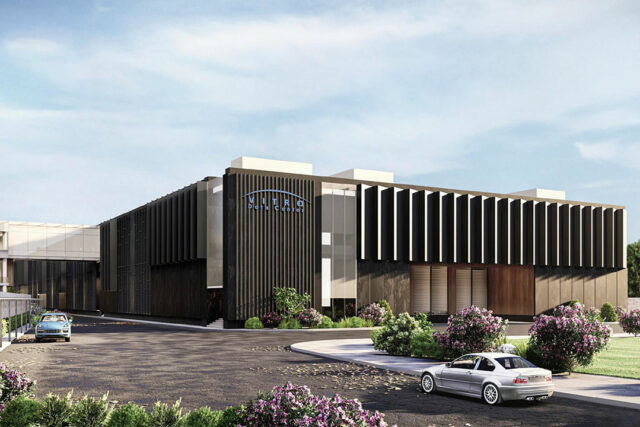
In April, PLDT inaugurated VITRO Sta. Rosa, its 11th data center.

The facility, located on a five-hectare site in Sta. Rosa, Laguna, is said to be the country’s largest data center campus, with a capacity of up to 50 megawatts (MW). Across all sites, VITRO data centers have a combined capacity of nearly 100 MW.

The company also said it is moving closer to building its 12th and largest data center. The facility will rise in General Trias, Cavite, and will have a capacity of up to 100 MW — double that of VITRO Sta. Rosa.

Hastings Holdings, Inc., a unit of the PLDT Beneficial Trust Fund subsidiary MediaQuest Holdings, Inc., holds a majority stake in BusinessWorld through the Philippine Star Group, which it controls. — Ashley Erika O. Jose

T-bill, bond rates may go down on easing hopes

BW FILE PHOTO

RATES of the Treasury bills (T-bills) and Treasury bonds (T-bonds) on offer this week could go down on monetary easing bets and as demand returns to normal following the end of the government’s public offering of five-year retail Treasury bonds (RTB).

The Bureau of the Treasury (BTr) will auction off P25 billion in T-bills on Monday, or P8 billion in 91-day and 182-day securities, and P9 billion in 364-day papers.

On Tuesday, the government will offer P25 billion in reissued 10-year T-bonds with a remaining life of nine years and eight months.

T-bill and T-bond yields could decline this week, mirroring the week-on-week decline seen at the secondary market, following dovish signals from the central bank chief, Rizal Commercial Banking Corp. Chief Economist Michael L. Ricafort said in a Viber message.

“The markets have been anticipating a possible 25-basis-point (bp) Bangko Sentral ng Pilipinas (BSP) rate cut as early as the next rate-setting meeting on Aug. 28, as supported by benign inflation recently,” Mr. Ricafort said.

Investors are also pricing in a possible 25-bp reduction from the US Federal Reserve in September, he added.

A trader said in an e-mail that the reissued 10-year bonds to be offered this week could see good reception and fetch rates ranging from 6% to 6.075%, broadly in line with secondary market levels.

At the secondary market on Friday, yields on the 91-, 182-, and 364-day T-bills went down by 7.83 bps, 5.09 bps, and 0.65 bp week on week to close at 5.2921%, 5.5066%, and 5.6592%, respectively, according to PHP Bloomberg Valuation Service Reference Rates data published on the Philippine Dealing System’s website.

The 10-year bond’s rate also declined by 5.91 bps week on week to end at 6.0657%.

Last week, BSP Governor Eli M. Remolona, Jr. said a rate cut is “quite likely” at the Monetary Board’s next meeting on Aug. 28 as inflation is likely to settle within its annual target.

The central bank has so far lowered borrowing costs by a total of 125 bps since it began its easing cycle in August last year to bring the benchmark rate to 5.25%.

Mr. Remolona said they are expecting to deliver two more rate cuts this year. However, he noted that the possibility of three rate cuts is “unlikely.”

After the Aug. 28 meeting, the BSP will have two more policy meetings before the end of 2025.

Philippine headline inflation slowed to a near six-year low of 0.9% in July, marking the fifth straight month that inflation settled below the central bank’s 2-4% target range.    

For the first seven months of the year, inflation averaged 1.7%.

Mr. Ricafort added that the closure of the government’s RTB offer on Friday, which temporarily affected market liquidity, as well as a recent bond maturity could lead to better demand and lower yields this week.

The government raised an initial P210 billion from its offer of five-year RTBs at the rate-setting auction held on Aug. 5, with tenders reaching P354.175 billion.

The notes are priced at 6% per annum, payable quarterly.

The public offer period ran from Aug. 5 to 15, while settlement is on Aug. 20.

The government has not announced the final issue size for its latest tranche of retail bonds. National Treasurer Sharon P. Almanza earlier said the government is aiming to raise P300 billion in fresh funds from the RTBs, excluding the volume generated through the bond exchange offer program.

Last week, the government raised P25 billion as planned from the T-bills it auctioned off as the offer was almost four times oversubscribed, with total bids reaching P94.926 billion.

Broken down, the Treasury borrowed P8 billion as planned via the 91-day T-bills as total tenders for the tenor reached P30.47 billion. The three-month paper was quoted at an average rate of 5.287%, down by 3.1 bps from the previous auction. Yields accepted ranged from 5.21% to 5.318%.

The government also raised P8 billion as programmed from the 182-day securities as tenders amounted to P33.45 billion. The average rate of the six-month T-bill was at 5.506%, declining by 2.9 bps, with accepted yields ranging from 5.448% to 5.533%.

Lastly, the Treasury sold the planned P9 billion in 364-day debt as demand for the tenor totaled P31.006 billion. The average rate of the one-year T-bill dropped by 2.5 bps to 5.612%. Tenders accepted carried rates ranging from 5.6% to 5.638%.

Meanwhile, the reissued 10-year bonds on offer on Tuesday were last auctioned off on July 15, where the BTr raised P25 billion as planned at an average rate of 6.285%, below the 6.375% coupon.

The Treasury is looking to raise P185 billion from the domestic market this month, or P125 billion through T-bills and P60 billion via T-bonds.

The government borrows from local and foreign sources to help fund its budget deficit, which is capped at P1.56 trillion or 5.5% of gross domestic product this year. — Aaron Michael C. Sy

AI, language training to address skills gaps in Philippine labor market — MMDC

MMDC CHIEF LEARNING OFFICER and Ayala Education Co-founder Derrick Latreille

By Beatriz Marie D. Cruz, Reporter

MAPÚA MALAYAN Digital College (MMDC) said it is expanding its micro-credential programs with courses in English proficiency and artificial intelligence (AI) to help Filipino workers address skills gaps in the technology-driven labor market.

The upcoming courses will focus on training and exam preparation for the International English Language Testing System (IELTS), certification for English as a Second Language (ESL) instructors, and an introduction to AI, MMDC Chief Learning Officer and Ayala Education Co-founder Derrick Latreille said in an interview with BusinessWorld.

“As technology disrupts the labor market faster and faster, people need quicker, more nimble ways to skill themselves up and move into better-paying jobs and better careers,” Mr. Latreille said.

“We’ve gotten overwhelming demand for ESL, so we’re going to offer a micro-credential certification to qualify someone as an ESL instructor,” he added.

MMDC will also offer micro-credential courses for those taking the IELTS, particularly individuals aiming to work, study, or migrate to English-speaking countries, he said.

Meanwhile, its AI certification course is intended to help learners transition from basic to advanced use of AI technologies.

“We’ve put together an AI micro-credential [course] from multiple providers that addresses the awareness gaps people have around which AI [tools] they need to know, and the skill gaps,” Mr. Latreille said.

By September, MMDC will also implement a more affordable pricing scheme in response to public demand, he said.

“We saw that people wanted lower, more broken-down prices. So, starting in September, all our courses will cost no more than P5,000 to get started,” Mr. Latreille said. “The modules that follow will usually be about P1,000 to P3,000.”

MMDC offers flexible, industry-recognized certification programs as workers navigate technological disruptions in the post-pandemic workplace. It operates under Mapúa Malayan Colleges Laguna, a sister school of Mapúa University.

Mapúa is the flagship university of listed company iPeople, Inc., a joint venture between the Yuchengco-led House of Investments and Ayala Corp.

The MMDC Certification Programs currently offer five courses: Virtual Assistance, Meta Social Media Marketing, Google Digital Marketing and E-Commerce, Adobe Content Creation, and IBM Data Analytics.

“We just launched in April, so what we’re working on and ironing out is what the experience has been [for our enrollees, and] what support they need,” Mr. Latreille said.

“By October, November, and December, we’re going to be taking off at high speed. I would expect there will be about a thousand people enrolling in that timeframe.”

MMDC’s certification programs are fully online, catering to the needs of both full-time and working students. They are accessed through Coursera, a global online learning platform, providing self-paced learning modules, AI learning tools, and student monitoring.

Upon completing a course, MMDC can provide additional support such as building graduates’ curriculum vitae, preparing them for interviews, and connecting them with prospective employers.

To enroll in a certification program, an applicant must be at least a high school graduate, whether pre-K-12 or K-12. Enrollment is open from the 1st to the 20th of each month, while classes begin on the 1st of the succeeding month.

Most of MMDC’s students already have work experience and are aiming for promotions, while others enroll to increase their chances of being hired, Mr. Latreille said.

“One of the things that surprised us is we thought most of the people signing up would be looking for new jobs, but that’s actually the minority. A lot of them are looking to upgrade their skills for a future promotion,” he added.

About 68% of Filipinos need training to meet evolving skill demands, with two-thirds of Philippine employers identifying skills gaps as a barrier in the labor market over the next five years, the World Economic Forum (WEF) said in its 2025 Future of Jobs Report.

By 2030, the most in-demand skills among employers globally will include AI and big data, networks and cybersecurity, technological literacy, creative thinking, resilience, flexibility and agility, and curiosity and lifelong learning, WEF said.

“Some of my friends in the BPO (business process outsourcing) space recently told me that they’re finally seeing AI handle low-level phone calls. So, people in the BPO space need to start looking at other options, like, ‘How can I skill up to move into other spaces?’” Mr. Latreille said.

The gig economy also serves as a key market for MMDC, he noted, as many types of gig work opportunities focus on an individual’s micro-credentials and value-added skills.

“First, it was the OFWs (overseas Filipino workers), then it was the BPOs, and now, I think gig work is the third wave of labor in the Philippines,” he said. “Preparing people for lots of gig work will be a big opportunity for micro-credentials to enable them to participate in it.”

As the Philippine job market evolves, MMDC expects greater demand for micro-credential programs as workers and employers alike seek to address the country’s digital skills gap.

“There will be a lot of people looking for better jobs, and they don’t have the time and money to make college work,” Mr. Latreille said. “At the same time, you might have a college degree but you see the labor market shrinking for that degree because of things like AI.”

For Mr. Latreille, what sets MMDC’s certification courses apart is the involvement of tech leaders such as Google and Meta.

“We’re letting the labor market lead us in what we offer, because we see ourselves as facilitators here rather than the teachers.”

Workhorse racing

PHOTO BY KAP MACEDA AGUILA

The TGR Philippine Cup season wraps up; Tamaraws unleashed

FOR THE FIRST time in quite a while, the weather was not just cooperative but almost embarrassingly perfect on race day for the final round of the Toyota Gazoo Racing (TGR) Philippine Cup 2025.

It was neither hot nor rainy — two extremes that had seemed to define the previous legs stretching back to the previous season. Given this blessed break, racers, participants, spectators, and yes, even members of the media and content creators had a field day to take in the spectacle of Race Weekend 3 (RW3).

The 11th season of what was once known as the Vios Cup showed that the race has truly gone a long way and today means a lot of things to a lot of people. The one-make, grassroots racing series has always stood as a sort of low-hanging fruit for those wanting to scratch an itch to race on the track through Toyota’s best-selling, ubiquitous, and time-tested sedan — while serving up the action to racing fans of all ages for absolutely free. The most recent iteration has shown it to be much more than a stage for the Vios.

Indeed, this season had a lot of highlights, milestones, and enhancements. Speaking at a presser in between race heats, Toyota Motor Philippines (TMP) Assistant Vice-President for Marketing Services Department Andy Ty said that among the changes made this year to the series is the addition of the Legacy Class. “That has added more excitement,” he maintained, “especially for the owners of the older Vios Cup cars that have been out of commission for a couple of years.” Another big change is the return of the street race. The on-road edition of the race, last seen seven years ago, was brought back in a big way with Race Weekend 2 (RW2) slated at the Villar City in Cavite last May. A sizeable crowd of 12,000 took in the action, which brought not only racing but entertainment, and other activities much closer to communities, compared to the usual haunt at the Clark International Speedway in Pampanga.

Having said that, RW3, now back at Clark, saw a record-breaking number of cars — around 70 — on the grid at various times to participate in the races. Add to this the exciting showcase vehicles: GR Yaris, GR Supra, and GR 86, some of which were modified by TMP partner, speed shop Autoplus.

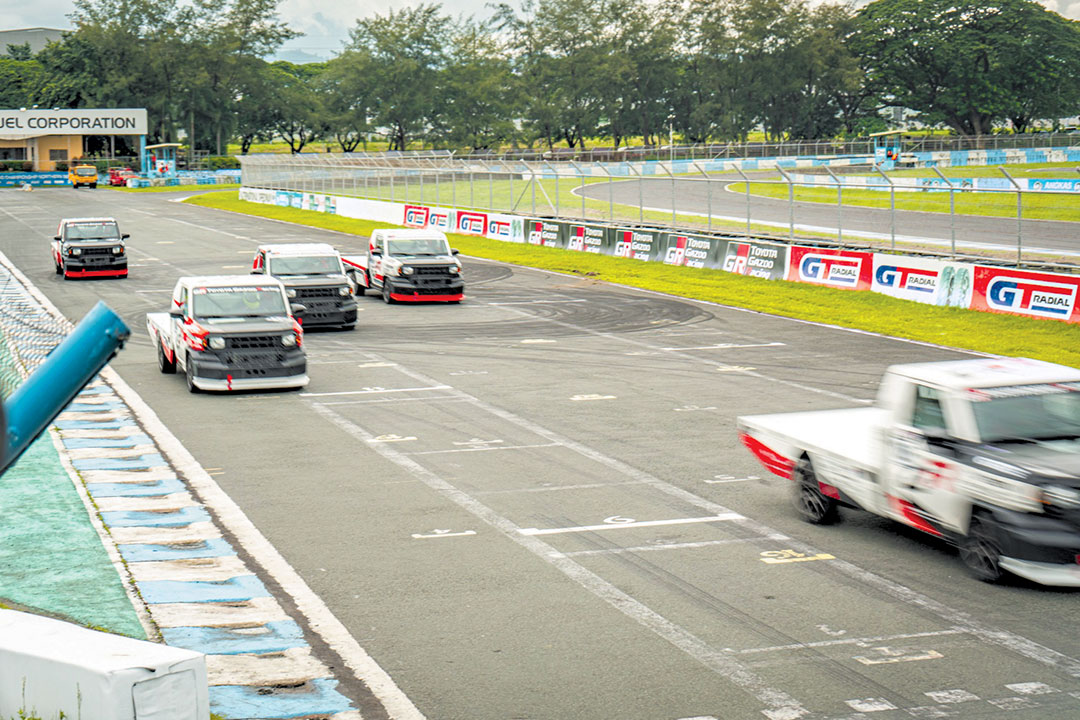
Aside from being the culminating series of races for the various categories, RW3 featured the first-ever sprint race participated in by, yes, specially constructed new-generation Toyota Tamaraw units. “A lot of effort has been put into developing the vehicles and, of course, modifying them, shared Mr. Ty.

Speaking to this writer, Luis Gono of Autoplus revealed the range of modifications made on the Tamaraws conscripted into the sprint race. “It’s the same intake, same intercooler, same exhaust (versus the Tamaraw Concept first seen in Villar City).” However, the ECU, crucially, has not been remapped.

“The underchassis is where a lot of the improvements happened, Mr. Gono continued. “We have installed suspension from TCD (Toyota Customizing and Development Co., Ltd), which was formerly TRD (Toyota Racing Development), TCD LSD (limited slip differential), and lowering blocks from TCD as well,” he elaborated. “Inside are Sparco bucket seats, a Schroth safety harness, and TCD roll cage. We swapped in the Hilux instrument cluster, too, so that there’s an RPM indicator; and brake pads are by TCD as well, made by Project Mu.”

The overall look of the race-ready Tamaraw was completed with Rota-brand wheels, GT Radial SXR tires, a front lip by TCD, and the inclusion of mandatory safety equipment such as a fire extinguisher and killswitches on the outside and inside.

The output is almost stock, with Mr. Ty estimating the maximum power gain at around 5hp. This was deliberate, according to Mr. Gono. “We wanted to push the handling first and the corner speeds. We still think there’s time left before we start experimenting with a remap. But we have been pleasantly surprised with the performance.”

Interestingly, ahead of the Tamaraw sprint race, a souped-up Tamaraw handily beat an unmodified GR 86 in a drag race. That version of the workhorse, revealed Mr. Gono, was “a super pickup concept” built by Autoplus. The output of the manual-transmission Tamaraw was a robust 335whp via a compound turbo setup. That specimen’s ECU was tuned by Constant Racing, producing a hefty 700Nm.

This is obviously serious stuff for an unlikely track tamer. Where is this all headed?

Mr. Ty announced, “We are planning to make the Tamaraw one-make race an entirely separate class for next year. The Vios will (have the) standard classes that you see from this season. But we do plan to add for the Tamaraw. How these will mesh together is something that we are discussing, and we hope to have at least 30 cars on the grid, if possible.”

As with the Vios Cup cars, TMP is planning to offer race-ready units of the Tamaraw. “If anyone is interested (to purchase) the vehicle, we are currently working on a way to provide a complete package. It should be ready by the time the next season starts,” he concluded.

(To be continued next week)

Bringing Philippine design to Milan

FOUR CURATED WORKS from the delegates for the FASHIONPhilippines Milan Mentorship Program 2025.

Mentorship program builds on lessons learned here

TWELVE DESIGNERS are going to Milan this year for a mentorship program, culminating in a three-day exhibition in Fondazione Sozzani in Milan from Sept. 23 to 25.

The 12 delegates were announced in a press conference at Hotel Benilde in Manila on Aug. 11. They are a mix of young and established names: Adam Pereyra, Joseph Bagasao, Jo Ann Bitagcol, Tessa Nepomuceno, Carl Jan Cruz, Ched Dalogaog, Steffi Cua, Jerome Lorico, Renz Reyes, Gabby Garcia, Thian Rodriguez, and Vania Romoff.

The designers will be sent to Milan under the FASHIONPhilippines Milan Mentorship Program 2025, in cooperation with the Center for International Trade Expositions and Missions (CITEM), the Philippine Textile Research Institute of the Department of Science and Technology (DOST-PTRI), the Philippine Fashion Coalition (PFC), and the LIT Fashion Consultancy.

The mentorship journey began right here in Manila, where a roster of local mentors had been guiding the delegates even before they set out for Italy.

“The mentor program was designed in order to address all the important aspects of the business of fashion,” said Program Co-organizer Tetta Ortiz-Matera of LIT Fashion Consultancy. “We specifically chose mentors who really champion small brands.”

Ms. Ortiz-Matera provided insights on collection curation and exhibition readiness, while stylist Ryuji Shiomitsu shared expertise on conceptual coherence and storytelling. Resource speakers Pam Quiñones and Trickie Lopa, shared their insights on striking the balance between staying true to Filipino roots while creating collections with international appeal.

Carmina Sanchez-Jacob of FASHx offered guidance on market positioning, pricing structures, and target demographics to ensure the collections are commercially viable. Rhea Matute, executive director of the Design Center of the Philippines, emphasized the delicate balance between creativity, innovation, sustainability, and marketability.

For brands requiring initial public offering registration and formal brand development, designer and educator Esme Palaganas gave advice, while Paolo Reyes of Monday Off lent his expertise in strengthening the designers’ social media content and digital presence. Complementing these creative and business-focused sessions, DOST-PTRI Director IV Dr. Julius L. Leaño, Jr. provided specialized mentorship on Filipino textile innovation.

In Milan, they will be taught by an eight-member panel of fashion leaders. The lineup, led by Sara Sozzani-Maino, creative director of Fondazione Sozzani and Milan Fashion Week International New Talent and Brand Ambassador, includes Riccardo Grassi, Niccolo Pasqualetti, Riccardo Terzo, Silvia Bertocchi, Ryle Tuvierra, Giulia Demitri, and Helena Boissonnas.

Ms. Ortiz-Matera said that the 12 designers/brands were chosen by the Italian mentors: “Most, if not all the jury panel found that they were very Filipino, but they were not traditional. It was so important for them, for the brands, to have a story to tell. That was, I think, the main reason why they were all selected.”

This program seems to be a culmination for Ms. Ortiz-Matera’s projects, dating back to before the pandemic where designers would attend talks from international buyers giving advice on better marketability abroad. These were accompanied by numerous pop-ups, seminars, and shows abroad, with the goal of helping Filipino designers not just to show, but to sell.

“When you do shows abroad — you get publicity and all that — but after the show, there’s no sales showroom, there are no buyers coming. That component kind of gets lost in translation,” she told BusinessWorld.

“I wanted to put together a project that encompassed the whole business of fashion,” she said. “Is it a culmination? I don’t want to say culmination. There’s more.”

Meanwhile, in a speech at the presentation, Trade and Industry Secretary Cristina Roque urged the designers: “Make your mark. Represent our culture with pride. Remember: you are not just going to Milan as designers. You are going as storytellers, ambassadors, game changers, and the representative of the Republic of the Philippines.” — Joseph L. Garcia

After the Alaska disappointment: 10 ways to force Putin back to the bargaining table

VLADIMIR PUTIN — COMMONS.WIKIMEDIA.ORG

By James Stavridis

Vladimir Putin came to Alaska and got the red-carpet treatment, complete with a fighter-jet flyover and a warm presidential handshake. The state was an ironic location for a summit given Russia’s continuing seller’s remorse over having sold it to America in the mid-19th century. While expectations were low for a full ceasefire, most observers were hoping for at least a path to negotiations.

But as he has for months now, Putin simply continued to play rope-a-dope like a boxer in the ring, ducking both a ceasefire or even a demonstrated willingness to negotiate. A subdued President Donald Trump canceled a planned luncheon to discuss broader economic and security issues with Russia, uncharacteristically refused to take questions, and flew back to DC to ponder next steps.

Clearly, it’s going to take “severe measures,” to use Trump’s own words, to get Moscow not to just sit at the bargaining table but stay for dinner.  But what measures need to be up for discussion to convince the maximalist Putin to reduce his demands? Is there a specific checklist?

Ordered in ascending amount of pain for Moscow, here are 10 options the White House, acting in concert with European allies, should strongly consider:

1. Increase the number of F-16 aircrafts to Ukraine to at least 100.

This would be triple the number of Ukrainians undergoing fighter training and provide commensurate air-to-air, air-to-ground, and electronic warfare capabilities. This should be done by a joint US-European Union task force under the direction of the supreme allied commander of NATO.

2. Quadruple the number of long-range, surface-to-surface weapons provided to Ukraine.

The US High Mobility Artillery Rocket System is the gold standard, but European defense forces also have powerful capabilities in this area. Assign this to the EU as lead, with purchases of both US and European weapons in the mix.

3. Provide highly precise targeting intelligence for these missiles to Ukraine, with a detailed focus on Russian logistics systems.

The US has spent decades studying how to reverse-engineer military logistic chains to find the critical nodes and destroy them, rendering the supply chain useless. Assign this targeting effort to a combined task force of US Transportation Command and US Strategic Command, both run by two combat commanders with deep experience.

4. Begin sharing technology and hardware of unmanned vehicles between the EU, US, and Ukraine.

Put particular emphasis on maritime unmanned systems (air, surface, and subsurface). Target the remaining ships of the Russian Black Sea Fleet. Use the US Navy’s expert Task Force 59, based in the Arabian Gulf, which has experimented with maritime unmanned warfare extensively.

5. Confiscate the $300 billion in Russian assets in Western banks, including the $10 billion in US institutions.

Then, use the money to set up a trust fund, of which the profits are applied to Ukrainian defense spending in perpetuity. Have a joint US-EU team of expert financiers manage the investment of the funds, the way that the board of directors at a large foundation does.

6. Immediately apply secondary sanctions on global purchases of Russian oil and gas.

These must be universally placed on any nation doing business, including China. Track and impound the Russian “shadow fleet” that is engaged in such activities, with an eye toward confiscating at least 10 such tankers each month.

7. Provide NATO-like security guarantees to Ukraine (but without fully bringing them formally into the alliance).

Expand NATO cooperation with every element of the Ukrainian military, especially through the NATO Centers of Excellence, e.g., NATO Cooperative Cyber Defense in Tallinn, Estonia; Air Operations in Lyon, France; and Maritime Security in Istanbul.

8. Send European military training and advisory troops into Ukraine.

Target an initial force of 5,000 experts, with self-protection capability working at all levels (with higher priority than that of tactical, front-line) with the Ukrainian military. Focus on intelligence, unmanned vehicle warfare, cybersecurity, maritime warfare, and logistics. This would be an EU military mission akin to the counter-piracy or Balkan security efforts the European’s routinely execute.

9. Plan and execute a no-fly zone over Ukraine.

It would be defensive in nature but include air assets for every NATO nation and operate under the control of the supreme allied commander of the alliance through a task force set up at Ramstein Air Base in Germany. About 100 combat aircraft, including the dedicated NATO Airborne Early Warning and Control System (E-3 Sentry) force, would help maintain the zone.

10. Formally admit Ukraine into the NATO Alliance.

Obviously, this would be a “nuclear option,” and there would be difficulty getting it through the NATO formal process. (Look at the one-year delay to admit Finland and Sweden, the ultimate no-brainers.) But as the ultimate threat to Putin, it would be powerful.

As Trump and his team consider their options to put sufficient pressure on Putin, the items on this list could be initially threatened and deployed one-by-one as necessary. And certainly, Ukraine conceding some of its territory already in Russian hands would have to be part of a final agreement.  There are carrots as well as sticks to be used on Moscow, including sanctions relief and the return of their funds. But more sticks appear to be needed to get Putin to make a deal.

BLOOMBERG OPINION


James Stavridis is dean emeritus of the Fletcher School of Law and Diplomacy at Tufts University. He is on the boards of Aon, Fortinet, and Ankura Consulting Group.

Palay farmgate price falls 33.5% in July

A farmer dries rice grains in Baliuag, Bulacan, Oct. 9, 2023. — PHILIPPINE STAR/KRIZ JOHN ROSALES

THE average farmgate price of palay (unmilled rice) fell 33.5% year on year in July to an average of P16.40 per kilo, the Philippine Statistics Authority (PSA) said. 

Month on month, the average palay farmgate price fell 3.5% compared to June, the PSA said in a report.

The July decline was steeper than the 31.8% year-on-year decline recorded in June.

In July 2024, the farmgate price averaged P24.68 per kilo.

None of the 15 rice-producing regions posted year-on-year growth in average farmgate prices last month.

The highest palay prices were posted in the Bangsamoro Autonomous Region in Muslim Mindanao (BARMM) at P20.36, against the month-earlier P19.96 and the year-earlier P26.28.

The lowest palay prices were logged in Calabarzon at P11.15, with the farmgate price in the region falling 45% year on year and 10.9% month on month.

In Central Luzon, the average farmgate price was P13.26, down from P24.43 a year earlier and P14.51 a month earlier.

The Department of Agriculture (DA) said in a statement that palay prices had increased in some areas a week after President Ferdinand R. Marcos, Jr. announced a two-month suspension of rice imports starting Sept. 1.

“Farmgate prices of palay have begun to rise in six of the 13 key rice-producing regions,” the DA said, citing the National Food Authority.

Traders’ buying prices for dry palay increased between 0.3% and 2.6% since late July in Central Luzon, Bicol, the Central Visayas, and parts of Mindanao, it said.

Average prices ranged from P16.98 per kilo in Central Luzon to P20.59 in Southern Mindanao. Prices held steady at P16.52 in Southern Tagalog and P17.60 in the Western Visayas.

But the DA said prices dropped sharply in Ilocos, Cagayan Valley, Eastern Visayas, Northern Mindanao, and the Bangsamoro region, “with the lowest at P14.43 per kilo in Cagayan Valley and the highest at P21.67 in BARMM.”

Citing Agriculture Secretary Francisco P. Tiu Laurel, Jr. the DA said the government was “closely monitoring market reactions to the impending import ban,” which was ordered after reports showed palay prices dropping to as low as P8 per kilo, which was well below the estimated production cost of around P12 per kilo for the most efficient farmers.

“We are watching the market’s response to the rice import suspension very closely,” Mr. Laurel said.

“If palay prices remain low during the ban, we may consider extending it, or recommend that President Marcos increase tariffs. And if prices of palay rise, we could shorten the ban,” he added. — Kyle Aristophere T. Atienza

Peso may be range-bound as mart awaits policy hints from Fed chief

BW FILE PHOTO

THE PESO could continue to move sideways against the dollar this week as markets monitor developments at the US Federal Reserve as the Trump administration continues to pressure the central bank to cut interest rates.

On Friday, the local unit closed at P57.065 per dollar, weakening by 12 centavos from its P56.945 finish on Thursday, data from the Bankers Association of the Philippines showed.

Meanwhile, week on week, the peso inched up by 4.5 centavos from its P57.11 close on Aug. 8.

The peso dropped on Friday as the dollar gained early in the session on faster-than-expected July US producer inflation data, which tempered Fed rate cut expectations, Rizal Commercial Banking Corp. Chief Economist Michael L. Ricafort said in a Viber message.

“The dollar-peso closed higher after stronger than expected US producer price inflation (PPI) data brought down Fed cut bets,” a trader likewise said in a phone interview on Friday.

The dollar held on to previous session gains early on Friday after hotter-than-expected inflation data prompted traders to trim wagers on rate cuts by the Fed, Reuters reported.

Overnight, markets had to contend with US producer prices showing the quickest rise in three years in July amid a surge in the costs of goods and services, pointing to a broad pick up in inflationary pressures which analysts say could pose a dilemma for the Fed.

The hot measure of producer price inflation followed a comforting consumer inflation outcome earlier in the week which had boosted expectations of policy easing in the world’s largest economy and helped lift risk assets across the board. Odds of a 25-basis-point cut by the US central bank retreated slightly after the producer price figures, per CME’s FedWatch tool.

Markets also await this week’s Jackson Hole symposium, where Fed Chair Jerome H. Powell will give a speech, for clues on the Fed’s next move. Signs of weakness in the US labor market combined with any inflation from trade tariffs could present a dilemma for the Fed’s rate cut trajectory.

For this week, the trader said the peso could continue trading sideways against the dollar ahead of the release of the minutes of the Fed’s latest policy meeting.

“Markets are also awaiting developments if the Fed chair will be replaced,” the trader said.

The trader sees the peso moving between P56.80 and P57.30 against the dollar this week, while Mr. Ricafort expects it to range from P56.70 to P57.30. — A.M.C. Sy with Reuters

AEV regains top spot in power generation with 23.9% share

JEROME CMG-UNSPLASH

ABOITIZ EQUITY VENTURES, INC. (AEV) regained its position as the country’s largest power producer this year, accounting for 23.86% of the national grid’s installed generating capacity, data from the Energy Regulatory Commission (ERC) showed.

AEV recorded the highest installed generating capacity nationwide at 6,774 megawatts (MW), based on ERC data as of July 2025.

By grid, the company had an installed capacity of 5,568 MW in Luzon, 567.7 MW in the Visayas, and 638.83 MW in Mindanao.

San Miguel Corp. (SMC), which overtook AEV last year, ranked second with a total capacity of 5,710 MW, equivalent to a 20.11% share of the national grid.

Lopez-led First Gen Corp. secured third place with 3,524 MW of installed capacity, representing a 12.41% share.

Pangilinan-led Manila Electric Co. held the fourth spot with a market share of 8.06%, or 2,288 MW of capacity.

Ayala Corp., which controls renewable energy developer ACEN Corp., accounted for 5.2% of the national grid with 1,478 MW of installed capacity.

Under Republic Act No. 9136, or the Electric Power Industry Reform Act of 2001, no company may own, operate, or control more than 30% of the installed generating capacity per grid and 25% nationwide.

The ERC sets the thresholds for installed generating capacity and market share limitations annually, which may be adjusted as necessary based on the maximum capacity of generation facilities.

In a resolution dated July 30, the ERC set the maximum installed generating capacity of the national grid at 28,390 MW, higher than the 27,096 MW initially set for the year.

The regulator said the adjustment was necessary due to the entry of new generation facilities with newly issued certificates of compliance or provisional authorities to operate, as well as changes in maximum capacity.

The ERC set the maximum allowable capacities per grid at 20,659 MW for Luzon, 3,443 MW for the Visayas, and 4,288 MW for Mindanao.

Each power generation company may not exceed 7,098 MW nationwide, 6,198 MW in Luzon, 1,033 MW in the Visayas, and 1,286 MW in Mindanao.

The ERC said the adjusted caps will remain in effect until the next review, which may take place on or before March 15, 2026, or as the need arises. — Sheldeen Joy Talavera

Electric flex

From left are United Asia Automotive Group, Inc. (UAAGI) Chief Marketing Executive Lyn Manalansang-Buena; Foton Motor Philippines Deputy Sales Director Joshua Sytin; and Foton Motor Philippines General Manager Levy Santos. — PHOTO BY KAP MACEDA AGUILA

Foton PHL showcases all-BEV CV lineup

By Kap Maceda Aguila

THE PATH to motoring electrification is getting increasingly well-paved — and wider — all the time, as more brands and their fully electric models are filling up various vehicle categories, from small passenger cars all the way up to large tractor heads. It’s starting to look like an embarrassment of EV (electric vehicle) riches, even if it seems we are still wanting in terms of charging infrastructure rollout and ubiquity.

That was the veritable crux of the message from Foton Motor Philippines recently, which hosted an event right at its assembly facility in the Clark Freeport Zone. Dubbed “EV Forward,” it was a chance for the Chinese brand with a considerable presence and history in the country (including its production line) to collect and flex all of its battery electric vehicle offerings.

Foton Motor Philippines Deputy Sales Director Joshua Sytin, in a speech, described the event as a “glimpse into the future of transport logistics — one that is cleaner, smarter, and more sustainable.” He stressed that the company’s “commitment doesn’t stop at delivering electric vehicles. We are dedicated to providing a complete ecosystem designed to support… operations with integrated, future-ready solutions.”

Among the models on display was the huge Foton EST 6×4 Tractor Head EV, a heavy-duty puller with a 282-kWh battery. It enlists 483hp and 2,100Nm to tow a maximum of 45,000kg. Foton reported that DC (direct current) charging to full capacity can take as short as one hour, 40 minutes (at 160kW), with range stretching to 200 kilometers. The Foton Tornado 3.6 EV, on the other hand, is a full-electric light-duty truck outputting 154hp and 300Nm from its 81.14-kWh battery. Driving range is 208 kilometers; payload capacity is 3,600kg. The Foton Transvan HR Cargo EV is able to accommodate up to 1,100kg of payload. Peak output is 114hp/290Nm, with a driving range of 195 kilometers.

The Foton Harabas TM300 EV, a full-electric light commercial vehicle, gets a 39.64-kWh battery which realizes 101hp and 220Nm from the electric motor. Driving range is 220 kilometers, while payload capacity is at 1,340kg. Using an 80-kW DC charger, its battery can be completely charged in 30 minutes. The Harabas is also configurable depending on the “dry” cargo. “Velocity” asked if a fully electric refrigerated van is available as a custom order. At the moment, the Harabas unit cannot support this yet (due to the cooling unit’s massive energy demand), but there are Foton “reefer van” models in China that are being studied for import into the country, according to officials.

Lastly, the Foton Traveller Sierra EV is a full-electric, 12-passenger van boasting up to 303 kilometers of range. Powered by a 77.28-kWh battery, its motor generates a maximum of 135hp and 330Nm, and can be charged to full in as little as 55 minutes via an 80-kW DC charger.

Foton Motor Philippines General Manager Levy Santos said to guests that the brand “stands at the forefront of sustainable transport solutions and a leading proponent of full electric vehicle solutions for both businesses and communities. Our vision is clear: to provide mobility that not only drives productivity but also protects the environment, reduces fuel costs, and minimizes maintenance expenses — empowering enterprises to achieve greater operational efficiency while contributing to a cleaner, greener future.”

The marque’s selection of battery electric vehicles are said to be able to empower enterprises while reducing their environmental impact, and “drive long-term business value.” Foton Motor Philippines is also set to bring in the full-electric Foton Bus, which can ferry 33 passengers (excluding the driver) as far as 350 kilometers per full charge. The 200.54-kWh battery — which can be charged to 100% in as fast as an hour and 15 minutes via 160-kW DC charging — delivers 248hp and 2,100Nm.

With a perceived range of benefits over their internal combustion engine counterparts, these full-electric models are expected to test not just the readiness of entrepreneurs and firms to the idea of full-electric workhorses, but should help further raise awareness of — and speed up the charging infrastructure development for — electric vehicles.