Home Blog Page 7715

GCash named ‘Outstanding Partner’ at the BSP stakeholders appreciation ceremony 2021
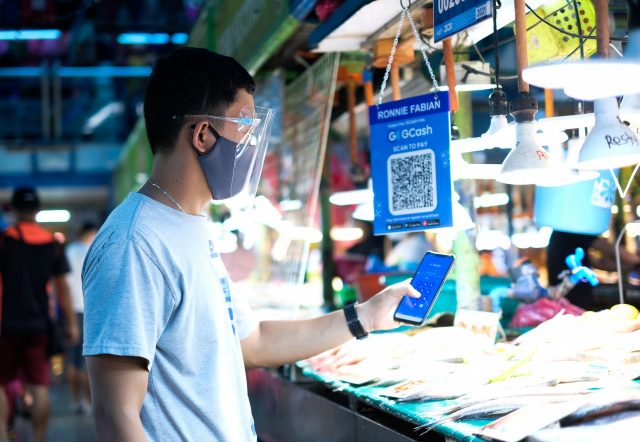
GCash, the undisputed no. 1 mobile wallet app in the Philippines, was named an “Outstanding Partner” by the Bangko Sentral ng Pilipinas (BSP) at this year’s Stakeholders Appreciation Ceremony for its innovative financial solutions to grant financial access to all Filipinos, especially the unbanked and underbanked segments.

“We are very honored to be named as one of the Outstanding Partners by the Bangko Sentral ng Pilipinas. At GCash, we have been working very hard to provide more relevant financial services and products to build a more inclusive financial ecosystem,” said Martha Sazon, GCash president and chief executive officer. “This recognition is an affirmation of our hard work to achieve finance for all.”

For this year, the annual BSP Stakeholders Appreciation Ceremony was done virtually.  With the theme “Pagpugay at Pagkilala sa Gitna ng Hamon ng Pandemya,” the awarding ceremony acknowledged the outstanding partners who have supported BSP’s various initiatives and advocacy programs especially during the pandemic.

“It has been more than a year since the pandemic began, and with cautious optimism, we can say that the worst is over. Though our economy received big blows because of the pandemic, we started green shoots of recovery as early as the third quarter of last year. This is because of a whole nation approach that we, which includes our partners, employed,” said BSP Governor Benjamin Diokno.

In support of BSP’s recovery efforts, including its vision of financial inclusion for Filipinos, GCash has launched a host of products and services at the height of the pandemic. On the app, users can enjoy GSave, an online savings bank; GInvest, an easy investment feature; GInsure for insurance for medical emergencies such as dengue, COVID-19, and accidents; GCredit, a personal credit line with up to P30,000 credit line and up to 3% prorated interest rate. GCash features GLife, the e-commerce feature on the GCash app  that allows users to shop exclusive deals from 35 brands across retail, food, gaming, entertainment, and transport.

To help mobilize the economy, GCash partnered with businesses and rolled out GCash QR on Demand. On the app, users can use the QR Code in place of their mobile number to send or receive money, whether for personal use or small businesses. These business partnerships include market vendors and customers, helping them have a safe and convenient payment method. GCash has also enabled 15,000 jeepney drivers to receive alternative income sources through the app and provides PUJ drivers and commuters with a safe and cashless transaction option amid the pandemic via P2P QR Codes on the GCash app.

Recently, GCash partnered with the BSP in launching a webinar series, which kicked off with the webinar entitled, “One with the Nation: Forging Public-Private Partnerships Towards Digital Inclusion in the Philippines.” The online event featured distinguished speakers from the public  and private sectors led by  Diokno, Sazon, Makati Mayor Abby Binay, Congressman Jose Enrirque Garcia, DSWD Director Wayne Belizar, BSP official Atty. Leah Irao, and Bureau of Treasury of the Philippines OIC Deputy Treasurer Ed Marino.

With its numerous programs and initiatives to promote digital transformation among Filipinos during the pandemic, the e-wallet app has grown its user base to more than 40 million, doubling the figure from 20 million users in January 2020.

For more information, visit www.gcash.com.

Tencent tumbles after China media calls online gaming “spiritual opium”

TRUSTPAIR.COM

SHANGHAI, Aug 3 (Reuters) – Tencent Holdings Ltd shares were on track to fall by their most in a decade on Tuesday after a Chinese state media outlet branded online video games “spiritual opium“, stoking concern that the sector may be next in regulators’ crosshairs.

China‘s biggest social media and video game firm saw its stock tumble more than 10% in morning trade, wiping almost $60 billion from its market capitalisation.

Shares of rival NetEase Inc slumped as much as 15.7%, while those of game developer XD Inc and mobile gaming company GMGE Technology Group Ltd also plunged.

State-run Economic Information Daily in an article on Tuesday said many teenagers were addicted to online video games and called for more curbs on the industry. The outlet is affiliated with China‘s biggest state-run news agency, Xinhua.

The newspaper repeatedly cited Tencent‘s flagship game, “Honor of Kings”, which it said was the most popular online game among students who sometimes played for up to eight hours a day.

“No industry, no sport, can be allowed to develop in a way that will destroy a generation,” the newspaper said, likening online video games to “electronic drugs”.

Tencent did not respond to a Reuters request for comment.

The government has vowed to strengthen rules around online gaming and education to protect child wellbeing. Last month, it banned for-profit tutoring in core school subjects, a move that threatens to decimate China‘s $120 billion private tutoring sector.

In online video games, authorities have sought to limit hours that teenagers can play, and companies including Tencent have implemented anti-addiction systems that they say cap young users’ game time.

The Economic Information Daily, citing legal experts and professors, said current curbs were not able to keep up with the sector’s development to prevent youth addiction, and that there should be more “mandatory means” to increase the social responsibility of video game companies.

Tencent has already been under pressure alongside major technology peers by increased regulatory action on online platforms. Last month, it was barred from exclusive music copyright agreements and fined for unfair market practices. – Reuters

ADB, Citi, HSBC, Prudential hatch plan for Asian coal-fired closures -sources

LONDON/MELBOURNE, Aug 3 (Reuters) – Financial firms including British insurer Prudential, lenders Citi and HSBC and BlackRock Real Assets are devising plans to speed the closure of Asia’s coalfired power plants in order to lower the biggest source of carbon emissions, five people with knowledge of the initiative said.

The novel proposal, which is being driven by the Asian Development Bank, offers a potentially workable model and early talks with Asian governments and multilateral banks are promising, the sources told Reuters.

The group plans to create public-private partnerships to buy out the plants and wind them down within 15 years, far sooner than their usual life, giving workers time to retire or find new jobs and allowing countries to shift to renewable energy sources.

It aims to have a model ready for the COP26 climate conference which is being held in Glasgow, Scotland in November.

“The private sector has great ideas on how to address climate change and we are bridging the gap between them and the official-sector actors,” ADB Vice President Ahmed M. Saeed said.

The initiative comes as commercial and development banks, under pressure from large investors, pull back from financing new power plants in order to meet climate targets.

Saeed said that a first purchase under the proposed scheme, which will comprise a mix of equity, debt and concessional finance, could come as soon as next year.

“If you can come up with an orderly way to replace those plants sooner and retire them sooner, but not overnight, that opens up a more predictable, massively bigger space for renewables,” Donald Kanak, chairman of Prudential‘s Insurance Growth Markets, told Reuters.

Coalfired power accounts for about a fifth of the world’s greenhouse gas emissions, making it the biggest polluter.

The proposed mechanism entails raising low cost, blended finance which would be used for a carbon reduction facility, while a separate facility would fund renewable incentives.

HSBC declined to comment on the plan.

Finding a way for developing nations in Asia, which has the world’s newest fleet of coal plants and more under construction, to make the most of the billions already spent and switch to renewables has proved a major challenge.

The International Energy Agency expects global coal demand to rise 4.5% in 2021, with Asia making up 80% of that growth.

Meanwhile, the International Panel on Climate Change (IPCC) is calling for a drop in coalfired electricity from 38% to 9% of global generation by 2030 and to 0.6% by 2050.


MAKING IT VIABLE

The proposed carbon reduction facility would buy and operate coalfired power plants, at a lower cost of capital than is available to commercial plants, allowing them to run at a wider margin but for less time in order to generate similar returns.

The cash flow would repay debt and investors.

The other facility would be used to jump start investments in renewables and storage to take over the energy load from the plants as it grows, attracting finance on its own.

The model is already familiar to infrastructure investors who rely on blended finance in so-called public-private deals, backed by government-financed institutions.

In this case, development banks would take the biggest risk by agreeing to take first loss as holders of junior debt as well as accepting a lower return, according to the proposal.

“To make this viable on more than one or two plants, you’ve got to get private investors,” Michael Paulus, head of Citi‘s Asia-Pacific public sector group, who is involved in the initiative, told Reuters.

“There are some who are interested but they are not going to do it for free. They may not need a normal return of 10-12%, they may do it for less. But they are not going to accept 1 or 2%. We are trying to figure out some way to make this work.”

Citi declined further comment.

The framework has already been presented to ASEAN finance ministers, the European Commission and European development officials, Kanak, who co-chairs the ASEAN Hub of the Sustainable Development Investment Partnership, said.

Details still to be finalised include ways to encourage coal plant owners to sell, what to do with the plants once they are retired, any rehabilitation requirements, and what role if any carbon credits may play.

The firms aim to attract finance and other commitments at COP26, when governments will be asked to commit to more ambitious emissions targets and increase financing for countries most vulnerable to climate change.

U.S. President Joe Biden’s administration has re-entered the Paris climate accord and is pushing for ambitious reductions of carbon emissions, while in July, U.S. Treasury Secretary Janet Yellen told the heads of major development banks, including ADB and the World Bank, to devise plans to mobilize more capital to fight climate change and support emission cuts.

A Treasury official told Reuters that the ADB‘s plans for coal plant retirement are among the types of projects that Yellen wants banks to pursue, adding the administration is “interested in accelerating coal transitions” to tackle the climate crisis.


ASIA STEPS

As part of the group’s proposal, the ADB has allocated around $1.7 million for feasibility studies covering Indonesia, Philippines and Vietnam, to estimate the costs of early closure, which assets could be acquired, and engage with governments and other stakeholders.

“We would like to do the first (coal plant) acquisition in 2022,” ADB‘s Saeed told Reuters, adding the mechanism could be scaled up and used as a template for other regions, if successful. It is already in discussions about extending this work to other countries in Asia, he added.

To retire 50% of a country’s capacity early at $1 million-$1.8 million per megawatt suggests Indonesia would require a total facility of roughly $16-$29 billion, while Philippines would be about $5-$9 billion and Vietnam around $9-$17 billion, according to estimates by Prudential‘s Kanak.

One challenge that needs to be tackled is the potential risk of moral hazard, said Nick Robins, a London School of Economics sustainable finance professor.

“There’s a longstanding principle that the polluter should pay. We need to make absolutely sure that we are not paying the polluter, but rather paying for accelerated transition,” he said. – Reuters

Qantas idles 2,500 more staff as COVID-19 cuts domestic flights

Aug 3 (Reuters) – Qantas Airways Ltd is temporarily idling about 2,500 employees without pay for at least two months in a bid to cope with fresh COVID19 restrictions in Australia slashing domestic travel demand.

The decision will directly impact domestic pilots, cabin crew and airport workers, mostly in New South Wales, the airline said on Tuesday, adding that no job losses were expected from the move.

Qantas said it had gone from operating almost 100% of its pre-COVID domestic flying capacity in May to less than 40% in July due to lockdowns meant to curb the rapid spread of the Delta variant of the coronavirus.

The country’s most populous city, Sydney, has been hit particularly hard by infections and will remain in lockdown for at least another three-and-a-half weeks amid a drive to get the population vaccinated against COVID19 as quickly as possible.

“Based on current case numbers it is reasonable to assume that Sydney borders will be closed for at least another two months,” Qantas Chief Executive Alan Joyce told reporters.

The affected domestic employees, who will join 6,000 colleagues furloughed in its international division due to border closures, will receive government-backed support payments of A$750 ($552.15) a week.

Qantas has around 22,000 employees in all.

The airline said it is aiming for domestic flying levels to improve to around 50%-60% of normal levels within a few weeks as some states reopen borders after exiting lockdowns that contained small outbreaks.

Qantas will not hibernate any of its domestic planes because it wants to be able to ramp up quickly as demand returns, with a goal of topping 100% of pre-COVID capacity by Christmas, Joyce said.

Its international fleet has been grounded since March 2020. The airline currently has many international flights on sale from late December, but Joyce said the status of those plans would depend on Australia’s vaccination rate.

The government set a target last week for 80% of adults to be fully vaccinated for a calibrated reopening of its international borders. Only around 18% are fully vaccinated currently.

Qantas shares were down 1.4% in early afternoon trade, underperforming a 0.3% drop in the broader stock market. – Reuters

S.Korea detects its first two cases of Delta Plus COVID-19 variant

SEOUL, Aug 3 (Reuters) – South Korea has detected its first two cases of the new Delta Plus COVID-19 variant, the Korea Disease Control and Prevention Agency (KDCA) said on Tuesday, as the country battles with its fourth wave of infections nationwide.

The Delta Plus variant is a sub-lineage of the Delta variant first identified in India, and has acquired the spike protein mutation called K417N, which is also found in the Beta variant first identified in South Africa.

Reports of Delta Plus cases have been few so far, and a handful of countries, including Britain, Portugal and India, have reported some cases.

“The first case (in South Korea) was identified in a man in 40s who has no recent travel records,” the KDCA told Reuters in a text message.

Test results in people who have been in contact with the man showed that a family member of his tested positive, but the KDCA did not confirm the patient was infected with Delta Plus.

“The second case was found in an overseas traveller,” KDCA said.

Health authorities have said several major vaccines work against the highly contagious Delta variant, which has already become dominant in many countries, but have raised concern new strains may evade some vaccines.

Some scientists have said the Delta Plus variant may be even more transmissible. Studies are ongoing in India and globally to test the effectiveness of vaccines against this mutation.

South Korea reported 1,202 new COVID-19 cases for Monday, raising the total to 202,203 infections, with 2,104 deaths.

The country on Tuesday said it has given 20 million people, or 39% of its population, at least one dose of a vaccine, while 14.1% have been fully vaccinated.

South Korea aims to immunise at least 36 million people by September. – Reuters

Nesthy Petecio settles for silver after close defeat to Irie

Sena Irie of Japan celebrates after winning her fight against Nesthy Petecio of the Philippines in Tokyo, Japan, Tuesday. REUTERS/Ueslei Marcelino

Filipina boxer Nesthy A. Petecio settled for a silver medal at the Olympics after bowing to Japanese Sena Irie by unanimous decision in the finals of the women’s featherweight boxing tournament at the Kokugikan Arena in Tokyo, Tuesday.

Ms. Petecio, 29, tried hard to get the gold with a more authoritative showing in the last two rounds but just could not get the nod of the judges in the end to lose, 5-0.

The Philippine bet was frustrated in the first round by the Japanese boxer’s continued holding and clinching to stop Ms. Petecio from gaining any momentum.

In the second and third rounds, Ms. Petecio did a better job landing more punches despite Ms. Irie’s attempts to slow down the contest.

On the scorecard, Ms. Irie won 29-28 in four judges while one scored it 30-27.

Ms. Petecio’s silver Olympic medal finish equals that achieved by Mansueto Velasco in 1996 in Atlanta and Anthony Villanueva in 1964 in Tokyo.

For her silver, Ms. Petecio is set to receive cash incentives from both the government and the private sector amounting to at least P17 million. – Michael Angelo S. Murillo

Carlo Paalam punches way to semi-finals, assured of an Olympic medal

Filipino boxer Carlo Paalam wins against Shakhobidin Zoirov of Uzbekistan in the men's flyweight boxing quarterfinals in Tokyo, Japan, Tuesday. REUTERS/Ueslei Marcelino

Filipino boxer Carlo Paalam advanced to the semi-finals of the Tokyo Games flyweight boxing tournament on Tuesday, assuring the Philippines will get another Olympic medal.

The 23-year-old Bukidnon native secured his spot in the final four after defeating defending Olympic flyweight champion Shakhobidin Zoirov of Uzbekistan by split decision on points, 4-0, in their quarterfinal clash at the Kokugikan Arena in Tokyo.

Mr. Paalam came out aggressive and took the fight to his opponent right at the opening bell, connecting with solid blows to the head and body en route to claiming the opening round.

In the second, the action continued to be frenetic with both fighters tagging one another with clear shots.

Unfortunately, midway into the round both boxers absorbed cuts after a head collision.

The ringside doctor checked on Mr. Zoirov before calling a halt to the fight.

Moments later, Mr. Paalam was declared the winner by split decision after the judges turned to the score cards.

The win assured the Philippines will get a fourth medal in the Olympic Games after the gold won by weightlifter Hidilyn F. Diaz and those of boxers Nesthy A. Petecio (gold or silver) and Eumir Felix D. Marcial (at least bronze).

In the semifinals set for Aug. 5, Mr. Paalam will face Ryomei Tanaka of Japan. – Michael Angelo S. Murillo

More Filipinos unemployed in June 

THE RANKS of jobless Filipinos and those employed but wanting more work increased in June, the Philippine Statistics Authority (PSA) reported earlier this morning.

Preliminary results of PSA’s June 2021 round of the Labor Force Survey (LFS) showed around 3.764 million unemployed Filipinos, up from 3.730 million in May.

Unemployment rate registered at 7.7% in June, unchanged from the previous month. The rise in unemployment despite a steady jobless rate can be explained by the increase in the participation rate, which indicates more Filipinos have entered the labor force.

Meanwhile, the underemployment rate — the proportion of those already working, but still looking for more work or longer working hours — worsened to 14.2% in June from 12.3% in May. This translates to 6.409 million underemployed Filipinos, up from 5.492 million in the preceding survey round.

The size of the labor force was approximately 48.840 million in June, up from 48.446 million in May. This brought the labor force participation rate to 65% of the country’s working-age population in June from 64.6% the previous month.

The employment rate remained steady at 92.3% in June. In absolute terms, however, the number of employed Filipinos went up to 45.075 million in June from 44.716 million previously.

The service sector made up 57.6% of total employment in June, slightly down from the 57.8% cited in May. The industry sector likewise saw its employment rate go down to 18.1% during the period from 18.4%.

Meanwhile, agriculture had an employment rate of 24.3%, up from 23.8%. — Bernadette Therese M. Gadon

July manufacturing activity extends glut

Filipinos work at an electronics factory in Malvar, Batangas, Aug. 10, 2018. — REUTERS/ERIK DE CASTRO

FACTORY ACTIVITY in the Philippines continued to expand in July, in contrast to the broad contraction in Southeast Asia where many economies are grappling with a fresh surge in coronavirus infections, a survey by IHS Markit showed on Monday.

The Philippine Manufacturing Purchasing Managers’ Index (PMI) stood at 50.4 last month, slipping from 50.8 in June but remained above the 50 neutral mark that separates contraction from expansion.

This marked the second month in a row the index showed an expansion after worsening in April and May.

Manufacturing Purchasing Managers’ Index of Select ASEAN Economies, (July 2021)

“Latest data revealed only a slight expansion in operating conditions across the Philippine manufacturing sector, with declines in output and new orders persisting in July,” IHS Markit said.

The Philippine manufacturing sector recorded the highest PMI among six Southeast Asian economies surveyed. Factory activity for the rest of the economies shrank in July — Thailand with 48.7, Vietnam with 45.1, Indonesia and Malaysia both with 40.1 and Myanmar with 33.5.

“Although the Philippine manufacturing sector recorded another improvement in operating conditions during July, latest data revealed domestic demand and production levels were still impacted by the pandemic,” Shreeya Patel, an economist at IHS Markit, said in the statement.

Filipino manufacturers continued to report lower new orders due to weak demand amid the ongoing health crisis and as consumers remained cautious in spending, according to IHS Markit.

This was offset by the improving external demand for local goods which rose for the third month in a row in July amid a better global economic landscape.

However, production continued to decline for the fourth straight month in July due to slow orders, but showed a slight improvement from June’s output.

Manufacturers laid off employees again for the 17th month in a row due to lower production and since past voluntary resignations were not replaced. IHS Markit noted that the decline in employment was the softest since March.

Longer supplier lead times were also recorded, which was attributed to shortages in raw materials and quarantine restrictions.

IHS Markit said buying activity improved for the second month in a row, with companies stocking up on their inventories in preparation for a possible shortage and in anticipation of greater demand in the near term.

On prices, producers expected inflation to remain high but slightly lower than the previous months, due to costlier raw materials and the imposition of the 12% value-added tax (VAT) on locally obtained inputs by exporters. The Bureau of Internal Revenue suspended the implementation of the VAT on local inputs last week.

“Similarly, factory-gate prices rose during the month, with panel members noting a partial pass-through of higher expenses and the impact of the introduction of VAT,” IHS Markit said.

An improvement in the country’s vaccination rollout boosted overall sentiment, IHS Markit said, adding that it prompted factories to increase their stock of raw materials and manufactured goods.

The survey showed manufacturers expect better output in the next 12 months, with sentiment reaching a four-month high on hopes increased vaccinations will help the economy normalize.

Introduction of new products and a rebound in client demand also contributed to better sentiment.

“Nevertheless, domestic demand must improve throughout the second half of the year to help underpin growth in 2021,” Ms. Patel said.

However, manufacturing conditions may deteriorate as Metro Manila and four other provinces will be under an enhanced community quarantine from Aug. 6-20 amid the Delta variant threat.

“The Philippines’ index was the only one that kept its head above water among the ASEAN economies we track closely. But it is likely to have entered into the red this month, in view of the preemptive restrictions the government will be instituting to mute the potential spike in Delta cases,” Miguel Chanco, senior Asia economist at Pantheon Macroeconomics said on Monday.

Rizal Commercial Banking Corp. (RCBC) Chief Economist Michael L. Ricafort said local manufacturing activities could slow during the lockdown.

“Going forward, risk of lockdown orders in the National Capital Region in an effort to help reduce new COVID-19 local cases that have been relatively higher on a daily basis recently… could result in slower recovery in production, sales, net income/livelihood, jobs and other economic activities, especially for hard-hit sectors,” he said in a note.

Meanwhile, lower infections and further reopening of the economy should improve manufacturing conditions in the country.

The Health department reported 8,167 COVID-19 infections on Monday, bringing the number of active cases to 62,615. — Beatrice M. Laforga

House panel approves measure to scrap tax hike on private schools

REUTERS

By Russell Louis C. Ku

THE HOUSE Committee on Ways and Means on Monday approved a proposed law that scraps a 150% tax hike on private schools.

In a hearing, the panel approved the committee report and substitute House Bill 9913, which amends Section 27 (B) of the National Internal Revenue Code (NIRC) of 1997 to apply the 10% preferential tax rate to all proprietary educational institutions and nonprofit hospitals from Jan. 1, 2012 to June 30, 2020.

However, the bill states that no tax credit or refund can be granted due to this reduced tax rate during the period.

Under the bill, private schools will also be given a reduced tax rate of 1% from July 1, 2020 to June 30, 2023, as provided for under Republic Act 11534 or the Corporate Recovery and Tax Incentives for Enterprises (CREATE) law. After the relief under CREATE expires, the tax rate will revert to 10%.

“The income of nonstock, nonprofit educational institutions not used actually, directly and exclusively for educational purposes shall be subject to the rate of tax under this subsection,” according to the bill.

The Bureau of Internal Revenue (BIR) recently suspended certain provisions of Revenue Regulations (RR) No. 5-2021 that excluded nonprofit private schools from availing themselves of the preferential tax and effectively increased the rate to the 25% regular corporate income tax. 

“To ease the burden of taxation among proprietary educational institutions, especially during this time of COVID-19 pandemic, and taking into account the pending bills in Congress… to finally clarify the income taxation of schools, the implementation of the following provisions of RR 5-2021 dated 8 April 2021 are hereby suspended pending passage of such appropriate legislation,” the BIR said in RR No. 14-2021.

Albay Rep. Jose Ma. Clemente S. Salceda, chairman of the House Ways and Means committee, said via Viber that the tax hike would have forced private schools to lay off over 20,000 jobs, in addition to the 80,000 jobs already lost during the pandemic.

Mr. Salceda said in a separate statement the enactment of the bill along with the reduced tax rate under the CREATE law would allow schools to “save an equivalent of 3.43% of compensation expenses, which could help them rehire at least 12,996 teachers at the start of the next school year.”

He expects the bill to be passed with “very little” resistance on the House floor and hopes for the measure to be transmitted to Malacañang before the year ends.

“I do expect some amendments, particularly on the use of tax savings towards lower tuition. These are good amendments in principle, although the question of implementation is still there,” he added.

Coordinating Council of Private Educational Associations Managing Director Joseph Noel M. Estrada said the “overwhelming support” for the bill raises hopes it would be approved by Congress before the break in September.

“We hope for the enactment of the law before end of the third and last session of this 18th Congress,” he said via mobile message.

The counterpart measure, Senate Bill 2272, is pending in the Senate Ways and Means committee.

Growth prospects could dim if NCR lockdown is extended

PHILIPPINE STAR/ MICHAEL VARCAS

By Luz Wendy T. Noble and Kyle Aristophere T. Atienza, Reporters

THE PHILIPPINE economy’s recovery prospects could further deteriorate if the strict lockdown in the capital region goes beyond two weeks and extends to other regions, analysts said.

“The return of lockdowns is consistent with our view that the economic recovery will lag far behind ASEAN-5, as vaccination rates are among the lowest in the region, leaving the country susceptible to rolling COVID-19 (coronavirus disease 2019) waves and recurring lockdowns,” Nomura Global Research Chief ASEAN Economist Euben Paracuelles and analyst Rangga Cipta said in a note on Monday.

Nomura Global Research kept its gross domestic product (GDP) forecast for the Philippines at 5.4% this year, lower than the government’s 6-7% target.

However, Nomura’s analysts said “downside risks will rise if the enhanced community quarantine is prolonged beyond Aug. 6 to 20 and expanded to other areas,” noting Metro Manila accounts for 37.5% of GDP.

The government announced that the National Capital Region will be placed under an enhanced community quarantine, the most stringent level of lockdown, from Aug. 6 to 20 to curb a surge in coronavirus infections believed to be caused by the more contagious Delta variant.

Fitch Solutions Country Risk & Industry Research Senior Country Analyst Michael Langham warned that another lockdown could be “devastating” for the Philippines given its consumer-driven economy. For now, he said Fitch Solutions is keeping its 2021 growth forecast for the Philippines at 5.3%.

“The Philippine economy is so driven by domestic activity. When they do impose these lockdowns, it disrupts growth,” Mr. Langham said in an ANC interview on Monday.

Household spending, which accounts for 70% of the economy, shrank by 4.8% in the first quarter.

Mr. Langham said the impact of the lockdown would depend on its duration and the size of aid that will be distributed relative to economic loss.

He noted how the Philippine economy still suffered despite the passage of Republic Act 11469 or Bayanihan I, which realigned P275 billion from the 2020 budget for pandemic response.

Nomura’s Messrs. Paracuelles and Cipta do not expect significant aid despite the lockdown.

“Near-term fiscal support measures are also likely to be similarly small, with the government focusing on other priorities like infrastructure spending,” the analysts said.

BIGGER STIMULUS SOUGHT
Economic managers should consider a bigger stimulus measure to address potential lockdown-induced supply and demand shocks, economists said.

“It would be already pragmatic to institutionalize budget for stimulus/relief measures in case there would be hard lockdowns to respond to the current realities and always be ready for any contingencies,” said Rizal Banking Corp. Chief Economist Michael L. Ricafort.

“This would be part of increased readiness to have ready funds for social amelioration whenever there is a need to impose an enhanced community quarantine,” he said in a Viber message.

John Paolo R. Rivera, an economist at the Asian Institute of Management, said a bigger stimulus is needed to address a possible “consumption crunch” due to the lockdowns and tighter mobility restrictions.

“A bigger stimulus law, which will extend cash aid to the poorest, will allow households to augment consumption,” he said by telephone.

The Palace on Friday said it expects cash aid to be given to families affected by the lockdown of about P1,000 to P4,000 per family.

Sonny A. Africa, executive director of think tank Ibon Foundation, said a consumption-driven economy like the Philippines stands to benefit from a huge stimulus because it increases “aggregate demand and helps businesses to stay alive.”

“The national budget is the stimulus package,” Palace Spokesperson Herminio L. Roque, Jr. said at a televised news briefing when asked if the administration would push for a bigger stimulus as potential Delta-fueled lockdowns loom.

The government has a P4.506-trillion national budget for this year. Economic managers have approved a P5.024-trillion ceiling for next year’s national budget, which is set to be submitted to Congress before Aug. 25.

The proposed Bayanihan III, which allocates P400 billion for the pandemic response, including financial aid worth P2,000 for all Filipinos, has been approved by the House of Representatives but is pending at the Senate. However, economic managers have said they could only fund P173 billion for a stimulus response this year.

“Bayanihan III will draw the attention of legislators and highlight the important role of active government spending in the economic recovery,” Pamantasan ng Lungsod ng Maynila President Emmanuel A. Leyco in a Facebook Messenger chat.

He said economic managers must “re-examine their priorities and define their economic recovery strategies” before Congress tackles the 2022 national budget.

The pandemic should force the government to rethink its economic policy of managing the pace of economic growth by mainly adjusting the cost of private borrowing rather than increasing public spending, Ibon’s Mr. Africa said.

“Our economic managers still have this hangover from the 1980s era of fiscal austerity. They are still obsessed with fiscal austerity as something valid for its own sake,” he said by telephone.

“Frugality is counter-productive because it’s undermining our economic capacity. There’s nothing wrong with borrowing more money, especially now that they have been saying that we have a good credit rating,” Mr. Africa said. “Borrowing is not necessarily bad if it’s spent well.”

The Philippines has secured $18.4 billion in foreign loans as of June to fund its fight against the pandemic.

The National Government’s outstanding debt inched up to a new high of P11.166 trillion at the end of June. Economic managers expect the country’s debt stock to reach P11.98 trillion by the end of this year.

“We can still borrow more money for a stimulus, but under the assumption that it will be used properly,” Jefferson A. Arapoc, a behavioral economics professor at the University of the Philippines Los Baños, said. “Our external debt is still manageable.”

Private sector aims for strong fourth quarter

THE private sector is aiming for a stronger fourth quarter to prepare for an anticipated economic rebound next year through expanded vaccination, Presidential Adviser for Entrepreneurship Jose Ma. “Joey” Concepcion III said.

Businesses plan to achieve this through “micro-herd immunity” or the full vaccination of employees at workspaces like office buildings, malls, and factories, as well as inoculation for the transport sector and in homes, he said at a virtual event on Monday.

Mr. Concepcion has been calling for incentives for businesses that aim for full vaccination of their work force against the coronavirus disease 2019 (COVID-19).

He supported upcoming stricter restrictions in the capital region under the enhanced community quarantine (ECQ).

“To protect the fourth quarter, we said let’s focus the lockdown in this month,” he said, noting higher consumer sending during the December holidays.

“Our objective for this year is to save the fourth quarter. This is a quarter whereby businesses do extremely well. This is a quarter where our micro, small and medium enterprises (MSMEs) who are challenged in the first and second and third quarter can actually rebound.”

Trade Secretary Ramon M. Lopez said at the same event that the economy will again be affected by the ECQ, which he said could raise the number of small business closures.

“By imposing this ECQ, we can remove the possibility of an uncontrollable surge like what happened in our neighboring countries that claimed thousands of lives. But even as we do so, we assure businesses that we will allow the dominant portion of the production sector — from agriculture to industry and services — to continue to operate so that we can save jobs and income,” he said.

Various firms at the event expressed support for the Tatak Matatag na Negosyo movement, where government and the private sector assist micro-retailers improve their access to financing, automated wholesale links, and retailer business skills development. — Jenina P. Ibañez