Home Blog Page 764

FEU’s Reynold Agnes elected President of the Philippine Political Science Association

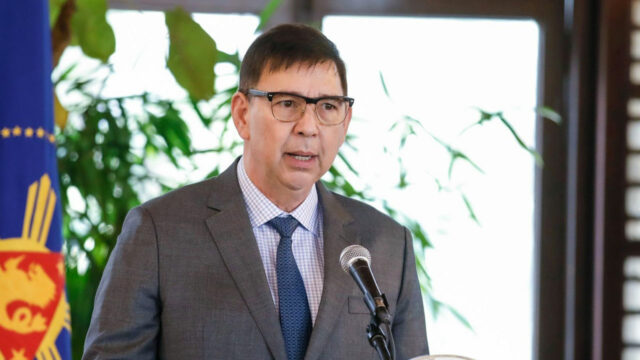
As the first FEU alumnus to lead PPSA, Dr. Reynold Agnes brings consultative leadership, academic grounding, and a strong mentoring spirit to the national stage. Photo credit: FEU Media Center

For the next two years, Far Eastern University’s (FEU) very own Dr. Reynold D. Agnes takes the lead as president of the Philippine Political Science Association (PPSA), a professional organization of political scientists, educators, and researchers established in 1962. As the first FEU alumnus to hold the position, Dr. Agnes carries the distinction with great purpose.

“The PPSA is composed of professionals, scholars, and groups from different universities, so the best approach is to consult with them and reconcile our positions toward the common good,” said Dr. Agnes, who believes consultative leadership is key to the association’s continued relevance.

Before being elected to the national post, Dr. Agnes served as the inaugural representative of PPSA’s National Capital Region cluster. Despite the challenges of the pandemic, his team mounted a national symposium and helped sustain the organization’s lecture caravans, crediting the success to the commitment of volunteers across the country. ‘The PPSA shall promote the discipline of political science in the country and the region,’ the organization’s mission states. Its vision: to be the leading institution for knowledge production and dissemination for the political science community and the public.

Dr. Agnes currently serves as a tenured faculty member at FEU’s Institute of Arts and Sciences, where he continues to emphasize the real-world value of political education. “As teachers, we are accountable to ourselves as much as we are accountable to our students and the community. Political education is indeed necessary nowadays,” he said. “Public service requires self-effacement.”

A trusted leader within and beyond the classroom

Whether in faculty meetings, student consultations, or national academic circles, Dr. Agnes has built a reputation as someone others can count on.

“I am a member of the PPSA. While I know a lot of people in PPSA, and Dr. Agnes was the one who included me in one of the recent activities,” shared Wayne Winter Uyseco, a fellow faculty member at FEU. Dr. Agnes’s ability to bring others in, whether to contribute to an event or collaborate on ideas, speaks to his openness and reliability. “He also throws out a lot of ideas to improve workflow,” Mr. Uyseco added. “He is very approachable and easy to get along with. He is able to start a conversation with anybody.”

The trust extends to academic mentorship. Mr. Uyseco recalled how a conversation with Dr. Agnes about his dissertation led to insights and data that proved pivotal. “Given his connections and experience, he easily helps others without thinking twice,” he said.

For student leaders like Jared Izek Mallillin, newly elected president of the FEU Political Science Society, Dr. Agnes is both a guide and a model of what a political science educator should be. “Through his unwavering support and deep commitment to our growth, he challenges us to think critically, dream boldly, and pursue our ambitions with confidence.”

As one who has served the PPSA in various capacities and contributed consistently to its growth, Dr. Agnes’s election as president is a well-deserved natural progression. Across roles, titles, and generations, he remains a steady, inspiring presence at the heart of the political science community.


Spotlight is BusinessWorld’s sponsored section that allows advertisers to amplify their brand and connect with BusinessWorld’s audience by publishing their stories on the BusinessWorld Web site. For more information, send an email to online@bworldonline.com.

Join us on Viber at https://bit.ly/3hv6bLA to get more updates and subscribe to BusinessWorld’s titles and get exclusive content through www.bworld-x.com.

Humble coconut oil turns into a luxury on rising demand, shrinking output

Various brands of coconut oil packets and bottles are placed on the shelves inside a retail store in Kochi, India, July 23, 2025. — REUTERS/SIVARAM V

MUMBAI/JAKARTA/KUALA LUMPUR — Prices of coconut oil are surging in Asia, where top consumer India leads the charge with a tripling in two years, as supply shortages and booming demand for the nutrient-rich water enclosed within turn the kitchen staple into a premium product. 

The edible oil is slipping out of the reach of price-conscious consumers, and those accustomed to its distinctive flavor, deeply embedded in regional cuisine, must search harder to find alternatives.

“I will switch to the more affordable refined sunflower oil for everyday cooking and save coconut oil for dishes where its flavor is absolutely irreplaceable,” said Leelamma Cherian, who lives in India’s southern state of Kerala.

The price surge that began in the second half of 2024 was accelerated by output disruptions across major producer nations from India to Southeast Asia, caused by seasons of lower rainfall, extended heat, and more ravages by pests and disease.

Prices in India have nearly tripled in less than two years, to a record 423,000 rupees ($4,840) a metric ton, while global prices surged to an all-time high of $2,990 per ton over the same period.

A group of producer nations, the International Coconut Community (ICC), says growing demand in the face of production limits will keep second-half global prices in the range of $2,500 to $2,700, well over the 2023 figure of about $1,000.

Coconut oil supplies usually improve in Southeast Asia in the second half, and new season output will help ease prices off records, said a Singapore-based vegetable oil trader.

“Still, prices probably won’t drop below $2,000 anytime soon,” he said.

A fall below $1,800 a ton in the next two years was unlikely, he added, pointing to the neglect of plantations and unfavorable weather in recent years as factors likely to delay a broader production recovery, especially at a time when supplies of other similar lauric oils are tight.

“While prices are expected to ease gradually, the current rally is likely to establish a new normal.” 

The price surge also affects unripe green coconuts harvested for their electrolyte-laden water, and products such as copra, milk, and powder, while squeezing makers of shampoo and skincare items, who prize the oil for its high content of lauric acid.

SUPPLY SQUEEZE
Globally, coconut oil output is falling as trees age, replanting proves inadequate, and plantations grapple with a shortage of better seed varieties, said Dorab Mistry, a director of Indian consumer goods company Godrej International.

World coconut oil production was 3.67 million tons in 2024–25, with no growth over the past three decades, barring minor annual fluctuations, the U.S. agriculture department says.

As weather conditions increasingly swing from hot, dry spells to sudden heavy rains, both extremes disrupt coconut production, said Joe Ling, executive director of Malaysia’s Linaco Group, a leading supplier.

These days, at least one producing country is affected – if dry weather is not curtailing output in Indonesia or Malaysia, it is highly likely that typhoons are disrupting production in the Philippines, or vice versa, Ling said.

Yields fell in 2023 as the El Niño weather phenomenon brought above-average heat and below-average rains to key growing regions, said a Mumbai-based dealer at a global trading house, who sought anonymity in line with company policy.

The shortfall was only reflected in 2024, since coconuts typically need nearly a year to mature after flowering.

In the wake of years of underinvestment thanks to low prices, coconut production was further hit by the COVID-19 outbreak, as lockdowns brought a slump in demand and prices.

That in turn led farmers to neglect plantations, resulting in lower yields just as demand began to recover when social media influencers drummed up attention to the health benefits of coconut water.

Higher demand for the water prompted farmers to harvest coconuts earlier and further narrowed the supply of mature nuts used to make oil and copra.

Even at higher prices, the perceived health benefits continue to fuel demand for coconut food products, said Ling of Linaco Group.

The rally has led his company to raise prices almost monthly and maintain supplies despite upsetting customers, Ling added. 

Coconut oil’s premium over rival palm kernel oil, also primarily produced in Asia, has surged to a record $1,000 per ton, up from the usual $100 to $200. Palm kernel oil prices have also risen, climbing 30% this year.

Any major shift away from coconut oil could drive up prices of alternatives, including palm kernel oil for industry and palm, soy, and sunflower oils for households.

GLOBAL DEMAND
While coconut oil is popular in Asia, demand for copra, coconut cream, and milk is strong in Britain, China, Europe, Malaysia, the United States, and the United Arab Emirates.

To capitalize on rising demand, Indonesian farmers are increasingly shipping whole coconuts instead of extracting oil, said Amrizal Idroes, vice chairman of the Indonesian Coconut Processing Industry Association.

Indonesia’s coconut oil exports fell 15% between January and June, while shipments of items such as desiccated coconut and endocarp coconut rose by 58% annually, government data showed. 

Shortages have spurred calls for changes to trade policies that make more oil available at home.

In Indonesia, the Association urged suspension of coconut exports for six to 12 months to stabilize prices, while in India, the Solvent Extractors’ Association asked New Delhi to allow imports of coconut oil and copra.

India regulates imports of coconut oil tightly, with a duty of more than 100% that makes them expensive, and traders required to seek permits from state trading enterprises.

Higher prices have spurred farmers to expand planting, with strong seedling demand depleting most nurseries’ stocks this year, said an official of India’s state-run Coconut Development Board, who sought anonymity.

But yield from new plantations take four or five years to come in, so prospects are bleak for prices to subside quickly. — Reuters

Musk quietly puts brakes on plans for new political party, WSJ says

ELON MUSK — REUTERS

Billionaire Elon Musk is quietly putting the brakes on plans to start his new political party, telling allies he wants to focus on his companies, the Wall Street Journal said on Tuesday, citing people with knowledge of the plans.

Mr. Musk unveiled the ‘America Party’ in July after a public dispute with President Donald Trump on the tax cut and spending bill.

He has recently been focused in part on maintaining ties with Vice President JD Vance, the paper said, and has acknowledged to associates that forming a political party would damage his relationship with Mr. Vance.

Mr. Musk, the world’s richest man, and his associates have told people close to Vance that the billionaire is considering using some of his financial resources to back Vance if he decides to run for president in 2028, the paper said.

The CEO of Tesla and SpaceX spent nearly $300 million in 2024 to help Mr. Trump and other Republicans get elected, exerting enormous influence in the first few weeks of Mr. Trump’s term as head of the newly created efficiency department (DOGE).

Reuters could not immediately verify the Journal report. Tesla and the White House did not immediately respond to a Reuters request for comment outside regular business hours.

Mr. Vance, who had called for a truce following Mr. Musk’s all-public feud with Mr. Trump, reaffirmed his position this month and said he had asked Musk to return to the Republican fold.

Tesla shares are down more than 18% this year after it posted in July its worst quarterly sales decline in more than a decade and profit that missed Wall Street targets, though its profit margin was better than many had feared.

Mr. Musk also warned of “a few rough quarters” after the end of support for electric vehicles by the Trump administration.

Investors worry whether he will be able to devote enough time and attention to Tesla after locking horns with Mr. Trump over his ambitions for a new political party. – Reuters

US commerce secretary says trade documents wanted by Japan are ‘weeks away’

COMMONS.WIKIMEDIA.ORG

 – U.S. Commerce Secretary Howard Lutnick said in a CNBC interview on Tuesday that documents memorializing trade agreements with Japan and South Korea — a sensitive topic in Tokyo — are “weeks away” from being ready.

Japanese Prime Minister Ishiba, who is facing calls to step down after the ruling coalition’s loss in the July upper house election, has come under attack for not insisting on getting the details of the U.S.-Japan trade deal in writing.

He has said Japan skipped this to avoid delaying a reduction in U.S. tariffs on Japanese goods.

Lutnick told CNBC the United States has reached a common understanding with both Japan and South Korea on these trade agreements.

Under the deal reached last month, the U.S. agreed to reduce tariffs on Japanese car imports to 15% from the previous 27.5%, but did not announce when the change would take effect.

India, China agree to resume direct flights, boost business links

STOCK PHOTO | Image from Pixabay

 – India and China agreed on Tuesday to resume direct flights and step up trade and investment flows as the neighbours rebuild ties damaged by a 2020 border clash.

The Asian giants are cautiously strengthening ties against the backdrop of U.S. President Donald Trump’s unpredictable foreign policy, staging a series of high-level bilateral visits.

The two countries would resume direct flights and boost trade and investment, including reopening border trade at three designated points, and facilitate in visas, the Indian foreign ministry said.

Direct flights have been suspended since the COVID-19 pandemic in 2020. No date was given for their resumption.

The latest statements came at the end of Chinese Foreign Minister Wang Yi’s two-day visit to New Delhi for the 24th round of talks with Indian National Security (NSA) Advisor Ajit Doval to resolve their decades old border dispute.

The border talks covered issues related to pulling back troops both countries have amassed on their Himalayan border, delimitation of borders and boundary affairs, the Indian ministry said.

Both countries have agreed to set up a working group to consult and coordinate on border affairs to advance demarcation negotiations, a Chinese foreign ministry statement released on Wednesday showed.

It said the mechanism will extend talks to cover the eastern and middle sections of the border. Meanwhile another round of talks on the western section will be held as soon as possible, the ministry said.

Beijing also said both countries agreed to meet again in China in 2026.

“Stable, predictable, constructive ties between India and China will contribute significantly to regional as well as global peace and prosperity,” Prime Minister Narendra Modi posted on X after meeting Wang.

Modi is scheduled to travel to China at the end of this month to take part in the summit of the Shanghai Cooperation Organisation – his first visit to the country in more than seven years.


TIBET DAM

A readout from the Chinese foreign ministry said Wang told Doval that “the stable and healthy development of China-India relations is in the fundamental interests of the two countries’ people”.

The two sides “should enhance mutual trust through dialogues and expand cooperation,” Wang said, and should aim for consensus in areas such as border control and demarcation negotiations.

India said Foreign Minister Subrahmanyam Jaishankar had underlined in his talks with Wang India’s concerns with regard to the mega dam China is building on the Yarlung  Zangbo river in Tibet.

Yarlung  Zangbo becomes the Brahmaputra as it flows into India and Bangladesh, a lifeline for millions.

The dam would have implications for lower riparian states and the need for “utmost transparency” was strongly underlined, New Delhi said.

To that, China agreed to share with India emergency hydrological information on relevant rivers on humanitarian principles, China’s foreign ministry said.

Both sides agreed to engage an expert-level mechanism on cross-border rivers, and maintain communication to renew flood reporting arrangements, the ministry said.

Chinese officials had previously said hydropower projects in Tibet will not have a major impact on the environment or on downstream water supplies, but India and Bangladesh have nevertheless raised concerns.

Earlier on Tuesday, an Indian source said Wang had assured Jaishankar that Beijing was addressing three key Indian concerns – the need for fertilisers, rare earths and tunnel boring machines.

The Indian foreign and mines ministries and China’s commerce ministry did not immediately respond to requests for comment. – Reuters

White House launches TikTok account with Trump saying ‘I am your voice’

A TikTok logo is displayed on a smartphone in this illustration taken Jan. 6, 2020. — REUTERS

 – The White House launched an official TikTok account on Tuesday, taking advantage of the short video app’s more than 170 million U.S. users to spread the messages of President Donald Trump.

Mr. Trump has a soft spot for the popular app, crediting it with helping him gain support among young voters when he defeated Democrat Kamala Harris in the November 2024 presidential election.

Lawmakers in Washington worry, however, that its U.S. user data could fall into the hands of China’s government. Trump has been working on a deal for U.S. investors to buy the app from TikTok’s Chinese parent, ByteDance.

Past intelligence assessments have said the app’s owners are beholden to the Chinese government and that it could be used to influence Americans.

The new account, @whitehouse, went live on Tuesday evening with an initial video showing footage of Trump as he declares: “I am your voice.”

“America we are BACK! What’s up TikTok?” the caption read.

The TikTok account Mr. Trump used for his presidential campaign last year, @realdonaldtrump, has more than 15 million followers. The Republican president also relies heavily on his Truth Social account to deliver his message and posts occasionally on his X account.

“The Trump administration is committed to communicating the historic successes President Trump has delivered to the American people with as many audiences and platforms as possible,” White House press secretary Karoline Leavitt said.

“President Trump’s message dominated TikTok during his presidential campaign, and we’re excited to build upon those successes and communicate in a way no other administration has before,” she said.

A 2024 law required TikTok to stop operating by January 19 of this year unless ByteDance had completed divesting the app’s U.S. assets or demonstrated significant progress toward a sale.

Trump opted not to enforce the law after he began his second term as president on January 20. He first extended the deadline to early April, then to June 19 and then again to September 17.

Extensions to the deadline have drawn criticism from some lawmakers, who argue the Trump administration is flouting the law and ignoring national security concerns related to Chinese control over TikTok. – Reuters

US, NATO planners start to craft Ukraine security guarantee options

PRESIDENT OF UKRAINE, Volodymyr Zelensky, at the annual session of the NATO Parliamentary Assembly — PRESIDENT.GOV.UA

U.S. and European military planners have begun exploring post-conflict security guarantees for Ukraine, U.S. officials and sources told Reuters on Tuesday, following President Donald Trump’s pledge to help protect the country under any deal to end Russia’s war.

Ukraine and its European allies have been buoyed by Mr. Trump’s promise during a summit on Monday of security guarantees for Kyiv, but many questions remain unanswered.

Officials told Reuters that the Pentagon is carrying out planning exercises on the support Washington could offer beyond providing weapons.

But they cautioned that it would take time for U.S. and European planners to determine what would be both militarily feasible and acceptable to the Kremlin.

One option was sending European forces to Ukraine but putting the U.S. in charge of their command and control, two sources familiar with the matter told Reuters. The sources added that the troops would not be under a NATO banner but operate under their own nations’ flags.

The Pentagon and NATO did not immediately respond to a request for comment on the idea.

In a press briefing, the White House said that the United States could help coordinate a security guarantee for Ukraine.

Russia’s Foreign Ministry has ruled out the deployment of troops from NATO countries to help secure a peace deal.


POSSIBLE U.S. AIR SUPPORT

Mr. Trump has publicly ruled out deploying U.S. troops in Ukraine but on Tuesday appeared to leave the door open to other U.S. military involvement.

In an interview with Fox News “Fox & Friends” program, he suggested Washington could provide air support to Ukraine.

“When it comes to security, (Europeans) are willing to put people on the ground, we’re willing to help them with things, especially, probably, ... by air because nobody has stuff we have, really they don’t have,” Mr. Trump said.

He did not provide further details.

U.S. air support could come in a variety of ways including providing more air defense systems to Ukraine and enforcing a no-fly zone with U.S. fighter jets.

Since Russia’s full-scale invasion of its neighbor in 2022, the United States has shipped billions of dollars worth of weapons and munitions to Kyiv.

The Trump administration briefly halted those weapons shipments, including after a contentious White House meeting between Mr. Trump and Ukrainian President Volodymyr Zelenskiy in February and again in July.

Shipments have resumed and Trump has pledged to send weapons, primarily defensive ones, to help the war-torn country.


NATO MILITARY LEADERS TO MEET

NATO military chiefs will focus on Ukraine and the way forward when they meet virtually on Wednesday, a conference first reported by Reuters.

U.S. Air Force General Alexus Grynkewich, who also oversees NATO operations in Europe, will brief the chiefs of defense on the Alaska meeting between Trump and Russian President Vladimir Putin last week.

A U.S. official speaking on condition of anonymity said U.S. General Dan Caine, chairman of the Joint Chiefs of Staff, was expected to attend the meeting.

The official added that Mr. Caine would meet with some of his European counterparts in Washington on Tuesday evening.

Mr. Trump has pressed for a quick end to Europe’s deadliest war in 80 years, and Kyiv and its allies have worried he could seek to force an agreement on Russia’s terms after the president last week rolled out the red carpet for Mr. Putin.

Russia says it is engaged in a “special military operation” in Ukraine to protect its national security, claiming NATO’s eastward expansion and Western military support for Ukraine pose existential threats. Kyiv and its Western allies say the invasion is an imperial-style land grab. – Reuters

Iraq signs agreement with Chevron on oil exploration projects, prime minister says

 – Iraq signed an agreement in principle with U.S. oil producer Chevron for the Nassiriya project that consists of four exploration blocks in addition to the development of other producing oil fields, Iraq’s prime minister said on Tuesday.

Iraq in the past two years has signed agreements with other oil majors, reversing a long period during which they retreated from the country. Improved contract terms have lured both France’s TotalEnergies and UK oil major BP to sign new deals, with a combined investment of over $50 billion.

“We are confident that Chevron, with its proven track record and expertise in successfully developing oil and gas projects, has the resources, experience, and technology to support Iraq to further develop new energy resources,” said Frank Mount, Chevron’s vice president of corporate business development, in a statement.

In 2021, Iraq authorised National Oil Company (NOC) to negotiate with Chevron over the development of oilfields in Nassiriya, in the Iraqi southern province of Dhi Qar.

The ministry at the time said its plan in the province included the completion of a group of giant projects in the oil and gas and water injection sectors, with a targeted initial capacity of 600,000 barrels of crude oil per day within seven years of starting work.

Prime Minister Mohammed Shia al-Sudani said the government adopted a new approach in dealing with major international oil companies and their investments in Iraq, especially U.S. companies, his office said. – Reuters

Baobab Eyewear champions hybrid offline-online retail experience through TikTok Shop

Baobab Eyewear’s Escolta store offers a personalized offline experience, complementing its strong presence on TikTok Shop.

Baobab Eyewear is redefining how Filipinos shop for eyewear, both online and offline. Known for its stylish, functional, and fairly priced frames, the proudly Filipino brand has found success in bridging the gap between digital discovery and in-store experience through TikTok Shop.

By leveraging TikTok Shop’s full-funnel ecosystem and content-first approach, Baobab was able to grow its online presence while driving foot traffic to its optical shop in Escolta, Manila. Its physical store provides a personalized space for customers to try on frames they first encountered online, completing a hybrid retail experience built for today’s discovery-driven consumers.

“Our audience was able to discover our physical store, thanks to our campaigns and presence on TikTok Shop”, said Eunice Abalos, Founder and Owner of Baobab Eyewear. “We are committed to offering thoughtfully designed eyewear that is life-proof, practical, and affordable, and giving our customers the best experience, whether through our physical store or TikTok Shop.”

Turning Content into Commerce

Through TikTok Shop, Baobab turned content and community into powerful growth engines. From short-form videos to livestream selling, the brand embraced new ways of engaging with consumers while offering seamless shopping, from frame selection to lens customization and prescription uploading.

“Even before TikTok Shop, Baobab was actively posting about our products and day-to-day operations—we really wanted to build an online community,” said Sheena Concepcion, Baobab’s Marketing Manager. “Since joining TikTok Shop, we’ve been able to reach more people and convert through features like free shipping, vouchers, and platform promos.”

Concepcion credits TikTok Shop’s recently upgraded ACE indicator system, which helps sellers optimize their Assortment, Content, and Empowerment strategies, for their success. During their summer campaign, Baobab utilized short videos as pre-launch content to generate excitement and drive traffic to the grand launch. The pre-launch phase alone saw a +43% increase in video views versus regular days.

Breakthrough Launch with BINI

One of Baobab’s standout milestones was the launch of BINIVISION, an exclusive collection created in partnership with the nation’s girl group, BINI. The campaign was activated through TikTok Shop and delivered a 3,410.45% uplift in Live GMV, ranking Baobab #1 during the platform’s Eyewear Co-Brand Day.

The exclusive BINIVISION collection, launched with girl group BINI

“As a discovery-driven and social platform, TikTok Shop empowers brands in reaching a wider audience and building communities”, said Franco Aligaen, Marketing Lead of TikTok Shop. “We believe these communities help bridge the offline and online worlds.”

As Baobab continues to grow, its success on TikTok Shop proves that when digital content, community, and commerce come together, they can unlock new opportunities for homegrown brands. With a hybrid retail model and a deep understanding of its audience, Baobab Eyewear is charting a path forward, where Filipino creativity meets inclusive, accessible design across both online and offline spaces.


Spotlight is BusinessWorld’s sponsored section that allows advertisers to amplify their brand and connect with BusinessWorld’s audience by publishing their stories on the BusinessWorld Web site. For more information, send an email to online@bworldonline.com.

Join us on Viber at https://bit.ly/3hv6bLA to get more updates and subscribe to BusinessWorld’s titles and get exclusive content through www.bworld-x.com.

New taxes ruled out amid record debt

FINANCE SECRETARY RALPH G. RECTO — PCO

By Kenneth Christiane L. Basilio, Reporter

THE GOVERNMENT will not introduce new tax proposals in the 20th Congress, Finance Secretary Ralph G. Recto said, reaffirming the administration’s fiscal consolidation strategy despite record-high debt.

Speaking with reporters after a Development Budget Coordination Committee briefing at the House of Representatives on Monday evening, Mr. Recto said the Marcos administration would instead focus on previously filed measures including an excise tax on single-use plastics and a tax amnesty program.

Asked whether the Department of Finance would back additional tax initiatives, Mr. Recto replied: “No.”

He also said the government was not considering increases in existing tax rates too.

“We only have the single-use plastics remaining, that’s number one,” he said. “Also possibly, a tax amnesty.”

Mr. Recto had earlier stressed that new revenue measures were unnecessary, pointing to what he described in April as the country’s “robust” fiscal position.

Government data showed the Philippines’ debt-to-gross domestic product ratio had risen to 63.1% as of end-June, its highest level since 2005. The figure remains above the 60% threshold that multilateral lenders view as manageable for developing economies.

The debt ratio is expected to ease to 61.3% by yearend, though still above the earlier 60.4% target, according to a Finance department handout.

Outstanding debt stood at a record P17.27 trillion in June, up 2.1% from the previous month and 11.5% higher than a year earlier.

The excise tax on single-use plastic bags was one of the 28 priority bills identified by the Legislative-Executive Development Advisory Council. While it was approved by the House on third reading in 2022, the measure was stuck at the Senate Ways and Means Committee.

The Finance department last year said the government could raise up to P33.8 billion in excise taxes on single-use plastic bags.

Three measures, which all seek to impose a P100-per-kilogram excise tax on single-use plastic bags, have been refiled at the House. A Senate counterpart bill proposes a lower rate of P20 per kilogram.

Mr. Recto in early August said the government is also looking at proposing a tax amnesty that will involve an amnesty charge set at a yet-to-be-determined percentage of the outstanding unpaid tax, in exchange for immunity from civil, criminal and administrative penalties.

Lawmakers in the House and Senate are pushing for a general tax amnesty that will impose a 2% amnesty tax rate dependent on the total assets of taxpayers up to 2024.

The Finance department’s decision to hold off on introducing new taxes is a “good move” given that proposing new levies could dampen household spending, said Reinielle Matt M. Erece, an economist at Oikonomia Advisory and Research, Inc.

“More taxes will effectively reduce disposable income of households since more of their income will be directed to taxes rather than consumption,” he said in a Viber message.

“Fiscal consolidation is important to better manage debt and budget efficiency, but if it comes at the expense of economic performance then it may be best to rethink the strategy to achieve this goal,” he added.

While the proposed excise tax on single-use plastics and tax amnesty could boost state revenues, the government should look at expanding the tax base and ensure that revenue streams are “future-proof,” John Paolo R. Rivera, a senior research fellow at the Philippine Institute for Development Studies, said.

“These should be seen as complementary, not core, measures,” he said in a Viber message. “What we need is better tax administration, improved enforcement and expanded coverage of existing tax measures.”

Mr. Rivera said that if the Finance department reverses its initial stance, then it should look at its impact on Filipino consumers and businesses.

“Any move must be weighed against inflation risks and its impact on consumers and businesses.”

Military pension reform shelved; analysts warn of ‘fiscal time bomb’

SOLDIERS march during the Armed Forces of the Philippines (AFP) Anniversary held at Camp General Emilio Aguinaldo in Quezon City, Dec. 20, 2024. — PHILIPPINE STAR/NOEL B. PABALATE

By Aubrey Rose A. Inosante and Kenneth Christiane L. Basilio, Reporters

THE MARCOS administration has shelved a plan to overhaul the pension system for military and uniformed personnel (MUP), Finance Secretary Ralph G. Recto said.

Analysts have warned that the current pension system for MUPs is a “fiscal time bomb” that threatens the Philippines’ fiscal sustainability.

“I think we discussed that already,” he told reporters on the sidelines of a House Committee on Appropriations briefing late on Monday. “Wala na ’yung  (There will be no) MUP reform so far for the remainder of the term.”

“The reform will be costly at this point in time,” Mr. Recto said without providing details.

However, Budget Secretary Amenah F. Pangandaman said the fate of the MUP reform bill will still be discussed in the Legislative-Executive Development Advisory Council (LEDAC) meeting next month.

“We’ll have to sit down. We still have a LEDAC (meeting),” she told BusinessWorld when asked about Mr. Recto’s statement.

Ms. Pangandaman warned that government allocations for MUP pensions will consume a larger share of the national budget in the coming years and could pose a possible fiscal burden if left unchecked.

“As you know, we have a limited fiscal space — so the pension will eat up a chunk of the budget. It will keep piling up, and it’s going to grow even more,” she told BusinessWorld on the sidelines of the briefing late on Monday.

Under the 2026 National Expenditure Program, the proposed allocation for the Pension and Gratuity Fund is at P197.99 billion, 36.8% higher than P144.72 billion this year.

Unlike government and private sector employees whose pension contributions are regularly remitted to the Government Service Insurance System and Social Security System, MUPs do not contribute to their own pension funds.

In 2023, the Department of Finance (DoF) under then-Secretary Benjamin E. Diokno pushed to reform the MUP pension system, warning of the risk of a “fiscal collapse.”

At that time, the DoF proposed to require contributions from all active personnel and new entrants and removed the full indexation of pensions.

However, the House in 2023 approved a version that does not require mandatory contributions from active personnel. Under the approved version, new entrants would be required to contribute 9% of their salary, while the National Government counterpart was set at 12%. It also provided for the automatic indexation of MUP pensions at 100% of the increase in the base pay of active personnel.

The Senate did not pass a counterpart bill for the MUP reform.

‘FISCAL TIME BOMB’
Jonathan L. Ravelas, a senior adviser at Reyes Tacandong & Co., said it’s a “risky move” for the government to shelve plans to reform the MUP pension system.

“The current pension setup is a fiscal time bomb — fully funded by taxpayers, no contributions from personnel, and pensions indexed to active salaries,” he told BusinessWorld in a Viber message on Tuesday.

Mr. Ravelas said failure to reform the pension system could saddle the government with a P14-trillion liability and a possible fiscal collapse in the long term.

“We need reform, but with care. Either set up a dedicated, government-backed pension fund seeded with revenues from privatization,” he said.

Mr. Ravelas suggested mandatory pension contributions from new entrants, while scrapping the current automatic indexation of benefits. He said the government should instead implement a fixed annual adjustment of pensions tied to inflation.

John Paolo R. Rivera, a senior research fellow at the Philippine Institute for Development Studies said delaying the MUP reform may ease political tension in the short term, but it risks long-term fiscal sustainability.

“The current pension system for military and uniformed personnel is non-contributory and ballooning. It consumes a growing portion of the national budget, crowding out funds for education, health, and infrastructure,” Mr. Rivera said.

He also warned that the National Government may face bigger deficits and heavier borrowing down in the future.

“The sooner we address it, the better for long-term economic stability,” Mr. Rivera said.

Remittances likely to remain resilient for rest of 2025 — analysts

Money sent home by overseas Filipino workers (OFWs) rose by 3.1% to $16.75 billion in the first six months of the year. — REUTERS

By Katherine K. Chan

CASH REMITTANCES are projected to remain resilient for the rest of the year, potentially surpassing the Bangko Sentral ng Pilipinas’ (BSP) 2.8% full-year growth target, analysts said.

However, they also warned of possible external shocks that could dampen remittance growth.

“We’re on track. First-half growth hit 3.1%, already above BSP’s 2.8% forecast,” Jonathan L. Ravelas, a senior adviser at Reyes Tacandong & Co., said in a Viber message.

“If global labor markets stay resilient and the peso remains competitive, we could even beat the (BSP’s) 2.8% full-year target.”

Money sent home by overseas Filipino workers (OFWs) rose by 3.1% to $16.75 billion in the first six months of the year, with land-based workers contributing the bulk of the increase.

The BSP is targeting a 2.8% growth in remittances this year, and 3% growth for 2026.

Remittance inflows are expected to accelerate ahead of the holiday season, analysts said.

“We expect remittances to remain a constant and reliable source of foreign currency over the next few months, with a seasonal acceleration as we enter the fourth quarter of the year,” Metropolitan Bank & Trust Co. (Metrobank) Chief Economist Nicholas Antonio T. Mapa said.

Ruben Carlo O. Asuncion, chief economist at Union Bank of the Philippines, Inc., said the BSP’s full-year target of 2.8% remittance growth is “well within reach.”

“Remittance flows are expected to remain resilient, supported by seasonal inflows during the ‘ber’ months and improving global labor conditions,” he said.

Analysts warned the US government’s 1% tax on remittances, which will take effect on Jan. 1, 2026, will have a dampening effect on remittances from US-based Filipinos.

“However, the proposed 1% remittance tax in the US could pose downside risks in 2026. While the BSP’s 3% growth target remains achievable, the tax may dampen inflows from the US — currently the largest source — unless mitigated by digital remittance innovations or policy support,” Mr. Asuncion said.

The tax will be applied on cash-based remittance transfers from US-based senders, regardless of citizenship status.

BSP data showed the US remained the top source of remittances to the country in the first half, accounting for 40.1% of total remittances for the period.

“The proposed 1% US remittance tax could dampen inflows (from formal channels) slightly if implemented, but its real impact will depend on scope, implementation, and possible offsets from fintech cost reductions or regulatory responses,” John Paolo R. Rivera, a senior research fellow at the Philippine Institute for Development Studies, said in Viber message.

Mr. Ravelas said the proposed tax is a “red flag,” as it might encourage senders to use informal channels.

“That’s a red flag. The US sends over 40% of our remittances. A 1% tax could dampen flows or push senders to informal channels,” he said. “We’ll need to watch how it’s implemented and prepare support mechanisms for OFWs.”

Mr. Mapa said OFWs have been “creative” in finding ways to send money back home in the past.

“We could still expect remittance flows to remain robust in the near term,” he said.

Meanwhile, Rizal Commercial Banking Corp. Chief Economist Michael L. Ricafort noted US protectionist policies and stricter immigration rules could weigh on remittances from the US.

“Trump’s threats of higher reciprocal tariffs and other America-first policies could also slow down global trade, investments, employment including some OFW jobs, and overall world economic growth,” he said in an e-mail. “This could also indirectly slow down the growth in OFW remittances from other countries around the world.”