Home Blog Page 7632

Vista Land subsidiary adds $50M to senior guaranteed notes due 2027

VISTALAND.COM.PH/

VISTA Land & Lifescapes, Inc. on Wednesday said its subsidiary VLL International, Inc. has topped its senior guaranteed notes with another issuance of $50 million through a private placement.

In a regulatory filing, the company said this is pursuant to VLL International’s $2-billion medium-term note program.

“The new notes, upon issue, will be consolidated and form a single series with the US$370,000,000 7.25% Senior Guaranteed Notes Due 2027, and take the total issuance size of the series to US$420,000,000,” Vista Land said.

Proceeds from the notes issue will be funding existing debt, the purchase, development, construction, or for the improvement of assets, property, or equipment, and general corporate purposes.

VLL International has a subscription agreement with managers DBS Bank Ltd. and HSBC for the offer, sale, and issuance of the notes.

The notes are guaranteed by the company and subsidiaries Brittany Corp., Crown Asia Properties, Inc., Camella Homes, Inc., Communities Philippines, Inc., and Vista Residences, Inc.

On Wednesday, shares of Vista Land at the stock market improved by 2.82% or 10 centavos to close at P3.64 each. — Keren Concepcion G. Valmonte

San Miguel assures enough supply of hotdogs, luncheon meat 

SANMIGUEL.COM.PH

SAN MIGUEL Corp. (SMC) has assured that there is no shortage of products such as hotdogs and luncheon meat amid supply concerns raised by some groups due to higher meat material prices and import restrictions.

SMC President Ramon S. Ang said in a statement on Wednesday that the products of its food unit, San Miguel Foods, such as refrigerated meats and canned products will remain available in supermarket shelves and other retail outlets.

“Since the start of the coronavirus disease 2019 (COVID-19) pandemic, our food business has strived to make our supply chains more agile and resilient. As a result, we have expanded our raw material supply sources, and have also increased our flexibility in terms of production,” Mr. Ang said.

According to SMC, San Miguel Foods is not only one of the largest local producers of poultry and pork but is also a major importer of meat materials, using around 100,000 metric tons (MT) per year.

The company said its supply of raw materials was also affected by price hikes, tight supply, and import restrictions due to the pandemic, African Swine Fever, and avian influenza (bird flu).

However, SMC said that with quick adjustments in its production and anticipation of global trends, it can ensure the availability of its products for consumers.

“When you have enough meat and packaging materials, along with ample manufacturing capacity, you can ensure continuous supply. As we have done throughout the period of this pandemic, we can continue to provide for the needs of our consumers despite the present challenges,” Mr. Ang said.

Further, Mr. Ang said SMC’s strategy is focused on its integrated value chain, which allowed the company to use more of its internal raw material sources for value added meat production.

“Food security is always one of our top priorities. With our consumers’ needs always top of mind, we want to assure everyone that they can continue to enjoy their hotdogs, luncheon meat, chicken nuggets, bacon, and corned beef,” Mr. Ang said.

Sought for comment, Philippine Association of Meat Processors Inc. (PAMPI) Vice-President Jerome D. Ong said in a mobile phone message that the price of imported mechanically deboned meat (MDM) of chicken used in processed meat products has increased.

“The price used to be $0.50-0.60 per kilogram up to third quarter last year, but it is now more than $1.50 per kilogram and increasing further,” said Mr. Ong said, who is also president of CDO Foodsphere, Inc.

As a result, he said the retail prices of processed meats sold in local markets might increase by 20%.

“With supplies severely curtailed as a result of bird flu related bans, prices from the few remaining sources have really skyrocketed,” he added.

“But because of competition, [the increase] will be gradual, and barely enough to cover the impact of higher material costs. At the moment, the only thing that can be done to avert price increases and product shortage is for supply of major raw materials, particularly MDM, to ease,” he added. — Revin Mikhael D. Ochave

Phoenix says ‘no knowledge’ of banked gas purchase

PHOENIXFUELS.PH

PHOENIX Petroleum Philippines, Inc. has denied knowledge of “any manifest interest” in buying the state energy firm’s unused natural gas in the Malampaya field after the latter’s top official said the listed oil company made an offer.

“[Phoenix Petroleum] has no knowledge of any interest to purchase banked gases as of date of writing,” it said in a regulatory filing on Wednesday.

“Should there be any manifest interest and the board approves the same, we shall make the necessary disclosures at the appropriate time,” it added.

It made the disclosure after Philippine National Oil Co. (PNOC) President and Chief Executive Officer Reuben S. Lista was earlier quoted in a Manila Bulletin news report to have said that Phoenix Petroleum is offering to buy the banked gas.

Phoenix Petroleum, led by Davao-based businessman Dennis A. Uy, said the statement was “unconfirmed.”

Their statements come after Shell Petroleum N.V. announced on Thursday last week that it had signed an agreement with Malampaya Energy XP Pte. Ltd. for the sale of its 100% shareholding in Shell Philippines Exploration B.V. (SPEx).

Malampaya Energy XP is a unit of Udenna Corp., a holding firm also led by Mr. Uy.

SPEx holds a 45% operating interest in Service Contract (SC 38), which includes the gas producing Malampaya, the offshore northern Palawan field.

Shell said the base consideration for the sale is $380 million, with additional payments of up to $80 million between 2022 to 2024 “contingent on asset performance and commodity prices.”

The acquisition of SPEx’s stake is set to give Mr. Uy’s group 90% interest in the Malampaya gas-to-power project.

In Oct. 25, 2019, Udenna announced that its unit UC Malampaya Philippines Pte. Ltd. (now named UC38 LLC) had signed an agreement to acquire 100% of the shares of Chevron Malampaya LLC, which held 45% interest in the gas field.

Malampaya is operated by SPEx, with the third joint venture partner being PNOC Exploration Corp. with a 10% stake.

FIRST GEN KEEN ON BANKED RESERVES
In a separate filing on Wednesday, Lopez-led First Gen Corp. said that it is still interested to buy PNOC’s banked gas.

“First Gen confirms its continuing interest to purchase the Malampaya banked gas of [PNOC], for use by the company’s gas-fired power plants,” the company said in a disclosure, adding that it had expressed interest in the unused reserves as early as 2016.

The company operates four gas-fired power plants in Batangas City, namely: the 1,000-megawatt (MW) Santa Rita, 500-MW San Lorenzo, 97-MW Avion, and 420-MW San Gabriel.

The Santa Rita, San Lorenzo, and San Gabriel plants deliver baseload supply, while Avion provides for peaking power in the Luzon grid.

On Wednesday, Phoenix shares at the local bourse inched up 0.15% or two centavos to finish at P13.10 apiece, while First Gen shares shed 0.34% or 10 centavos to close at P29.40 each. — Angelica Y. Yang

A Pig’s Tale

BW FILE PHOTO

What can we tell about the Philippines’ favorite meat from the archeological record?

THE PIG is usually the centerpiece of our festivals as Filipinos, but have you ever thought about where they came from?

A talk from the Ateneo de Manila Department of Sociology and Anthropology had Dr. Philip Piper, Professor at the School of Archaeology and Anthropology in the Australian National University, presenting his study on the significance of pigs in Philippine prehistoric culture. The talk was titled “Pig Out! The Origin and Prehistoric Social and Cultural Significance of Domestic Pigs in the Philippines,” and was streamed on Facebook on May 18.

It focused on a series of archaeological digs Mr. Piper had done in the past. Tracking pigs is useful for several reasons. “Pigs don’t move themselves over considerable distances and therefore, they must have been moved by people,” he said. “They’re using pigs as a proxy for identifying the movements of people across the region.”

According to him, pigs in the region have their origins “in the region that is now China,” based on reports suggesting the domestication of pigs in a cave in Guangxi about 4,000 years ago, and in Zhejiang 8,000 years ago. “The question still remains open on whether these really are domesticated pigs.” He added that clearer evidence for pig domestication has been recorded at the Neolithic settlements of Nanzhuangtou, “possibly as early as 10,500 cal BP.”

(According to thoughtco.com, the scientific term “cal BP” is an abbreviation for calibrated years before the present” or “calendar years before the present and that is a notation which signifies that the raw radiocarbon date cited has been corrected using current methodologies.)

The question is important: it ties up with findings in Vietnam, where pig remains were found amid human settlements, but these were accompanied by animal remains — of reptiles, fish, and several other mammals. “Domestic pigs were integrated into an economic system still heavily reliant on foraging as much as farming,” he said.

Genetics and forensics also come into play in determining where the pigs come from. One such path is the Pacific clade (a clade is a group consisting of an ancestor and all its descendants), which originated in the region around Southern China and Vietnam, and moved on along all the way to the Pacific Islands. The Lanyu pig, meanwhile, moved from Lanyu off the coast of Taiwan to the Philippines, and “doesn’t seem to have moved beyond the archipelago.”

On more familiar ground, he discussed a dig in NagsabaranCagayan Valley, which found a shell midden (ancient refuse heaps useful for archaeologists) that dates from 2500 to 1600 cal BP, atop underlying silts from older periods (from 4000 to 3000 cal BP). Similar postholes are found here as in Vietnam, but the pig remains found here were more intact, suggesting that it was a structure on stilts, and that the refuse was thrown from the edge (heavier traffic would have damaged the bones). Incidentally, according to a paper called “Patterns of Animal Utilization in the Holocene of the Philippines: A Comparison of Faunal Samples from Four Archaeological Sites” by Karen Mudar, Ferdinand Magellan’s chronicler Antonio Pigafetta “observed pigs kept below the houses in the settlement” when they arrived in Cebu (a different region, of course).

Among other animal remains found in Nagsabaran were those of deer, dogs, rays, and sharks.

Mr. Piper identified two kinds of pigs present in that area, Sus philippensis, which is endemic to the Philippines, and Sus scrofa, introduced to the Philippines. Their differences were identified through their teeth (the former pig’s teeth were smaller, among other differences). According to him, the wild pigs outnumbered the domestic pigs 4:1. Does the presence of the wild pigs then present the same situation as in the one in Vietnam?  “Yes, and no.”

“Pigs, we know, are important in the Philippines beyond just being economic. They have other important social and religious status,” he said. He draws a parallel between the present-day Ifugao, who still keep ceremonial black pigs differentiated from “more general eating pigs” (in the past, wild endemic pigs; now the European-introduced breeds). “It could possibly be the case. We’re seeing the same sort of retention of black pigs — or the domestic pigs — for particular ceremonial and ritual purposes. This is why we don’t see quite so many of the bones, or teeth in the archaeological record. They’re not being slaughtered at quite the same rates as we see with the eating, or wild pigs.”

He warns though that “We need to be cautious in interpreting human mobility from the introduction of domesticated animals.”

Still, he says, “A lot of our traditions these days, as you can see, have got a long history that extends way back, even to the earliest agricultural Austronesian populations that arrived in the Philippines.” — JL Garcia

Term deposit yields mixed on case tally, Fed concerns

REUTERS

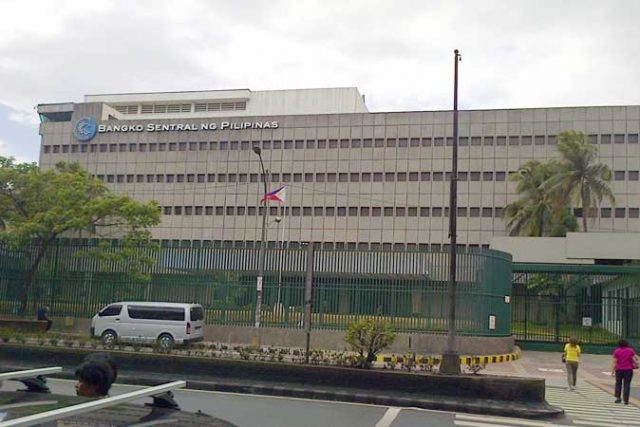
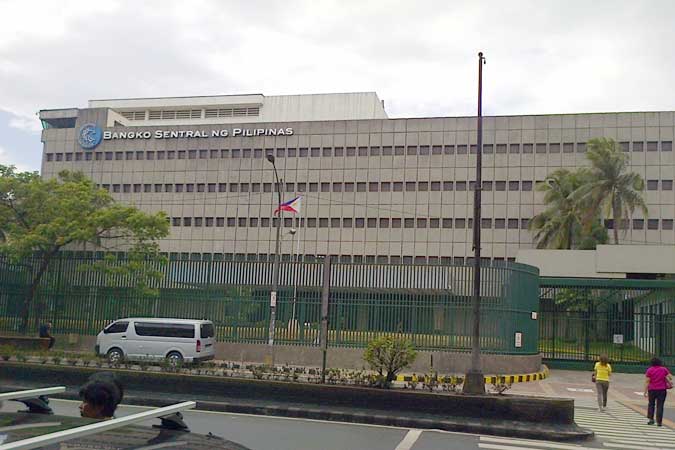
YIELDS ON THE central bank’s term deposits were mixed on Wednesday as the market was optimistic about the decline in local coronavirus cases but concerned about the possibility of policy tightening by the US Federal Reserve.

Demand for the term deposit facility (TDF) of the Bangko Sentral ng Pilipinas (BSP) amounted to P524.301 billion on Wednesday, higher than the P510 billion on the auction block, but lower than the P575.923 billion in tenders seen last week.

Broken down, bids for the seven-day term deposits stood at P159.225 billion, surpassing the P150 billion auctioned off by the BSP, but lower than the P167.799 billion in tenders logged a week ago.

Accepted yields for the tenor ranged from 1.7% to 1.7315%, a tad narrower than the 1.7% to 1.735% band the previous Wednesday. This caused the average rate of the seven-day deposits to inch down by 0.28 basis point (bp) to 1.7202% from the 1.723% seen during last week’s auction.

Meanwhile, the two-week papers attracted bids worth P365.076 billion, going beyond the central bank’s P360-billion offer on Wednesday and the P408.124 billion in tenders logged at the May 19 auction.

Banks asked for yields ranging from 1.725% to 2.08%, a wider band compared with the 1.7% to 1.83% seen in the previous offering. With this, the average rate for the 14-day deposits climbed by 1.68 bps to 1.7714% from 1.7546% last week.

The BSP did not offer 28-day term deposits for the 31st straight auction the to give way to its weekly offerings of bills with the same tenor.

The term deposits and short-term securities are used by the central bank to gather excess liquidity in the financial system and to better guide market rates.

The mixed result of the auction came after the recent decline in new cases which “somewhat [helps] improve economic recovery prospects,”Rizal Commercial Banking Corp. Chief Economist Michael L. Ricafort said on Wednesday.

New coronavirus infections in the country have been on a downtrend in the recent weeks compared with the surge seen in April. Data from the Health department showed coronavirus disease 2019 (COVID-19) patients rose by 3,972 on Tuesday to bring the total to 1.188 million.

Amid the steady decline in the daily COVID-19 case tally, the government recently eased restrictions in Metro Manila and its surrounding provinces, allowing more businesses to reopen and expand their operating capacity.

Meanwhile, signals from the US Federal Reserve on a possible tapering of its quantitative easing program also affected sentiment, Mr. Ricafort noted.

Federal Reserve policy makers have begun to acknowledge they are closer to debating when to pull back some of their crisis support for the US economy, even as they say it is still needed to bolster the recovery and employment, Reuters reported.

“We are talking about tapering,” San Francisco Federal Reserve Bank President Mary Daly told CNBC on Tuesday, referring to the potential reduction of the Fed’s $120 billion in monthly asset purchases. Those bond buys, together with near-zero interest rates, are aimed at easing borrowing costs and encouraging hiring and investment.

Earlier on Tuesday, Vice Chair Richard Clarida also opened the door to talking about the Fed doing less — at some point.

This suggestion that talking about tapering could become appropriate is a shift from just a month ago when Chair Jerome Powell said it was “not yet” time to even contemplate having that conversation.

The Fed has promised it won’t raise rates until the economy is back to full employment and it sees inflation reach 2% and poised to rise above that level.

Most Fed policy makers have stuck to the view that the recent rise in inflation will prove transitory, given its origins in supply and labor market bottlenecks that will in time get worked out.

The Fed will get new inflation data on Friday, with forecasters expecting that prices for personal consumption goods excluding food and energy rose at a 2.9% annual rate in April. That would be the highest reading since June 1993 and beyond the Fed’s 2% inflation target.

The Fed meets next on June 15-16. — L.W.T. Noble with Reuters

2020 Doreen Gamboa Fernandez Food Writing Award: Are you what you eat? Raw definitions, refined tastes

By Rosy Mina

(Honorable Mention in the 2020 Doreen Gamboa Fernandez Food Writing Award)

“YOU are what you eat,” said American nutritionist Victor Lindlahr, as well as the likes of French lawyer Jean Anthelme Brillat-Savarin and German philosopher Ludwig Andreas Feuerbach. And if this reasoning is to be considered for the livestock consumption in the Philippines, then Filipinos might be in for some linguistic trivia or a few surprises.

The consumption of livestock in the Philippines is a combined national average of at least 10.12 kilograms per capita on a yearly basis, according to the Philippine Statistics Authority. For this essay, livestock refers to pork, beef, carabao beef (carabeef), chevon, and horse. In Filipino, these are baboy, baka, kalabaw, kambing, and kabayo.

These are just basic Filipino words for livestock of Spanish or Malay origins. Through the years, these livestock meat names have been used wholly, as root words, and as part of phrases and idioms. More often than not, the new livestock terms have negative connotations.

This is the result of semantic derogation, when there is a shift in word meanings after taking on more negative denotations. This is also seen in other languages such as English, Chinese, Spanish, and Indian. With regard to livestock names, the English language has mostly negative connotations as well, such as pigging out, pigsty, having a beef to complain about, getting someone’s goat, horseplay, and horsing around.

In Filipino, the same livestock names have different meanings, and they have also taken on mostly negative denotations as a singular word, root word, and as part of a phrase.

Here is an alternative menu of Philippine livestock meats with their corresponding famous local dishes as well as their other meanings, including the unfortunate negative definitions and associations starting from the least offensive to the worst:

BAKAKalderetang Baka, Mechadong Baka, Nilagang Baka

It denotes uncertainty when pronounced with a stress on the last syllable, and it could mean maybe, might, perhaps, and possibly. It suggests struggle or conflict when it becomes the root word for pakikibaka, makibaka, and pagbabaka.

KABAYOTapang Kabayo, Talunang Kabayo, Adobong Kabayo

When pronounced with a stress on the final syllable, it refers to a coconut grater as well as an ironing board as both resemble a horseback. “Ay, kabayo!” is an expression of shock, usually exclaimed when one is surprised, while “hampas sa kalabaw, sa kabayo ang latay” means a verbal attack that is indirect, or in millennial speak, shade. Sadly, the horse feels greater pain from the whip.

KALABAWBulalong Kalabaw, Tocinong Kalabaw, Tapang Kalabaw

The aforementioned saying also hurts the country’s national animal, the carabao or water buffalo. The poor thing gets whipped by a farmer as it diligently goes about doing hours of farm chores and tasks. Being overworked is dubbed as “kayod kalabaw.” Meanwhile, “balat kalabaw” means shameless or thick-skinned.

KAMBINGPinapaitang Kambing, Kalderetang Kambing, Sinampalukang Kambing, Kilawing Kambing

Amoy kambing” pertains to body odor, particularly the foul armpit smell, while “boses kambing” means that one’s voice is unpleasant, just like a goat’s timbre.

BABOY — Adobong Baboy, Sinigang na Baboy, Kinamatisang Baboy, Giniling na Baboy

The worst negative connotations belong to the most consumed livestock meat in the Philippines. Baboy means unsanitary and dirty and “baboy na baboy” is translated as very filthy. As a root word, it has led to the nouns kababuyan and pambababoy as well as the verb binaboy.

But who are we to judge pigs? In George Orwell’s book Animal Farm, pigs were kind and harmless until they took on human behavior. This is also highlighted by the 2000 OPM hit song “Gusto Ko ng Baboy” by the Radioactive Sago Project that talked about wanting an actual pig and disliking the various “human pigs” in society who are so “baboy.”

That’s about it for the alternative menu. The menu items are surely palatable and scrumptious, but why do the livestock names have other meanings that have mostly negative connotations? Would you still like to cook stewed conflict or order grilled filth?

Isn’t it ironic that in Filipino, as well as in other languages, the very things that we put into our mouths are the same words that we utter whenever we say something bad or bash someone using everyday speech?

If that’s the case, then are we eating our own projections of the negative qualities of livestock animals? And if we are to become what we eat, should we make some diet changes? Or, are names really important? Must we make further linguistic updates to bring about semantic progression to highlight the positives of livestock animals in order to counter semantic derogation? Just some food for thought.

THE DOREEN Gamboa Fernandez Food Writing Award (DGF Award) recently announced the winners of the 2020 competition. The subject matter was “Livestock,” which, in the Philippines refers to cattle, pigs, goats, carabaos, and horses. The DGF Award is now in its 19th year. Named after the late dean of food writers, Doreen Gamboa Fernandez, it was founded to encourage writers to contribute to Philippine food literature. The winning essays of the first 15 years have been published in two books Savor the Word and Sangkap.

Manulife launches insurance plan for businesses covering critical illnesses

BW FILE PHOTO

MANULIFE PHILIPPINES has rolled out an insurance plan for businesses to give their employees health coverage of up to P5 million.

The insurer said in a statement on Wednesday that Health Protect is a one-year renewable term insurance plan for businesses that provides employees health protection coverage of up to P5 million against various critical illnesses.

Firms with full-time and active-at-work employees can purchase Health Protect for a minimum coverage amount of P50,000, Manulife said.

Meanwhile, for organizations with existing basic group life plans, they can boost their employees’ protection with the new group critical illness riders. Businesses can also upgrade their plan to include additional coverage of up to P6 million.

Manulife’s 2020 health study titled, “Understanding Filipino Sentiments Toward Health and Critical Illness” showed that among the top critical illnesses most feared by Filipinos are cancer, heart attack, and stroke, it said.

The insurer said Health Protect can help companies give their employees coverage for any of its four protection bundles against: cancer; cancer, heart attack, and stroke; cancer and 57 other critical illnesses; or three critical illnesses and 57 other clinical illnesses.

“The pandemic has made many organizations realize that taking care of their employees’ health and well-being not only makes good business sense, but helps them thrive in the long term,” Richard Bates, president and chief executive officer of Manulife Philippines, was quoted as saying. “In times of uncertainty, it is vital to support, protect and empower our employees — our greatest assets — by providing them optimal health protection when it matters.”

“With Manulife Health Protect, companies can strengthen their commitment to employee well-being, by providing benefits and health protection coverage against critical illnesses most prevalent in the Philippines,” he added.

Aboitiz unit completes fourth Davao terminal berth

ABOITIZ Construction, Inc. has finished building its fourth station on the Davao International Container Terminal (DICT) berth in Panabo City.

The 33-meter wide and 177-meter long structure is intended to improve the turnaround time for vessel loading, the company said in a press release on Wednesday.

“With the design and construction of Berths, DICT is now the biggest modern container terminal in Mindanao,” Aboitiz Contruction Director, President and Chairman Anton Mari G. Perdices said.

The length of the container terminal berth totals around 600 meters, and it can moor up to three Post-Panamax vessels.

“More vessels can now dock at the terminal to bring more produce and agricultural products in and out of the region, potentially creating demand,” Aboitiz Construction said.

The company hired 121 workers for the project, with 72% hired locally.

Aboitiz Construction is the construction arm of the Aboitiz group.

Listed holding firm Aboitiz Equity Ventures, Inc. posted a P7.6-billion consolidated net income for the first quarter, or a 275% jump from the previous year.

Shares in AEV went up 2.71% or 95 centavos to close at P35.95 apiece on Wednesday. — Jenina P. Ibañez

Tête-à-tête over tea

GREEN TEA and black tea have exactly the same benefits, says Dilmah founder Merrill J. Fernando. — DILMAH CEYLON TEA COMPANY/ DILMAHTEA.COM

TEA is usually a meditative drink, fit for relaxing or thinking about the day (whether it’s the day’s beginning or end). There was a lot to think about during Dilmah’s talk on May 21, or International Tea Day.

A Sri Lankan family tea company, Dilmah was pioneering the concept of Single Origin Tea in 1988. Fresh unblended tea is a hallmark of the brand.

The talk was an interview between father and son, current Dilmah CEO Dilhan Fernando, and his father, founder Merrill J. Fernando. The talk was supposed to be broadcast on Facebook Live, but due to a tropical storm in Sri Lanka, the Fernandos streamed on a recorded podcast. The younger Mr. Fernando noted on how the storm affected their audio quality.

The older Mr. Fernando officially founded Dilmah in 1988, though he had been in the tea business since at least the mid-1970s. “I had other ambitions. I wanted to become a lawyer and defend people who were accused unfairly, and fight for them in court of law,” he told his son. Still, tea wove its spell early on. He said that when he was around 14 or 15, he visited a tea plantation and saw how clean and clear the air was, and the smell of tea all around the plantation, “Especially around the tea factory,” he recalled. “I loved the smell.” After his secondary education, he found an opportunity to join the tea business. “I’m still learning. Tea is a huge subject.”

His son posed questions from friends and viewers, which he answered quite sagely. One  was about tea and health benefits. The senior Mr. Fernando said, “From the very beginning, health benfits in tea were known to the Japanese and the Chinese — Asians. Now, when it was brought to the West, these health benefits were minimized because they added sugar and milk.”

“Tea strengthens the immune system, because tea has unique richness in plant-based antioxidants,” his son noted. “This is the foundation of how tea enhances our immune system and helps you resist disease of any sort. It is not a cure. There are cures in tablets and other medicines. But it is part of a healthy regimen of healthy diets and so forth.”

On the question of health again, Mr. Fernando père cleared up a common misconception, that green tea is healthier than its more processed sibling, black tea.

“Green tea and black tea have exactly the same benefits — except catechins’ content is green tea is higher than in black tea. However, polyphenols in black tea cover up what is short in black tea in the form of catechins,” he explained.(Catechins are a potent antioxidant while polyphenols iare thought to boost digestion and brain health, and protect against heart disease and diabetes.)

“Most people believe that green tea is better maybe because green tea was first introduced in the world.”

He also talks about what he thinks is the best way to drink tea: “The best way to drink tea; to draw all of its benefits, is to drink black tea. If it must be sweet, use bees’ honey. No more.”

On the subject of sweetness, he also discusses success: “Success must never be used alone. That is greed. Share your success with the poor and the needy.” — J.L. Garcia

Goldman Sachs Group forms wealth venture with China’s largest lender

GOLDMAN SACHS Tower in Jersey City, USA — AKSHAY SADARANGANI /UNSPLASH

GOLDMAN SACHS Group, Inc. received approval from Chinese regulators to set up a wealth management joint venture in the world’s second-largest economy to go after an asset pool it estimated will surpass $70 trillion by the end of this decade.

Goldman Sachs Asset Management will hold 51% in the venture, while the wealth arm of Industrial & Commercial Bank of China Ltd. (ICBC), the world’s largest bank by assets, will own the remainder, the firms said on Tuesday.

Financial groups are rushing to capitalize on the opening of China’s $54-trillion financial industry. Goldman, JPMorgan Chase & Co and UBS Group AG are adding staff and expanding their footprint in everything from investment banking to asset management. Most foreign financial institutions have identified wealth management as a prime focus with investable assets estimated to double over the next few years.

“This joint venture with China’s pre-eminent financial institution will accelerate our objective of establishing a leadership position in one of the world’s largest, fastest-growing wealth management opportunities,” Tuan Lam, head of the client business for Asia Pacific, ex-Japan, at Goldman Sachs Asset Management, said in a statement.

Investable assets in China are set to surpass $70 trillion by 2030, with about 60% to be allocated to non-deposit products such as securities, mutual funds and wealth management products, according to Goldman Sachs research.

The firm is investing heavily and has plans to double its workforce in the country. It has been on an unprecedented hiring spree in mainland China and Hong Kong in the first four months of the year, adding 320 people, including about 70 dealmakers.

A new partnership with ICBC, which has more than 16,600 outlets, will boost Goldman’s distribution network and access to wealthy customers.

Beijing-based ICBC had 680 million personal banking clients by the end of last year, with the balance of personal financial assets under management reaching 16 trillion yuan. ICBC’s wealth management unit alone had more than 25 million customers, 89,000 private banking clients and 722,000 corporate customers.

Under new regulations introduced last year, foreign firms can take full control of their mutual fund joint ventures with the approval from the securities regulator, or seek partnerships with a local banks. More than 40 overseas companies have set up joint ventures and some have applied for greater control.

Amundi SA in December 2019 became the first foreign firm to be allowed to take control of a wealth management venture, owning 55% of a Shanghai-based company with Bank of China holding the rest.

BlackRock, Inc. and Temasek Holdings Pte have won approval to start an asset-management business in China along with China Construction Bank. Schroders was approved to set up a joint venture with Bank of Communications earlier this year.

JPMorgan said in March it is investing 2.67 billion yuan ($417 million) in China Merchants Bank Co.’s wealth management unit.

Still, not everyone is going all in. Fund giant Vanguard Group, Inc. earlier this year ditched plans for a wholly owned mutual fund license and is instead teaming up with Ant Group Co. on a joint robo advisory. — Bloomberg

SEC extends governance report submission deadline to June 30

THE Securities and Exchange Commission (SEC) has extended the submission deadline for the integrated annual corporate governance reports (I-ACGR) of publicly listed companies (PLCs) for a month to June 30.

“In recognition of the difficulties that the COVID-19 (coronavirus disease 2019) pandemic and the imposition of the General Community Quarantine may present on the ability of PLCs to timely comply with this requirement, the commission hereby extends the deadline for the filing of I-ACGR until June 30,” the SEC said in a notice.

Listed companies are required to submit the reports on May 30 for each year that it is listed on the Philippine Stock Exchange.

The commission said listed firms do not need to file a request as the deadline extension automatically applies. However, those who can submit on the original deadline may do so.

SEC BAGS GOVERNANCE AWARD
Meanwhile, London’s Cambridge International Financial Advisory has given the SEC a Global Good Governance (3G) Advocacy and Commitment Award for putting forward good governance in the country’s corporate sector. It was awarded virtually on Tuesday.

“This recognition affirms the SEC Philippines’ resolve not only in creating a good corporate governance climate in the country but also in promoting sustainable business practices and stakeholder centricity among its corporate constituencies,” Emilio B. Aquino, chairperson of the SEC, said in a statement on Wednesday.

The 3G Awards recognizes individuals and institutions for efforts in governance and sustainability through transparency, social responsibility, sustainability, impact, and innovation.

Winners are chosen from three main categories, namely: government and politics, corporate sector, and social sector and philanthropy.

The SEC has adopted corporate governance codes, sustainability reporting guidelines, among others. It also conducts forums with stakeholders to discuss corporate governance issues and participates in global development initiatives.

“We have been and shall remain to be a champion and purveyor of good corporate governance and sustainability,” Mr. Aquino said. — Keren Concepcion G. Valmonte

Firms urged to spend on digital resilience

INVESTING in digital resilience is important for companies amid these changing times, as highlighted by the coronavirus pandemic, as this will help firms be more innovative in delivering their services.

Digital resilience is the ability to restore, and also find opportunities, within business operations during such shifting times. Its goal is to have digital capabilities regardless of how the world changes.

According to research group IDC, spending on digital resilience as it relates to core infrastructure investment and innovation is projected to accelerate in 2021.

Resilience investments grew fastest in Asia-Pacific, which IDC said correlates with the region’s overall response to the pandemic compared to Europe and North America.

“The digital transformation that is happening now has dramatically altered how we work and live. It has changed the role of many businesses because the needs of their customers and the expectations of consumers are continuing to evolve so very rapidly,” Karrie C. Ilagan, managing director of Cisco Philippines, said at BusinessWorld’s May 2021 Virtual Economic Forum on Wednesday.

“Digital resilience is about being ready for change, for disruptions. It is one’s ability to readily adapt… and the ability to find opportunities in these shifts in environment… If we can invest in right technology that can deliver on most or all of these, there’s a big chance the Philippines can stand head-to-head with [more prosperous countries],” Ms. Ilagan said.

Digital infrastructure that creates an environment of innovation — and is rooted in cloud computing and cybersecurity — has to be in place so what can be delivered digitally can be delivered digitally, she said.

“All are not in silos and have to be integrated together,” she added.

Among the key technology trends shaping the world today, Ms. Ilagan shared, are the following:

Cloud — the accelerated move to cloud computing is highlighting the need for cloud native technologies.

Apps — their use has shifted from the periphery to the forefront as they become the primary interface between consumers and businesses.

Hybrid — the blended work model is seen as the next work force disruption and is expected to continue for the foreseeable future.

Security — the foundational piece for any digitalization effort, which has gone beyond the responsibility of information technology departments.

5G and Wi-Fi 6 — the next generation of game-changer technologies with the potential to connect the unconnected in the country.

Edge — the type of computing done at the source of the data so apps can be more relevant to where it brings the most value.

“Work is no longer just a place that you go to. It’s no longer a physical office. It’s something that you do from anywhere… Businesses have to accept that this setup is here to stay,” she said.

Among the obstacles to creating an agile and secure network include the lack of resources and the delivery of services. There are, however, opportunities in areas of collaboration, Ms. Ilagan noted.

“At the start of the pandemic, we worked with the DoH (Department of Health) to help them respond quickly,” she said. The DoH has performed 2.3 million minutes of services and meetings over Webex, Cisco’s videoconferencing application, according to the company.

“There is an urgent need now to simplify systems and place a strong focus on better — and not just more — cybersecurity. I don’t think anybody can successfully be digitally transformed unless they take to heart cybersecurity,” Ms. Ilagan said.

The multinational conglomerate also launched a financing program for micro, small, and medium enterprises (MSMEs) to help them access technologies needed to elevate their competitiveness at fixed, 0% interest, tree-year payment terms.

“The best way to help [MSMEs] is to provide them with technology,” Ms. Ilagan said. — with a report from Patricia B. Mirasol