Home Blog Page 7596

DOLE suspends OFW deployment to Saudi Arabia

https://www.dole.gov.ph/

The Department of Labor and Employment (DOLE) has temporarily suspended the deployment overseas Filipino workers (OFWs) to Saudi Arabia after reports that outbound OFWs were obliged to pay for their own coronavirus disease 2019 (COVID-19) tests and other health safety measures.

Based on a memorandum addressed to Labor Undersecretary Bernard P. Olalia dated May 27 that was made public, Labor Secretary Silvestre Bello ordered the suspension due to “reports that departing OFWs are being required by their employers/foreign recruitment agencies to shoulder the costs of the health and safety protocol for COVID-19 and insurance coverage premium upon their entry in the Kingdom (of Saudi Arabia).”

The suspension of deployment is effective immediately and will be in place until further notice.

In a press briefing on Friday, the DOLE said that recruiters and employers requiring the OFWs to pay for their insurance premiums and health protocols violates the Philippine Overseas Employment Administration’s Memorandum Circular No. 1 series of 2021 which mandates that recruitment agencies and principals/employers of the OFWs should spend for these requirements.

The abrupt deployment suspension resulted in hundreds of OFWs who were en route to Saudi Arabia finding themselves stranded at the Ninoy Aquino International Airport Terminal 1. Over 400 OFWs were not allowed to board their flights on Friday DOLE reported.

At the same briefing, Mr. Olalia said that the department is working to provide a resolution to the issue and is asking for clarification from Saudi Arabian authorities regarding the conflicting guidelines.

Flag carrier Philippine Airlines (PAL) on Friday said it “regrets” that it could not accommodate 282 passengers who were supposed to board a flight from Manila to Riyadh, Saudi Arabia.

PAL said in a statement that it “did not receive official advice from the Philippine government regarding the prohibition on the entry into Saudi Arabia until further notice.” — Gillian M. Cortez


8,000 new COVID-19 cases bring total active cases to 53,770

The Department of Health (DoH) on Friday said there are 8,748 new cases of the coronavirus disease 2019 (COVID-19) bringing the total number of active cases in the country to 53,770.

This is the first time that the number of active cases breached the 8,000 mark since May 1.

In a statement released on Friday, the health department reported 8,748 additional positive cases of COVID-19. This brings the total case tally since the pandemic started to 1,209,154.

Of the 53,770 active cases, 93.2% were classified as mild while 2.2% were asymptomatic, 1.8% were severe, 1.4% were critical, and 1.3% were moderate cases, the DoH reported.

It also said that 3,017 people have recovered from the disease, bringing the total number of recoveries to 1,134,818. There were also 187 new deaths, bringing the total death tally to 20,566 since the pandemic started.

Across the country, 59% of ICU beds are being utilized while 48% of ward beds are occupied, as are 46% of isolation beds. Thirty-seven percent of ventilators in the country are currently in use. — Gillian M. Cortez

DA task force seizes P100-M of smuggled frozen products

An intelligence unit of the national task group on food security has confiscated around P100 million worth of smuggled frozen food products after a raid in Brgy. San Rafael Village, Navotas City.

In an anti-smuggling operation held yesterday, authorities seized 12 refrigerated container vans holding an assortment of frozen pork, beef, jumbo shrimp, eel, black chicken, crawfish, Peking duck, and dory fish fillet.

“Based on the markings of the boxes, the shipments came from Vietnam, China, Germany, and Belgium,” the Department of Agriculture (DA) said in a statement released on Friday via Viber.

This marks the sub task group on economic intelligence’s first operation against illegal traders,

The units which participated in the operation include the DA, Department of Trade and Industry, National Intelligence Coordinating Agency, National Bureau of Investigation, and the Philippine National Police.

Representatives from the Bureau of Animal Industry, Bureau of Fisheries and Aquatic Resources, and the National Meat Inspection Service are now making an inventory of the smuggled goods.

“Documentation and filing of appropriate criminal cases against the owner of the smuggled shipments shall be conducted by NBI-National Capital Region,” the DA said. — Angelica Y. Yang

Arrest of brgy. captains for mass gathering violations covered by existing sanctions — DoJ

PCOO.GOV.PH

While President Rodrigo R. Duterte gave an order on Wednesday to arrest barangay captains in areas where there have been mass gatherings in violation of coronavirus health protocols, these are already covered by existing sanctions against public officials who fail to perform their duty, said Department of Justice (DoJ) officials.

“(R)egarding Barangay Captains who fail to enforce rules against mass gatherings, this may also fall under dereliction of duty under (Chapter Two – Malfeasance and Misfeasance in Office of) the Revised Penal Code,” DoJ Undersecretary Emmeline Aglipay-Villar told reporters on Friday.

The “Dereliction of duty” clause states that “(t)he penalty of prison correctional in its minimum period and suspension shall be imposed upon any public officer, or officer of the law, who, in dereliction of the duties of his office, shall maliciously refrain from instituting prosecution for the punishment of violators of the law, or shall tolerate the commission of offenses.”

Ms. Aglipay-Villar added that it may also fall under Section 6(a) of the Bayanihan to Heal as One Act or Republic Act 11469, which was signed into law on March 25, 2020.

It states that, “local government unit officials who disobey national government policies or directives in regard to quarantine impositions… (may face) imprisonment of two months or a fine of not less than (P10,000) but not more than (P1 million) or both, at the discretion of the court.”

DoJ Undersecretary Adrian F. Sugay, in a message to reporters on Friday, assured that the Philippine National Police (PNP) will “strictly observe the Rules of Court, particularly the rule on warrantless arrests, and relevant policies protocols in the enforcement of all relevant rules, guidelines, and ordinances.”

Mr. Sugay also said the guidelines on the arrest of those improperly wearing their face masks will “probably be (released) early next week” after the Department of the Interior and Local Government and the PNP chiefs affix their signatures. — Bianca Angelica D. Añago

House panel OKs Bayanihan 2 extension until December

A House of Representatives panel on Friday approved the extension of the Bayanihan to Recover as One Act until Dec. 30, 2021 as the law is set to expire next month.

In a hearing on Friday, the House Committee on Appropriations approved the unnumbered bill that will consolidate House Bills 9196 and 9356 subject to style. The proposed law called for the extension on the release, obligation, and disbursement of funds under the Bayanihan to Recover as One Act, informally known as Bayanihan 2.

The P165-billion economic relief fund was signed by President Rodrigo R. Duterte on Sept. 11, 2020 and was initially set to expire on Dec. 20, 2020. Through the legislation, the appropriations were then extended until June 30, 2021.

“Despite the best efforts to complete each program and initiatives to help the Filipino people rise above the adversity brought about the pandemic, the government finds it difficult to finish the disbursement of the allocated funds to all the beneficiaries until June 30, 2021,” said ACR-CIS Rep. Rowena Niña O. Taduran when she sponsored the measures during the hearing.

The Department of Budget and Management said at the hearing that all the funds under Bayanihan 2 have been remitted to the respective government agencies. Obligation and disbursement of the appropriations are on the part of the government agencies that received the funding.

With the proposed second extension, lawmakers wanted an assurance from all government agencies implementing programs under the Bayanihan 2 that extending the deadline to December 2021 will be long enough for them to finish all of their obligations. The agencies that attended the hearing all said that the December timeline will be sufficient to accomplish this.

APEC Party-list Rep. Sergio C. Dagooc said in the hearing that “the problems in the first extension would not happen in the second extension” once Congress passes the bill. — Gillian M. Cortez

NAIA to get 100 new immigration inspectors before end of 2021

Justice Secretary Menardo I. Guevarra has appointed 100 new primary immigration inspectors who will be deployed to the Ninoy Aquino International Airport (NAIA) before the end of the year. This as the bureau expects an increase in the number of international travelers in the coming months with the gradual reopening of the country’s borders.

With the new appointments, Bureau of Immigration (BI) Commissioner Jaime H. Morente said “we will be more prepared and are assured that sufficient manpower will be available in our ports to address the influx of passengers.

“We are hoping that our international flight operations will gradually return to normal before the year ends, following the government’s aggressive vaccine campaign,” Mr. Morente said. “As the country begins to reopen its economy, perhaps so, too, will our borders reopen slowly,” he added.

According to BI Personnel Chief Grifton S.P. Medina, the new appointees will be deployed after they submit the required documents and upon completion of their training on immigration laws, rules, and procedures.

However, due to the current pandemic, the new employees will be trained through virtual learning sessions “instead of the usual face-to-face, stay-in classes at the BI’s training academy in Clark, Pampanga,” Mr. Medina said. — Bianca Angelica D. Añago

DOST funds new R&D centers which focus on countryside development

https://www.dost.gov.ph/

The Department of Science and Technology (DOST) has approved over P540 million in funds to support seven new research centers that will focus on development in the countryside. 

In a statement released on Friday, the DOST said that it approved seven new research and development (R&D) centers in the countryside through the Niche Centers in the Regions for R&D (NICER) Program. NICER is a sub-program under the agencys Science for Change Program (S4CP) which aims to increase investment in R&D to boost the countrys innovation in the science and technology sector. 

The recipients will receive a total of P540,497,681.20. 

The R&D center recipients and their respective funding allocations are the following:  

  1. The Center for Vector of Diseases established by the De La Salle University-Laguna, P26.5 million 
  2. The Center for Advanced Batteries created by the Technological Institute of the Philippines in collaboration with the University of the Philippines-Diliman (UP Diliman), P142.9 million 
  3. The Center for Sustainable Polymers led by the Mindanao State University-Iligan Institute of Technology, P107.8 million 
  4. The Smart Water Infrastructure and Management R&D Center created by the Isabela State University in collaboration with Cagayan State University and Quirino State University, P77.2 million 
  5. The Coastal Engineering R&D (CoastER) Center led by Mariano Marcos State University with UP Diliman and Don Mariano Marcos State University, P79.9 million 
  6. The Center for Lakes Sustainable Development will be established under the leadership of the Laguna State Polytechnic University in collaboration with UP Diliman, P53.2 million 
  7. The Center for Environmental Technologies and Compliance will be established under the leadership of the Polytechnic University of the Philippines in collaboration with UP Diliman and Adamson University, P53.3 million.

Science and technology Secretary Fortunato T. dela Peña said in a statement on Friday, “DOST-S4CP in funding R&D Centers, capacitates the regions to become innovation hubs… By supporting R&D, we serve the academe, the local industry, and, in turn, the country due to the entrepreneurial advancement provided to the local community.” 

Science and technology Undersecretary for R&D Rowena Cristina L. Guevara also said in a statement that the S4CP is a means to proportionately spread funding across all regions for capacity-building initiatives and securing partnerships across academia and industry members.  

There are 35 R&D centers in all 17 regions of the country under the NICER program, with total funding of P1.7 billion. — Gillian M. Cortez 

IBP Board calls on gov’t agencies to act on PH arbitral award on West Philippine Sea

Board members of the Integrated Bar of the Philippines (IBP) have called on Philippine government agencies to uphold the country’s arbitral award on the West Philippine Sea, to clarify that the Chinese cannot fish in the country’s exclusive economic zone, and that China’s physical possession of the zone is unlawful.

“The Board of Governors of the (IBP) hereby calls on all instrumentalities of the Philippine State, including the Executive Department, the Armed Forces of the Philippines, the Congress, the Judiciary, the constitutional commissions, and the local government units, to uphold the rule of law and the Philippine national interest,” regarding the country’s arbitral award on the West Philippine Sea.

The IBP statement, signed by its 10 board members, dated May 24 and made public on Friday, explained that under Presidential Decree No. 1599 (1) established in 1978, the Philippines’ exclusive economic zone extends “200 nautical miles from the Philippine baselines” where the Philippines has the “exclusive sovereign right to exploit the natural resources, establish artificial islands, preserve the marine environment, and conduct scientific research.”

Moreover, it was explained in the statement that Congress enacted the Fisheries Code in 1998 “to limit access to the fishery and aquatic resources of the Philippines for the exclusive use and enjoyment of Filipino citizens” which is to be enforced in the Philippine exclusive economic zone.

The Philippine Constitution also mandates the Philippine State’s legal obligation to “protect the nation’s marine wealth in its archipelagic waters, territorial sea, and exclusive economic zone, and [to] reserve its use and enjoyment exclusively to Filipino citizens,” it added. — Bianca Angelica D. Añago

Rights group slams PNP’s drug war investigation

Human rights group Karapatan on Friday said that the Philippine National Police (PNP) was committed to holding itself accountable, then the deaths in the government’s war against drugs should have been investigated long ago.

The group made the statement after the PNP granted the Justice department access to the records of 61 investigations against policemen in anti-drug operations, which it said represents less than one percent of the over 7,800 deaths reported by authorities since the bloody war began in 2016.

“Opening 61 cases out of thousands is too little. The investigations are already too late,” Karapatan Secretary General Christina Palabay said in an e-mailed statement.

“The PNP should’ve not even allowed the death toll in the brutal drug war to reach thousands just to launch an investigation [now],” he added. “Any investigation now won’t bring back the lives claimed by the government’s murderous campaign.”

Fatou Bensouda, former chief prosecutor of the International Criminal Court, earlier said there is reasonable basis to believe that crimes against humanity had been committed under the administration’s drug war.

Her office said those crimes, including murder, torture, infliction of serious physical injury and mental harm, happened between July 1, 2016 and March 16, 2019.

“Genuine accountability seems dim when the [President’s] allies and specifically one of the drug war’s chief architects, former PNP chief Senator Ronald ‘Bato’ dela Rosa, are pushing for amendments to the Comprehensive Dangerous Drugs Act that would only give a legal cover to the killings, arbitrary arrests, and other human rights violations in the drug war,” Ms. Palabay said.

In March, Congress approved House Bill No. 7814, which proposes an amendment to Republic Act No. 9165 or the Comprehensive Dangerous Act of 2002, stating that “unless proven otherwise, a person found or is present in the immediate vicinity of the area of sale, trading, marketing, dispensation, delivery or distribution, is presumed to have been involved in the sale, trade, or distribution of dangerous drugs, controlled precursors or essential chemicals.”

The bill imposes death as the maximum penalty for drug criminals “but capital punishment has not been reimposed in the country,” Ms. Palabay pointed out. — Kyle Aristophere T. Atienza

Maynilad to go public as part of new concession deal

Maynilad Water Services Inc., the water supplier for Metro Manila’s west zone, has agreed to go public, as part of its revised concession deal with the government  

Metro Pacific Investments Corp. (MPIC) President and Chief Executive Officer Jose Ma. K. Lim said Maynilad’s agreement contained three provisions that differed from the deal signed by listed Manila Water Company.  

“First, we are not listed. So we have to become a listed company. Secondly, we have concession loan from JICA (Japan International Cooperation Agency) which has very favorable terms, and we have about P4 billion of that credit line,” he said during the MPIC stockholder’s meeting on Friday.  

“Finally, we will have the ability to tailor the business plan that was agreed upon in 2018,” Mr. Lim added.  

Maynilad signed the agreement with the Metropolitan Waterworks and Sewerage System (MWSS) on May 18.  The deal removed what President Rodrigo R. Duterte called “onerous provisions,” such as the non-interference clause and its ability to charge corporate income tax to consumers. 

Under the deal, Maynilad’s concession period would continue for 15 years, or from 2022 to 2037. Maynilad agreed to freeze tariffs until Dec. 31, 2022, and to remove corporate income tax from among its recoverable expenditures as well as the foreign currency differential adjustment.  

Maynilad also agreed to cap the annual inflation factor to two-thirds of the consumer price index, and impose rate caps for water and sewerage services to 1.3x and 1.5x, respectively, of the previous standard rate. 

Like Manila Water, Maynilad agreed to the “removal from the Republic of the Philippines’ (RoP) Letter of Undertaking of the non-interference of the Government in the rate-setting process, and the limitation of the RoP’s financial guarantees to cover only those loans and contracts that are existing as of the signing of the RCA.” 

Maynilad will also forego the collection P3.4 billion in compensation from the government. In 2017, the Permanent Court of Arbitration in Singapore ordered the Philippine government to pay for the losses incurred by the company due to its failure to approve water rate adjustments. 

The company also agreed to retain the rate rebasing mechanism where “the rates for the provision of water and wastewater services will be set at a level that will allow Maynilad to recover, over the term of the concession, expenditures efficiently and prudently incurred and to earn a reasonable rate of return.” 

MPIC has a 52.80% stake in Maynilad, which also has DMCI Holdings, Inc. (25.24%) and Marubeni Corporation (20.00%) as major stakeholders. 

MPIC is one of three Philippine units of Hong Kong-based First Pacific Co. Ltd., the others being Philex Mining Corp. and PLDT, Inc. 

Hastings Holdings, Inc., a unit of PLDT Beneficial Trust Fund subsidiary MediaQuest Holdings, Inc., has an interest in BusinessWorld through the Philippine Star Group, which it controls.  — J.P.Ibañez 

MPIC eyes other global vaccine partners

REUTERS 

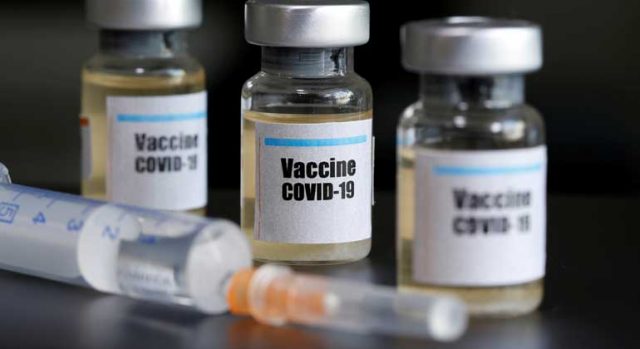
The Metro Pacific group may consider other global coronavirus disease 2019 (COVID-19 vaccine partners as it looks to invest in local manufacturing. 

“As a matter of principle, the Metro Pacific group is interested in the local manufacture of vaccines, also the boosters that would follow the vaccine application,” Metro Pacific Investments Corp. (MPIC) Chairman Manuel V. Pangilinan said at its annual stockholders’ meeting on Friday. 

He said the COVID-19 vaccine introduced during the group’s first meeting with Glovax Biotech Corp. was “one we are not familiar with,” adding that he is not sure it has government approval. 

“We are open to other vaccine producers globally.” 

Glovax last month said that Mr. Pangilinan is interested in investing in its proposed P7.5 billion vaccine manufacturing facility in the country. Glovax officials said they were applying for an emergency use authorization for EuCorVac-19, a COVID-19 vaccine that is being developed by South Korean firm EuBiologics. 

Mr. Pangilinan noted that Filipinos are interested in particular brands of COVID-19 vaccines. 

Six out of 10 Filipinos prefer coronavirus vaccines made in the US, according to a Social Weather Stations (SWS) poll. The Chinese Sinovac Biotech Ltd. topped the list of brands preferred by Filipinos at 39%, followed by the Pfizer, Inc. vaccine at 32%.  

MPIC is one of three key Philippine units of First Pacific, the others being Philex Mining Corp. and PLDT, Inc. Hastings Holdings, Inc., a unit of PLDT Beneficial Trust Fund subsidiary MediaQuest Holdings, Inc., has a majority stake in BusinessWorld through the Philippine Star Group, which it controls. — J.P.Ibañez 

SM mall unveils solar rooftop facility

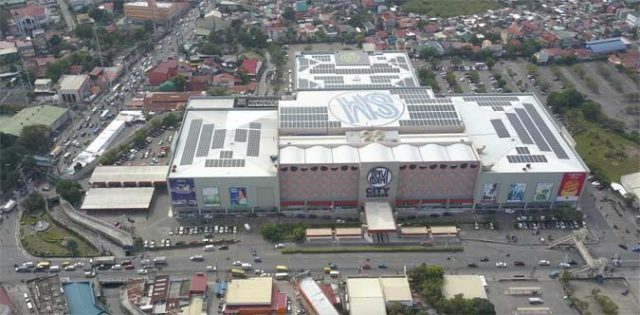
Over 3,100 solar panels are seen on the rooftop of SM City Bacoor in Cavite. Company handout

SM City Bacoor unveiled on Friday a 1.3-megawatt (MW) rooftop solar-powered facility which it hopes will help save P10.3 million in annual power bills and reduce its dependence on the grid.  

Designed by local solar firm Green Heat Corp., the facility is made up of over 3,100 solar panels covering 6,230 square meters. It can produce an average of 128,000 kilowatt-hours (kWh) of energy per month.  

SM City Bacoor expects to reduce its carbon footprint by over 8,400 metric tons by the first year of the facility’s operations, SM Supermalls Assistant Vice President for Operations for South 1 Region Lorenzo Leon A. Calingasan IV said during the virtual launch. 

“SM recognizes its impact on the environment and continuously takes measures to prioritize the efficient management of its resources, which in this case is our mall’s vast rooftop space that, aside from its use as shelter, is now a reliable source of power,” he was quoted as saying. 

Green Heat Director Glenn Tong said that they were excited to move forward with the partnership, supporting the mall’s initiative to complete its green business model. 

“Our group guarantees providing top quality systems that will perform for many years for our partners, who in turn can expect to make significant savings while making a lasting impact on the environment,” Mr. Tong said.   

During the rainy season, the installed solar rooftop facility can generate up to 15% of energy. The panels currently have a lifespan of 25 years. 

Mr. Calingasan said that the Cavite mall’s foray into harnessing power from the sun is part of SM Supermalls‘ many environmental projects. 

Seven years ago, SM City Bacoor started using light-emitting diode lights to become conserve energy. The management also started recycling treated wastewater in its toilets to manage water consumption and began a “Trash-to-Cash” campaign that promoted the trade of recyclables, among others.  

SM Supermalls is owned by SM Prime Holdings, Inc., a listed company. Shares of SM Prime in the stock exchange inched up by 1.79% or 65 centavos to finish at P36.90 apiece on Friday.