Home Blog Page 7583

NK appears to have restarted nuclear reactor — IAEA

VIENNA/SEOUL — North Korea (NK) appears to have restarted a nuclear reactor that is widely believed to have produced plutonium for nuclear weapons, the U.N. atomic watchdog said in an annual report, highlighting the isolated nation’s efforts to expand its arsenal.

The signs of operation at the 5-megawatt (MW) reactor, which is seen as capable of producing weapons-grade plutonium, were the first to be spotted since late 2018, the International Atomic Energy Agency (IAEA) said in the report, dated Friday.

“Since early July 2021, there have been indications, including the discharge of cooling water, consistent with the operation,” the IAEA report said of the reactor at Yongbyon, a nuclear complex at the heart of North Korea’s nuclear program.

The IAEA has had no access to North Korea since Pyongyang expelled its inspectors in 2009. The country subsequently pressed ahead with its nuclear weapons program and soon resumed nuclear testing. Its last nuclear test was in 2017.

The IAEA now monitors North Korea from afar, largely through satellite imagery.

Commercial satellite imagery shows water discharge, supporting the conclusion that the reactor is running again, said Jenny Town, director of the US-based 38 North project, which monitors North Korea.

“No way to know why the reactor wasn’t operating previously — although work has been ongoing on the water reservoir over the past year to ensure sufficient water for the cooling systems,” she said.

“The timing seems a little strange to me, given the tendency for flooding in coming weeks or months that could affect reactor operations.”

Last year 38 North said floods in August may have damaged pump houses linked to Yongbyon, highlighting how vulnerable the nuclear reactor’s cooling systems are to extreme weather events.

Seasonal rains brought floods in some areas this year, state media have said, but there have been no reports yet of threats to the site, the Yongbyon Nuclear Scientific Research Center.

KEY NUCLEAR SITE
At a 2019 summit in Vietnam with then-US President Donald Trump, North Korean leader Kim Jong Un offered to dismantle Yongbyon in exchange for relief from a range of international sanctions over nuclear weapons and ballistic missile programs.

At the time Mr. Trump said he rejected the deal because Yongbyon was only one part of the North’s nuclear program, and was not enough of a concession to warrant loosening so many sanctions.

US President Joseph R. Biden’s administration has said it reached out to the North Koreans to offer talks, but Pyongyang has said it has no interest in negotiating without a change in policy by the United States.

“There has been no agreement governing these facilities for a long time now,” said Joshua Pollack, a researcher at the James Martin Center for Nonproliferation Studies (CNS).

In June, the IAEA flagged indications of possible reprocessing work at Yongbyon to separate plutonium from spent reactor fuel that could be used in nuclear weapons.

In Friday’s report, the agency said the five-month duration of that apparent work, from mid-February to early July, suggested a full batch of spent fuel was handled, in contrast to the shorter time needed for waste treatment or maintenance.

“The new indications of the operation of the 5MW(e) reactor and the radiochemical (reprocessing) laboratory are deeply troubling,” it said in the report, which was issued without notice.

There were also indications of mining and concentration activities at a uranium mine and plant at Pyongsan, and activity at a suspected covert enrichment facility in Kangson, it added.

It is a safe bet that North Korea intends any newly separated plutonium for weapons, Mr. Pollack said, adding that in a speech this year Kim gave a long list of advanced weapons under development, including more nuclear bombs.

“North Korea’s appetite for warheads is not yet sated, it seems.” — Reuters
Afghanistan’s ‘Gen Z’ fears for future and hard-won freedoms

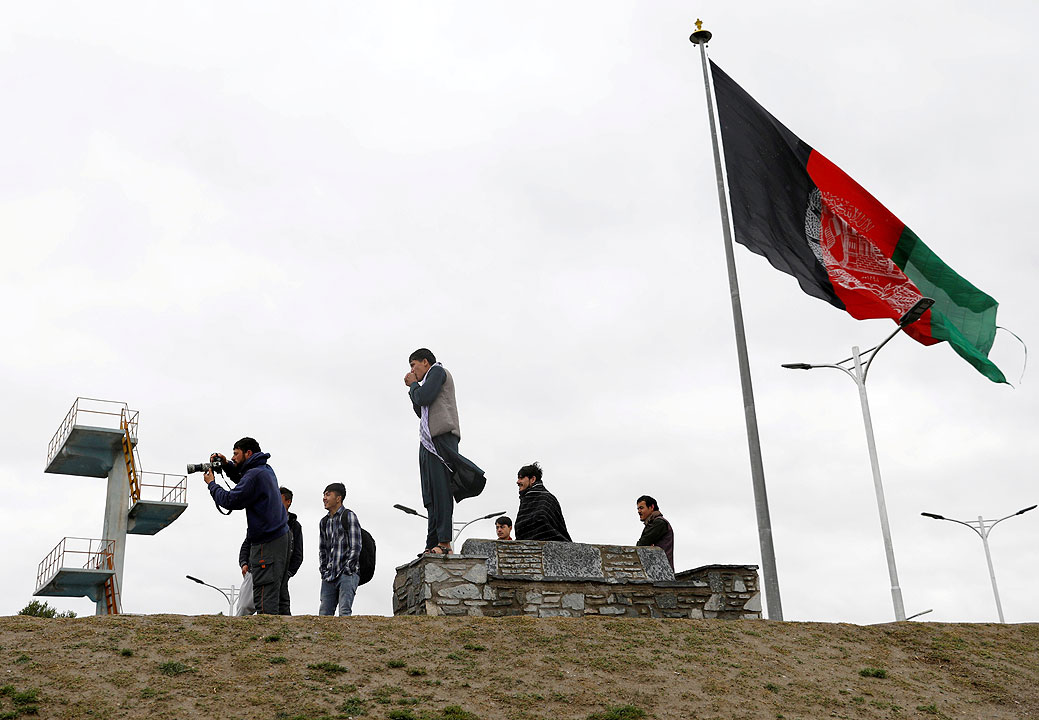
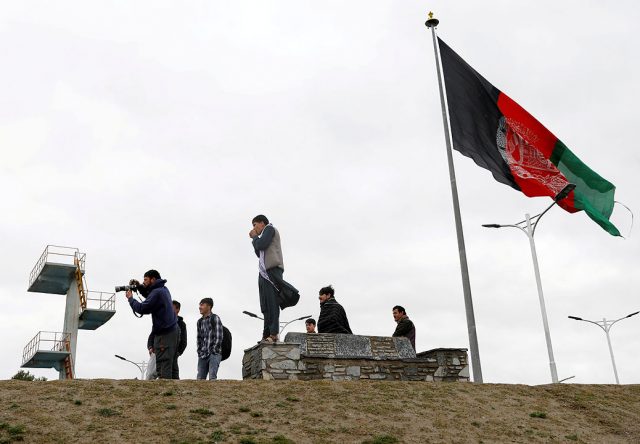
Youths take pictures next to an Afghan flag on a hilltop overlooking Kabul, Afghanistan, April 15, 2021. — REUTERS/MOHAMMAD ISMAIL/FILE PHOTO

WHEN 20-year-old Salgy found out last week that she had topped some 200,000 students who took Afghanistan’s university entrance exam this year, she was elated.

For months, she had locked herself away in her room in the capital Kabul to study, sometimes forgetting to eat. With her family crowding round their solar-powered TV as the results came in, she realized her hard work had paid off.

“That was a moment when I felt someone gifted me the whole world,” Ms. Salgy, who like many in the country goes by one name, told Reuters. “My mother cried out of happiness and I cried with her.”

That feeling turned almost immediately to worry when she remembered the events of the previous weeks.

Following the withdrawal of the bulk of the remaining US forces in Afghanistan, the Taliban began a lightning advance across the country, culminating in the fall of Kabul on Aug. 15.

“We are faced with a very uncertain future, thinking what will happen next,” Ms. Salgy told Reuters. “I think I am the luckiest and unluckiest person.”

Almost two third of Afghans are under the age of 25, and an entire generation cannot even remember the Taliban, who ruled Afghanistan from 1996 until it was toppled by Western-backed militia in 2001.

During that time they enforced a strict interpretation of Islamic law, banning girls from school, women from work and carrying out public executions. Since 2001, the militants fought an insurgency in which thousands of Afghans died.

Since re-taking power, the group has been quick to reassure students that their education would not be disrupted, also saying it would respect the rights of women and urging talented professionals not to leave the country.

But used to a life with cellphones, pop music and mixing of genders, Afghanistan’s “Generation Z” — born roughly in the decade around the turn of the millennium — now fears some freedoms will be taken away, according to interviews with half a dozen Afghan students and young professionals.

“I made such big plans, I had all these high reaching goals for myself that stretched to the next 10 years,” said Sosan Nabi, a 21-year-old graduate.

“We had a hope for life, a hope for change. But in just one week, they took over the country and in 24 hours they took all our hopes, dreams snatched from in front of our eyes. It was all for nothing.”

A Taliban spokesperson did not immediately respond to questions for this article.

HARD-WON FREEDOMS
On the morning of Aug. 15, as the Taliban neared Kabul, 26-year-old Javid rushed home from the university where he worked after graduating. He declined to give his full name out of fear of reprisals.

He deleted all emails and social media messages he had shared with foreign organizations and governments, especially the United States.

He took hard copies of certificates given by US-funded development programs to the backyard of his house and set them on fire. He broke a glass trophy received for that work against the floor.

Many Afghans working for overseas organizations have tried to flee the country in the last two weeks.

With little to go on but stories from parents about the Taliban, some young people said they were afraid, whatever the reality of the situation on the ground.

The first time many of them ever saw members of the group was patroling streets after their conquest of Kabul.

Besides safety, young people Reuters spoke with said they worried other hard-won freedoms could be taken away.

Secondary school enrolment rose from 12% in 2001 to 55% in 2018, according to the World Bank.

From a time when a single state-owned radio station broadcast mainly calls to prayer and religious teachings, Afghanistan now has an estimated 170 radio stations, over 100 newspapers and dozens of TV stations.

That’s not to mention smartphones and the Internet — non-existent under Taliban rule — giving young people access to events beyond Afghanistan’s borders, said Elaha Tamim, an 18-year-old who also just passed her university entrance exam.

“It is something we all use at all times,” she said. “We use it for entertainment when we want to relax, it’s our way of discovering what’s happening in the rest of the world. I don’t want to lose that.”

WOMEN’S RIGHTS
Some young women are particularly concerned by the Taliban’s victory.

The number of girls in primary school rose from effectively zero under the Taliban to over 80%, according the World Bank.

The Taliban has said it will respect the rights of girls to go to school this time around, though Mr. Javid said many female students at his university had stopped coming to class out of fear.

“I grew up in an environment where we were free, we could go to school, we could go out and about,” Ms. Tamim said. “My mother tells stories of her bitter time (under the Taliban). Those stories are frightening.”

Ammar Yasir, a member of the Taliban’s political office in Doha, personally congratulated Ms. Salgy — the student who topped the university entrance exams — on Twitter for her results, and for gaining admission to medical school.

She now hopes to fulfill her dream of becoming a doctor, despite the uncertainty.

“If the Taliban allow girls access to higher education and they don’t create barriers for them then that is good, otherwise my whole life’s struggle is at risk,” she said.

Despite the assurances, some people Reuters spoke with said they were desperate to leave, but didn’t know how.

“If I thought me staying here would bring any hope of a positive change then I would be ready, like the thousands of other young people, to give up my life for it,” Nabi said. “But we all know that isn’t a reality.” — Reuters

Israel offers COVID-19 booster shots to all vaccinated people

REUTERS

JERUSALEM — Israel on Sunday began offering a COVID-19 booster to children as young as 12, and its prime minister said a campaign that began a month ago among seniors has slowed a rise in severe illness caused by the Delta variant.

Announcing the decision, top Israeli health officials said the effectiveness of the second dose of the Pfizer-BioNTech vaccine waned six months after administration, making a booster necessary.

“The third dose brings us to the level of protection achieved by the second dose, when it was fresh,” said Sharon Alroy-Preis, head of public health at Israel’s Health Ministry.

“That means, people are 10 times more protected after the third vaccine dose,” she told a news conference, where the expanded booster drive was announced.

Those eligible for the third shot can receive it provided at least five months have passed since their second jab — a timeframe shorter than an eight-month interval in effect in the United States, which is considering cutting the waiting time.

Hoping to curb the spread of the highly contagious Delta variant, Israel began administering the booster to its older population a month ago and has been gradually lowering the age of eligibility. It stood at 30 before Sunday’s announcement.

So far 2 million people out of a population of 9.3 million have received three doses.

“There are already results: the increase in severe morbidity has begun to slow,” Prime Minister Naftali Bennett said in a statement. “But we have to complete third doses for all of our citizens. I call on those aged 12 and up to go out and immediately take the third shot.”

Israel and other countries have pressed ahead with booster plans despite opposition from the World Health Organization, which said more of the world should be vaccinated with a first dose before people receive a third.

The United States has said it will offer booster doses to all Americans, citing data showing diminishing protection. Canada, France and Germany have also planned booster campaigns. — Reuters

How the pandemic is shaping language 

PIXABAY

By Patricia B. Mirasol  

Pandemic-related words kept in their original English form are now a part of the Filipino language, according to the Commission on the Filipino Language (Komisyon sa Wikang Filipino or KWF). The commission also acknowledged that mobilizing people necessitated getting messages across in a language they understand.  

“We, the KWF, and other government agencies, initially struggled with words such as ‘PUI’ [person under investigation], ‘frontliner,’ and ‘physical distancing,’” said John Enrico C. Torralba, chief language researcher of KWF’s translation division. “There are no indigenous equivalents for them,” he told BusinessWorld in the vernacular, “so they were retained in their original form.”  

Citing Bicol poet and cultural advocate Victor Dennis T. Nierva, Mr. Torralba said many individuals who have translated materials from the Department of Health into their local languages practiced keeping these technical terms as well.  

Institutions like the US Centers for Disease Control and Prevention have similarly retained medical concepts like “spike protein” (which protrude from the outside of coronaviruses and allow them to infect cells) in its Filipino-translated resources.  

“Medical practitioners, language scholars, and translators need to work together to translate ideas into their respective languages,” said Mr. Torralba, adding that the KWF is developing a registry of technical word translations and building a network of translators. “They also need to be open to modifying translations that aren’t understood by the target audience.”   

Public understanding of a concept is an important factor for mobilizing individuals to follow official policy, such as evacuating during a storm. 

This need was highlighted during 2013’s super Typhoon Haiyan, Mr. Torralba told BusinessWorld: “A local citizen said he didn’t understand what a ‘storm surge’ meant. Had the authorities used the word daluyong, he would’ve immediately understood what to do.”  

Communicating in international lingua francas or national languages makes marginalized people more vulnerable, according to the United Nations Office for the Coordination of Humanitarian Affairs 

“People need to be more careful [about translations] because people’s lives are at stake,” Mr. Torralba said.   


SIDEBAR | Living languages 
KWF’s Buwan ng Wika (or Language Month) theme for 2021 is “Filipino and native tongues in Filipino decolonization.” The theme promotes the use of native languages to better reflect Filipino perspectives. It is in line with the 2021 Quincentennial Commemorations in the Philippines (2021 QCP), which commemorates significant events over the nation’s past 500 years.   

According to language resource Ethnologue, there are 183 living languages spoken in the Philippines, the majority of which are indigenous tongues. The most utilized languages — according to their order of use — are Tagalog, Cebuano, Pangasinan, Bicol, Hiligaynon, Waray, Kapampangan, Maranao, and Maguindanao, said Patrocinio V. Villafuerte, a poet, author, and retired professor, in an Aug. 12 webinar 

Republic Act No. 7104, which created the KWF, refers to Philippine languages as “the indigenous languages of the Philippines, including the national language and the regional and local languages.”   

Hurricane Ida plunges New Orleans into darkness amid Louisiana flooding

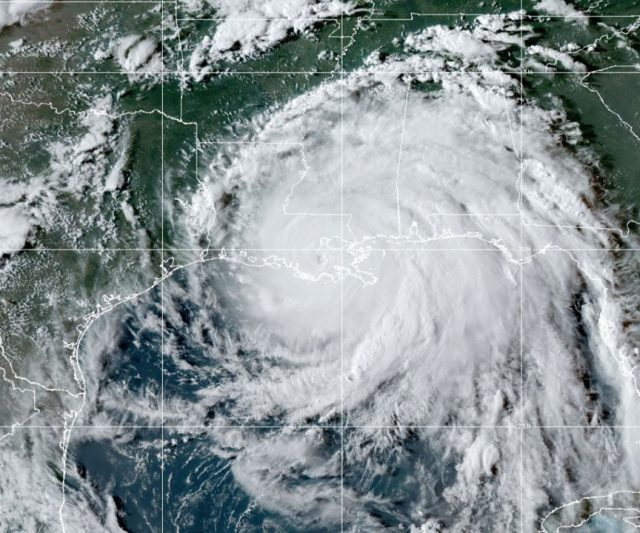
NOAA / NESDIS Center for Satellite Applications and Research

NEW ORLEANS — Hurricane Ida pounded Louisiana after sweeping ashore from the Gulf of Mexico, flooding wide areas under heavy surf and torrential rains as fierce winds toppled trees and power lines, plunging New Orleans into darkness after nightfall.  

The storm, though greatly diminished as it churned inland toward western Mississippi early on Monday, was expected to continue unleashing heavy downpours “likely to result in life-threatening” flooding, the National Hurricane Center said.  

Sunday night, the sheriff’s office in Ascension Parish reported the first known US fatality from the storm, a 60-year-old man killed by a tree falling on his home near Baton Rouge, the state capital.  

Ida, the first major hurricane to strike the United States this year, made landfall around noon on Sunday as a ferocious Category 4 storm over Port Fourchon, a hub of the Gulf’s offshore oil industry, packing sustained winds of up to 150 miles per hour (240 km per hour).  

Its arrival came 16 years to the day after Hurricane Katrina, one of the most catastrophic and deadly U.S. storms on record, struck the Gulf Coast, and about a year after the last Category 4 hurricane, Laura, battered Louisiana.  

US President Joseph R. Biden, Jr., declared a major disaster in the state, ordering federal assistance to bolster recovery efforts in more than two-dozen storm-stricken parishes. The full extent of storm damage remained to be seen at daybreak.  

Ida crashed ashore as Louisiana was already reeling from a resurgence of coronavirus disease 2019 (COVID-19) infections that have strained the state’s healthcare system, with an estimated 2,450 COVID-19 patients hospitalized statewide, many in intensive care units.  

A loss of generator power at the Thibodaux Regional Health System hospital in Lafourche Parish, southwest of New Orleans, forced medical workers to manually assist respirator patients with breathing while they were moved to another floor, the state Health Department confirmed to Reuters.  

Within 12 hours of landfall, Ida had weakened into a Category 1 hurricane on the five-level Saffir-Simpson scale, with top winds clocked at 85 mph (135 kph) as the storm pushed about 100 miles inland past New Orleans, Louisiana’s largest city, early on Monday.  

By then, Ida had plowed a destructive path that submerged much of the state’s coastline under several feet of surf, with flash flooding reported by the National Hurricane Center across southeastern Louisiana.  

Nearly all offshore Gulf oil production was suspended in advance of the storm, and major ports along the Louisiana and Mississippi coasts were closed to shipping.  

WIDESPREAD OUTAGES 
Power was knocked out Sunday night to the entire New Orleans metropolitan area following the failure of all eight transmission lines that deliver electricity to the city, the utility company Entergy Louisiana reported.  

One transmission tower collapsed into the Mississippi River, the Jefferson Parish Emergency Management Department said.  

More than one million Louisiana homes and businesses in all were without electricity by late Sunday night, according to the tracking site Poweroutage.US 

Residents of the most vulnerable coastal areas were ordered to evacuate days ahead of the storm. Those riding out the storm in their homes in New Orleans braced for the toughest test yet of major upgrades to a levee system constructed following devastating floods in 2005 from Katrina, a hurricane that claimed some 1,800 lives.  

“I almost found myself in a panic attack when news announced this was the anniversary of Katrina,” Janet Rucker, a lifelong New Orleans resident and recently retired sales manager who took shelter in a downtown hotel with her dog, Deuce. “This is just not good for our nerves and our psyche.”  

The US Army Corps of Engineers said the newly reinforced New Orleans levees were expected to hold, though they said they said the flood walls could be overtopped in some places.  

Hundreds of miles of new levees were built around New Orleans after flooding from Katrina inundated much of the low-lying city, especially historically Black neighborhoods.  

Inundation from Ida’s storm surge — high surf driven by the hurricane’s winds — was reported to be exceeding predicted levels of 6 feet (1.8 m) along parts of the coast. Videos posted on social media showed storm surge flooding had transformed sections of Highway 90 along the Louisiana and Mississippi coast into a choppy river.  

“We’re as prepared as we can be, but we’re worried about those levees,” said Kirk Lepine, president of Plaquemines Parish, and one of the most vulnerable areas along the Gulf Coast.  

The parish later issued an alert on Facebook urging residents of one area to seek higher ground after reports of an overtopped levee. — Devika Krishna Kumar/Reuters 

Japan’s Gunma prefecture reports contaminant in Moderna COVID-19 vaccine

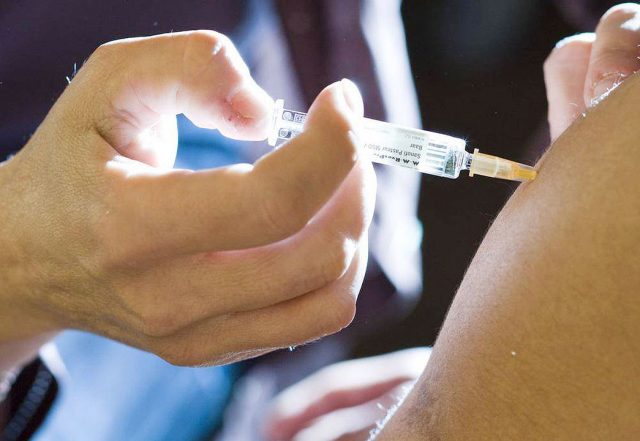
TOKYO — A contaminant was found in Moderna’s coronavirus disease 2019 (COVID-19) vaccine on Sunday in Japan’s Gunma prefecture, near Tokyo, the latest such case in the country involving the US company’s vaccines. A tiny, black substance was found in a Moderna Inc. vaccine vial, prompting the prefecture to suspend inoculation using vaccines from the Moderna lot from which the vial had come, a Gunma prefecture official said.  

Japan’s health ministry said on Saturday two people died after receiving Moderna’s vaccine shots that were among lots later suspended following the discovery of contaminants.  

The government had said that no safety or efficacy issues had been identified and that the suspension was a precaution. The causes of death are being investigated.  

Last week, Japan halted the use of 1.63 million Moderna doses, shipped to 863 vaccination centers nationwide, after the domestic distributor, Takeda Pharmaceutical, received reports of contaminants in some vials.  

Moderna and Spanish pharma company Rovi, which bottles Moderna vaccines for markets other than the United States, had said at the time that the contamination could be due to a manufacturing issue in one of Rovi’s production lines.  

The vaccine in question in Gunma is from a Moderna lot that is different from those whose use has already been suspended, the Gunma official said.  

Vaccines from the same lot have been administered to 4,575 people in Gunma, but the prefecture has heard no reports of ill health, the official said.  

Contaminants were found in Moderna vaccines in Japan’s southern prefecture of Okinawa, as well. — Reuters 

Chinese foreign minister tells top US diplomat world must ‘positively guide’ Taliban 

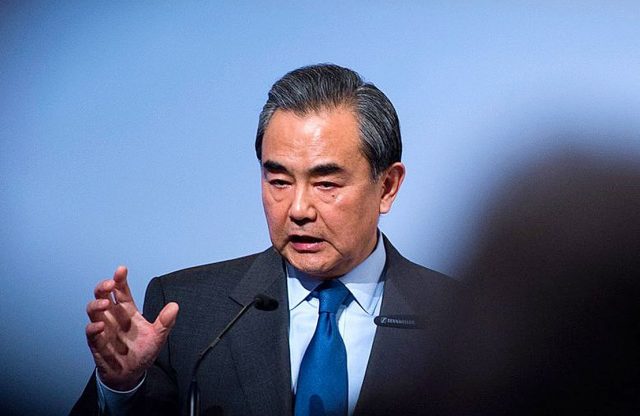
Chinese State Councillor and Foreign Minister Wang Yi. Image via Kleinschmidt/MSC/CC BY 3.0 DE/Wikimedia Commons.

BEIJING — Chinese State Councillor and Foreign Minister Wang Yi told US Secretary of State Antony Blinken in a phone call on Sunday that the international community should engage with Afghanistan’s new Taliban rulers and “positively guide” them, China’s foreign ministry said.  

Washington should work with the international community to provide economic and humanitarian aid to Afghanistan, help the new regime run governmental functions normally, maintain social stability, and stop the currency from depreciating and the cost of living from rising, Mr. Wang said, according to a statement.  

“While respecting the sovereignty of Afghanistan, the US should take concrete action to help Afghanistan fight terrorism and stop violence, rather than playing double standards or fighting terrorism selectively,” Mr. Wang said, warning that the “hasty withdrawal” could allow terrorist groups to “regroup and come back stronger.”  

Chinese state TV said the call was made at the invitation of Washington.  

State Department spokesperson Ned Price said in a statement that Messrs. Blinken and Wang spoke about “the importance of the international community holding the Taliban accountable for the public commitments they have made regarding the safe passage and freedom to travel for Afghans and foreign nationals.”  

Before the chaos of the past two weeks, US officials had argued that withdrawing from Afghanistan would free up time and attention of senior US political and military leaders, as well as some military assets, to focus on the Indo-Pacific and the challenge posed by China, which the Biden administration has declared its foreign policy priority.  

But China’s state-controlled media have seized on the often chaotic pullout, portraying US support for allies as fickle.  

China has not officially recognized the Taliban as Afghanistan’s new rulers, but Wang Yi last month hosted Mullah Baradar, chief of the group’s political office, and has said the world should guide and support the country as it transitions to a new government instead of putting more pressure on it.  

Mr. Wang earlier told Mr. Blinken in a call on Aug. 16 that the hasty pullout of US troops from Afghanistan had a “serious negative impact,” but pledged to work with Washington to promote stability in the country.  

But Mr. Wang said Washington could not expect China’s cooperation if it was also trying to “contain and suppress China and harm China’s legitimate rights and interests,” Chinese state media reported at the time of the earlier call.  

The engagement comes as relations between Beijing and Washington are at their lowest point in decades and just after the release of a US intelligence assessment into the origins of COVID-19 that China said “wrongly” claimed that Beijing was hindering the investigation and dismissed as “not scientifically credible.”  

The two diplomats also discussed US-China ties on Sunday, according to the Chinese statement.  

Mr. Wang said recent communications between the two countries on Afghanistan and climate change show that dialogue and cooperation are better than confrontation, it said.  

“China will consider how to engage with the US side based on the US attitude towards China,” Mr. Wang was quoted as saying. — Reuters 

Fauci backs COVID-19 vaccine mandate for US school children 

REUTERS

WASHINGTON — Dr. Anthony S. Fauci, the top US infectious disease expert, said on Sunday he supports coronavirus disease 2019 (COVID-19) vaccine mandates for children attending schools as the highly contagious Delta variant of the coronavirus continues to fuel a surge in cases in the nation.  

“I believe that mandating vaccines for children to appear in school is a good idea,” Dr. Fauci told CNN’s State of the Union program. “We’ve done this for decades and decades, requiring polio, measles, mumps, rubella, hepatitis” vaccinations.  

Currently, children under 12 are not eligible to receive the COVID-19 vaccine. But Dr. Fauci, in a separate interview on ABC’s This Week program, said there should be enough data by early October for the U.S. Food and Drug Administration to consider whether the shot is safe for children under that age.  

“I think there’s a reasonable chance” that the Pfizer-BioNTech or Moderna vaccines could get FDA clearance for kids under 12 before the upcoming holiday season, Dr. Fauci, the director of the National Institute of Allergy and Infectious Diseases and chief medical adviser to the White House, said last Tuesday.  

As schools reopen for the fall, the rise in coronavirus cases is already causing significant disruptions.  

Dozens of schools nationwide have had to delay the start of the school year or shut down since opening in August, according to data from tracking website Burbio. Its data shows the impact on schools so far has been heaviest in the South, the epicenter of the current surge in cases and where vaccination rates among those already eligible are generally the lowest in the country.  

The reopening of schools is also contributing to a supply shortage of COVID-19 tests in the United States as schools revive surveillance programs that will require tens of millions of tests, according to industry executives and state health officials, Reuters reported last week. — Linda So/Reuters 

PM says Singapore must remain open as anxiety over job competition grows

REUTERS

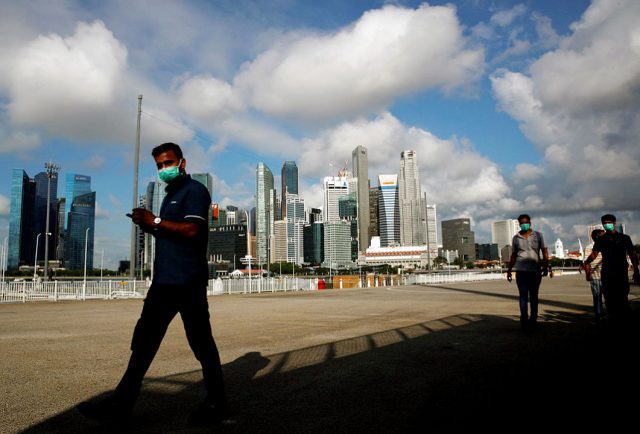
SINGAPORE — Singapore must stay open to preserve its status as a global business hub, its prime minister said on Sunday, even as the country continues to tighten its foreign worker policies and addresses anxieties among locals over competition for jobs.  

Foreign labor has long been a hot button issue in Singapore, but uncertainties due to the coronavirus disease 2019 (COVID-19) pandemic have increased employment worries among locals as the city state recovers from last year’s record recession.  

“We must make it crystal clear to the world that Singapore is determined to stay open, in order to earn a living for ourselves,” Lee Hsien Loong said in his National Day Rally speech. He said the country must not give the impression that Singapore is becoming xenophobic and hostile to foreigners.  

“It would gravely damage our reputation as an international hub. It would cost us investments, jobs, and opportunities. It would be disastrous for us.”  

While Singapore will continue to tighten its foreign worker policies, it will only do so gradually so as not to hurt businesses, Mr. Lee said. The government will also pass a law to ensure fair hiring, he said.  

Mr. Lee’s government has been tightening foreign worker policies for several years while taking steps to promote local hiring, including by raising the salary threshold for issuing work permits.  

Just under 30% of Singapore’s 5.7 million population are non-residents, up from around 10% in 1990, according to government statistics.  

On Sunday, Singapore hit a key milestone of fully vaccinating 80% of its population against COVID-19, setting the stage for further reopening of the economy as the country gets ready to live with the virus as endemic.  

“We may have to tap on the brakes from time to time, but we want to avoid having to slam on the brakes,” Mr. Lee said.  

“So in the next phase, we will move step by step not in one big bang like some countries but cautiously and progressively, feeling our way forward,” Mr. Lee added. — Reuters 

Voter’s registration now among the government services offered at SM

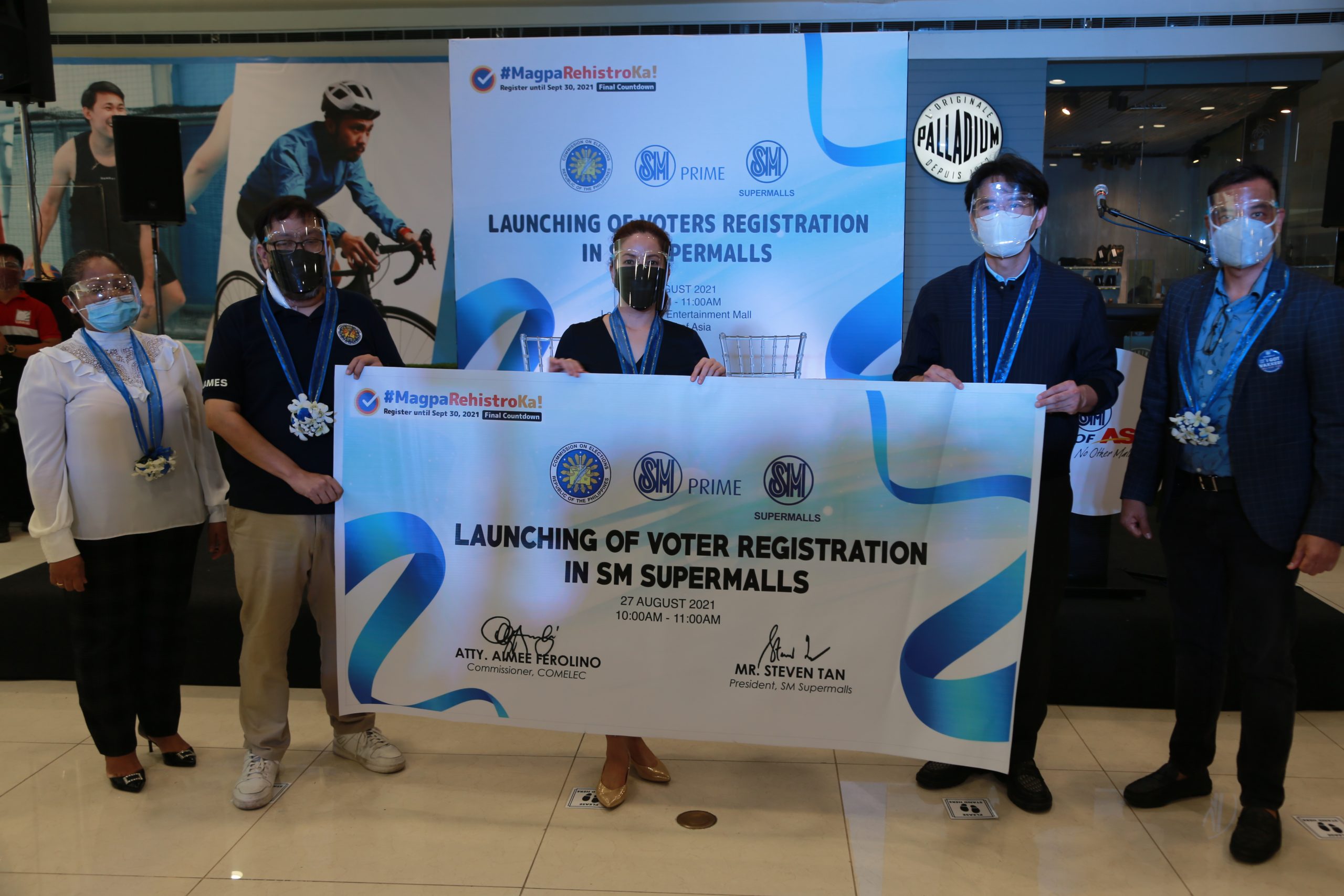
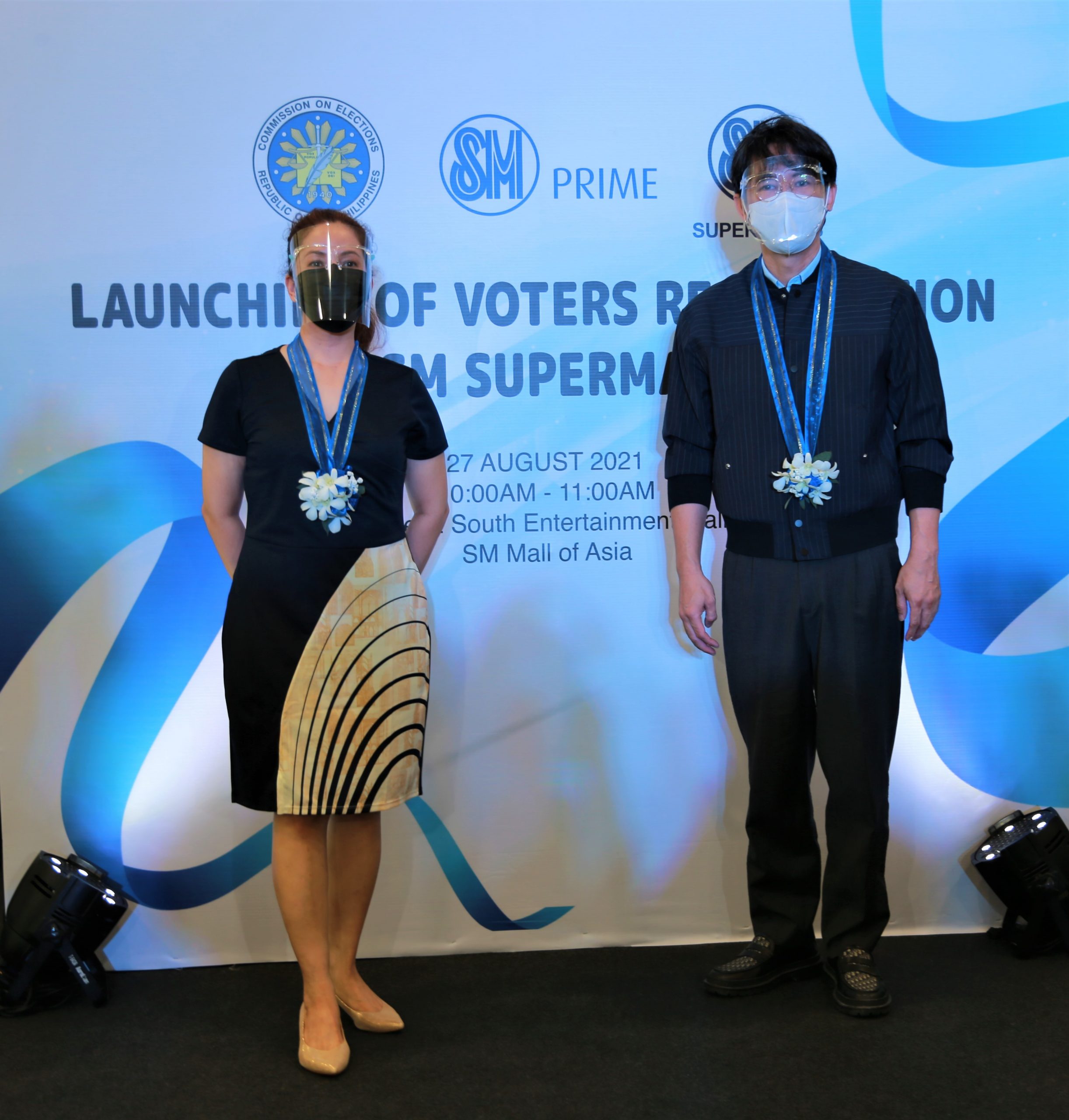
From (L-R) James B. Jimenez, Director IV, Education and Information Department, COMELEC Atty. Aimee P. Ferolino, Commissioner, Commission on Elections Mr. Steven T. Tan, President, SM Supermalls Atty. Divine E. Blas-Perez, Director IV, Election and Barangay Affairs Department, COMELEC Mr. Bien C. Mateo, Senior Vice President, SM Supermalls

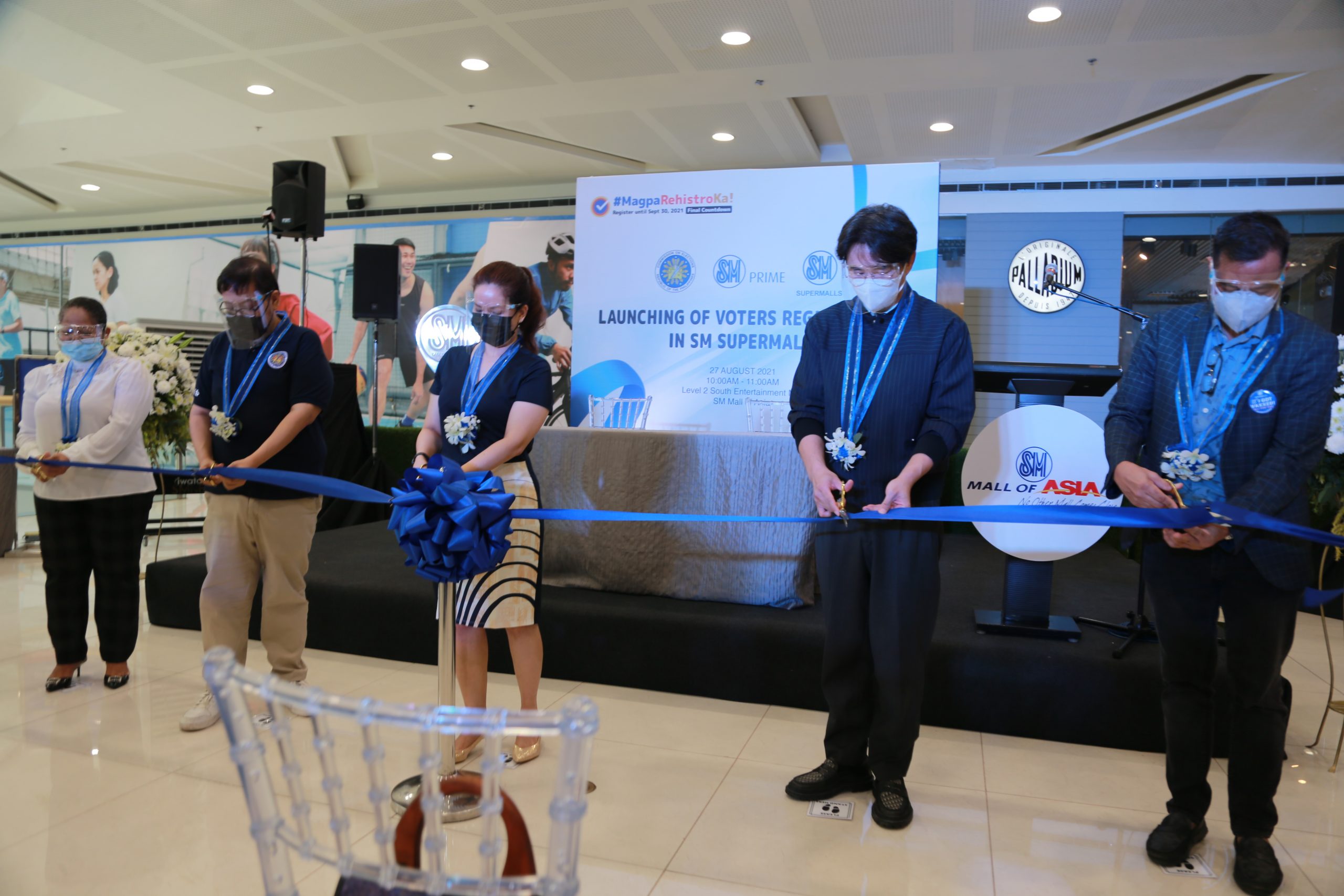
SM Supermalls and Commission on Elections (COMELEC) have officially teamed up to provide voters with more registration venues at SM. After signing a Memorandum of Agreement last August 27, 2021, at Level 2 South Entertainment Mall SM Mall of Asia, COMELEC has opened satellite registration centers in SM Supermalls nationwide. This gives the public a safer, more convenient option amidst the prevailing Covid health crisis.

COMELEC is the latest government agency to partner with the mall chain in bringing basic government services closer to the public. Other in-mall government services include Covid vaccination, international vaccine certification at the Bureau of Quarantine satellite office, National ID registration, passport application, and express services from government agencies such as PAGIBIG, PhilHealth, SSS, and GSIS.

With the approaching September 30 registration deadline, a good turnout of registrants is expected. In view of this, health and safety standards will be strictly observed. The voter’s registration center, like all other government service centers in the mall, is required to follow the Safety Protocols issued by the IATF. COMELEC shall limit the number of registrants per day. Execution of health declaration forms, checking of body temperature and physical distancing along with the mandatory face mask and face shields will be enforced on site.

47 SM Supermalls across the country will participate in this effort. This will help ease and unburden registration traffic in barangays, providing the public with a more convenient, faster, and safer way to access the registration process. For SM Supermalls with the Voter’s Registration Center and schedules, visit https://www.smsupermalls.com/whats-new/voters-registration-now-among-the-government-services-offered-at-sm/ or follow @smsupermalls on all social media accounts.


Spotlight is BusinessWorld’s sponsored section that allows advertisers to amplify their brand and connect with BusinessWorld’s audience by enabling them to publish their stories directly on the BusinessWorld Web site. For more information, send an email to online@bworldonline.com.

Join us on Viber to get more updates from BusinessWorld: https://bit.ly/3hv6bLA

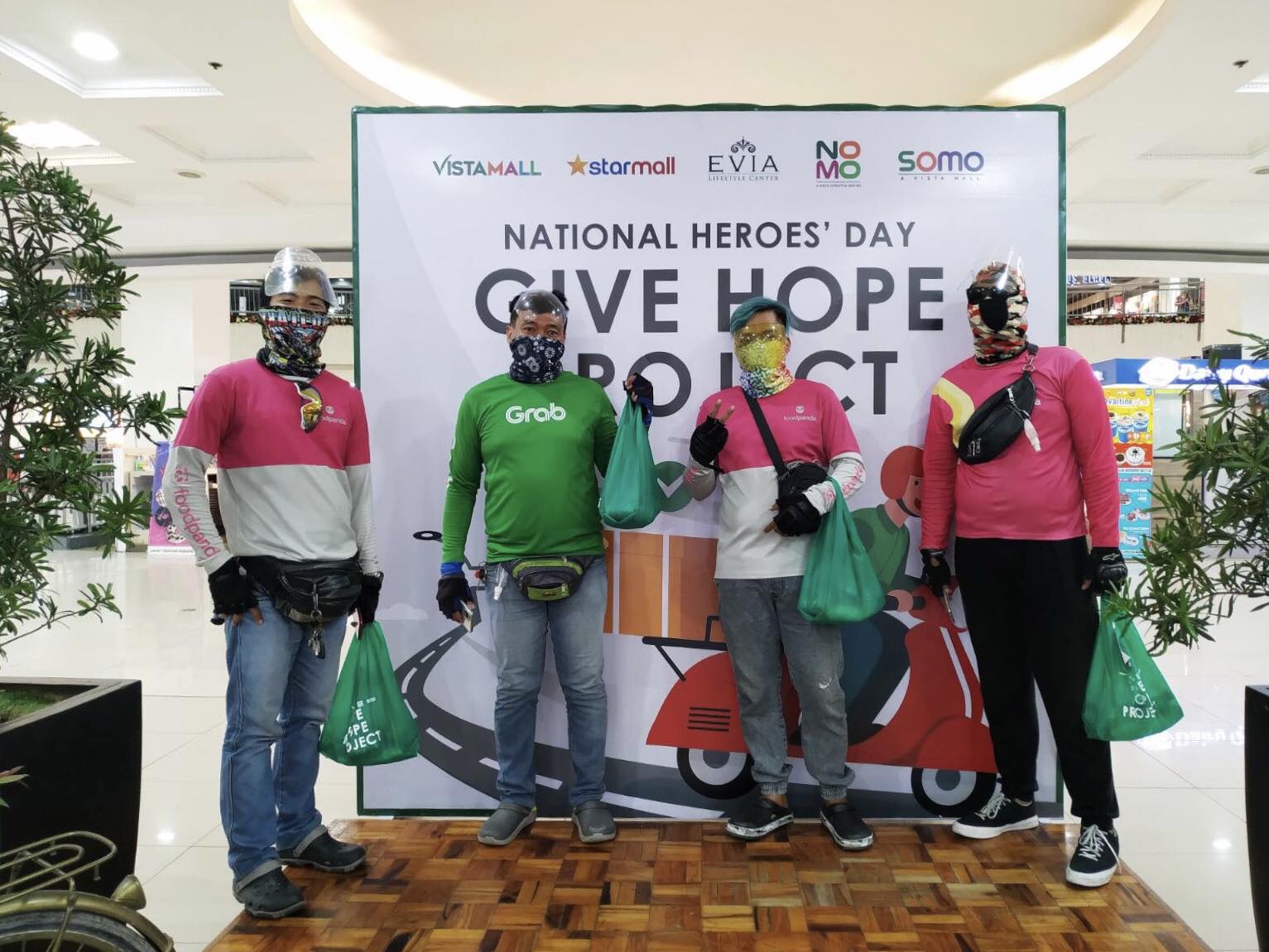
In celebration of National Heroes’ Day, Vista Mall and Starmall pay tribute to courier and delivery riders

In celebration of National Heroes’ Day, Vista Mall and Starmall pay tribute to lucky riders of GetAll, Foodpanda, and other accredited couriers who are the malls’ partners for their online delivery services. The lucky riders, who were in the vicinity of Vista Mall and Starmall branches nationwide, were given grocery packs, as tokens for their hard work during the pandemic.

IFC eyes record investment in East Asia

PHILIPPINE STAR/ MICHAEL VARCAS

THE INTERNATIONAL Finance Corp. (IFC), a member of the World Bank Group, is ramping up investments in East Asia and the Pacific economies to as much as $5 billion to help the region rebound from the pandemic and combat climate change, a top official said.

“For the next year, we’re targeting long-term investments of $4-5 billion across East Asia and the Pacific [for a] green, resilient and inclusive growth,” IFC’s newly appointed Regional Director for East Asia and the Pacific Kim-See Lim told BusinessWorld in an interview on Aug. 20.

If realized, this meant the World Bank’s private sector arm will exceed its record-high commitments of $3.8 billion in the previous fiscal year (July 1, 2020 to June 30, 2021).

“Many of the countries around the region and globally, the governments are facing fiscal deficits and therefore have not a lot of headroom to help the region and the private sector recover, so it’s key part of our mandate to use private sector solutions to help the region go back stronger,” Ms. Lim said.

Addressing climate change and marine plastic pollution are also top priorities for the IFC in the region, which is highly vulnerable to natural hazards, she said.

Ms. Lim said they are targeting to expand the institution’s climate financing to 35% of its total long-term investment portfolio by 2025, and align 85% of new direct investments with the Paris agreement by July 2023.

The agreement aims to limit the global temperature rise to 1.5 degrees Celsius, which experts say would require the world to achieve net zero emissions by 2050.

Currently, 26% of all the IFC-supported projects are focused on mitigating the impact of climate change and addressing the marine plastic crisis.

By July 2025, Ms. Lim said all of the IFC’s new direct investments should be aligned with the Paris Agreement.

The IFC also aims to sustain and even grow its investments in the Philippines, after investing $399 million across four local companies in the past fiscal year, IFC Country Manager for the Philippines Jean-Marc Arbogast said in the same interview.

Further, Ms. Lim said the IFC is planning to finance more climate-related projects in the Philippines since it is one of the world’s most disaster-prone nations and most exposed to the impact of climate change.

“We are definitely looking for opportunities to do more things in the Philippines in climate finance. But we cannot give a definitive answer [on target investments], because it depends on the client and the opportunities that come our way,” she said.

Mr. Arbogast said the IFC has a number of projects in the pipeline that it is considering to finance across strategic priority areas on climate change, financial inclusion, infrastructure and human capital development.

He noted infrastructure is among the most underinvested sectors in the country as the existing financing is not enough to close the infrastructure gap.

The country could open up the infrastructure market and attract more investments in the sector to bring in not only additional capital, but also technical know-how, he said.

Internet connectivity and affordable healthcare are also among the sectors that are lacking in investments in the Philippines, according to Mr. Arbogast, who noted both are crucial during the ongoing pandemic.

Ms. Lim, the IFC regional director, said much of the economic and development gains the region achieved in the past 10-20 years were reversed during the pandemic.

“Governments have less and less fiscal space to provide more support for businesses, because of these very stretched resources. So all in all, I think there is much need for a bigger role for the private sector to play and this is where IFC will step up, to help the private sector in this recovery in the next few years,” she added.

Despite the impact of the pandemic, Ms. Lim said the IFC continued to balance its portfolio and businesses to sustain its financing to clients while managing the risks on its own balance sheet.

“Because we’re a global institution, we have the largest source of multilateral financing. That in itself provides some level of diversification, to the size of the portfolio and the geographies and the sectors that we have on our books,” she said.

In March 2020, the IFC launched an $8-billion fast-disbursing financing facility that pandemic-hit clients could access. It also has a $4-billion global health platform that aims to boost healthcare supplies in developing countries. — Beatrice M. Laforga