Home Blog Page 7548

Wuhan lab staff sought hospital care before COVID-19 outbreak disclosed — WSJ

COMPUTER-GENERATED representation of COVID-19 virions via Felipe Esquivel Reed / CC BY-SA

WASHINGTON  Three researchers from China’s Wuhan Institute of Virology (WIV) sought hospital care in November 2019, months before China disclosed the coronavirus disease 2019 pandemic, the Wall Street Journal reported on Sunday, citing a previously undisclosed US intelligence report. 

The newspaper said the report  which provides fresh details on the number of researchers affected, the timing of their illnesses, and their hospital visits  may add weight to calls for a broader probe of whether the COVID-19 virus could have escaped from the laboratory. 

The report came on the eve of a meeting of the World Health Organization’s (WHO) decision-making body, which is expected to discuss the next phase of an investigation into the origins of COVID-19. 

A National Security Council spokeswoman had no comment on the Journal’s report but said the Biden administration continued to have “serious questions about the earliest days of the COVID-19 pandemic, including its origins within the Peoples Republic of China.” 

She said the US government was working with the WHO and other member states to support an expert-driven evaluation of the pandemic’s origins “that is free from interference or politicization.” 

“We’re not going to make pronouncements that prejudge an ongoing WHO study into the source of SARS-CoV-2, but we’ve been clear that sound and technically credible theories should be thoroughly evaluated by international experts,” she said. 

The Journal said current and former officials familiar with the intelligence about the lab researchers expressed a range of views about the strength of the report’s supporting evidence, with one unnamed person saying it needed “further investigation and additional corroboration.” 

The United States, Norway, Canada, Britain and other countries in March expressed concerns about the WHO-led COVID-19 origins study, and called for further investigation and full access to all pertinent human, animal and other data about the early stages of the outbreak. 

Washington is keen to ensure greater cooperation and transparency by China, according to a source familiar with the effort. 

The Chinese Embassy in Washington did not immediately respond to a request for comment on Sunday. 

On Sunday, China’s foreign ministry noted that a WHO-led team had concluded a lab leak was extremely unlikely after a visit in February to the virology institute. “The US continues to hype the lab leak theory,” the ministry said in response to a request for comment by the Journal. “Is it actually concerned about tracing the source or trying to divert attention?” 

The Trump administration had said it suspected the virus may have escaped from a Chinese lab, which Beijing denies. 

A State Department fact sheet released near the end of the Trump administration had said “the US government has reason to believe that several researchers inside the WIV became sick in autumn 2019, before the first identified case of the outbreak, with symptoms consistent with both COVID-19 and common seasonal illnesses.” It did not say how many researchers. 

China refused to give raw data on early COVID-19 cases to the WHO-led team probing the origins of the pandemic, according to one of the team’s investigators, Reuters reported in February, potentially complicating efforts to understand how the outbreak began. — Reuters 

Taiwan slams WHO’s ‘indifference’ after failing to get into key meeting

NATANAELGINTING-FREEPIK

TAIPEI  Taiwans government slammed the World Health Organizations (WHO) indifference” to the health rights of Taiwanese people and for capitulating to China on Monday after failing to get invited to a meeting of its decisionmaking body. 

Taiwan is excluded from most global organizations such as the WHO because of the objections of China, which considers the island one of its provinces not a country. 

Taiwan, with the strong backing of major Western powers, had been lobbying for access to the WHOs World Health Assembly, which opens on Monday, as an observer. 

In a joint statement by Foreign Minister Joseph Wu and Health Minister Chen Shih-chung, Taiwans government said that they would continue to seek participation. 

As a professional international health body, the World Health Organization (WHO) should serve the health and welfare of all humanity and not capitulate to the political interests of a certain member, Mr. Chen said, referring to China. 

Mr. Wu expressed regret at the WHO Secretariats continued indifference to the health rights of Taiwans 23.5 million people. 

China says Taiwan can only take part if it accepts it is part of one China, which Taipeis government will not do, and that only Beijing has a right to speak for Taiwan on the international stage and Taiwan has in any case been given the access it needs during the coronavirus disease 2019 (COVID-19) pandemic. 

Taiwans statement said China was falsely claiming that appropriate arrangements have been made for Taiwans WHO participation, adding that only the island’s democratically elected government can speak for its people. 

Taiwan urges the WHO to maintain a professional and neutral stance, reject Chinas political interference, and allow Taiwan to join WHO meetings, mechanisms, and activities in order to protect the welfare of humanity and jointly combat disease. 

While the WHO cooperates with Taiwans technical experts on COVID-19, it is up to member states whether to invite Taiwan to observe the WHO meeting, the WHO’s principal legal officer Steve Solomon said last week. — Reuters 

Israel-Hamas ceasefire holds, UN to launch Gaza aid appeal

REUTERS/MOHAMMED SALEM

JERUSALEM/GAZA  A ceasefire between Israel and Hamas held into a third day on Sunday as mediators spoke to all sides about extending the period of calm after the worst outbreak of fighting in years. 

Egyptian mediators have been shuttling between Israel and the Gaza Strip, which is ruled by Hamas, to try to sustain the ceasefire and have also met the Islamist groups rival, Palestinian President Mahmoud Abbas, in the occupied West Bank. 

Egypts foreign minister was also set to meet with top Jordanian officials on Sunday to discuss de-escalation and ways to revive the Middle East peace process. 

Lynn Hastings, the United Nations (UN) Humanitarian Coordinator for the Palestinian territories, said on Sunday the UN would launch an appeal to repair the damage in densely populated Gaza, where there is a threat of coronavirus disease 2019 (COVID-19) spreading. 

The escalation has exacerbated an already dire humanitarian situation in Gaza, generated by nearly 14 years of blockade and internal political divisions, alongside recurrent hostilities, she said in a statement issued from the Palestinian enclave. 

We must also ensure support to continue addressing needs that already existed, including those arising from the ongoing pandemic. 

Israel has blockaded Gaza since 2007, saying this prevents Hamas bringing in arms. Ms. Hastings said the United Nations had long been asking Israel to stop the blockade and would continue doing so. 

US President Joseph R. Biden, Jr., has said Washington will work with UN agencies on expediting humanitarian aid for Gaza in a manner that does not permit Hamas to simply restock its military arsenal. 

His top diplomat, US Secretary of State Antony Blinken, in television interviews on Sunday said that while the Biden administration was now focused was on aid, reconstruction and diplomacy, an end to violence could help shift gears toward long-term peace. 

Well be re-engaging with the Palestinians  of course continuing our deep engagement with the Israelis  in trying to put in place conditions that allow us over time, hopefully, to advance a genuine peace process. But that is not the immediate order of business, Mr. Blinken told CNNFareed Zakaria GPS program. We have a lot of work to get to that point. 

The United Arab Emirates on Sunday also said it stands ready to facilitate peace efforts. 

Palestinian officials put reconstruction costs at tens of millions of dollars in Gaza, where medical officials said 248 people were killed during the 11 days of fighting. 

Medics said rocket fire and a guided missile attack killed 13 people in Israel during the hostilities. 

Economists said Israels recovery from the COVID-19 pandemic could be curbed by the hostilities. Israel reopened its borders to foreign tourists on Sunday but said it would take time to revive the tourism industry. 

Israel has fully vaccinated about 55% of its population and COVID-19 cases have dropped sharply. 

AL-AQSA 

Israel admitted Jewish visitors on Sunday to a contested Jerusalem holy site where police confrontations with Palestinian protesters helped to ignite the cross-border Gaza fighting on May 10. 

Police said this was a regular scheduled visit to the sacred compound known as Temple Mount by Jews and the Noble Sanctuary by Muslims. Israeli social media accounts showed a few dozen Jews in religious garb strolling around the site under guard and police reported no unusual incidents. 

The hilltop plateau in Jerusalems walled Old City is the most sensitive site in the conflict, and was the focus of frequent protests by Palestinians during the Muslim holy month of Ramadan. 

The holiest site in Judaism, it is revered by Jews as the site of the Biblical temples of antiquity. It is now dominated by two Muslim shrines, the Dome of the Rock and al-Aqsa Mosque, which is the third-holiest site in Islam. 

It is situated in East Jerusalem, which Israel captured and occupied in a 1967 war, later annexing in a move not recognized internationally. 

Palestinians seek East Jerusalem, including the Old City, as the capital of a future state. But Israel deems all of Jerusalem to be its capital, citing religious and historical ties. — Reuters 

Add to cart: Wilcon flagship store now on Lazmall

Wilcon Depot, the Philippines’ leading home improvement and construction supply retailer, announces the launch of its newest Flagship Store on LazMall.

Customers can now purchase high-quality products and home solutions from Wilcon Depot with just a few quick clicks on their gadgets. Wilcon Flagship Store on LazMall brings you amazing products for your home needs from Hamden kitchen appliances and Ariston water heaters.

Hamden kitchen appliances offer top-notch residential kitchen needs for cooking and baking from gas burners, oven, electronic hotplates, range hoods, induction hobs, cooktops, built-in hobs, and freestanding cooker with oven. Most of Hamden products are distinctly developed with Italian SABAF burners that guarantee high level performances with an excellent flame distribution.

Ariston offers the widest and most comprehensive range of water heaters with high technology, quality, and efficiency. Ariston water heaters, your perfect partner in achieving the ultimate shower experience, can guarantee undeniable satisfaction as it bears the hallmarks of Italian design—stunning, slim, and safe.

Customers can expect that Wilcon products come with warranties—assuring its high quality and workmanship. Online home shopping lovers can now add to cart and check out Wilcon products. Start loving your homes even more and get all these Hamden and Ariston appliances at Wilcon Flagship Store on LazMall by clicking here: https://www.lazada.com.ph/shop/wilcon-depot.

Wilcon continuously provides its valued customers a safer and more convenient home shopping experience in partnership with Lazada Philippines. The company aims to deliver better product offering and customer satisfaction and service to more homeowners and builders alike nationwide. The retail giant who has over 43 years of leadership in the retailing industry aspires to be the top-of-mind home retailer—not just in the physical stores but also online.

The current product offering is just the beginning. The company plans to add more high-quality products and home solutions that will be made available soon in the Wilcon Flagship Store on LazMall. Continue to watch out their official flagship store and find everything you need for your home with Wilcon.

Visit any of their 65 stores nationwide and explore the limitless product selections that Wilcon offers ranging from Tiles, Sanitarywares, Plumbing, Furniture, Home Interior, Building Materials, Hardware, Electrical, Appliances, and other DIY items.

Adhering to health and safety protocols to fight against COVID-19, Wilcon continuously implements necessary precautionary measures inside all of its stores to ensure their employees and valued customers’ safety, health, and well-being a priority.

You can also browse their Digital Catalogue and shop conveniently while at home through your personal shopper with the Browse, Call, and Collect/Deliver service. BROWSE the items you want to purchase at shop.wilcon.com.ph and www.wilcon.com.ph, CALL/Viber/text the Wilcon branch of your choice, and schedule a COLLECT/DELIVER. For the list of participating stores with their pick-up and delivery contact details, click this link: www.wilcon.com.ph/content/328-bcc-branches.

Another shopping alternative is the Wilcon Virtual Tour. An online shopping option wherein customers can contact the nearest Wilcon store via Facebook Messenger App. Customers can contact the nearest stores, and the Wilcon team will take you on a virtual tour where you can explore the available products inside their physical stores.

Wilcon also provides contactless payment options to its customers like bank transfers, GCash, PayMaya, InstaPay, PesoNet, WeChat, and Alipay for customers’ convenience.

For more information about Wilcon, you can log on to www.wilcon.com.ph or follow their social media accounts on Facebook and Instagram, and subscribe and connect with them on Viber Community, LinkedIn, and YouTube.

[B-SIDE Podcast] The pandemic and Philippine debt 

Follow us on Spotify BusinessWorld B-Side

The Philippine government went on a borrowing spree to support its pandemic response and make up for the plummeting revenues at the height of the coronavirus crisis. For 2020 alone, its gross borrowings — which does not include all the payments made during the period — hit P2.74 trillion, matching the P2.757 trillion debt incurred from 2017 to 2019. 

In this B-Side episode, Alvin P. Ang, a professor at the economics department of the Ateneo de Manila University, speaks with BusinessWorld reporter Beatrice M. Laforga about the government’s rising debt and its impact on the economy. 

TAKEAWAYS 

It’s natural for governments to borrow. 

Government borrowing primarily does two things, said Mr. Ang: pump-prime the economy by funding programs — such as infrastructure projects — that will drive growth; and address crises, financial or otherwise 

In 2017, the Duterte administration had to borrow money to fund the massive Build, Build, Build program. And it borrowed P2.74 trillion in 2020 to address the coronavirus disease 2019 (COVID-19) pandemic, which forced the government to implement lockdown measures that ground the economy to a near halt. 

 [When] the general confidence of businesses consumers is not there, they are not able to spend and produce so it is only the government, which is the third major player in the economy that comes in and borrows, Mr. Alvin said. 

Manageable debt’ is relative. 

It took 15 years for the Philippine government to bring down its debt-to-gross domestic product (GDP) ratio to an all-time low of 39.6% in 2019 from a high of 71.6% in 2004. 

“If your debt is lower than the whole capacity of the economy, you can still borrow. Even if you keep on borrowing more every year, but your GDP is increasing faster than your borrowings, then your debt-to-GDP is falling,” said Mr. Ang. “But I cannot say what is manageable because even countries as big as Japan and Singapore, they have a debt-to-gross domestic product ratio of more than 100%.”  

He cautioned that a high debt stock could limit not just the states space to incur more debts in the future, but also its plans to expand further. 

The government has to spend as much as possible on health. 

The huge debt pile has to be reduced at some point. But with the crisis still ongoing, Mr. Ang believes the government may need to wait a bit longer before it can start bringing down the debt levels and raise taxes to avoid hurting the economys long-term growth. 

I think the next government will still have to borrow because this is not a usual crisis. What they need is to spend as much as possible on health, on building our capacities and increase confidence once again, he said. “As long as these are muted, they have to spend. The government is the only entity that can really help the private sector and the consumers to get back into their groove of what they’re supposed to do.” 


This episode was recorded remotely on May 13. Produced by Paolo L. Lopez, and Sam L. Marcelo. 

Follow us on Spotify BusinessWorld B-Side

National Reinsurance Corporation of the Philippines announces schedule of virtual stockholders’ meeting

NOTICE OF ANNUAL MEETING OF STOCKHOLDERS
JUNE 23, 2021 / 3:30 P.M.


DEAR STOCKHOLDERS:

Please be advised that the Annual Meeting of Stockholders of NATIONAL REINSURANCE CORPORATION OF THE PHILIPPINES (the “Company”) will be held virtually on June 23, 2021, Wednesday, at 3:30 P.M. The proceedings will be livestreamed and voting in absentia will be facilitated through the Company’s secure online voting facility.

Agenda

  1. Call to Order
  2. Proof of Notice of Meeting and Certification of Quorum
  3. Approval of Minutes of Previous Stockholders’ Meeting held on August 07, 2020
  4. Management Report for the Year Ended December 31, 2020
  5. Ratification of All Acts of the Board of Directors and Officers during the Preceding Year
  6. Appointment of Independent Auditors
  7. Increase of Per Diem of Regular and Independent Directors in Committee Meetings
  8. Election of Directors
  9. Re-election of Mr. Medel T. Nera as Independent Director
  10. Other Matters
  11. Adjournment

A brief explanation of each item in the agenda is hereto attached as Annex “A” for your reference and guidance.

Record date. Stockholders of record as of May 10, 2021 shall be entitled to notice of, participation via remote communication, and voting in absentia at such meeting and any adjournment thereof.

Registration. Stockholders who wish to participate in the meeting via remote communication and to exercise their right to vote in absentia must register through the link provided in the company’s website at https://www.nat-re.com/investor-relations/annual-stockholders-meeting/  starting May 24, 2021 but no later than June 16, 2021 and submit the required information listed there. All information submitted will be subject to verification and validation.

Successfully registered stockholders can cast their votes in absentia through the Company’s secure online voting facility and will be provided access to the live streaming of the meeting. For the detailed registration and voting procedures, please refer to our Guidelines and Procedures for Participating via Remote Communication and Voting in Absentia as set forth in the Definitive Information Statement and published in the Company’s website.

Voting. You may vote in absentia, or through proxy. Voting in absentia is thru the online voting facility, the respective link will be emailed after validating the registration of stockholders. Deadline for casting of votes thru online voting facility is on or before 5:00 p.m. of June 16, 2021. To vote by proxy, you may download, fill-up and sign the proxy form found in https://www.nat-re.com/investor-relations/annual-stockholders-meeting/ and send the scanned signed copy to asm@nat-re.com not later than June 11, 2021. For Corporate Stockholders, in addition to the proxy form signed by your authorized officer, attach a copy of the related Secretary’s Certificate. Validation of proxies shall be held on June 17, 2021 at 2:00 P.M.

Electronic Copies of Relevant Documents. Copies of the Notice of the Meeting, Definitive Information Statement, and other related documents in connection with the annual meeting may be accessed through the company’s website and through the PSE Edge portal at https://edge.pse.com.ph.

For any concerns, please reach us through asm@nat-re.com.

For complete information on the Company’s annual meeting, please visit www.nat-re.com/investor-relations/annual-stockholders-meeting.

May 18, 2021, Makati City, Metro Manila.

Access to Notice of Meeting, Agenda Items and Explanation of Agenda Items, Proxy Form, Sample Secretary Certificate, Definitive Information Statement, Management Report, Financial Statements, SEC Form 17A, and Minutes of Stockholders’ Meeting dated August 7, 2020 can be downloaded by scanning the QR code provided herewith. Likewise, you may also download it from the Company’s website by clicking this link https://www.nat-re.com/investorrelations/annual-stockholders-meeting/#files.

Electronic copies of the same documents are also available at the PSE Edge.

For the Board of Directors,

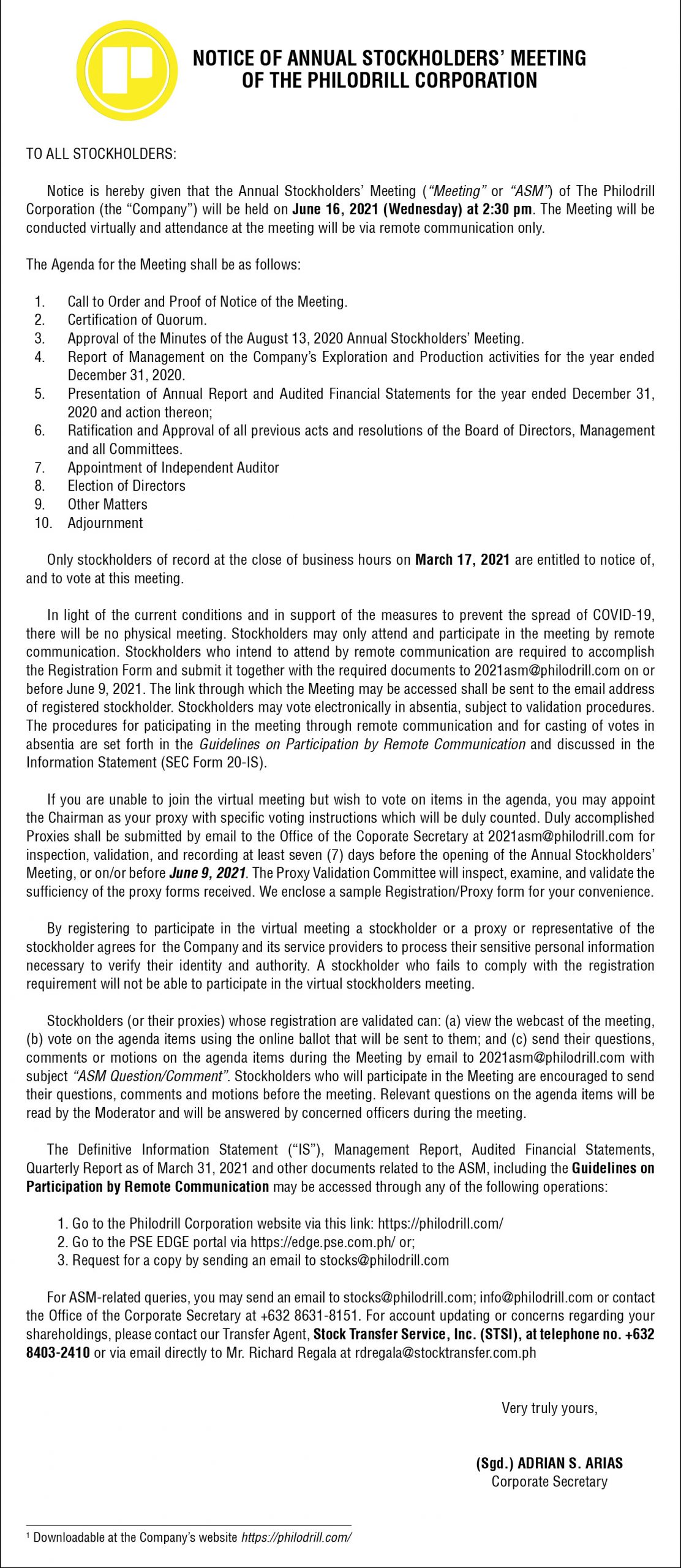
Philodrill Corporation announces schedule of virtual stockholders’ meeting

New breed of Filipino farmers

Senator Cynthia A. Villar

Villar Farm Schools Help Promote New Breed of Filipino Farmers

Villar SIPAG has four farm schools established one after the other since 2015. The first is located in the boundary of Las Pinas City and Bacoor city that caters to farmers in NCR, Southern Luzon, and Bicol. The farm in San Jose del Monte City opened in July 2016. It also offers free training programs for farmers in Northern and Central Luzon and the Cordilleras. Both Villar SIPAG farms schools are venues of the training program on Agri-Crops production in partnership with East-West Seeds Foundation- a program that is open to everyone who wants to learn urban agriculture, Training on Farm Business School, Production of High-Quality Inbred Rice Seeds and  Farm Mechanization, Workshop on  Farm Machinery Operation, Management, and Enterprise and Training on the Operation and Maintenance of Rice Machinery. All these in partnership with Agricultural Training Institute (ATI), Philmech, Philrice, and TESDA. It also provides a location for training on Freshwater Aquaculture and Training on Native Animal Production and Management together with the Bureau of Fisheries and Aquatic Resources (BFAR) and Bureau of Animal Industry (BAI). It also holds training in cacao production, intercropping of coconut with the Philippine Coconut Authority (PCA).

On January 20, 2020, Villar inaugurated the Villar SIPAG Farm School in San Miguel, Iloilo to serve the Visayas Region. The main training program offered here is the two-week Training of Trainors on Rice Mechanization and Inbred Rice Seeds Production. The Philippine Carabao Center also conducts training in Villar SIpag Farm such as Training on Bull handling and Dairy and Buffalo Fattening. It became a venue for TESDA courses like Construction, Painting, and Masonry.

In addition, the Villar SIPAG Farm School in Davao City was established also in 2020 to provide training to farmers and others who want to avail of agriculture-related training in Mindanao.


Training at the Villar Farm Schools is financed by the Villar Social Institute for Poverty Alleviation and Governance (SIPAG). The Villar SIPAG Farm Schools have welcomed thousands of trainees and hosted hundreds of training sessions on agriculture-related courses for free.

To date, there are 2,367 accredited farm schools all over the country that serve as learning sites for farmers and plant enthusiasts who are given the opportunity to train for free on the ways of modern farming. The farm schools once accredited with the Technical Education and Skills Development Authority (TESDA) or by the Agricultural Training Institute (ATI) they can avail of government support and scholarship grants as a learning site.

The chairperson of the Committee on Agriculture and Food promotes the increase of farm schools nationwide for agriculture-related training to help remove the barriers that prevent Filipino farmers and fisherfolk from being competitive and profitable, including the lack of technology, mechanization, and financial literacy, how to operate the farm as a business and inability to access cheap credit.

The growth of farm schools all over the country was attributed to two pieces of legislation that SenatorVillar principally authored: Republic Act 10816 or the Farm Tourism Development Act of 2016, which encourages the conversion of farms into tourist farms and learning sites; and Republic Act 11203 or the law that created the P10-billion Rice Competitiveness Enhancement Fund which mandated a special role for farm schools as venues of extension services program.


How to prep for your capital markets debut

“Dragons” dancing, confetti falling, champagne bottles popping, bells ringing. These are some of the familiar scenes on the stock exchange trading floor during a listing ceremony of an initial public offering (IPO).

More than pomp and pageantry, the day a company begins trading on the stock exchange is always a reason to celebrate. After all, private companies seeking to raise capital and access deep pools of liquidity through an IPO have to undertake a challenging but worthwhile and rewarding journey.

First Metro Investment has been conducting investment briefings to urge firms to go public or guide them in their IPO journey. Here is its step-by-step guide on preparing for a stock market debut:

1. To list or not to list? This is the question that you may want to answer before you decide on going public. By definition, an IPO is the first sale of stock by a company to the public. So if you are looking to grow your company and need to raise capital to expand, then having an IPO can help you. Aside from accessing public capital, IPO issuers also benefit from enhanced liquidity, wealth creation, tax efficiency, well as enhanced public reputation and image.

2. Ready for changes? Successful issuers know that having an IPO is like a transformation — a metamorphosis from being privately owned to publicly listed. With the benefits you get to reap from an IPO come the responsibilities. These include sharing company ownership and financial gain with other investors (including small ones), being more transparent by disclosing to the public any material information that might affect the performance of your stock, and being subjected to tighter regulatory scrutiny, among others.

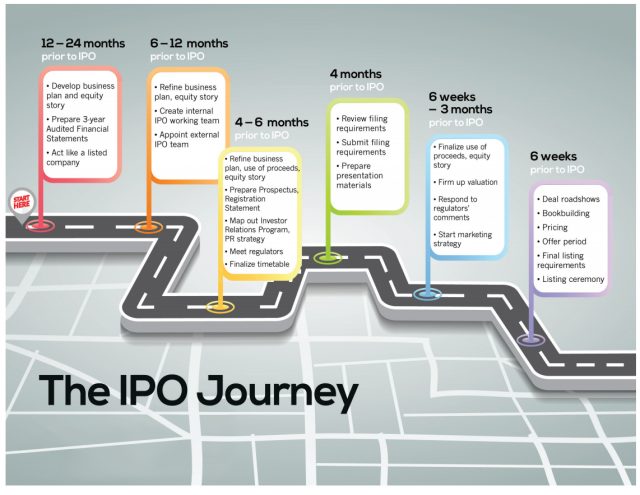
3. Prepping for the journey: The process leading up to an IPO is extensive, but preparing early and thoroughly can make all the difference. In preparing your company for this milestone, First Metro Investment has prepared the following roadmap:

12-24 months prior to IPO:

  • Develop a good business plan and equity story.
  • Prepare a 3-year Audited Financial Statement by a reputable auditor (SEC Class A) and interim Financial Statement.
  • Start acting like a listed company — i.e., adhere to the highest standards of corporate governance principles and practices, ensure compliance with laws and regulations and reportorial requirements, ensure a good corporate structure.

6-12 months prior to IPO:

  • Refine your business plan and equity story.
  • Build an internal IPO working team.
    • This should include a senior executive from your company to make critical decisions, and the following departments: Investor Relations, Compliance, Legal, Finance, Business Development/Marketing, and Corporate Planning.
    • It is highly recommended to appoint an overall point person from the company who will be responsible for the timely execution of IPO-related activities.
  • Appoint an external IPO team.
    • For a domestic listing, the following parties are required:
      • Issue Manager/Bookrunner/Underwriter
      • Legal Counsel for Issuer
      • Legal Counsel for Underwriter
      • Receiving/Stock Transfer Agent
      • Custodian/Depositary Bank
      • Escrow Agent
    • If you plan to offer some shares abroad, on top of the external domestic team, the following are required:
      • International Issue Manager/s and Bookrunner/s
      • International Legal Counsel for Issuer
      • International Legal CounselUnderwriter

4-6 months prior to IPO:

  • Refine your business plan, establish your use of proceeds, and equity story.
  • Produce a draft prospectus and a Registration Statement.
  • Prepare your Investor Relations Program and PR strategies.
  • Meet with the regulators: Securities and Exchange Commission and PSE.
  • Finalize your timetable.

4 months prior to IPO:

  • Review filing requirements before filing with regulators.
  • Submit filing requirements.
  • Prepare presentation materials emphasizing your company’s equity story.

6 weeks – 3 months prior to IPO:

  • Finalize your use of proceeds and equity story.
  • Firm up your valuation.
  • Respond to regulators’ comments in a timely manner.
  • Start your marketing strategy, including formation of a selling syndicate.

6 weeks prior to IPO:

  • Start deal roadshows.
  • Bookbuilding
  • Pricing
  • Offer period
  • Comply with final listing requirements.
  • Hold a listing ceremony at the Philippine Stock Exchange (PSE).

If you think your job is done after you have rung the bell at the PSE, think again!

When the excitement has died down after your company has gone public, the real hard work begins. As a public company, you will now lead a life post-IPO focused on complying with all relevant regulation, and ensuring complete and timely disclosure of material information to the public.

Most of all, it is all about delivering on the promises you made to investors when you were asking them to buy your equity story. At the end of the day, the success of an IPO is not just about the money raised; it is about how investors have put their trust in the company and placed their bet on its long-term growth.

PHL vs. ASEAN: The vaccine race and the markets

In 2020, the race was about getting a vaccine for COVID-19. Nine months after a global pandemic was declared by the World Health Organization in February 2020, news of the first vaccine discovery sent stocks and bond yields soaring on hopes an economic recovery will happen sooner rather than later.

In 2021, the race turned to vaccine rollouts. On the first trading day of the year, major stock markets welcomed the news that some COVID vaccines were ready for distribution.

While questions still linger over the vaccines, financial markets get a shot in the arm every time a vaccine-related positive development hogs the headlines. After entering a global economic recession, any sign that leads to recovery is being taken by investors as a cue to buy stocks.

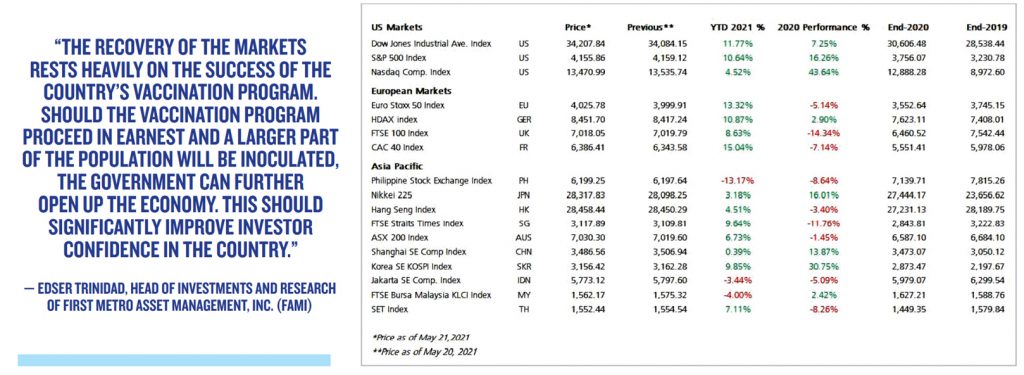
“The recovery of the markets rests heavily on the success of the country’s vaccination program.  Should the vaccination program proceed in earnest and a larger part of the population will be inoculated, the government can further open up the economy. This should significantly improve investor confidence in the country,” said Edser Trinidad, head of Investments and Research of First Metro Asset Management, Inc. (FAMI).

How the Philippines stacks up

In the Philippines, the first batch of vaccines arrived on March 1, 2021, and was followed by the sporadic arrival of supply and inoculations.

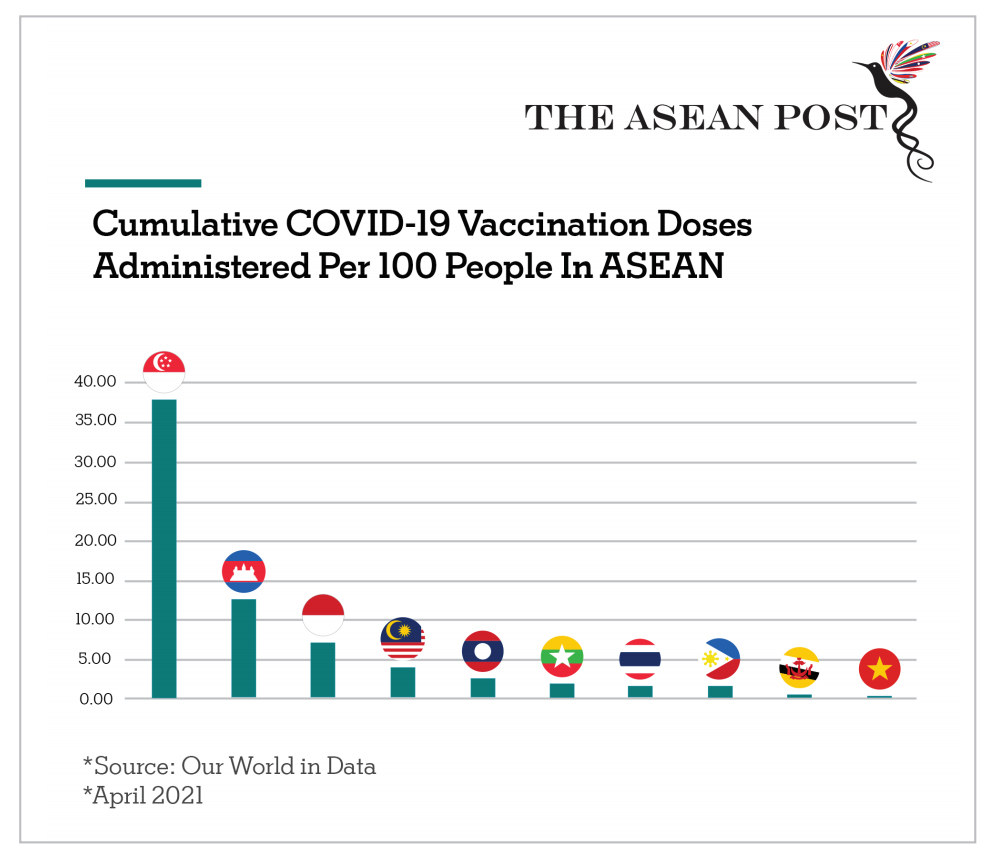
Two months after the rollout, the country continues to lag behind its neighbors in the ASEAN, according to The ASEAN Post, a digital media organization that tracks regional developments. Citing figures from Our World in Data, it showed the Philippines ranked third to the last among 10 ASEAN member-countries based on COVID-vaccination doses administered per 100 people.

The slower than expected vaccine rollout is reflected in the Philippine stock market’s performance versus its regional peers. Year-to-date, the Philippine Stock Exchange index (PSEi) had contracted by 13.17 percent — the worst among the 10 bourses in the region. The index has dipped by 8.6 percent year-on-year — the second-worst performance after Singapore’s FTSE Straits Times Index, which lost 11.7 percent.

In the case of the Philippines, there are several reasons for the weak performance of the PSEi.

Apart from the vaccine rollout and procurement, analysts are also closely monitoring the number of COVID-19 cases in the country, as this serves as an important indicator of the pace of economic recovery. As the table shows, the stock market of countries that have successfully contained the spread of the virus and have started to open up their economy has been posting strong performance.

Another reason is inflation. Investors are worried that the Bangko Sentral ng Pilipinas (BSP) may tighten liquidity by raising policy rates to stave off inflation. This can affect the borrowing cost of companies which, in turn, can scuttle the country’s recovery efforts. Consumer appetite, which remains weak because of the pandemic, can also be further dampened.

For the fourth month, inflation in April remained above the BSP’s target, with headline inflation staying at 4.5%. While it was unchanged from March, inflationary pressures from the index-heavy food component and transport costs persist.

Where’s the light?

The proverbial light at the end of the tunnel depends on the changing dynamics of the crisis.

However, the picture might change by the second half of 2021, as more vaccines become available for the local population. This is expected to speed up the easing of lockdown restrictions, and allow the economy to function at full capacity. Consequently, the economic recovery will generate more jobs and improve household income, leading to higher spending power and better corporate earnings.

Swift recovery for the local bourse may also be expected, given that the average foreign ownership on listed companies is now at a 10-year low. This means local investors, including retail, are seen to fuel market sentiment as positive developments on the vaccine availability and rollout trickle in.

According to First Metro Securities Research, investors must keep an eye on key sectors that could benefit from the sudden pent-up demand. These are those related to transport and mobility, tourism, events and social gatherings, mall foot traffic, and food services.

It also pays to keep track of other markets, particularly those in the region, said FAMI’s Trinidad. “Given that economic interdependence among countries is higher than ever, it is important for a stock market investor to pay attention to what is happening in other markets as it provides a big picture of what is happening in the global economy, which can eventually impact the local market,” he said.

Looking at the regional markets also provides a glimpse on how foreign investors behave, including in which markets they prefer investing. Several regional markets have managed to perform better than the Philippines largely because of foreign investment inflows. Due to the strong performance of these markets, foreign investors may be on the lookout for other markets that have lagged behind but the fundamentals are still improving or about to improve, he added.

While the speed of economic recovery among regional markets may be uneven, there are still opportunities that the Philippines can take advantage of. “Once the COVID-19 surge has been contained and a substantial number of vaccines starts to arrive, then it will be just a matter of time for foreign investors to return to the Philippines,” said Trinidad.

Are you a lion or a sheep?

Find out your risk appetite

As COVID-19 continues to spread and mutate in many parts of the world, some investors have opted to remain on the sidelines for fear of losing the shirt off their backs. Some, however, look at “crisis” and “opportunity” as a pair, much like “risk” and “rewards.” Fear may hold them back from taking on risks, but it is only when they dare that they get to reap the rewards.

Or as some put it, “It’s better to be a lion for a day than a sheep all your life.”

When it comes to investing in the stock market, how do you know if you are a lion or a sheep? How would you know if your “risk appetite” — the amount of risk you are willing to accept to pursue your investment goal — is high or low?

Financial advisers use psychometric tests to assess their clients’ attitudes towards risk and their risk tolerance. This is in addition to profiling their income, expenditure, assets, liabilities, and investment timeframe to work out the clients’ capacity for loss.

There is no golden rule or global standard when it comes to evaluating an investor’s risk tolerance. Still, it is best to know your risk appetite first before you put your hard-earned money on an investment. An accurate assessment of your risk profile is important to determine if the investment you choose matches your investment horizon, financial goals, and willingness to secure investment rewards versus risk.

If you don’t have a financial adviser, you can still find out your risk appetite by answering these five basic questions:

What am I investing for? (Your investment goal)

When do I need the money? (Your timeframe or investment horizon)

Do I understand the investment I am making?

How much am I willing to invest to achieve my goal?

Do I want to be an active or passive investor?

Active vs Passive Investing

To answer Question No. 5, you need to know the difference between active and passive investing.

Active investing demands a hands-on approach to making buy-sell decisions on your stock investment. You may need to tap a professional portfolio manager who knows how to beat the stock market’s average returns, take full advantage of short-term price fluctuations, and seize the opportunity in information flows. You will benefit from their in-depth analysis and expertise in knowing exactly the right time to buy or sell.

Passive investing, on the other hand, means investing for the long haul. You only have to adopt two strategies: to buy or to hold. You resist every temptation to react to or anticipate every move or development in the stock. Some passive investors buy an index fund that tracks the movement of major indices or mutual funds (more on this in our next issue). Compared with actively managed funds, investing in index funds is more cost-effective as it entails lower expenses and fees.

For the Lionhearted

Choosing to be an aggressive investor means you are willing to risk more money for the possibility of better returns. This makes sense only if you have the luxury of time or have a long investment horizon. But if you need the money very soon, take caution. As you move closer to your investment goal, you need to adjust your strategy to protect your gains.

If you are an investment newbie, it also helps to build an emergency fund before you start investing. Make sure you have set aside cash for unexpected events such as for medical emergencies or job loss. The last thing you need is being forced to sell your assets in a down market like in this pandemic.

For those with a high-risk appetite, First Metro Asset Management (FAMI) recommends its balanced fund and equity-laced funds. “These funds provide returns that beat inflation and are ideal for meeting long-term goals such as retirement, funding children’s education, or business capital,” said Sheila Limon, head of Sales at FAMI.

For the Conservative Sheep

For those who opt to stay on the conservative side, there is no harm in starting out as a sheep. But if you have many years ahead of your investment goal, you may want to overcome your fear and be a little bit more aggressive. Being too conservative can be damaging if it prevents you from growing your portfolio fast enough to beat inflation over time.

If you have more cash to spare than what you need for emergency or daily use, you may want to invest more to make your money work harder for you. Focus on your long-term goal and ride out the short-term peaks and troughs in the market.

For those with low-risk appetites, Ms. Limon recommended money market, fixed income, and dollar bond funds. “These provide prudent price appreciation without the high volatility of the stock market. They are also perfect for goals that are in the short- to medium-term as they give investors returns that is potentially higher than the usual time deposits, government bonds, and even corporate papers,” she explained.

From Sheep to Lion

While conservativism has its merits, you cannot become rich by staying meek as a sheep forever. Investors with a low-risk appetite can still improve their risk appetite.

One way is to determine where your financial goals are in your time horizon. One or two years of a down market would not matter if your financial goal is still 20 years down the road. Long-term goals (10 years or more) can be funded with equity-laced investments that beat inflation and significantly increase in value over time. These investments also require less money to fund these goals, as they provide more returns for the long term. This means you will have more resources available to meet other needs and financial goals.

Take courage to step outside of your comfort zone. Educate yourself and read up on investing before you move forward. Then start by making a small investment in a riskier asset, then grow it slowly over time. You will learn how to do things as you go. Every small win will boost your confidence and every loss will teach you important lessons that will help you get it right the next time. Either way, you build the confidence that comes with experience.

If you want to undergo training, take advantage of the many options available in the market. First Metro Securities (FirstMetroSec) offers free online seminars, as well as resources on YouTube and Spotify. Its podcast, Philippine Stock Market Weekly, is one of the most popular Filipino business podcasts on Spotify and serves as a go-to source for timely economic and market insights.

All these mean that a conservative investor can still invest in riskier investments if they are clear with their financial goals and investment horizon. History, after all, has shown that the stock market always rises.

“Current stock market levels are even much higher than before the 2008 Global Financial Crises. These would be the best time to buy as prices are cheaper,” said Mark Angeles, head of Research of FirstMetroSec.


The Philippine stock market’s new saving grace

Like many of its neighbors in the region, the Philippine stock market was badly battered by the COVID-19 global pandemic, with the Philippine Stock Exchange index (PSEi) dipping by 8.6 percent year-on-year.

As foreign investors headed for the exit door, retail investors are left holding the fort, emerging as saviors driving liquidity and moving the market.

In 2020, local investors accounted for 55 percent or P7.35 billion of the daily average trading volume in the PSE. Of this, slightly more than a quarter was from retail investors. In the first quarter of this year, retail investors accounted for more than 45 percent of market turnovers.

While investors, in general, remain cautiously optimistic about the Philippine stock market, retail investors continue to find gems in the battered market. These are mostly young, tech-savvy millennials who are awash with cash, and are trading online. Their sudden influx into the market is the reason many leading stock brokerage houses had to temporarily halt new account openings or invest in additional bandwidth to accommodate the surge of online trades.

The heightened participation of retail investors is a good sign that the local stock market still offers plenty of opportunities for those who are willing to look beyond short-term gains. With more familiarity with the local market and growing maturity in investing, these investors have been buoying up interest in listed shares and enabling the economy to recover faster from the impact of the pandemic.

Here are some of the opportunities they see in the Philippine stock market:

  1. Potential to earn higher than bank deposit yields. Since the pandemic started last year, the Bangko Sentral ng Pilipinas (BSP) has been cutting its policy rates and banks’ reserve requirements to stimulate lending and consumer spending. This has been driving down interest rates to record lows, a trend expected to prevail throughout 2021. Cash-awash individuals thus turned to stock investing instead of placing their funds in banks which offer interest rates no higher than 2 percent per annum. In comparison, stocks offer the potential for a higher return (the average return in the Philippine stock market is 6.40 percent in the last 10 years).
  2. More access to listed shares. One of the silver linings in the pandemic is the emergence of online stock trading due to digital transformation. This led to more market participants and opened up earning opportunities to more Filipinos, especially those who lost their jobs or closed their shops because of the pandemic. With more stock brokerage houses going online, building your wealth through stock market trading is now possible even without leaving the comfort of your own home. Investing in your favorite stocks takes just a few clicks on your smartphone or a few taps on your keyboard.
  3. Exciting IPOs and REITs from capital-hungry companies. With banks reaching their single borrowers limit and turning more risk-averse, companies have been turning to the local bourse and the fixed income market to raise capital that will allow them to weather the pandemic. This has led to a proliferation of corporate issues and listings. This year, at least four real estate investment trusts (REITs) and three initial public offerings are expected to stir excitement among investors in the local bourse. This includes consumer food conglomerate Monde Nissin, which is expected to be the country’s largest IPO.
  4. Poised for a recovery. Despite some setbacks, namely the continuous spike in COVID-19 cases which prompted the government to return to more restrictive measures in Metro Manila and nearby provinces, 2021 still promises to be a better year than 2020 for the PSEi. The vaccine rollout should lead to improved investor sentiment. However, the transitory nature of the crisis makes it difficult for stock market experts to forecast when the recovery will actually be.

Investing strategy

In this fickle environment, Edser Trinidad, head of Investments and Research at First Metro Asset Management Inc. (FAMI), advises investors to “buy the dips and look for reopening plays that are trading at a discount.”

He cited the telecoms and consumer staple sectors as the sectors most resilient during this pandemic. “A big portion of the workforce are in a work from home setup so demand for bandwidth surged, benefiting the telecom sector. The lockdown has also forced consumers to do pantry loading, which favored the consumer staple sector,” Trinidad explained.

For Mark Angeles, head of Research at First Metro Securities, cyclical sectors that can leverage on the economic recovery such as property, banks, and some consumer-related businesses have good earnings potential. Once the community quarantine restrictions are relaxed and more businesses are allowed to reopen, sectors related to restaurants, beer consumption, malls, cars, and property would also make good plays, he added.

Both investment gurus agree that the current market condition presents a good opportunity to invest as the market now has limited further downside. Foreigners holding Philippine shares are now at a 10-year low so the selling pressure from foreign funds has now eased.

“Cost averaging is highly encouraged. Do not invest in one swing! Invest in tranches. Buy during market dips,” said Trinidad. He quoted legendary Omaha investor Warren Buffet, who said: “I will tell you how to become rich. Close the doors. Be fearful when others are greedy. Be greedy when others are fearful.”