Home Blog Page 7535

Migration and financial stability: Revisiting what we know about remittances

PCH.VECTOR-FREEPIK

While we champion our OFWs for being a pillar of our economy, with the top-of-mind statistics — 10% of the population, representing 10% of the GDP — many people are unaware of how remittances are being used on a daily basis. Indeed, if remittances are increasing, the skill sets of migrants and their jobs supposedly improving abroad, then should not the second, third generations left in the Philippines by now be better off? Why is poverty still so rampant? Why is there a continuing need, and not simply desire, to follow in the footsteps of the generations before and seek a better fortune elsewhere?

Several studies in Migration and Economics have shed light on how families of migrants in the home country use the money remitted. I explained in an earlier column how in countries where migrants are predominantly female, there is a tendency to use the funds as a form of “mothering from afar.” Beyond this, studies have also shown that, 1.) Income earned abroad is significantly higher and is less volatile than other income flows, 2.) Remittances can be seen as insurance products, 3.) Usage of remittances are mainly for education, repaying debt, and savings.

Income earned abroad is significantly higher and is less volatile than other income flows. An ADB study by Ang et al. (2009) showed that the average annual income of OFW households in the Philippines is about 73% greater than the average annual income of non-OFW families who are dependent on wage and entrepreneurial income. Unsurprisingly, this is enough to justify how migration is a legitimate investment strategy. Indeed, why risk becoming an entrepreneur or slave away as an employee, with no guarantee of such returns? And speaking of risk, a World Bank study has found that the amount sent back is usually not linked to the general economic situation in the host country. Meaning: migrants continue to send the same amounts home whenever possible. They keep a stable amount, similar to giving a monthly salary, to provide stability and support to the family. This mitigates the problem of instability of income flows which keep the poor, poor. One study showed that Migrants from poor countries to rich countries can multiply their real earning potential by between three and 10 times.

Remittances can be seen as insurance products. The poor face much higher risks in terms of health and other unforeseen events (e.g., losing one’s home and job) which current savings strategies and available financial products cannot mitigate. However, they do try to do as much as they can. Yet no matter the effort made in saving, these amounts are often gone or measly compared to what is needed in times of difficulties. Because the poor are unable to pay insurance premiums at regular times, remittances can combat this wherein when there is a decline or shock in the income of the recipient household, there is a corresponding increase in remittances, operating fundamentally as an insurance policy (Yang & Choi 2007).

Usage of remittances are mainly for education, repaying debt, and savings. Based on several studies in the Philippine context, including government-wide surveys, we have clearer insight as to how migrant families use their increased incomes when they have remittances. The Bangko Sentral releases consumer expectations survey every quarter and while the numbers fluctuate, generally, more than 90% use remittances to purchase food, around 70% use the funds partly for education, 65% for medical expenses, 50% for debt repayments, and a little less than 50% used them for savings. The top three allocations were food, followed by rent, and then education. These numbers are relevant in telling us the hierarchy of what the money is being used for. Several other studies have illustrated that whereas most households used remittances for food, having additional income negatively influences the share of food consumption in total expenditure and thus allow them to spend for other things. The fact that education features so strongly is important: the poor believe in education, and yet must supplement food expenditures — illustrates how households have a long way to go in being self-sufficient.

Sixty percent reported that they were able to save and 87% kept their savings in banks. Even if they were highly indebted and continued repaying debt, they nevertheless managed to save. The OFW households also appeared to have more leisure activities, own more gadgets such as computers and laptops, and were more inclined to eat out, shop, watch movies, socialize (including drinking and attending parties), travel, and go to the mall. Some even allot a budget for charitable acts. At the end of the day, one empirical study points out that a lot depends on the treatment of remittances either as permanent income (used to augment basic consumption like food) or transitory income (used to finance purchases of durable goods, repay debts, housing and housing repairs). Finally, migrants are known to have a “home bias in investing.” That is, money is used to fund entrepreneurships and investments in the home country rather than in the host country, regardless of economic conditions abroad. That is, no matter how long they have been away, they keep looking back.

References:

Ang, A., Jha, S., & Sugiyarto, G. (2009). “Remittances and Household Behavior in the Philippines.” Asian Development Bank Economics Working Paper No. 188.

Yang, D., & Choi, H. (2007). “Are remittances insurance? Evidence from rainfall shocks in the Philippines.” The World Bank Economic Review, 21(2), 219-248.

Other References are available upon request.


Daniela “Danie” Luz Laurel is a business journalist and anchor-producer of BusinessWorld Live on One News, formerly Bloomberg TV Philippines. Prior to this, she was a permanent professor of Finance at IÉSEG School of Management in Paris and maintains teaching affiliations at IÉSEG and the Ateneo School of Government. She has also worked as an investment banker in The Netherlands. Ms. Laurel holds a Ph.D. in Management Engineering with concentrations in Finance and Accounting from the Politecnico di Milano in Italy and an MBA from the Universidad Carlos III de Madrid.


A digital mindset

VECTORJUICE-FREEPIK

So much has changed in the world in the last 18 months, particularly in the way technology has found its way in many everyday things. But, moving forward, given current trends, it may no longer be enough for one to simply know how to use technology. One may also have to start adopting a Digital Mindset.

In short, one’s attitude and behavior towards technology may also have to change. Digital Technology is no longer just a tool to get things done. It may be also viewed as a means to achieving the “impossible.” In it lies the power to foresee and appreciate potential and possibilities, and to imagine a future where current impossibilities become realities.

After the world survived the destructive force that was World War II, who would have thought that 70 years on people’s daily lives would be so influenced and affected by computers and artificial intelligence; telephones would be “mobile,” or customers would buy things without a “store,” or cars would run on electricity, or “money” would not have to be in paper or in coins.

Back in the day, if one wanted to produce and sell a book, then the author would need an editor and publisher, a book designer, a printer and a binder, a distributor, and then book stores. Reach was limited by the number of books printed, and the number of stores that sold them. And to distribute globally would be an expensive logistical nightmare.

Nowadays, however, “content producers” are no longer limited by logistical concerns. One can opt to author a book, self-publish it into digital copies, and then distribute PDF versions via e-mail and online stores. No paper, no printing, no binding, no packing, no trucking to stores, no displays on shelves, and no more people buying at bookstores and carrying around books.

The digital version of the book, or e-book, can be downloaded to one’s mobile phone. It could be bought online and paid for using e-money. No physical book or money will need to change hands. A shorter, perhaps cheaper, process that takes into account the three things that most people carry around every day: wallets, keys, and phones.

In the last 18 months, I have not had to use much cash and made only a few trips to the bank or ATMs. Many purchases were made online, and paid with e-wallets or an e-credit card. Stores purchases were made with regular credit cards, while even drive-through purchases were paid with some form of electronic money. Even tollway payments were made electronically through RFIDs. Most bills are delivered electronically, and most bills payments are done electronically as well.

Also, I used to buy a lot of pre-owned books, and a few new ones once in a while. But this has not been the case of late. I have not bought a book for over 18 months now, as I have not stepped into a bookstore since the pandemic started. Moreover, books take up a lot of shelf space in a tiny home. So, I have actually started giving away a lot of them. And I have not had to buy much printing paper as well.

I keep more files electronically now than maybe 15 years ago, when I had mountains of files laying around all over the place. I also do most of my reading on screen now. Either a laptop, a tablet, or a mobile phone is always on hand. Not a healthy habit, really. Electronic-based reading, for work or leisure, can take its toll on the eyes and hands and arms, not to mention the neck, shoulders, and back. Hours in front of the computer can be physically tiring as well.

My household has also spent a small fortune since March 2020 on better connectivity and digital systems that included laptops, tablets, mobile devices, routers, LAN cables, and a Network Attached Storage to serve as a data server at home. With parents working at home and children doing school from home, productivity and efficiency required an updated digital infrastructure.

Parents nowadays have to contend less with school books and supplies, and preparing lunches, and more with handling device failures, computer glitches, and poor internet connection. Parents also need to learn along with their children how to use new software applications that are needed for schoolwork.

With Work-From-Home and School-From-Home, and given the health protocol limits to calling service technicians into one’s home, a parent is also forced to be tech-proficient in one way or the other when trouble arises. Add to that some minor carpentry, plumbing, and electrical work in addition to regular cleaning and laundry at home. Thankfully, cooking can still be outsourced through take-out and food delivery.

As Digital Technology now find its way in most everything people do, it is pointless to resist its pervasiveness. Just a matter of time for a Digital Life to become truly a way of life for most. Computers and electronic devices were expensive luxuries in the 1970s and 1980s, as mobile phones were in the 1990s. But now, they are all everyday devices for work and leisure. Children born in the last 10 years are mostly Digital Natives.

Of course, catch-up remains an issue. The Digital Divide is wide, with the have-nots falling behind. In this line, digital technology should be made accessible to all, initially as a matter of policy. Legislation and regulation can then be calibrated to promote awareness and access. But for those with the access and the resources, no matter how few they are, it is also time to step up.

And this brings me to the point that environment, situation, and circumstance — and not just choice — can prompt people towards adopting a Digital Mindset. One must start looking beyond what digital technology currently does, and begin realizing what else it can do in the future. And this means investing time, effort, and resources to better appreciate its value and contribution to achieving unrealized potential and new possibilities. 


Marvin Tort is a former managing editor of BusinessWorld, and a former chairman of the Philippine Press Council

matort@yahoo.com

Vaccinate then stimulate

FREEPIK

After close to six years of “retirement” from sports column writing at the Philippine Star, I am back but this time in the op ed pages of this paper.

Fortunately, I am not new to writing for BusinessWorld. I have been here before as an occasional columnist for the De La Salle Graduate School of Business’ monthly column, “View from Taft.” I was Dean of the Graduate School of Business then and one of my tasks was to write a column to commemorate important national events: the anniversary of People Power 1, Independence Day, commemoration of the August 21, 1983 execution of Ninoy Aquino, recollections on the proclamation of martial law, National Heroes Day, and business and education management matters.

When I retired as dean in 2008, I still continued to teach as part time faculty. I would sometimes be called upon to write about the same important events of national interest. While writing my business column for De La Salle, I also wrote for two broadsheets’ business pages, and continued writing a sports column called “Sports for All” for the Philippine Star from February 2002 up to March 2015 when I was elected president of the Philippine Athletics Track and Field Association (PATAFA). My sports editor advised me of a potential conflict of interest between being head of the association that governs the sport of athletics track and field, the centerpiece event of any Olympics, multi-sport gathering.

That was not the first time the Star had pointed out a conflict of interest. Earlier in 1995, when President Fidel V. Ramos appointed me as chairman of the Philippine Sports Commission, my sports editor Lito Tacujan, gently invoked a policy of the Star prohibiting government officials from writing columns in the Star. Lito was a friend from way back in the early 1970s when I was asked to write about an international football tournament by the Philippine Herald. Lito and I were together at the Herald with the late Iking Gonzalez as our editor.

My weekly sports column writing actually started in 1989 when the late Betty Go-Belmonte asked me to write for the Star. I had just resigned from my post as Secretary of Agrarian Reform after paying a heavy public price for making the Comprehensive Agrarian Reform Program (CARP) the genuine social justice program that it was intended to be. There were too many powerful forces that threw roadblocks and installed land mines all over the place. People whose participation was crucial to CARP’s orderly implementation were the first ones to sabotage it.

After this brief trip down memory lane, we are here to deal with the here and now, with all the confusing issues ranging from the pandemic and how it has impacted the economy, human behavior, Government, food production and security, livelihood, banking practices and lending policies, and its other serious consequences. We shall, of course, also deal with our territorial integrity, the protection and promotion of democracy, governance and accountability issues, business trends and new ideas that will affect daily lives.

A prime topic for discussion is the Archer Talks Forum that I, together with De La Salle High School class of 1965 and college 1970 had the privilege of organizing on May 12. Archer Talks is an inclusive forum that provides an opportunity for the honest, objective, dispassionate, and respectful discussion of matters of personal and professional interest.

The bi-monthly forum had as its first speaker retired Senior Associate Justice Antonio Carpio who provided and informative and instructive update on the West Philippine Sea.

The second forum, held last Saturday, had Monetary Board member and former Secretary of Socio-economic Planning and NEDA director general, Dr. Felipe Medalla discussing the Philippine economy before, during, and after the pandemic. The main message of Medalla (who earned his doctorate in economics at Northwestern University) was “vaccinate and stimulate.” The former dean of the University of the Philippines School of Economics and cum laude graduate of Economics and Accounting at De La Salle, expressed frustration at government passing laws and implementing programs to stimulate economic activity and spending while at the same time locking down whole areas and restricting business activity.

Dr. Luis Dumlao, the forum’s second speaker, discussed economic trends over the years. At the latter part of his talk, he provided examples of successful social enterprises in agriculture.

Dr. Dumlao, who is Dean of the John Gokongwei School of Management at Ateneo, cited the late John Gokongwei for creating a conglomerate that employs thousands practically totally from borrowed funds.

At this point, readers may ask what is the meaning of the title of this column: “Earning Our Tomorrows.”

The title comes from a poem by British-born American poet Edward Albert Guest. It is entitled, “Have You Earned Your Tomorrow?”

The poem went viral some weeks ago. It was featured in a video that had motivational speaker Simerjeet Singh reciting portions of the poem which I will quote later.

For now, I will retell the thoughts of Heraclitus, the Greek philosopher: “What you choose; what you think; what you do is what you become”

Singh quotes Guest, “as you close your eyes in slumber, do you think that God would say ‘you have earned one more tomorrow by the work you did today?’…. Did you waste the day or lose it? Did you leave a trail of kindness or a scar of discontent? As you close your eyes in slumber, do you think God would say, ‘you have earned one tomorrow by the work you did today.’”

Folks, let’s earn our tomorrow.


Philip Ella Juico’s areas of interest include the protection and promotion of democracy, free markets, sustainable development, social responsibility and sports as a tool for social development. He obtained his doctorate in business at De La Salle University. Dr. Juico served as Secretary of Agrarian Reform during the Corazon C. Aquino administration.

Politically speaking

FREEPIK

THE WORDS sound familiar. You think you know what they mean. But when it is politicians talking, you have to look for hidden meanings. In this political season, it is good to check what the interviewed pols are really saying. Rhetoric can conceal duplicity, bitterness, and frustration.

What is expressed in public may be a secret message to someone in particular who understands what is behind the bland expressions. What is said and what is meant are not always identical.

This is best shown with examples.

We are working for party unity and there are those conspiring to split our ranks. (I don’t know what is going on. I have an idea who is behind this but he’s not taking my calls.)

I am willing to reach out to the doubters. (I will not answer any questions regarding my fitness for the highest office. There’s no need to stress the obvious.)

We need to have a single candidate to rally behind so as not to split the opposition. (Only the chosen one will agree to this principle.)

Why should we be swayed by the polls? Are they reliable or paid for by interested parties? (I am lagging in all the surveys. Sometimes my name doesn’t even get mentioned.)

I have decided to withdraw from the race to concentrate on what I am presently doing. (Anyway, I am not even in the conversation. Maybe this will attract the interest of some supporters.) I’m still hoping for a groundswell of support. (I am not holding my breath.)

In due time, I will reveal my program of government… (Nobody is interested in discussing issues.)

I am willing to debate on the issue… (I intend to use a proxy who knows this stuff. If the rules don’t allow that, you can forget about it.)

I am the most qualified candidate for the job. (Do I really need to talk about my achievements? Do you have time?)

I have to consult my family and take a pulse on what the country is saying before I throw my hat in the ring. (They all said — forget it.)

What the country needs is a leadership that is competent, honest, and having only the interests of the people being served. (We’ll keep looking.)

He is not a traditional politician. (The guy is clueless. He thinks his bio-data is impressive enough to get votes.)

My polls may look bad at this time. The campaign period has hardly begun. Watch my numbers rise… (I’m not getting any money from the fat cats yet.)

I have a young family to take care of and I have to give this my highest priority. I may not be able to turn down the pleas of my supporters to serve our country… (but not as Mayor. Anyway, my tarps are all printed and the videos are in the pipeline. Got my running shoes on.)

We have to watch out for fake news, swarming social attacks organized by digital mercenaries, and fake polls. Can political double-talk be far behind?

Even in closed-door meetings, where no minutes are taken, politicians in a huddle can pledge support for a particular candidate. This does not mean they cannot be persuaded to switch sides the day after. (Did I promise to be faithful?)

The tussle over the “gentlemen’s agreement” on term sharing for the leadership of the lower house is a classic case of political communication. There were even two secret vote counts whose total exceeded the number of members. This was followed by a highly publicized clarification on the wishes of the leader which also seemed inconclusive.

This political story has given a new shade to the favorite attire of politicians, the turncoat. It’s similar to a reversible jacket where both sides are waterproof.

Political communication is an art form. It needs to be interpreted by those who speak and understand it. It’s usually scripted anyway, especially when officially released through media. Even ambush interviews can be staged — you caught me off guard.

The only way to understand what politicians really mean is what they do (or don’t do) after they get elected. And by the time he admits he was just joking, it’s really too late. Thankfully, there is a next time, next year. Jokers need not apply.


Tony Samson is Chairman and CEO of TOUCH xda

ar.samson@yahoo.com

After 28 planes fly near Taiwan, China says must respond to ‘collusion’

REUTERS
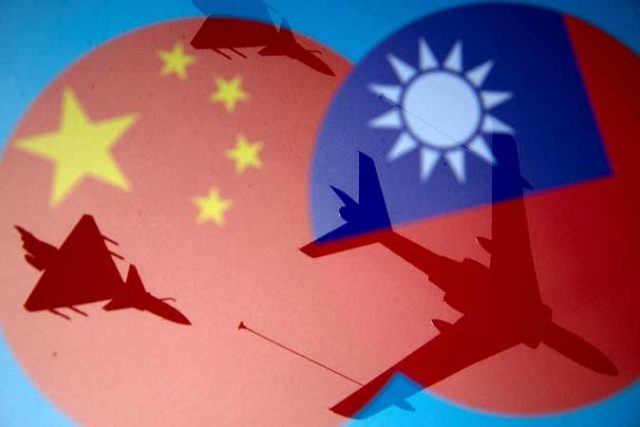
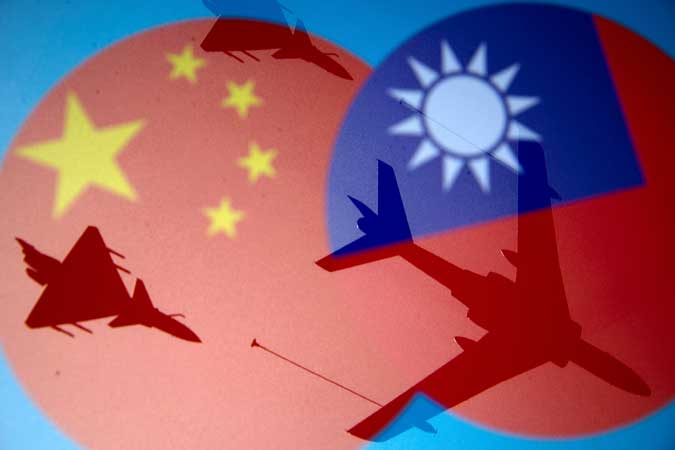
Chinese and Taiwanese national flags are displayed alongside military airplanes in this illustration taken April 9, 2021. — REUTERS/DADO RUVIC/ILLUSTRATION

BEIJING/TAIPEI — China does not tolerate foreign forces intervening in Taiwan issues and has to make strong responses to such acts of “collusion,” the government said on Wednesday after the island reported the largest incursion to date of Chinese aircraft.

Twenty-eight Chinese air force aircraft, including fighters and nuclear-capable bombers, entered Taiwan’s air defense identification zone (ADIZ) on Tuesday, the Chinese-claimed island’s government said.

The incident came after the Group of Seven leaders issued a joint statement on Sunday scolding China for a series of issues and underscored the importance of peace and stability across the Taiwan Strait, comments China condemned as “slander.”

Asked at a news conference whether the military activity was related to the G7 (Group of Seven) statement, Ma Xiaoguang, spokesman for China’s Taiwan Affairs Office, said it was Taiwan’s government that was to blame for tensions. Beijing believes the island’s government is working with foreign countries to seek formal independence.

“We will never tolerate attempts to seek independence or wanton intervention in the Taiwan issue by foreign forces, so we need to make a strong response to these acts of collusion,” Mr. Ma said.

Democratically-ruled Taiwan has complained over the last few months of repeated missions by China’s air force near the island, concentrated in the southwestern part of its air defense zone near the Taiwan-controlled Pratas Islands.

However, this time not only did the Chinese aircraft fly in an area close to the Pratas Islands, but the bombers and some of the fighters flew around the southern part of Taiwan near the bottom tip of the island, according to Taiwan’s defense ministry.

The fly-by happened on the same day the US Navy said a carrier group led by the USS Ronald Reagan had entered the disputed South China Sea.

“The Ronald Reagan Strike group did not interact with any Chinese military aircraft,” Carrier Strike Group 5 spokesperson Lt. Cmdr. Joe Keiley said in an emailed statement responding to questions on whether the Chinese aircraft had approached them.

“During the strike group’s South China Sea operations, all communications between ships and aircraft have been consistent with international norms and have not impacted our operations.”

A senior official familiar with Taiwan’s security planning told Reuters that officials believed China was sending a message to the United States as the carrier group sailed through the Bashi Channel, which separates Taiwan from the Philippines and leads into the South China Sea.

“It’s strategic intimidation of the US military. They wanted the United States to notice their capability and for them to restrain their behavior.”

Taiwan needs in particular to pay attention to the fact that China’s military has started conducting drills in Taiwan’s southeastern ADIZ, the source added.

This “to a certain degree was targeting our deployments in the east and increasing air defense pressure around our ADIZ”, the source said.

Taiwan’s east coast is home to two major air bases with hangers dug out of the side of mountains to provide protection in the event of a Chinese assault. — Reuters

Tourist hotspot Phuket reopening offers model for Asia as travel bubbles burst

TATNEWS.ORG

THAILAND’s plan to reopen the tourist haven of Phuket could become a model for other vacation hotspots in Asia to prise open their borders and bring in visitors as strategies such as travel bubbles falter, according to the founder of Banyan Tree Holdings Ltd.

Tourism-reliant Thailand aims to allow quarantine-free travel to its prime destination from July 1 for the first time in more than a year, provided visitors are inoculated against COVID-19 and aren’t coming from high-risk countries.

The so-called Phuket Sandbox plan is dependent on the vaccination rate among the island’s residents hitting at least 70%. It currently stands at about 60%, far higher than the 5% nationwide, after a concerted push to get locals vaccinated.

“Every government is beginning to feel around on how to open up, and the Phuket Sandbox is really a viable way now because even the travel bubbles that people talked about didn’t take place,” Banyan Tree Executive Chairman Ho Kwon Ping said in an interview Monday. “It’s the first time anywhere east of the Maldives that you have a country with this population size with such a low vaccination rate actually opening up to the rest of the world.”

Asia has been slow to reopen due to sluggish vaccine rollouts. Many countries also still only allow residents to enter and enforce strict lockdowns in a bid to keep Covid cases at or close to zero. Hong Kong and Singapore have been trying to open a quarantine-free travel corridor for months, but outbreaks have so far scuppered plans.

Meanwhile, European countries such as France and Spain are loosening restrictions faster and allowing vaccinated visitors from places as far away as New Zealand to enter without quarantine. Even if Phuket Sandbox goes ahead, travelers may have to quarantine when they return to their home countries.

Still, Mr. Ho welcomes the plan, saying islands are the best place to start as they are more isolated. “You can control it,” he said. “If you have an infection rate going up, you clamp down, you protect the rest of the country.”

Mr. Ho also said it was encouraging to see Thailand taking the initiative rather than waiting for international agreements on vaccine passports showing whether travelers have been inoculated. The US, for example, has ruled them out due to privacy concerns.

Vaccination remains key. With its higher rate of inoculations, Phuket reported only six new cases over the past week, with some days of no local infections at all. For Thailand as a whole, new virus cases are averaging 2,790 a day, about a third of which are in the capital Bangkok. Under the reopening plan, vaccinated tourists can stay in Phuket for any period of time and travel to other parts of Thailand after 14 days on the island.

“The Sandbox is much more than just for Phuket or Thailand. It sets a possible way forward for other Asian countries,” said Mr. Ho, who founded a leisure and property empire of 48 hotels and resorts in more than a dozen countries. In addition to the Indonesian island of Bali, he said the plan could be followed by China’s Hainan province and Phu Quoc in southern Vietnam, which are also islands.

Final details of the plan are expected to be approved by Thailand’s Covid-19 task force on Friday, with Cabinet approval likely next week. Prime Minister Prayuth Chan-Ocha has said it could be replicated in other tourist hotspots in Thailand, such as Chiang Mai and Koh Samui, if it succeeds.

“We’re still waiting for the final framework, which has to be friendly to visitors and safe for local residents,” said Thaneth Tantipiriyakij, president of the Tourism Council of Phuket. “It has to be the right balance for this to work.”

Details still to be announced include a list of approved vaccines and countries eligible for quarantine-free travel, Thaneth said.

Foreign visitor numbers to Thailand dried up last year and a special visa program initiated ahead of the peak season over the Northern Hemisphere winter did little to boost numbers. In the year before the pandemic, the country welcomed more than 3 million international visitors a month on average and the tourism industry contributed about a fifth of gross domestic product.

With only a few hundred visitors expected in July, Phuket’s success should be based on a “gradual” increase in arrivals rather than numbers just after the island reopens, according to Mr. Ho. A steady rise would demonstrate confidence ahead of the high season in November and December, he said.

“Once Phuket has worked out its protocols and Bangkok and Chiang Mai have tested this, you have a real hope that Thailand as a whole will be ahead of Vietnam, Indonesia and the Philippines in attracting back tourism,” Mr. Ho said. — Bloomberg

Human investment and its impact at SCPA

Hygiene products company Sanitary Care Products Asia, Inc. (SCPA), in partnership with Asian Institute of Management-Dado Banatao Incubator (AIM-DBI), launched an accelerator program for Filipino start-ups called HIIGENE, which stands for Human Investment Impact Grant for Entrepreneurship and Empowerment. It aims to award not just a P500,000 equity-free grant to each of up to three deserving start-ups but would also conduct a three-month long mentorship by SCPA founders and executives themselves.

What does human investment look like in SCPA

President of SCPA and a certified Gallup strengths coach himself, Ven Sio, spearheaded the rollout of a strengths-based approach in the SCPA workplace.

“Instead of focusing on the weaknesses of our employees, we ask what each one is actually good at — identifying their unique strengths and positioning them in work responsibilities that will draw out the very best of them as needed by the company,” Mr. Sio shared.

This challenges SCPA managers to really understand the personal motivations, desires and dreams of each of their team members. Instead of a very top-down approach to managing performance, it takes on a 360 view of each employee and their role in the company.

SCPA’s commitment to people development goes beyond maximizing the strengths of their employees and placing them at the right seats. Mr. Sio acknowledges that equipping is equally important as empowerment. He recently developed a 20-week leadership track program with his HR team, onboarding various external training partners including iLeap, Ardy Abello, and AIM School of Executive Education and Lifelong Learning. It was rolled out to current and potential leaders in the company across all 23 branches nationwide.

“From a family-run business, we are working towards professionalizing the management of the company, but the standard for great management is set by us as founders. That’s a big task and I personally feel responsible for it. It’s an intentional journey we’ll need to take but one that is worth doing because great managers develop great people. We’ll need that caliber to continually drive our company to greater heights,” Mr. Sio explained.

Alongside the leadership programs being conducted, Mr. Sio has been sharing the company’s vision for the next 3 to 10 years, running nationwide town hall meetings with employees to expound on the path SCPA is taking.

“People are looking for a guiding light and direction especially in this pandemic,” Mr. Sio said. “I wanted to highlight the positive difference of being under a management that is clear on its vision and mission. While it takes a lot of patience, modeling, and a lot of repeating yourself, you are rewarded with a dedicated team who is pulling towards the same direction as you.”

How does human investment impact SCPA

At a very challenging time when some businesses have been forced to downsize their workforces, Mr. Sio took the lead in encouraging and empowering their employees when the pandemic struck the country. “One of the first things I mentioned to the team is ‘whatever happens, don’t let our team down; don’t let our customers down; don’t let our suppliers down,’ and ‘know that you’re not alone’,” he recalled.

The COVID-19 pandemic isn’t the first crisis SCPA has faced. They survived the financial crisis back in 2008, a fire that struck down its Taguig plant in 2012, and a typhoon flooding in its Lipa plant in 2014. Through all of it, Mr. Sio acknowledges the loving and gracious hand of God that sustained and is continuously sustaining the business. But he also experienced and witnessed firsthand the return on the love and dedication for the company shown by SCPA staff.

“During the fire, as the main building was burning, our production team were out risking their lives to try and pull out the machines, trying to save what they could while the rest who were safe in another part of the compound remained focused on their work. No one ran away, no one stopped working. No one was forcing them to stay but they all simply did. It was safe enough where they were, they said, and they needed to get their job done. Our sales team also offered to waive their commissions if that would help the company stay financially afloat. I refused, of course, but I was very touched by their desire to help anyway they could. When this pandemic broke out, while we were deemed essential business that was allowed to operate, it was hard for our workers to come in. In their place, we had people from marketing offering to do production work so we could fulfill the demand. We provided transportation for our workers, so they managed to come in soon enough but the fact that other departments considered offering to do above and beyond their work was a blessing and a great encouragement. There truly is a positive impact from human investment in SCPA.”

SCPA’s hope for start-ups

HIIGENE’s top criterion in looking for the winning start-ups is the human investment at the very gene of the business because SCPA desires to support similar-minded companies who believe that investing in people is one of the many effective ways, if not the most, that can truly sustain and even propel the growth of any organization.

“Investing in people yields returns beyond the measurable,” Mr. Sio concludes, as he looks forward to mentoring the winning start-ups. “Having that conversation, affirming to them that their people are their only true assets, and telling our story; hopefully it will resonate with them,” he added.

Awarding of HIIGENE Grant will happen on June 24, 2021 at 3 p.m. via SCPA FB Page.
To know more about this program, watch the live launch at bit.ly/HIIGENELive.

Philanthropist MacKenzie Scott donates $2.7B in latest round of charitable giving

REUTERS

Billionaire philanthropist MacKenzie Scott announced on Tuesday that she has donated $2.7 billion to nearly 300 organizations focused on what she described as “categories and communities that have been historically underfunded and overlooked.” 

Scott, who became one of the world’s richest women upon her 2019 divorce from Amazon.com In founder Jeff Bezos, has since given away more than $8 billion in three rounds of contributions – each made public via a surprise announcement.   

Last year, amid the coronavirus pandemic, she donated more than $4 billion to food banks and emergency relief funds, months after she announced $1.7 billion in grants to causes such as racial equality, LGBTQ rights and climate change. 

Scott, who is now married to Dan Jewett, a Seattle science teacher, received a 4% stake in Amazon as part of her divorce and has promised to give away the vast majority of her fortune. The 51-year-old is worth around $60 billion, according to Forbes, making her the 20th-richest person in the world. 

In a blog post on the website Medium, Scott said she and Jewett grappled with how to announce the donations due to their discomfort with becoming the center of the story, rather than the groups they intend to benefit. 

“Me, Dan, a constellation of researchers and administrators and advisors – we are all attempting to give away a fortune that was enabled by systems in need of change,” she wrote. “In this effort, we are governed by a humbling belief that it would be better if disproportionate wealth were not concentrated in a small number of hands.” 

The groups range from higher education institutions such as schools in the California and Texas state university systems and community colleges, to arts centers such as the Apollo Theater, and to organizations dedicated to racial and gender equity. — Reuters 

China says no leak at nuclear plant, no change to detection standards

BEIJING – China said on Wednesday that there was no radiation leak at the Taishan nuclear power station and it had not raised acceptable limits for radiation levels around the plant, responding to a CNN report earlier this week.

CNN reported on Monday that Framatome, the French company which designed the plant, had warned China’s National Nuclear Safety Administration (NNSA) had raised acceptable radiation limits outside the plant in the southeastern province of Guangdong to avoid having to shut it down.

The Ministry of Ecology and Environment said on Wednesday an increase in radiation levels had been detected in the primary circuit at Taishan’s Unit 1 reactor, but they were within the parameters for safe operations.

The higher radioactivity level was caused by damage to a small number of fuel rods, which is usual during production, transportation and loading of the fuel, the ministry said on its Wechat social media account.

“Environmental monitoring in the vicinity of the Taishan plant found no abnormal parameters … showing no leak has occurred at all,” it said.

About five out of more than 60,000 fuel rods at the Unit 1 reactor were estimated to have been damaged, or less than 0.01%, far below a designed allowance of 0.25%, it said.

It said the NNSA had approved radiation limits for noble gases inside the reactor coolant, but this had nothing to do with the detection of radiation outside the plant, adding that “the idea in the CNN report was erroneous.”

The ministry said it will continue to closely monitor radioactivity levels at the Unit 1 reactor and would also maintain communications with the International Atomic Energy Agency as well as France’s nuclear safety watchdog.

The Taishan project, completed in 2019, consists of two French-designed reactors, and is located around 200 km (124 miles) from Hong Kong. – Reuters

Singapore records slowest decade of population growth since independence

SINGAPORE – Singapore’s population rose by about 1.1% each year over the past decade, the slowest rate since independence in 1965, the latest census showed on Wednesday, with locals having fewer children and immigration policies tightening.

Just last year, the global financial hub saw its population fall 0.3% to 5.69 million, the first drop since 2003, due to fewer foreign arrivals on the back of travel curbs and job losses brought about by the coronavirus pandemic.

Like many other developed countries, Singapore is struggling with the implications of low birth rates and an ageing population.

Residents aged 65 years and over formed 15.2% of the population in 2020, up from 9% in 2010.

Between 2010 and 2020, the number of Singaporean citizens increased to 3.52 million from 3.23 million. But more are staying single and those who marry are having fewer children.

The average number of children born to a resident female, who has been married, aged 40 to 49 years dropped to 1.76 in 2020, from 2.02 in 2010.

The median age of the resident population, which includes citizens and permanent residents, increased to 41.5 years in 2020 from 37.4 years in 2010, the latest census showed.

Authorities have also been accelerating immigration restrictions since the 2011 general elections when the ruling People’s Action Party polled a record low share of the popular vote, hurt by citizens’ anxiety over an influx of foreigners. – Reuters

India’s famed Taj Mahal re-opens for tourists as COVID-19 curbs ease

BENGALURU – India’s iconic Taj Mahal re-opened to the public on Wednesday as the country, still reeling from a disastrous second wave of the pandemic, rushes to lift restrictions in a bid to revitalise its economy.

The 17th century monument, built by Mughal emperor Shah Jahan in the northern city of Agra, was closed in early April as India introduced strict lockdown measures in an effort to contain a surge in COVID-19 infections that is still killing thousands every day.

Only 650 tourists will be allowed inside the premises of the Taj Mahal at any point of time, Prabhu Singh, the District Magistrate of Agra said. The white marble monument normally attracts 7 million to 8 million visitors annually, or an average of over 20,000 people per day.

The state of Uttar Pradesh, where Agra is located, reported 270 new infections overnight and 56 deaths. It is among India’s hardest states in terms of total COVID-19 cases.

Other federally protected monuments, including New Delhi’s Red Fort and Qutub Minar, were also re-opened to tourists on Wednesday, even as alarm bells ring in the world’s second most populous country over a resurgence of crowds in major cities that threatens to fuel another spike in infections.

Indian media reported traffic jams and a surge in tourists this week to the northern hill station of Shimla, famous for its picturesque views of snow-capped Himalayan peaks, further raising fears about the spread of the virus.

India’s health ministry reported on Wednesday 62,224 new COVID-19 infections overnight, slightly higher than the previous day’s figures but still well below the May peak of over 400,000 daily infections.

The South Asian country’s total COVID-19 case load now stands at 29.63 million, while total fatalities are at 379,573, the data showed. India added 2,542 deaths overnight. – Reuters

Shakey’s to hold annual stockholders’ meeting on July 15

Notice of Annual Stockholders’ Meeting

Notice is hereby given that the Annual Stockholders Meeting will be held on Thursday, July 15, 2021 at 8:30 in the morning.

The agenda for the said meeting shall be as follows:

  1. Call to Order
  2. Secretary’s Proof of Due Notice of the Meeting and Determination of Quorum
  3. Approval of the Minutes of the Stockholders’ Meeting held on July 15, 2020
  4. Management’s Report
  5. Ratification of Acts of the Board of Directors and Management During the Previous Year
  6. Election of Directors (including Independent Directors)
  7. Appointment of External Auditor
  8. Other Matters
  9. Adjournment

A brief explanation of the agenda items which require stockholders’ approval are provided on the Information Statement. The Information Statement and Annual Report will be uploaded to the Corporation’s website https://www.shakeyspizza.ph/and PSE EDGE.

In light of current conditions and in support of the efforts to contain the outbreak of COVID-19, stockholders may attend the meeting and vote via remote communication only.

Stockholders should pre-register at this link:
https://www.shakeyspizza.ph/investors/register fromJune 22, 2021 to June 30, 2021.

Upon registration, Stockholders shall be asked to provide the information and upload the documents listed below (the file size should be no larger than5MB):

A. For individualStockholders:

  1. Emailaddress
  2. First and LastName
  3. Birthdate
  4. Address
  5. MobileNumber
  6. Phone Number
  7. Current photograph of the Stockholder, with the face fullyvisible
  8. Stock Certificate Number and number of shares held by the stockholder
  9. Valid government-issuedID
  10. For Stockholders with joint accounts: A scanned copy of an authorization letter signedbyallStockholders,identifyingwhoamongthemisauthorizedtocastthe vote for the account

B. For corporate/organizationalStockholders:

  1. Emailaddress
  2. First and LastName of stockholder
  3. Address
  4. MobileNumber
  5. Phone Number
  6. Stock certificate number and number of shares held by the stockholder
  7. Current photograph of the individual authorized to cast the vote for the account (the “AuthorizedVoter”)
  8. Valid government-issued ID of the AuthorizedVoter
  9. A scanned copy of the Secretary’s Certificate or other valid authorization in favor of the Authorized Voter

Stockholders who will join by proxy shall download, fill out and sign the proxy found in https://www.shakeyspizza.ph/investors/register.Deadline to submit proxy forms is on June 30, 2021.

All registrations shall be validated by the Corporate Secretary in coordination with the Stock Agent. Successful registrants will receive an electronic invitation via email with a complete guide on how to join the meeting and how to cast votes.

Only stockholders of record as of the close of business on June 10, 2021are entitled to notice and to vote at the meeting.


MARIA ROSARIO L. YBANEZ
Corporate Secretary