Home Blog Page 7512

Get discounted vivo smartphones from Shopee on the Super Brand Day

Treat yourself with an affordable smartphone without hassle as vivo joins Shopee for the Super Brand Day on June 26 to 28.

“We are very excited for our first regional Super Brand Day with a leading player like Shopee to scale our presence in the region,” said Charisma Buan, public relations lead at vivo Philippines.

Shopee Philippines Director Martin Yu also expressed his delight in taking the e-commerce platform’s partnership with vivo to the next level. “This collaboration comes at an opportune time where more people are shopping from home, and we are pleased to work with vivo to deliver even more value to shoppers looking to purchase their products,” he said.

“We saw great results for our past few campaigns with Shopee. Building on this track record, we will continue to leverage Shopee’s wide reach and engagement features to give our shoppers the best shopping experience,” Ms. Buan added.

Shoppers can purchase selected vivo smartphones at a discounted price on Shopee. Aside from enjoying this big sale of up to P9,000 for the vivo smartphones, shoppers also have a chance to win additional gifts and vouchers only from the brand’s official store.

For buyers looking for excellent selfie phones, the vivo V21 and V21e will be priced at the best value. These smartphones encompass the world’s first 44-megapixel selfie camera. Both of their front and rear cameras also have stabilization, which makes every photo high quality.

The V21 and V21e are also ideal choices for buyers who want to have a great gaming experience and faster internet usage, being equipped with 8GB + 3GB extended RAM.

For those who prefer much more budget-friendly smartphones, vivo offers their bestselling Y1s and Y12s. Even with their cheaper prices, buyers will own stunning smartphones with their slim design and Halo FullView™ Display, AI Face Beauty, and long-lasting battery.

The Y1s is available at only P4,799 with a P100 off voucher applicable. Meanwhile, the discounted price of Y12s is P5,799, with a P300 off voucher available. Get an additional P200 off when purchasing the Wireless Sport Lite with any phone.

The vivo Y20s G (4+128), an online-exclusive, can also be purchased, which would save the buyer a total of P1,600 when combining the P1,300 discount and P300 voucher. It comes with a free DITO sim card, while stocks last.

There will also be a special and limited number of P6,000 off vouchers for the vivo V20.

More vivo smartphones will sell at a discounted price, where shoppers can also receive exclusive vouchers of P1,000.

To increase the anticipation further on the Super Brand Day, vouchers from vivo of up to P1,000 off storewide await winning shoppers on the exclusive Instagram story filter game created by vivo. Coins collected can be exchangeable for gifts and vouchers through the official store of vivo on Shopee.

vivo also launches a promotion where buyers on Shopee can win exclusive prizes. Simply follow its official Shopee store and get a chance to receive gifts from vivo when they reach 950,000 and one million followers.

For the prices, discounts, and vouchers of vivo products on Shopee for the Super Brand Day, refer to the following details:

Shopee Super Brand Day Sale Price (PHP):

Model Original Price (PHP) Shopee Super Brand Day Sale Price (PHP) Additional Voucher Total Savings
Y1s 5,499 4,799 100 800
Y12s 6,499 5,799 300 1,000
Y20i 2021 7,499 6,999 300 800
Y20s G (4+128) 8,999 7,699 300 1,600
Y30 9,999 7,999 300 2,300
V20 19,999 16,999 Max 6,000 9,000
V21e 17,999 16,999 1,000 2,000


Vouchers:

  • P50 OFF voucher (no min. spend)
  • P100 OFF voucher (min. spend P4,000)
  • P300 OFF voucher (min. spend P5,000)
  • P500 OFF voucher (min. spend P9,000)
  • P1,000 OFF on selected vivo phones – V15, V17 Pro, V19 Neo, V20and V20 Pro
  • P6,000 OFF on selected vivo phones – V20 (limited only)

Do not miss the exciting partnership of vivo and Shopee on Super Brand Day. For more information on these amazing deals, visit vivo’s official Shopee store. Head on to https://www.vivoglobal.ph/ or to vivo’s official Facebook and Instagram pages for the full specs of these smartphones.

IABC Philippines elects new Board of Trustees

The International Association of Business Communicators (IABC) Philippines announced its new Board of Trustees for 2021 – 2023 with proven expertise and fresh perspectives in the dynamic field of business communications.

The diverse group of trustees include leading communications professionals from different fields, such as banking, insurance, media and entertainment, utilities, and advocacy groups, to the heavyweights of the country’s top communications agencies.

Joe Zaldarriaga will continue to serve as Chairman and Chair of the IABC Philippines Forum Series. He is the Vice President and Head of Corporate Communications of the Manila Electric Company, spearheading the corporate communications team of the Philippines’ biggest private electric power distributor. He is a recipient of the Medallion of Honor and Scroll of Commendation from the University of Manila – a testament to his years in public service exemplified by outstanding communication excellence.

Belle Tiongco was reelected as President of IABC Philippines. She is the Co-Founder of Football for Humanity, an independent (CIO) charity registered in the UK and the Philippines harnessing the power of play to educate, empower and protect children facing the threat of violence, exploitation and poverty. In IABC, she has thrice chaired the Philippine Quill Awards and CEO Excel Awards.

Richard Arboleda will serve as Vice President and Co-Chair of the Digital and Publicity Committee of IABC Philippines. He is currently the President and COO of EON Group, one of the largest Filipino integrated communication agencies in the country. Prior to joining EON, he held communication leadership roles in Wyeth and Samsung. In IABC, he has chaired the Philippine Quill Awards and the Student Quill Awards twice and has also served as Chair of the CEO Excel Awards.

Ferdinand Bondoy was named as Secretary and Chair of the Digital and Publicity Committee. A certified digital marketer and crisis counselor in Asia-Pacific, he is the Regional Integration and Chief Executive Director of ComCo Southeast Asia, a global award-winning integrated communications agency in the Philippines with affiliate network presence in Singapore, Thailand, Malaysia, and Indonesia. In IABC, he chaired the recent Student Quill Awards and continues to manage the CommChat Series.

Sherryl Yao was elected as Treasurer of IABC Philippines. The Head of Public Service of TV5 Network Inc., she leads Rescue 5, the Emergency Response Unit of News5. Rescue 5 made the pioneering move in the Philippines to equip news reporters and camera men with emergency medical service and other lifesaving skills and was also the first in the broadcast industry to become an affiliated reserve unit of the Armed Forces of the Philippines-Philippine Air Force (AFP-PAF).

Ramon Isberto will serve as Auditor of the Board of Trustees. He was Public Affairs Head of the Philippine Long Distance Telephone Company (PLDT) and its wholly-owned wireless subsidiary, Smart Communications Inc. He now hosts the weekly TV show “Tech Ka Muna” which is aired on Cignal TV One PH, along with doing consultancy work and contributing articles to various news publications.

Dave Devilles was named Chair of the Membership, Learning and Engagement Committee. He is currently the Vice President for Sustainability, Corporate Social Responsibility (CSR), and Employee Relations of Union Bank of the Philippines. During his stint as Chair of the Philippine Quill Awards, IABC Philippines redesigned the online facility for an efficient and eco-friendly management system.

Melody Del Rosario will serve as Chair of the Environment, Social and Governance Committee. She is Metro Pacific Investment Corporations’ (MPIC) Vice President of Corporate Communications and President of the Metro Pacific Investments Foundation Inc. She has over 28 years of experience heading MPIC’s public and media relations, corporate communications, advertising, and CSR.

Robert “Bobby” Vito was named Chair of the Philippine CEO Excel Awards. He is the Managing Director of Ripple8, the public relations company of the DDB Group in the Philippines. He has been in the business of communications for 25 years and is a founding member of Ripple8, one of the most award-winning PR agencies in the country.

Abigail Ho-Torres will serve as Chair of the Philippine Quill Awards. She is the Assistant Vice President and Head of Advocacy and Marketing of Maynilad Water Services, Inc. She leads the corporate social responsibility, brand building, marketing management, and market research initiatives of the company. Abigail was formerly a business reporter of the Philippine Daily Inquirer.

Leah Caringal was named Chair of the Sponsorship Committee. As the CEO of Greenbulb Communications and RedTorch Communications, Leah has established experience in leading communications campaigns for a variety of clients, from government, consumer, FMCG, financial and technology industries.

The new board is supported by a distinguished roster of veteran communicators and past presidents: Elpi Cuna, IABC Fellow and Consultant of San Miguel Corporation; Rey Anthony David, President of Great Wall Advertising; Carmencita Arce, Vice President and Executive Director of Philippine Business Center Inc.; Ritzi Villarico-Ronquillo, IABC Fellow and Consultant for Business Communication and Strategic PR, and Kane Errol Choa, Vice President and Head of Corporate Communications, ABS-CBN Corporation.

IABC Philippines President Belle Tiongco shared, “In my second term, I think I would like to steer IABC Philippines to a continuous drive towards upgrading our knowledge and appreciation of the technology and the developments surrounding our industry. We survived the pandemic because we adjusted and evolved so quickly; so, let’s keep evolving!”

“Establishing this new era of diverse, highly-effective and inspiring leadership is a timely development now that we are ushering in the “next normal” way of living and working, one where authentic communications has proven to be integral,” said Joe Zaldarriaga, IABC Philippines Chairman. “I know that IABC PH is in the hands of trailblazers who have deep foundations in excellent business communications and strategic PR that can bring the organization to new heights. We look forward to continuously raising the bar of communication excellence that the Philippine chapter is known for and one of the organizations looked up to even at the global level.”

IABC Philippines is the first IABC country chapter in Asia. It is an association of top business, industrial and organizational communicators and professionals that supports the highest professional standards and practice of exceptional quality and innovation in organization and business communication. It advocates for continued professional growth, learning, and communication excellence, linking Filipino practitioners with colleagues and practices worldwide. Its two major communication excellence industry awards are the Philippine Quill and the Philippine CEO EXCEL Awards. IABC is a member of the Global Alliance of Public Relations and Communication Management.

To know more about IABC Philippines, please visit https://www.facebook.com/iabcph or e-mail iabcphilippinesat30@gmail.com.

Britain wants to allow people to travel again – minister says

LONDON – Britain wants to allow people to travel abroad again for a foreign holiday but new variants of the novel coronavirus are complicating plans to relax its rules, Environment Secretary George Eustice said.

Asked on Sky News if Brits would be able to enjoy a foreign holiday on Spanish islands this year amid speculation that restrictions on travel to Ibiza and Mallorca could be eased, Eustice said:

“Well, personally I want us to get back to a position where we can support those who want to travel to do so, nobody likes the draconian restrictions we’ve had to put in place over this last year.”

Transport minister Grant Shapps will publish an update on Thursday showing whether any other countries have been added to England’s green list for safe travel, Eustice said.

Malta and the Portuguese island of Madeira have also been touted as possible additions to the list.

Currently there are just 11 “green” destinations where people can go without having to quarantine on their return, effectively ensuring the travel industry stays shut despite the easing of lockdown domestically.

Those rules mean there has been no recovery for airlines and holiday companies which are already on their knees after nearly 18 months of COVID-19 restrictions.

A wider reopening of travel from the UK also faces a new challenge as European destinations could start to restrict Britons’ entry.

Chancellor Angela Merkel said on Wednesday she would like other European countries to require people entering them from countries where there are high levels of the Delta variant, like Britain, to go into quarantine, as is the case in Germany. – Reuters

U.S. bans imports of solar panel material from Chinese company

STOCK PHOTO

WASHINGTON – The Biden administration on Wednesday ordered a ban on U.S. imports of a key solar panel material from Chinese-based Hoshine Silicon Industry Co over forced labor allegations, said two sources briefed on the matter.

The U.S. Commerce Department separately restricted exports to Hoshine, three other Chinese companies and the paramilitary Xinjiang Production and Construction Corps (XPCC), saying they were involved with the forced labor of Uyghurs and other Muslim minority groups in Xinjiang.

The three other companies added to the U.S. economic blacklist include Xinjiang Daqo New Energy Co, a unit of Daqo New Energy Corp; Xinjiang East Hope Nonferrous Metals Co, a subsidiary of Shanghai-based manufacturing giant East Hope Group; and Xinjiang GCL New Energy Material Co, part of GCL New Energy Holdings Ltd.

The Commerce Department said the companies and XPCC “have been implicated in human rights violations and abuses in the implementation of China’s campaign of repression, mass arbitrary detention, forced labor and high-technology surveillance against Uyghurs, Kazakhs, and other members of Muslim minority groups in” Xinjiang.

At least some of the companies listed by the Commerce Department are major manufacturers of monocrystalline silicon and polysilicon that are used in solar panel production.

The companies or their parent firms did not immediately respond to requests for comment, or could not immediately be reached. XPCC could not immediately be reached for comment.

The immediate effect of the restrictions would be limited as the companies named do not have “vast contracts” with U.S. based wafer companies, Dennis Ip, Regional Head of Power, Utilities, Renewables & Environment (PURE) Research at Daiwa said in a note to clients.

“However, we see possibility for the ban to gradually extend to include restrictions on all solar modules which contain Xinjiang-produced polysilicon,” he said.

Chinese module producers could still use polysilicon from Inner Mongolia and Yunnan for their U.S.-bound module shipments, he added.

About 45% of all polysilicon used in solar module production is produced in Xinjiang, with 35% produced in other parts of China. The remainder comes from outside China.

The global solar energy supply chain has been squeezed by record high costs for polysilicon, labour and freight.

When asked for comment, China’s embassy in Washington referred to remarks on Tuesday by Chinese Foreign Ministry spokesperson Zhao Lijian who dismissed accusations of genocide and forced labor in Xinjiang as “nothing but rumors with ulterior motives and downright lies.”

The “Withhold Release Order” by U.S. Customs and Border Protection only blocks imports of the material from Hoshine. A source familiar with the order said it does not impact the majority of U.S. imports of polysilicon and other silica-based products.

A second source said the move does not conflict with President Joe Biden’s climate goals and support for the domestic solar industry.

The Biden administration in March announced a target to cut the cost of solar energy by 60% within the next 10 years. President Biden has set a goal of a 100% clean electricity grid by 2035.

The sources said the United States is continuing to investigate allegations of forced labor by Chinese companies who supply polysilicon.

The Xinjiang region accounts for approximately 45% of the world’s solar-grade polysilicon supply, a report by solar industry analysts found.

The two sources familiar with the policy said the White House sees the actions as a “natural continuation” of the G7 agreement earlier this month to eliminate forced labor from supply chains.

“We view these three actions as putting that commitment into action,” one of the sources said. “We believe these actions demonstrate a commitment to imposing additional costs on the PRC for engaging in cruel and inhumane forced labor practices.”

The XPCC, a paramilitary organization sent to Xinjiang in the 1950s to build farms and settlements, remains powerful in the region’s energy and agriculture sectors, operating almost like a parallel state.

Foreign governments and human rights activists say it has been a force in the crackdown and surveillance of Uyghurs in the region, running some detention camps. The U.S. Treasury Department last year sanctioned XPCC for “serious rights abuses against ethnic minorities.” – Reuters

Taiwan says discussing COVID-19 vaccine passports

TAIPEI – Taiwan is in talks with international bodies about COVID-19 vaccine passports, the head of its Centres for Disease Control said on Thursday, which could help ease long-standing travel restrictions.

Taiwan has previously considered such a scheme, but has been extremely cautious about opening its largely-closed borders lest it lets in more infections, and is currently on high alert to stop the highly contagious Delta variant.

Taiwan Centres for Disease Control Director-General Chou Jih-haw told reporters they have already begun talks with other governments and international organisations about vaccine passports.

“We hope we can quickly get into step with the international community,” he said, without giving details.

The government is trying to speed a vaccination programme hobbled by supply delays, with around 7% of a population of 23.5 million having received at least one of the required two doses.

Chou said getting vaccines was still very difficult due to global shortages, but that they were working hard and he had no concrete timetable for when more might arrive.

Taiwan’s government said last week it would allow Terry Gou, the billionaire founder of Apple Inc supplier Foxconn , and Taiwan Semiconductor Manufacturing Co Ltd to negotiate on its behalf for vaccines from Germany’s BioNTech SE.

Cabinet spokesman Lo Ping-cheng told the same news conference there was an “opportunity” for this plan to succeed.

“I want to emphasise that it is an opportunity, because there is almost no international use of this procurement method,” he said.

Taiwan is dealing with a cluster of domestic infections, almost all the previously globally dominant Alpha variant, though numbers are stabilising and the outbreak has been comparatively small.

Still, the cases have unnerved the government, which has enacted curbs on public gatherings and closed entertainment venues.

Taiwan has only reported five infections of the Delta variant to date, Chou said, all imported and who were identified while undergoing the strict two weeks quarantine overseas arrivals are subject to. – Reuters

Philippine military grounds Black Hawk helicopters after crash kills six

MANILA – Philippine defense secretary Delfin Lorenzana on Thursday ordered the grounding of the military’s fleet of Black Hawk helicopters after a crash during training mission in an province north of the capital Manila killed six people.

The S-70i Black Hawk helicopter, one of 16 purchased in 2019 from Poland, crashed on Wednesday evening after taking off from a former U.S. military base in Pampanga province, the air force said in a statement.

Search and rescue teams later found the wreckage of the combat utility helicopter, it said, adding that an investigation had been launched.

Six Black Hawks, including the one that crashed, were delivered in November, while five others were shipped early in June and are under technical inspection. The final batch are due to be delivered later this year.

In July, four soldiers died and another was injured after a “Huey” military helicopter crashed while taking off for a night-time training operation in the northern Philippines.

Much of the equipment used by the military is ageing, including World War Two-era warships and Vietnam War-vintage aircraft, and the government has allotted more than $6 billion to upgrade its defence capability between 2018 to 2022. — Reuters

Benigno Aquino, graft-busting Philippine president, dies at 61

By Norman P. Aquino, Special Reports Editor
and
Kyle Aristophere T. Atienza, Reporter

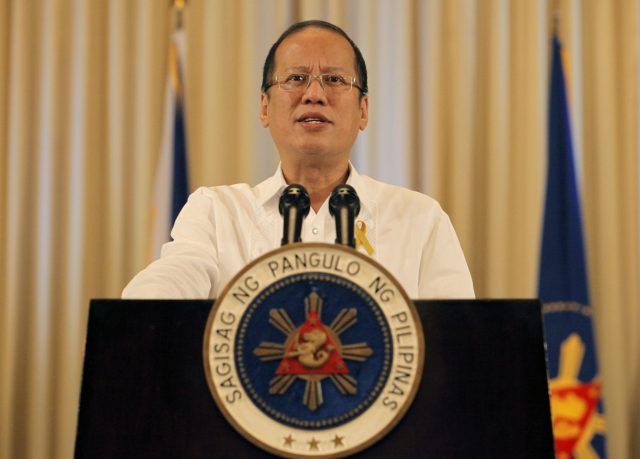
BENIGNO S.C. AQUINO III, the Philippine president who tried to send corrupt officials to jail and took China to court for its island-building activities in the South China Sea, has died. He was 61.

Mr. Aquino was rushed to the hospital on Thursday morning, Manuel “Mar” A. Roxas II, a close friend and his Interior and Local Government chief, told reporters in a Viber group message. He “passed away after efforts to revive him failed,” he added.

He died peacefully in his sleep at 6:30 a.m. due to renal disease secondary to diabetes, his elder sister Pinky Aquino-Abellada said in a video streamed live on Facebook later in the day.

“He made the fight against corruption his political centerpiece, so much so that his anti-thesis — President Rodrigo R. Duterte — also took up the same slogan strings in his government and during his presidential run,” said Richard Javad Heydarian, professorial chairholder in geopolitics at the Polytechnic University of the Philippines.

“Because of Aquino’s moral politik, it has become closely impossible for any president to not put fighting corruption at the heart of their political vision and agenda,” he said by telephone.

He managed to jail his predecessor Gloria Macapagal-Arroyo and at least three senators for graft, while firing the country’s chief justice for hiding his wealth.

Mr. Aquino, whose political lineage propelled him to power in 2010, ran after tax evaders and unscrupulous officials, giving him more revenue to build roads and schools and boost cash aid to the poor while cutting debt.

These efforts led to investment-grade credit ratings and economic growth exceeding 6% from 2012 to 2014.

PHL economic growth through the years

“The turnaround story of the Philippines — from Asia’s sick man to Asia’s bright star — is without doubt one of his greatest legacies,” Cesar V. Purisima, Mr. Aquino’s Finance chief, said in an e-mailed statement. “He left office with a Philippines more optimistic about its future, having ended the vicious cycle of doubt and having entered a virtuous cycle of confidence.”

The Philippines under Mr. Aquino also sued China before an international tribunal for its militarization of the South China. In 2016, the court rejected China’s claim to more than 80% of the disputed waterway based on a 1940s nine-dash map.

“He was the first Asian leader to dare to directly confront China,” Mr. Heydarian said. That arbitration award had set the tone of conversation about the South China Sea and allowed neighbors such as Vietnam to question China by invoking international law, he added.

“Aquino has been a major headache for the Chinese as far as their excessive and unlawful claims and activities in the sea are concerned,” the political analyst and columnist said.

Also part of Mr. Aquino’s legacy was laying down the foundation for the establishment of the Bangsamoro Autonomous Region in Muslim Mindanao after landmark negotiations with Muslim rebels in the country’s south.

“Let us all take this opportunity to unite in prayer and set aside our differences as we pay respects to a leader who has given his best to serve the Filipino people,” Mr. Duterte said in a statement.

“His memory and his family’s legacy of offering their lives for the cause of democracy will forever remain etched in our hearts.”

RISE TO POWER
The son of ex-President and “People Power” icon Corazon C. Aquino was thrust into the political limelight on a massive outpouring of grief following her death in August 2009. He beat his rivals in the presidential race despite a rather undistinguished legislative career.

Mr. Aquino, like his parents, came from pedigreed stock — landed, aristocratic families that have long been part of the ruling elite. His campaign was based on a legacy far greater than his own.

Aside from having the first female Philippine president for a mother, his father Benigno Jr. was the country’s greatest democracy champion before he was assassinated in 1983 presumably by agents of the dictator Ferdinand Marcos. Corazon ended Marcos’s two-decade rule in the popular uprising of 1986.

As soon as he assumed office, Mr. Aquino created a “truth commission” to probe Ms. Arroyo, which the Supreme Court struck down for being illegal. He fired officials whom his predecessor had appointed shortly before her term ended in June 2010, and refused to be sworn into office by one of them — ex-Chief Justice Renato C. Corona, Ms. Arroyo’s former chief of staff.

Less than three months into his term, Mr. Aquino suspended the incentives received by directors of government-owned companies and abolished superfluous agencies under him, including an anti-smuggling office and another dealing with global warming.

Mr. Aquino’s first crucial test came on Aug. 23, 2010 when eight members of a Hong Kong tour group died in a 10-hour police siege of a hijacked bus in Manila.

The Hong Kong government expressed its disappointment with the Philippines for failing to take more serious action against officials who mishandled the crisis, which was broadcast live around the world. Police officers had stormed the bus after negotiations with the hijacker, a disgruntled former policeman, failed.

After the probe, the former leader said Manila’s mayor and two police chiefs would face charges over their handling of the incident. He later fired the deputy Ombudsman for sitting on the plea for reinstatement of Rolando Mendoza, the dismissed police officer.

In December 2011, Mr. Aquino faced criticisms for his government’s lack of preparation for Tropical Storm Washi (Sendong), which killed more than 1,200 people in southern Philippines — the deadliest to hit the country in three years.

He ordered a probe of the government’s response to the disaster as the death toll climbed and promised that there would be “no disaster of this magnitude ever again.”

Mr. Aquino was also criticized for his government’s mishandling of a police raid where 44 commandoes were killed in a clash with Muslim rebels in Mamasapano town, Maguindanao in January 2015.

He later faced charges of reckless imprudence resulting in homicide for the bloodbath. The Supreme Court in 2019 rejected a lawsuit that sought his indictment.

Mr. Aquino’s career as a congressman and senator was rather unexceptional. Among his most notable measures that became law was the creation of a congressional committee to ensure intelligence funds were used properly.

At the Senate, he pushed for a more transparent government procurement process and budget “impoundment,” which allowed the President to block the release of certain funds appropriated by Congress.

Mr. Aquino, the third and only son among five children, was born on Feb. 8, 1960 in Manila. He attended Ateneo de Manila University for his primary, high school and college education. He graduated in 1981 with a Bachelor’s degree in Economics and was one of Ms. Arroyo’s students.

The first bachelor Philippine president, his love life was a constant target of media speculations. Mr. Aquino was a shooting and billiards enthusiast, enjoyed playing video games and was an avid smoker.

Mr. Aquino’s government was marked by “impressive economic growth,” with four credit rating upgrades and a significant increase in foreign direct investments that were aided by his transparency and good governance, the Management Association of the Philippines said in a statement.

“Although his administration had its fair share of challenges, the reforms he initiated in public infrastructure, the Judiciary, education, healthcare and social protections created an engine for progress,” it said. “He generated a new respect for the country on the world stage.”

Benedicto V. Yujuico, president of the Philippine Chamber of Commerce and Industry (PCCI) said economic output grew from an annual average of 4.5% before Mr. Aquino’s term to 6.2% during his six-year reign.

Gross domestic product growth peaked at 7.2%in 2013, when the country was the second-fastest growing economy in Asia after China, he said in a separate statement.

“On the back of his high-profile campaign to weed out corruption and the excellent gross domestic product performance, the inflow of foreign direct investment steadily improved, rising by 60% when he stepped down from office,” he added.

‘BETTER PLACE’
Mr. Aquino pursued his good governance campaign because he thought good housekeeping would drive good economics, said John Paul R. Rivera, an economist at the Asian Institute of Management.

Government transactions were meticulously examined, fiscal management became participatory and transparent and tax collection was improved, he said in a Viber message.

His anti-corruption drive boosted business confidence and attracted more foreign investments, Antonio A. Ligon, a law and business professor at De La Salle University, said by telephone.

Philippine capital markets also thrived during Mr. Aquino’s term, as interest rates reached record lows especially in 2013, said Michael L. Ricafort, chief economist at Rizal Commercial Banking Corp.

“The low interest rate environment and strong economic growth led to strong double-digit growth in loans,” he said in a Viber message.

The Philippine Stock Exchange index more than doubled from 3,372.71 in end-June 2010 to the 7,000 level by the end of his term, Mr. Ricafort said.

Mr. Aquino is survived by four sisters.

Mr. Heydarian, who spoke with Mr. Aquino on the phone two years ago, said the former leader was “very crest-fallen.” “He was really dejected because of the state of affairs in the country and by the political backlash against the whole project that his parents and himself represented.”

Despite his faults, Mr. Aquino “was a transitional leader in the sense that he was a bridge to a sustained period of economic growth and democratic consolidation.” “Unfortunately, his successor was almost the opposite of that.”

“In creating his place in history, each leader can only hope he leaves something better than what he found,” the MAP said. “The Philippines, which President Aquino left behind was indeed a better place.” — with Jenina P. Ibañez


Death of former President Benigno S.C. Aquino III mourned online

BW FILE PHOTO

Personalities took to social media and their respective platforms to express their grief over the death of former President Benigno S.C. Aquino III on Thursday.Kyle Aristophere T. Atienza

Senator Risa N. Hontiveros-Baraquel 

Like his parents, Ninoy and Cory, Noy dedicated his life to the ideals of democracy and the well-being of Filipinos, giving hope and moral courage when the country needed it most. 

He made the six years of his presidency count. 

He was a champion for clean and honest governance, which was key to sustaining the remarkable economic growth under his watch. 

He was also well-respected as a statesman and fought enormous battles for our national sovereignty. His strong stand led to our historic win at The Hague in 2016, leaving behind a legacy of hope and justice for generations to come. 

His remarkable focus on the hallmarks of democracy and public service are solid foundations that our leaders can build upon. To honor his legacy is to continue the fight against corruption and reaffirm our fundamental freedoms and human rights. 

Former Secretary of Finance Cesar V. Purisima 

President Aquino demonstrated principled leadership in realizing those hopes for our country in the six years he was in office. The turnaround story of the Philippines  from Asia’s sick man to Asia’s bright star  is without doubt one of his greatest legacies. He left office with a Philippines more optimistic about its future, having ended the vicious cycle of doubt and having entered a virtuous cycle of confidence. 

His six years in office was proof of his fundamental thesis: that good governance delivers great economics. 

I recall with pride, how we raced past our peers and even outpaced China at times to post economic growth figures that were among the world’s fastest. Indeed, the six-year growth average of 6.2% during his administration was the Philippines’ highest in four decades. 

Vice-President Maria Leonor G. Robredo

Senate Minority Leader Franklin M. Drilon 

I grieve and mourn the passing of former President Benigno Simeon C. Aquino III. I have lost a dear friend and the nation has lost a gentleman who served his country well  with all honesty and sincerity and with the purest of intentions. I am thankful for the opportunity of having worked with PNoy during his Presidency. He meant well and wanted the best for the country and for all of us. We have lost an honest man. I join the Aquino family in their mourning and offer them my sympathies and prayers. 

Senator Grace S. Poe-Llamanzares 

Sa nagbukas ng pinto ng serbisyo publiko para sa atin, maraming salamat sa iyong legasiya ng pagsisilbi nang buong katapatan at dedikasyon. 

Ipinakita sa atin ni PNoy ang kahalagahan  ng mabuting kalooban sa isang pinuno: walang pag-iimbot sa kapwa, malinis ang intensyon, at walang pagkagahaman sa kapangyarihan. 

Pinapahalagahan namin ang iyong matapat na paglilingkod, PNoy.

House Majority Leader and Leyte Rep. Martin G. Romualdez 

I join the nation in mourning the passing of former President Noynoy Aquino. The news of his death was a shock to all of us. We all grieve for losing him so early — a man of integrity, a Filipino leader who made it his primary mission to institutionalize good governance reforms. 

We extend our condolences to his family and loved ones. May you find peace in knowing that he is now back to the loving embrace of our Father.  

Rest now former President Aquino. Paalam. 

Anakalusugan Rep. Michael T. Defensor 

My heartfelt condolences and prayers to the family of Pres Noynoy Aquino. As a colleague in the 11th congress and as a friend, Pres Noy and I have  shared fond memories. While our lives are enmeshed in politics and there may have been differences at certain periods of time , we have remained good friends throughout the years. He is too young to die and today is a day of mourning. May he rest in peace. 

Davao City Mayor Sarah Duterte-Carpio 

The City Government of Davao is one with the nation in praying for the eternal repose of the soul of former President Benigno Aquino III.  

The Philippine flag in the entire Davao City shall be flown at half-mast until his burial.  

Thank you. 

Senator Juan Edgardo “Sonny” M. Angara 

We join the nation in mourning the passing of our former President Benigno “Noynoy” Aquino III. Continuing the legacy of his esteemed parents Ninoy and Cory, PNoy introduced widespread reforms and espoused a strong anti-corruption policy during his presidency.  

“Walang wang-wang, walang counterflow, walang tong.” “Walang tongpats.” “Kayo ang boss ko.” These are just some of the quotes of PNoy that are forever etched in the hearts and minds of every Filipino and aptly captures his stance against the abuse of power by the people in power. 

President Noy, who was a colleague of mine from 2004 to 2007 at the House of Representatives, played a major role in my entry into the Senate in the 2013 mid-term elections where I was part of the Team PNoy coalition. He truly loved his country and helped so many Filipinos during his time in office. 

Rest well knowing that in time your own legacy will be remembered as it should be, from a perspective that is objective. You have earned your place in the annals of Philippine history. May the Lord bring comfort to PNoy’s siblings and rest of the Aquino clan.” 

13th Vice President of the Philippines Jejomar “Jojo” C. Binay 

Former Congressman Ibarra “Barry” Gutierrez III

Former Secretary of Finance Cesar Antonio Velasquez Purisima 

Governor of Sorsogon Francis Joseph “Chiz” Guevara Escudero 

Former Commission on Elections (Comelec) Commissioner Gregorio “Goyo” Y. Larrazabal 

Manila City Mayor Francisco “Isko Moreno” Domagoso

House Deputy Speaker and Antique Rep. Loren  B. Legarda

Antonio “Sonny” F. Trillanes IV, former senator

Jose Manuel “Chel” I. Diokno, human-rights lawyer 

Curtis S. Chin, United States Ambassador to and member of the Board of Directors of the Asian Development Bank 

Supreme Court Associate Justice Marvic Mario Victor F. Leonen 

Foreign Affairs Secretary Teodoro L. Locsin, Jr. 

Protecting cloud-based collaboration and productivity tools at work with ESET Cloud Office Security

Cloud-based solutions support organizations in terms of collaboration and productivity during the current remote work challenges. As the usage of these tools continues to increase, so does the accelerating need for businesses to optimize security.

ESET, an Internet security provider, reminded the potential weaknesses of cloud services through its report on the Microsoft Exchange server attacks last March. Over 10 different threat actors or groups likely took advantage of this vulnerability chain, as identified by ESET researchers.

Such an incident tells organizations utilizing cloud-based tools to invest in advanced preventive protection from cyber threats. Promisingly, the introduction of ESET Cloud Office Security (ECOS) strengthens the defense for Microsoft 365, including Teams, OneDrive, Exchange Online, and SharePoint Online.

With its advanced preventive measures against malware, spam, and phishing attacks in a company’s work at the aforesaid cloud-based applications, ECOS, therefore, has a fundamental contribution to the teamwork and efficiency within the business.

Organizations rely on e-mails for communication, especially in a remote work setup. Issues like spam, suspicious or malicious attachments, and links to phishing sites can cause some troubles for the business and its employees. ECOS ensures the safety of every email delivered to a user’s Microsoft 365 inbox through an extensive inspection.

ESET’s award-winning antispam technology functions as the first layer that filters out spam messages with nearly absolute accuracy. The second layer is a malware scanner that detects malicious or suspicious attachments. Then the third layer serves as anti-phishing protection.

Aside from e-mails, business users also want a platform for their files that would decrease their cybersecurity concerns, which may also affect their productivity. With ESET’s powerful malware detection engine, all files uploaded to OneDrive, shared via SharePoint, or transferred via Teams are examined. ECOSputs a file in quarantine when identified as dangerous. This file is accessible only by administrators, thus protecting the users.

ECOS also has a simple, well-designed cloud console that can be convenient for administrators in their work. They get an overview of the quarantined items and receive an immediate notification when a detection takes place.

Administrators can glimpse at their company’s state in Microsoft 365 relating to security matters as well, which is viewable over a timescale of 24 hours, seven days, and 30 days.

ECOS provides such security details including license usage; the total number of protected users; the recipients of most spam, malicious, and phishing emails; and the top questionable accounts, groups, or sites on OneDrive, SharePoint, and Teams. It also shows the spam, malware, and phishing traffic charts and the total number of detections.

Along with its role as the shield of organizations against cyberattacks, ECOS is also a scalable solution. It allows administrators to manage the security for 5 or more seats or more with its effective multi-tenant service. And while protection is its prime function, the configuration of ECOS can also match the company size and maturity of IT security staff.

Substantiating ECOS’ valuable capabilities, ESET reported this year that through several dashboards of ECOS, IT administrators and SOC teams spotted significant threat types that evaded the native security of the cloud-based productivity suite. Such threats, among others, include Word documents and emails containing various types of fraudulent content that are designed to steal account credentials or other sensitive information.

As more and more businesses use cloud-based resources like Microsoft 365 to sustain their operations, they must also add further security measures to ensure their business data kept safe. Cyberthreats can greatly impact the collaboration and productivity within organizations when their platforms became compromised.

ECOS functions to ensure that users can interact via Exchange Online, without the infuriating spams and phishing emails, share a clean and safe document to OneDrive, Teams, and SharePoint Online, and a lot more. It is a cost-effective, wide-ranging protective solution for establishments of different sizes. Incorporating layers of security in cloud-based tools can at least bring forth reassurance to the business in its maintenance and success.

To know more about ESET Cloud Office Security, send an e-mail to esetphmarketing@b1g2.io for a free product presentation and demo.


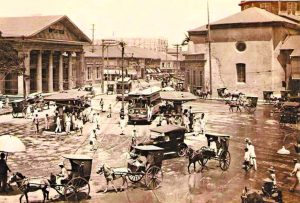
Looking back at the history of Manila

Photo from WIKIMEDIA COMMONS | Vanessa David

Manila is one of the cities that give Filipinos a glimpse of the rich history of the Philippines. From landmarks and structures to narratives and paintings, several accounts can let the people somehow view Manila’s image throughout the years.

Even before the “discovery” of Manila on June 24, 1571, there are already accounts on the look of this historic city.

In 2008, Carmen Guerrero Nakpil recorded the most untold stories on the founding of Manila (referencing also to Tome Pires, Pigafetta, Majul, W.H. Scott, and Gaspar de San Agustin) in her article for Philstar.

As early as the 14th century, the Luzon island natives — composed of traders, investors, mercenaries, seafarers called Luzones — were working in the commerce triangle of Southeast Asia between Canton, Malacca, and Timor. “They owned ships, underwrote large-scale export ventures, and were called “discoverers”, for their sea-faring skills,” Ms. Nakipil wrote.

Manila was the chief city in Luzon. It was ruled by three Muslim kinglets: Ache (or Raha Matanda), a grandson of Sultan Bolkiah of Borneo; Raha Sulayman, Ache’s nephew; and Raha Lakandula of Tondo.

“The town all around this bay was really marvelous. It was tilled and cultivated. The slopes were smooth. So excellent indications have not been seen in this land. The town was situated on the bank of the river, defended by a palisade. Within were many warriors and the shore outside was crowded with many people. Pieces of artillery stood at the gates, guarded by bombardiers, linstock in hand,” stated a Spanish chronicle quoted by O.D. Corpus in The Roots of the Filipino Nation, according to Ms. Nakpil.

After Raha Sulayman routed Martin de Goiti’s attack on Manila in 1570, Spanish conquistador Miguel Lopez de Legazpi, however, arrived and claimed the Spanish sovereignty over Manila in 1571.

Manila then was given “a city charter with municipal councilors, a plan for a plaza, two grand houses and 150 smaller houses, and a project for the distribution of land,” Ms. Nakpil wrote.

That day when Legazpi established a municipal council was recognized now as the foundation day of Manila. Thus, the city commemorated on Araw ng Maynila is the “Spanish Manila.”

In 1952, National Artist for Literature Nick Joaquin put into words an image of Manila of the past, basing on the impression made by an unknown author who traveled in the city around 1860. He said that the watercolors produced by the unknown author have been in the possession of the Zobel family.

“[It is] a Manila of which we have no memory, no knowledge at all. It is terra incognita, newfoundland, a strange unrecognizable place,” Mr. Joaquin, under the pseudonym of Quijano de Manila, wrote in the Philippine Free Press.

“All of us have the same general idea of what is meant by ‘the old Manila, the Spanish Manila.’ We instantly see the sagging balconies of Calle Real, the Gothic spires of Sto. Domingo, the silver Romanesque dome of the Cathedral. Against that unchanging background, we naively pose the conquistadores of the 16th century, the missionaries of the 17th, the grandees of the 18th, and the rebel patriots of the 19th century,” Mr. Joaquin said. 

Plaza Moraga, Old Manila — WIKIMEDIA COMMONS

“But now, confronted with these watercolors, we feel like the archaeologists who, searching for the ‘real’ Troy, found seven different Troys, one beneath the other. And we realize how many, many Manilas have come and gone, unknown to us,” he continued.

“In the Manila of these watercolors, nothing is familiar, everything seems ‘wrong’ — Sto. Domingo is not Gothic nor the Cathedral Romanesque; the Governor’s palace stands in the cathedral square, which has an iron fence running around it; San Agustin has two towers; and the Escolta, with its whitewashed one-story buildings, looks like the main street of a minor Andalusian village,” he described.

Mr. Joaquin further considered that though descriptions from historical chronicles could not give a concrete image of the other, earlier appearances of Manila, the unknown artist somehow managed to keep a glimpse of Manila in 1860.

“From the ruins of that other Manila — the odd city smiling at us from the Zobel watercolors — arose the Manila we remember, the Manila of Rizal and the Revolution, the last great creation of Spain in the Philippines,” Mr. Joaquin said.

The city of Manila certainly underwent many changes since that description written by Nick Joaquin. Nevertheless, Manila at present still preserves some of its important historical sites.

The people of Manila will once again commemorate the city’s history, 450 years after its acknowledged foundation on June 24, currently a special holiday in Manila.

For the Araw ng Maynila this year, as posted on Manila City’s official website, Mayor Francisco “Isko Moreno” Domagoso said that “the activities that we have prepared are meant to unite us and be one as we pave the way towards progress and development.”

“With our celebration’s theme of ‘Maynila, Dalhin Mo Ang Bandila,’ we, Manilenyos should be exemplary role models and charge the path for our city to trailblaze and lead the country as we have been doing in the past 449 years,” he added. — Chelsey Keith P. Ignacio

Manila as a beacon for culture and commerce

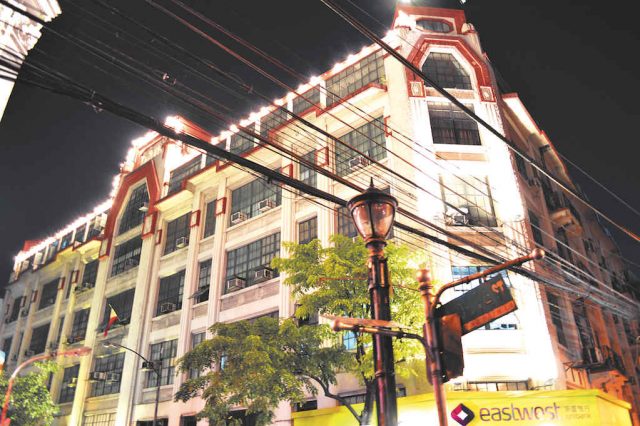
First United Bldg. — PHILIP JAMES F. DAGUN

As one of the most populous urban areas in the world, the City of Manila is a melting pot of culture, and a bustling hub of trade and commerce.

In fact, based on the data gathered by the City of Manila, the district of Sta. Ana has the most heritage sites with 88, followed by the districts of San Nicolas and Malate with 78 and 55, respectively.

The list includes parks, monument, buildings, interiors, and even a vista. Among these are the walls of Intramuros, office buildings in the Binondo and Escolta areas including El Hogar and First United Bldg. (formerly Perez-Samanillo Bldg.), Arroceros Park, Paco Park, churches including Quiapo Church and the Manila Cathedral, the Aristocrat restaurant along Roxas Blvd., the interior of the Playboy Club in the Silahis hotel, and Manila Bay and the Waterfront from Del Pan Bridge to the Cultural Center of the Philippines.

Considered cultural properties under the Philippine Registry of Cultural Property are those that were declared cultural property by the National Commission for Culture and the Arts or National Cultural Agencies (NCAs); that are presumed important cultural property which are currently not declared by the NCCA or NCAs; local cultural property declared by the respective LGUs through executive order, ordinance, or resolution; and registered cultural property which carry significance to local culture and history.

Not only is the city home to a number of other historically-significant monuments, Manila has also been a significant contributor to the country’s economic development.

Most recently, the City of Manila was recognized by the Department of Trade and Industry as the most competitive highly urbanized city in the country in the Cities and Municipalities Competitiveness Index (CMCI) 2020, an annual ranking of the competitiveness of cities and municipalities in the country.

It also won first place in two other categories Most Competitive in Government Efficiency in Highly Urbanized Cities; and Most Competitive in Infrastructure for Highly Urbanized Cities.

The Overall Competitiveness Award was based on four criteria: economic dynamism, government efficiency, infrastructure, and resiliency. The index looks at each city’s implemented programs and how they have improved through the years, with scores on each pillar determined by the National Competitiveness Council (NCC).

Economic dynamism was scored based on the following factors: cost of doing business, cost of living, increase in employment, financial deepening, local economic growth, local economy size, presence of business and professional organizations, productivity, local economic structure, and safety compliant in business.

For the scoring in the infrastructure category, the availability of basic utilities, education, health, accommodation capacity, information technology capacity, financial technology capacity, distance to ports, LGU investment, road network, and transportation vehicles were considered.

Government efficiency was determined according to the city’s compliance to business permits and licensing system standards, efficiency in business registration, health services capacity, compliance to national directives, presence of investment promotion unit, the capacity of school services, performance recognition, the capacity to generate local resource, social protection, and peace and order.

Finally, resiliency was based on the city’s programs to conduct an annual disaster drill, budget for DRRMP, disaster risk reduction plan, emergency infrastructure, employed population, early warning system, land use plan, sanitary system, utilities, and local risk assessments. — Bjorn Biel M. Beltran