Home Blog Page 7502

Philippines divers clear plastic waste from corals for World Cleanup Day

PIXABAY

MANILA – Divers in the Philippines pulled plastic bags, drinks bottles and fishing nets from a coral reef on Saturday, joining an annual cleanup that aims to highlight the impact of garbage on the world’s oceans.

About a dozen divers cleared rubbish from the reef and nearby beaches as they marked World Cleanup Day in Batangas province, a popular spot for snorkelling and diving south of the capital, Manila.

“For every fishing line or net that you remove, you could actually prevent a turtle from dying or getting caught in it or eating a plastic bag,” organiser Carmela Sevilla told Reuters, holding up a mesh bag full of garbage.

The Philippines, an archipelago of more than 7,600 islands with nearly 36,300 km (22,555 miles) of coastline, is one of the world’s most marine resource-rich countries.

But campaigners say its marine resources are threatened by the neglect of local authorities and lax implementation of environmental laws.

Another of the clean-up participants, Haley Osbourne, 35, a Canadian who has lived in the Philippines five years, said all divers should do their bit by picking up any rubbish they come across while underwater.

Most of the plastic trash blighting the world’s oceans comes from rivers and coastlines.

Of the total, 81% percent is estimated to come from Asia, with a third of the Asian plastic originating in the Philippines, according to a 2021 report by Our World in Data, a scientific online publication.

World Cleanup Day is held annually on the third Saturday of September. — Reuters

Bad for business: World Bank’s China rigging scandal rattles investors

REUTERS

LONDON – Some investors and campaigners expressed dismay on Friday at revelations that World Bank leaders pressured staff to boost China’s score in an influential report that ranks countries on how easy it is to do business there.

They also said the World Bank’s subsequent discontinuation of the “Doing Business” series of annual reports could make it harder for investors to assess where to put their money.

“The more I think about this, the worse it looks,” said Tim Ash at BlueBay Asset Management, adding that the reports published since 2003 had become important for banks and businesses around the world.

“Any quantitative model of country risk has built this into ratings. Money and investments are allocated on the back of this series.”

An investigation by law firm WilmerHale, at the request of the World Bank’s ethics committee, found that World Bank chiefs including Kristalina Georgieva – now head of the International Monetary Fund – had applied “undue pressure” to boost China’s scores in the “Doing Business 2018” report.

At the time, the Washington-based multilateral lender was seeking China’s support for a big capital increase.

Georgieva said she disagreed “fundamentally with the findings and interpretations” of the report, which was released on Thursday, and had briefed the IMF’s executive board.

Advocacy group Tax Justice Network welcomed the investigation by the ethics committee.

“The bigger question is how, if it is even possible, the Bank can eliminate the apparent corruption of the institution,” the British-based group’s CEO Alex Cobham said on Twitter.

KREMLIN: RATINGS JUST A YARDSTICK
Economists said such reports – by the World Bank and others – were useful but had long been vulnerable to manipulation.

They said some governments, especially in emerging market countries who want to demonstrate progress and attract investment, could become obsessed with their position in the reports, which assess everything from ease of paying taxes to legal rights.

The United Arab Emirates, 16th in the latest 2020 report, had targeted topping the ranking in 2021, while Russia surged up the rankings to 28th in 2020 from a dismal 120th in 2011. President Vladimir Putin set a challenge for the country to break into the top 20 by the end of the last decade.

When asked to comment on the World Bank ditching the ratings, Kremlin spokesperson Dmitry Peskov said on Friday: “The task of improving the business climate is not linked to the existence of any ratings. Ratings are just a yardstick.”

Past research by the World Bank nonetheless suggested that foreign direct investment flows were higher for economies performing better in its reports.

‘DIVERGENCE WITH CORRUPTION SCORES’
But Charles Robertson, chief economist at Renaissance Capital, said ease of doing business scores had been losing credibility for years. Some countries employ investment firms, including his own, and even former government leaders to advise them on how to improve their rankings.

“There have been wide divergences between some countries corruption ranking(s) and the ease of doing business scores, which implies that these were only face-value improvements rather than reflecting underlying economic change,” he said.

“As an economist, though, it would a real shame if we lose access to the underlying data. It is really interesting, for example, to know that it takes a company in Brazil 900 hours to process taxes, whereas for somewhere else it take only 70,” Robertson added.

Emerging markets-focused investment manager Ashmore Group engaged a third-party data provider that used the Doing Business findings as one of their sources, but ultimately relied upon its own research for investment decisions, said Gustavo Medeiros, Ashmore’s deputy head of research at the investment firm.

“When companies are looking to do foreign direct investment, the report is a useful roadmap to understand where the potential problems may be and then they can go and do the due diligence,” he added. — Reuters


BSP lowers balance of payments projections

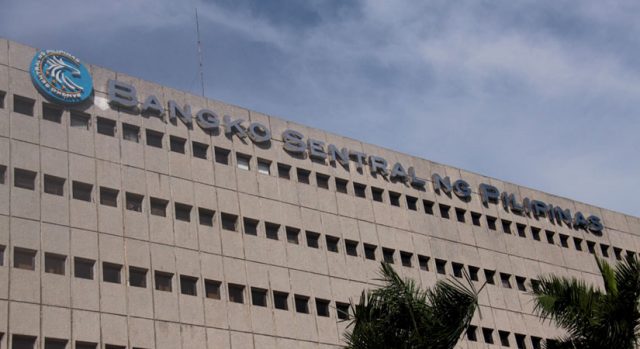
The Bangko Sentral ng Pilipinas (BSP) lowered the country’s balance of payments (BoP) surplus projection for this year, reflecting the lower current account surplus and the risks arising from the spread of the more infectious coronavirus variant and delays in the vaccine rollout. 

The Monetary Board on Thursday approved the revised BoP projections for 2021 and 2022. 

The BoP is now projected to yield a surplus of $4.1 billion or equivalent to 1.1% of gross domestic product (GDP), significantly lower than the previous forecast of a $7.1 billion surplus (1.8% of GDP). 

The BoP gives a glimpse of the country’s transactions with the rest of the world at a given time. A deficit reflects more funds fleeing the country than what went in, while a surplus means more money entered the economy.  

In a statement, the BSP said the current BOP assessment takes a “more guarded view” of economic developments at home and abroad in the last few months of the year. 

“The lingering uncertainty continues to cast a shadow on external sector prospects over the near term as the direction and duration of the pandemic remains little known,” it said.  

The BSP cited key risks from the Delta-driven surge in coronavirus cases that prompted stricter lockdowns, as well as supply and logistical issues hounding the vaccine rollout. 

“The narrower BOP surplus reflects the expected lower current account surplus of US$3.5 billion (0.9 percent of GDP) from the previous projection of US$10.0 billion (2.5 percent of GDP) amid the expected widening of the trade-in-goods deficit,” the central bank said.  

Latest data from the BSP showed the country’s BoP position stood at a deficit of $1.3 billion in the first seven months of 2021, a reversal from the $4.117-billion surplus a year ago. 

For 2022, the BOP surplus is seen further narrowing to $1.7 billion (0.4% of GDP), lower than the previous forecast of $2.7 billion (0.6% of GDP), on the back of an anticipated reversal of the current account to a $1.4-billion deficit (-0.3% of GDP). 

BSP Department of Economic Research Senior Director Zeno R. Abenoja said in an online briefing that imports are expected to be “reinvigorated” as more business activities resume and the government ramps up its infrastructure projects. 

Steady inflows from both overseas Filipino remittances and outsourcing revenues as well as some recovery in travel receipts lend support to the current account next year, the BSP said. 

The BSP expects cash remittances to grow at a faster 6% this year from the previous 4% growth estimate. By 2022, the central bank sees these inflows rising by 4%, unchanged from previous projection. 

Cash remittances in the first seven months jumped by 5.8% to $17.771 billion.  

“We have also observed increased global demand for foreign workers, as host economies start rebooting their economies. And finally, the rise in access to digital financial services could also facilitate remittance transfers, and that would be reflected in our former BoP numbers,” Mr. Abenoja said. 

On the other hand, the central bank expects foreign direct investment inflows of $7 billion and $7.5 billion for 2021 and 2022, both lower than the $7.5 billion and $8.5 billion previous projections. 

The BSP expects hot money to yield net inflow worth $4.3 billion (from $5.5 billion) this year and $5.7 billion (from $7.4 billion) next year. Both are lower than previous estimates. 

Meanwhile, gross international reserves projection has been trimmed to $114 billion (from $115 billion) and $115 billion (from $117 billion) for 2021 and 2022, respectively. 

“Although it is slightly lower than the previous projections, we take into account the outflows from the foreign currency withdrawals of the national government from its deposits with the BSP to pay its obligations and fund various expenditures,” Mr. Abenoja said. 

The dollar buffers reached a seven-month high of $108.046 billion as of end-August, boosted by fresh special drawing rights from the International Monetary Fund. — LWTN 

SEC wants over 800 companies listed at the stock exchange by 2024

The Securities and Exchange Commission (SEC) is encouraging more companies to tap the capital markets, in hopes that there would be over 800 companies listed at the Philippine Stock Exchange (PSE) by 2024.   

“We challenge ourselves that by the time we celebrate our 88th year anniversary on November 11, 2024, there are at least 888 companies that would have tapped the capital market for their capital raising activities,” SEC Chairperson Emilio B. Aquino said at the second day of the PSE’s Road to IPO (initial public offering) for small and medium enterprises (SME) on Friday.  

To achieve this goal, the SEC wants more SME firms to consider listing at the PSE. There are currently 272 companies listed at the local bourse, only seven of which are part of the SME board.  

“We would be more than happy to see more SMEs undertaking IPOs. It is part of our mission to provide the necessary assistance to achieve this commitment,” Mr. Aquino said.  

In line with this, the regulator said it is creating the Office for the Advancement of Strategic Investments in SMEs or the so-called (OASIS), which will be working with other government agencies and the private sector to help SMEs tap the capital market via developmental and regulatory programs. 

The new office aims to “simplify the capital raising products” and streamline the registration process for the SMEs. It also aims to encourage investment houses and financial institutions to have “SME-friendly” underwriting and/or advisory programs.  

“[It will also] engage multilateral agencies such as ADB (Asian Development Bank) and [the] IFC (International Finance Corp.) in launching SME-focused investment funds,” said Mr. Aquino.  

However, the SEC reiterated that market-based financing should not be considered as a substitute for business funding.   

“Capital market-based financing should complement and supplement the traditional source of financing for SMEs. Bank financing and capital market financing, we believe, can co-exist,” said Vicente Graciano P. Felizmenio, Jr., director of the SEC’s Markets and Securities Regulation Department.  — Keren Concepcion G. Valmonte  

BPOs allowed to continue WFH scheme until March

BW FILE PHOTO

Outsourcing firms operating in economic zones are allowed to implement remote work arrangements until March 2022 as the pandemic continues, the Finance department said in a statement. 

The Fiscal Incentives Review Board (FIRB) has issued Resolution No. 19-21 which allows Information Technology and Business Process Management (IT-BPM) firms in ecozones to adopt up to 90% work-from-home scheme until  

Jan. 1, 2022, after which a 75% ceiling will be in place until March 31, 2022. 

However, the FIRB said if the state of calamity will be extended after Jan. 1, the 90% ceiling will be maintained until end-March.  

The 90% WFH setup was supposed to have ended this month, as the national state of calamity was scheduled to have ended.  

President Rodrigo Duterte has extended the state of calamity in the country until September 2022. 

“The policy was set by the FIRB to address the work constraints brought about by the pandemic in accordance with the provision in the implementing rules and regulations of the Corporate Recovery and Tax Incentives for Enterprises (CREATE) Act, which gives an investment promotion agency (IPA) the authority to implement temporary measures as long as these are approved by the FIRB to help registered business enterprises recover from a pandemic, national emergencies, or major disasters,” the Department of Finance said. 

Under the resolution, IT-BPM firms were required to submit information to their respective IPAs by Sept. 30 if they want to continue with WFH arrangements. These include the number of employees and those who are working from home, as well as equipment and assets brought out of the ecozones.  

The IT-BPM firms should also include the acquisition costs, book value, and bond amount to cover 150% of the taxes for resources that were brought outside ecozones. 

“Bonds shall be posted for all equipment (e.g. desktops and laptops) deployed by the RBE (registered business entity) to their employees’ homes, to ensure payment of taxes and duties if any such equipment is not returned to the site of the RBE after the WFH arrangement,” the memo stated. 

IT-BPM companies should also submit updated information to the IPAs within five days after the end of each month. 

Firms are given until Sept. 30 to submit to their IPAs a certification that the export requirement and the number of employees will be maintained. 

Businesses that fail to comply with the requirements may face suspension, withdrawal or removal of tax incentives.  — Luz Wendy T. Noble 

Metro Manila retail price growth slowest in five months in July

The growth in retail prices of general goods slowed in July. -- PHILIPPINE STAR/ MICHAEL VARCAS

RETAIL PRICE growth of general goods in the National Capital Region eased to its slowest pace in five months in July, the Philippine Statistics Authority (PSA) reported on Friday. 

The general retail price index (GPRI) registered a 1.8% growth in July, decelerating from the 2% rise in June but faster than the 1.5% a year ago. 

The July performance marked the slowest in five months or since the 1.6% annual growth recorded in February.  

Metro Manila’s retail price growth averaged 1.9% so far this year, faster than the 1.2% average in 2020’s comparable seven months. 

The PSA attributed the downtrend mainly to the lower year-on-year growth in the prices of beverages and tobacco at 6.9% in July versus 9% in June. 

The GRPI also posted slowdowns in the subindices of food (1.7% in July from 1.9% in June); mineral fuels, lubricants and related materials (13% from 13.6%); chemicals, including animal and vegetable oils and fats (0.8% from 0.9%); machinery and transport equipment (0.3% from 0.4%); and miscellaneous manufactured articles (0.3% from 0.4%). 

Price growth in crude materials, inedible except fuels; and manufactured goods classified chiefly by materials retained their previous month’s annual growth rates of 1.6% and 1.0%, respectively. 

“The drop in GRPI is to be expected with economic activity on the downtrend…,” ING Bank N.V. Manila Senior Economist Nicholas Antonio T. Mapa said in an e-mail interview. 

Mr. Mapa said the deceleration of GRPI is in stark contrast with the pickup in the CPI (consumer price index) basket, which can be traced to the composition of the two baskets. 

“The most common item in both baskets are food and beverage which both comprise the lion’s share of the GRPI and CPI baskets and these items have seen a stark pickup in price pressures of late, driving overall headline print close to 5%.  Thus, we can surmise that despite the stark pickup in food inflation, the GRPI remains much slower than CPI inflation as the price of all other items (crude materials, chemicals, manufactured goods, machinery and miscellaneous articles) are all on the downtrend,” Mr. Mapa explained. 

“This decline in price pressure for these other items can be traced directly to the economic recession that the Philippines continues to endure.  With the Philippines not likely to exit from recession soon, we could see GRPI and CPI diverge for the balance of the year,” he added

WHOLESALE PRICES ALSO DOWN 

In a separate report by the PSA, the general wholesale price index (GWPI) posted a 2.2% growth in June — the slowest since the 2.1% growth rate posted in January.  

Driving the June outcome were moderating price increases in food (0.5% from 2.2% in May); beverages and tobacco (4.1% from 6.3%); crude materials, inedible except fuels (39.2% from 44.9%); mineral fuels, lubricants, and related materials (15.9% from 18.7%); chemicals including animal and vegetable oils and fat (5.7% from 5.9%); and manufactured goods classified chiefly by material (0.8% from 0.9%). 

In contrast, the subindices of machinery and transport equipment and miscellaneous manufactured articles picked up to 0.9% and 3.0%, respectively, from 0.8% and 0.7% in May.  

Of the three major island groups, only Mindanao saw a pickup in general prices as its GWPI rose by 4.8% from 4.2% the month before. 

Meanwhile, wholesale prices in Luzon and the Visayas eased by 2.1% (from 3.0%) and 0.4% (from 0.8%), respectively. — Abigail Marie P. Yraola 

Exporters call for changes to PHL shipping rules

The Philippines’ trade in merchandise goods continued to rebound in May. -- Reuters

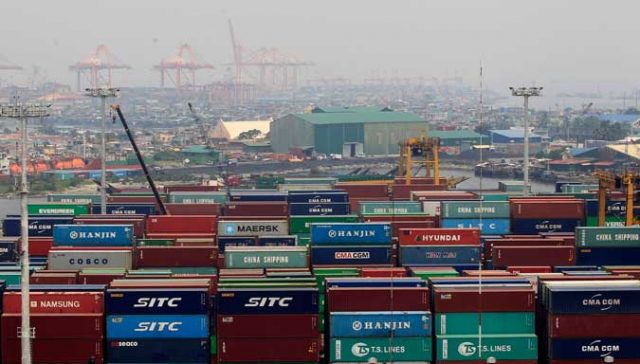
Exporters and logistics groups are proposing longer-term changes to Philippine shipping rules to allow domestic ships to carry out international trade.  

Royal Cargo, Inc. subsidiary Iris Logistics, Inc. will soon transport containers carrying export products to the United States amid a global container shortage that has led exporters to flag logistics delays and higher freight costs. 

Local exporters have not been able to book slots on international container lines, leading them to tap domestic ships. 

Philippine Exporters Confederation, Inc. (Philexport) in a statement Friday said that the industry group has been working with the Networking Committee on Transportation and Logistics of the Export Development Council and Royal Cargo to address the capacity issues. 

“As part of the intervention, the three groups agreed to propose to government to allow domestic shipping lines to operate beyond domestic waters. Royal Cargo agreed to help by providing its ships to transport export cargoes to their ports of destination,” Philexport said. 

For the long term, the groups are supporting the passage of the Philippine Ship Registry Act, which would incentivize ship registry, to enable Philippine flag vessels to transport goods internationally. 

They are also campaigning for regulation changes, asking to remove the distinction between “coastwise license” and “international license” among Philippine flag ships and for changes to a Maritime Industry Authority circular to recognize Philippine-registered vessels doing both domestic and international trade. 

The groups also want Philippine flag ships to be able to carry government cargo imports. 

“Issues with supply chain disruptions, not just in the Philippines but around the world, have been intensifying, the result of factors such as a surge in global demand, the early resumption of manufacturing in China, port congestion, and the reduction of capacity by carriers in response to lockdowns,” Philexport said. 

Philexport in July said that 80 out of nearly a hundred member-companies that responded to a survey said they were not able to ship goods because of the shortage.  

The industry group expects shipment delays to stretch into the Christmas season. — Jenina P. Ibañez 

Pandemic disrupts PHL’s sustainable development gains: Chua

THE COUNTRY’S progress towards achieving the sustainable development goals (SDGs) laid out by the United Nations has been affected by the pandemic, Socioeconomic Planning Secretary Karl Kendrick T. Chua said. 

“We will be seeing some changes, but it doesn’t mean that they are insurmountable. We have seen some of these indicators where we have significant gains delayed for a couple of years or three years,” Mr. Chua said in an online briefing on Thursday. 

There are 17 SDGs focused on eradicating poverty, reducing inequality, and spurring economic growth sustainably. 

Mr. Chua said while the country has been adversely affected by the pandemic, it has economic and social foundations that will help it recover. 

“We still have the people, their skills, we have our infrastructure, the factories and offices. The problem is the pandemic made it impossible to have everyone work because we had to be more risk averse initially,” he said. 

Mr. Chua said he believes the economy can recover and get back on track towards attaining the SDGs on the back of ramped-up vaccination, “better risk management” and support packages through lower taxes, subsidies, as well as fiscal and monetary support. 

“I am still hopeful that after a few years of delay, we will be able to get back up because of the strong social and economic foundations, and our commitment to the SDGs,” Mr. Chua said. 

The economy recorded its worst recession since the Marcos regime in 2020 as when gross domestic product (GDP) shrank by 9.6%. 

In the second quarter, GDP expanded by 11.8%, mainly due to base effects from the record 17% decline in the same period of 2020. 

The government has downgraded its growth target for this year to 4-5% from 6-7% previously, saying the fresh infection surge due to the Delta variant could hamper recovery. — LWTN 

Price growth of building materials in NCR picks up in July

THE WHOLESALE and retail price growth of construction materials in Metro Manila picked up in July as lockdowns eased, data released by the Philippine Statistics Authority (PSA) on Friday showed. 

The construction materials wholesale price index (CMWPI) in the National Capital Region (NCR) grew 2.3% year on year in July, a tad faster than the 2.2% expansion in June and 1.8% in July 2020.   

Similarly, growth in the construction materials retail price index (CMRPI) picked up to 1.4% in July from 1.2% the previous month and 1.1% last year. It was also fastest in eight months or since the 1.7% year-on-year expansion in November 2020 and matched December 2020’s 1.4%. 

Wholesale prices reflect bulk purchases by building firms participating in major projects like infrastructure works. Retail prices reflect activity in smaller segments. 

The acceleration in the CMWPI was driven by higher annual increments in the following materials: electrical works (4.1% in July from 3.9% in June); reinforcing and structural steel (3.6% from 2.1%); PVC pipes (3.5% from 1.0%); tileworks (2.8% from 2.4%); galvanized iron sheets (2.3% from 0.7%); hardware (2.2% from 2.0%); painting works (1.7% from 1.4%); plywood (1.9% from 1.2%); and doors, jambs, and steel casement (1.9% from 1.8%). 

Plumbing fixtures and accessories/waterworks continued to decline, albeit at a slower pace at -0.9% from -1.0% in the previous month.   

The annual drop in the index of plumbing fixtures and accessories/waterworks was lower in July at -0.9 percent from -1.0 percent in the previous month.   

Slower price pickups were recorded in lumber (2.0% from 2.3%) and fuels and lubricants (18% from 21.2%). 

Meanwhile, the price growth of glass and glass products was unchanged at 14.4%, while that for asphalt and machinery and equipment rental was flat. 

At the retail level, the CMRPI was driven by faster increases in the following commodity groups: tinsmithry materials (2.2% from 1.8%), miscellaneous construction materials (1.6% from 1.5%), electrical materials (1.0% from 0.8%), and plumbing materials (0.8% from 0.6%).   

On the other hand, masonry materials saw its price growth ease to 1.0% from 1.1% the month before.   

The following commodity groups saw their respective price growth steady in July: carpentry materials (1.5%) and painting materials and related compounds (1.1%).   

“The pickup in some construction activity parallels with easing lockdowns in July and may have pushed prices slightly higher, although base effects may have also contributed to the uptick even though it remains below pre-pandemic levels,” said Security Bank Corp. Chief Economist Robert Dan J. Roces in an e-mail. 

Metro Manila and the surrounding areas were placed under general community quarantine from May 15 to Aug. 5, albeit with varying restrictions. This was elevated to a stricter enhanced community quarantine (ECQ) from Aug. 6 to 20 in order to curb the spread of the more infectious Delta coronavirus disease 2019 (COVID-19) variant, and later eased to modified ECQ.   

Since Thursday, the government implemented a pilot program of localized lockdowns in Metro Manila. Under the new guidelines, lockdowns will be localized at city level depending on the case transmission rates and healthcare utilization rates. The new alert system will consist of five levels, with level 5 equivalent to ECQ.   

“August’s construction activity may have been hampered by the return to ECQ that month, although we may see only a modest pullback in construction efforts with the imposition of a granular form of lockdown by September, while base effects may still lift prices in the months ahead when more projects resume,” Mr. Roces said.   

“In addition, capital expansion via loan growth has been observed in the construction sector with January-July growth printing a decent 2.0% while employment growth for the same period was at 7%, so activity in the sector is expected to continue to contribute to upticks in the CWMPI,” he added. — Bernadette Therese M. Gadon 

Average retail prices for rice go down

PHILSTAR

THE AVERAGE retail price of regular-milled rice fell in six regional trading centers at around mid-August, according to the Philippine Statistics Authority (PSA). 

In a report on Friday, the PSA said the average retail price of regular-milled rice decreased by P4.56 to P34.44 per kilogram (/kg) in Iloilo City, P3.72 to P32.44/kg in Calapan City, P1.21 to P35.48/kg in Kidapawan City, 75 centavos to P34.25/kg in Cabanatuan City, 40 centavos to P36.50/kg in Butuan City, and 12 centavos to P35.69/kg in Legazpi City. 

The price sampling period was from Aug. 15 to 17. Prices were compared to those recorded from Aug. 1 to 5. 

The average retail price of regular-milled rice climbed P1.05 to P35.65/kg in Baguio City, P1.01 to P42.55/kg in Digos City, 47 centavos to P32.47/kg in Pagadian City, 12 centavos to P40.27/kg in Tacloban City, ten centavos to P43.24/kg in Cebu City, and three centavos to P38.18/kg in the National Capital Region (NCR). 

The PSA said the average retail price for a kilo of pork in bones dropped by P5.42 to P35.31 in four regional centers. 

Tacloban City registered the steepest drop at P35.31 to P247.19/kg, followed by Baguio City with P8.48 to P280/kg, Pagadian City at P7.84 to P212.16/kg and Cebu City at P5.42 to P184.17/kg. 

On the other hand, San Fernando City recorded the largest increase at P25 to P310/kg. Cabanatuan and Legazpi cities also saw a rise in average retail prices for pork with bones at P10 to P345/kg and at P5.64 to P340.36/kg, respectively. 

Meanwhile, average retail prices for galunggong (round scad) declined in six regional centers. Legazpi City recorded the largest decline at P38.67 to P154.67/kg, followed by Pagadian City at P35 to P105/kg, P6.23 to P162.08/kg in Iloilo City, P3.11 to P226.44/kg in NCR, and P2.43 to P167.57/kg in Baguio City. 

Butuan City, on the other hand, saw an increase of P43.37 to P239.68/kg of galunggong. Cabanatuan City posted an increase of P40 to P220/kg, Cagayan de Oro City at P10 to P190/kg, and Kidapawan City at P3.72 to P156.28/kg. 

The PSA also reported that the average retail price of red onion increased in five centers. Butuan City posted the largest increase at P18.50 to P138.50/kg, followed by Legazpi City with P11.16 to P136.74/kg, Kidapawan City at P7.02 to P107.02/kg, Tacloban City at P4.07 to P120/kg and NCR at P0.44 to P110.44/kg. 

Meanwhile, its average price fell by P15.74 to P104.26 in Pagadian City, P10 to P90/kg in Cabanatuan City, P5 to P132.50/kg in Cagayan de Oro City, and P1.96 to P105.88/kg in Baguio City. — Angelica Y. Yang 

DA announces temporary ban on cattle meat from Brazil

THE Department of Agriculture (DA) has announced a temporary halt on the issuance of permits for the importation of live cattle and its meat products from Brazil amid reports of a mad cow disease outbreak in the country earlier this month, according to a memorandum order. 

In the memo posted on the department’s website on Thursday, DA Secretary William D. Dar ordered a “temporary suspension of the processing, evaluation of application, and issuance of sanitary and phytosanitary (SPS) import clearances for meat and by-products from cattle, including live cattle imports” from Brazil. 

The order took effect on Sept. 16. 

An SPS import clearance ensures that the product meets health standards and guarantees it is safe for consumption and is free of pests and disease. 

According to the order, cattle shipments will still be accepted as long as the slaughter and production happened on or before Aug. 31. 

“[But] all [products with] previously approved SPS import clearance which were not yet in transit, loaded, or accepted unto port after official communication of this order to Brazilian authorities are hereby revoked,” Mr. Dar said. 

The DA also said it will conduct more rigorous inspections of all Brazilian cattle meat arrivals in ports of entry. 

In a separate statement on Friday, the Philippine Association of Meat Processors, Inc. (PAMPI) said the ban will force meat processors to use higher-priced beef sourced from suppliers in Australia, Ireland and the United States. 

“The increased cost of beef raw material for processed meats will be passed on to consumers in terms of higher prices while the ban on Brazilian beef is in effect,” it said. 

PAMPI said the Philippines is the only country that has imposed a ban on Brazilian meat imports. Brazil supplies 40% of the Philippines’ requirements, with local meat processors getting as much as 70% of their needs from the country, according to PAMPI. 

It added that Brazilian beef is cheaply priced compared to similar products from other countries. 

“As the only Southeast Asian country banning Brazil beef, we expose ourselves to trade retaliation which will make our food production situation more difficult as it already is under the pandemic,” it said. — A.Y. Yang 

DTI flags digital gap among businesses

A TRADE department official has flagged a potentially worsening digital gap among enterprises in the Philippines, pointing to the need for policies that address the divide. 

Philippine firms that have adopted high-level technologies in their operations are usually large enterprises, exporters, and firms with foreign direct investment, Trade Undersecretary Rafaelita M. Aldaba said at a virtual event on Friday. 

Most of these firms are also concentrated in Metro Manila, Central Luzon and CALABARZON (Cavite-Laguna-Batangas-Rizal-Quezon).  

“I am highlighting this because this is something I think that we really should pay attention to, because if our policies won’t take these things into account — the adoption of these new technologies — (it) could lead to the worsening of the digital divide,” she said. 

“It’s really important that policies and programs are conscious of all these current operating systems, current situation and conditions that our companies are faced with.” 

She added that most companies that were able to adopt high-level technologies before the pandemic booked profits or minimized losses during the health crisis because of their existing digital systems. 

Limited access to digital resources set back smaller exporters despite government policies that allowed the sector to continue operations throughout the pandemic, Philexport said in June. 

Trade Secretary Ramon M. Lopez said at the same event that technologies most likely to be adopted by 2025 include cloud computing, big data analytics, Internet of Things (IoT), encryption and cyber-security, and artificial intelligence. 

The Philippines fell to 18th in the list of top 50 digital nations from the Tholons Global Innovation Index in 2021 from fifth place in 2020 after a score slump in the indicator on talent pool available for re-skilling to serve cross industries in services, along with changes to the index parameters. — Jenina P. Ibañez