Home Blog Page 7501

Liverpool goes top with win over Palace as City held by Saints

LIVERPOOL went top of the Premier League with a 3-0 win over Crystal Palace on Saturday, while champion Manchester City was held to a goalless draw at home to Southampton.

Arsenal picked up their second straight win with a 1-0 victory at Burnley, while promoted Brentford posted an impressive 2-0 win at Wolverhampton Wanderers.

Everton’s unbeaten start to the season came to an abrupt end as they crashed to a 3-0 defeat at Aston Villa.

With Chelsea and Manchester United not in action until Sunday, Juergen Klopp’s side moved to 13 points from five matches after goals from Sadio Mane, Mohamed Salah and Naby Keita at Anfield.

Liverpool had been well on top against Patrick Vieira’s Palace, but struggled to turn their dominance into goals until Mane turned the ball in from close range just before half time for his 100th goal for the club.

His strike followed a shocking miss by Portugal international Diogo Jota, who blazed over the bar from two yards out.

Salah added a second to kill off the contest on 78 minutes as Virgil van Dijk flicked on a corner and the forward supplied a neat finish.

City were held to a frustrating goalless draw by Southampton at the Etihad Stadium.

After an uneventful first half where City was well below par, Southampton thought they had been handed a golden chance to go in front just after the interval when they were awarded a penalty for a foul on Adam Armstrong. To make matters worse for City, Kyle Walker was sent off for the foul.

But referee Jon Moss, following a VAR intervention, overturned both the red card and the awarding of the spot kick.

Kevin De Bruyne and Phil Foden were both summoned from the bench as City pressed for a winner, which they thought they had grabbed at the death through Raheem Sterling, but his effort was ruled out for offside.

The result means City falls three points behind Liverpool, on 10 points.

Everton is fifth on 10 points although Rafa Benitez’s side was given a reality check as they conceded three times in 10 minutes after the break at Villa Park.

Matty Cash thumped in the opener in the 66th minute — his first goal for the club — before Lucas Digne’s own goal from a corner and substitute Leon Bailey’s fierce drive.

Martin Odegaard’s 30th-minute curling free kick earned Arsenal back-to-back wins although they also had some help from VAR as they hung on for the three points at Turf Moor.

The Norwegian midfielder curled the ball beautifully into the top corner of Nick Pope’s goal in the 30th minute, helping take Mikel Arteta’s side on to six points.

Burnley thought they had a chance of an equalizer when Matej Vydra went down under a challenge from Arsenal keeper Aaron Ramsdale and referee Anthony Taylor pointed to the spot. — Reuters

Teen Ostapenkov stuns Schwartzman in Davis Cup

BELARUSIAN Daniil Ostapenkov, a teenager who had not played professional-level match before, stunned world number 15 Diego Schwartzman (6-4, 6-3) in their World Group I Davis Cup match against Argentina on Saturday.

The 18-year-old became the latest young gun to cause an upset following a US Open where teenagers seized the spotlight and 18-year-old Briton Emma Raducanu became the first qualifier to win a Grand Slam title.

Ostapenkov fired down three aces and saved seven break points to defeat Schwartzman on his home turf at the Buenos Aires Lawn Tennis Club, although Guido Pella leveled the tie at 1-1 with a convincing win over Erik Arutiunian.

Slovakia completed a 3-1 victory over Chile with Norbert Gombos thrashing world number 17 Cristian Garin (6-0, 6-1) for his second win of the tie in Bratislava. The Slovaks must now wait to see whether they are automatically into the February qualifiers to reach the 2022 Finals.

Norway were also triumphant with Casper Ruud’s (6-3, 6-1) victory over Sanjar Fayziev handing them a 3-1 lead and keeping alive their hopes of reaching the 2022 Finals.

The eight highest ranked winners from the World Group I ties will go into the Davis Cup qualifiers next February where they will attempt to qualify for the 2022 Finals.

The other four nations will contest an additional knockout round in November with the winners entering the qualifiers.

South Korea guaranteed a place in the qualifiers as they overcame New Zealand (3-1). Finland completed a victory over India although they must wait to find out whether they are automatically through to the qualifiers. — Reuters

Jim Knous, Maverick McNealy tied for lead in Napa

JIM Knous fired a seven-under 65 on Saturday to vault up the leaderboard and into a first-place tie with Maverick McNealy after 56 holes of the Fortinet Championship in Napa, CA.

The pair are tied at 14-under 202, sitting two strokes ahead of five players tied for third at the Silverado Resort and Spa North Course.

McNealy birdied his final three holes to climb back into the lead after a rough front nine. McNealy, who owned the 18-hole lead, carded four bogeys for a 38 going out.

Knous, on the other hand, recorded six birdies on the front nine en route to eight overall, moving nine spots up the leaderboard. He had just one bogey for his round.

“It was a great day, putter got hot there late on the back nine, on the front nine, stayed hot pretty much most of the round,” Knous said. “Especially a nice putt on the last, that was a bonus. Just played solid, just stayed patient, kind of let the course come to me.”

Max Homa also shot 65 on moving day, shooting up into a five-way tie for third with Beau Hossler (70), Troy Merritt (69), Mito Pereira (70) and Scott Stallings (67).

“I played really well yesterday so it was cool to be able to go into today, even though the score wasn’t great yesterday, to go in with some momentum,” said Homa, who shot 72 on Friday. “Made a lot of good swings yesterday on the back nine and made some birdies coming in, so felt good. Played honestly better yesterday than I did on Thursday I felt like tee to green, just didn’t hole any putts.”

Talor Gooch shot 66 to sit alone in eighth place, three shots back.

Ten players are T9 at 10 under, four shots back. Webb Simpson also tallied a 65 on Saturday to be a part of that group, and Phil Mickelson jumped 15 spots after a 67.

“Yeah, it was a good way to finish,” Mickelson said. “I hit some good shots, I had a lot of chances early on and made a couple of putts that I haven’t been making throughout the week, or poor strokes. And then the back nine I made a lot.” — Reuters

K.J. Choi has two-shot lead at Sanford International

SOUTH Korea’s K.J. Choi shot a 4-under 66 on Saturday and holds a two-shot lead at 11-under 129 after two rounds of the Sanford International at Sioux Falls, SD.

Paul Stankowski, Germany’s Alex Čejka and Australia’s Rod Pampling are tied for second after two trips around Minnehaha Country Club.

Stankowski fired a round-best 63, Čejka shot 64 and Pampling recorded a 67. Steve Flesch (65) and Mario Tiziani (67) are tied for fifth at 8 under.

Darren Clarke, who shared the first-round lead with Choi, shot even-par 70 and is four shots off the pace. The Northern Ireland product is in a four-way tie for seventh.

Choi had five birdies and one bogey, but was particularly strong on the back nine, when he carded four birdies while posting a 32.

Stankowski registered eight birdies and one bogey in his strong round. He carded seven birdies in an 11-hole stretch before a bogey on the par-3 17th and finished with a birdie on 18.

Čejka had two eagles, four birdies and two bogeys. His eagles came on two par-5s — Nos. 12 and 16.

Pampling made six birdies and three bogeys. All three of his bogeys came on par-4 holes — Nos. 7, 11 and 13.

Clarke’s round got off to a poor start when he double-bogeyed the first hole. He made birdies on Nos. 3 and 4, but soon bogeyed Nos. 6 and 7 and finished the front nine at 2-over 36.

He lost another shot with a bogey on 10, but steadied himself and made birdies at Nos. 12, 15 and 16.

Tom Byrum (67), Australia’s David McKenzie (65) and South African Retief Goosen (68) were tied with Clarke in seventh. — Reuters

James Kaprielian, Athletics shut down Angels

JAMES Kaprielian allowed two hits over six shutout innings to lead the Oakland A’s to a 3-1 victory over the Los Angeles Angels on Saturday night in Anaheim, CA.

Kaprielian had been bumped from the start in favor of Daulton Jefferies, an effort by A’s manager Bob Melvin to get a “fresh arm” on the mound in place of a struggling Kaprielian.

Jefferies, however, was placed on the injured list before the game with nerve irritation in his elbow, allowing Kaprielian a chance to get on the mound. And he made the most of it.

He retired the first six batters of the game until Jose Rojas singled to lead off the third. But Kaprielian responded by retiring the next 10 Angels hitters in a row until Jack Mayfield doubled with one out in the sixth.

Kaprielian (8-5) got out of the inning and was finished after six, having made 90 pitches, striking out five and walking nobody.

The Angels (72-76) threatened after Kaprielian was gone, putting together a rally against A’s reliever Deolis Guerra in the seventh. It appeared Guerra got out of the inning when Luis Rengifo ground into a double play, Guerra covering first to get out of the inning.

However, the play was overturned when the umpires ruled the ball popped out of Guerra’s glove, giving the Angels runners on first and third with two out. Melvin was tossed for arguing and the Angels immediately took advantage when Rojas singled to drive in Shohei Ohtani from third.

Guerra, though, escaped when he struck out Max Stassi.

Andrew Chafin pitched the ninth for Oakland and earned his fifth save, getting out of a bases-loaded jam when second baseman Josh Harrison made a leaping catch of Stassi’s line drive to end the game.

The win moved the A’s (81-67) to within two games of Toronto for the second wild card spot in the American League.

Angels starter Jose Suarez (7-8) got the first two outs in the first inning before yielding a home run to Matt Olson. After a walk by Mark Canha, Chad Pinder doubled in one run and Matt Chapman followed with another RBI double for a 3-0 Oakland lead.

Suarez, though, settled in from there and didn’t give up another run before leaving with two out in the sixth. In all, he gave up three runs and six hits in 5 2/3 innings, striking out three and walking two. — Reuters

Reality

There was a time when John Wall rubbed elbows with the best of the best at the point. Chosen first overall in the 2010 National Basketball Association draft following a one-and-done All-American showing with the Wildcats, he promptly made the All-Rookie Team en route to claiming five consecutive All-Star berths. And so good was he that the Wizards practically lived on his playmaking savvy, the presence of Bradley Beal notwithstanding. Which was why few dared question the four-year, $171-million supermax extension he received in 2017. The duration of the contract projected him to be tied to the franchise until 2023, seemingly covering his peak.

Unfortunately, reality often gets in the way of even the best-laid plans. In Wall’s case, his relatively brittle legs handicapped him to the point where he was either unable to suit up due to injury or far from effective on the court. Multiple trips to the operating table cost him his speed, the single biggest factor underpinning his skill set. Without it, he wasn’t otherworldly; without it, he was simply ordinary. In fact, advanced metrics deemed him below average; borne of a high usage rate on a squad with few options, his gaudy numbers underscored his inefficiency.

Little wonder, then, that the Wizards grew tired of paying him megabucks just to stay the sidelines or, in the few times he did burn rubber, engage in ultimately useless stat stuffing. They dealt him to the Rockets (who were as willing to start fresh), getting Russell Westbrook in return. That he became in the eyes of his previous employers an even bigger headache than the league’s most traded marquee name in recent memory speaks volumes of how much stock he has lost. And that he now finds himself looking for another landing spot is no surprise.

Heading into the weekend, the biggest news in hoops circles focused on the Rockets agreeing to work with him to “find [him] a new home.” According to The Athletic’s Shams Charania, the plan “is for him to be present at training camp, but not play in Rockets games this season.” In other words, the red and white will be forking over $44.3 million for him to stay away; they prefer to hand over the minutes to the likes of Kevin Porter, Jr. and Jalen Green instead. Imagine that.

To be sure, not all is lost for Wall. The ball, as the cliché goes, is round, and, at 31, he still has enough time, if barely, to make the kind of career renaissance that, say, Kyle Lowry did. Again, however, there’s a difference between thinking it and actually doing it. And where he will be when his albatross of a deal expires in two years is anybody’s guess.


Anthony L. Cuaycong has been writing Courtside since BusinessWorld introduced a Sports section in 1994. He is a consultant on strategic planning, operations and Human Resources management, corporate communications, and business development.

Terrorists didn’t change the world, we did

UNSPLASH

THE WORLD changed on 9/11 — this sentiment was expressed again during the recent commemorations of the World Trade Center attacks. But the world did not change on Sept. 11, 2001. Nor did the mass-murderers of al-Qaeda ever possess the power to change the world.

This small band of fanatics certainly “hated our freedoms,” as President George W. Bush claimed in September 2001, “our freedom of religion, our freedom of speech, our freedom to vote and assemble and disagree with each other.” The most vicious assaults on these freedoms, however, were launched by their supposed defenders — politicians, bureaucrats, lawyers, and journalists — in the weeks, months, and years after 9/11.

That’s when the world truly changed, leading to the traumatic present where the Taliban are back in power and the rest of us, whether in India or the United States, are besieged by what Bush last weekend called the “violence that gathers within.”

In the US, racial injustice and white supremacism came to flourish on the scorched ground where a bonfire of laws was fed by successive administrations, pursuing an endless war on terror with the help of extrajudicial executions, torture, indefinite detentions, and intrusive surveillance.

Much of our bleak world today, where once-celebrated democracies such as the United Kingdom, India, and Israel are dominated by far-right personalities and movements, and Russia and China seem condemned to authoritarian rule, was also forged in the days after 9/11, when the global war on terror endowed violence and brutality with unprecedented global sanction.

A younger generation today probably doesn’t remember how quickly an insecure young Russian leader named Vladimir Putin moved in 2001 to link Russia’s long battle against separatists in Chechnya to Bush’s war on terror. The first foreign leader to call the White House after 9/11, Putin accelerated his brutal suppression of the Chechens with support from Bush, who claimed to have looked into the Russian leader’s “soul” and found him “very straightforward and trustworthy.” It was in the weeks and months after 9/11 that Putin’s autocracy was consolidated.

In Israel, right-wing Prime Minister Ariel Sharon, who had been complicit in the massacre of hundreds of civilians in Beirut in 1982 and had found his way back to power by undermining peace talks with the Palestinians, moved as fast as Putin to subsume decades-old Palestinian resistance to Israeli military occupation under the war on terror. Describing Yasser Arafat, leader of Palestinian Authority, as Israel’s Bin Laden, Sharon launched in March 2002, with the support of the Bush administration, Israel’s biggest military operation in Gaza and the West Bank since its original occupation of these territories in 1967 — an assault that irreparably damaged fledgling Palestinian institutions.

India’s Hindu nationalist leaders claimed that India had suffered its own 9/11 in December 2001, when militants driving a car with a sticker that proclaimed “India is a very bad country” opened fire at the Indian parliament building in New Delhi. Putting the Indian army on high alert on the border with Pakistan, they introduced anti-terrorist legislation which put the onus on the accused to prove his or her innocence, laws which were later disproportionately deployed against India’s Muslim minority.

It was in this toxic climate of jingoism and Islamophobia that more than 2,000 Muslims were massacred in Gujarat state, six months after 9/11, under the watch of Narendra Modi, now prime minister of India.

The most malign legacy of 9/11 was an extensive dissolution of norms and values as well as laws. It is hard to imagine China’s large-scale detention of Uyghur Muslims without the superpower culture of impunity defiantly proclaimed by the still-open prison in Guantanamo Bay.

The ongoing descent of Britain, the original home of liberty, into a libertarian’s nightmare can be dated back to Prime Minister Tony Blair’s involvement in the US-led invasion and occupation of Muslim countries — what brought, as widely predicted, terrorism to the streets of London, a state crackdown on civil liberties, and a virulent media culture of Muslim-baiting and xenophobia in general.

More damagingly, the mainstream intelligentsia in advanced democracies chose to participate in their self-mutilation. Those marveling today at how once-respectable media organizations, from the UK’s Spectator to the Times of India, became eager hosts to far-right trolls and culture warriors must examine their post-9/11 record of warmongering and Islamophobia, of marginalizing and stigmatizing dissent.

No wonder the violence that gathers within today is fueled by a profound and universal collapse of public confidence in political elites and the media.

“Never forget” — the imperative resonates 20 years after the unconscionable attacks that killed thousands of men, women and children. But nor should we forget that, though terrorists brought down the Twin Towers on 9/11, the older and sturdier edifices of democratic institutions were devastated by those sworn to protect them.

BLOOMBERG OPINION

Streamlining local government data systems

STUDIES-FREEPIK

The new mantra of local governments units (LGUs) is to promote the strategic use of information for effective decision making as they focus to improve the delivery of economic and social services.

Local governments often face challenges inherited from analogue models. To name some: analogue models and outdated data infrastructure, data silos, skill gaps, regulatory barriers, lack of leadership and accountability, and a culture which undervalues digital innovation and change.

These problems require specific technical and political solutions. Take, for example, the problems of depending on old data infrastructure and having data silos. They can be solved by establishing the integrated economic data system and a common and flexible data sharing platform for both the local and national agencies.

Recognizing the need, the Western Visayas Regional Development Council Economic Development Committee (EDC) formed a Technical Working Group (TWG) composed of National Government agencies (NGAs), the academe, and the private sector towards the creation of an integrated economic data system.

Guided by the Development Entrepreneurship model advocated by Asia Foundation, which, among other things, emphasizes doing diagnostics to situate the main bottlenecks and determine appropriate solutions, the TWG conducted a “Data Gaps” exercise. The initial review showed that LGUs are required to prepare at least 33 plans by the NGAs, using 600 or more indicators. This task of gathering and analyzing data for 600 indicators is overwhelming. In addition, there is no common template for data gathering and processing. Thus, it is difficult to measure progress or to aggregate data in a way that gives an accurate assessment of the performance of LGUs.

To surmount the above challenge, the TWG has identified, rationalized, and weighted the common economic data issues and the set of indicators that have practical value for LGUs.

The LGUs are tasked to deliver basic services to their constituents and are responsible for ensuring that their programs and projects are well-planned, budgeted, and fulfilled. In this regard, the TWG recognizes the imperative of having the data sets that will guide local executives in implementing economic programs for recovery and sustainability. These data sets will enable a better understanding of the changing contexts of the local economy.

Data initiatives at the regional and local level often miss the understanding and appreciation of the data needs of the stakeholders and how data affect them. Many LGUs and NGAs do not appreciate why data is needed for change to take place. This problem is pronounced when an LGU is not particularly inclined towards technical thinking and when such change takes them out of their comfort zone.

At a more technical level, fragmentation happens when accountability mechanisms are weak. This, for instance, is manifested in not knowing who is responsible for generating and controlling the data. Fragmentation also arises when sharing and accessing the data are severely constrained by specific legal arrangements. Fragmentation leads to siloed policy and technical solutions, making it harder to build integrated and connected local governments.

The role of the academe in the coalition (or the TWG) to have integrated data systems is exemplified by the Iloilo Science and Technology University (ISTU). ISTU sees the value of data interoperability. To realize data interoperability, a team of faculty experts, with the assistance of the Department of Science and Technology, will spearhead the development of the prototype for a portal. The portal should be completed and operational by end of 2021. We are expecting more NGAs and LGUs to be part of this economic data platform.

The work-together data platform will help ensure that the policy of decentralization as enshrined in the Constitution, the Local Government Code, and the Mandanas-Garcia ruling of the Supreme Court will be carried out with smoothness, transparency, and accountability.

Hopefully, this initiative will allow for more collaboration and for more in-depth discussions among stakeholders to strengthen leadership and accountability. Hopefully, too, the initiative can achieve productivity and effectiveness in planning for local economic recovery.

In today’s uncertain and volatile environment, data fuel growth and development. Collecting large amounts of data and analyzing them have become essential tasks of how local governments and organizations track their progress and develop growth strategies.

The power of data opens new possibilities for the future of economic governance in this part of the country, Western Visayas. We, too, hope we can learn from colleagues in other regions in the same way that they can learn from Western Visayas.

This column is part of a series on data-driven development.


Francis Gentoral is Executive Director of the Iloilo Economic Development Foundation, Inc. and works with government, as well as with non-government organizations, private sector associations and organizations on local economic development and governance, program design, and impact evaluation.

The future of malls

PHILIPPINE STAR/ MICHAEL VARCAS

Is there a place for malls in the post-COVID world? This question is relevant not only for the hundreds of mall operators across the country but more so for the thousands of merchants who conduct business inside malls.

My regular readers know that one of my businesses is a restaurant group for which many of our stores are inside malls. My management team has had long discussions on whether we should continue expanding in malls given the changes in consumer behavior triggered by COVID-19. No doubt, the same discussions are taking place in other boardrooms across the country.

I got some insights from Gino Borromeo, the Vice-President of Strategy for the SM Group. Gino delivered what is SM’s appraisal on the future of malls in a recently concluded conference organized by the Philippine Retailers Association.

As we are painfully aware, COVID-19 has permanently changed the way we live and the way we consume goods and services. Working from home has substantially decreased the number of people roaming in commercial centers. Remote working has allowed people to leave cities and move to the countryside where they can enjoy a better quality of life for less cost. Germaphobia persists, and will continue to do so, as is an aversion for crowded places. On top of it all, e-commerce is now in the mainstream.

E-commerce will soon touch every aspect of our lives. It is already pervasive for our groceries, fashion, food, wellness, hardware and electronics needs. It will soon be our source for insurance, airline tickets, healthcare services, real estate, cars and even banking services. A survey conducted by Colliers International last year revealed that 91% of consumers in Luzon and the Visayas have already experienced online shopping. Of this number, 84% still prefer in-store shopping while 16% said they preferred shopping over the internet. While Filipinos still enjoy the physical shopping experience, experts are certain that the Filipino will see more value in online shopping. It is only a matter of time before e-commerce surpasses the collective sales volumes of brick-and-mortar stores as it has in the US and China.

Globalization and the affordability of travel have also exposed Filipinos to new products, new brands, and new forms of services. This has made the Filipino consumer more discriminating.

With e-commerce, rapidly shifting preferences, and COVID-induced lifestyle changes, are malls still relevant in our lives? The short answer is yes, according to Borromeo. See, malls have benefitted from government’s lack of investment in parks, open spaces, and public venues. There will always be a need for venues where people can converge, socialize, and engage in leisure activities. That said, malls will continue to play a role in society since they serve as community centers.

While malls will remain relevant, they must evolve in step with societal and cultural changes. This will be most evident in what malls have to offer, their tenancy mix and amenities.

Filipinos will continue to shop not just for functional purposes but more so for emotional upliftment and leisure. Whereas in the past, the majority flocked to malls to purchase fashion products, food essentials, gifts, toys, hardware, appliances, and office supplies, COVID has given rise to what is called the “new essentials.” These include domestic hobbies, health and wellbeing products, products that provide home experiences, products that enhance home productivity, functional fashion, and comfort food.

All these mean that there will be a shift in the merchant mix of malls. We will see a bias in favor of stores that offer these new essentials and brands born offline (not established online brands). There will be an equal split between established brands and new generation brands as well local and foreign marques.

Consumers are also reassessing their loyalties towards their favorite brands. Unless old-timer brands evolve to the beat of changing customer preferences, they will likely fall out of preference and lose their customers base, says Borromeo. On the flip side, opportunities to grab market share await new and innovative brands. Studies show that 36% of all Filipinos ventured out of their usual brands to patronize a new brand last year. This was most evident among the Millennials and Generation Z. It was evident too among GenXers, although to a lesser extent. The shifting taste of consumers can be viewed as a great equalizer for retailers.

As in the US, retailers will still maintain a few brick-and-mortar stores to complement their online store. However, the purpose of the brick-and-mortar stores will change. Whereas in the pre-COVID era, a physical store was built solely to drive sales, in the post-COVID world, it will play multiple roles. Not only is it a sales generator, it will also serve as a venue for customers to discover more dimensions about the brand. It will serve as a “stage” where customers can experience the brand’s attributes. It will serve as fodder for social media content. In short, physical stores will play more of a branding role to enhance online sales. With this, we can expect better curated and more interactive brick-and-mortar stores in the future.

And since customers are now more accustomed to the convenience of online shopping where all forms of payment and home delivery are provided, brick-and-mortar stores must offer the same to be competitive.

Malls will offer unique experiences that cannot be had online. Movies are no longer an attraction since streaming apps like Netflix have overcome them. What will come to the fore are kid’s playgrounds, pet parks, themed parks, sports facilities, experiential dining, and group activities like trade expositions, workout camps, and the like.

Nothing beats physical contact with products and people. This is the advantage of malls over online shopping.

So, is there a place for malls in the world of tomorrow? The answer is yes. However, they will no longer be of the colossal size they are today. Neither will they be as numerous. And since they will no longer be the primary driver of retail sales for merchants, malls can no longer charge the heady lease rates and take a percentage of merchant sales. Lease rates will have to be rationalized to a level that makes sense for the merchants.

Indeed, COVID-19 has not accelerated the evolution of malls, it has in fact changed it completely.


Andrew J. Masigan is an economist

andrew_rs6@yahoo.com

Facebook@AndrewJ. Masigan

Twitter @aj_masigan

An introduction to Confucius, his ideas, and their lasting relevance

DENISE BOSSARTE-UNSPLASH

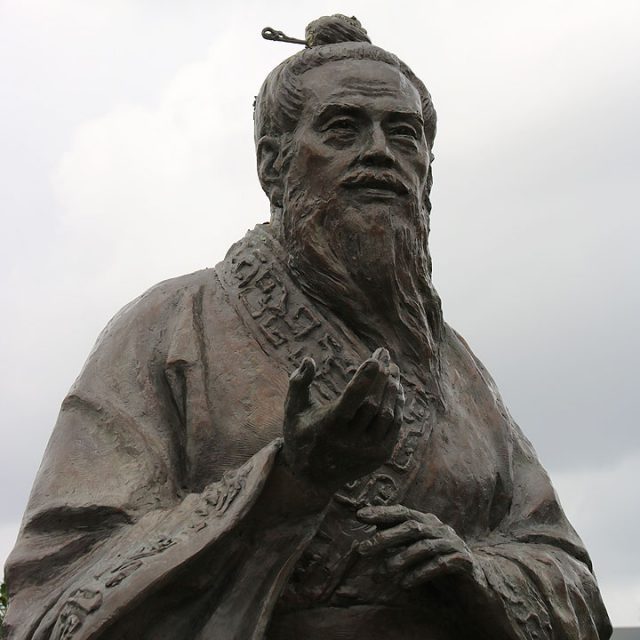
The man widely known in the English language as Confucius was born around 551 BCE in today’s southern Shandong Province. Confucius is the phonic translation of the Chinese word Kong fuzi , in which Kong was his surname and fuzi is an honorific for learned men.

Widely credited for creating the system of thought we now call Confucianism, this learned man insisted he was “not a maker but a transmitter,” merely “believing in and loving the ancients.” In this, Confucius could be seen as acting modestly and humbly, virtues he thought of highly.

Or, as Kang Youwei — a leading reformer in modern China has argued — Confucius tactically framed his revolutionary ideas as lost ancient virtues so his arguments would be met with fewer criticisms and less hostility.

Confucius looked nothing like the great sage in his own time as he is widely known in ours. To his contemporaries, he was perhaps foremost an unemployed political adviser who wandered around different fiefdoms for some years, attempting to sell his political ideas to different rulers — but never able to strike a deal.

It seems Confucius would have preferred to live half a millennium earlier, when China — according to him — was united under benevolent, competent, and virtuous rulers at the dawn of the Zhou dynasty. By his own time, China had become a divided land with hundreds of small fiefdoms, often ruled by greedy, cruel, or mediocre lords frequently at war.

But this frustrated scholar’s ideas have profoundly shaped politics and ethics in and beyond China ever since his death in 479 BCE. The greatest and the most influential Chinese thinker, his concept of filial piety remains highly valued among young people in China despite rapid changes in the country’s demography.

Despite some doubts as to whether many Chinese people take his ideas seriously, the ideas of Confucius remain directly and closely relevant to contemporary China.

This situation perhaps is comparable to Christianity in Australia. Although institutional participation is in constant decline, Christian values and narratives remain influential on Australian politics and vital social matters.

The danger today is in Confucianism being considered the single reason behind China’s success or failure. The British author Martin Jacques, for example, recently asserted Confucianism was the “biggest single reason” for East Asia’s success in the handling of the COVID-19 pandemic, without giving any explanation or justification.

If Confucius were alive, he would probably not hesitate to call out this solitary root of triumph or disaster as being lazy, incorrect, and unwise.

Confucius wanted to restore good political order by persuading rulers to reestablish moral standards, exemplify appropriate social relations, perform time-honored rituals, and provide social welfare.

He worked hard to promote his ideas but won few supporters. Almost every ruler saw punishment and military force as shortcuts to greater power.

It was not until 350 years later, during the reign of the Emperor Wu of Han, that Confucianism was installed as China’s state ideology.

But this state-sanctioned version of Confucianism was not an honest revitalization of Confucius’ ideas. Instead, it absorbed many elements from rival schools of thought, notably legalism, which emerged in the latter half of China’s Warring States period (453–221 BCE). Legalism argued efficient governance relies on impersonal laws and regulations — rather than moral principles and rites.

Like most great thinkers of the Axial Age between the 8th and 3rd century BCE, Confucius did not believe everyone was created equal.

Similar to Plato (born over 100 years later), Confucius believed the ideal society followed a hierarchy. When asked by Duke Jing of Qi about government, Confucius famously replied: let the ruler be a ruler; the minister, a minister; the father, a father; the son, a son.

However, it would be a superficial reading of Confucius to believe he called for unconditional obedience to rulers or superiors. Confucius advised a disciple “not to deceive the ruler but to stand up to them.”

Confucius believed the legitimacy of a regime fundamentally relies on the confidence of the people. A ruler should tirelessly work hard and “lead by example.”

Like in a family, a good son listens to his father, and a good father wins respect not by imposing force or seniority but by offering heartfelt love, support, guidance, and care.

In other words, Confucius saw a mutual relationship between the ruler and the ruled.

To Confucius, the appropriate relations between family members are not merely metaphors for ideal political orders, but the basic fabrics of a harmonious society.

An essential family value in Confucius’ ideas is xiao , or filial piety, a concept explained in at least 15 different ways in the Analects, a collection of the words from Confucius and his followers.

Depending on the context, Confucius defined filial piety as respecting parents, as “never diverging” from parents, as not letting parents feel unnecessary anxiety, as serving parents with etiquette when they are alive, and as burying and commemorating parents with propriety after they pass away.

Confucius expected rulers to exemplify good family values. When Ji Kang Zi, the powerful prime minister of Confucius’ home state of Lu asked for advice on keeping people loyal to the realm, Confucius responded by asking the ruler to demonstrate filial piety and benignity (ci ).

Confucius viewed moral and ethical principles not merely as personal matters, but as social assets. He profoundly believed social harmony ultimately relies on virtuous citizens rather than sophisticated institutions.

In the ideas of Confucius, the most important moral principle is ren , a concept that can hardly be translated into English without losing some of its meaning.

Like filial piety, ren is manifested in the love and respect one has for others. But ren is not restricted among family members and does not rely on blood or kinship. Ren guides people to follow their conscience. People with ren have strong compassion and empathy towards others.

Translators arguing for a single English equivalent for ren have attempted to interpret the concept as “benevolence,” “humanity,” “humanness,” and “goodness,” none of which quite capture the full significance of the term.

The challenge in translating ren is not a linguistic one. Although the concept appears more than 100 times in the Analects, Confucius did not give one neat definition. Instead, he explained the term in many different ways.

As summarized by China historian Daniel Gardner, Confucius defined ren as: to love others, to subdue the self and return to ritual propriety, to be respectful, tolerant, trustworthy, diligent, and kind, to be possessed of courage, to be free from worry, or to be resolute and firm.

Instead of searching for an explicit definition of ren, it is perhaps wise to view the concept as an ideal type of the highest and ultimate virtue Confucius believed good people should pursue.

Confucius’ thinking has had a profound impact on almost every great Chinese thinker since. Based upon his ideas, Mencius (372–289 BCE) and Xunzi (c310–c235 BCE) developed different schools of thought within the system of Confucianism.

Arguing against these ideas, Mohism (4th century BCE), Daoism (4th century BCE), Legalism (3rd century BCE) and many other influential systems of thought emerged in the 400 years after Confucius’ time, going on to shape many aspects of the Chinese civilization in the last two millennia.

Modern China has a complicated relationship with Confucius and his ideas.

Since the early 20th century, many intellectuals influenced by western thought started denouncing Confucianism as the reason for China’s national humiliations since the first Opium War (1839-42).

Confucius received fierce criticism from both liberals and Marxists.

Hu Shih, a leader of China’s New Culture Movement in the 1910s and 1920s and an alumnus of Columbia University, advocated overthrowing the “House of Confucius.”

Mao Zedong, the founder of the People’s Republic of China, also repeatedly denounced Confucius and Confucianism. Between 1973 and 1975, Mao devoted the last political campaign in his life against Confucianism.

Despite these fierce criticisms and harsh persecutions, Confucius’ ideas remain in the minds and hearts of many Chinese people, both in and outside China.

One prominent example is PC Chang, another Chinese alumnus of Columbia University, who was instrumental in drafting the Universal Declaration of Human Rights, proclaimed by the United Nations General Assembly in Paris on Dec. 10, 1948. Thanks to Chang’s efforts, the spirit of some most essential Confucian ideas, such as ren, was deeply embedded in the Declaration.

Today, many Chinese parents, as well as the Chinese state, are keen children be provided a more Confucian education.

In 2004, the Chinese government named its initiative of promoting language and culture overseas after Confucius, and its leadership has been enthusiastically embracing Confucius’ lessons to consolidate their legitimacy and ruling in the 21st century.


Yu Tao is a Senior Lecturer in Chinese Studies at The University of Western Australia.

Australia says it was ‘upfront’ with France over submarine deal

REUTERS
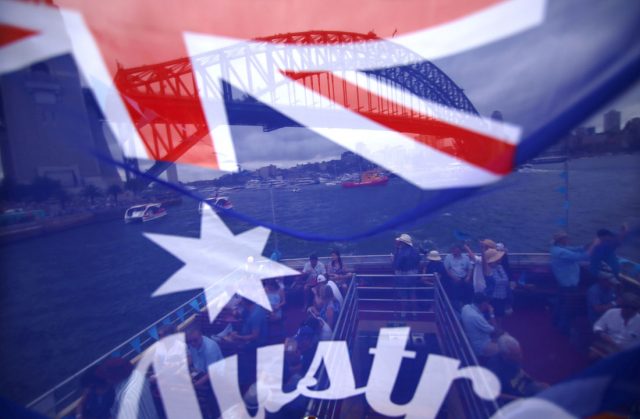
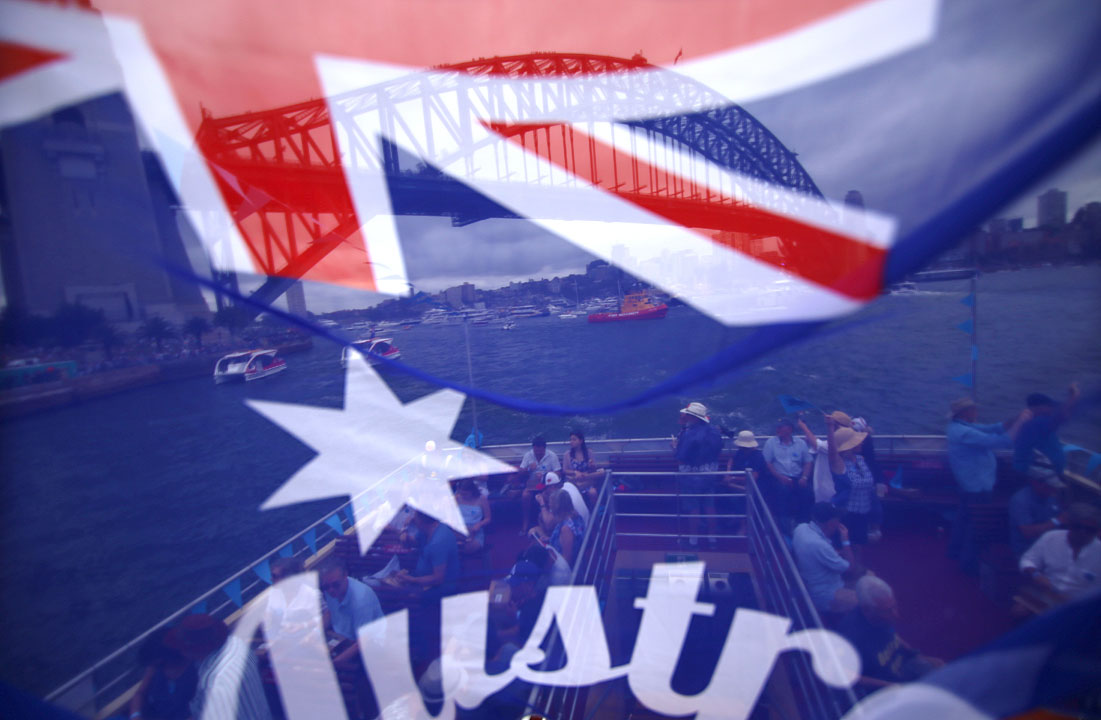
PASSENGERS aboard a ferry are seen in Sydney, Australia, Jan. 26, 2018. — REUTERS

MELBOURNE — Australia was “upfront, open and honest” with France about its concerns over a deal for French submarines, its defense minister said on Sunday, as a new deal with the United States and Britain continued to fuel a multinational diplomatic crisis.

Australia ditched the 2016 deal with France’s Naval Group to build a fleet of conventional submarines, announcing on Thursday a plan to build at least eight nuclear-powered ones with US and British technology in a trilateral security partnership.

The move infuriated France, a NATO ally of the United States and Britain, prompting it to recall its ambassadors from Washington and Canberra, and riled China, the major rising power in the Indo-Pacific region.

The deal has put Washington in an unprecedented diplomatic crisis with France that analysts say could do lasting damage to the US alliance with France and Europe, throwing also into doubt the united front that the Biden administration has been seeking to forge against China’s growing power.

Paris has called the cancellation a stab in the back, with Foreign Minister Jean-Yves Le Drian saying relations with the United States and Australia were in a “crisis.”

But Defense Minister Peter Dutton said on Sunday that Australia had been raising concerns with France over the order — valued at $40 billion in 2016 and reckoned to cost much more today — for a couple of years.

“Suggestions that the concerns hadn’t been flagged by the Australian government, just defy, frankly, what’s on the public record and certainly what they’ve said publicly over a long period of time,” Mr. Dutton told Sky News.

Prime Minister Scott Morrison said on Friday he had expressed “very significant concerns” about the deal to French President Emmanuel Macron in June and made clear Australia “would need to make a decision on in our national interest”.

Finance Minister Simon Birmingham said Australia had informed France of the deal but acknowledged on Sunday the negotiations had been secret, given the “enormous sensitivities.”

Mr. Dutton and Mr. Birmingham declined to reveal costs of the new pact, although Mr. Dutton said “it’s not going to be a cheap project.” — Reuters

Pandemic in focus at UN general assembly

REUTERS/MIKE SEGAR/FILE PHOTO
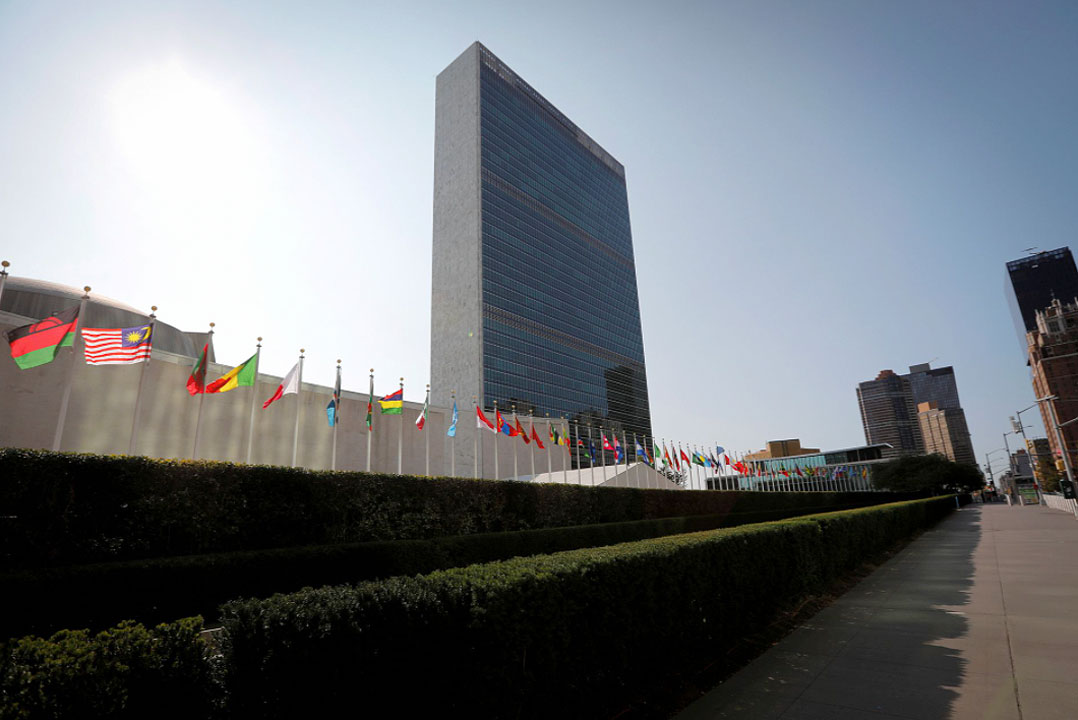
The United Nations headquarters is seen during the 75th annual U.N. General Assembly high-level debate, which is being held mostly virtually due to the coronavirus disease pandemic in New York, US, Sept. 21, 2020. — REUTERS/MIKE SEGAR/FILE PHOTO

UNITED NATIONS — World leaders are returning to the United Nations in New York this week with a focus on boosting efforts to fight both climate change and the COVID-19 pandemic, which last year forced them to send video statements for the annual gathering.

As the coronavirus still rages amid an inequitable vaccine rollout, about a third of the 193 U.N. states are planning to again send videos, but presidents, prime ministers and foreign ministers for the remainder are due to travel to the United States.

The United States tried to dissuade leaders from coming to New York in a bid to stop the U.N. General Assembly from becoming a “super-spreader event,” although President Joseph R. Biden will address the assembly in person, his first U.N. visit since taking office. A so-called U.N. honor system means that anyone entering the assembly hall effectively declares they are vaccinated, but they do not have to show proof.

This system will be broken when the first country speaks — Brazil. Brazilian President Jair Bolsonaro is a vaccine skeptic, who last week declared that he does not need the shot because he is already immune after being infected with COVID-19 (coronavirus disease 2019).

Should he change his mind, New York City has set up a van outside the United Nations for the week to supply free testing and free shots of the single-dose Johnson & Johnson vaccine.

U.N. Secretary-General Antonio Guterres told Reuters that the discussions around how many traveling diplomats might have been immunized illustrated “how dramatic the inequality is today in relation to vaccination.” He is pushing for a global plan to vaccinate 70% of the world by the first half of next year.

Out of 5.7 billion doses of coronavirus vaccines administered around the world, only 2% have been in Africa. Mr. Biden will host a virtual meeting from Washington with leaders and chief executives on Wednesday that aims to boost the distribution of vaccines globally.

Demonstrating US COVID-19 concerns about the U.N. gathering, Mr. Biden will be in New York only for about 24 hours, meeting with Mr. Guterres on Monday and making his first U.N. address on Tuesday, directly after Mr. Bolsonaro.

His U.N. envoy, Linda Thomas-Greenfield, said Mr. Biden would “speak to our top priorities: ending the COVID-19 pandemic; combating climate change … and defending human rights, democracy, and the international rules-based order.”

Due to the pandemic, U.N. delegations are restricted to much smaller numbers and most events on the sidelines will be virtual or a hybrid of virtual and in-person. Among other topics that ministers are expected to discuss during the week are Afghanistan and Iran.

But before the annual speeches begin, Mr. Guterres and British Prime Minister Boris Johnson will start the week with a summit on Monday to try and save a U.N. summit — that kicks off in Glasgow, Scotland, on Oct. 31 — from failure.

As scientists warn that global warming is dangerously close to spiraling out of control, the U.N. COP26 conference aims to wring much more ambitious climate action and the money to go with it from participants around the globe.

“It’s time to read the alarm bell,” Mr. Guterres told Reuters last week. “We are on the verge of the abyss.” — Reuters