Home Blog Page 7484

Joey Votto homers twice; Reds rally to beat Pirates

JOEY Votto homered twice and Eugenio Suarez went deep for the go-ahead blow as the desperate Cincinnati Reds erased an early five-run deficit with nine unanswered runs to beat the visiting Pittsburgh Pirates (9-5) Monday night.

Votto’s career-high fourth multi-homer game of the season gives him a team-leading 33 homers. The Reds (78-73) won for just the ninth time in 25 games to remain three games behind the St. Louis Cardinals in the race for the second National League wild card spot.

The Cardinals (80-69) beat the division-leading Milwaukee Brewers for their ninth straight win on Monday.

Votto added an eighth-inning single and walked twice to reach base in all five plate appearances.

The comeback matched the biggest this season for the Reds, who fought back from a 6-1 hole in Colorado on May 16 in a 7-6 win. The win also gave Cincinnati its 13th straight victory over Pittsburgh at Great American Ball Park, their most consecutive home wins against Pittsburgh since capturing 18 straight between 1939 and ‘40.

Luis Cessa (5-2) struck out three and retired all four batters he faced in relief of struggling starter Vladimir Gutierrez to earn the win. Mychal Givens pitched the ninth in a non-save situation. Right-handed reliever Cody Ponce (0-5) surrendered the tying and go-ahead homers to suffer the loss.

Yoshi Tsutsugo hit the first pitch he saw from Gutierrez in the first inning for a home run to right. Bryan Reynolds followed that up with a home run of his own, his team-leading 24th of the season, to put the Pirates up 2-0.

Gutierrez failed to reach four innings for the fourth time in five starts and showed more signs of late-season rookie fatigue. The right-hander walked opposing starting pitcher Dillon Peters on four pitches to start the third inning. The Pirates capitalized by scoring three more runs off Gutierrez, highlighted by and RBI single from Tsutsugo and a sacrifice fly by Reynolds.

The Reds appeared hopeless with no hits through the first 2 2/3 innings against Peters. But Jonathan India’s walked sparked a four-run, two-out rally in the third, highlighted by Votto’s two-run homer to close Pittsburgh’s lead to 5-4.

The Reds pulled even on Votto’s solo shot in the fifth, his third homer in as many at-bats dating to a pinch-hit homer in the ninth inning Sunday against the Los Angeles Dodgers. Suarez went back to back with his 27th homer to center, putting the Reds ahead 6-5.

Cincinnati added two runs in the seventh, one on Kyle Farmer’s 15th homer, and another run in the eighth.

The start of the game was delayed one hour, 25 minutes due to rain.Reuters

Steve Stricker: Brooks Koepka ‘all in’ for Ryder Cup

DOES Brooks Koepka really want, and thereby deserve, a spot on the US Ryder Cup team after recent controversial comments that seemed to criticize the entire event?

Team captain Steve Stricker thinks so, and says that the 31-year-old American is “all in” for this weekend’s 43rd rendition of the tournament at Whistling Straits in Haven, WI.

Last week, a Golf Digest interview quoted Koepka, the No. 10 ranked player in the world, speaking frankly about the challenges of the Ryder Cup — an event pitting top Americans against the best European players in an emotion-filled, team-based event, unique in such an individual sport.

As a result, Koepka has faced some criticism from those who were offended by his remarks, such as former US Ryder Cup captain and NBC analyst Paul Azinger.

On Monday at Whistling Straits, the 54-year-old Stricker downplayed Koepka’s perceived complaints and backed Koepka, who has also played in the Ryder Cup in 2016 and 2018.

“I talked to him about it. I’ve had experiences with Brooks over many of these teams and the conversation that I have had with him and what I have personally seen in the team room doesn’t jive up to what I was reading in those articles,” Stricker said. “Again, I’m not worried about Brooks. He assures me he is healthy. He assures me that he is 100 percent all in on this team and whatever he needs for this team to become the winner at the end of the week.

“So again, I’m not worried about Brooks at all. It’s been good talks and he’s ready to get down and start playing.”

Koepka had termed the Ryder Cup “hectic” and “a bit odd” in the Golf Digest story, opening up on the unusual routine.

“It’s different,” Koepka said. “It’s hectic. It’s a bit odd, if I’m honest. I don’t want to say it’s a bad week. We’re just so individualized, and everybody has their routine and a different way of doing things, and now, it’s like, okay, we have to have a meeting at this time or go do this or go do that. It’s the opposite of what happens during a major week.

“There are times where I’m like, ‘I won my match. I did my job. What do you want from me?’ I know how to take responsibility for the shots I hit every week. Now, somebody else hit a bad shot and left me in a bad spot, and I know this hole is a loss. That’s new, and you have to change the way you think about things.”

The Ryder Cup begins on Friday and runs through Sunday after being postponed in 2020 because of the coronavirus pandemic. Team Europe is the reigning champion per its victory in 2018 in France. — Reuters

US faces tough Ryder Cup test against battle-hardened Europe

KOHLER, Wisconsin — Home advantage for a largely inexperienced US team versus European passion will be one of the compelling storylines in this week’s Ryder Cup between two star-studded teams at Whistling Straits.

The Americans will have six Ryder Cup rookies on their 12-man team who will strive to reclaim the trophy against a close-knit and battle-tested European side that have mostly dominated the biennial match play competition over the last four decades.

Despite a slew of new faces, the US does not lack for talent given an average world ranking of nine compared to 30 for Europe, but American struggles to play as a unit at the Ryder Cup have become an all too familiar refrain.

“The fact that the Americans have only won five times in 38 years has us all wondering can this juggernaut of an American team… beat that team,” NBC Sports golf analyst and former US Ryder Cup captain Paul Azinger said on a conference call.

“Because (Europe is) going to show up as a bonded team, and our guys are going to show up — I don’t know how they’re going to show up. They’re going to show up as the best players.”

World number two Dustin Johnson, playing in a team-high fifth Ryder Cup, headlines a US squad whose rookies include British Open winner Collin Morikawa, Olympic champion Xander Schauffele and PGA Tour Player of the Year Patrick Cantlay.

A possible distraction ahead of Friday’s start could be the well-documented frosty relationship between Bryson DeChambeau and Brooks Koepka, who US captain Steve Stricker has said will likely not be paired together during the three-day event.

The narrative that the Americans lack the chemistry enjoyed by Europe will likely remain a common theme this week, perhaps even more given Koepka told Golf Digest the Ryder Cup threw off his routine and that he might not be cut out for team sports.

Even if the US team are able to find the right formula and silence questions about chemistry, they will still have their work cut out against opponents who have managed to consistently form a cohesive unit and typically thrive in the team format.

“Look, I’ll believe this forever — the Europeans are bonded by blood. They’re bonded naturally. This means everything to them,” said Azinger. “It’s sad really that this American side has gotten beaten like that, but (Europe) brings an intangible with them. It’s a fact.”

‘SENSE OF FREEDOM’
Europe will have seven returning players from the 2018 team that triumphed in Paris, led by Spanish world number one Jon Rahm, Northern Irishman Rory McIlroy and Englishman Tyrrell Hatton, their only top-20 representatives along with Norway’s Viktor Hovland.

Also in the team are Spaniard Sergio Garcia, a veteran of nine Ryder Cups and Europe’s all-time leading points scorer, and Englishman Ian Poulter, who is known as “the Postman” given his knack for delivering crucial points in the competition.

Still, despite being the defending champions and having five players with four-plus Ryder Cup appearances, Europe are again being perceived as clear underdogs due in part to the current form and lofty ranking of their opponents.

“The European side seems to take this underdog role and mentality and use it to their advantage, whether they’re playing at home or in the US,” said NBC Sports analyst and former US Ryder Cup player Justin Leonard.

“With that comes a sense of freedom, of well we’re not really expected to win, so let’s go out and play freely. And I think you see that time and again at every Ryder Cup.”

Europe, led by captain Padraig Harrington, undoubtedly faces a challenging task on American soil where the US have lost only four times since the matches began in 1927.

The Americans took a recent trip to Whistling Straits, a links-style layout sculpted along two miles of Lake Michigan shoreline, to get a feel for the setup, but Azinger said Mother Nature could make for a much different course this week.

“If the wind blows, I think they’re going to lose any advantage, really mainly on the greens,” he said.

“Everybody can handle the wind tee to green, but on the green somehow, Europe makes all those putts in the wind.”

The Ryder Cup was postponed last year because of the coronavirus disease 2019 (COVID-19) pandemic. — Reuters

Merry-go-round

In the aftermath of an embarrassing loss to last-minute replacement Yordenis Ugás last month, occasional legislator Manny Pacquiao hinted at retirement once again. It was a familiar refrain; in the last five years or so, he had been broaching the possibility of hanging up his gloves given his advancing age. In the wake of the setback he suffered at the hands of an opponent who had only 11 days to prepare for him and yet pummeled him en route to a unanimous-decision victory, however, his words rang truer than ever before.

To be sure, Pacquiao has had myriad reasons to exit stage left. Apart from his candidacy for the rocking chair, there are also the entreaties from his family sick of seeing him bloodied and bruised from fight after fight. Most importantly, there are his obligations outside the ring, not least of which involve his “commitment” to serve the country as a sitting senator. Something has had to give, and those who wish better for him and for the public who pay his salary continue to hope it would finally be his supposed sidelining as a boxer. They know it has been time for a while now: For all the otherworldly assets that ensure his place in history as one of boxing’s best, he has been finding it more and more difficult to prepare for any given fight. And, for a moment there, it felt like he, too, knew it was time.

As things have turned out, Pacquiao is apparently crossing his fingers for yet another big payday (or two) inside the ropes. Seam Gibbons, president of MP Promotions, told ESPN: “Until you see it officially come out on his Twitter or Instagram, he isn’t retired. Once you see it on a platform like that, it’s official.” Interesting choice of words, to say the least. And how about the pronouncements of the future Hall of Famer? “Anything else is just talk about what his thoughts are in the moment. It’s coming from him, but it’s hearsay.”

How can a statement uttered directly by Pacquiao be termed hearsay? Forget that he has changed his mind on the matter again and again. He says it’s because he’s “passionate about the sport.” The more practical answer, however is this: He needs the money. He may be a billionaire, but he has political ambitions that need capital for fuel. He just declared his intention to run for president of the Philippines, which means he will have to mount a prolonged campaign that needs a significant amount of personal money to sustain. And let’s not forget the hangers-on in his party; they, too, await their share from his coffers.

Little wonder, then, that Pacquiao has waffled on his departure from the boxing scene. After a bout, he’s spent and all too ready to call it a career. He has also just seen his bank account get substantially bigger, and so he foresees a future with his cup full. After a while, however, the pains subside and his need to earn more megabucks becomes pronounced anew; this is when he is again enjoined to head back inside the ropes. It’s a merry-go-round that has no one quarter winning. Not him, and not the people he’s supposed to serve.


Anthony L. Cuaycong has been writing Courtside since BusinessWorld introduced a Sports section in 1994. He is a consultant on strategic planning, operations and Human Resources management, corporate communications, and business development.

Aspiring for high-income status

VECTORJUICEW-FREEPIK

(Part 5)

As discussed in Part 1 of this series, the Philippines will transition into an upper-middle income economy in the next three or four years. Will our economy face the same fate as many Latin American economies by being caught in the so-called Middle Income trap because of our inability to transition from resource-driven growth, with low cost of labor and capital, to productivity-driven growth, especially in the agricultural sector? It would be of great interest for us to examine closely the experience of South Korea, one of the so-called “tiger economies” which transitioned from low-income to First World status in record time. Among these Newly Industrializing Economies (NIEs), South Korea is the closest model to follow because of its relatively larger population. The other three — Singapore, Hong Kong, and Taiwan — have much smaller populations and may have fewer lessons for us to follow.

An article by Jeong Hyeoh on South Korea’s growth experience over six decades describes how this Third World country in 1960 saw its per capita income balloon from $1,557 to First World status of $34,300 in 2014. Despite such phenomenal growth, that was unmatched especially among the Middle Income economies of Latin America and Asia, South Korea continued to be considered an “emerging market” all the way until July 2021. On July 2, 2021, the United Nations Conference on Trade and Development (UNCTAD) upgraded South Korea to developed country status, putting it in the same category as the US, Japan, and the leading European economies. Today, South Korea is the 10th largest economy in the world. How did the country get there?

In sum, Jeong Hyeoh identified the main engines of growth of South Korea during three distinct periods. During the 1960s, labor and human capital factors accounted for the high growth. South Korea’s leaders then knew how to capitalize on the demographic dividend that resulted from the baby boom after the Korean war. Like the other tiger economies (and unlike the Philippines), it adopted economic policies that encouraged the establishment of labor-intensive, export-oriented industries such as garments, textiles, toys, wigs and other manufactured products that benefited from huge markets in the more developed countries such as the US, Japan, and some European nations. Then, during the 1970s, taking advantage of the high domestic savings rate, the country invested in capital-intensive industries, like iron and steel, ship building, chemicals, and infrastructure. For the following periods, the emphasis was on productivity growth and not factor-driven growth. Benefiting from its Confucian culture, South Korea invested heavily in a rigorous education system which helped to establish a highly motivated and educated populace, which was largely responsible for spurring the country’s high technology boom and rapid economic development.

In the best seller entitled Why Nations Fail, Daron Acemoglu and James Robinson emphasized the crucial importance of institution building in attaining sustainable and inclusive growth. To quote from the book, “Both Syngman Rhee and General Park Chung-Hee secured their places in history as authoritarian presidents. But both governed a market economy where private property was recognized, and after 1961, Park effectively threw the weight of the State behind rapid economic growth, channeling credit and subsidies to firms that were successful.” This reminds me of the last public debate that I dared to have with the authoritarian leader President Ferdinand Marcos. In a business conference organized just before the 1986 elections, then President Marcos tried to justify his coddling of business cronies by claiming that he was just imitating the style of Park Chung Hee in getting the State behind business conglomerates (called chaebols in Korean). I gathered enough courage to tell him during the open forum that there was a big difference between him and Park Chung Hee in this regard. While the South Korean dictator chose as his “cronies” chaebols like Hyundai, Samsung, Daewoo, Lucky Goldstar, and Lotte that had been founded by very successful entrepreneurs, President Marcos used family relations and personal friendship as the basis for giving privileges to certain business firms.

Acemoglu and Robinson highlighted the extreme contrast between the economic policies of North Korea and those of South Korea. They highly criticized North Korea’s “stifling, repressive regime that was inimical to innovation and the adoption of new technologies. But Kim Il-Sung, Kim Jong-Il and their cronies had no intention of reforming the system, or introducing private property, markets, private contracts, or changing economic and political institutions. North Korea continues to stagnate continuously.” In contrast, “in the South, economic institutions encouraged investment and trade. South Korean politicians invested in education, achieving high rates of literacy and schooling. South Korean companies were quick to take advantage of the relatively educated population, the policies encouraging investment and industrialization, exports, and transfer of technology.”

The “Story of the Two Koreas” leaves no doubt about the primordial importance of institutions in preventing economic failure: “By the late 1990s, in just about half a century, South Korean growth and North Korean stagnation led to a tenfold gap between the halves of this once-united country… The economic disaster of North Korea which led to the starvation of millions, when placed against the South Korean economic success, is striking. Neither culture nor geography nor ignorance can explain the divergent path of North and South Korea. We have to look at institutions for an answer.”

The most important lesson from South Korea for the Philippines is the priority to be given to rural and agricultural development in attaining sustainable and inclusive growth. Despite the fact that South Korea has very limited agricultural resources, Park Chung Hee made sure that the highest importance was given at the beginning of the development process to rural and agricultural development. In 1971, as reported in an ADB study of Professor Djun Kil Kim of the University of Asia and the Pacific, the South Korean government launched the Saemaul Undong (SU) movement which was a community-driven development program. This movement contributed to improved community wellbeing in rural communities through agricultural production, household income, village life, communal empowerment and regeneration, and women’s participation.

As reported in the ADB study, this “New Village” movement had modest goals but very significant impacts on rural poverty. To quote from the Executive Summary: “Thanks to upgrading of the agricultural production infrastructure and introduction of high-yielding Indica and Japonica hybrid rice varieties, by the end of Stage I, rural household incomes had reached parity with those of urban industrial households. During Stage II, village life was improved through modernization of rural dwellings, with changes such as replacement of thatched roofs with tin, tile and slate roof coverings; electrification; and introduction of telecommunications on a mass basis in rural villages. By the end of the 1970s, the Republic of Korea had overcome its chronic shortfall in the domestic supply of food.”

The most important way we can avoid being caught in the Middle Income trap is to address the challenge of rural and agricultural development. We still need our own version of the SU movement so that we can address the two most important goals of our economy in the next decade or so: food security and the reduction of rural poverty. Even more important, however, is a change of mindset among our rural dwellers. As the ADB concludes about the SU movement: “Ultimately, the most valuable long-term benefits of the SU movement were not its outward tangible achievements, but rather those that resulted from the sweeping change in the mentality of the people induced by the SU movement itself. In sum, the SU movement built a national confidence infused with a ‘can-do’ spirit that transformed a former national mentality of chronic defeatism into new hope, a long-term shared vision of a better life for all, and an infectious enthusiasm sustained by volunteerism at the community level.”

To be continued.


Bernardo M. Villegas has a Ph.D. in Economics from Harvard, is Professor Emeritus at the University of Asia and the Pacific, and a Visiting Professor at the IESE Business School in Barcelona, Spain. He was a member of the 1986 Constitutional Commission.

bernardo.villegas@uap.asia

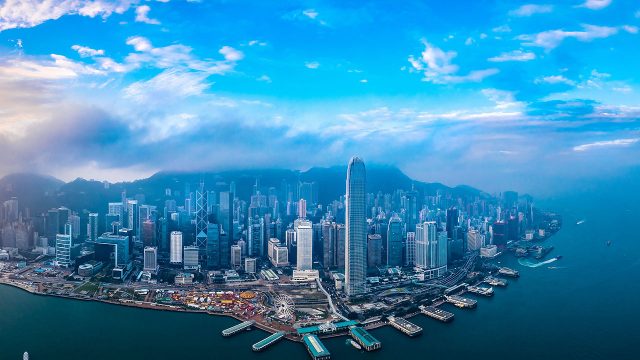
Hong Kong’s non-election is momentous and meaningless

LOK YIU CHEUNG-UNSPLASH

HONG KONG has had its first taste of the remodeled electoral system that China designed for the city. As an exercise in competitive politics, Sunday’s vote had all the suspense and spontaneity of a Soviet military parade, though with fewer people. All the same, Beijing has reason to be satisfied with the outcome.

The ballot was to fill about a quarter of the seats on the so-called Election Committee that will choose the city’s next chief executive and appoint a chunk of the legislature. About 4,900 voters were eligible to take part. Beijing shrank the electorate by about 97% due to the inconvenient tendency of Hong Kong people to vote for pro-democracy candidates. More than three-quarters of the seats open to election were filled uncontested after the number of nominations matched the number of places available, a sign that the important decisions had already been made behind closed doors.

China calls this improving the electoral system. That word was written into the legislation for the avoidance of doubt: The National People’s Congress passed the “Decision on Improving the Electoral System of the Hong Kong Special Administrative Region” in March, and inserted it into the city’s de facto constitution, the Basic Law.

For the government, the poll was an opportunity to showcase how Beijing’s intervention had moved Hong Kong beyond the unrest of 2019 and restored a stable, functioning polity. In fact, it did more to highlight the contradictions between the official version of events and observable reality since China imposed a national security law on the former British colony in mid-2020.

Authorities made efforts to treat the vote as if it were a genuine political contest. There was the over-the-top police presence: The force announced plans to deploy as many as 6,000 officers, more than the total number of electors. Property tycoons such as CK group’s Victor Li and Adam Kwok of Sun Hung Kai Properties Ltd. were ordered on to the streets to canvas, according to the South China Morning Post. That was far from necessary for such an uncompetitive poll, though it will have helped to create the impression that something was at stake in the absence of a political opposition. Absurdly, Chief Executive Carrie Lam paid tribute to the high turnout rate on Sunday night — for a ballot from which more than 99.9% of Hong Kong’s population was excluded.

In the telling of mainland Chinese and Hong Kong officials, the national security law is a piece of routine housekeeping that has weeded out a group of anti-China troublemakers backed by malicious foreign actors. Freed from this influence, Hong Kong’s people have realized the error of their ways and come to welcome the security law and Beijing’s insistence that only “patriots” should be allowed to partake in the city’s political life.

It’s a stretch to make this narrative stick. For one thing, Hong Kong’s pro-democracy camp has consistently drawn the support of a majority of voters in open elections over decades. There is no credible evidence that this support has waned; opposition voices have just been silenced. Second, many of those targeted are far from the petrol-bomb-throwing radicals implied by Chinese state media rhetoric. They are mild-mannered and respectable lawyers, accountants, doctors and the like who have worked within the constitutional structure and sought only the autonomy and greater democracy promised to Hong Kong in the Basic Law.

It cannot escape the attention of the city’s people that the officials who now decry these politicians as subversive and secessionist previously engaged with them for years or decades in relative civility. The same goes for the civil society organizations that the authorities are now erasing from the city’s life, including the Civil Human Rights Front and the Hong Kong Alliance in Support of Patriotic Democratic Movements of China, organizer of the annual Tiananmen vigil. Both staged peaceful and orderly protests that were approved by police for decades without incident.

Even the insistence on “patriots” employs some semantic legerdemain. This requirement draws its authority from late paramount leader Deng Xiaoping, who said that patriots must form the main body of Hong Kong’s administrators. But Deng had an expansive definition, saying patriots included anyone “who respects the Chinese nation, sincerely supports the motherland’s resumption of sovereignty over Hong Kong and wishes not to impair Hong Kong’s prosperity and stability.” And that’s how it was treated in practice, for more than two decades after the 1997 handover that returned the city to China. As in so many other areas, the past is now being rewritten.

Sunday’s vote can’t be ignored, given the power that the Election Committee wields. An “election” devoid of genuine debate or competition is a momentous sign of the lack of genuine democracy Hong Kong can expect in future. It is also, from another perspective, meaningless. The Election Committee was never very democratic to begin with, though the electorate had expanded since 1997 in line with the Basic Law’s vague aspirations. The electoral structure was always designed to enable Beijing to control the process, which it did most recently by anointing Lam — Hong Kong’s most unpopular chief executive ever — in 2017 over the Hong Kong public’s clear favorite, John Tsang. Beijing was always in control; that control has simply become tighter.

BLOOMBERG OPINION

Are Hong Kong property tycoons China’s next target?

FOR ANYONE who wasn’t paying attention, China is serious about its common prosperity drive. Aiming to rein in billionaires and reduce income inequality, regulators have cracked down on tech giants and mainland real estate developers alike, costing shareholders over $1 trillion along the way. Last week, officials set their eyes on the territory of Macau, the world’s biggest gambling hub. Can Hong Kong’s property tycoons remain unscathed much longer?

Investors don’t seem to think so, and Monday’s selloff was swift and brutal. The city’s big four developers, Sun Hung Kai Properties Ltd., CK Asset Holdings Ltd., Henderson Land Development Co., and New World Development Co., all tumbled to their lowest level since 2016. Having witnessed what happened to China’s education stocks, another sector in the crosshairs, and Macau’s casino shares, investors are selling first, and asking questions later.

The share moves come after reports that China asked the territory’s real estate billionaires to resolve the city’s housing crisis. Some officials in Beijing have blamed Hong Kong’s protests in 2019 on its sky-high home prices, which fueled resentment among the youth. The city was ranked the world’s least affordable housing market for the 11th year, according to a report put out by two think tanks. So, what’s next for Hong Kong?

Sell-side analysts are preparing for doomsday scenarios: What if developers have to donate all of their (rather substantial) agricultural land holdings to the government? What if they are required to sell all of their future residential land banks at cost? Hong Kong’s limited land supply is a big problem that the government has been slow to address. Only about 6.9% of its land is available for housing development, while agriculture accounted for another 6.1%.

Did investors overreact? Over the years, the territory’s real estate developers have diversified, to mainland China and beyond. New World Development and CK Asset and have just 14% and 16% of their net asset value exposed to Hong Kong residential property, estimates JPMorgan Chase & Co.

Catch the falling knife at your own risk. We knew that the rules of the game had changed as early as July, when Beijing put ride-hailing giant Didi Global, Inc. under regulatory review after it defied warnings and went ahead with its US initial public offering. China no longer sees shareholder capitalism serving the nation well; now, it’s going for stakeholder capitalism, where customers, employees, and even local governments all have a say in how companies do business and retain their earnings.

Soaring home prices are becoming a political problem around the world. In China, out of desperation, some cities with red-hot housing markets have instituted price controls. Across the border, in the Tier-1 cities of Guangzhou and Shenzhen, local governments launched price reference systems for existing home sales. If, for example, you can sell your apartment for $1 million, but your buyer can only get a bank mortgage based on the suggested sale price of $500,000, the buyer will have to shell out a much bigger down payment. This reduces demand and dampens home prices.

Amid China’s regulatory crackdowns and stock selloffs, real estate developers in the blue-chip Hang Seng Index had been fairly immune, down only 15.5% year to date, versus the Hang Seng Tech Index’s 26.7% tumble, and Macau casino operators’ 46% bloodbath. That seems too good to be true. China’s whip is coming for Hong Kong’s property billionaires, too.

BLOOMBERG OPINION

Changing measures: The dawn of a new age

No person shall be deprived of his life, liberty, or property without due process of law.1 This was guaranteed by no less than the Constitution — our fundamental law, in its mission to find a striking balance between the immense powers of the State on one hand, and an individual’s right to being on the other. Necessarily, and rightfully so, due process has been defined as the “sporting idea of fair play”2 considering as it does limit official acts within the bounds of reason.

In hopes of adding more meaning to such a guaranty, the Constitution recognized as inviolable the right of the people to be secure in their persons, houses, papers, and effects against unreasonable searches and seizures of whatever nature and for any purpose.3 Speaking through Justice Marvic Leonen, the Supreme Court, in People v. Cogaed,4 elucidated that the foregoing mantle of protection is essential to allow each and every individual to evolve their autonomy, and to avail for themselves the right to privacy.

However, notwithstanding the foregoing guarantees, these rights remain to be threatened. As it may be recalled, this country saw a proliferation of allegations involving abuses and irregularities in the execution of warrants of arrest and/or search warrants. These include, among others, allegations of extrajudicial killings — the stories of which, and the truth behind them, we are truly yet to hear and know of.

Abuses in the course of the execution of search warrants is not a novel concept in the Philippines. As a matter of fact, as early as 1930, the Philippine Legislature saw it fit to define and penalize abuses in the service of search warrants. Thus, Article 129 of the Revised Penal Code thereby imposes, among others, the penalty of imprisonment upon any public officer or employee who shall exceed his authority or use unnecessary severity in execution of a search warrant legally obtained.5 The purpose of Article 129 of the Revised Penal Code cannot be overemphasized. Unmistakably, it seeks to give life and meaning to the Constitutional protection against unreasonable searches and seizures. This view is supported by the Revised Penal Code itself, which classifies Article 129 as crime against the fundament law[s] of the State.

Notably, the Supreme Court, through its rule-making power, also gave life to the foregoing Constitutional rights and protections. As presently worded, the Rules of Court are replete with Rules to safeguard the foregoing rights, to wit: a.) the proscription against the use of violence and unnecessary force in the course of making an arrest6; b.) mandating police officers to deliver the person so arrested to the nearest police station or jail without unnecessary delay7; c.) prohibiting the search of a house, room, or any other premise unless it be done in the presence of the lawful occupant thereof, or any member of his family, or in their absence, two witnesses of sufficient age and discretion residing in the same locality8; and, d.) limiting the validity of a search warrant for 10 days from the date of its issuance.9

In hindsight, the foregoing Rules are merely part and parcel of the Supreme Court’s duty to not only interpret the Constitution, but to also act with haste in safeguarding the Constitutional rights of every individual when the need to do so arises. Nonetheless, sufficient as these Rules are in protecting such rights, it is a known fact that ours is a society of rapid change, and changing times call for responsive measures. It was on this score, coupled with the proliferation of extrajudicial killings, that the Supreme Court saw it fit to promulgate A.M. No. 21-06-08-SC or the “Rules on the Use of Body-Worn Cameras in the Execution of Warrants” (Body-cam Rules).

At a glance, the Body-cam Rules introduced in our jurisdiction the concepts of Body-worn Cameras, defined an electronic camera system designated to law enforcement units for, among others, creating, generating, sending, and processing audio-visual recordings that may be worn during law enforcement activities10, and Alternative Recording Devices (ARD), defined as an electronic camera system that it not a body-worn camera, but may be used as a substitute for the same in case of the latter’s unavailability.11 However, the ARD must comply with the minimum standard requirements set forth by the Body-cam Rules.12

The Body-cam Rules provided for Rules that were either specific for Warrants of Arrest or Search Warrants, or are common to both. One such commonality includes the mandate on judges to issue the warrant with an order requiring the use of at least one body-worn camera and one ARD, or at least a minimum of two devices.13 Further, it appears to be the duty of law enforcements officers executing the warrant to preserve at all times the chain of custody over the recordings.14 However, non-compliance with the chain of custody rule appears not to be a fatal defect as this may be cured by the mere execution by the law enforcement officer concerned of an affidavit indicating therein, among others, the reasonable grounds for his non-compliance including all acts undertaken showing genuine and sufficient efforts exerted to ensure compliance with the Body-cam Rules.15

Consent of the subjects to be recorded is not a requirement before they can be validly recorded.16 All that is required is for the law enforcement officer executing the warrant to notify, as early as practicable, the person to be arrested and the other subjects of the recording17, or, in case of search warrants, the lawful occupants of the premises to be searched, that the execution of the warrant is being recorded and that the same is being conduct pursuant to a warrant issued by a court.18 Nonetheless, the consent of the subject so record is required before the recording may be used by or against him in a court proceeding.19 Save, however, when the recording captured incidents resulting in the loss of life or an assault made on law enforcement officers during the conduct of the arrest or search.20 Finally, recordings made pursuant to the Body-cam rules are, by expression provision, not a public record subject to disclosure except, however, when the foregoing instances are also applicable.21

The Body-cam Rules made a striking distinction between Warrants of Arrests and Search Warrants insofar as the effects of non-compliance and the scope of its applicability are concerned. Failure to observe the requirement of using body-worn cameras or ARDs, justifiable or otherwise, during the execution of warrant of arrest shall not render the arrest unlawful, much less render the evidence obtained therein as inadmissible.22 Nevertheless, unjustifiable failure renders the law enforcement officer concerned liable for contempt of court, without prejudice to any other liability under the law.23 An exception, however, must be made when an arrest was made by virtue of a warrant, and a search was made incidental to such arrest.24 In this case, should the arrest be made without the use of a body-worn camera or ARD, the evidence so obtained no longer remains infallible as the person so arrested and searched may file a motion to suppress evidence.25

The Rules for Search Warrants, however, paint a different picture. Failure to use body-worn cameras or ARDs without reasonable grounds renders the evidence obtained inadmissible for the prosecution of the offense for which the search warrant was applied for.26 Necessarily, the person so searched may likewise file a motion to suppress evidence.27

Finally, and most importantly, the Body-cam Rules expanded the territorial applicability of search warrants in Special Criminal Cases28 upon proof of compelling reasons for the filling of the application for a search warrant with the Executive Judge, or in his absence, the Vice-Executive Judge of the Regional Trial Court.29 If the Executive Judge, or in his absence, the Vice-Executive Judge, finds the reasons justifiable, they shall issue the warrant, which may be served in places outside their territorial jurisdiction, but within their judicial region.30

The promulgation of the Body-cam Rules marked the dawn of a new age in our justice system. These Rules address the growing apprehensions regarding extrajudicial killings by providing verifiable proof of the actual arrest and/or search. Effectively the Body-cam Rules will place the execution of warrants beyond the realm of “he said, she said.” In doing so, the Rules will not only help rebuild the public’s trust in law enforcement, but will also prove that the inviolability of a person’s Constitutional right against unreasonable searches and seizures are not mere empty words.

The foregoing considered, one can only remain hopeful.

This article is for informational and educational purposes only. It is not offered and does not constitute legal advice or legal opinion.

1 CONSTITUTION, Article III, Sec. 1.

2 Frankfurter, Mr. Justice Holmes and the Supreme Court, pp. 32-33, cited in Tañada and Fernando, Constitution of the Philippines, 4th ed., Vol. I, p. 85.

3 CONSTITUTION, Article III, Sec. 2.

4 G.R. No. 200334, July 30, 2014.

5 REVISED PENAL CODE, Book Two, Title Two, Chapter One, Section 2, Art. 129.

6 RULES OF COURT, Rule 113, Sec. 2.

7 RULES OF COURT, Rule 113, Sec. 3.

8 RULES OF COURT, Rule 126, Sec. 8.

9 RULES OF COURT, Rule 126, Sec. 10.

10 A.M. No. 21-06-08-SC, Rule 1, Sec. 4(2).

11 A.M. No. 21-06-08-SC, Rule 1, Sec. 4(1).

12 Ibid.

13 A.M. No. 21-06-08-SC, Rule 2, Sec. 1; Rule 3, Sec. 1.

14 A.M. No. 21-06-08-SC, Rule 4, Sec. 2.

15 A.M. No. 21-06-08-SC, Rule 2, Sec. 4(9); Rule 3, Sec. 6(9).

16 A.M. No. 21-06-08-SC, Rule 4, Sec. 6.

17 A.M. No. 21-06-08-SC, Rule 2, Sec. 2.

18 A.M. No. 21-06-08-SC, Rule 3, Sec. 4.

19 A.M. No. 21-06-08-SC, Rule 4, Sec. 6.

20 Ibid.

21 Ibid.

22 A.M. No. 21-06-08-SC, Rule 2, Sec. 5.

23 Ibid.

24 A.M. No. 21-06-08-SC, Rule 3, Sec. 8.

25 Ibid.

26 A.M. No. 21-06-08-SC, Rule 3, Sec. 7.

27 A.M. No. 21-06-08-SC, Rule 3, Sec. 8.

28 A.M. No. 21-06-08-SC, Rule 3, Sec. 2.

29 Ibid.

30 Ibid.


Ramon Jose A. Dimaculangan is an Associate of the Litigation and Dispute Resolution Department (LDRD) of the Angara Abello Concepcion Regala & Cruz Law Offices or ACCRALAW.

(632) 8830-8000

radimaculangan@accralaw.com

Fostering a people-centered health agenda

MACROVECTOR -FREEPIK

After backtracking from its initial decision, the National Government recently announced that it will push through with the implementation of granular lockdowns. This is being piloted in the National Capital Region until Sept. 30.

Since this pandemic began, the government has experimented with various types of mobility restrictions that until now bring utter confusion to Filipinos. And yet we are in the middle of another scheme, adding to the ever-expanding vocabulary of quarantine measures.

Then again, “granular lockdowns” is not an altogether new concept. It is a rehash of the “localized lockdown” being implemented by the LGUs for more than a year now. This pertains to areas with a high incidence of cases.

What we are seeing is a frazzled response to the continued rise in new COVID-19 cases and woefully inadequate efforts to control the transmission. Lockdowns of whatever name notwithstanding, this virus continues to strain our healthcare system and the economy, aside from bringing grief to the sick and their families. In the past two weeks, more than 20,000 new cases were reported daily. The current positivity rate is almost 30%, which is far greater than the less than 5% recommendation by the World Health Organization (WHO).

There is a clear disconnect between the measures used to address the pandemic and their actual results.

In its recent presentation in the Health Committee Hearing in the House of Representatives, the Department of Health (DoH) says it seeks more than P157 billion from the Congress for 2022 — around a 14% increase from the current year’s allocated budget for health. According to Health Secretary Francisco Duque III, a big portion of the proposed budget, or P78.83 billion, was earmarked for the implementation of programs under the Universal Health Care (UHC) Law, which included COVID-19 initiatives such as providing for 3.8 million COVID-19 tests and laboratory network needs.

In an earlier hearing, however, the Health Secretary admitted that under this National Expenditure Program, there is no budget allotted for the creation of more COVID-19 testing laboratories, and the funding for more vaccines was uncertain. When asked about how long the pandemic will most likely last, Mr. Duque mentioned that “based on the projections of experts and of the WHO, the pandemic could last one or two more years.” Given these pronouncements, it is unclear how the DoH will have enough capacity to curb the spread of the virus.

As the lead agency in the pandemic response, the DoH is expected to provide clear and evidence-based strategies on how to proactively address the health situation of the country. It should also properly relay and coordinate these proposed solutions with other agencies and stakeholders so that there could be a whole-of-society response.

Only this will allow the public to have trust and confidence that the government is really on top of the crisis. When the public is confident that their government is doing the right thing and living by examples, there is no reason why they will not abide by the set rules and regulations, most especially if these are for their own health, safety and/or welfare.

Unfortunately, since this crisis started last year, the efforts of the health agency have always been divided in responding to several uncertainties and controversies. These are recurring issues of negligence, transparency, and alleged corruption that erode the credibility and tarnish the image of the department.

These controversies are unfair to those who work hard, earning their honest keep, passionately serve the public and man the frontlines of the healthcare system. The DoH needs to seriously address management and leadership issues within the organization.

Better health resource utilization and outcomes do not automatically translate into higher health allocations and expenditures. Higher funding for health does not guarantee better pandemic response and progressive implementation of the UHC. A much better course of action is to have a holistic, transparent, and people-centered approach to healthcare, one that duly considers the rights and needs of different health constituents and stakeholders.

As elections draw near — the filing of certificates of candidacy for public office will be in less than a month — different stakeholders can shape a strategic health agenda with clear solutions and policy recommendations. This is to address existing gaps and build a better, more responsive healthcare system.

On Sept. 24, the Stratbase ADR Institute, in partnership with Universal Health Care (UHC) Watch, will gather experts and stakeholders from the academe, public, private, and civil society sectors to share their perspectives and solutions. By injecting a multi-sectoral synergy into the current health equation, we hope to foster a renewed healthcare agenda that is proactive, efficient, evidence-based, and, most importantly, people-centered.


Alvin Manalansan is a Non-Resident Fellow of the Stratbase ADR Institute, and a Convenor of CitizenWatch Philippines.

Trudeau wins another minority in election, claims ‘clear mandate’

PHILIPPINE STAR/KRIZ JOHN ROSALES

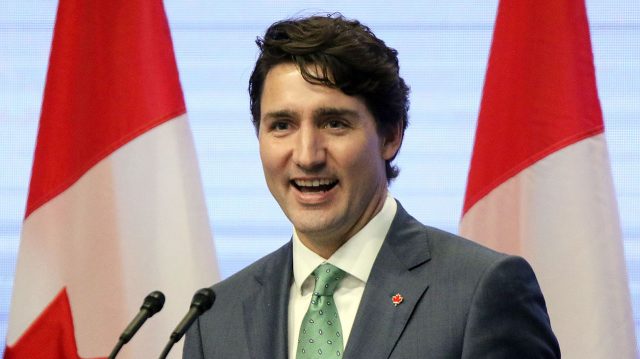
MONTREAL/OTTAWA — Canadian Prime Minister Justin Trudeau hung onto power on Monday as his main rival conceded defeat, saying he had won a clear mandate to govern although he fell short of his goal for a majority win.

Mr. Trudeau, in power since 2015 and governing with a minority of House of Commons seats since 2019, decided to gamble on an early vote and capitalize on his government’s handling of the pandemic, which included massive spending to support individuals and businesses and a push for high vaccination rates.

Instead, he will end up where he started after an unexpectedly tight election race characterized by a lackluster campaign and voter anger at an election during a pandemic.

Conservative Leader Erin O’Toole, whose party placed second, conceded defeat as results trickled in late into the night. Mr. Trudeau spoke to supporters shortly after, pledging to work with other parties for the good of all Canadians.

“You are sending us back to work with a clear mandate to get Canada through this pandemic and to the brighter days ahead,” Mr. Trudeau said to a small crowd gathered in a hotel ballroom. “What we’ve seen tonight is that millions of Canadians have chosen a progressive plan.”

CBC and CTV projected that Mr. Trudeau’s Liberal government would hold a minority of seats in the House of Commons, meaning he will need another party’s support to govern.

Elections Canada showed the Liberals leading in 156 electoral districts nationally, one more than they held before the election, including 110 in vote-rich Ontario and Quebec.

“It’s a Groundhog Day election,” said Gerald Baier, a professor of political science at University of British Columbia. “It seems that ambivalence has stayed (from the 2019 election).”

The House of Commons holds 338 seats and a party needs to win 170 to hold a majority. The Conservatives led in 122 districts.

The Conservatives looked on track to win the popular vote, attracting 34% support to the Liberals’ 32%, but Liberal support is centered around urban and suburban areas where there are more seats.

“Our support has grown, it’s grown across the country, but clearly there is more work for us to do to earn the trust of Canadians,” Mr. O’Toole told supporters, while suggesting that he planned to stay on as leader. “My family and I are resolutely committed to continuing this journey for Canada.”

Polls reported results much more slowly than usual, with some stations forced to limit occupancy due to COVID-19 restrictions. Long lines forced some electors to wait hours to vote in southern Ontario, a critical battleground.

The Canadian dollar strengthened against its US counterpart in Asian trading on Tuesday, in part as a projected election win for Mr. Trudeau’s Liberal party reassured investors that economic support would continue.

Mr. Trudeau, 49, a charismatic progressive and son of former Liberal Prime Minister Pierre Trudeau, swept to power in 2015. But the Liberals dropped to a minority in 2019 after Mr. Trudeau was damaged in part by disclosures that he had worn blackface years ago.

Amid a fourth wave of COVID-19, Mr. Trudeau backed vaccine mandates while Mr. O’Toole, 48, opposed them, preferring a combination of voluntary vaccinations and rapid testing to stop the spread of the virus.

Mr. Trudeau had said he needed a new mandate to ensure Canadians approve of his plan for getting the country past the coronavirus pandemic. The Liberals, whose fiscal policy supports for the pandemic exceed 23% of GDP, plan billions in new spending to support economic recovery if re-elected. — Reuters

COVID-19 toll in US surpasses 1918 pandemic deaths

REUTERS

THE US’s COVID-19 (coronavirus disease 2019) deaths have surpassed the toll of the 1918 influenza pandemic, a milestone many experts say was avoidable after the arrival of vaccines.

The US has reported 675,446 deaths since the start of the pandemic, according to Johns Hopkins University data — more than the 675,000 that are estimated to have died a century earlier.

The US hits that deadly mark despite the widespread availability of COVID-19 vaccines, which were developed in record time in a display of the extraordinary advances in medical science in the past century. The inoculations have been passed up by some 70 million eligible Americans, many of them encouraged by Republican politicians and conservative media.

“To have so many people who have died with modern medicine is distressing,” said Eric Topol, director of the Scripps Translational Research Institute, who noted there were no ventilators or vaccines in 1918. “The number we are at represents a number that is far worse than it should be in the US.”

The milestone also comes as the fast-spreading Delta variant has pushed the US into a dangerous new phase, upending hopes that the pandemic had passed and setting the stage for an uncertain winter.

Of course, the comparisons to the 1918 pandemic are highly imperfect. For starters, the US has about three times as many residents as it had a century ago, meaning the implied death rate is about a third as high. 

The 1918 pandemic also targeted many young people, whereas COVID has so far mostly killed those 65 and over, and the pandemics have played out at very different paces, according to John Barry, author of The Great Influenza: The Story of the Deadliest Pandemic in History. He said the 1918 pandemic did the majority of its damage during a 14- to 15-week stretch in the latter part of that year.

“That was much more intense, much more frightening,” Mr. Barry said of the earlier tragedy. But Mr. Barry said the stress from Covid has been longer-lasting, “and the economic damage is light-years greater.”

There are other reasons why the numbers may not reflect significant differences. The 675,000 estimate from 1918-19 was based on extrapolations from spotty data. While imperfect in their own ways, COVID statistics are probably better.

During extreme events such as pandemics, experts use so-called excess death studies as one way to estimate fatalities — essentially comparing the number of deaths in the outlier period with “normal” times. One excess death estimate from the US Centers for Disease Control and Prevention (CDC) suggests there have been as many as 830,443 such fatalities during the Covid pandemic, meaning the official numbers could be an undercount.

The unaccounted-for excess deaths may also reflect the price of disruptions in medical care and other indirect byproducts of the pandemic.

Vaccinations first rolled out in the US in December, and have been widely available for months. Since then, the vast majority of deaths have been among the unvaccinated.

“There is so much misinformation out there that some people cannot be convinced” of the benefits of vaccines, said Bertha Hidalgo, an epidemiologist at the University of Alabama. “Those are absolutely the deaths that can be prevented.”

A CDC study this month found that people who were not fully vaccinated this spring and summer were more than 10 times more likely to be hospitalized, and 11 times more likely to die of COVID-19, than those who were fully vaccinated. While Delta’s spread has resulted in more cases among the vaccinated than many anticipated, the vaccine still protects well against severe illness.

Mr. Topol, the Scripps director, said the US has failed in other ways. Mask use has declined significantly, and most people are still using cloth masks, which have shown to be much less effective than surgical and N95 masks. He said there needs to be widespread distribution of medical-grade masks and rapid at-home Covid tests that can help detect infections early on.

“Vaccines are a paramount part of the strategy, but we have failed on other measures as well, “ Mr. Topol said. “We’re fighting this war with two hands behind our back.”— Bloomberg

Cancer-detecting blood tests have same goal, different approaches

UNSPLASH 

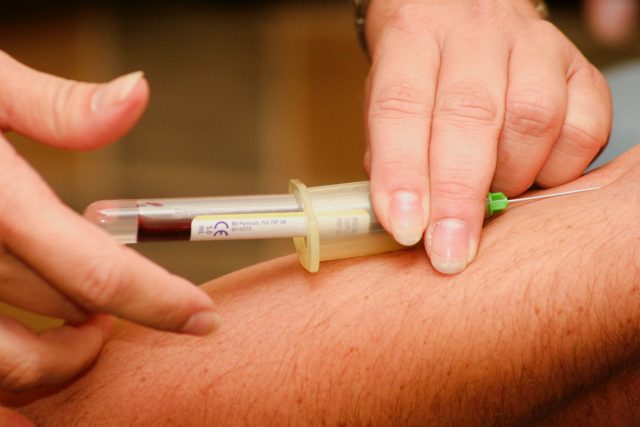
InterVenn BioSciences’ V.O.C.A.L. trial and GRAIL’s Galleri trial are underway, to see how well their respective blood tests can detect various types of cancer prior to the appearance of symptoms. Earlier diagnosis leads to a higher survival rate.   

The blood tests have fundamental differences, but neither is superior to the other. The approaches are complementary, said Aldo Carrascoso, the Filipino co-founder of InterVenn BioSciences, adding that tackling cancer is a “very hard” field that should have more attention than it is getting now.    

“The more weapons we have in the fight [against cancer], the more chances we have of winning it,” Mr. Carrascoso told BusinessWorld in a Zoom call.  

There is an attendant responsibility for companies developing screening tests, he added.  

Screening tests need to have a 99% specificity, or the ability to definitively state that an individual is not sick, to be acceptable in clinical literature.  

Tests that are less than 99% sensitive will end up overtreating patients who — “freaked out” by their results — will push for unnecessary diagnostic tests such as MRIs (magnetic resonance imaging). This overtreatment will overwhelm healthcare systems in the process.  

“There are implications to everything,” said Mr. Carrascoso. “Early detection is only as good as you can [rely on it].”  

The InterVenn founder compared GRAIL’s Galleri test with “looking for a needle in the haystack.” 

The Galleri test detects pieces of an individual’s DNA in the bloodstream that have been released from cancer cells.   

(Galleri’s genomic approach is similar to that of Guardant360 and Signatera, two cancer-detecting blood tests that received, respectively, approval and “Breakthrough Device” designation from the US Food and Drug Administration.) 

“One-tenth of 1% of cells shed tumor DNA,” said Mr. Carrascoso, said of the genomic approach.  

In contrast, InterVenn employs glycobiology (the study of glycans or carbohydrates) combined with deep machine learning and instrumentation.  

“Eighty percent of you is glycosylate [or proteins combined with sugar] surrounded by these sugar structures,” Mr. Carrascoso said. “When you measure them, you can see a very stark contrast between yung dami ng [the amount of] glycosylation and the progression of the disease.”  

In the V.O.C.A.L. trial, the more glycans a woman has, the higher the probability she has ovarian cancer. The higher the probability too that the further along she is in the disease.  

InterVenn BioSciences says it can now detect more than 50 cancers through its artificial intelligence-supported work with glycoproteins.  

This includes nasopharyngeal cancer, which it predicted with 100% accuracy in a 2020 study in Malaysia 

The company’s technology, according to Mr. Carrascoso, shows the entire movie of a disease as compared to only a snapshot of it. It can also detect COVID-19, and can predict serious cases versus cases that can be allowed home care 

“The [coronavirus’] spike protein is a glycoprotein, and we were able to see glycosylation patterns together with our multiple collaborators,” he said. More information about this development will be released in a paper with Standford University at a yet unannounced date.  

An upcoming and expanded InterVenn trial for cancer will also be announced at the American Society of Clinical Oncology conference in January 2022.  

“It’s like the Galleri test but more specific,” Mr. Carrascoso said. “We’re developing very specific signatures for very specific cases.” — Patricia B. Mirasol