Home Blog Page 7482

Bill to improve teacher training 

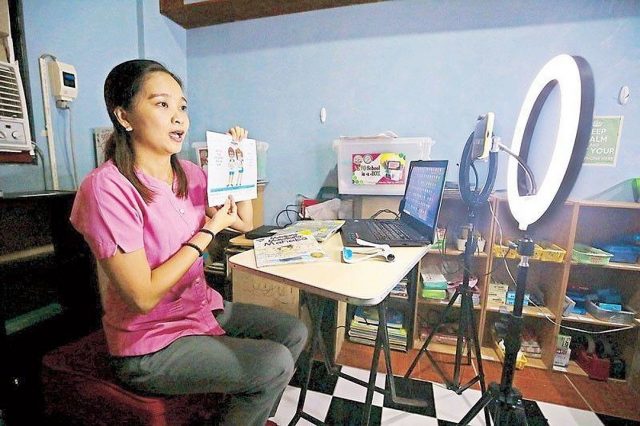
A TEACHER holds an online class in this August 2021 photo. — THE PHILIPPINE STAR/MICHAEL VARCAS

THE SENATE on Monday approved on third and final reading a bill that seeks to improve the quality of teacher education and training in the country. 

Senate Bill 2152 or the proposed Teacher Education Excellence Act will amend Republic Act 7784 by strengthening the Teacher Education Council (TEC) created in 1993. 

The measure seeks to turn the council into a responsive coordinating body for the Commission on Higher Education, Professional Regulation Commission and Department of Education, the main entities involved in teacher education. 

It will realign pre-service and in-service education to improve the quality of teachers. 

“We cannot raise the quality of education of our children if our teachers hold no experience or quality education,” Senator Sherwin T. Gatchalian said in a statement on Tuesday. “Our teachers are our frontliners in our suppression of the educational crisis, so it must be assured that from college to teaching, they are ready and have sufficient capabilities.” 

The revamped council will establish a roadmap for teacher education by mandating, monitoring and assuring quality compliance with minimum requirements for teacher education programs. 

TESDA restarts face-to-face training 

THE TECHNICAL Education and Skills Development Authority (TESDA) on Tuesday said face-to-face training and assessment in Metro Manila have restarted after the change in the lockdown level. 

Face-to-face training and assessment will be allowed up to 50% capacity for Alert Levels 2 to 4, while full capacity will be allowed for areas under Alert Level 1, TESDA said. 

Areas under Alert Level 5 or a granular lockdown should suspend face-to-face training and assessment until the status is eased, it added. 

It also said training involving human contact such as massage therapy and other beauty care-related skills was not allowed regardless of the alert level. 

Face-to-face training in areas under an enhanced community quarantine and modified enhanced community quarantine were still suspended. — Revin Mikhael D. Ochave 

Bolts make assault on no. 2 seed

THE MERALCO Bolts finish their PBA Philippine Cup elimination round assignments this week with an eye on completing their assault on the number two seed in the playoffs and the twice-to-beat incentive that goes with it. — PBA IMAGES

By Michael Angelo S. Murillo, Senior Reporter

THE Meralco Bolts finish their Philippine Basketball Association (PBA) Philippine Cup elimination round assignments this week with an eye on completing their assault on the number two seed in the playoffs and the twice-to-beat incentive that goes with it.

Meralco (7-2) will play back-to-back matches on Wednesday and Thursday, looking to at least win one, if not complete a sweep, to officially claim the second seed in the ongoing Philippine Basketball Association tournament.

It will first play the NLEX Road Warriors (5-5) in a match scheduled for 3 p.m. at the Don Honorio Ventura State University (DHVSU) Gym in Bacolor, Pampanga, then it takes on defending champions Barangay Ginebra San Miguel Kings (4-6) on Thursday at 2 p.m.

Both matches are expected to be not a walk in the park for the Bolts as both the Road Warriors and the Kings are looking for an all-important victory to give their own playoff push a huge boost.

Meralco has been on a tear of late after missing two weeks of play after it entered the league’s health and safety protocols.

It won back-to-back matches last week to put it in a solid position to contend for a top-two finish in the eliminations.

The last of its victories came at the expense of also-rans Blackwater Bossing, 104-97, on Sept. 18 where they continued to play sans key cogs Chris Newsome and Cliff Hodge, who were yet to get clearance to return as per the safety guidelines set by the league.

Allein Maliksi led the steady attack of the Bolts in the win, finishing with 21 points and 10 rebounds. Raymond Almazan had a huge double-double of 15 points and 17 rebounds while Reynel Hugnatan and Trevis Jackson each had 14 points.

If the Bolts succeed in securing the second seed, they will take the number seventh team after the eliminations in the quarterfinals with a twice-to-beat advantage.

Apart from Meralco, also playing two games in the final week of elimination play are the Alaska Aces (3-6), who need to sweep all of it to put themselves in a firmer position to catch the playoff bus.

The Aces play the San Miguel Beermen (6-4) on Wednesday at 6 p.m. and the Northport Batang Pier (5-5) the following day at 4:35 p.m.

Only three spots in the quarterfinals are left to be filled, with TnT Tropang Giga (10-1), Meralco, Magnolia Hotshots Pambansang Manok (8-3), San Miguel and Rain or Shine Elastopainters (6-5) already in.

LEE IS BEST PLAYER OF THE WEEK
Meanwhile, Magnolia’s Paul Lee nabbed PBA player of the week honors for the period of Sept. 15 to 19.

The veteran guard torched San Miguel for 32 points in a 100-90 win on Sunday, 18 of which coming in the fourth quarter.

The win thrusted Magnolia to an 8-3 record at the end of their elimination assignments, good for solo third place, but still has a chance of notching the second seed if Meralco loses all of its games this week.

Mr. Lee edged TnT rookie Mikey Williams in a close vote for the weekly award handed out by media covering the PBA beat.

Others in the running for the award were Meralco’s Maliksi, Almazan and Bong Quinto, Magnoli’s Ian Sangalang, and veteran NLEX big man JR Quinahan.

Team Lakay’s Lito ‘Thunder Kid’ Adiwang ready to swing back into action after battle with COVID-19

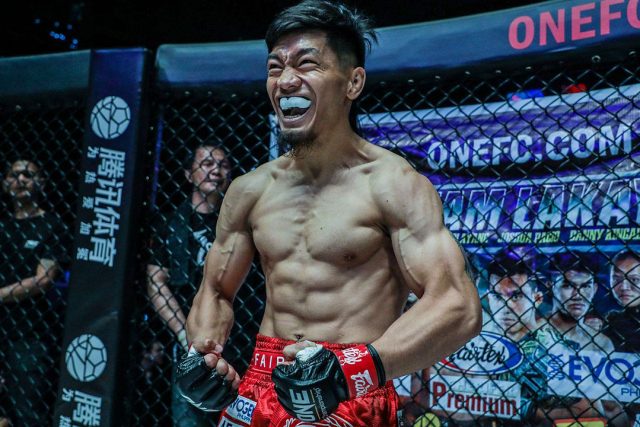
TEAM Lakay’s Lito Adiwang returns to ONE Championship action on Sept. 24 after recovering from COVID-19. — ONE CHAMPIONSHIP

AFTER being sidelined by coronavirus disease 2019 (COVID-19) early this year, Team Lakay fighter Lito “Thunder Kid” Adiwang is ready and excited to get back into action in ONE Championship.

Mr. Adiwang (12-3) is to battle Hexigetu of China in a strawweight clash in the lead card for “ONE: Revolution” on Sept. 24 at the Singapore Indoor Stadium.

It will be the first fight for the Filipino warrior after recovering from COVID-19, which forced his scheduled bout in April to be canceled.

“It (COVID-19) really took a toll on me physically. My cardio and strength were down and it was tough at the start,” shared Mr. Adiwang in an online media roundtable for ONE Revolution on Sept. 17.

“We really needed to come up with a plan to recover the lost strength and get back to the form where I was before getting the virus,” he added.

He was also happy to share that he has fully recovered and has prepared well for his upcoming fight where he hopes to win his second straight match.

Mr. Adiwang last fought in January this year, winning over Japanese Namiki Kawahara by knockout (punch) in the second round.

It was a bounce-back win for him after losing in his prior fight in October 2020, his first defeat in ONE in three fights in the main roster of the promotion.

He said the victory did a lot in getting him back on track mentally and motivated to shore up standing in the game.

“I can say that I have regained my confidence. Since that win over Namiki, my focus has just been on an uphill climb that I’m so excited to get back and fight inside the ONE Circle,” he said. “I’m definitely happy with my performance against Namiki.”

Against noted grappler Hexigetu (8-3), the Team Lakay stalwart is expecting no less than a solid challenge, but vowed to come out fighting and do well.

“Of course, I want to keep our game plan a secret, but all I can tell everyone is that they can expect that everything we planned for is very solid. Coach Mark [Sangiao] has diligently worked with me in preparing me for this, and like in my past wins, I can say that this will be another highlight win for us,” he said.

ONE: Revolution will be headlined by three world title fights led by reigning ONE Lightweight World Champion Christian Lee of Singapore/United States against no. 3 contender Ok Rae Yoon of South Korea. Also on tap are the bantamweight kickboxing world championship clash between Capitan of Thailand and Mehdi Zatout of Algeria and the world strawweight title collision between Joshua Pacio of the Philippines and Japanese Yosuke Saruta.

Revolution will be broadcast live over One Sports on Friday, beginning at 6:30 p.m. — Michael Angelo S. Murillo

Donaire and Magsayo set for WBC mandatory fights

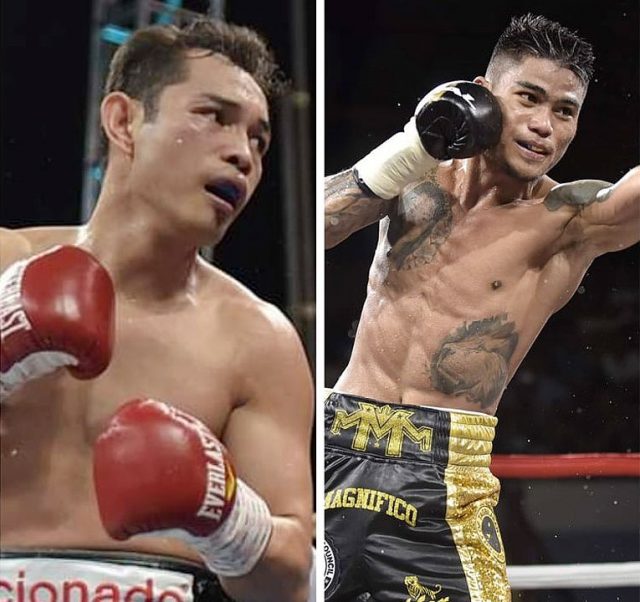
NONITO “The Filipino Flash” Donaire, Jr. (left) and Mark “Magnifico” Magsayo are up for mandatory World Boxing Council fights, the boxing organization announced on Tuesday. — ALVIN S. GO

FILIPINO boxers Nonito “The Filipino Flash” Donaire, Jr. and Mark “Magnifico” Magsayo are up for mandatory World Boxing Council (WBC) fights, the boxing organization announced.

As per the WBC, through a Twitter post on Tuesday, Mr. Donaire (41-6), the reigning bantamweight champion, must defend his title against unbeaten interim champion and compatriot Reymart “Assassin” Gaballo while Mr. Magsayo (23-0) will be the mandatory opponent for featherweight champion Gary Russell, Jr. of the United States in his title defense.

When and where these fights will take place is still to be determined.

The Gaballo fight could well put on hold unification fights Mr. Donaire is angling for against World Boxing Organization (WBO) champ John Riel Casimero of the Philippines and World Boxing Association (WBA) and International Boxing Federation (IBF) titleholder Naoya Inoue.

Mr. Gaballo (24-0) threw his name in the title mix after defeating Emmanuel Rodriguez of Puerto Rico in December 2020 by split decision to win the vacant WBC interim bantamweight title.

Mr. Magsayo, for his part, became the number one challenger for the featherweight title after knocking out Julio Ceja of Mexico in the 10th round of their clash last month in Las Vegas.

Bohol native Mr. Magsayo said that he has what it takes to go up against Mr. Russell (31-1), banking on his size and strength.

Mr. Russell has been WBC champ since 2015 and has had five successful title defenses since.

Other fights announced by the WBC include Eduardo Ramirez (Mexico) against Lerato Dlamini (South Africa) for the WBC featherweight final elimination and Joseph Diaz against Ryan Garcia in an all-American WBC lightweight interim championship battle. — Michael Angelo S. Murillo

Packers shake off opening loss, down Lions

AARON Jones scored four touchdowns on Monday night, three on passes from Aaron Rodgers, as the Green Bay Packers bounced back from a Week 1 blowout loss by topping the visiting Detroit Lions (35-17).

Jones rushed 17 times for 67 yards and caught six passes for 48 yards for Green Bay, which took over in the second half, scoring touchdowns on its first three possessions. The Packers’ defense, which was carved up by Jared Goff in the first half, stiffened considerably after half time.

Rodgers, who was under fire during a 38-3 blowout loss to the New Orleans Saints a week ago, enjoyed an impressive bounce-back performance against Detroit (0-2). He completed 22 of 27 passes for 255 yards and four scores, including a 22-yard connection with Robert Tonyan early in the third quarter that gave the Packers the lead for good at 21-17.

Green Bay (1-1) made it a two-score game with seven seconds left in the third when Rodgers found Jones for an 11-yard touchdown pass, finishing off an 11-play, 75-yard drive that chewed up nearly six minutes.

After Goff fumbled on the Lions’ next possession, Jones concluded the game’s competitive phase with 12:42 left, barreling in from the 1.

It was a far cry from the first half, when Detroit stood toe-to-toe with the Packers as Goff picked out open teammates at will against a defense that couldn’t mount a pass rush or cover receivers. The Lions needed just seven plays to score on the game’s opening drive, with Goff hitting Quintez Cephus with a 5-yard scoring strike.

After Rodgers and Jones teamed up for a 4-yard touchdown pass at the 3:45 mark of the first quarter, Detroit regained the lead with 7:22 left in the first half, as Goff found tight end T.J. Hockenson on an 8-yard strike.

Rodgers and Jones hooked up for a 1-yard score with 1:52 remaining in the second period, but Austin Seibert toed a 43-yard field goal with three seconds left to give the Lions a 17-14 half time lead.

Goff finished 26 of 36 for 246 yards with two touchdowns and an interception. Hockenson caught eight passes for 66 yards. — Reuters

Joey Votto homers twice; Reds rally to beat Pirates

JOEY Votto homered twice and Eugenio Suarez went deep for the go-ahead blow as the desperate Cincinnati Reds erased an early five-run deficit with nine unanswered runs to beat the visiting Pittsburgh Pirates (9-5) Monday night.

Votto’s career-high fourth multi-homer game of the season gives him a team-leading 33 homers. The Reds (78-73) won for just the ninth time in 25 games to remain three games behind the St. Louis Cardinals in the race for the second National League wild card spot.

The Cardinals (80-69) beat the division-leading Milwaukee Brewers for their ninth straight win on Monday.

Votto added an eighth-inning single and walked twice to reach base in all five plate appearances.

The comeback matched the biggest this season for the Reds, who fought back from a 6-1 hole in Colorado on May 16 in a 7-6 win. The win also gave Cincinnati its 13th straight victory over Pittsburgh at Great American Ball Park, their most consecutive home wins against Pittsburgh since capturing 18 straight between 1939 and ‘40.

Luis Cessa (5-2) struck out three and retired all four batters he faced in relief of struggling starter Vladimir Gutierrez to earn the win. Mychal Givens pitched the ninth in a non-save situation. Right-handed reliever Cody Ponce (0-5) surrendered the tying and go-ahead homers to suffer the loss.

Yoshi Tsutsugo hit the first pitch he saw from Gutierrez in the first inning for a home run to right. Bryan Reynolds followed that up with a home run of his own, his team-leading 24th of the season, to put the Pirates up 2-0.

Gutierrez failed to reach four innings for the fourth time in five starts and showed more signs of late-season rookie fatigue. The right-hander walked opposing starting pitcher Dillon Peters on four pitches to start the third inning. The Pirates capitalized by scoring three more runs off Gutierrez, highlighted by and RBI single from Tsutsugo and a sacrifice fly by Reynolds.

The Reds appeared hopeless with no hits through the first 2 2/3 innings against Peters. But Jonathan India’s walked sparked a four-run, two-out rally in the third, highlighted by Votto’s two-run homer to close Pittsburgh’s lead to 5-4.

The Reds pulled even on Votto’s solo shot in the fifth, his third homer in as many at-bats dating to a pinch-hit homer in the ninth inning Sunday against the Los Angeles Dodgers. Suarez went back to back with his 27th homer to center, putting the Reds ahead 6-5.

Cincinnati added two runs in the seventh, one on Kyle Farmer’s 15th homer, and another run in the eighth.

The start of the game was delayed one hour, 25 minutes due to rain.Reuters

Steve Stricker: Brooks Koepka ‘all in’ for Ryder Cup

DOES Brooks Koepka really want, and thereby deserve, a spot on the US Ryder Cup team after recent controversial comments that seemed to criticize the entire event?

Team captain Steve Stricker thinks so, and says that the 31-year-old American is “all in” for this weekend’s 43rd rendition of the tournament at Whistling Straits in Haven, WI.

Last week, a Golf Digest interview quoted Koepka, the No. 10 ranked player in the world, speaking frankly about the challenges of the Ryder Cup — an event pitting top Americans against the best European players in an emotion-filled, team-based event, unique in such an individual sport.

As a result, Koepka has faced some criticism from those who were offended by his remarks, such as former US Ryder Cup captain and NBC analyst Paul Azinger.

On Monday at Whistling Straits, the 54-year-old Stricker downplayed Koepka’s perceived complaints and backed Koepka, who has also played in the Ryder Cup in 2016 and 2018.

“I talked to him about it. I’ve had experiences with Brooks over many of these teams and the conversation that I have had with him and what I have personally seen in the team room doesn’t jive up to what I was reading in those articles,” Stricker said. “Again, I’m not worried about Brooks. He assures me he is healthy. He assures me that he is 100 percent all in on this team and whatever he needs for this team to become the winner at the end of the week.

“So again, I’m not worried about Brooks at all. It’s been good talks and he’s ready to get down and start playing.”

Koepka had termed the Ryder Cup “hectic” and “a bit odd” in the Golf Digest story, opening up on the unusual routine.

“It’s different,” Koepka said. “It’s hectic. It’s a bit odd, if I’m honest. I don’t want to say it’s a bad week. We’re just so individualized, and everybody has their routine and a different way of doing things, and now, it’s like, okay, we have to have a meeting at this time or go do this or go do that. It’s the opposite of what happens during a major week.

“There are times where I’m like, ‘I won my match. I did my job. What do you want from me?’ I know how to take responsibility for the shots I hit every week. Now, somebody else hit a bad shot and left me in a bad spot, and I know this hole is a loss. That’s new, and you have to change the way you think about things.”

The Ryder Cup begins on Friday and runs through Sunday after being postponed in 2020 because of the coronavirus pandemic. Team Europe is the reigning champion per its victory in 2018 in France. — Reuters

US faces tough Ryder Cup test against battle-hardened Europe

KOHLER, Wisconsin — Home advantage for a largely inexperienced US team versus European passion will be one of the compelling storylines in this week’s Ryder Cup between two star-studded teams at Whistling Straits.

The Americans will have six Ryder Cup rookies on their 12-man team who will strive to reclaim the trophy against a close-knit and battle-tested European side that have mostly dominated the biennial match play competition over the last four decades.

Despite a slew of new faces, the US does not lack for talent given an average world ranking of nine compared to 30 for Europe, but American struggles to play as a unit at the Ryder Cup have become an all too familiar refrain.

“The fact that the Americans have only won five times in 38 years has us all wondering can this juggernaut of an American team… beat that team,” NBC Sports golf analyst and former US Ryder Cup captain Paul Azinger said on a conference call.

“Because (Europe is) going to show up as a bonded team, and our guys are going to show up — I don’t know how they’re going to show up. They’re going to show up as the best players.”

World number two Dustin Johnson, playing in a team-high fifth Ryder Cup, headlines a US squad whose rookies include British Open winner Collin Morikawa, Olympic champion Xander Schauffele and PGA Tour Player of the Year Patrick Cantlay.

A possible distraction ahead of Friday’s start could be the well-documented frosty relationship between Bryson DeChambeau and Brooks Koepka, who US captain Steve Stricker has said will likely not be paired together during the three-day event.

The narrative that the Americans lack the chemistry enjoyed by Europe will likely remain a common theme this week, perhaps even more given Koepka told Golf Digest the Ryder Cup threw off his routine and that he might not be cut out for team sports.

Even if the US team are able to find the right formula and silence questions about chemistry, they will still have their work cut out against opponents who have managed to consistently form a cohesive unit and typically thrive in the team format.

“Look, I’ll believe this forever — the Europeans are bonded by blood. They’re bonded naturally. This means everything to them,” said Azinger. “It’s sad really that this American side has gotten beaten like that, but (Europe) brings an intangible with them. It’s a fact.”

‘SENSE OF FREEDOM’
Europe will have seven returning players from the 2018 team that triumphed in Paris, led by Spanish world number one Jon Rahm, Northern Irishman Rory McIlroy and Englishman Tyrrell Hatton, their only top-20 representatives along with Norway’s Viktor Hovland.

Also in the team are Spaniard Sergio Garcia, a veteran of nine Ryder Cups and Europe’s all-time leading points scorer, and Englishman Ian Poulter, who is known as “the Postman” given his knack for delivering crucial points in the competition.

Still, despite being the defending champions and having five players with four-plus Ryder Cup appearances, Europe are again being perceived as clear underdogs due in part to the current form and lofty ranking of their opponents.

“The European side seems to take this underdog role and mentality and use it to their advantage, whether they’re playing at home or in the US,” said NBC Sports analyst and former US Ryder Cup player Justin Leonard.

“With that comes a sense of freedom, of well we’re not really expected to win, so let’s go out and play freely. And I think you see that time and again at every Ryder Cup.”

Europe, led by captain Padraig Harrington, undoubtedly faces a challenging task on American soil where the US have lost only four times since the matches began in 1927.

The Americans took a recent trip to Whistling Straits, a links-style layout sculpted along two miles of Lake Michigan shoreline, to get a feel for the setup, but Azinger said Mother Nature could make for a much different course this week.

“If the wind blows, I think they’re going to lose any advantage, really mainly on the greens,” he said.

“Everybody can handle the wind tee to green, but on the green somehow, Europe makes all those putts in the wind.”

The Ryder Cup was postponed last year because of the coronavirus disease 2019 (COVID-19) pandemic. — Reuters

Merry-go-round

In the aftermath of an embarrassing loss to last-minute replacement Yordenis Ugás last month, occasional legislator Manny Pacquiao hinted at retirement once again. It was a familiar refrain; in the last five years or so, he had been broaching the possibility of hanging up his gloves given his advancing age. In the wake of the setback he suffered at the hands of an opponent who had only 11 days to prepare for him and yet pummeled him en route to a unanimous-decision victory, however, his words rang truer than ever before.

To be sure, Pacquiao has had myriad reasons to exit stage left. Apart from his candidacy for the rocking chair, there are also the entreaties from his family sick of seeing him bloodied and bruised from fight after fight. Most importantly, there are his obligations outside the ring, not least of which involve his “commitment” to serve the country as a sitting senator. Something has had to give, and those who wish better for him and for the public who pay his salary continue to hope it would finally be his supposed sidelining as a boxer. They know it has been time for a while now: For all the otherworldly assets that ensure his place in history as one of boxing’s best, he has been finding it more and more difficult to prepare for any given fight. And, for a moment there, it felt like he, too, knew it was time.

As things have turned out, Pacquiao is apparently crossing his fingers for yet another big payday (or two) inside the ropes. Seam Gibbons, president of MP Promotions, told ESPN: “Until you see it officially come out on his Twitter or Instagram, he isn’t retired. Once you see it on a platform like that, it’s official.” Interesting choice of words, to say the least. And how about the pronouncements of the future Hall of Famer? “Anything else is just talk about what his thoughts are in the moment. It’s coming from him, but it’s hearsay.”

How can a statement uttered directly by Pacquiao be termed hearsay? Forget that he has changed his mind on the matter again and again. He says it’s because he’s “passionate about the sport.” The more practical answer, however is this: He needs the money. He may be a billionaire, but he has political ambitions that need capital for fuel. He just declared his intention to run for president of the Philippines, which means he will have to mount a prolonged campaign that needs a significant amount of personal money to sustain. And let’s not forget the hangers-on in his party; they, too, await their share from his coffers.

Little wonder, then, that Pacquiao has waffled on his departure from the boxing scene. After a bout, he’s spent and all too ready to call it a career. He has also just seen his bank account get substantially bigger, and so he foresees a future with his cup full. After a while, however, the pains subside and his need to earn more megabucks becomes pronounced anew; this is when he is again enjoined to head back inside the ropes. It’s a merry-go-round that has no one quarter winning. Not him, and not the people he’s supposed to serve.


Anthony L. Cuaycong has been writing Courtside since BusinessWorld introduced a Sports section in 1994. He is a consultant on strategic planning, operations and Human Resources management, corporate communications, and business development.

Aspiring for high-income status

VECTORJUICEW-FREEPIK

(Part 5)

As discussed in Part 1 of this series, the Philippines will transition into an upper-middle income economy in the next three or four years. Will our economy face the same fate as many Latin American economies by being caught in the so-called Middle Income trap because of our inability to transition from resource-driven growth, with low cost of labor and capital, to productivity-driven growth, especially in the agricultural sector? It would be of great interest for us to examine closely the experience of South Korea, one of the so-called “tiger economies” which transitioned from low-income to First World status in record time. Among these Newly Industrializing Economies (NIEs), South Korea is the closest model to follow because of its relatively larger population. The other three — Singapore, Hong Kong, and Taiwan — have much smaller populations and may have fewer lessons for us to follow.

An article by Jeong Hyeoh on South Korea’s growth experience over six decades describes how this Third World country in 1960 saw its per capita income balloon from $1,557 to First World status of $34,300 in 2014. Despite such phenomenal growth, that was unmatched especially among the Middle Income economies of Latin America and Asia, South Korea continued to be considered an “emerging market” all the way until July 2021. On July 2, 2021, the United Nations Conference on Trade and Development (UNCTAD) upgraded South Korea to developed country status, putting it in the same category as the US, Japan, and the leading European economies. Today, South Korea is the 10th largest economy in the world. How did the country get there?

In sum, Jeong Hyeoh identified the main engines of growth of South Korea during three distinct periods. During the 1960s, labor and human capital factors accounted for the high growth. South Korea’s leaders then knew how to capitalize on the demographic dividend that resulted from the baby boom after the Korean war. Like the other tiger economies (and unlike the Philippines), it adopted economic policies that encouraged the establishment of labor-intensive, export-oriented industries such as garments, textiles, toys, wigs and other manufactured products that benefited from huge markets in the more developed countries such as the US, Japan, and some European nations. Then, during the 1970s, taking advantage of the high domestic savings rate, the country invested in capital-intensive industries, like iron and steel, ship building, chemicals, and infrastructure. For the following periods, the emphasis was on productivity growth and not factor-driven growth. Benefiting from its Confucian culture, South Korea invested heavily in a rigorous education system which helped to establish a highly motivated and educated populace, which was largely responsible for spurring the country’s high technology boom and rapid economic development.

In the best seller entitled Why Nations Fail, Daron Acemoglu and James Robinson emphasized the crucial importance of institution building in attaining sustainable and inclusive growth. To quote from the book, “Both Syngman Rhee and General Park Chung-Hee secured their places in history as authoritarian presidents. But both governed a market economy where private property was recognized, and after 1961, Park effectively threw the weight of the State behind rapid economic growth, channeling credit and subsidies to firms that were successful.” This reminds me of the last public debate that I dared to have with the authoritarian leader President Ferdinand Marcos. In a business conference organized just before the 1986 elections, then President Marcos tried to justify his coddling of business cronies by claiming that he was just imitating the style of Park Chung Hee in getting the State behind business conglomerates (called chaebols in Korean). I gathered enough courage to tell him during the open forum that there was a big difference between him and Park Chung Hee in this regard. While the South Korean dictator chose as his “cronies” chaebols like Hyundai, Samsung, Daewoo, Lucky Goldstar, and Lotte that had been founded by very successful entrepreneurs, President Marcos used family relations and personal friendship as the basis for giving privileges to certain business firms.

Acemoglu and Robinson highlighted the extreme contrast between the economic policies of North Korea and those of South Korea. They highly criticized North Korea’s “stifling, repressive regime that was inimical to innovation and the adoption of new technologies. But Kim Il-Sung, Kim Jong-Il and their cronies had no intention of reforming the system, or introducing private property, markets, private contracts, or changing economic and political institutions. North Korea continues to stagnate continuously.” In contrast, “in the South, economic institutions encouraged investment and trade. South Korean politicians invested in education, achieving high rates of literacy and schooling. South Korean companies were quick to take advantage of the relatively educated population, the policies encouraging investment and industrialization, exports, and transfer of technology.”

The “Story of the Two Koreas” leaves no doubt about the primordial importance of institutions in preventing economic failure: “By the late 1990s, in just about half a century, South Korean growth and North Korean stagnation led to a tenfold gap between the halves of this once-united country… The economic disaster of North Korea which led to the starvation of millions, when placed against the South Korean economic success, is striking. Neither culture nor geography nor ignorance can explain the divergent path of North and South Korea. We have to look at institutions for an answer.”

The most important lesson from South Korea for the Philippines is the priority to be given to rural and agricultural development in attaining sustainable and inclusive growth. Despite the fact that South Korea has very limited agricultural resources, Park Chung Hee made sure that the highest importance was given at the beginning of the development process to rural and agricultural development. In 1971, as reported in an ADB study of Professor Djun Kil Kim of the University of Asia and the Pacific, the South Korean government launched the Saemaul Undong (SU) movement which was a community-driven development program. This movement contributed to improved community wellbeing in rural communities through agricultural production, household income, village life, communal empowerment and regeneration, and women’s participation.

As reported in the ADB study, this “New Village” movement had modest goals but very significant impacts on rural poverty. To quote from the Executive Summary: “Thanks to upgrading of the agricultural production infrastructure and introduction of high-yielding Indica and Japonica hybrid rice varieties, by the end of Stage I, rural household incomes had reached parity with those of urban industrial households. During Stage II, village life was improved through modernization of rural dwellings, with changes such as replacement of thatched roofs with tin, tile and slate roof coverings; electrification; and introduction of telecommunications on a mass basis in rural villages. By the end of the 1970s, the Republic of Korea had overcome its chronic shortfall in the domestic supply of food.”

The most important way we can avoid being caught in the Middle Income trap is to address the challenge of rural and agricultural development. We still need our own version of the SU movement so that we can address the two most important goals of our economy in the next decade or so: food security and the reduction of rural poverty. Even more important, however, is a change of mindset among our rural dwellers. As the ADB concludes about the SU movement: “Ultimately, the most valuable long-term benefits of the SU movement were not its outward tangible achievements, but rather those that resulted from the sweeping change in the mentality of the people induced by the SU movement itself. In sum, the SU movement built a national confidence infused with a ‘can-do’ spirit that transformed a former national mentality of chronic defeatism into new hope, a long-term shared vision of a better life for all, and an infectious enthusiasm sustained by volunteerism at the community level.”

To be continued.


Bernardo M. Villegas has a Ph.D. in Economics from Harvard, is Professor Emeritus at the University of Asia and the Pacific, and a Visiting Professor at the IESE Business School in Barcelona, Spain. He was a member of the 1986 Constitutional Commission.

bernardo.villegas@uap.asia

Hong Kong’s non-election is momentous and meaningless

LOK YIU CHEUNG-UNSPLASH

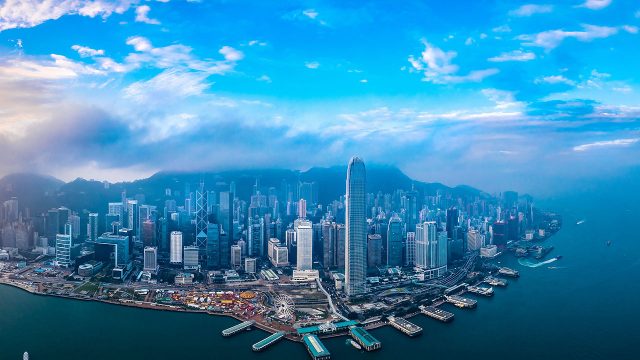
HONG KONG has had its first taste of the remodeled electoral system that China designed for the city. As an exercise in competitive politics, Sunday’s vote had all the suspense and spontaneity of a Soviet military parade, though with fewer people. All the same, Beijing has reason to be satisfied with the outcome.

The ballot was to fill about a quarter of the seats on the so-called Election Committee that will choose the city’s next chief executive and appoint a chunk of the legislature. About 4,900 voters were eligible to take part. Beijing shrank the electorate by about 97% due to the inconvenient tendency of Hong Kong people to vote for pro-democracy candidates. More than three-quarters of the seats open to election were filled uncontested after the number of nominations matched the number of places available, a sign that the important decisions had already been made behind closed doors.

China calls this improving the electoral system. That word was written into the legislation for the avoidance of doubt: The National People’s Congress passed the “Decision on Improving the Electoral System of the Hong Kong Special Administrative Region” in March, and inserted it into the city’s de facto constitution, the Basic Law.

For the government, the poll was an opportunity to showcase how Beijing’s intervention had moved Hong Kong beyond the unrest of 2019 and restored a stable, functioning polity. In fact, it did more to highlight the contradictions between the official version of events and observable reality since China imposed a national security law on the former British colony in mid-2020.

Authorities made efforts to treat the vote as if it were a genuine political contest. There was the over-the-top police presence: The force announced plans to deploy as many as 6,000 officers, more than the total number of electors. Property tycoons such as CK group’s Victor Li and Adam Kwok of Sun Hung Kai Properties Ltd. were ordered on to the streets to canvas, according to the South China Morning Post. That was far from necessary for such an uncompetitive poll, though it will have helped to create the impression that something was at stake in the absence of a political opposition. Absurdly, Chief Executive Carrie Lam paid tribute to the high turnout rate on Sunday night — for a ballot from which more than 99.9% of Hong Kong’s population was excluded.

In the telling of mainland Chinese and Hong Kong officials, the national security law is a piece of routine housekeeping that has weeded out a group of anti-China troublemakers backed by malicious foreign actors. Freed from this influence, Hong Kong’s people have realized the error of their ways and come to welcome the security law and Beijing’s insistence that only “patriots” should be allowed to partake in the city’s political life.

It’s a stretch to make this narrative stick. For one thing, Hong Kong’s pro-democracy camp has consistently drawn the support of a majority of voters in open elections over decades. There is no credible evidence that this support has waned; opposition voices have just been silenced. Second, many of those targeted are far from the petrol-bomb-throwing radicals implied by Chinese state media rhetoric. They are mild-mannered and respectable lawyers, accountants, doctors and the like who have worked within the constitutional structure and sought only the autonomy and greater democracy promised to Hong Kong in the Basic Law.

It cannot escape the attention of the city’s people that the officials who now decry these politicians as subversive and secessionist previously engaged with them for years or decades in relative civility. The same goes for the civil society organizations that the authorities are now erasing from the city’s life, including the Civil Human Rights Front and the Hong Kong Alliance in Support of Patriotic Democratic Movements of China, organizer of the annual Tiananmen vigil. Both staged peaceful and orderly protests that were approved by police for decades without incident.

Even the insistence on “patriots” employs some semantic legerdemain. This requirement draws its authority from late paramount leader Deng Xiaoping, who said that patriots must form the main body of Hong Kong’s administrators. But Deng had an expansive definition, saying patriots included anyone “who respects the Chinese nation, sincerely supports the motherland’s resumption of sovereignty over Hong Kong and wishes not to impair Hong Kong’s prosperity and stability.” And that’s how it was treated in practice, for more than two decades after the 1997 handover that returned the city to China. As in so many other areas, the past is now being rewritten.

Sunday’s vote can’t be ignored, given the power that the Election Committee wields. An “election” devoid of genuine debate or competition is a momentous sign of the lack of genuine democracy Hong Kong can expect in future. It is also, from another perspective, meaningless. The Election Committee was never very democratic to begin with, though the electorate had expanded since 1997 in line with the Basic Law’s vague aspirations. The electoral structure was always designed to enable Beijing to control the process, which it did most recently by anointing Lam — Hong Kong’s most unpopular chief executive ever — in 2017 over the Hong Kong public’s clear favorite, John Tsang. Beijing was always in control; that control has simply become tighter.

BLOOMBERG OPINION

ADVERTISEMENT
ADVERTISEMENT