Home Blog Page 748

Philippines, US conduct 8th joint maritime drills in South China Sea
PHILSTAR FILE PHOTO

By Chloe Mari A. Hufana and Kenneth Christiane L. Basilio, Reporters

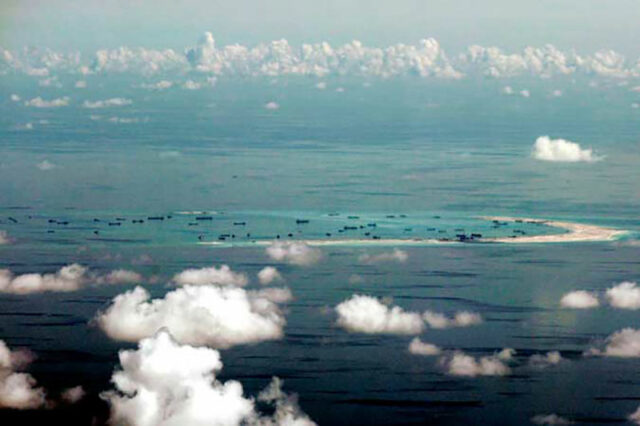
THE PHILIPPINES and US conducted joint maritime drills in the contested South China Sea on Wednesday to strengthen naval coordination between the two close allies and improve maritime awareness in the waterway that China claims almost entirely.

The Philippine Navy deployed its newest warship, BRP Miguel Malvar, to participate in naval drills within Manila’s exclusive economic zone alongside the US Navy guided missile destroyer USS Curtis Wilbur, the Philippine military said in a statement on late Wednesday.

Also participating were Coast Guard vessels BRP Cabra and BRP Suluan, which carried out boarding and search operations to strengthen law enforcement capabilities, it added.

“These maritime engagements demonstrate our commitment to maintaining a free, open, and secure Indo-Pacific,” Philippine military chief General Romeo S. Brawner, Jr. said.

Manila and Washington, which are long-time treaty allies, are working together to bolster defense coordination amid increased Chinese assertiveness in the South China Sea, a key global trade route that is believed to be rich in minerals and oil deposits.

The two nations agreed to hold “maritime cooperative activities” (MCA) in the contested waters to help bolster their forces’ interoperability at sea. The exercise on Wednesday was the fourth for the year and eighth overall since the drills began in 2023.

China claims nearly the entire South China Sea under its so-called nine-dash line, which overlaps with the exclusive economic zones of several countries, including the Philippines, Vietnam, and Malaysia.

Multinational military cooperation has become the new normal in the South China Sea as the Philippines, the US, and other key allies ramp up joint operations to counter China’s growing presence, which Manila and its partners view as destabilizing to regional security.

“The 8th bilateral MCA reinforces both countries’ shared commitment to upholding international law, freedom of navigation and regional stability,” Mr. Brawner said.

The naval drills saw the Philippine and US navies performing communication drills meant at honing coordination protocols and contact reporting exercises aimed at practicing the identification and reporting of unknown vessels in contested waters.

Sailors also conducted deck operations aboard BRP Miguel Malvar as part of the joint drills, practicing helicopter launch procedures while the warship is at sea.

Meanwhile, President Ferdinand R. Marcos, Jr. led the Armed Forces of the Philippines’ mid-year command conference at the Philippine military’s headquarters on Thursday, according to the Presidential Communications Office (PCO).

The conference served as a platform to discuss key national strategic matters and review the military’s recent achievements, it added.

The Southeast Asian nation adheres to its so-called Comprehensive Archipelagic Defense Concept as it shifts its focus from internal to external defense, a strategic pivot aimed at countering maritime threats and safeguarding its vast territorial waters.

PALACE ORDERS
This also followed President Marcos’ directive for all state agencies to intensify efforts in promoting public understanding of the country’s maritime domain and archipelagic status, as Manila continues to assert its sovereign rights in the South China Sea.

According to Memorandum Circular No. 87, signed on July 11 by Executive Secretary Lucas P. Bersamin, Malacañang ordered agencies to implement education, information dissemination, and public engagement campaigns highlighting the Philippines as a maritime and archipelagic nation.

“To raise and deepen public understanding of the country’s maritime and archipelagic issues and concerns, it is imperative to strengthen public awareness, national consciousness, and intergenerational appreciation of the Philippine national territory and maritime zones,” the memorandum read.

The directive comes as the Philippines on July 12 marked the ninth anniversary of its landmark arbitral victory against China. In 2016, the Permanent Court of Arbitration ruled that Beijing’s expansive claims in the South China Sea had no legal basis, affirming Manila’s rights within its exclusive economic zone.

The memorandum also urged local government units and the private sector to support the initiative.

The PCO will spearhead the implementation of communication strategies to inform and engage the public, while the National Maritime Council, through the Presidential Office for Maritime Concerns, was tasked to lead year-round programs promoting maritime awareness.

The council is also expected to organize activities for Maritime and Archipelagic Nation Awareness Month every September.

Josue Raphael J. Cortez, who lectures on diplomacy at De La Salle-College of St. Benilde, said the new mandate from the Palace is another strategy for the Philippines to further embed in the social psyche the sovereign rights the country has over the disputed areas and the resources on them.

“It is also a stark way to remind the public of the very reason why there is a need for us to uphold our territorial integrity, no matter how capable and powerful foreign powers are,” he said via Facebook Messenger chat.

He noted the move is an effective way to demonstrate the public’s commitment to the cause, which can also be carried on to the other areas of governance, specifically the private sector and civil society.

“Maximizing the integral role of these sectors in further raising awareness on the vitality of upholding our rights in these domains will certainly generate a positive repercussion towards our quest for territorial integrity by fueling a whole-of-society approach in defending what is rightfully ours, as given by the Arbitral Award of 2016,” Mr. Cortez added.

The move is also a manifestation of the country’s desire to promote a normative type of showing of its might, echoing that it remains a peace-loving country and conflict resolution through diplomacy.

Meanwhile, a senator filed a bill seeking to institutionalize the Philippine Navy’s plan to establish forward operating bases nationwide that would serve as strategic outposts near the South China Sea and Pacific Ocean.

Under Senate Bill No. 340, Senator Joseph Victor “JV” G. Ejercito seeks to provide at least P1 billion in initial funding to the navy in its pursuit to construct bases in provinces like Palawan, Zambales and Surigao del Norte.

“In light of the escalating geopolitical challenges in the Indo-Pacific region, the institutionalization and funding for the Philippine Navy forward operating bases are a fundamental national security imperative,” the senator said in the explanatory note of the bill, shared to reporters on Thursday.

Gov’t on high alert as PAGASA expects Crising to intensify

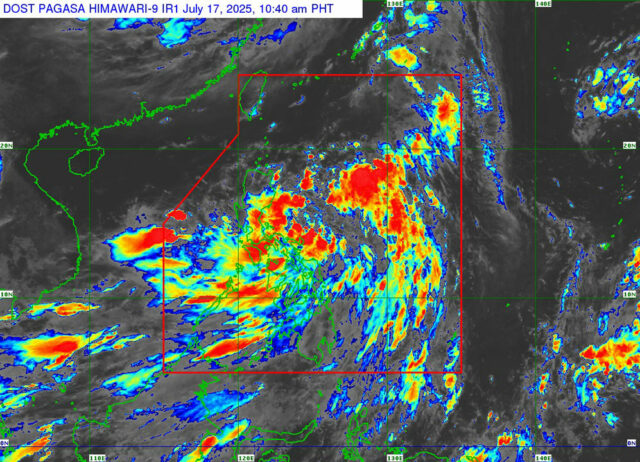
PAGASA continues monitoring tropical depression Crising, which is expected to intensify into a severe tropical atorm by Saturday, July 19. — DOST-PAGASA OFFICIAL FACEBOOK PAGE

PRESIDENT Ferdinand R. Marcos, Jr. has ordered all government agencies to implement proactive measures as the state weather bureau expects tropical depression Crising to intensify into a severe tropical storm by Saturday.

In a press briefing on Thursday, Presidential Communications Undersecretary and Palace Press Officer Clarissa A. Castro said concerned agencies are now on high alert as they conduct pre-disaster risk assessments at the President’s directive.

The National Disaster Risk Reduction and Management Council (NDRRMC) on Thursday afternoon declared a red alert status, requiring duty officers from the Armed Forces of the Philippines, Bureau of Fire Protection, Philippine Coast Guard, Philippine National Police to render duty at its operations center in Quezon City.

Technical staff from other agencies such as the Department of Science and Technology-Philippine Atmospheric Geophysical and Astronomical Service Administration (PAGASA), Department of the Interior and Local Government, Department of Social Welfare and Development, Department of Agriculture, among others, are also called to gather at the operations center.

Crising was spotted at 335 kilometers northeast of Virac in Catanduanes or 545 km east of Baler, Aurora, as of 4 p.m., PAGASA said in a 5 p.m. report.

It was moving west northwestward at 30 km per hour, packing maximum sustained winds of up to 55 km/h, gustiness of up to 70 km/h, and central pressure of 1000 hPa. PAGASA said strong winds extend outwards up to 500 km from the center.

Crising may make landfall over mainland Cagayan by Friday, the weather bureau noted.

Moreover, it is expected to intensify into a tropical storm on Thursday evening or early Friday morning and further intensify into a severe tropical storm by Saturday morning or afternoon.

“Further intensification over the Philippine Sea and the possibility of reaching Severe Tropical Storm before landfall is not ruled out,” it said.

The NDRRMC said in a situation report on Thursday there were already three landslides and 19 flooded areas due to Crising and the southwest monsoon in central Visayas.

PAGASA has raised wind Signal No. 1 in several Luzon areas such as Batanes; Cagayan including Babuyan Islands; Isabela; Quirino; the northern portion of Nueva Vizcaya (Kasibu, Quezon, Bagabag, Diadi,

Bayombong, Solano, Ambaguio, Villaverde, Dupax del Norte, Bambang, Kayapa), the northern portion of Aurora (Dilasag, Casiguran, Dinalungan, Dipaculao, Baler), Abra, Apayao, Kalinga, Mountain Province, Ifugao, and the northern portion of Benguet (Bakun, Mankayan, Buguias, Kibungan, Kabayan, Bokod, Atok, Kapangan).

Also under Signal No. 1 were Ilocos Norte, Ilocos Sur, the northern portion of La Union (Bangar, Sudipen, Luna, Balaoan, Santol, San Gabriel, Bacnotan), Polillo Islands, Camarines Norte, the northern portion of Camarines Sur (Caramoan, Garchitorena, Lagonoy, San Jose, Presentacion, Tinambac, Siruma, Goa), and Catanduanes.

FLOOD CONTROL
The Department of Environment and Natural Resources, meanwhile, urged local government units (LGUs) to integrate comprehensive flood risk reduction programs into their design and solid waste management plans.

LGUs should pursue ecosystem restoration by implementing green infrastructure and restoring natural water systems to absorb excess rainwater, it said in a statement.

They should incorporate modern drainage solutions that can handle increased rainfall volumes and ensure that waste management systems prevent blockages in drainage systems, it added.

The Philippines, which is highly vulnerable to climate change, may see 11 to 19 tropical cyclones from July to December, about two to three of which this month, PAGASA said in June.

An average of 19 to 20 storms develop inside the Philippine area of responsibility each year, with about 8 or 9 making landfall.

In January, the Department of Agriculture said calamities including tropical cyclones, the El Niño weather pattern, pests, and volcanic activities, among others, resulted in P57.78 billion in agricultural damage in 2024.

The Philippine Rice Research Institute (PhilRice) on Thursday urged rice farmers in Central Luzon and the Bicol Region to step up field surveillance as wet‑season weather is expected to fuel pest and disease outbreaks.

Citing the Bureau of Plant Industry, it flags brown planthopper, bacterial leaf blight, rice blast, rice stemborer, and rodents as the top threats for the July‑to‑September quarter.

“Cloudy, rainy days with temperatures of 25‑30 °C are ideal for brown planthopper outbreaks. We expect heavier infestations and more cases of hopperburn,” PhilRice crop‑protection specialist Leonardo V. Marquez said.

He urged growers to plant pest‑resistant varieties, synchronize sowing dates, keep paddies weed‑free, alternate wetting and drying, and apply fertilizer judiciously to curb pest buildup.

Stemborer pressure could also rise, because plentiful rainfall encourages back‑to‑back cropping and short fallow periods that let the insect persist, he added.

Rodent damage is projected to peak in Mindanao’s Bangsamoro Autonomous Region in Muslim Mindanao, where continuous rains spur weed growth and reproduction, and to be lowest in the typically drier Ilocos region.

“If the cost of control outweighs the expected gain, it may be wiser to wait and prepare for the next season,” PhilRice said. — Kyle Aristophere T. Atienza with Chloe Mari A. Hufana

PNAC, AIDS group procuring vaccines amid HIV emergency

WHO FILE PHOTO

THE PHILIPPINE National AIDS Council (PNAC) and AIDS Healthcare Foundation (AHF) Philippines on Thursday said the procurement of the vaccine lenacapavir is underway following the rapid spike of human immunodeficiency virus (HIV) cases in the country.

“Just an update on the lenacapavir — under the Global Fund project, which we still have, we will procure and start FDA (Food and Drug Administration) approval for this year,” AHF Philippines Program Officer Neoman Roxas said during a forum on the national HIV emergency.

“So, hopefully next year we will already have supplies to test here in the Philippines,” he added.

Mr. Roxas said the procurement is part of the three-year Global Fund project for the Philippines, which is set to end next year. The project includes operational and financial support for programs for HIV and acquired immunodeficiency syndrome (AIDS), tuberculosis, and malaria.

The Council and the Department of Health (DoH) are also planning to push for higher funding in 2026 to fund the procurement and support other initiatives to address the country’s growing HIV problem, PNAC Executive Director Joselito R. Feliciano said.

“The medicine we have now is being taken orally by patients. They take it daily. Lenacapavir, it’s more of an injection and will require them to return only every six months,” Mr. Feliciano said in mixed English and Filipino. “The problem is it’s very expensive. But the results from the studies are very promising.”

Lenacapavir is a preventive shot for HIV administered twice a year. It costs $40 or at least P2,000 per person, significantly lower than the $28,218 reported last year, according to a recent study cited by the Joint United Nations Programme on HIV/AIDS.

The World Health Organization said the Philippines has the fastest-growing number of HIV cases in the Asia-Pacific region.

In the first quarter of 2025, a total of 5,101 Filipinos, or at least 57 individuals every day, were identified as HIV-positive, data from the DoH showed. This is 49.6% higher than the 3,409 cases logged in the same period last year.

A third of the total patients are between the ages of 15 to 24, with the majority, or 95%, being men.

DoH also reported that the number of HIV cases in 2024 spiked by 550% to 29,600 from 4,400 in 2010.

The health agency estimated that around 252,800 Filipinos would be living with HIV this year.

Last month, Health Secretary Teodoro J. Herbosa said in a statement that addressing this issue demands a multifaceted approach, involving enacting new laws, boosting government funding, and launching an “aggressive” information campaign through the media.

MARCOS, CONGRESS AID
Amid this, Mr. Feliciano said they have been coordinating with President Ferdinand R. Marcos, Jr. regarding an executive order (EO) that would declare a public health emergency on HIV.

“The request for an EO is for an intensified HIV awareness policy,” he said.

“One of these is regarding condoms — we don’t want to distribute condoms one by one to every youth. What we want is for Filipinos to have access and power to decide for themselves whether to use condoms or not,” he added.

Mr. Feliciano noted that access should mean condoms are readily available “in motels, red district areas, and even in spas, where we know sexual things occur.”

He said that they are pushing for an EO to encourage local governments and National Government agencies to invest and allocate funds for HIV programs, in compliance with Republic Act No. 11166.

RA 11166, the HIV and AIDS Policy Act, promotes prevention, treatment, care, and support for people living with HIV and AIDS through a multi-sectoral approach, ensuring access to services while protecting patients from discrimination.

However, Mr. Feliciano said the law has unclear guidelines regarding treatment, which he said they have raised to Congress as part of their legislative agenda.

HIV is a viral disease that can spread via unprotected sex, oral sex, shared needles, blood transfusion, or from a mother to her child during pregnancy, birth, or breastfeeding.

It weakens a person’s immune system by attacking the cells that help the body fight infection. — Katherine K. Chan

PAGASA issues storm surge warning

PHILIPPINE STAR/MIGUEL DE GUZMAN

BAGUIO CITY — State-run weather bureau Philippine Atmospheric, Geophysical and Astronomical Services Administration (PAGASA) issued on Thursday morning a storm surge warning for coastal areas in Cagayan and Isabela provinces as Typhoon Crising approaches.

PAGASA urged residents to take precautions, warning a storm surge of one to two meters is possible.

Affected areas in Cagayan include Abulug, Aparri, Baggao, Ballesteros, Buguey, Calayan, Claveria, Gattaran, Gonzaga, Lal-lo, Pamplona, Peñablanca, Sanchez-Mira, Sta. Ana, and Sta. Teresita. In Isabela, Dinapigue, Divilacan, Maconacon, and Palanan.

PAGASA urges the public to avoid shorelines and cancel all sea activities due to potential danger. The agency also advises continuous monitoring of advisories for possible expanded warnings. — Artemio A. Dumlao

Taal spews 2.5-km plume of smoke

TAAL VOLCANO emitted a plume of dark smoke on Thursday, Phivolcs reported. — PHILVOCS-DOST OFFICIAL FACEBOOK PAGE

RESTIVE TAAL volcano emitted a plume of dark smoke on Thursday, the Philippine Institute of Volcanology and Seismology (Phivolcs) reported.

Manila’s seismology agency said that a steam emission from the Taal Volcano in Batangas province happened after magma came into contact with water within its main crater, according to a post on its official Facebook page.

There were three “eruptive activities” each lasting four to six minutes based on visual and seismic monitoring, it added.

“The events were preceded by a strong tremor and produced a plume that rose 2,400 meters above the MCL (main crater lake) before drifting southeast,” Phivolcs said. Taal, located about 70 kilometers (km) south of Manila, is one of the world’s smallest active volcanoes, but some of its previous eruptions had affected the capital and air travel.

The Philippines is along the so-called Pacific Ring of Fire, a belt of volcanoes around the Pacific Ocean, putting it at risk of volcanic eruptions and earthquakes. It also lies directly on the path of the northwestern Pacific’s typhoon belt, experiencing about 20 storms per year.

Authorities have kept Taal Volcano under Alert Level 1 since 2022. It maintained the status despite recent steam emissions triggered by what the seismology agency described as a “minor phreatomagmatic activity.”

In its Thursday bulletin, Phivolcs warned that hazards such as sudden volcanic explosions, earthquakes and the accumulation or release of lethal volcanic gas remain a threat around Taal Volcano. — Kenneth Christiane L. Basilio

PSEi sinks to 6,200 range as tariff concerns linger

BW FILE PHOTO

PHILIPPINE SHARES declined further on Thursday, with the main index retreating to the 6,200 level, due to lingering uncertainties caused by the United States’ shifting trade policies.

The benchmark Philippine Stock Exchange index (PSEi) dropped by 0.66% or 41.93 points to close at 6,295.55, while the broader all shares index went down by 0.67% or 25.11 points to 3,723.14.

This was the PSEi’s worst close in more than three weeks or since it finished at 6,292.75 on June 24.

“The local market extended its decline as uncertainties over the US’ tariff policies continued to weigh on investors’ sentiment,” Philstocks Financial Inc. Research Manager Japhet Louis O. Tantiangco said in a Viber message.

“The peso’s further depreciation also contributed to the market’s drop,” he added.

US President Donald J. Trump said on Wednesday that a trade deal might soon be reached with India, which faces a 26% tariff. He added that letters will be soon sent to dozens of smaller countries, informing them that their goods would have a tariff rate of over 10%.

Meanwhile, the peso dropped for a fourth straight day on Thursday, closing at P57.29, down by 20.5 centavos from Wednesday’s close. This was a new three-week low for the local unit as this was its weakest close since it ended at P57.58 on June 23.

“Philippine shares continued to tumble as concerns surfaced from a rumor regarding a potential Federal Reserve leadership change,” Regina Capital Development Corp. Head of Sales Luis A. Limlingan added in a Viber message.

Mr. Trump said on Wednesday he is not planning to fire Federal Reserve Chair Jerome H. Powell, but he kept the door open to the possibility and renewed his criticism of the central bank chief for not lowering interest rates, Reuters reported.

A Bloomberg report earlier Wednesday saying that Mr. Trump was likely to fire Mr. Powell soon sparked a drop in stocks and the dollar, and a rise in Treasury yields.

All sectoral indices closed lower on Thursday. Mining and oil went down by 2.34% or 220.76 points to 9,175.61; holding firms retreated by 1.41% or 77.50 points to 5,417.43; industrials sank by 0.77% or 70.26 points to 9,023.2; financials fell by 0.72% or 15.99 points to 2,179.63; property dropped by 0.61% or 14.53 points to 2,364.26; and services decreased by 0.58% or 12.61 points to 2,137.14.

“Converge ICT Solutions, Inc. was the day’s index leader, climbing 4.32% to P18.84. Bloomberry Resorts Corp. remained as the worst index performer, dropping 5.62% to P4.03,” Mr. Tantiangco said.

Value turnover dropped to P7.33 billion on Thursday with 2.41 billion shares traded from the P20.78 billion with 3.43 billion shares exchanged on Wednesday.

Decliners outnumbered advancers, 112 versus 75, while 56 names were unchanged.

Net foreign selling declined to P24.38 million on Thursday from P3.47 billion on Wednesday. — Revin Mikhael D. Ochave with Reuters

PSA: PHL population now 112 million

PHILIPPINE STAR/WALTER BOLLOZOS

THE COUNTRY’S total population grew to 112.73 million in 2024, higher than the 109.04 million recorded in 2020, Census of Population data showed.

Latest data from the Philippine Statistics Authority (PSA) showed that these represented a population growth of 0.8% between 2020 and 2024, decelerating from the 1.63% rate in 2015-2020.

“The slowdown of growth of the population seems to reflect the global trend of declining birth rates. This may be driven by economic pressures that discourage the formation of families with children,” Reinielle Matt M. Erece, an economist at Oikonomia Advisory & Research, Inc., said in an e-mail.

How population growth compared across regions in 2024

He added that the relatively expensive and inefficient healthcare system has impacted mortality rates, especially after the pandemic and several local outbreaks of some diseases.

The Bangsamoro Autonomous Region of Muslim Mindanao (BARMM) grew at the fastest pace among regions with 3.43% to 5.69 million from the 4.94 million in 2020.

Other regions that outpaced the national average were Central Luzon (1.08%), Calabarzon (1.07%), and Metro Manila (0.91%).

Meanwhile, the slowest average increases in population were posted by Mimaropa (0.13%), Cordillera Administrative Region (0.15%), and Ilocos Region (0.19%).

Broken down by region, Calabarzon had the largest population by 2024, growing to 16.93 million from 2020’s 16.2 million.

Following this were the National Capital Region (NCR) at 14 million (from 13.48 million), and Central Luzon at 12.99 million (from 12.42 million).

In absolute terms, BARMM gained the most to its population by 746,783 in 2024. Other significant rises were seen by Calabarzon (738,192), Central Luzon (566,902), and NCR (517,289) within the period.

The Bicol Region saw the only population contraction, shrinking by 0.07% or 17,739 to 6.06 million from 6.08 million previously.

At the provincial level, Cavite was the most populous with 4.57 million. This was followed by Bulacan (3.88 million), Laguna (3.69 million), Rizal (3.42 million), and Pangasinan (3.19 million).

The least populated were Batanes (18,937), Camiguin (94,892), Siquijor (107,642), Dinagat Islands (120,533), and Apayao (126,583).

Among highly urbanized cities, Quezon City had the largest number of people by 2024 with 3.08 million. It was followed by the City of Manila with 1.9 million, and the City of Davao with 1.85 million people.

Within Metro Manila, the highest growth rate was seen by Mandaluyong at 2.18% to 465,902. This was followed by the cities of Taguig (1.61% to 1.31 million) and San Juan (1.61% to 134,312).

The laggards among NCR localities were the cities of Valenzuela (0.34% to 725,173), Las Piñas (0.36% to 615,549), and Muntinlupa (0.39% to 555,225).

Mr. Erece said that declining birth rates may be a persistent trend not just in the country but globally as well, primarily due to increasing living costs.

“Supporting job generation, upskilling and improving productivity and overall quality of life for citizens are all necessary to promote formation of families,” he added.

The latest figures reflect the total number of persons living in the 18 administrative regions of the country, including Filipinos in Philippine embassies, consulates, and missions abroad, as of 12:01 a.m. on July 1, 2024. — Matthew Miguel L. Castillo

GSIS signs deal with Dragonpay

GSIS FACEBOOK PAGE

THE GOVERNMENT Service Insurance System (GSIS) has signed a memorandum of agreement (MoA) with payment solutions provider Dragonpay to expand digital payment channels for the state pension fund’s members.

“What we have just signed is proof of GSIS’ commitment to provide ease of doing business for our members and pensioners,” GSIS President and General Manager Jose Arnulfo “Wick” A. Veloso said in a statement on Thursday.

Signed on July 16, Dragonpay will add to GSIS’ roster of payment partners including Bayad Center, MLhuillier, Maya, UnionBank of the Philippines, and Land Bank of the Philippines.

Under the agreement, Dragonpay will provide electronic payment channels for the collection of GSIS loan repayments, accessible through the GSIS Touch app and designated GSIS information booths during the launch.

GSIS and Dragonpay will also integrate their systems, including the establishment of technical specifications, reporting protocols, and regular testing to ensure accountability.

“Dragonpay is required to submit daily reports and proof of transactions, which GSIS will verify against settlement records,” GSIS said.

“Both parties have committed to fully comply with the Data Privacy Act of 2012, and relevant regulations of the Bangko Sentral ng Pilipinas and the Commission on Audit. Robust security protocols will be enforced to protect the confidentiality and integrity of all personal and financial data.”

The state pension fund said any convenience fees will be shouldered by the payors, based strictly on agreed terms, with all charges to be disclosed at the point of transaction.

“At GSIS, we are always finding new ways to use technology to serve our members better. This partnership with Dragonpay is another milestone toward faster, more convenient, and more secure service for everyone we serve,” Mr. Veloso said. — Aaron Michael C. Sy

Nov. 7 declared working holiday

PRESIDENT FERDINAND R. MARCOS, JR. — PCO.GOV.PH

PRESIDENT Ferdinand R. Marcos, Jr., signed Republic Act No. 12228 on July 9, declaring every Nov. 7 a special national working holiday in honor of the establishment of the Philippines’ first mosque and the arrival of Islam in the country.

The day, now called Sheikh Karim’ul Makhdum Day, will commemorate the establishment of the Philippines’ first mosque and the introduction of Islam in the country.

The first mosque was built in Tawi-Tawi following the arrival of Shariff Karim’ul Makhdum, an Arab missionary who played a pivotal role in spreading Islam in the region.

“It is the policy of the State to instill inclusivity for all regardless of religious beliefs, in line with the constitutional right to freely exercise and enjoy their religion,” the law stated.

“Moreover, it is the State’s policy to provide due recognition to the indispensable contributions of Muslim Filipinos in the development of Philippine culture and civilization.” — Chloe Mari A. Hufana

Floating drugs found in Batanes waters

BAGUIO CITY — A local resident found a kilo of crystal meth, or shabu, in Sabtang, Batanes, the Philippine Drug Enforcement Agency (PDEA) said.

The 46-year-old male residing in Barangay Chavayan reportedly found the illicit drugs packed inside a transparent plastic bag labeled “66,” which was further enclosed in an open gold and black aluminum bag marked “freeso dried durien.”

PDEA said the recovery on July 13 was reported to authorities, prompting the Batanes Provincial Police Office (BPPO), PDEA RO2 Batanes Provincial Office, Sabtang Police Station, Philippine Coast Guard, and the Provincial Intelligence Unit to head to the area where the shabu was formally turned in the next day.

The shabu is now with the PDEA Batanes Provincial Office and will undergo laboratory analysis. — Artemio A. Dumlao

Maharlika taps Ausenco for Makilala feasibility update

MAKILALAMINING.COM

MAHARLIKA Investment Corp. (MIC) said it engaged Australian engineering firm Ausenco to update the feasibility study and front-end engineering design (FEED) for a copper-gold project with Makilala Mining Co., Inc.

In a statement, MIC Chief Executive Officer Rafael D. Consing, Jr. said Ausenco will lead the technical groundwork for the Maalinao-Caigutan-Biyog (MCB) Copper-Gold Project in Kalinga province.

Maharlika had announced that it signed a binding term sheet that will provide a $76.4-million bridge loan facility to Makilala to fund the early-stage development of the copper-gold project.

“This includes tendering of work packages and long-lead equipment procurement,” Mr. Consing said.

The feasibility study update and FEED program are expected to be completed by the end of 2025, according to Celsius Resources Ltd, Makilala’s parent.

Celsius is listed on both the Australian Securities Exchange and the London Stock Exchange.

These preparatory activities will lead to the development of the project, with main construction starting in 2026 and production in 2027.

“In this program, Ausenco will finalize the process for plant design, including crushing, grinding, flotation, copper concentrate production and handling,” Maharlika said.

“As part of this, additional metallurgical test work will be conducted to support the design and optimization of the process plant flow sheet,” it added.

Ausenco is expected to provide an estimate for new project costs and project valuation for the MCB Project, it said.

Mr. Consing has said Maharlika is planning to acquire a stake in Makilala, with the deal expected to close in the second half of 2025. — Aubrey Rose A. Inosante

CMEPA tax rules not applicable to SSS, GSIS, Pag-IBIG savings — DoF

FINANCE SECRETARY RALPH G. RECTO — PHOTO FROM DEPARTMENT OF FINANCE FACEBOOK PAGE

THE Department of Finance (DoF) said government-backed savings schemes are exempt from the tax provisions of the new Capital Markets Efficiency Promotion Act (CMEPA).

“The unified rate does not apply to provident savings programs under the Social Security System (SSS), Government Service Insurance System (GSIS), and Pag-IBIG (such as MP2). These savings programs remain exempt from tax,” the DoF said in a statement on Thursday.

The DoF was responding to a backlash against CMEPA, amid claims that its tax provisions apply to funds held in government savings schemes, which it called “fake news.”

“The standardized tax rate is not retroactive and does not apply to financial instruments that were issued or transacted prior to July 1, 2025. Therefore, existing long-term deposits made prior to the effectivity of the law will continue to enjoy the preferential rate until their maturity,” it added. 

CMEPA, which sets a flat 20% tax rate on interest income, is not a new levy but rather “corrects an unfair system that favored the wealthy,” it said.

The DoF also noted that before the law was signed, the National Internal Revenue Code of 1997 had imposed a 20% final tax on interest earned from bank deposits with a maturity of less than three years.

The rate for deposits with maturities of between four years and under five years was 5%, and those with maturities of between three years and under 4 years had been 12%.

“This special tax treatment favored depositors who can afford to park their savings in long-term deposits, making the tax system unfair for short-term depositors who face liquidity issues and need immediate access to their funds,” it said.

Citing the Bangko Sentral ng Pilipinas, the DoF said more than 99.6% of total deposits are already subject to the 20% tax rate, with only 0.4% enjoying preferential rates.

President Ferdinand R. Marcos, Jr. signed CMEPA into law on May 29. — Aubrey Rose A. Inosante